
Investigating a Phase Approach to Using Technology as
- Slides: 22
Investigating a Phase Approach to Using Technology as a Teaching Tool Pep Serow University of New England
Background ¡ ¡ ¡ Van Hiele five level framework. Opportunity to exhibit insight. Dynamic Geometry Software (DGS) provides the potential for student-centred problem-solving tasks that remain in the control of the individual student (Goldenberg & Cuoco, 1998). Many teachers are comfortable using technology as a display tool, but there is a need to focus on how technology can be used to enhance conceptual understandings (Mc. Gehee & Griffith, 2004). Teachers often lack confidence in sequencing technological tasks as an integral component of a teaching/learning sequence.
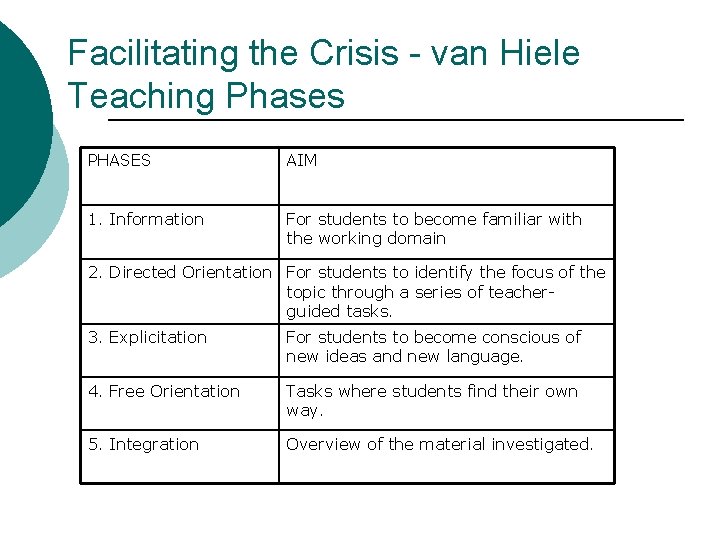
Facilitating the Crisis - van Hiele Teaching Phases PHASES AIM 1. Information For students to become familiar with the working domain 2. Directed Orientation For students to identify the focus of the topic through a series of teacherguided tasks. 3. Explicitation For students to become conscious of new ideas and new language. 4. Free Orientation Tasks where students find their own way. 5. Integration Overview of the material investigated.
Research Questions The research questions for this study were: 1. Is the van Hiele teaching phases framework an effective structure for designing teaching sequences involving dynamic geometry software? 2. To what extent does the implementation of student-centred tasks, which utilise dynamic geometry software, facilitate student growth in understandings of relationships among quadrilateral figures?
Method o o This study uses a pre-experimental design One group of 23 students Pre-test, post-test, and delayed post -test Team teaching intervention
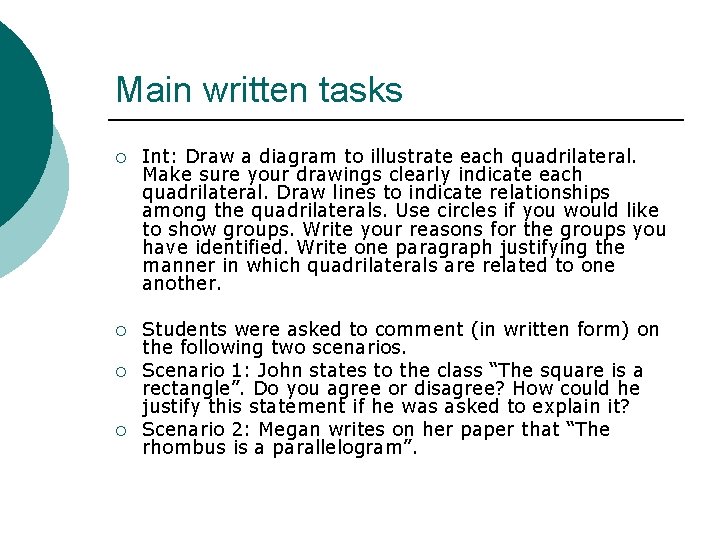
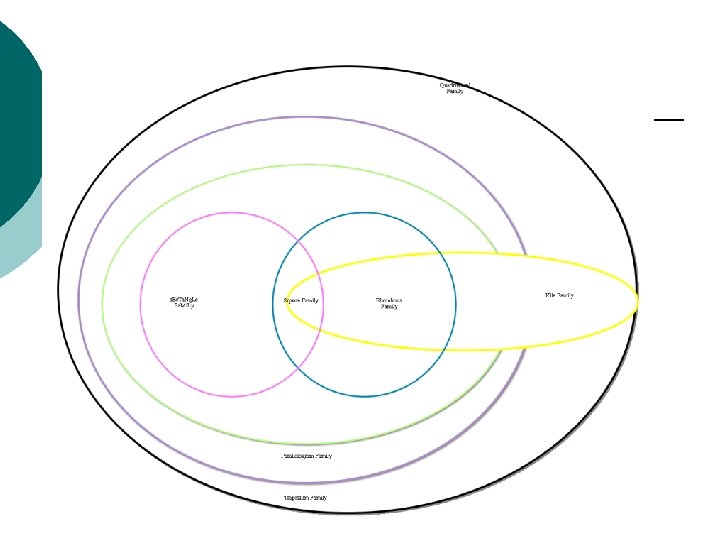
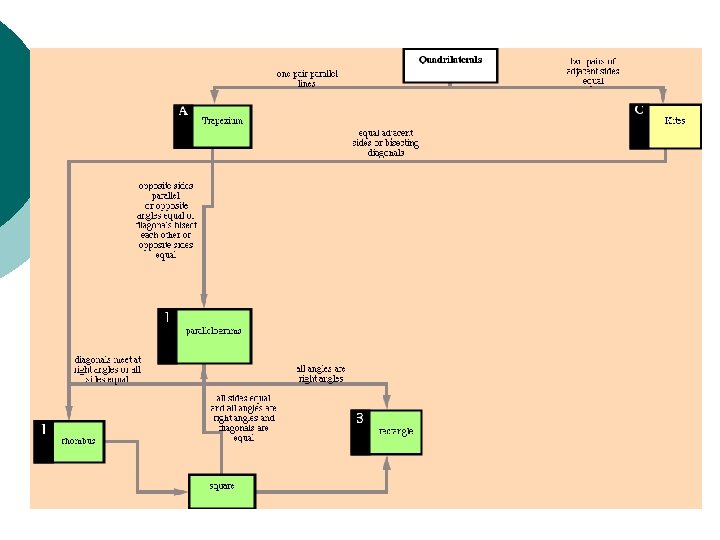
Main written tasks ¡ Int: Draw a diagram to illustrate each quadrilateral. Make sure your drawings clearly indicate each quadrilateral. Draw lines to indicate relationships among the quadrilaterals. Use circles if you would like to show groups. Write your reasons for the groups you have identified. Write one paragraph justifying the manner in which quadrilaterals are related to one another. ¡ Students were asked to comment (in written form) on the following two scenarios. Scenario 1: John states to the class “The square is a rectangle”. Do you agree or disagree? How could he justify this statement if he was asked to explain it? Scenario 2: Megan writes on her paper that “The rhombus is a parallelogram”. ¡ ¡
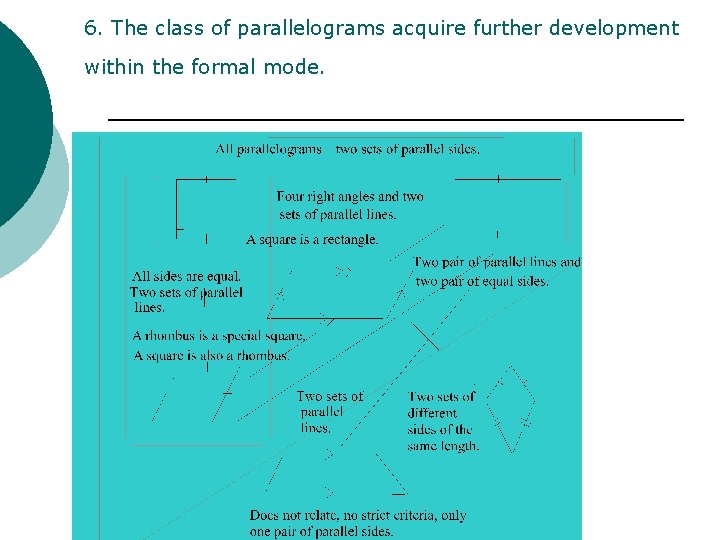
6. The class of parallelograms acquire further development within the formal mode.
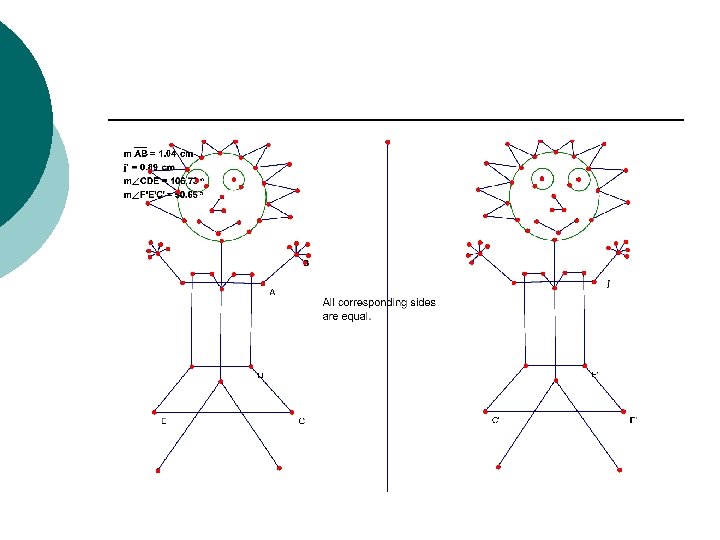
Teaching Sequence Activities 1 ¡ Mechanics of software and recall of known quadrilaterals. Write your name using sketchpad. Create a person and reflect the figure. What do you notice when you drag one of your people. Check this with measurement tools. Create a house design using the six quadrilaterals. (Information and Directed Orientation).
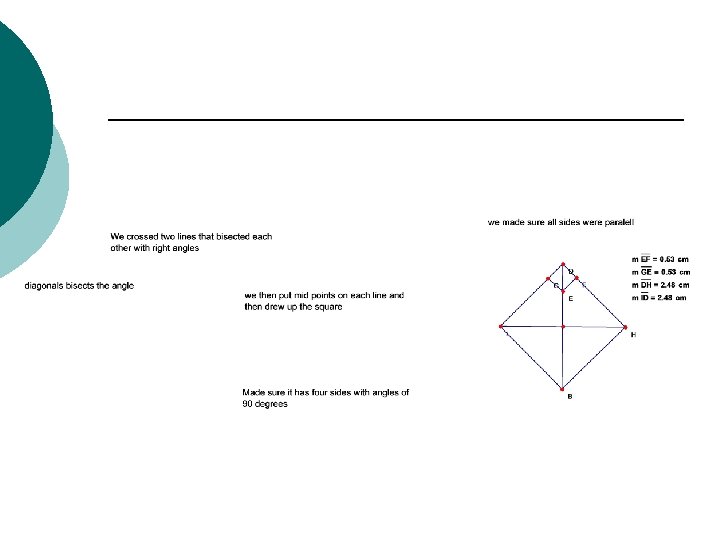
Activities 2 ¡ • • Creating robust templates for each quadrilateral using properties and the drag test. Describe your construction within a textbox and record the properties of each figure on a teacher-designed table Explicitation Phase.
Activities 3 ¡ ¡ Irregular quadrilateral and midpoints construction (Directed Orientation). Create any irregular quadrilateral. Construct the midpoints. Join the midpoints to construct another quadrilateral. What do you notice? Investigate the properties of this shape and justify what you have found.
Activities 4 ¡ Exploration of figures and student designed spreadsheet (involving a list of all possible properties with recording of when each property applied) of figures and properties (Explicitation).
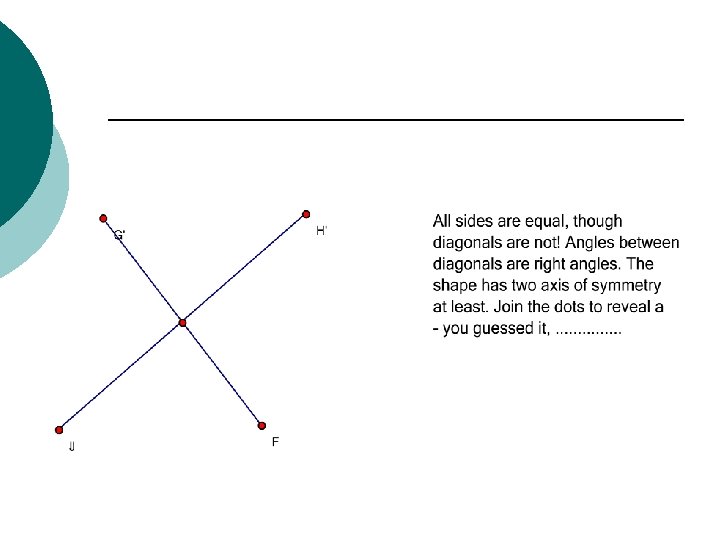
Activities 5 § Quadrilateral diagonal starters. Game design (Free Orientation). § Students create the diagonal formation needed for each of the quadrilaterals. The aim is for templates to be created so that younger students could complete the figure and explore the properties.
Activity 6 ¡ Students create; a) a concept map b) a flow chart, to summarise their known relationships among quadrilateral figures (Free Orientation).
Activity 7 and 8 Students design an information booklet with all material that they have been working on (Integration). ¡ Routine questions involving known properties and relationships (Integration). ¡
Discussion ¡ ¡ ¡ Two-week intervention did reinforce the high level of student interest in the activities. Students exchanged their ideas verbally. There is need to assist in the making the implicit nature of the relationships – demonstrated through ‘dragging’ explicit. This is where the combinations of different technologies and recording methods was most beneficial.
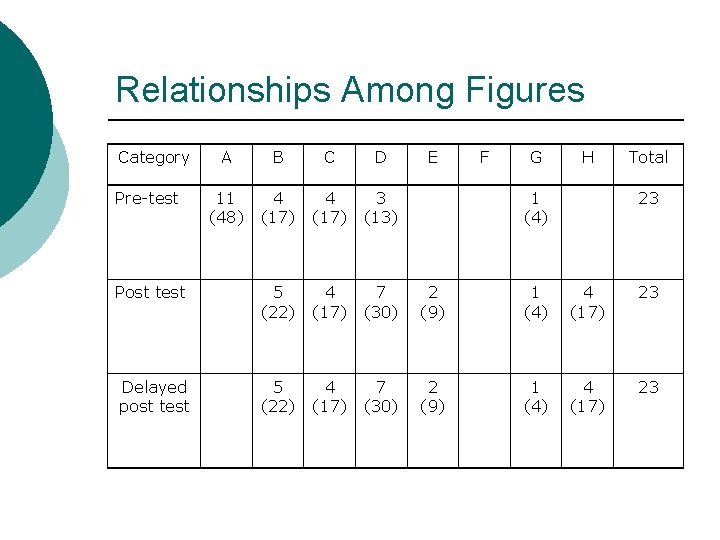
Relationships Among Figures Category A B C D 11 (48) 4 (17) 3 (13) Post test 5 (22) 4 (17) 7 (30) 2 (9) 1 (4) 4 (17) 23 Delayed post test 5 (22) 4 (17) 7 (30) 2 (9) 1 (4) 4 (17) 23 Pre-test E F G H 1 (4) Total 23
Conclusion ¡ ¡ ¡ This study provides base line data which is worthy of exploration in greater detail. The findings point to the benefits in melding of cognitive frameworks, phases of teaching, and the embedding of Information and Communication Technology within a teaching sequence. Highlights the importance of embedding technology within a pedagogical framework.