
Inverted Commas DIRECT SPEECH is when you are
- Slides: 11
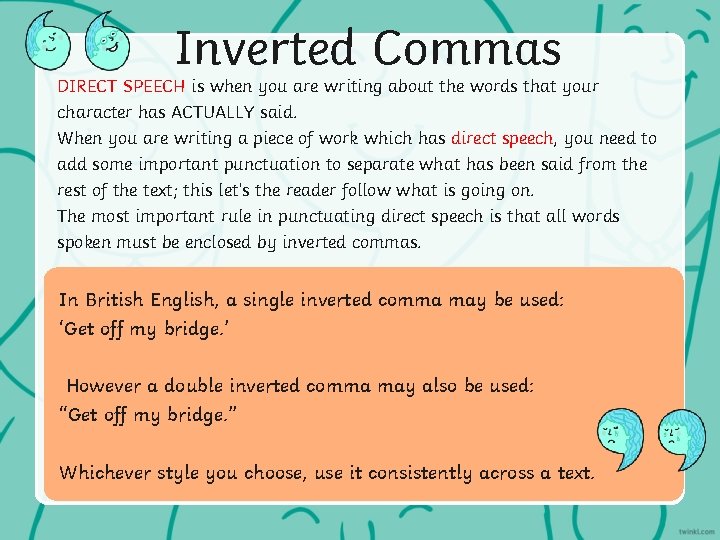
Inverted Commas DIRECT SPEECH is when you are writing about the words that your character has ACTUALLY said. When you are writing a piece of work which has direct speech, you need to add some important punctuation to separate what has been said from the rest of the text; this let’s the reader follow what is going on. The most important rule in punctuating direct speech is that all words spoken must be enclosed by inverted commas. In British English, a single inverted comma may be used: ‘Get off my bridge. ’ However a double inverted comma may also be used: “Get off my bridge. ” Whichever style you choose, use it consistently across a text.
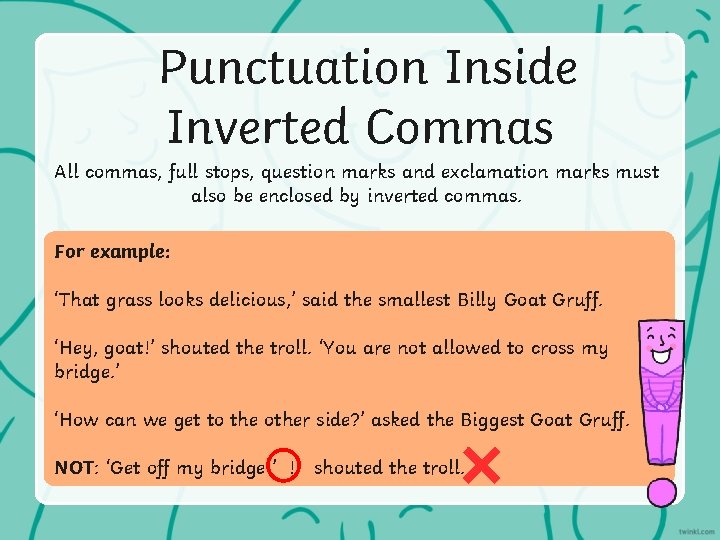
Punctuation Inside Inverted Commas All commas, full stops, question marks and exclamation marks must also be enclosed by inverted commas. For example: ‘That grass looks delicious, ’ said the smallest Billy Goat Gruff. ‘Hey, goat!’ shouted the troll. ‘You are not allowed to cross my bridge. ’ ‘How can we get to the other side? ’ asked the Biggest Goat Gruff. NOT: ‘Get off my bridge ’ ! shouted the troll.
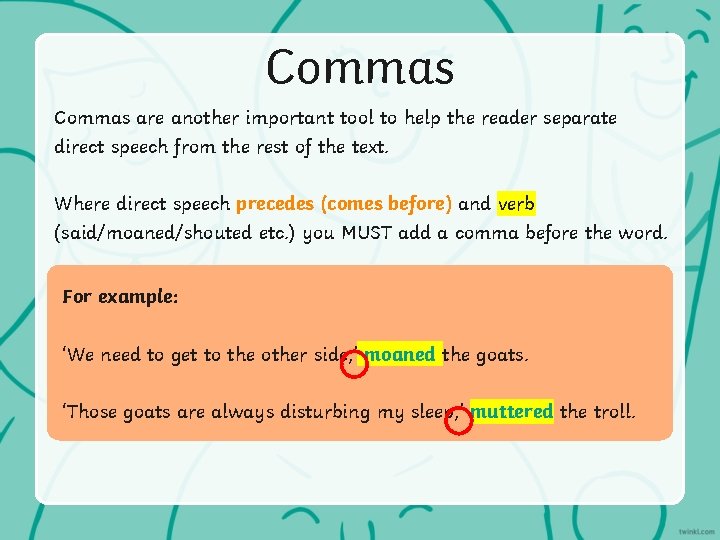
Commas are another important tool to help the reader separate direct speech from the rest of the text. Where direct speech precedes (comes before) and verb (said/moaned/shouted etc. ) you MUST add a comma before the word. For example: ‘We need to get to the other side, ’ moaned the goats. ‘Those goats are always disturbing my sleep, ’ muttered the troll.
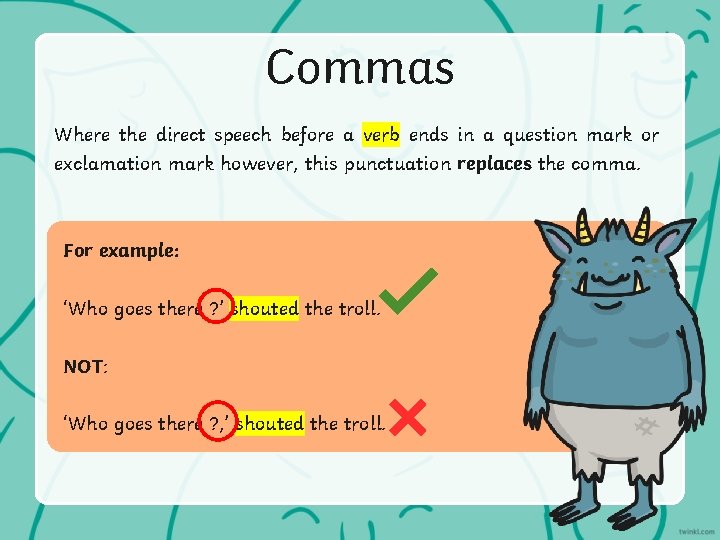
Commas Where the direct speech before a verb ends in a question mark or exclamation mark however, this punctuation replaces the comma. For example: ‘Who goes there ? ’ shouted the troll. NOT: ‘Who goes there ? , ’ shouted the troll.
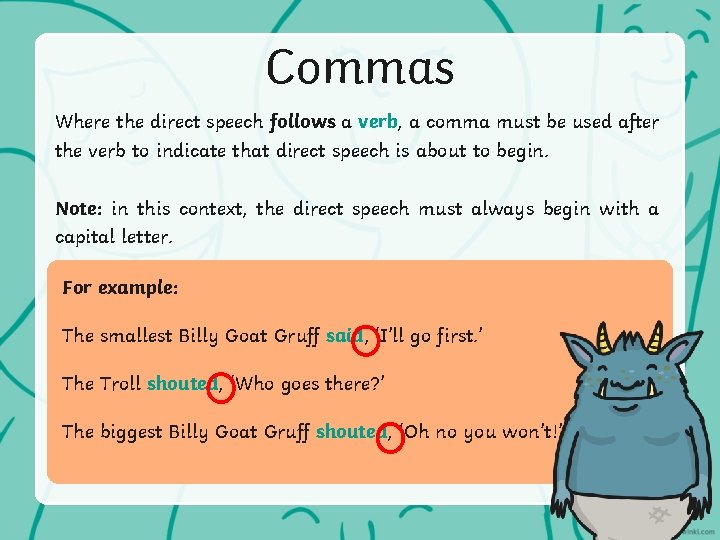
Commas Where the direct speech follows a verb, a comma must be used after the verb to indicate that direct speech is about to begin. Note: in this context, the direct speech must always begin with a capital letter. For example: The smallest Billy Goat Gruff said, ‘I’ll go first. ’ The Troll shouted, ‘Who goes there? ’ The biggest Billy Goat Gruff shouted, ‘Oh no you won’t!’
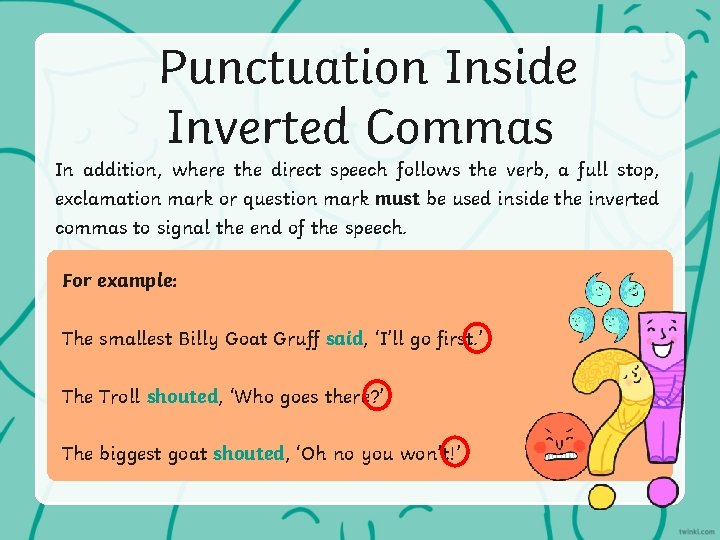
Punctuation Inside Inverted Commas In addition, where the direct speech follows the verb, a full stop, exclamation mark or question mark must be used inside the inverted commas to signal the end of the speech. For example: The smallest Billy Goat Gruff said, ‘I’ll go first. ’ The Troll shouted, ‘Who goes there? ’ The biggest goat shouted, ‘Oh no you won’t!’
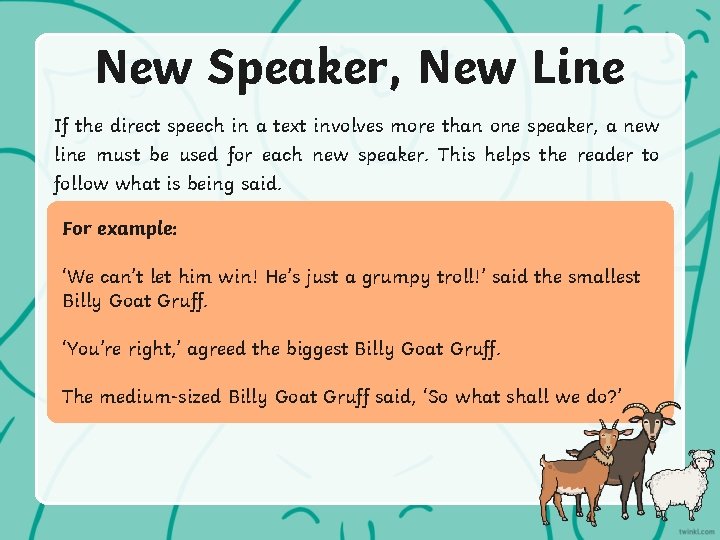
New Speaker, New Line If the direct speech in a text involves more than one speaker, a new line must be used for each new speaker. This helps the reader to follow what is being said. For example: ‘We can’t let him win! He’s just a grumpy troll!’ said the smallest Billy Goat Gruff. ‘You’re right, ’ agreed the biggest Billy Goat Gruff. The medium-sized Billy Goat Gruff said, ‘So what shall we do? ’
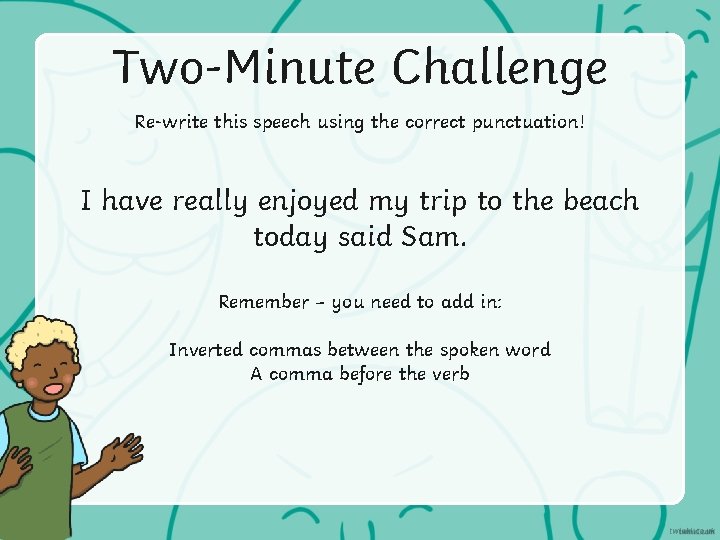
Two-Minute Challenge Re-write this speech using the correct punctuation! I have really enjoyed my trip to the beach today said Sam. Remember – you need to add in: Inverted commas between the spoken word A comma before the verb
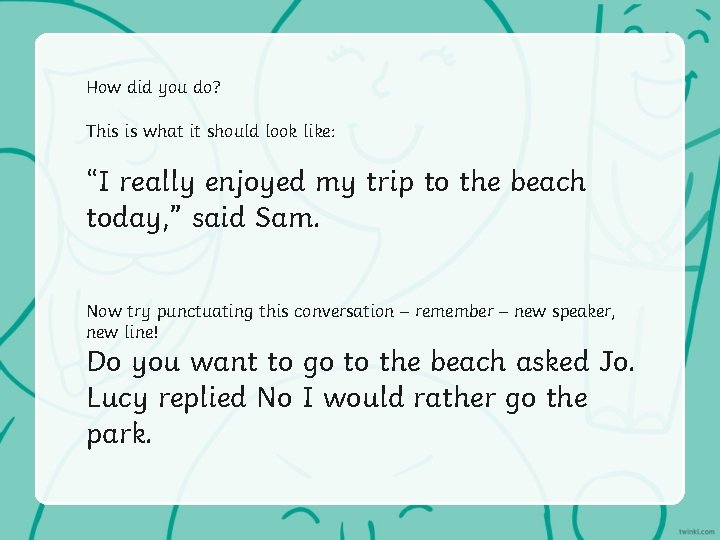
How did you do? This is what it should look like: “I really enjoyed my trip to the beach today, ” said Sam. Now try punctuating this conversation – remember – new speaker, new line! Do you want to go to the beach asked Jo. Lucy replied No I would rather go the park.
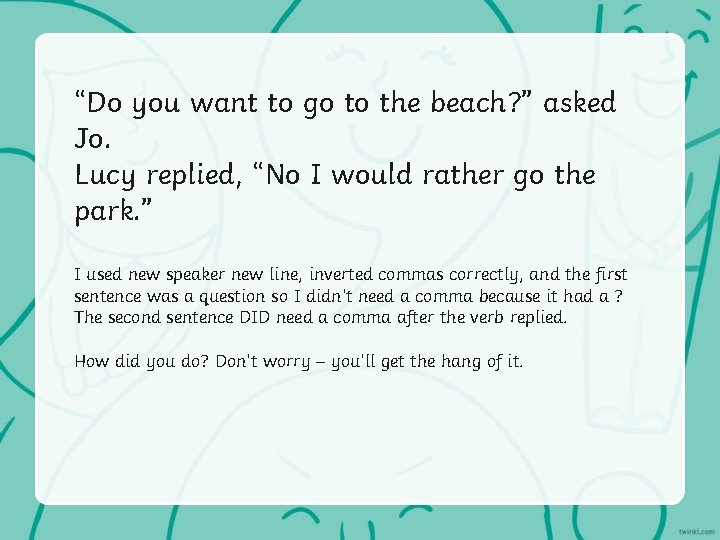
“Do you want to go to the beach? ” asked Jo. Lucy replied, “No I would rather go the park. ” I used new speaker new line, inverted commas correctly, and the first sentence was a question so I didn’t need a comma because it had a ? The second sentence DID need a comma after the verb replied. How did you do? Don’t worry – you’ll get the hang of it.