
Inverted commas are also known as speech marks
- Slides: 13
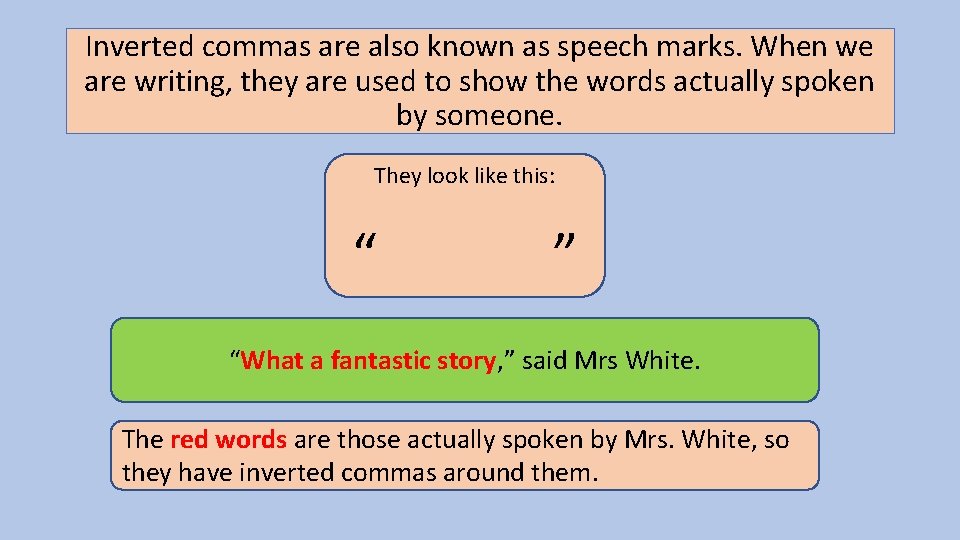
Inverted commas are also known as speech marks. When we are writing, they are used to show the words actually spoken by someone. They look like this: “ ” “What a fantastic story, ” said Mrs White. The red words are those actually spoken by Mrs. White, so they have inverted commas around them.
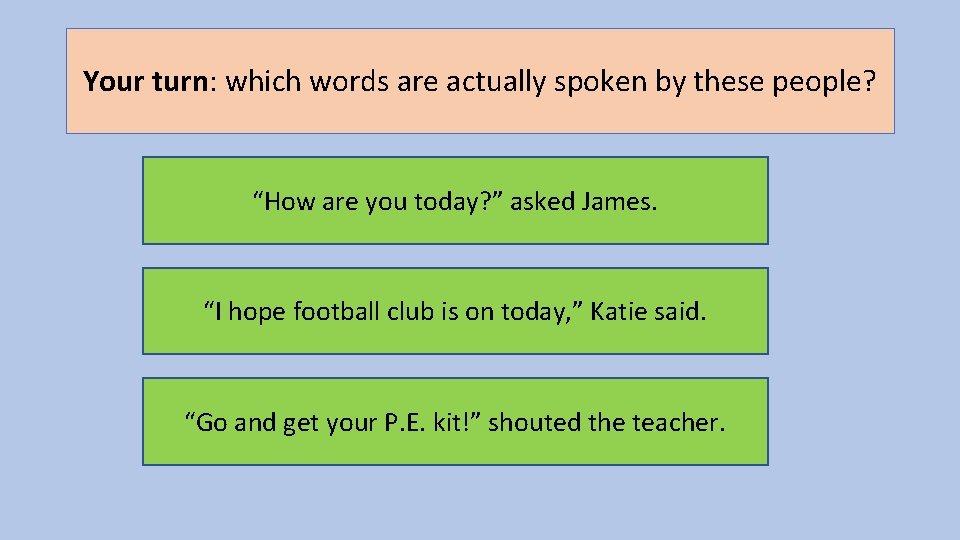
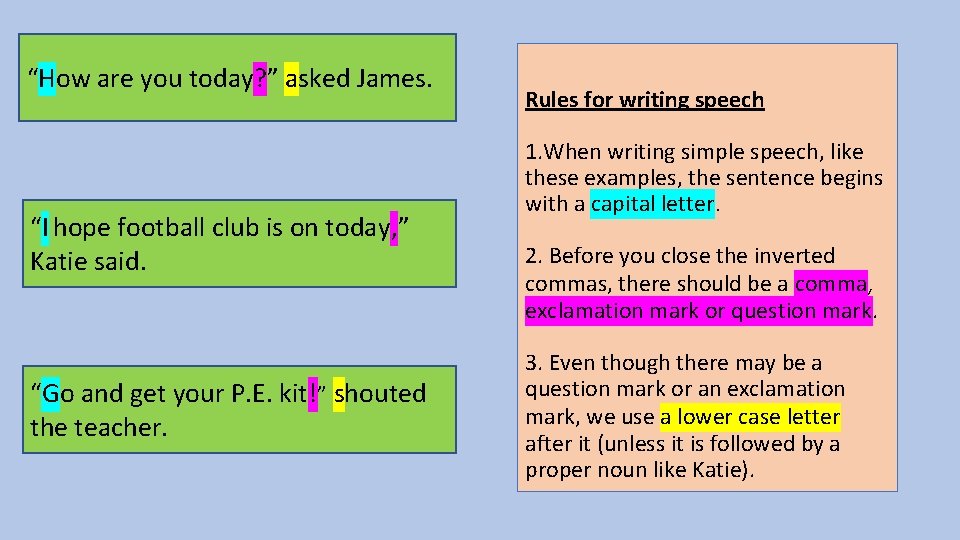
Your turn: which words are actually spoken by these people? “How are you today? ” asked James. “I hope football club is on today, ” Katie said. “Go and get your P. E. kit!” shouted the teacher.
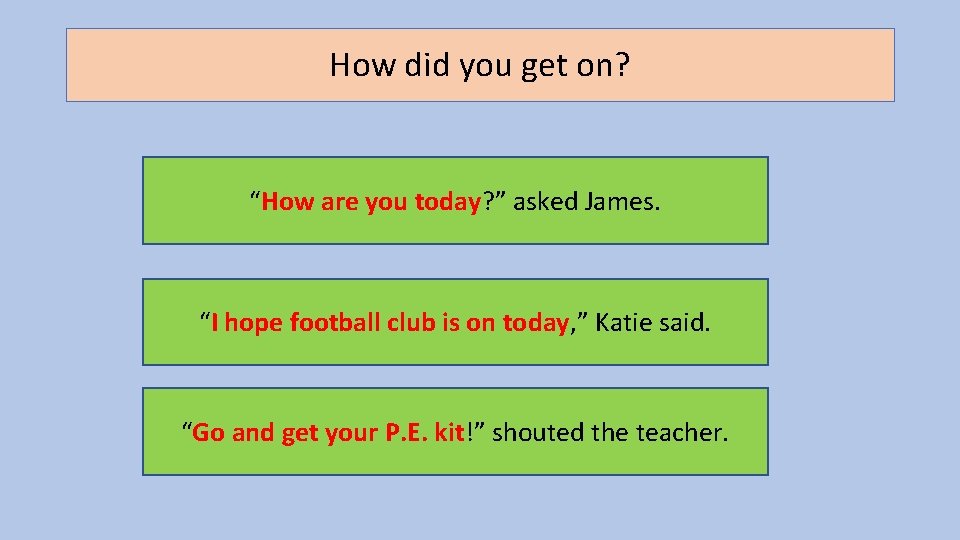
How did you get on? “How are you today? ” asked James. “I hope football club is on today, ” Katie said. “Go and get your P. E. kit!” shouted the teacher.
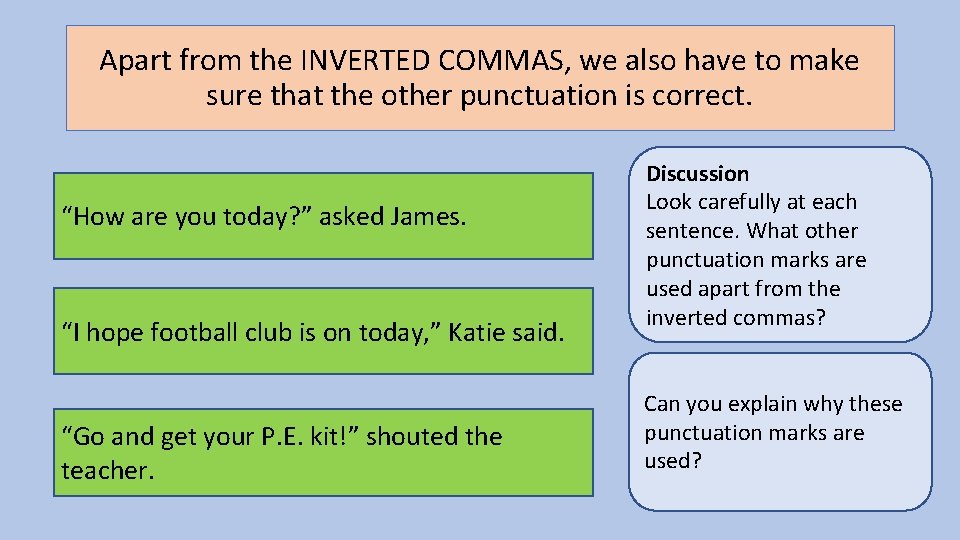
Apart from the INVERTED COMMAS, we also have to make sure that the other punctuation is correct. “How are you today? ” asked James. “I hope football club is on today, ” Katie said. “Go and get your P. E. kit!” shouted the teacher. Discussion Look carefully at each sentence. What other punctuation marks are used apart from the inverted commas? Can you explain why these punctuation marks are used?
“How are you today? ” asked James. “I hope football club is on today, ” Katie said. “Go and get your P. E. kit!” shouted the teacher. Rules for writing speech 1. When writing simple speech, like these examples, the sentence begins with a capital letter. 2. Before you close the inverted commas, there should be a comma, exclamation mark or question mark. 3. Even though there may be a question mark or an exclamation mark, we use a lower case letter after it (unless it is followed by a proper noun like Katie).
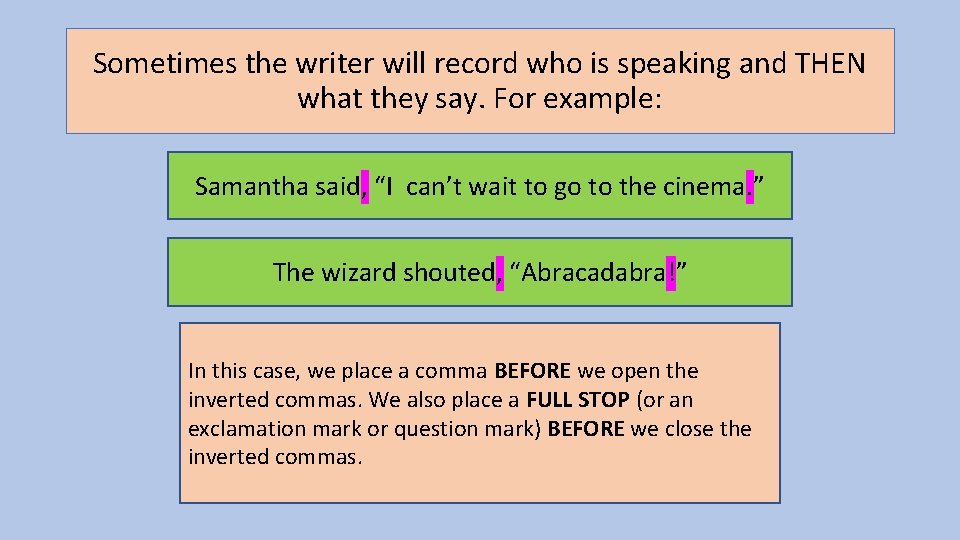
Sometimes the writer will record who is speaking and THEN what they say. For example: Samantha said, “I can’t wait to go to the cinema. ” The wizard shouted, “Abracadabra!” In this case, we place a comma BEFORE we open the inverted commas. We also place a FULL STOP (or an exclamation mark or question mark) BEFORE we close the inverted commas.
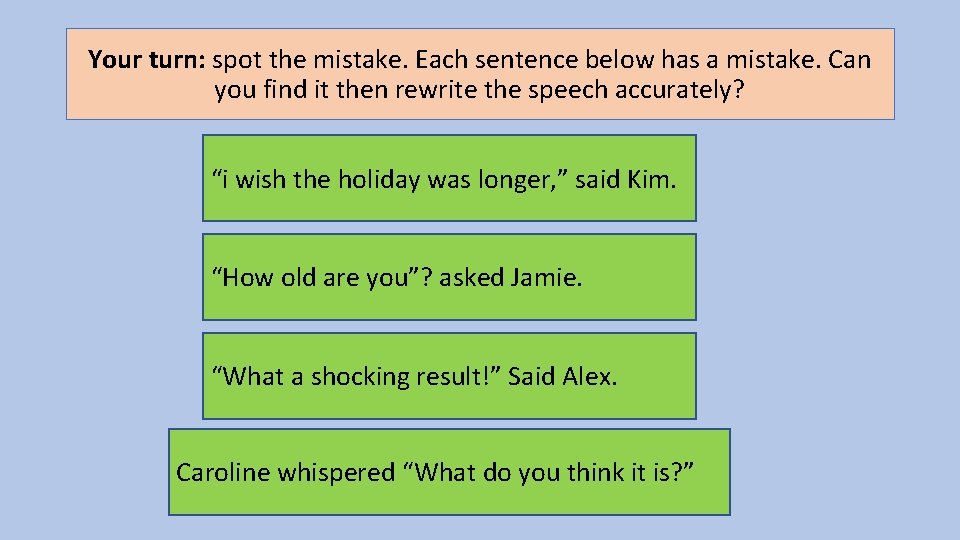
Your turn: spot the mistake. Each sentence below has a mistake. Can you find it then rewrite the speech accurately? “i wish the holiday was longer, ” said Kim. “How old are you”? asked Jamie. “What a shocking result!” Said Alex. Caroline whispered “What do you think it is? ”
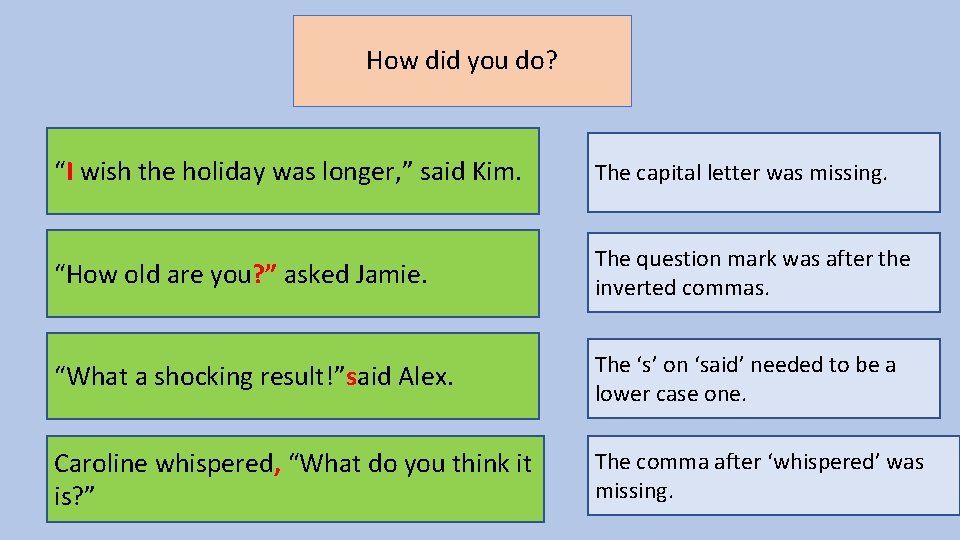
How did you do? “I wish the holiday was longer, ” said Kim. The capital letter was missing. “How old are you? ” asked Jamie. The question mark was after the inverted commas. “What a shocking result!”said Alex. The ‘s’ on ‘said’ needed to be a lower case one. Caroline whispered, “What do you think it is? ” The comma after ‘whispered’ was missing.
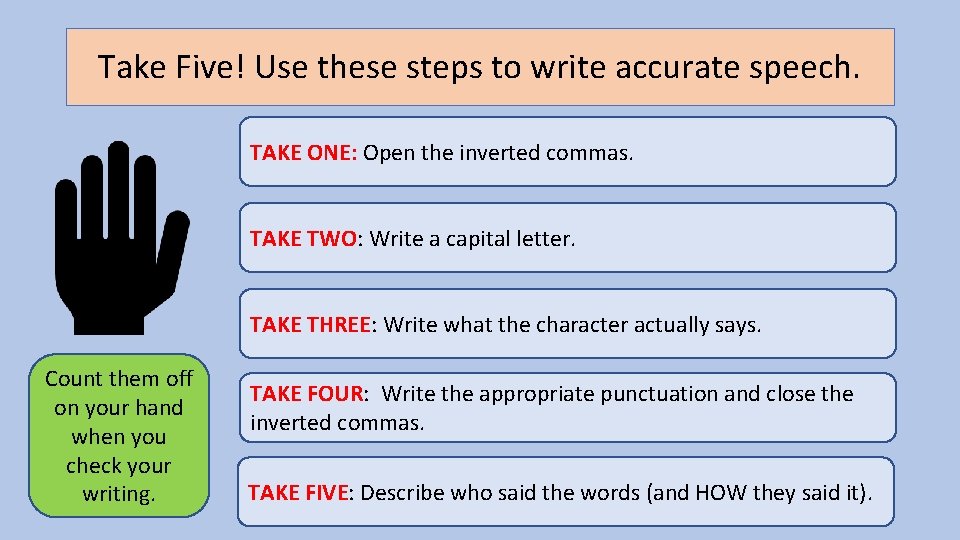
Take Five! Use these steps to write accurate speech. TAKE ONE: Open the inverted commas. TAKE TWO: Write a capital letter. TAKE THREE: Write what the character actually says. Count them off on your hand when you check your writing. TAKE FOUR: Write the appropriate punctuation and close the inverted commas. TAKE FIVE: Describe who said the words (and HOW they said it).
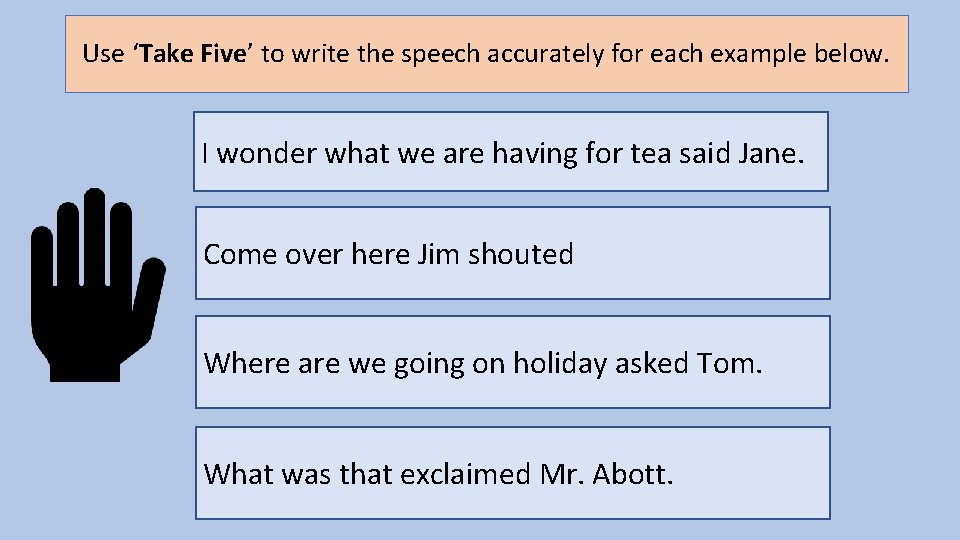
Use ‘Take Five’ to write the speech accurately for each example below. I wonder what we are having for tea said Jane. Come over here Jim shouted Where are we going on holiday asked Tom. What was that exclaimed Mr. Abott.
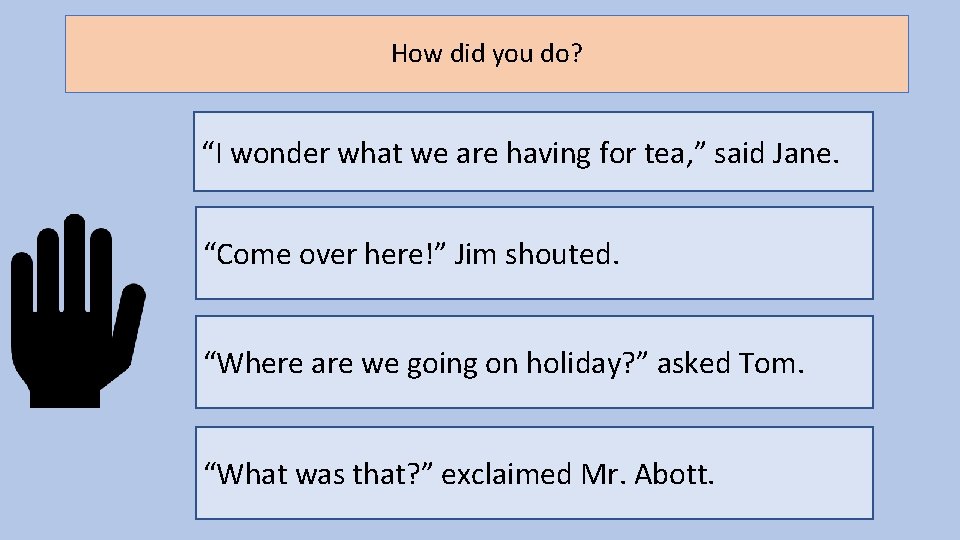
How did you do? “I wonder what we are having for tea, ” said Jane. “Come over here!” Jim shouted. “Where are we going on holiday? ” asked Tom. “What was that? ” exclaimed Mr. Abott.
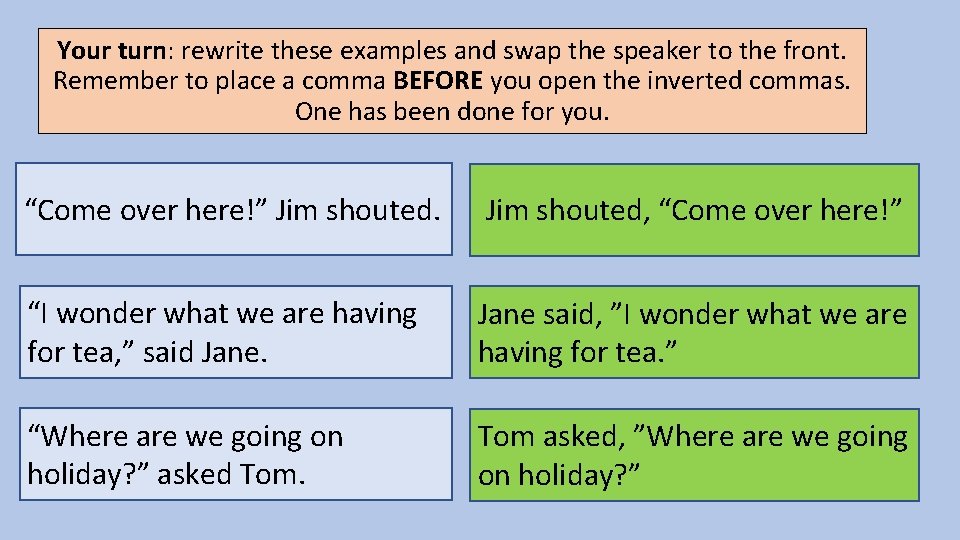
Your turn: rewrite these examples and swap the speaker to the front. Remember to place a comma BEFORE you open the inverted commas. One has been done for you. “Come over here!” Jim shouted, “Come over here!” “I wonder what we are having for tea, ” said Jane said, ”I wonder what we are having for tea. ” “Where are we going on holiday? ” asked Tom asked, ”Where are we going on holiday? ”
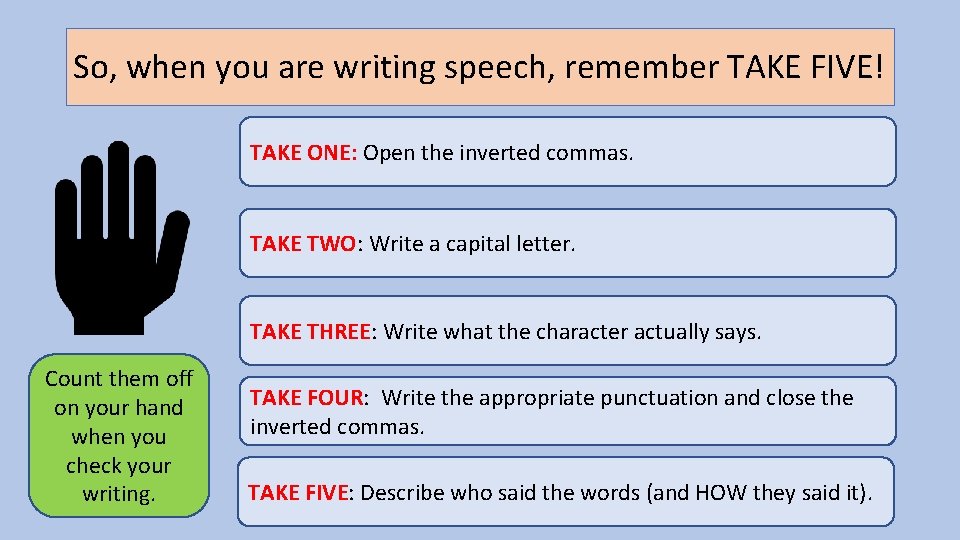
So, when you are writing speech, remember TAKE FIVE! TAKE ONE: Open the inverted commas. TAKE TWO: Write a capital letter. TAKE THREE: Write what the character actually says. Count them off on your hand when you check your writing. TAKE FOUR: Write the appropriate punctuation and close the inverted commas. TAKE FIVE: Describe who said the words (and HOW they said it).