
Invertebrates Porifera n n Examples sponges Characteristics n
Invertebrates

Porifera n n Examples: sponges Characteristics: n n n n Name means pore-bearer Lack symmetry Lack true tissues Adults are sessile (do not move) Can regenerate Filter feed Structures: n Skeleton is made of spicules

Cnidaria n n Examples: jellyfish, sea anemones, hydra, coral Characteristics: n n n Radially symmetrical Only 2 germ layers (ectoderm, endoderm) One opening digestive tract Body plan: medusa or polyp Structures: n n Nerve net Cnidocytes (stinging cells) and nematocysts (trigger) for defense Gelatinous Tentacles surround the mouth
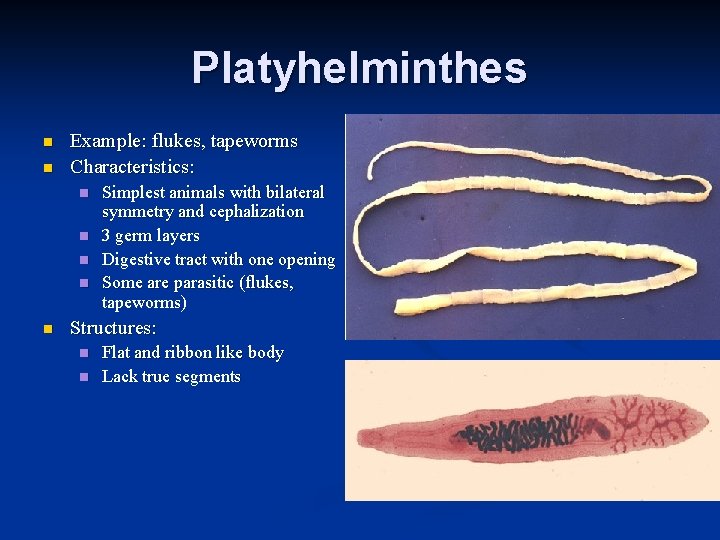
Platyhelminthes n n Example: flukes, tapeworms Characteristics: n n n Simplest animals with bilateral symmetry and cephalization 3 germ layers Digestive tract with one opening Some are parasitic (flukes, tapeworms) Structures: n n Flat and ribbon like body Lack true segments
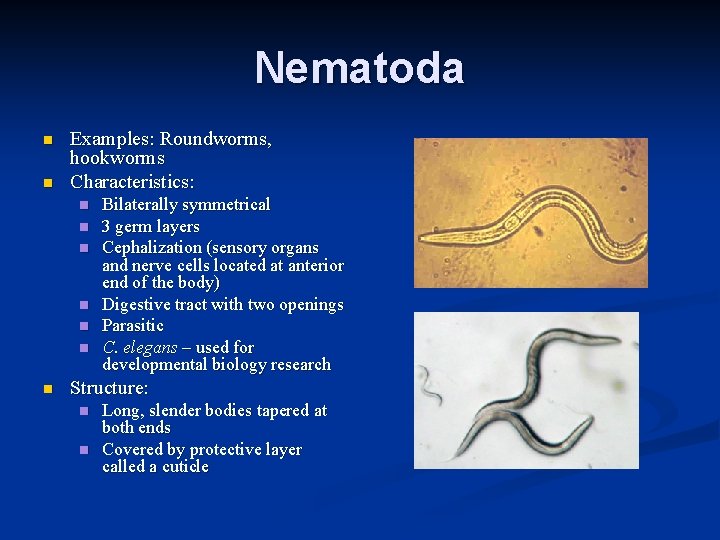
Nematoda n n Examples: Roundworms, hookworms Characteristics: n n n n Bilaterally symmetrical 3 germ layers Cephalization (sensory organs and nerve cells located at anterior end of the body) Digestive tract with two openings Parasitic C. elegans – used for developmental biology research Structure: n n Long, slender bodies tapered at both ends Covered by protective layer called a cuticle

Rotifera n n n Examples: Rotifers Characteristics: n Bilaterally symmetrical n 3 germ layers n Digestive tract with two openings n Transparent n Almost all live in freshwater Structure: n Crown of cilia around the mouth

Mollusca n n Examples: Mollusks (clams, snails, octopus, squid, mussels) Characteristics: n n n Name means “soft” Bilaterally symmetrical 3 germ layers Digestive tract with two openings Structures: n n n Rasping tongue called radula Most have external shells made of calcium carbonate Gills
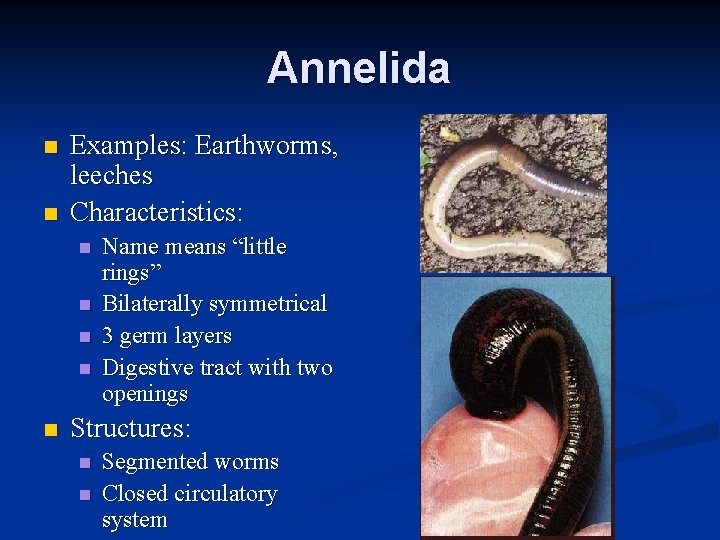
Annelida n n Examples: Earthworms, leeches Characteristics: n n n Name means “little rings” Bilaterally symmetrical 3 germ layers Digestive tract with two openings Structures: n n Segmented worms Closed circulatory system
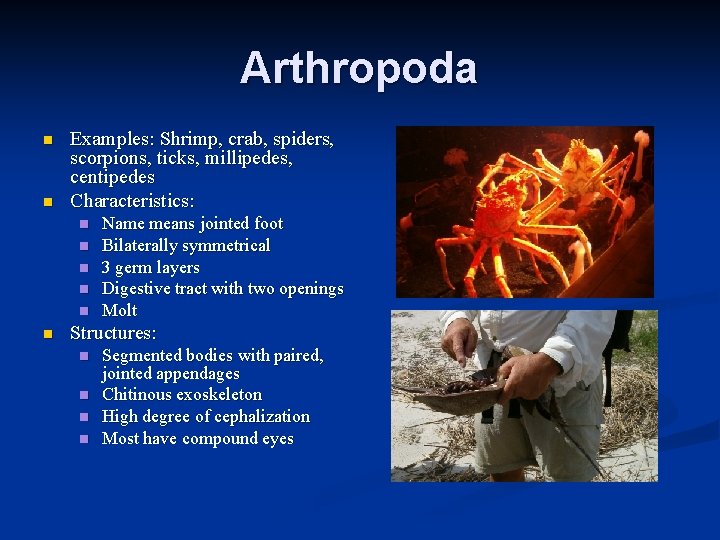
Arthropoda n n Examples: Shrimp, crab, spiders, scorpions, ticks, millipedes, centipedes Characteristics: n n n Name means jointed foot Bilaterally symmetrical 3 germ layers Digestive tract with two openings Molt Structures: n n Segmented bodies with paired, jointed appendages Chitinous exoskeleton High degree of cephalization Most have compound eyes
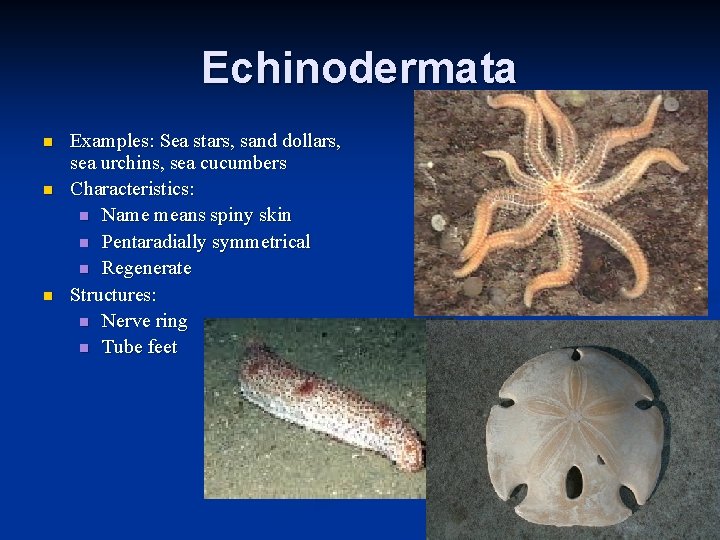
Echinodermata n n n Examples: Sea stars, sand dollars, sea urchins, sea cucumbers Characteristics: n Name means spiny skin n Pentaradially symmetrical n Regenerate Structures: n Nerve ring n Tube feet
- Slides: 10