
Invertebrates Key Vocabulary Bilateral symmetrytwo mirrored sides Radial
Invertebrates
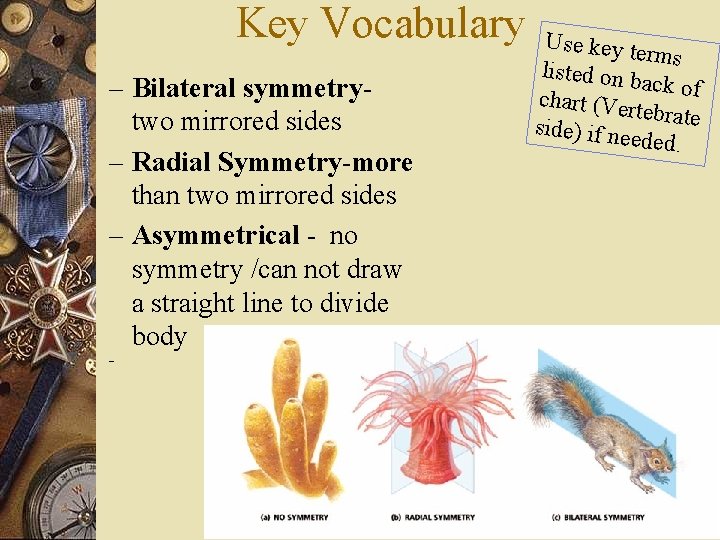
Key Vocabulary – Bilateral symmetrytwo mirrored sides – Radial Symmetry-more than two mirrored sides – Asymmetrical - no symmetry /can not draw a straight line to divide body – Use key te rms listed on b ack of chart (Ver tebrate side) if ne eded.
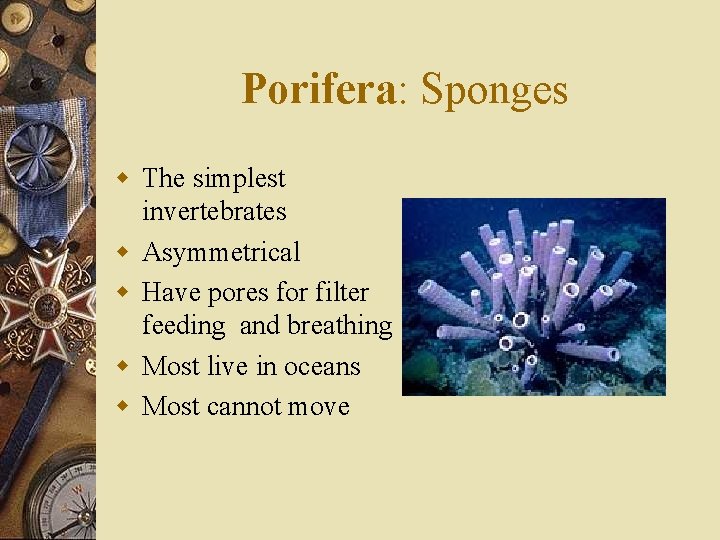
Porifera: Sponges w The simplest invertebrates w Asymmetrical w Have pores for filter feeding and breathing w Most live in oceans w Most cannot move
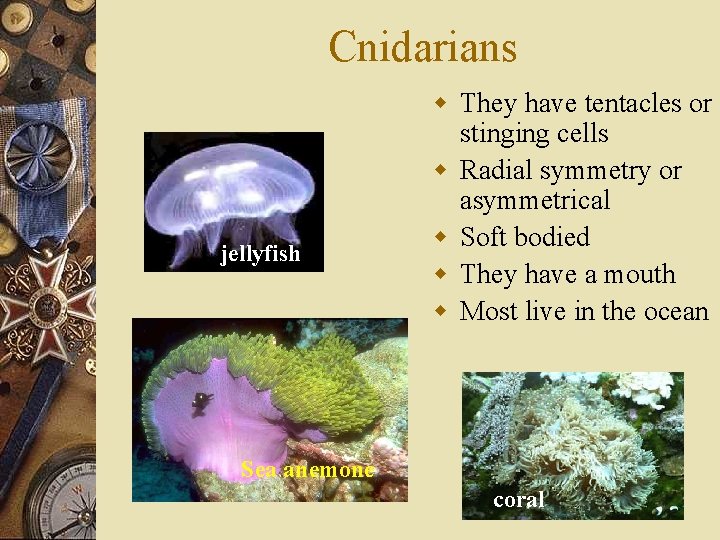
Cnidarians jellyfish w They have tentacles or stinging cells w Radial symmetry or asymmetrical w Soft bodied w They have a mouth w Most live in the ocean Sea anemone coral
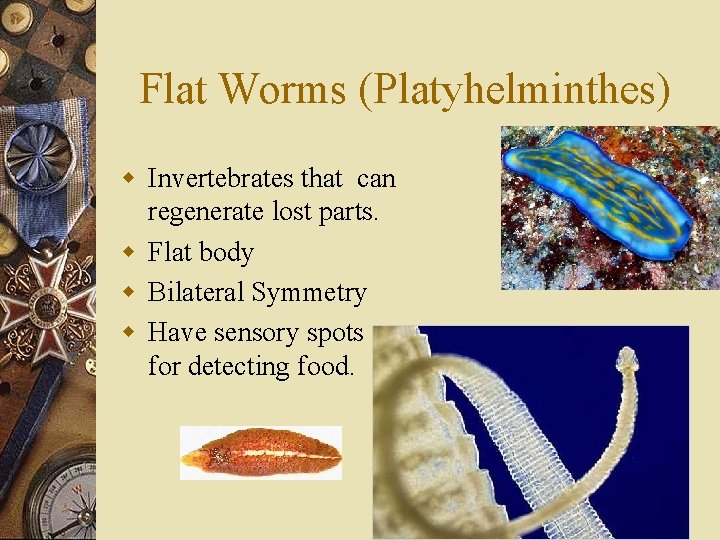
Flat Worms (Platyhelminthes) w Invertebrates that can regenerate lost parts. w Flat body w Bilateral Symmetry w Have sensory spots for detecting food.
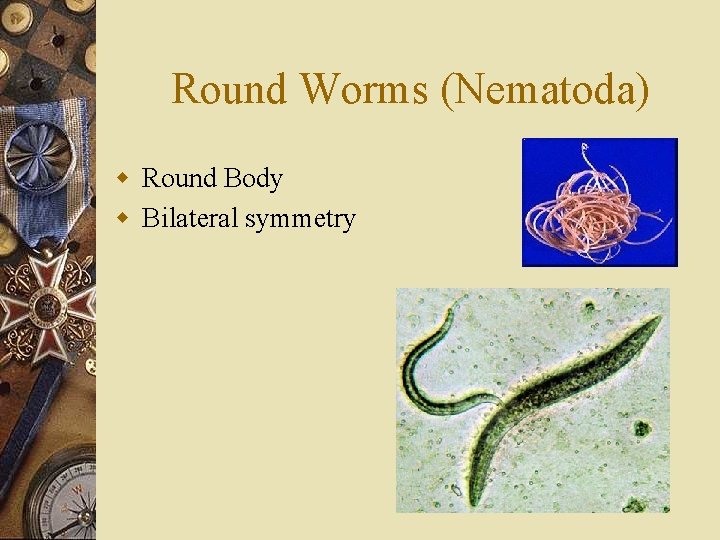
Round Worms (Nematoda) w Round Body w Bilateral symmetry
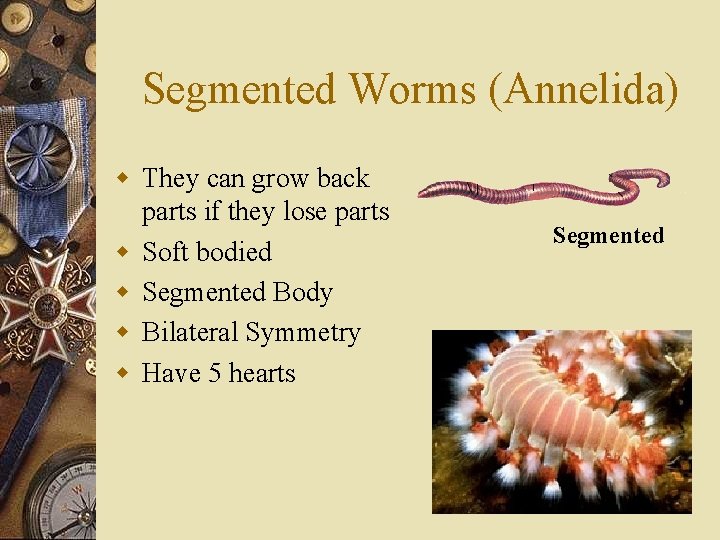
Segmented Worms (Annelida) w They can grow back parts if they lose parts w Soft bodied w Segmented Body w Bilateral Symmetry w Have 5 hearts Segmented
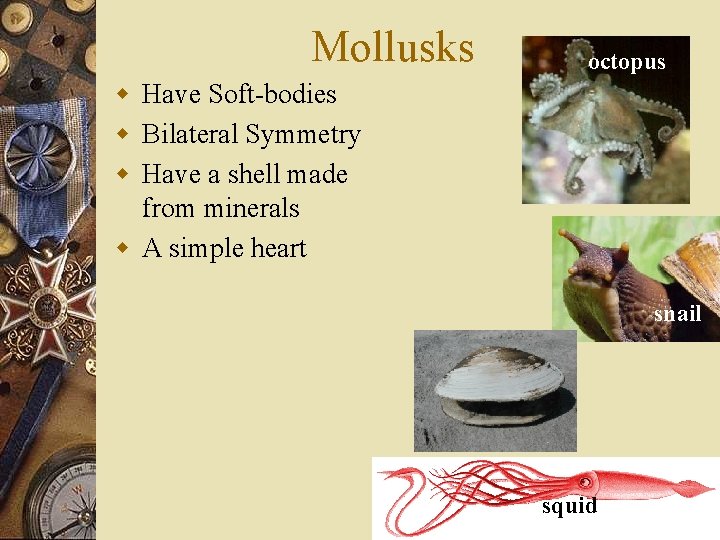
Mollusks octopus w Have Soft-bodies w Bilateral Symmetry w Have a shell made from minerals w A simple heart snail squid
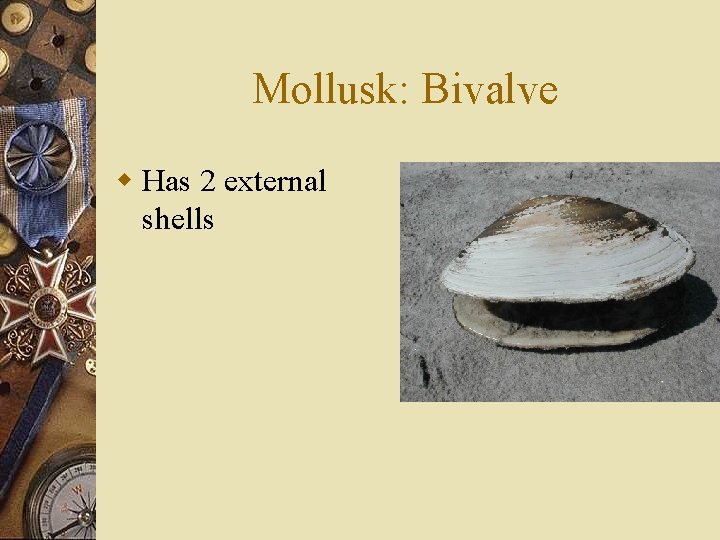
Mollusk: Bivalve w Has 2 external shells
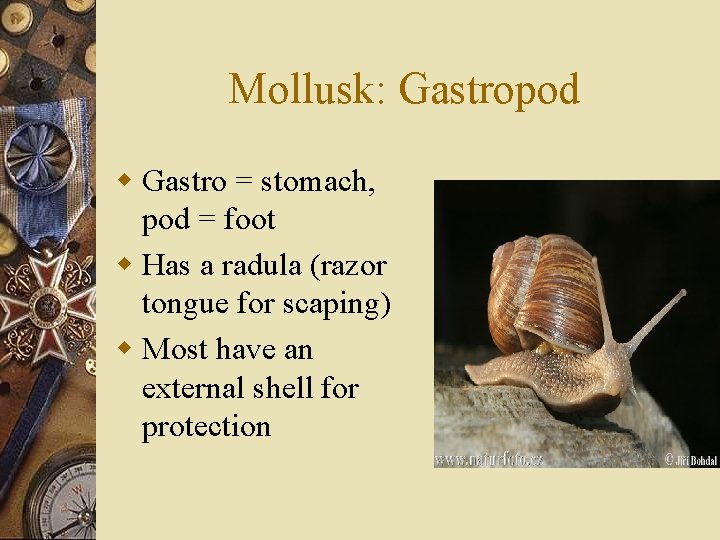
Mollusk: Gastropod w Gastro = stomach, pod = foot w Has a radula (razor tongue for scaping) w Most have an external shell for protection
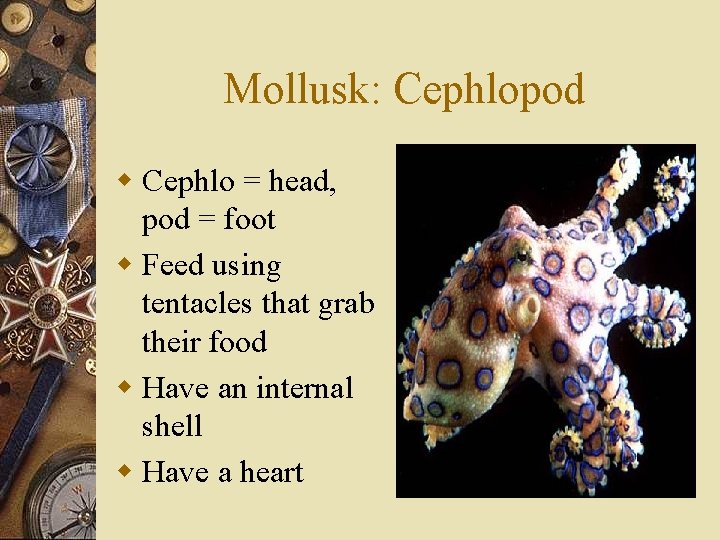
Mollusk: Cephlopod w Cephlo = head, pod = foot w Feed using tentacles that grab their food w Have an internal shell w Have a heart
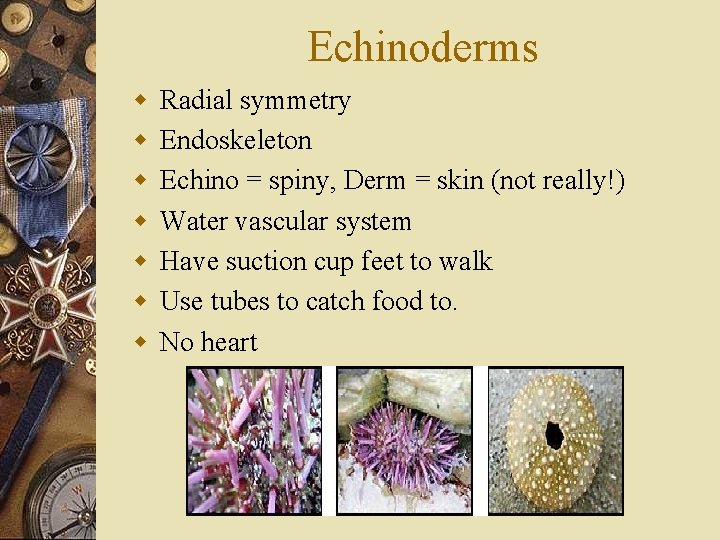
Echinoderms w w w w Radial symmetry Endoskeleton Echino = spiny, Derm = skin (not really!) Water vascular system Have suction cup feet to walk Use tubes to catch food to. No heart
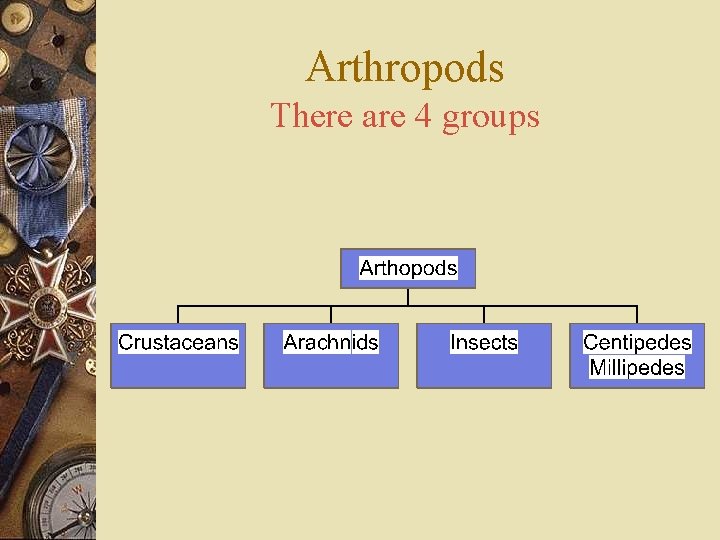
Arthropods There are 4 groups
Arthopods w They have exoskeletons. w Bilateral symmetry w Have 3 main segments (head, thorax, and abdomen) w Have compound eyes w Have jointed limbs (legs) w Have a heart
- Slides: 14