
Invertebrates I Porifera Cnidaria Tree of Life Invertebrates

Invertebrates I: Porifera, Cnidaria,

Tree of Life
Invertebrates - Background Kingdom Animalia I. • • • 97% of all animal species are invertebrates Animals without a backbone All major groups have marine representatives (some are exclusively marine) (3 -15 million species)
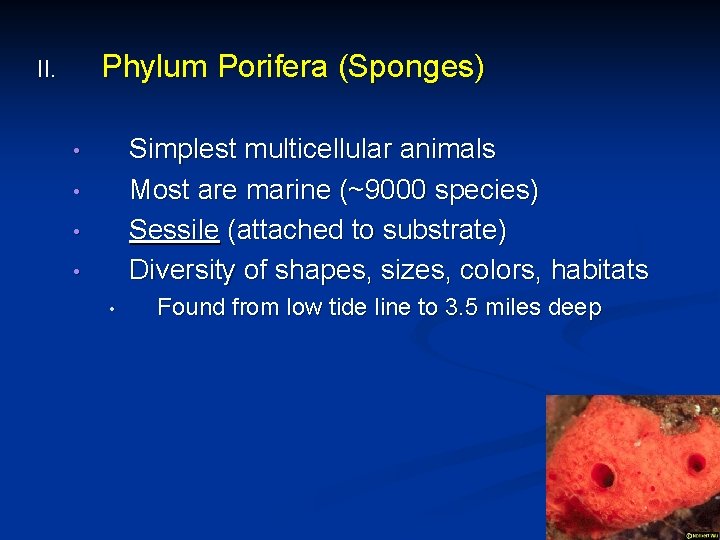
Phylum Porifera (Sponges) II. Simplest multicellular animals Most are marine (~9000 species) Sessile (attached to substrate) Diversity of shapes, sizes, colors, habitats • • • Found from low tide line to 3. 5 miles deep
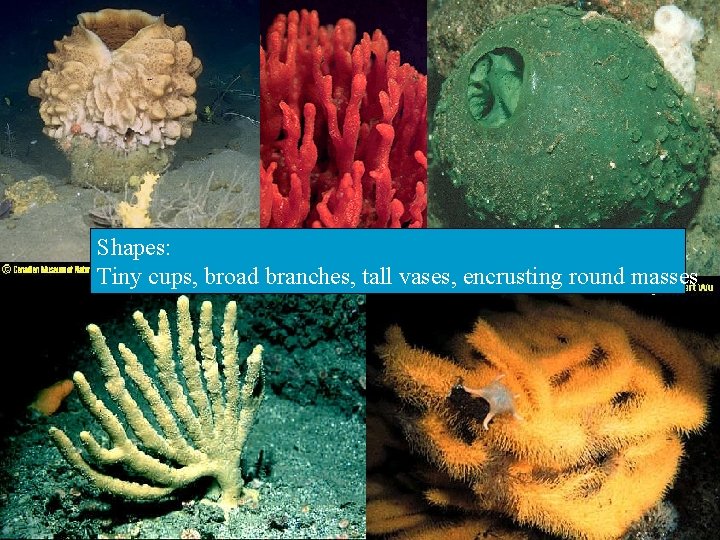
Shapes: Tiny cups, broad branches, tall vases, encrusting round masses
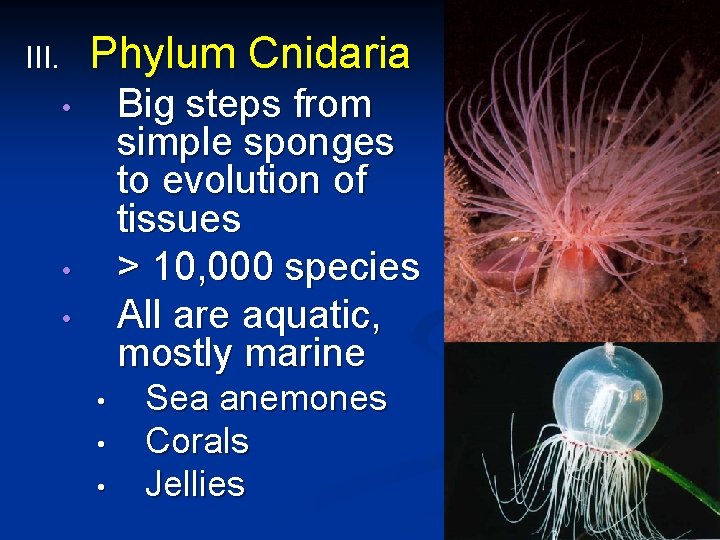
Phylum Cnidaria III. Big steps from simple sponges to evolution of tissues > 10, 000 species All are aquatic, mostly marine • • • Sea anemones Corals Jellies
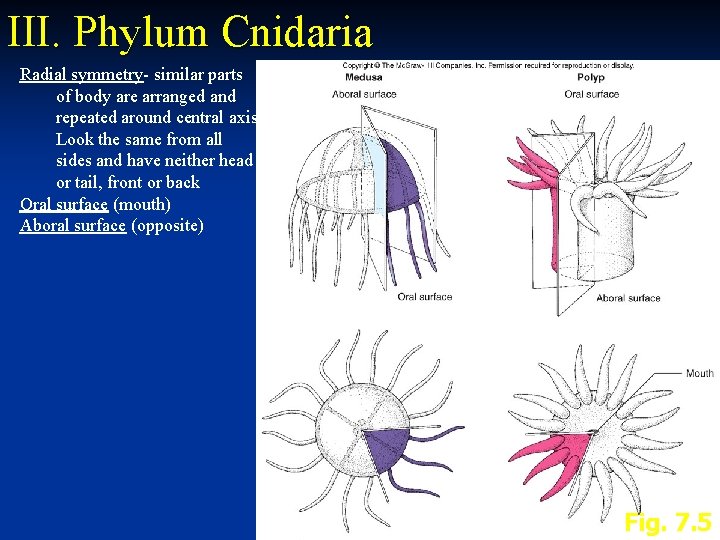
III. Phylum Cnidaria Radial symmetry- similar parts of body are arranged and repeated around central axis. Look the same from all sides and have neither head or tail, front or back Oral surface (mouth) Aboral surface (opposite) Fig. 7. 5
III. Phylum Cnidaria 2 basic forms Polyp: anemone, tube with a mouth surrounded by tentacles, specialized in sedentary (sessile) life attached to substrate n Medusa: jellyfish, bell-shaped free-floating, swim by pulsating contractions n
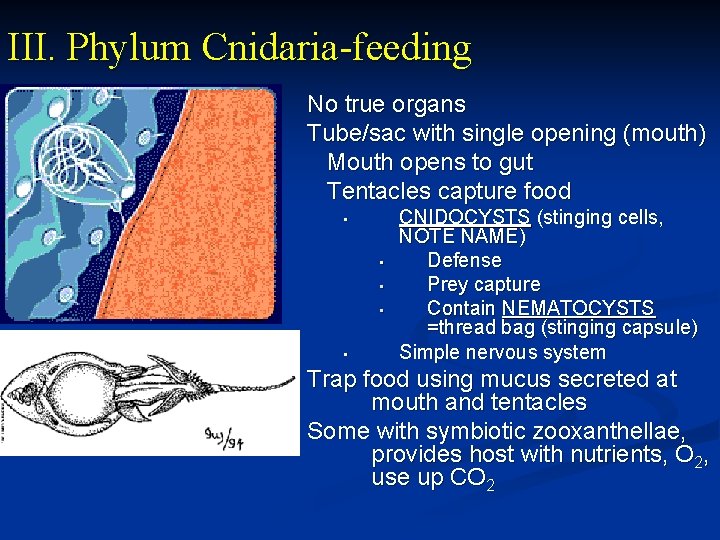
III. Phylum Cnidaria-feeding No true organs Tube/sac with single opening (mouth) Mouth opens to gut Tentacles capture food • • • CNIDOCYSTS (stinging cells, NOTE NAME) Defense Prey capture Contain NEMATOCYSTS =thread bag (stinging capsule) Simple nervous system Trap food using mucus secreted at mouth and tentacles Some with symbiotic zooxanthellae, provides host with nutrients, O 2, use up CO 2
III. Phylum Cnidaria 4 Classes of cnidarians Class Hydrozoa (includes hydras, hydroids, hydromedusae, chondrophorans, siphonophores, hydrocorallines) Feathery, bushy colonies of tiny polyps attach to pilings, shells, surfaces Alternate between polyp and medusa form

III. Phylum Cnidaria Class Scyphozoa-jellyfishes • All marine species, few hundred • Medusae large (dominant stage) E. g. – Cyanea capillata (Lion’s Mane) • • • Desmonema glaciale Bell > 2 m Tentacles 60+ m Swim by contracting bell rhythmically, pulsing contraction, at mercy of currents Stings *, sometimes fatal Aurelia
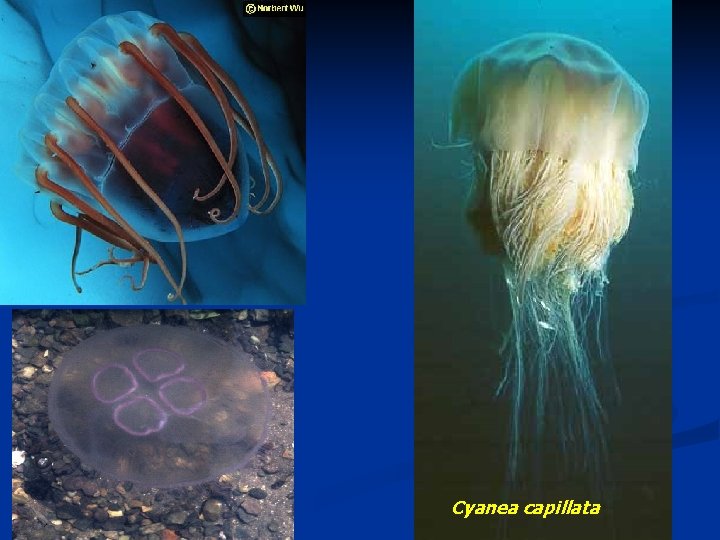
Cyanea capillata
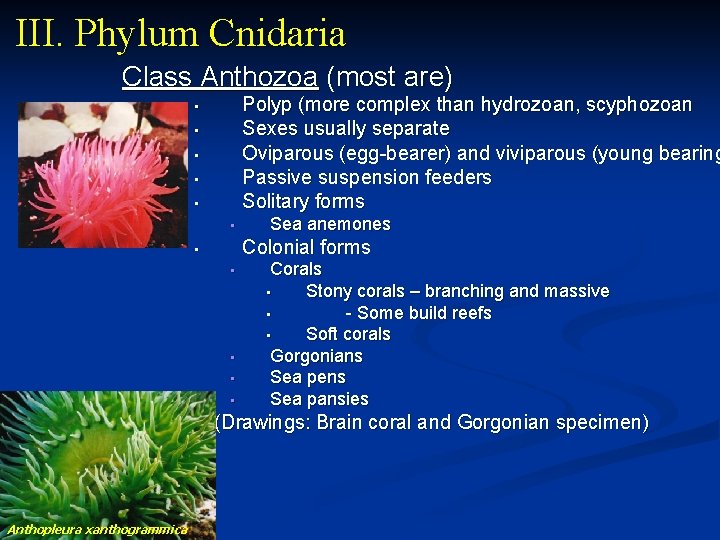
III. Phylum Cnidaria Class Anthozoa (most are) Polyp (more complex than hydrozoan, scyphozoan Sexes usually separate Oviparous (egg-bearer) and viviparous (young bearing Passive suspension feeders Solitary forms • • • Colonial forms • • • Anthopleura xanthogrammica Sea anemones Corals • Stony corals – branching and massive • - Some build reefs • Soft corals Gorgonians Sea pens Sea pansies (Drawings: Brain coral and Gorgonian specimen)
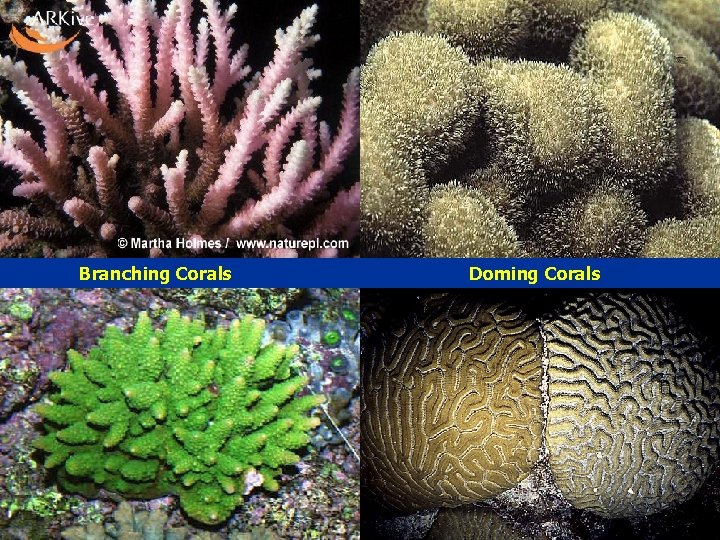
Branching Corals Doming Corals
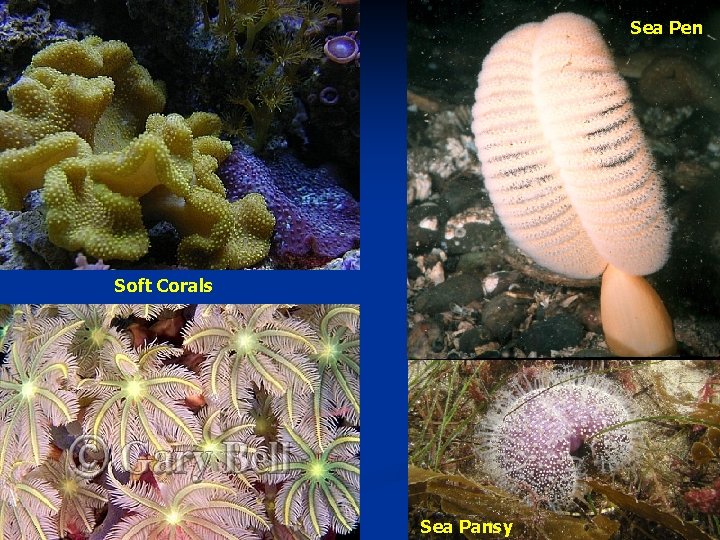
Sea Pen Soft Corals Sea Pansy
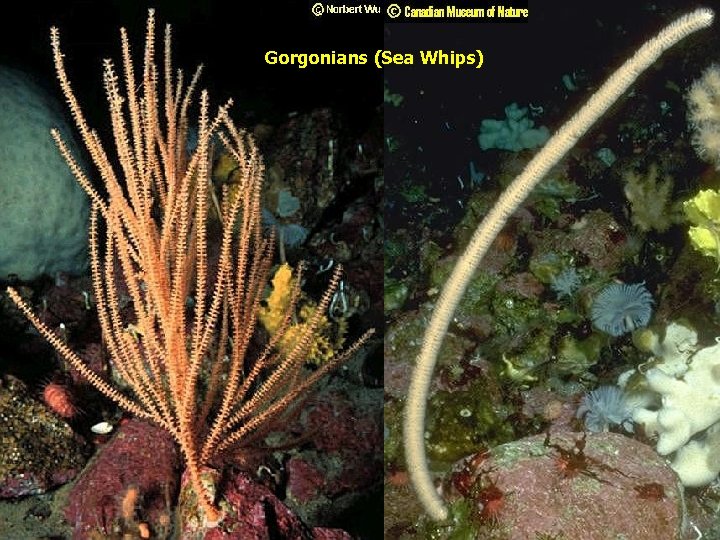
Gorgonians (Sea Whips)
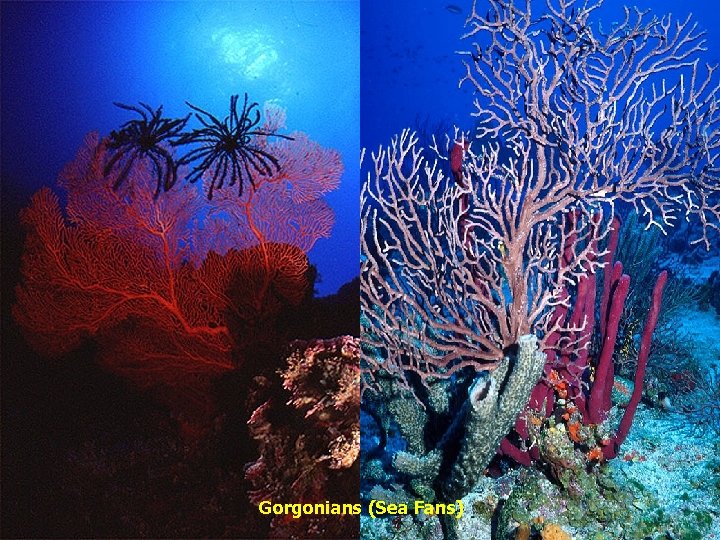
Gorgonians (Sea Fans)
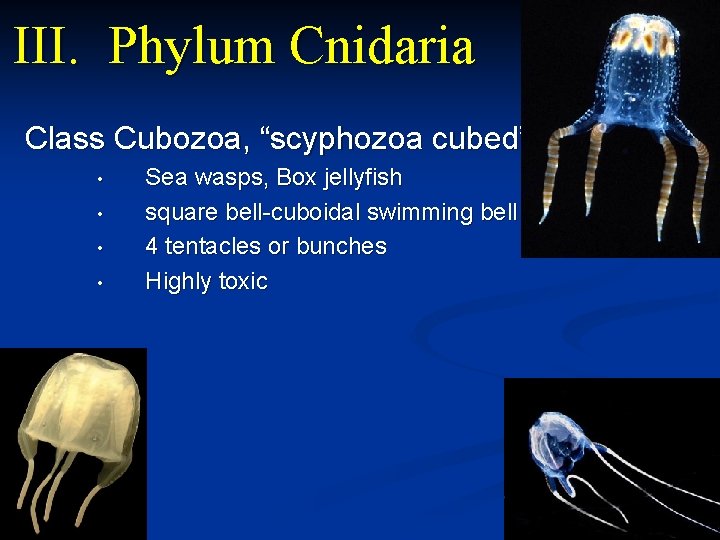
III. Phylum Cnidaria Class Cubozoa, “scyphozoa cubed” • • Sea wasps, Box jellyfish square bell-cuboidal swimming bell 4 tentacles or bunches Highly toxic
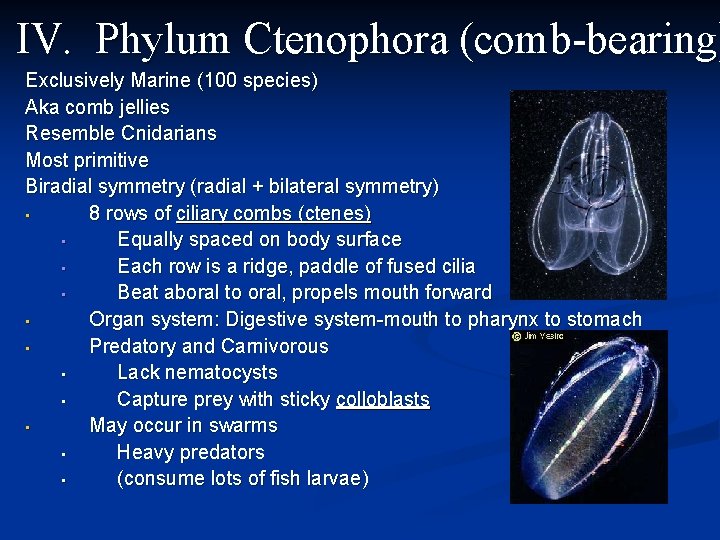
IV. Phylum Ctenophora (comb-bearing) Exclusively Marine (100 species) Aka comb jellies Resemble Cnidarians Most primitive Biradial symmetry (radial + bilateral symmetry) • 8 rows of ciliary combs (ctenes) • Equally spaced on body surface • Each row is a ridge, paddle of fused cilia • Beat aboral to oral, propels mouth forward • Organ system: Digestive system-mouth to pharynx to stomach • Predatory and Carnivorous • Lack nematocysts • Capture prey with sticky colloblasts • May occur in swarms • Heavy predators • (consume lots of fish larvae)
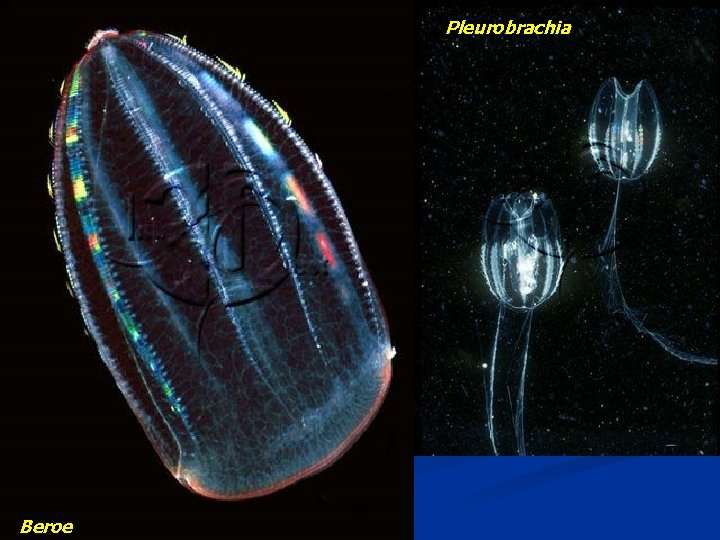
Pleurobrachia Beroe
- Slides: 20