
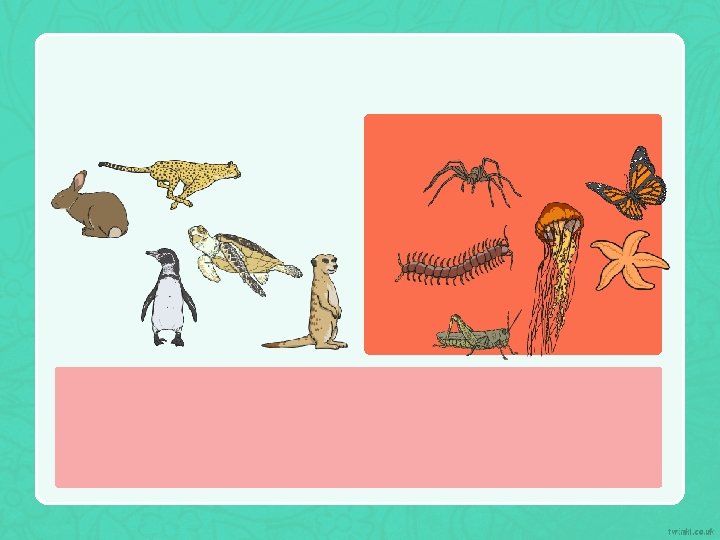
Invertebrates do not have a backbone or a
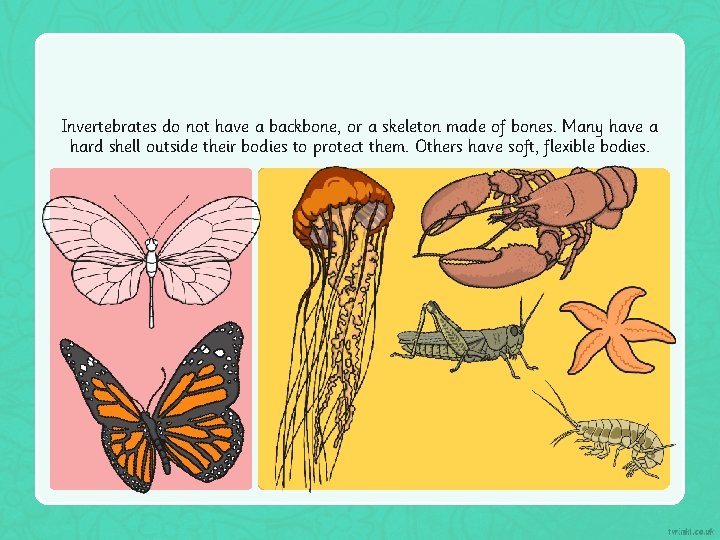
Invertebrates do not have a backbone, or a skeleton made of bones. Many have a hard shell outside their bodies to protect them. Others have soft, flexible bodies.
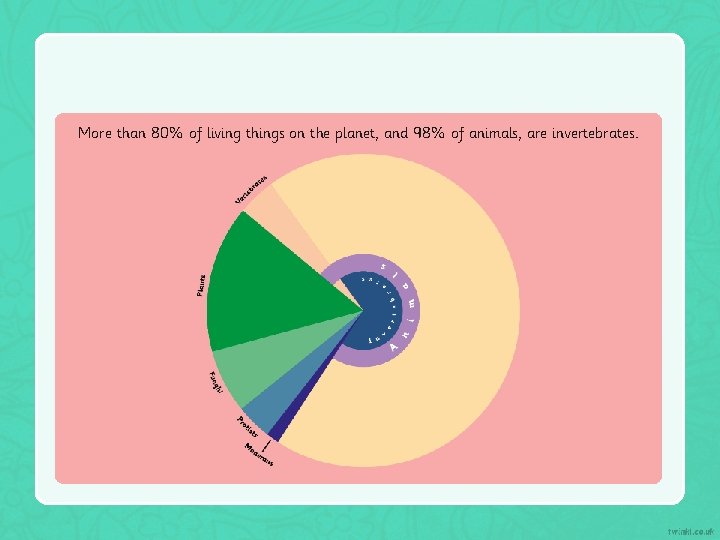
More than 80% of living things on the planet, and 98% of animals, are invertebrates.
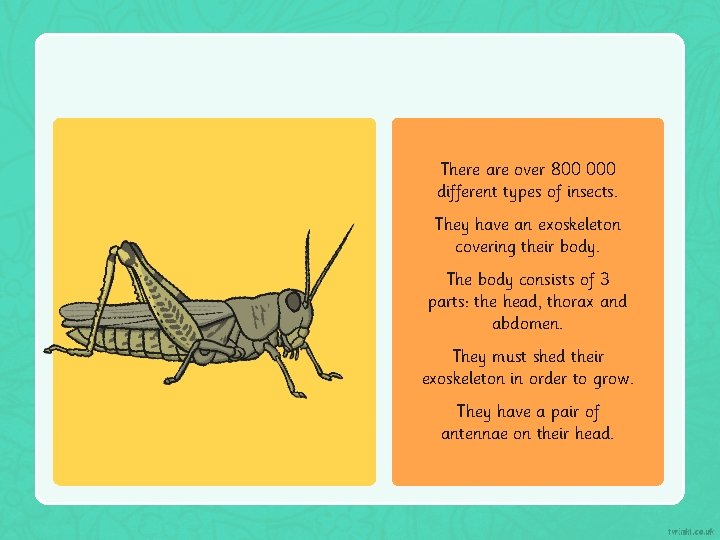
There are over 800 000 different types of insects. They have an exoskeleton covering their body. The body consists of 3 parts: the head, thorax and abdomen. They must shed their exoskeleton in order to grow. They have a pair of antennae on their head.
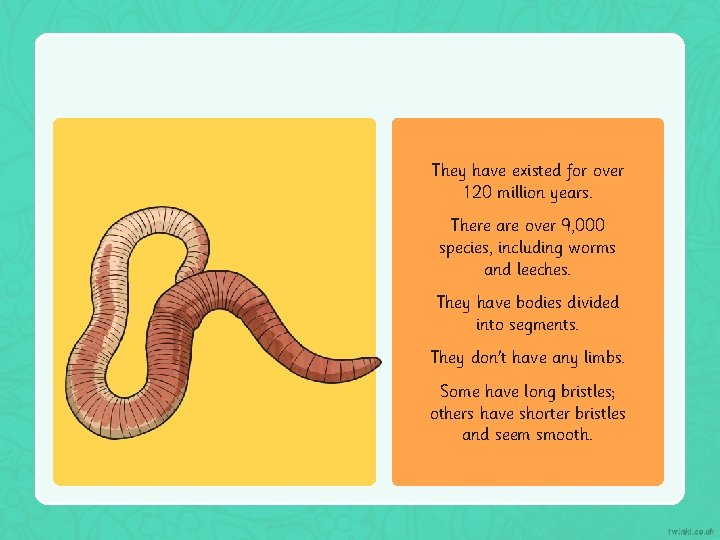
They have existed for over 120 million years. There are over 9, 000 species, including worms and leeches. They have bodies divided into segments. They don't have any limbs. Some have long bristles; others have shorter bristles and seem smooth.
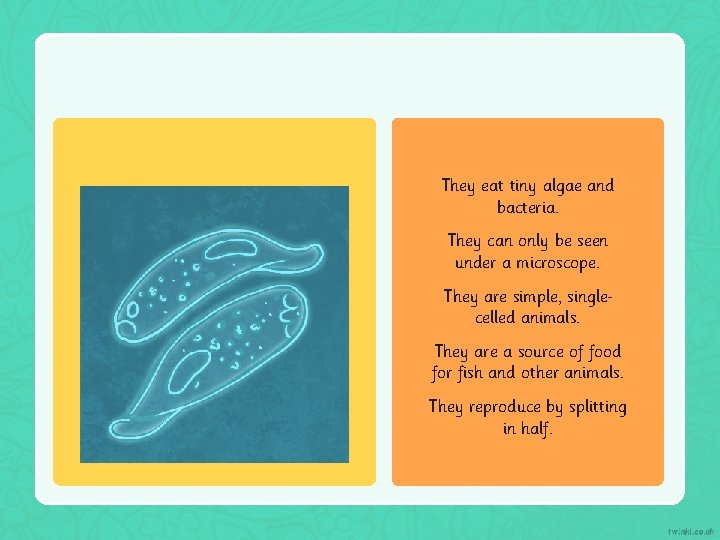
They eat tiny algae and bacteria. They can only be seen under a microscope. They are simple, single celled animals. They are a source of food for fish and other animals. They reproduce by splitting in half.
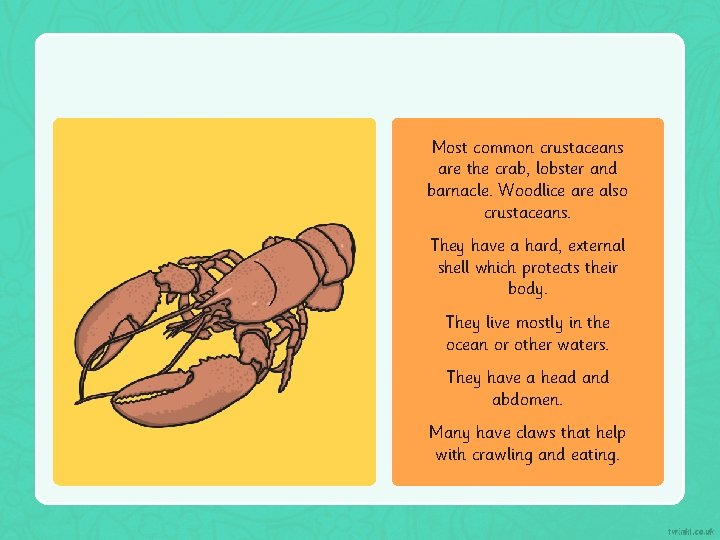
Most common crustaceans are the crab, lobster and barnacle. Woodlice are also crustaceans. They have a hard, external shell which protects their body. They live mostly in the ocean or other waters. They have a head and abdomen. Many have claws that help with crawling and eating.
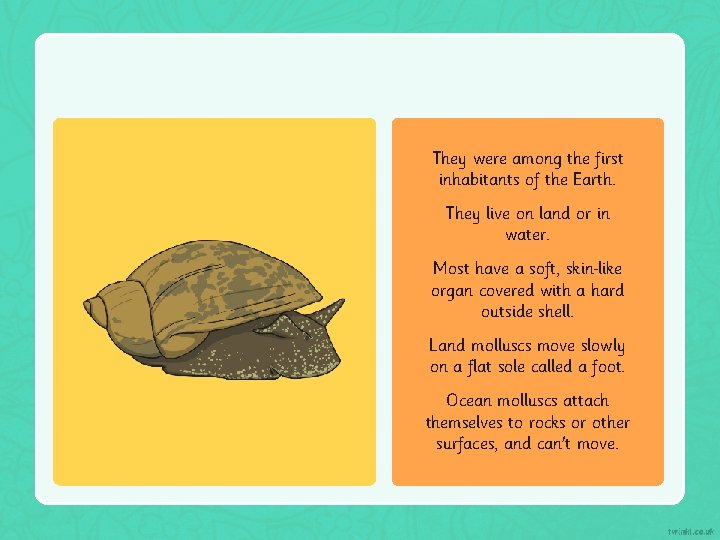
They were among the first inhabitants of the Earth. They live on land or in water. Most have a soft, skin like organ covered with a hard outside shell. Land molluscs move slowly on a flat sole called a foot. Ocean molluscs attach themselves to rocks or other surfaces, and can't move.
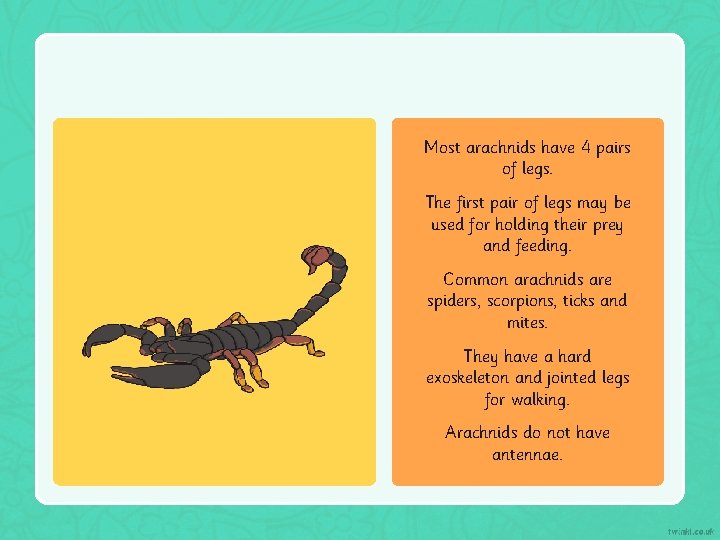
Most arachnids have 4 pairs of legs. The first pair of legs may be used for holding their prey and feeding. Common arachnids are spiders, scorpions, ticks and mites. They have a hard exoskeleton and jointed legs for walking. Arachnids do not have antennae.
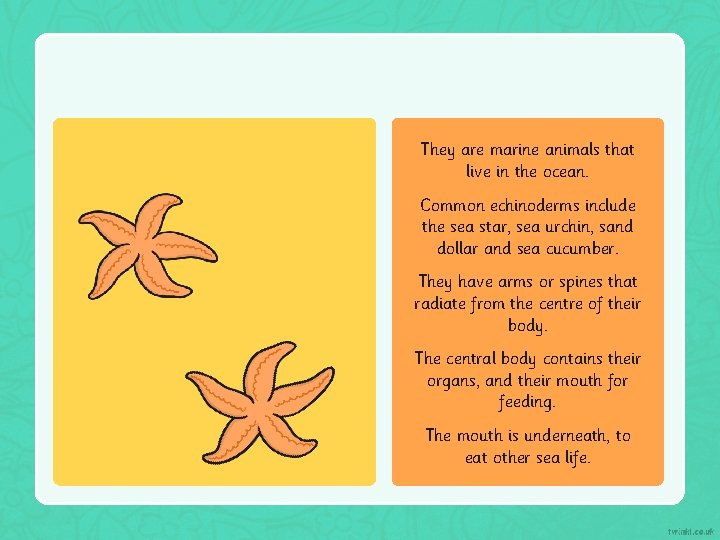
They are marine animals that live in the ocean. Common echinoderms include the sea star, sea urchin, sand dollar and sea cucumber. They have arms or spines that radiate from the centre of their body. The central body contains their organs, and their mouth for feeding. The mouth is underneath, to eat other sea life.
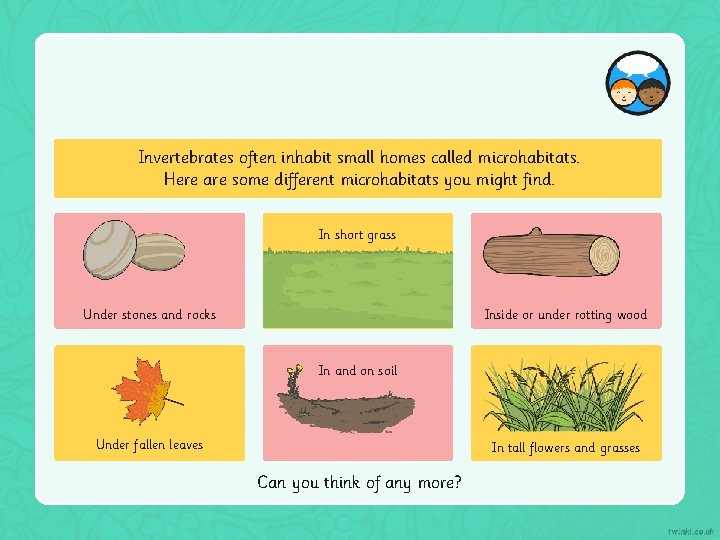
Invertebrates often inhabit small homes called microhabitats. Here are some different microhabitats you might find. In short grass Under stones and rocks Inside or under rotting wood In and on soil Under fallen leaves In tall flowers and grasses Can you think of any more?

With your partner, find, identify and name invertebrates, using your activity sheet. Each pair may carefully capture an invertebrate specimen to bring back to class for further study.
- Slides: 13