
INVERTEBRATES Chapter 24 27 Organizing Your Knowledge Plants
INVERTEBRATES Chapter 24 -27
Organizing Your Knowledge Plants Animals Fungi Protists Prokaryotes July 22, 2012 Footer text here 2
Organizing Your Knowledge Draw a black line between organisms that have simple cells and those that have complex cells. Draw a blue line between organisms that are primarily unicellular and those that are multicellular Separate heterotrophic and autotrophic multicellular organisms with a green line Draw a red line between those heterotrophs that ingest their food and then digest it July 22, 2012 Footer text here 3
Animal Characteristics ■ Feeding and Digestion – Animals – Heterotrophic (feed on other organisms) ■ Support – Invertebrates ■ without backbone ■ Exoskeleton or Endoskeleton – Vertebrates ■ with back bone ■ Endoskeleton ■ Habitats – Live in various habitats because of variations/adaptations July 22, 2012 Footer text here 4
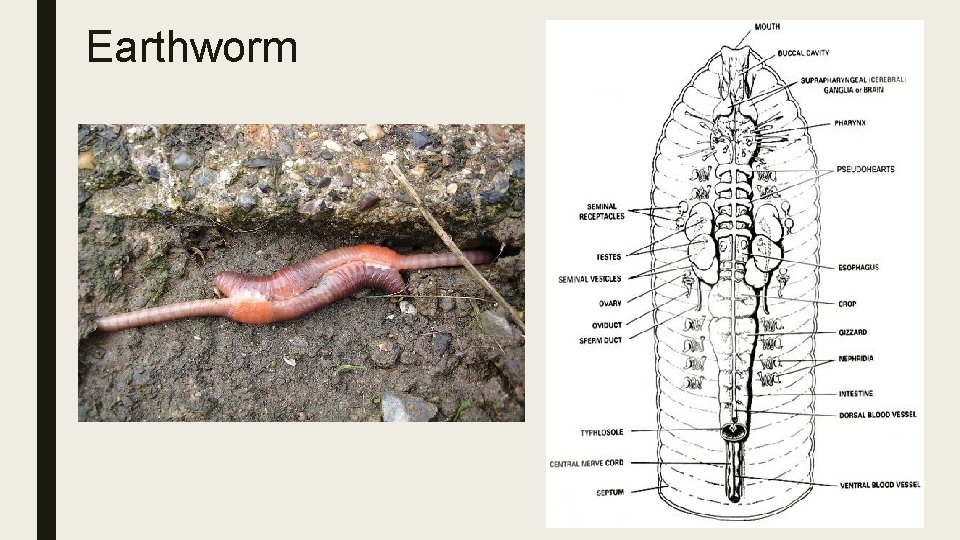
Animal Characteristics ■ Cell Structure – No cell walls – Organized into tissues (except sponges) ■ Movement ■ Reproduction – Sexual Reproduction ■ Internal and external ■ Hermaphrodites – produce egg and sperm in same animal body (earthworms) July 22, 2012 Footer text here 5
Animal Characteristics – Asexual Reproduction ■ Budding – forms as a growth on the parent ■ Fragmentation – piece breaks off and forms new individual ■ Regeneration – regrow a body part or a body ■ Parthenogenesis – female produces egg that develops without being fertilized Asexual Reproduction Video July 22, 2012 Footer text here 6
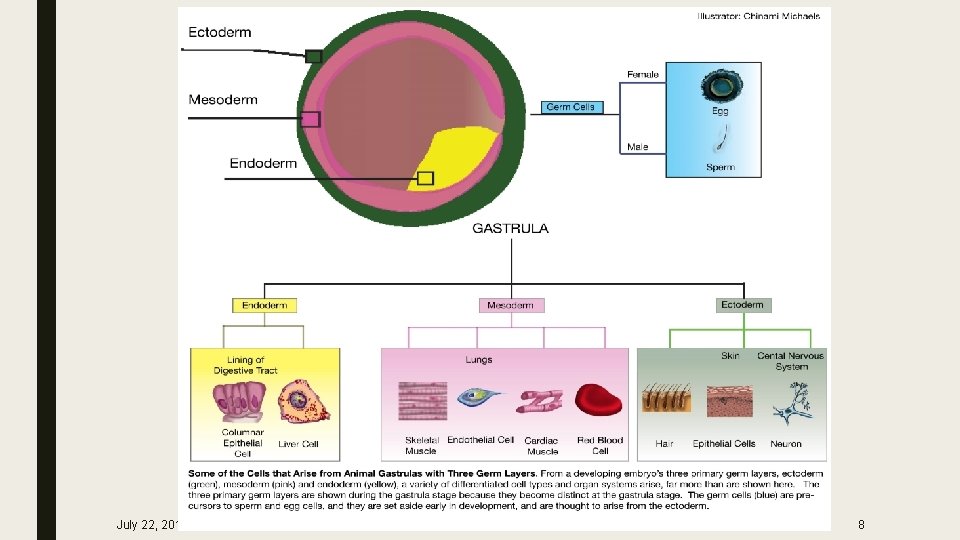
Animal Characteristics ■ Tissue Development – Ectoderm ■ Becomes skin/outer layer – Mesoderm ■ Middle / muscles, skeleton, gondads, kidneys, circulatory system – Endoderm ■ Innermost / lining of digestive tract, liver, pancreas, lungs July 22, 2012 Footer text here 7
July 22, 2012 Footer text here 8
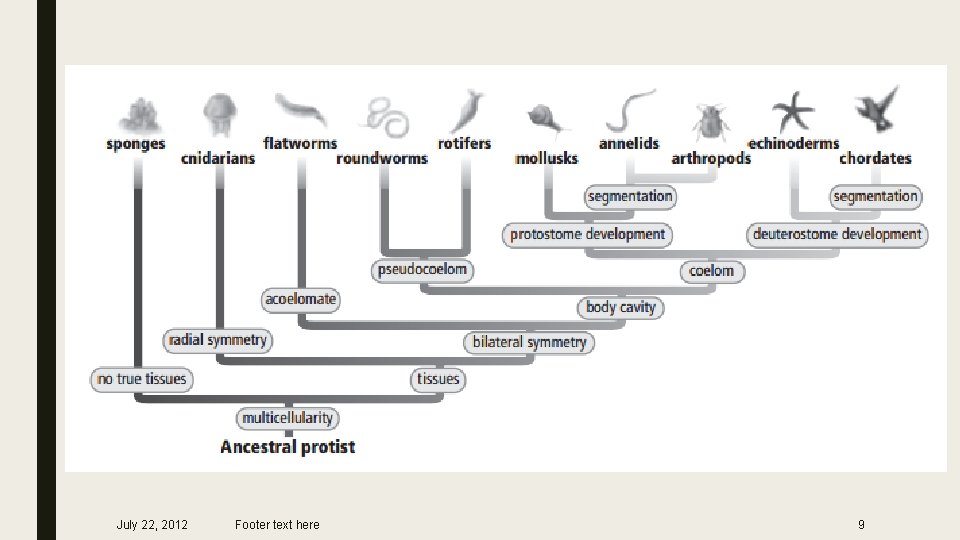
July 22, 2012 Footer text here 9
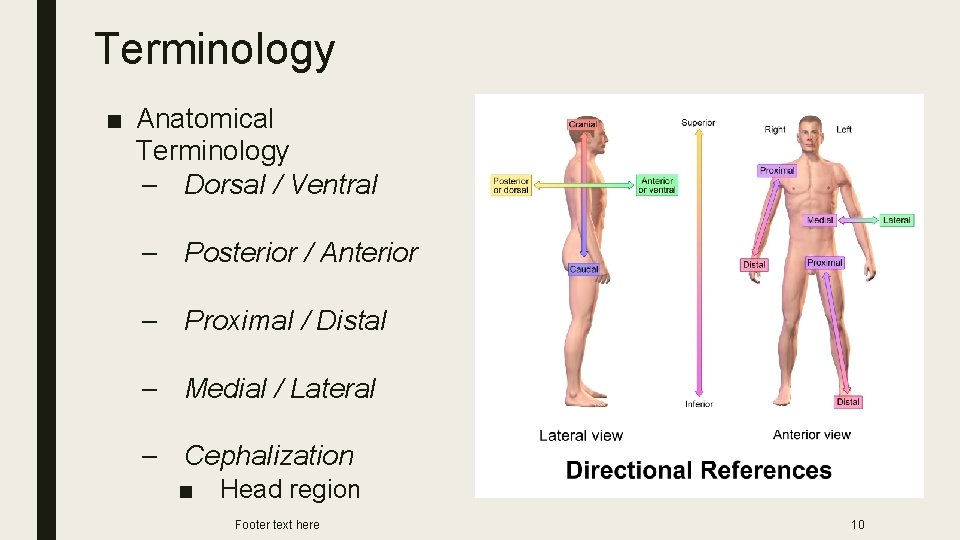
Terminology ■ Anatomical Terminology – Dorsal / Ventral – Posterior / Anterior – Proximal / Distal – Medial / Lateral – Cephalization ■ Head region Footer text here 10

Ways to Group ■ Symmetry ■ Body Cavities ■ Development July 22, 2012 Footer text here 11
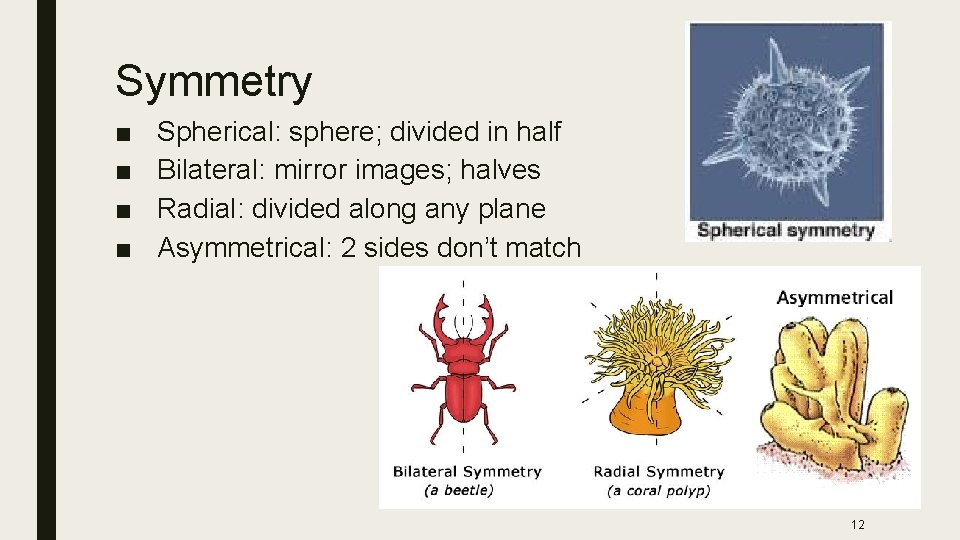
Symmetry ■ ■ Spherical: sphere; divided in half Bilateral: mirror images; halves Radial: divided along any plane Asymmetrical: 2 sides don’t match 12

Radial / Bilateral Symmetry Activity July 22, 2012 Footer text here 13
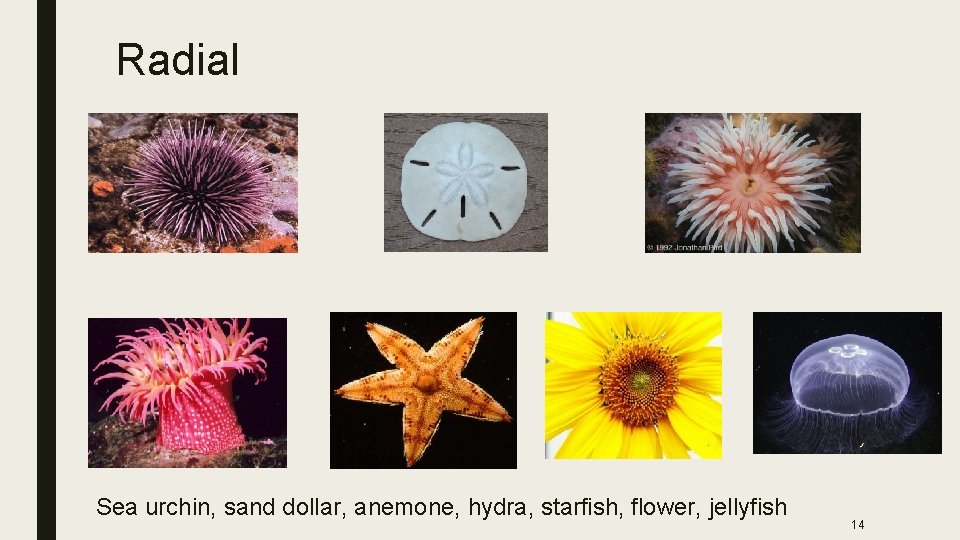
Radial Sea urchin, sand dollar, anemone, hydra, starfish, flower, jellyfish 14
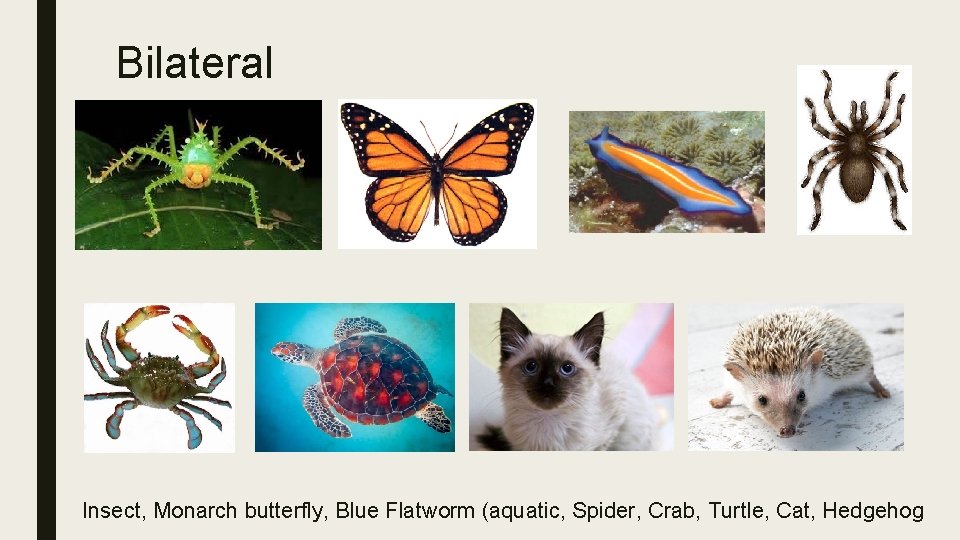
Bilateral Insect, Monarch butterfly, Blue Flatworm (aquatic, Spider, Crab, Turtle, Cat, Hedgehog
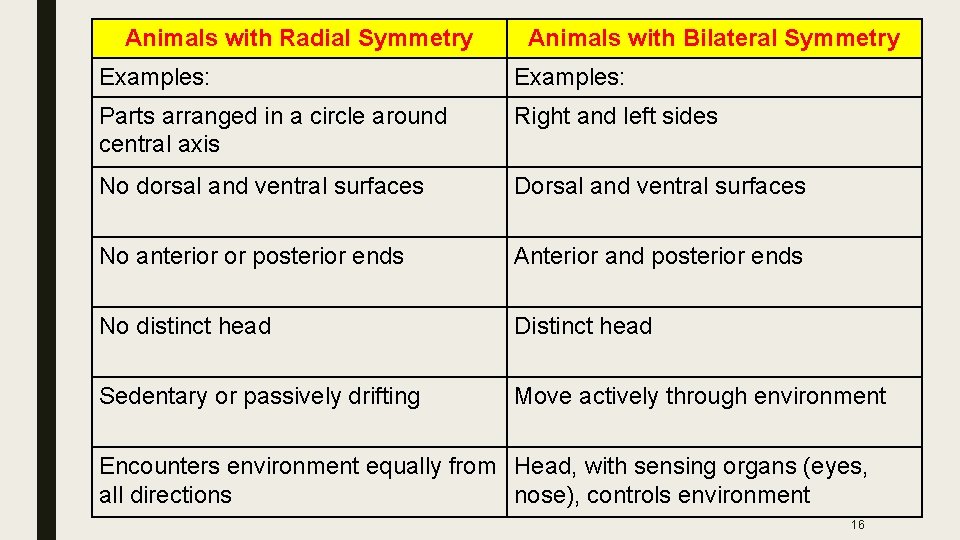
Animals with Radial Symmetry Animals with Bilateral Symmetry Examples: Parts arranged in a circle around central axis Right and left sides No dorsal and ventral surfaces Dorsal and ventral surfaces No anterior or posterior ends Anterior and posterior ends No distinct head Distinct head Sedentary or passively drifting Move actively through environment Encounters environment equally from Head, with sensing organs (eyes, all directions nose), controls environment 16
Body Cavities Types of Body Cavities July 22, 2012 Footer text here 17
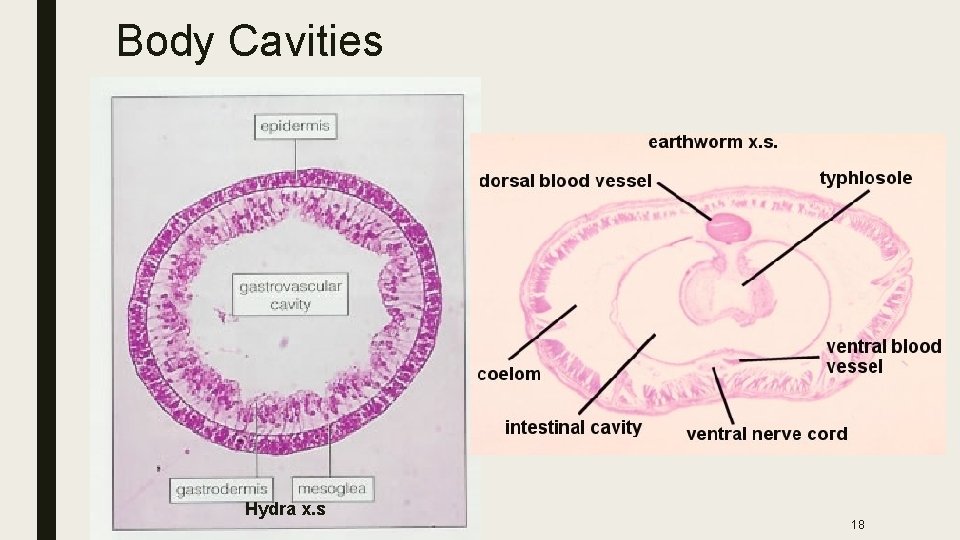
Body Cavities Hydra x. s 18
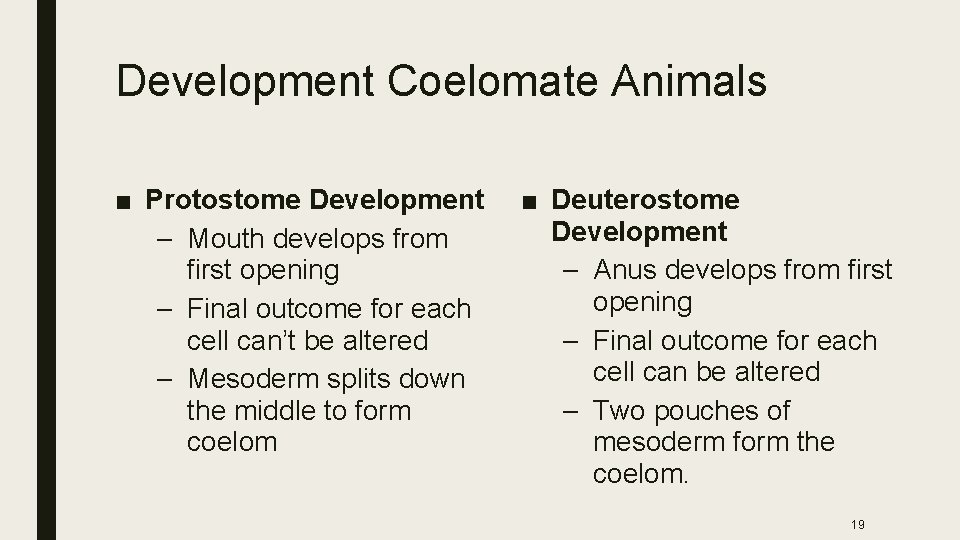
Development Coelomate Animals ■ Protostome Development – Mouth develops from first opening – Final outcome for each cell can’t be altered – Mesoderm splits down the middle to form coelom ■ Deuterostome Development – Anus develops from first opening – Final outcome for each cell can be altered – Two pouches of mesoderm form the coelom. 19
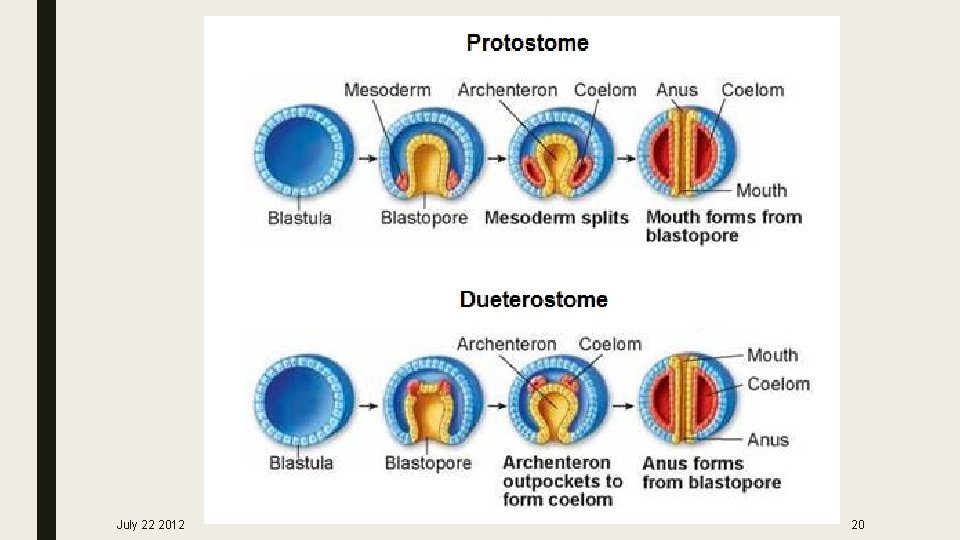
July 22 2012 20
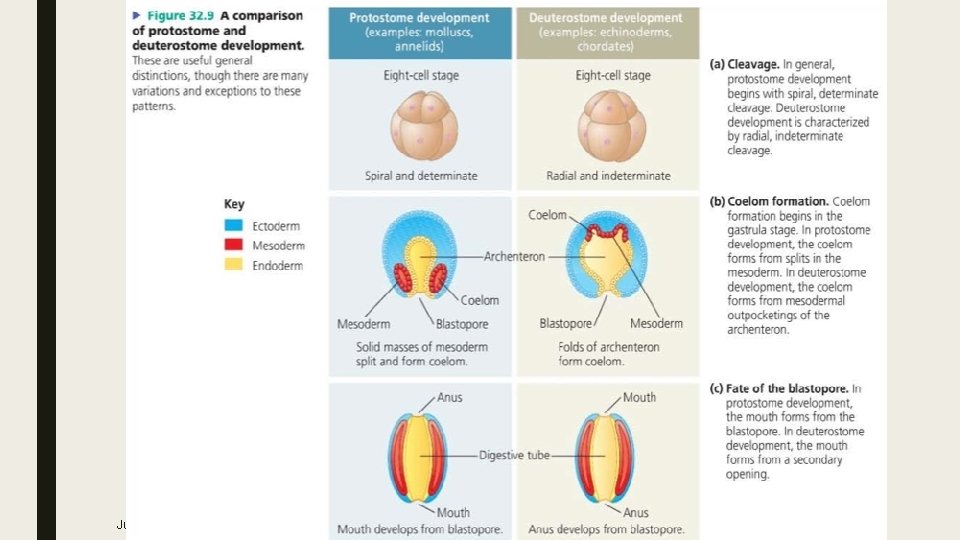
July 22, 2012 Footer text here 21
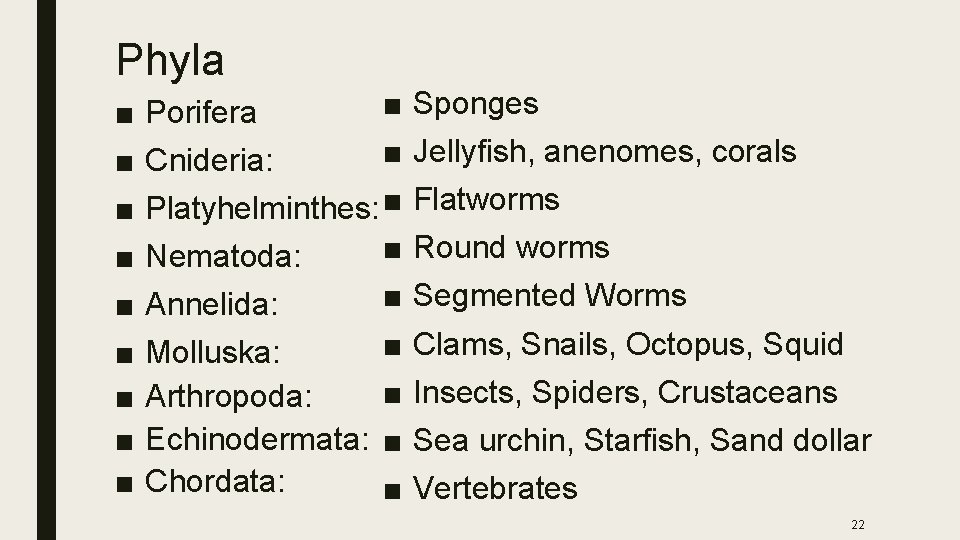
Phyla ■ ■ ■ Cnideria: Platyhelminthes: ■ ■ Nematoda: ■ Annelida: ■ Molluska: ■ Arthropoda: Echinodermata: ■ Chordata: ■ Porifera Sponges Jellyfish, anenomes, corals Flatworms Round worms Segmented Worms Clams, Snails, Octopus, Squid Insects, Spiders, Crustaceans Sea urchin, Starfish, Sand dollar Vertebrates 22
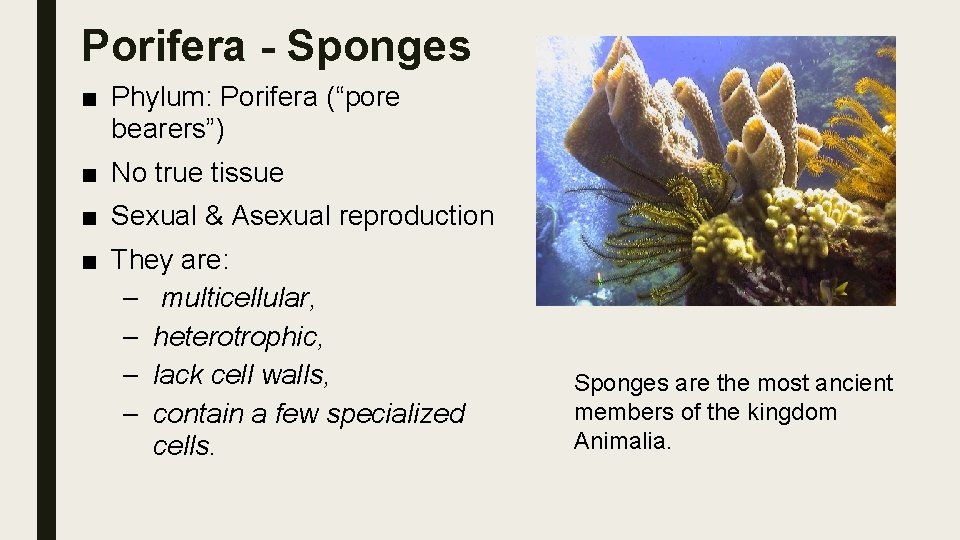
Porifera - Sponges ■ Phylum: Porifera (“pore bearers”) ■ No true tissue ■ Sexual & Asexual reproduction ■ They are: – multicellular, – heterotrophic, – lack cell walls, – contain a few specialized cells. Sponges are the most ancient members of the kingdom Animalia.
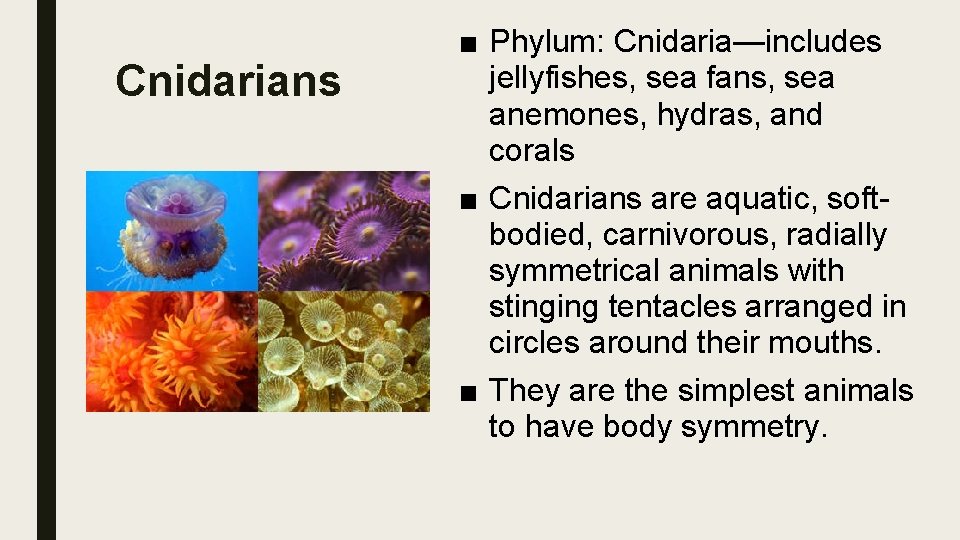
Cnidarians ■ Phylum: Cnidaria—includes jellyfishes, sea fans, sea anemones, hydras, and corals ■ Cnidarians are aquatic, softbodied, carnivorous, radially symmetrical animals with stinging tentacles arranged in circles around their mouths. ■ They are the simplest animals to have body symmetry.
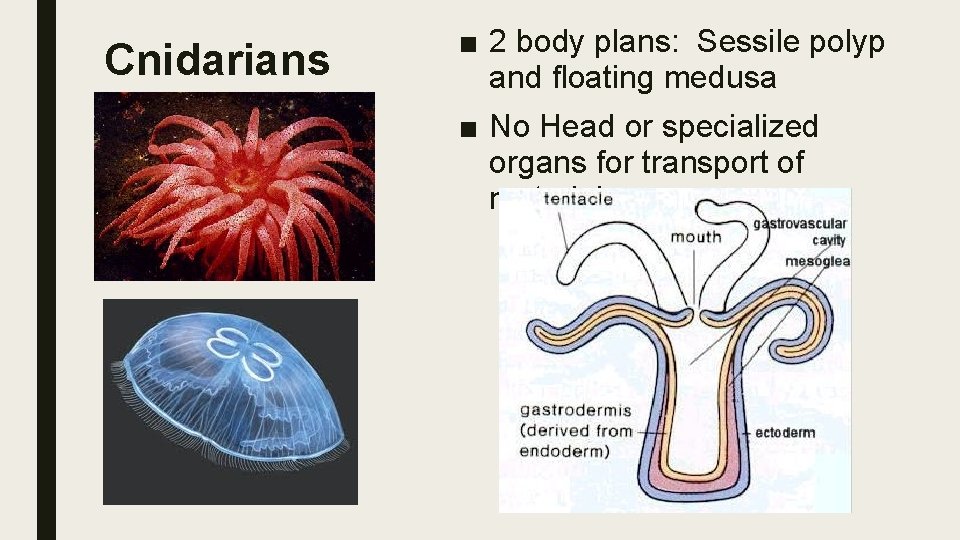
Cnidarians ■ 2 body plans: Sessile polyp and floating medusa ■ No Head or specialized organs for transport of materials

Moon Jelly Life Cycle Video Amazing Jellies Monterey Bay Live Jelly Cam 1/12/2022 26
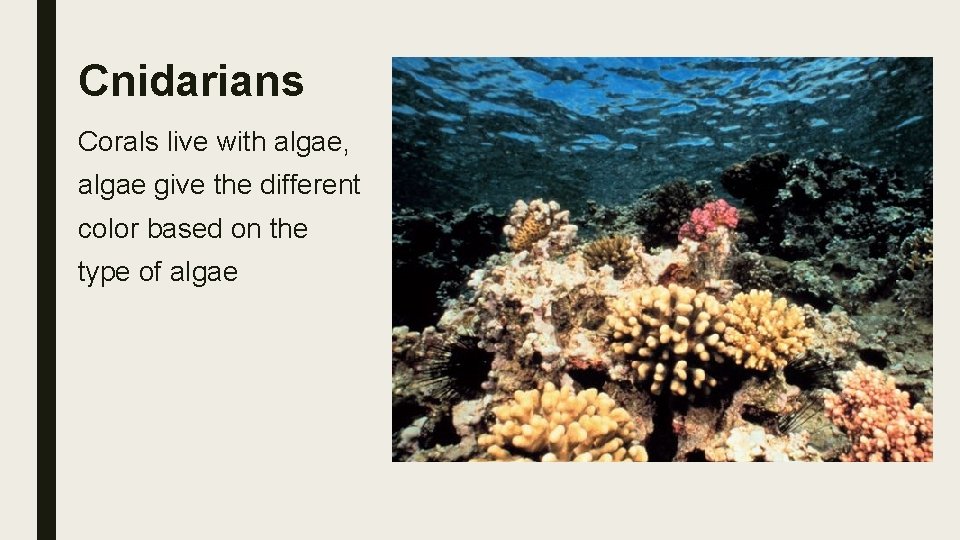
Cnidarians Corals live with algae, algae give the different color based on the type of algae
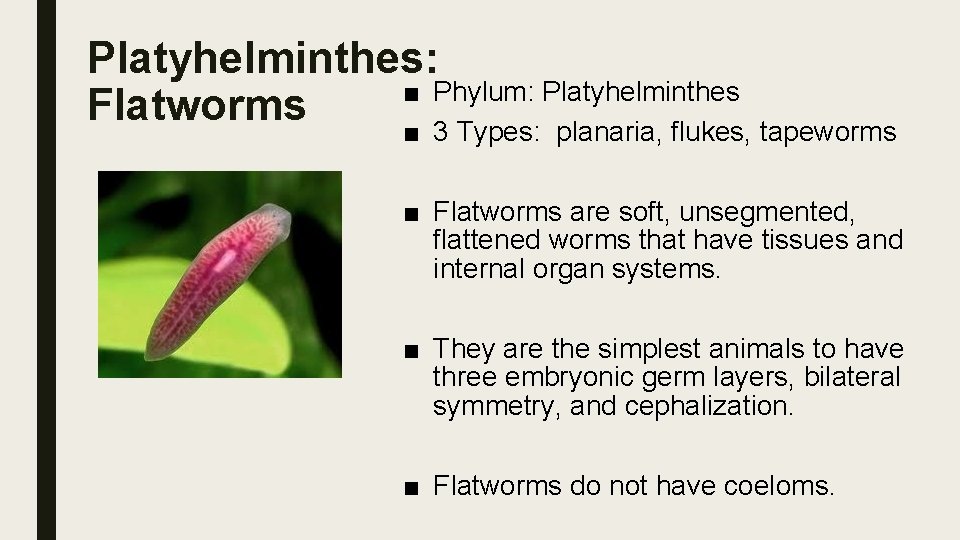
Platyhelminthes: ■ Phylum: Platyhelminthes Flatworms ■ 3 Types: planaria, flukes, tapeworms ■ Flatworms are soft, unsegmented, flattened worms that have tissues and internal organ systems. ■ They are the simplest animals to have three embryonic germ layers, bilateral symmetry, and cephalization. ■ Flatworms do not have coeloms.

Watch the following video and write a “transcript” of what is being said. Planaria II Tapeworm 1/12/2022 29
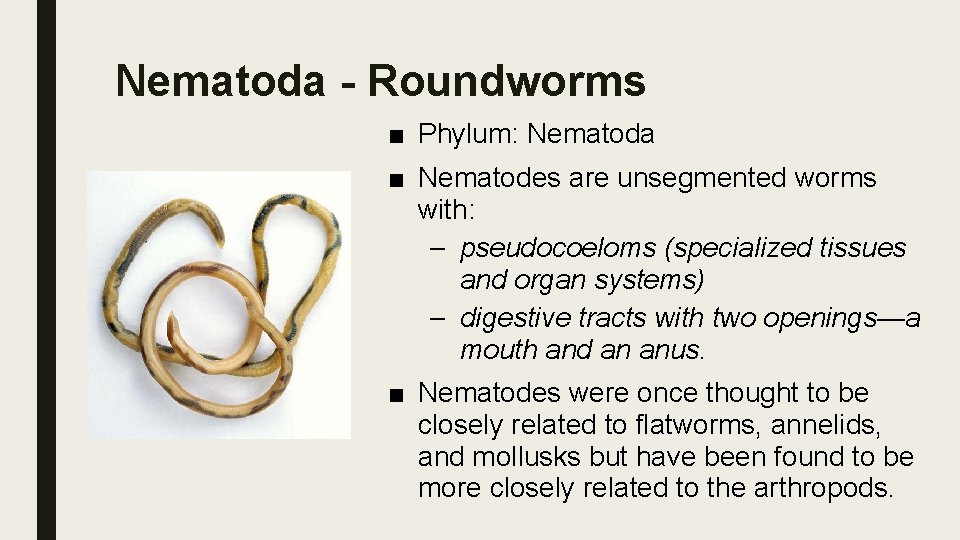
Nematoda - Roundworms ■ Phylum: Nematoda ■ Nematodes are unsegmented worms with: – pseudocoeloms (specialized tissues and organ systems) – digestive tracts with two openings—a mouth and an anus. ■ Nematodes were once thought to be closely related to flatworms, annelids, and mollusks but have been found to be more closely related to the arthropods.
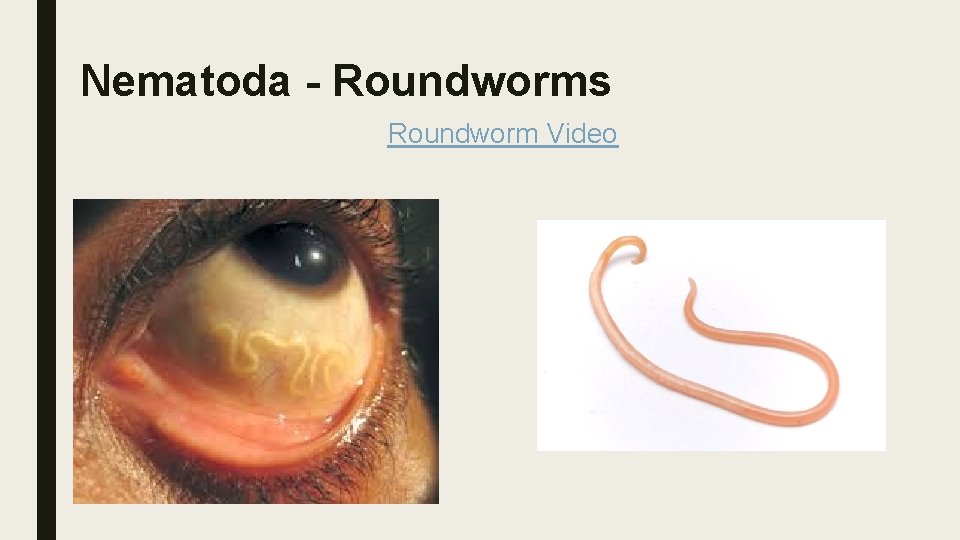
Nematoda - Roundworms Roundworm Video
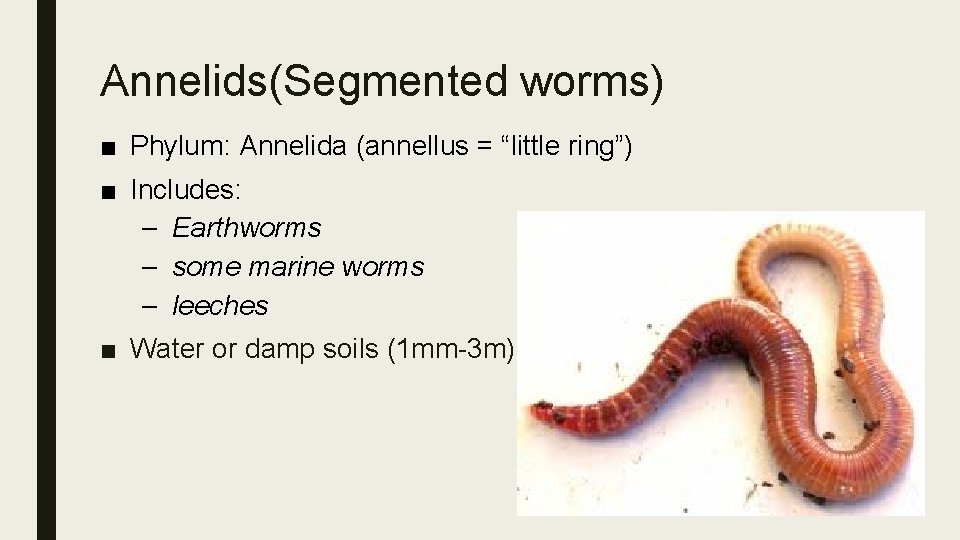
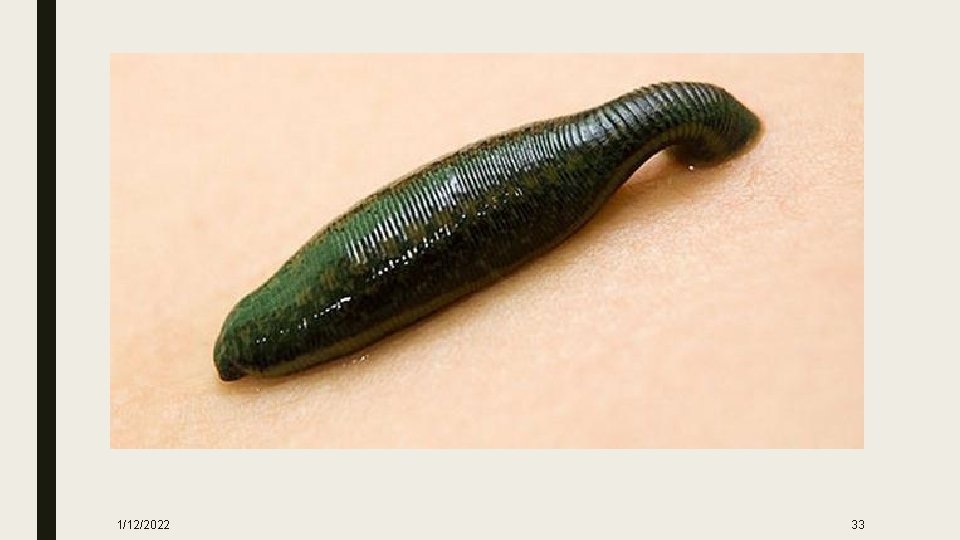
Annelids(Segmented worms) ■ Phylum: Annelida (annellus = “little ring”) ■ Includes: – Earthworms – some marine worms – leeches ■ Water or damp soils (1 mm-3 m)
1/12/2022 33
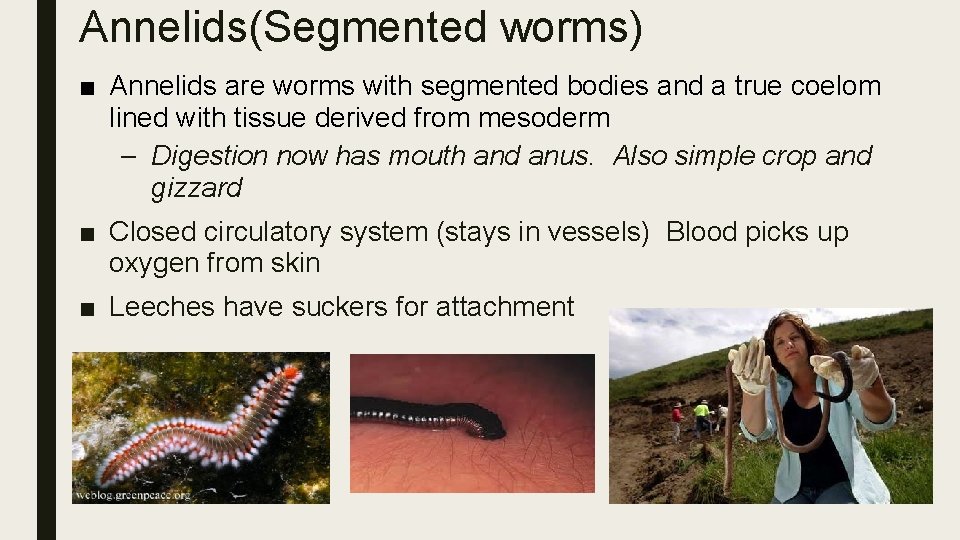
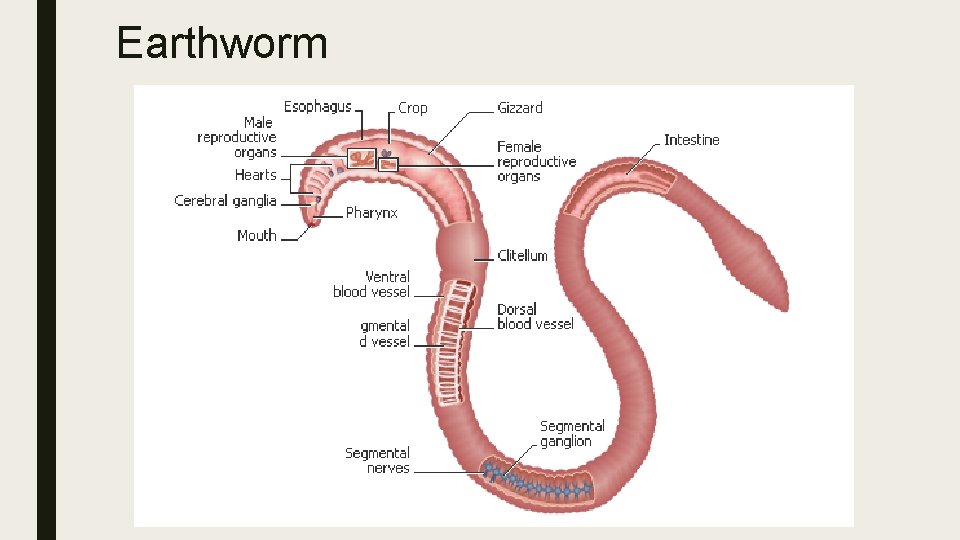
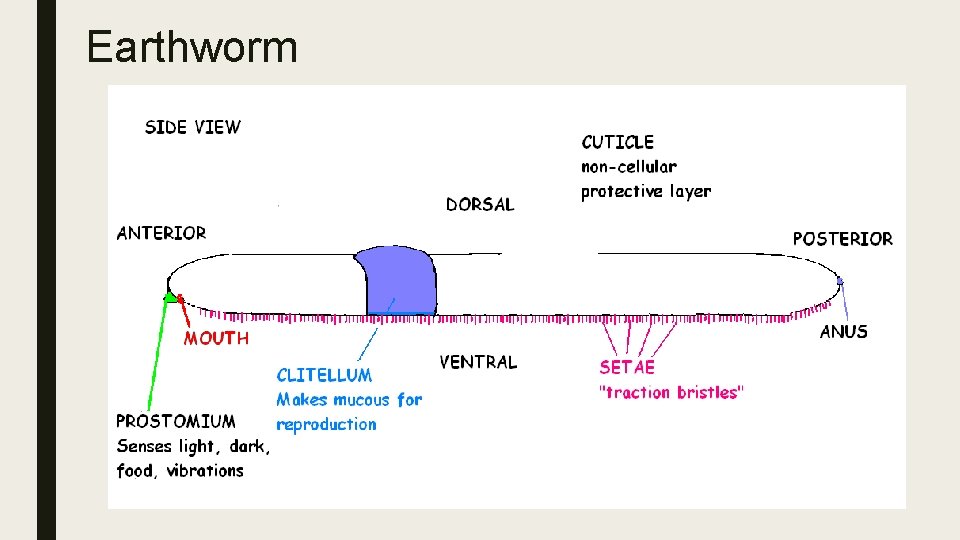
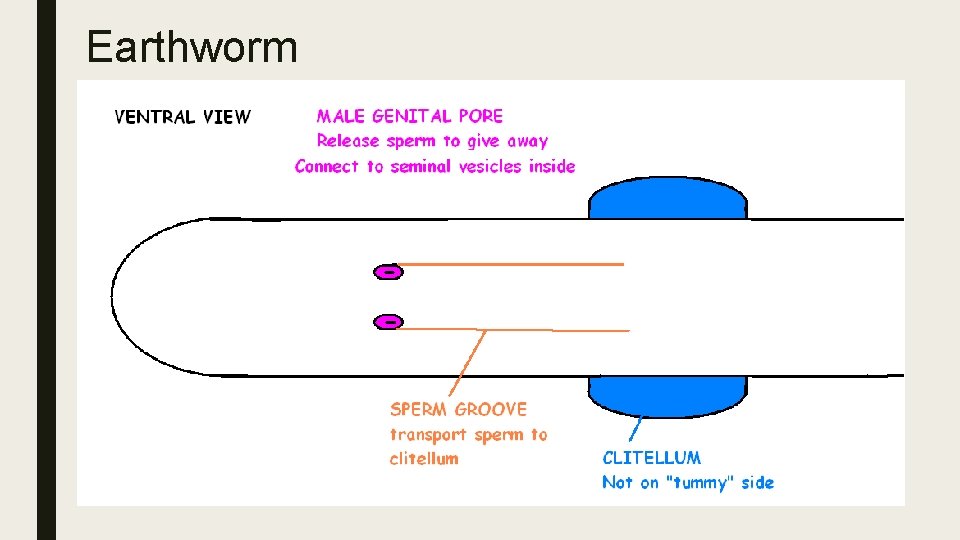
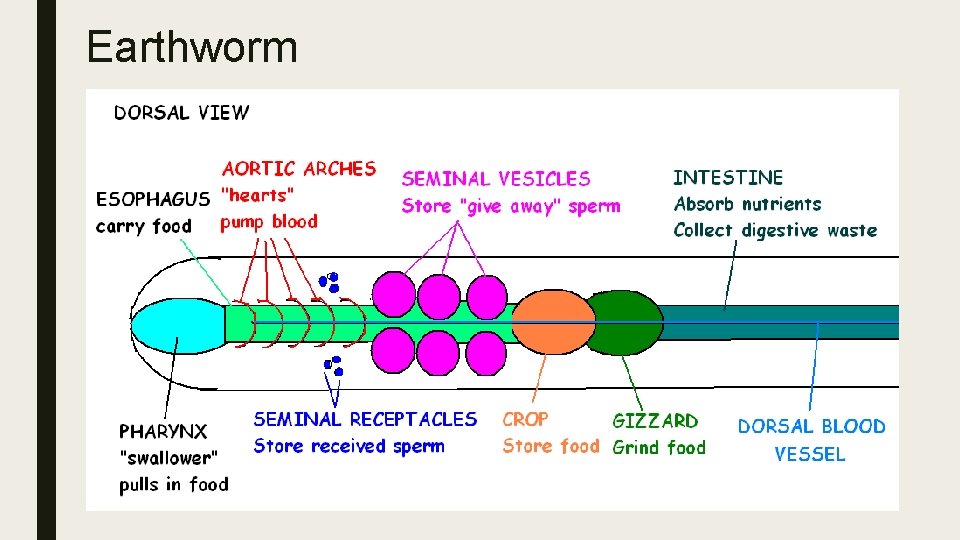
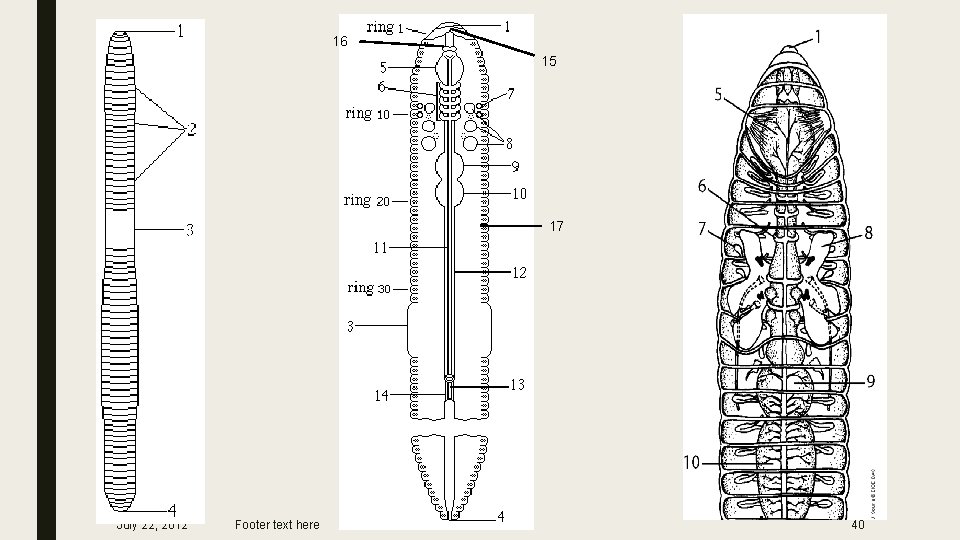
Annelids(Segmented worms) ■ Annelids are worms with segmented bodies and a true coelom lined with tissue derived from mesoderm – Digestion now has mouth and anus. Also simple crop and gizzard ■ Closed circulatory system (stays in vessels) Blood picks up oxygen from skin ■ Leeches have suckers for attachment
Earthworm
Earthworm
Earthworm
Earthworm
Earthworm
16 15 17 July 22, 2012 Footer text here 40
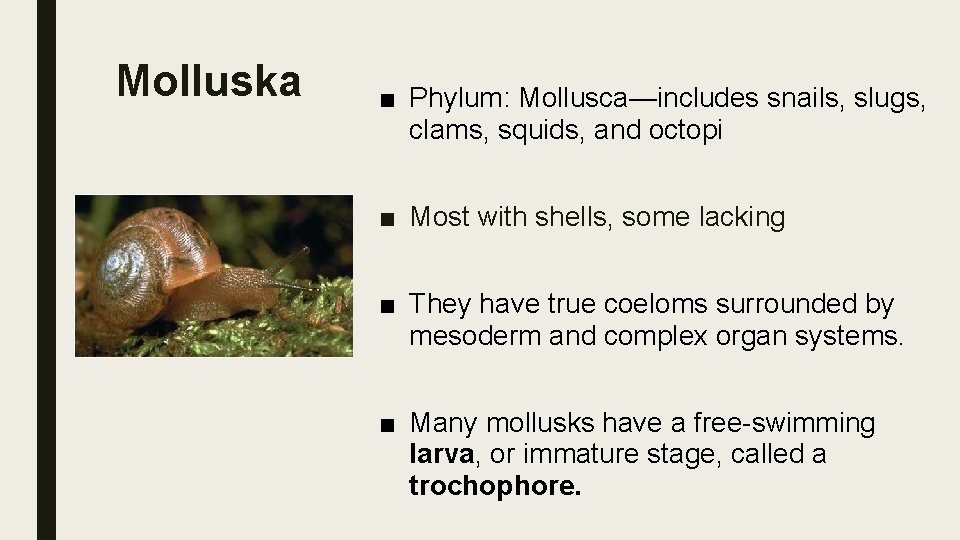
Molluska ■ Phylum: Mollusca—includes snails, slugs, clams, squids, and octopi ■ Most with shells, some lacking ■ They have true coeloms surrounded by mesoderm and complex organ systems. ■ Many mollusks have a free-swimming larva, or immature stage, called a trochophore.
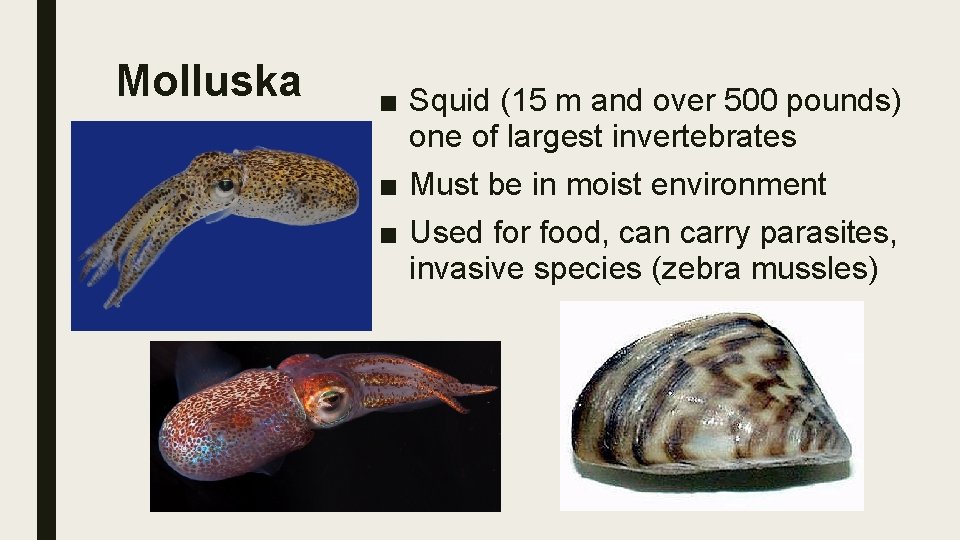
Molluska ■ Squid (15 m and over 500 pounds) one of largest invertebrates ■ Must be in moist environment ■ Used for food, can carry parasites, invasive species (zebra mussles)

Mollusks Video 1/12/2022 43
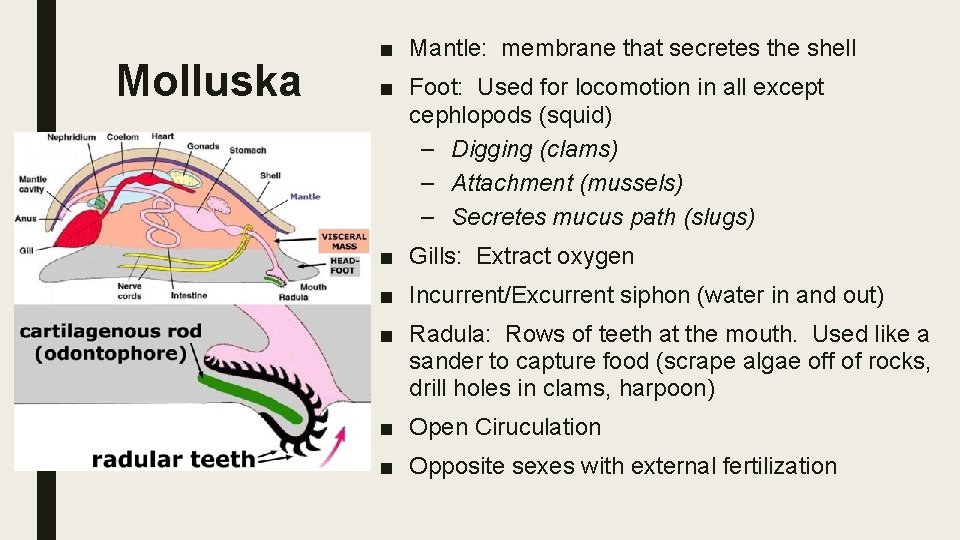
Molluska ■ Mantle: membrane that secretes the shell ■ Foot: Used for locomotion in all except cephlopods (squid) – Digging (clams) – Attachment (mussels) – Secretes mucus path (slugs) ■ Gills: Extract oxygen ■ Incurrent/Excurrent siphon (water in and out) ■ Radula: Rows of teeth at the mouth. Used like a sander to capture food (scrape algae off of rocks, drill holes in clams, harpoon) ■ Open Ciruculation ■ Opposite sexes with external fertilization
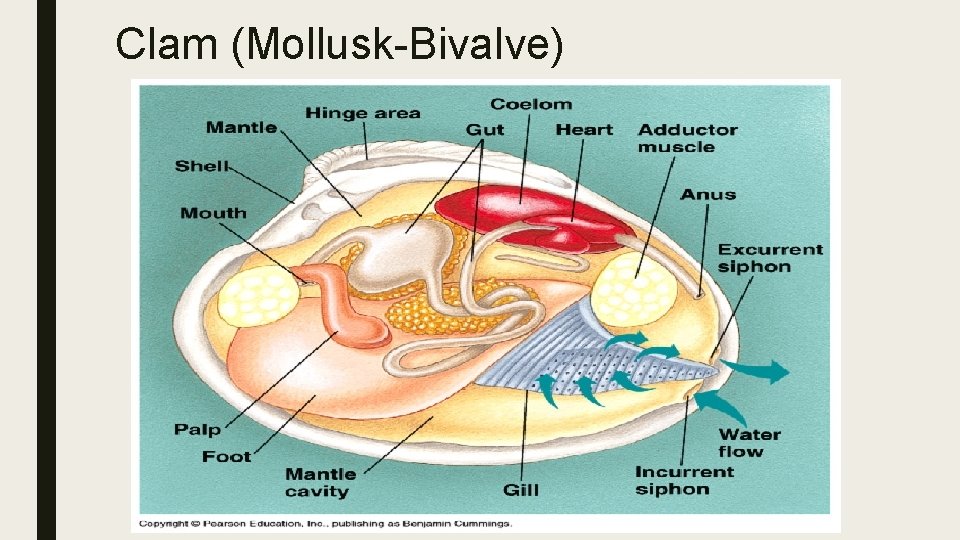
Clam (Mollusk-Bivalve)
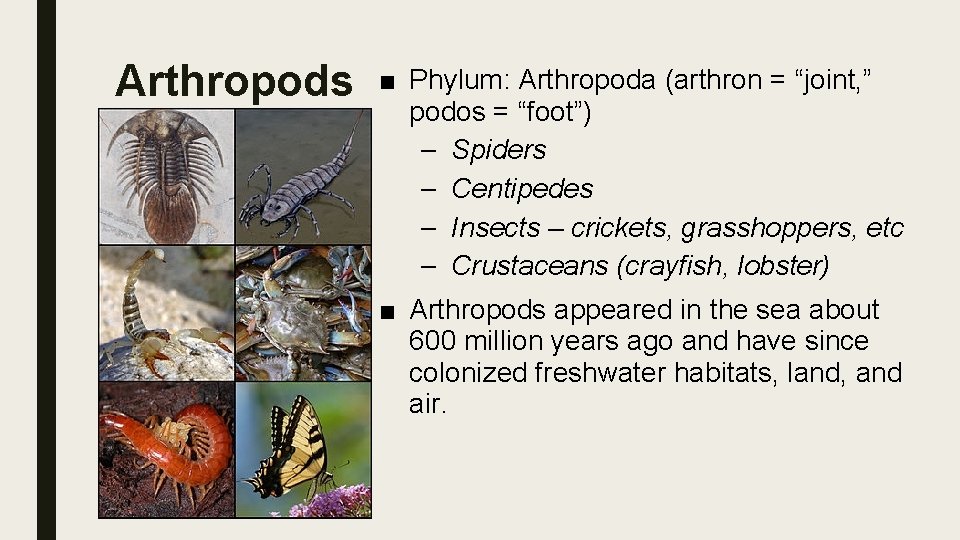
Arthropods ■ Phylum: Arthropoda (arthron = “joint, ” podos = “foot”) – Spiders – Centipedes – Insects – crickets, grasshoppers, etc – Crustaceans (crayfish, lobster) ■ Arthropods appeared in the sea about 600 million years ago and have since colonized freshwater habitats, land, and air.
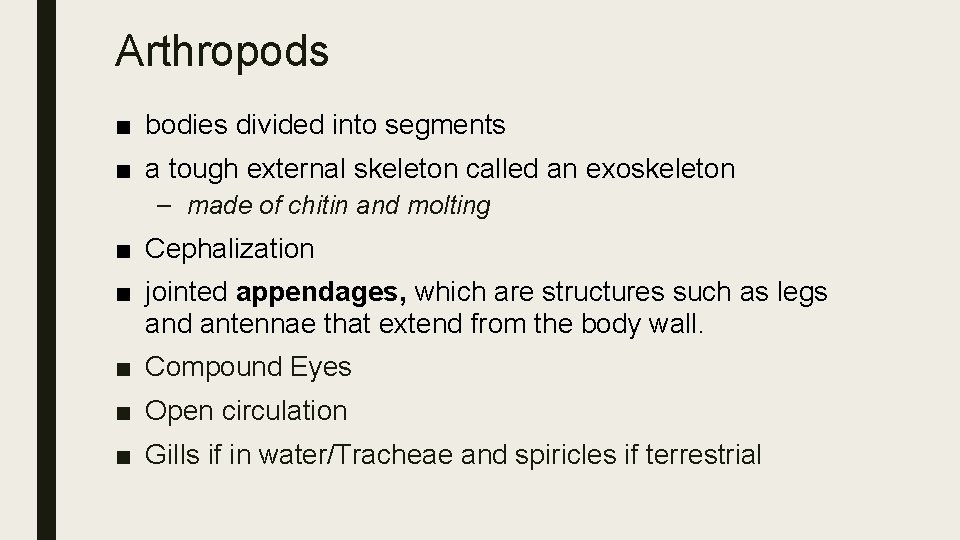
Arthropods ■ bodies divided into segments ■ a tough external skeleton called an exoskeleton – made of chitin and molting ■ Cephalization ■ jointed appendages, which are structures such as legs and antennae that extend from the body wall. ■ Compound Eyes ■ Open circulation ■ Gills if in water/Tracheae and spiricles if terrestrial
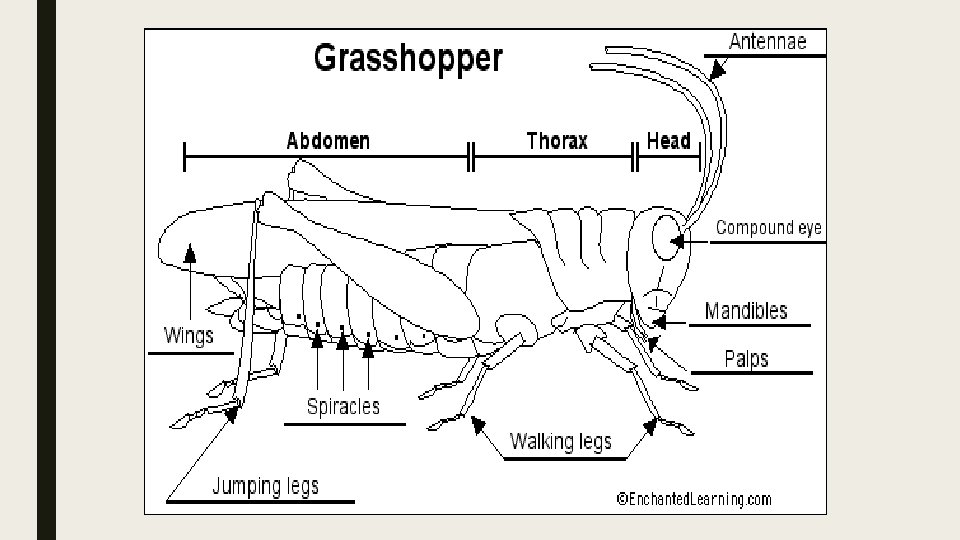
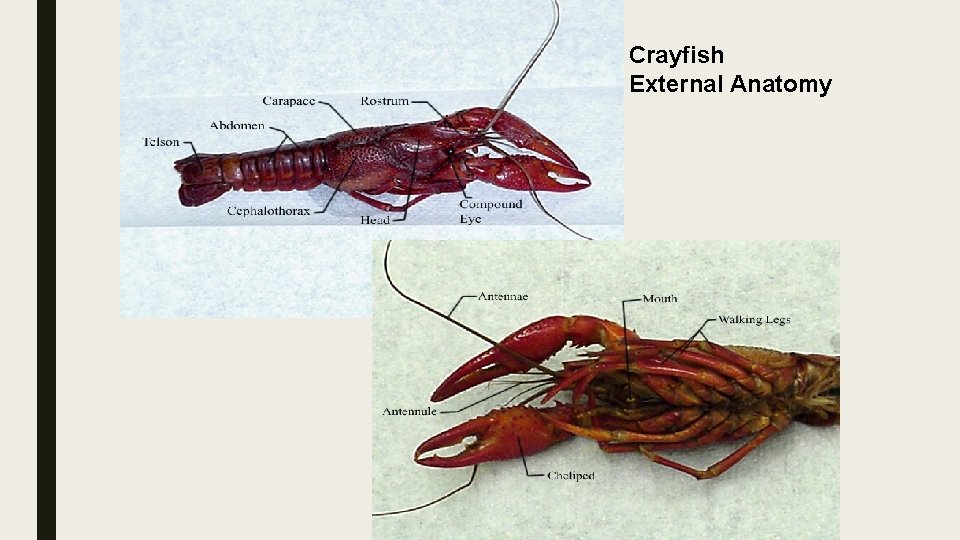
Crayfish External Anatomy
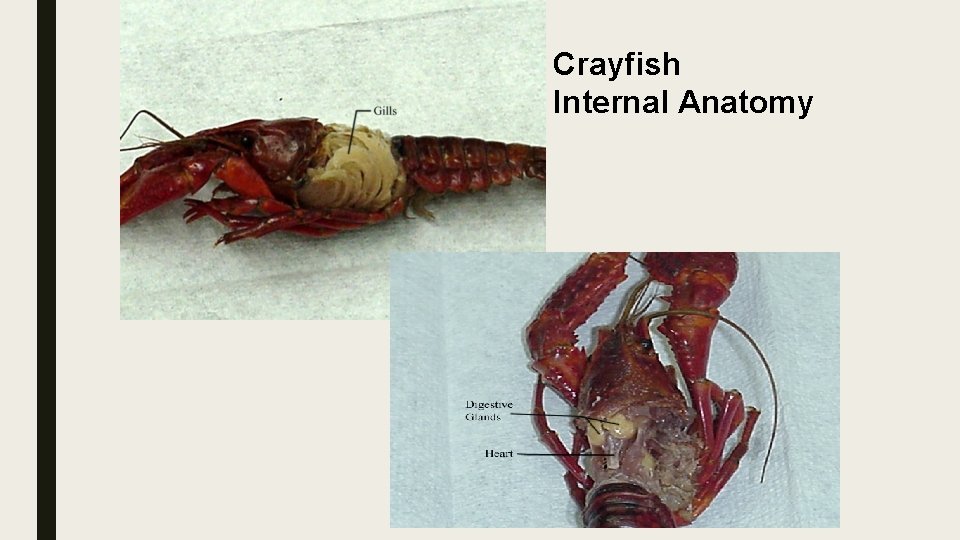
Crayfish Internal Anatomy

Echinoderms ■ Phylum: Echinodermata (echino = “spiny, ” dermis = “skin”)— includes sea stars, sea urchins, and sand dollars. ■ Echinoderms have spiny skin and an internal skeleton. ■ They also have a water vascular system—a network of waterfilled tubes that include suction-cuplike tube feet, which are used for walking and gripping prey. ■ Most exhibit five-part radial symmetry and are deuterostomes.
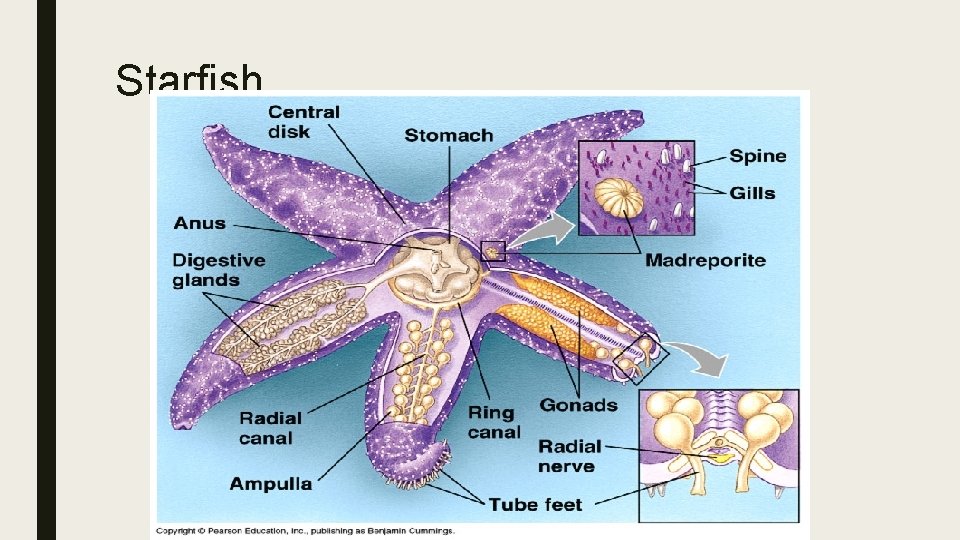
Starfish
- Slides: 52