
Invertebrate Zoology Lecture 20 Phylum Mollusca General Cephalopoda
Invertebrate Zoology Lecture 20: Phylum Mollusca General; Cephalopoda focus
Lecture outline § Phylum Mollusca «Diversity «Evolutionary relationships «Bauplan Basics «Body systems (briefly…) § Feeding/digestion § Circulation/gas exchange § Osmoregulation/excretion § Nervous system/sensory § Reproduction § Focus: Class Cephalopda «Cephalopoda diversity «Evolution of cephalopods

Class Polyplacophora: “many plates” § The chitons
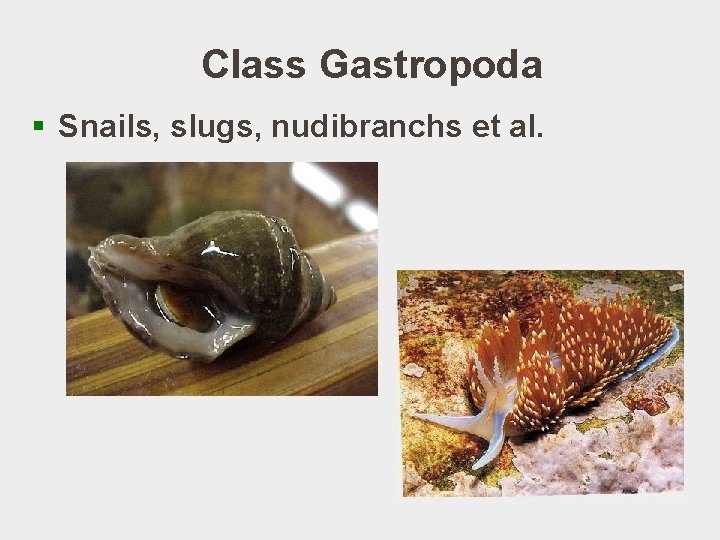
Class Gastropoda § Snails, slugs, nudibranchs et al.
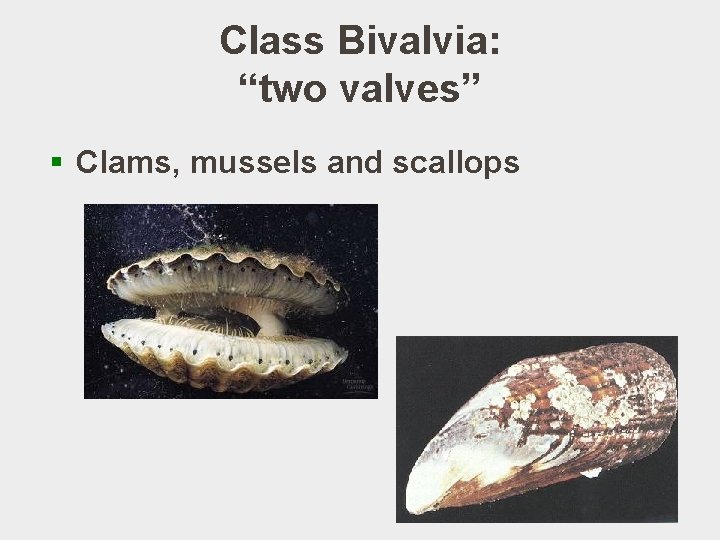
Class Bivalvia: “two valves” § Clams, mussels and scallops
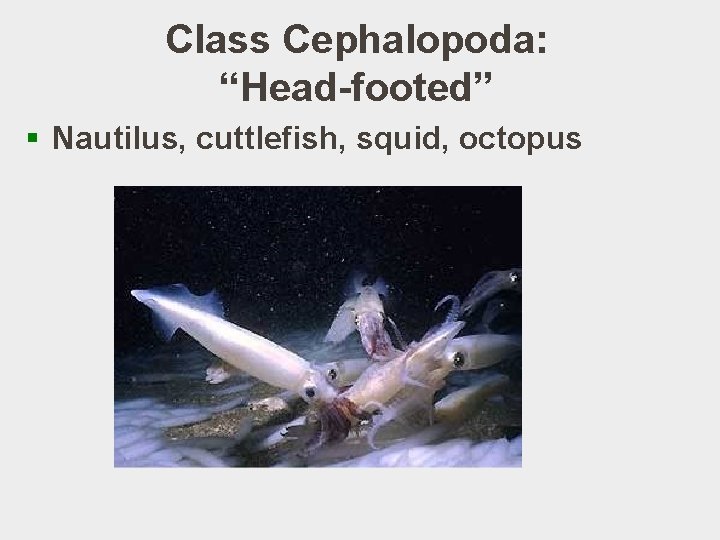
Class Cephalopoda: “Head-footed” § Nautilus, cuttlefish, squid, octopus
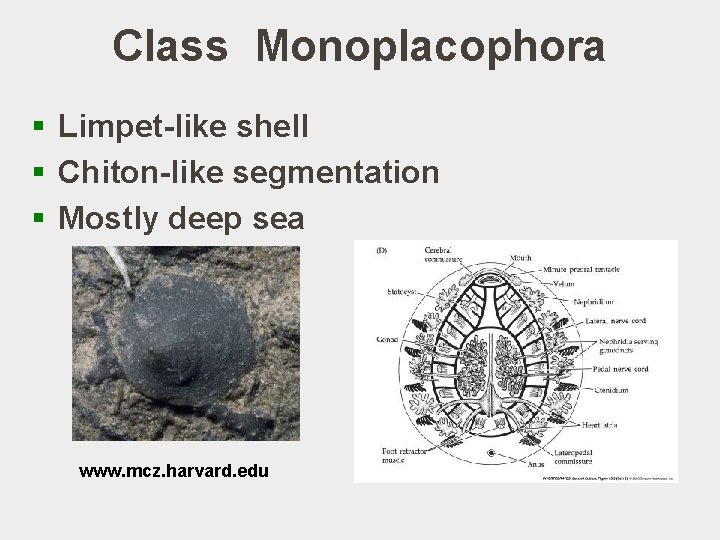
Class Monoplacophora § Limpet-like shell § Chiton-like segmentation § Mostly deep sea www. mcz. harvard. edu
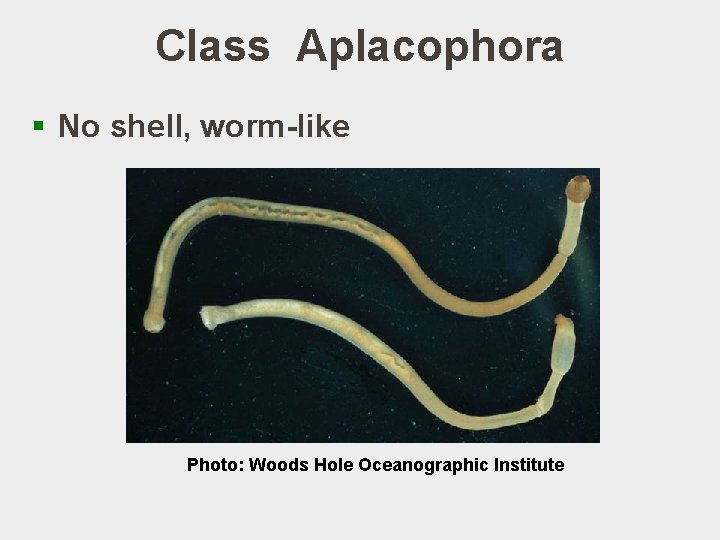
Class Aplacophora § No shell, worm-like Photo: Woods Hole Oceanographic Institute
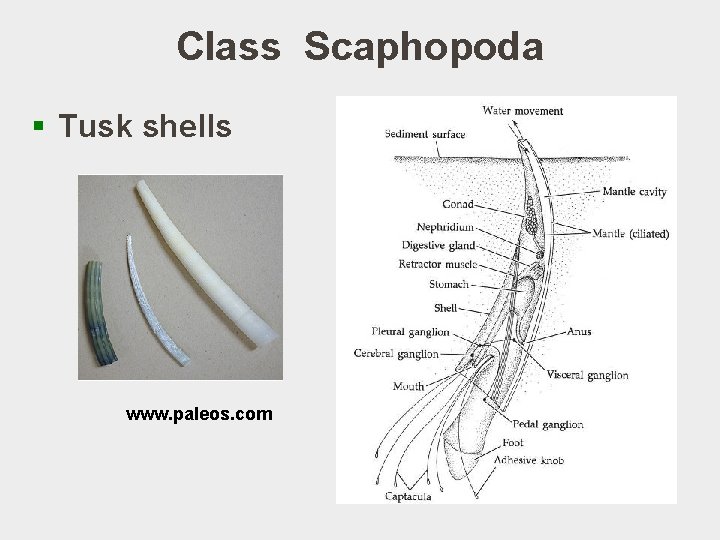
Class Scaphopoda § Tusk shells www. paleos. com
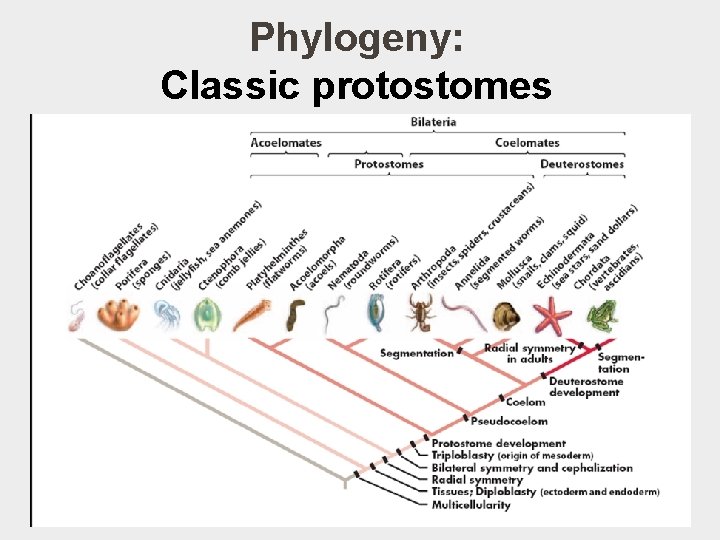
Phylogeny: Classic protostomes § Hypothesis 1:
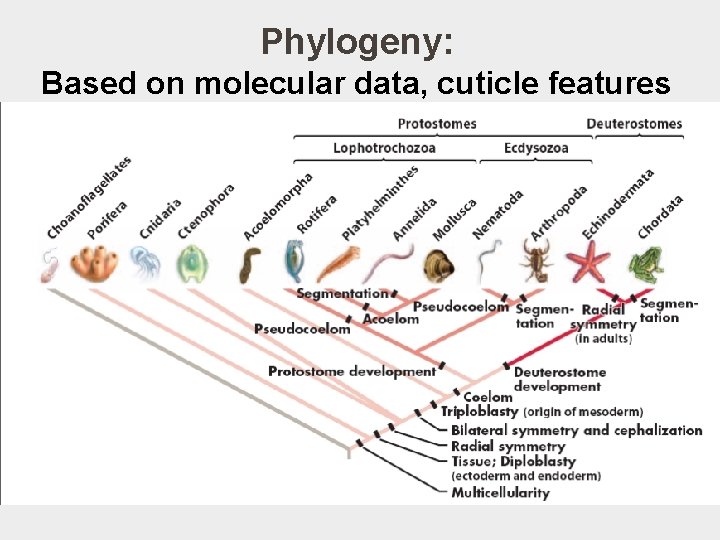
Phylogeny: Based on molecular data, cuticle features
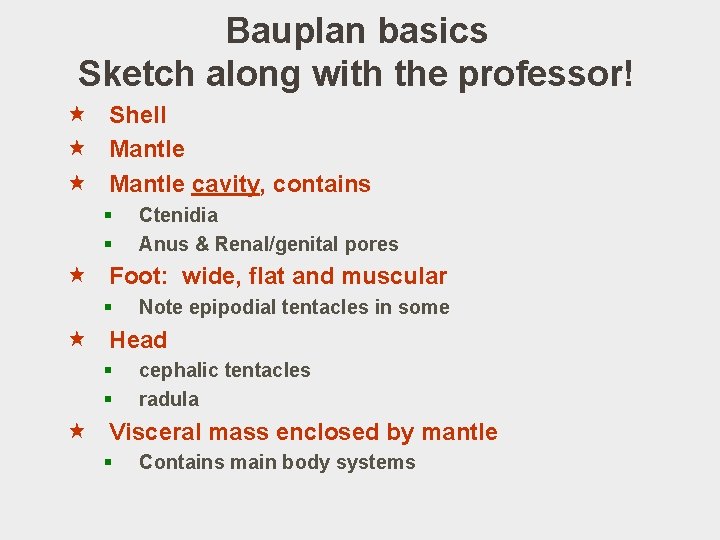
Bauplan basics Sketch along with the professor! « Shell « Mantle cavity, contains § § Ctenidia Anus & Renal/genital pores « Foot: wide, flat and muscular § Note epipodial tentacles in some « Head § § cephalic tentacles radula « Visceral mass enclosed by mantle § Contains main body systems
Feeding/digestion § Radula or filter feeding « Structure used for filter-feeding in bivalves? § § § Salivary glands with toxins, digestive enzymes Complete digestive system Anus empties into mantle cavity
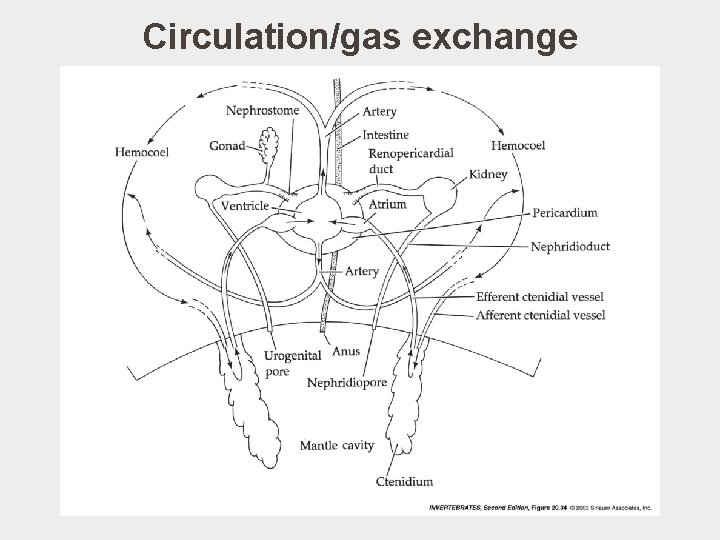
Circulation/gas exchange § Ctenidium (sketch) « Ctenidial axis & ctenidial filaments « Hemolymph flow, water flow & countercurrent exchange § Circulatory system « Open (except Cephalopoda) « Heart with two atria and a muscular ventricle « Pericardial cavity is part of reduced coelom § Note key aspects of circulation pattern! [Fig. 20. 34]
Circulation/gas exchange
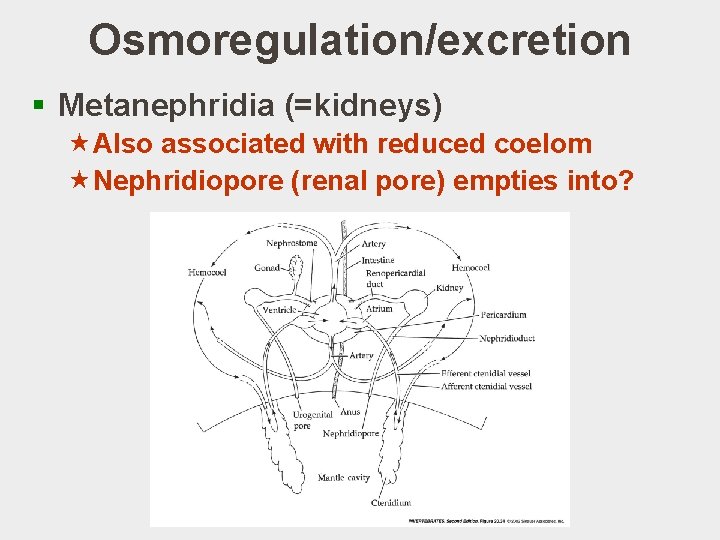
Osmoregulation/excretion § Metanephridia (=kidneys) «Also associated with reduced coelom «Nephridiopore (renal pore) empties into?
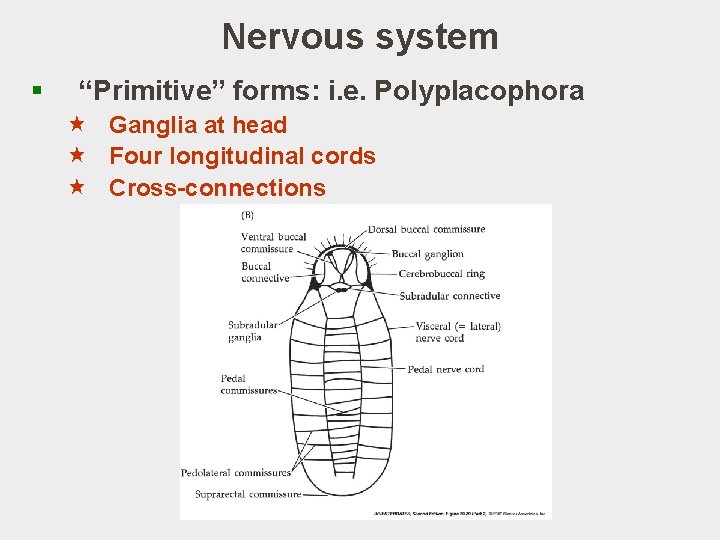
Nervous system § “Primitive” forms: i. e. Polyplacophora « Ganglia at head « Four longitudinal cords « Cross-connections
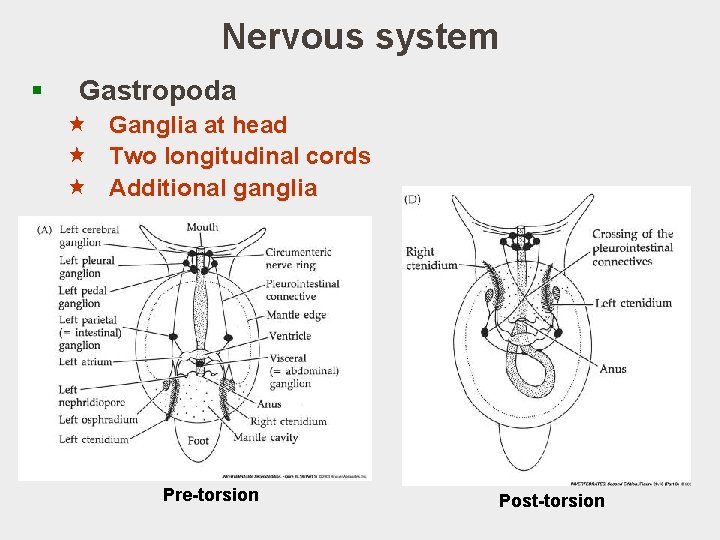
Nervous system § Gastropoda « Ganglia at head « Two longitudinal cords « Additional ganglia Pre-torsion Post-torsion
Reproduction § § Gonochoristic or hermaphroditic Gonads associated with reduced coelom « Ancestral condition: spawning via genital pores (empty into mantle cavity) § Sometimes linked with nephridiopore « Some with elaborate structures & behaviors for internal fertilization
Focus: Cephalopoda § Diversity: living forms (slides) « « Nautilus Cuttlefish Squid Octopus
Evolution of cephalopods § Ancestral cephalopod: key features (handout) § Three key lineages (handout) «Ammonoids «Nautiloids and Nautilus features (handout) «Coleoids
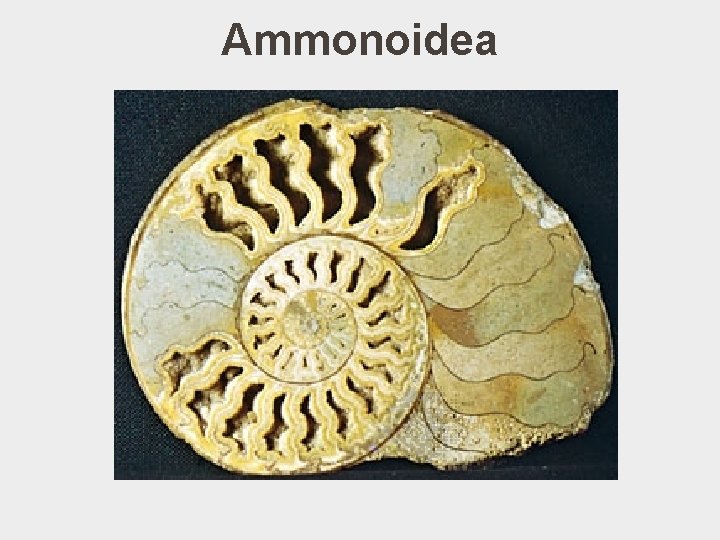
Ammonoidea
Nautiloids § See handouts for key features
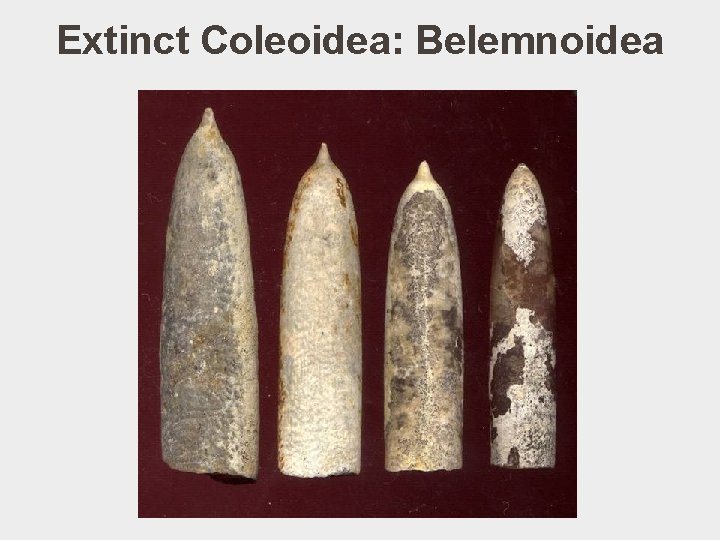
Extinct Coleoidea: Belemnoidea
Focus: extant Coleoidea Predatory adaptations § Previously… «Streamlined shape «Shell reduction «Funnel/siphon jet propulsion § Further arm development § Further cephalic tentacle development § Eye development
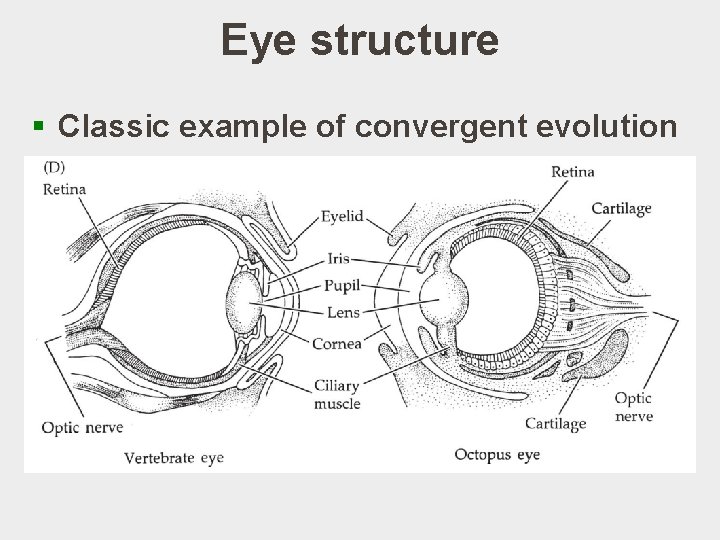
Eye structure § Classic example of convergent evolution
Focus: extant Coleoidea Predatory adaptations § Nervous system § Further adaptations of the mantle «Musculature «Chromatophores (slides) «Photophores «Fins § Ink sac
Life history: Loligo opalescens § § § Mating Egg laying Development Hatching Where have all the young squid gone?
- Slides: 28