
Invertebrate Diversity I Porifera Cnidaria Ctenophora Platyhelminthes Rotifera
Invertebrate Diversity I Porifera, Cnidaria, Ctenophora, Platyhelminthes, Rotifera, Nematoda

Kingdom Animalia • Heterotrophic ingesters • Multicellular – “higher” groups have tissues – tissues arranged into organs in some groups • No cell walls – flexible • Nervous tissue & Muscle tissue • No alternation of generations • Common early embryological development

2 Sub-kingdoms in Animalia • Parazoa: • Eumetazoa: – no symmetry – all symmetrical • radial or bilateral – no true tissues or organs – almost all have tissues – 1 phylum: Porifera – all other animal phyla (~35 phyla)
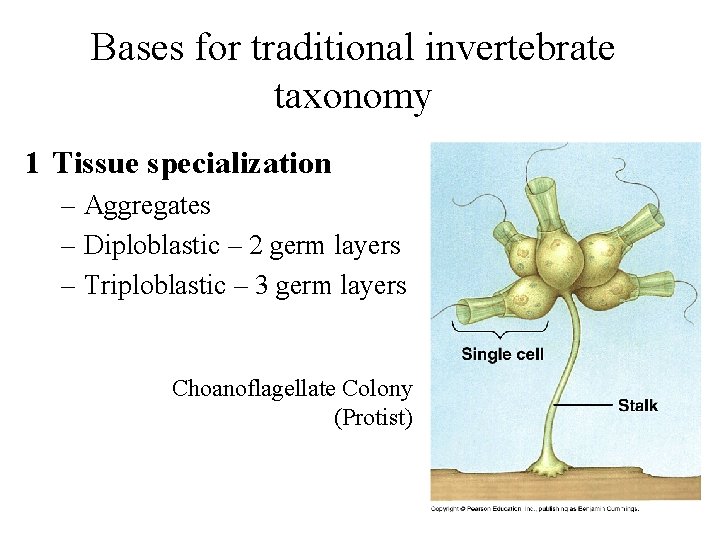
Bases for traditional invertebrate taxonomy 1 Tissue specialization – Aggregates – Diploblastic – 2 germ layers – Triploblastic – 3 germ layers Choanoflagellate Colony (Protist)
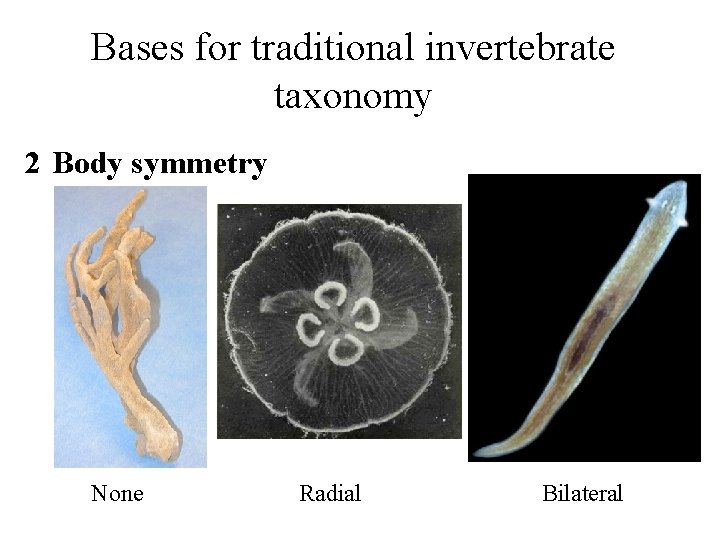
Bases for traditional invertebrate taxonomy 2 Body symmetry None Radial Bilateral
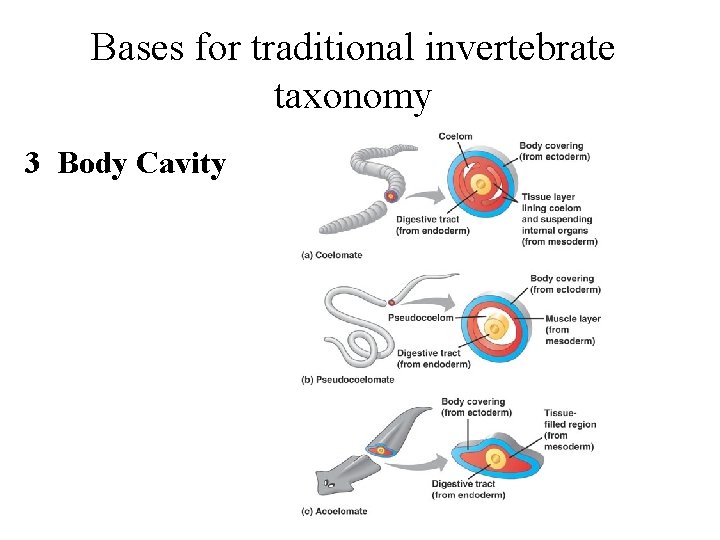
Bases for traditional invertebrate taxonomy 3 Body Cavity
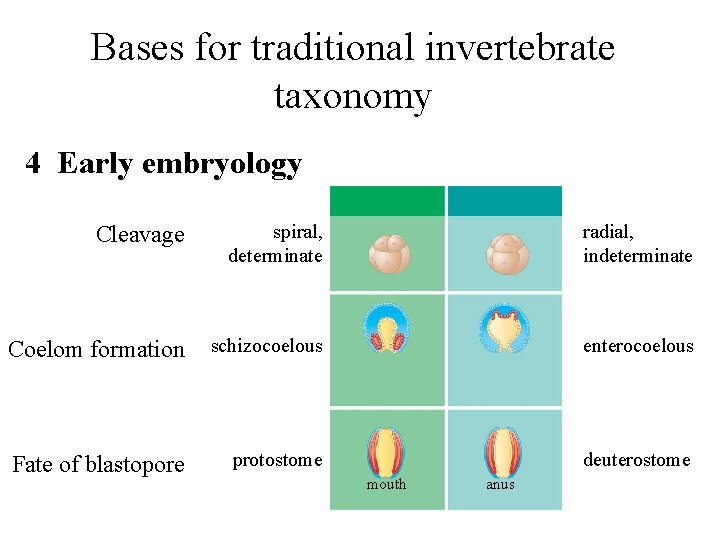
Bases for traditional invertebrate taxonomy 4 Early embryology Cleavage spiral, determinate radial, indeterminate Coelom formation schizocoelous enterocoelous Fate of blastopore protostome deuterostome mouth anus
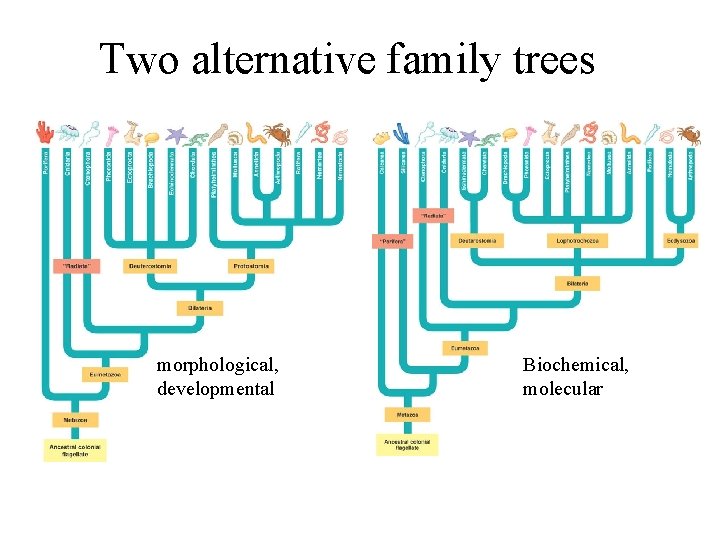
Two alternative family trees morphological, developmental Biochemical, molecular
Vertebrates vs. Invertebrates • Invertebrates – “animals without backbones” – 35. 001 modern animal phyla – origin of all modern phyla in Cambrian Explosion (~540 mya) • Vertebrates – “animals with backbones” – one diverse subphylum of Ph. Chordata – staggered evolution of vertebrate classes
Q 1: Which of the following is NOT a common feature of the eumetazoan animals 1) 2) 3) 4) cell walls multicellular heterotrophic tissues
Q 2: Which of the following is NOT a basis for traditional animal taxonomy 1) 2) 3) 4) tissue specialization/number of germ layers body symmetry molecular similarities early embryology
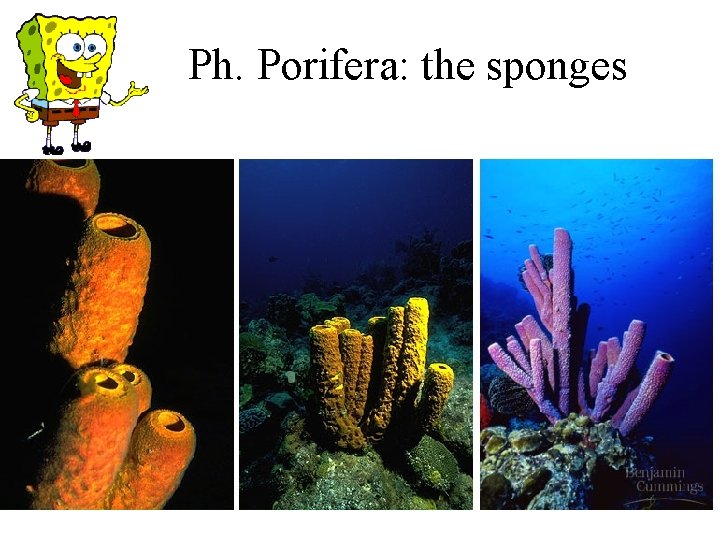
Ph. Porifera: the sponges
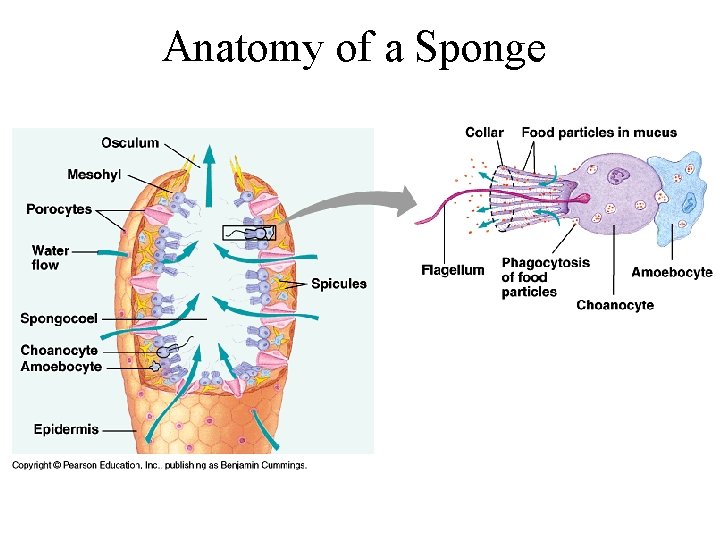
Anatomy of a Sponge
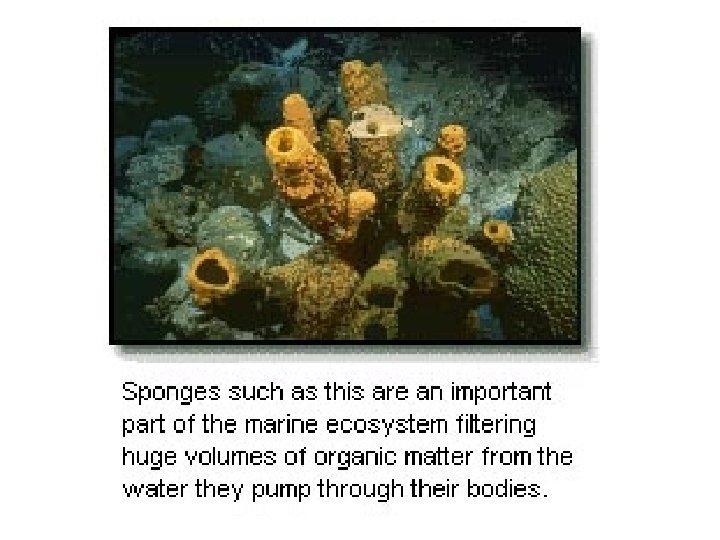
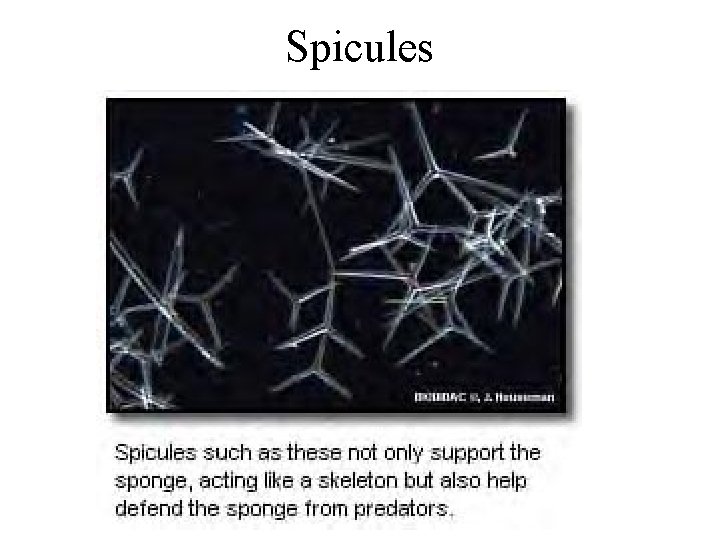
Spicules
Classes of Poriferans • Calcarea – small, calcium spicules • Demospongae – larger, silica spicules – the includes the bath sponges and flower baskets • Hexactinellidae – hexagonal spicule array – the “glass sponges”

Some poriferans. . .
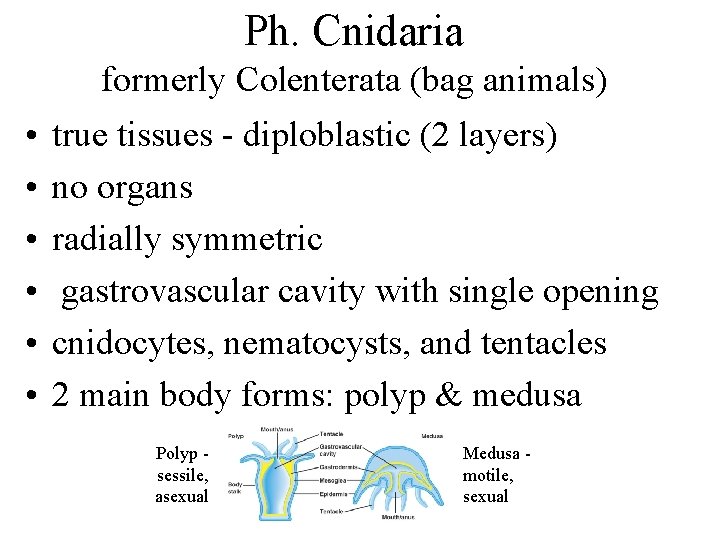
Ph. Cnidaria formerly Colenterata (bag animals) • • • true tissues - diploblastic (2 layers) no organs radially symmetric gastrovascular cavity with single opening cnidocytes, nematocysts, and tentacles 2 main body forms: polyp & medusa Polyp sessile, asexual Medusa motile, sexual

Cnidocytes: stinging cells
Classes of Cnidarians: • Cl. Hydrozoa: hydroids (dominant polyp stage) • Cl. Scyphozoa: true jellyfish (dominant medusa stage) • Cl. Anthozoa: sea anemones, corals (no medusa stage)
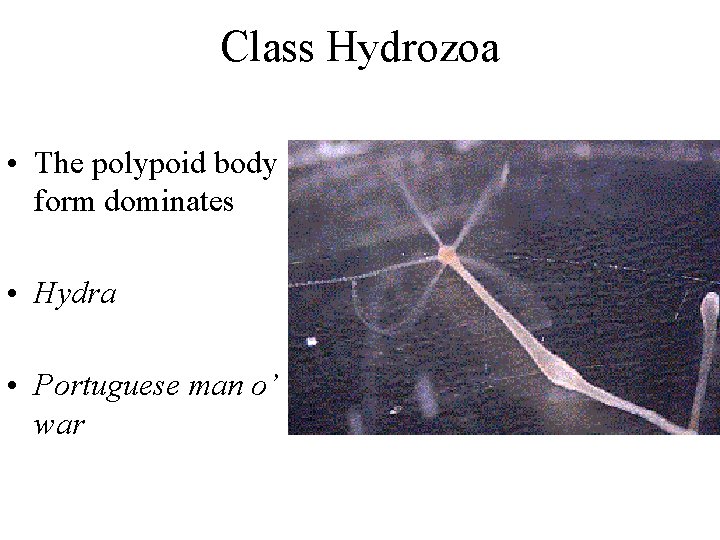
Class Hydrozoa • The polypoid body form dominates • Hydra • Portuguese man o’ war
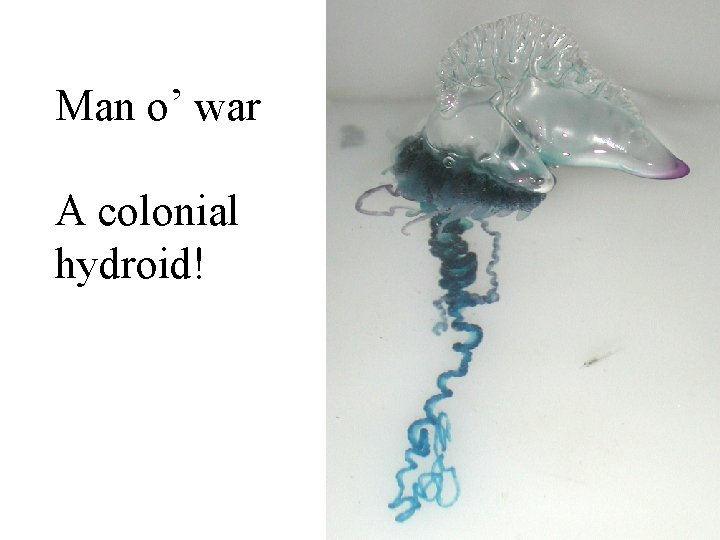
Man o’ war A colonial hydroid!

Cl Scyphozoa: jellyfish
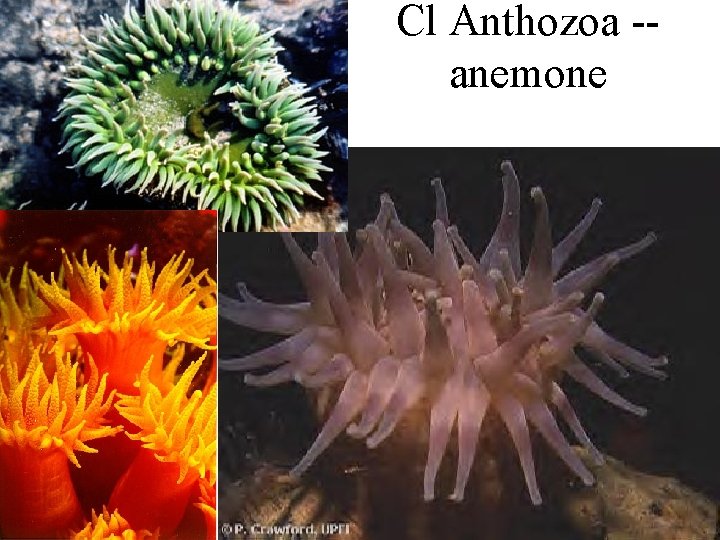
Cl Anthozoa -anemone
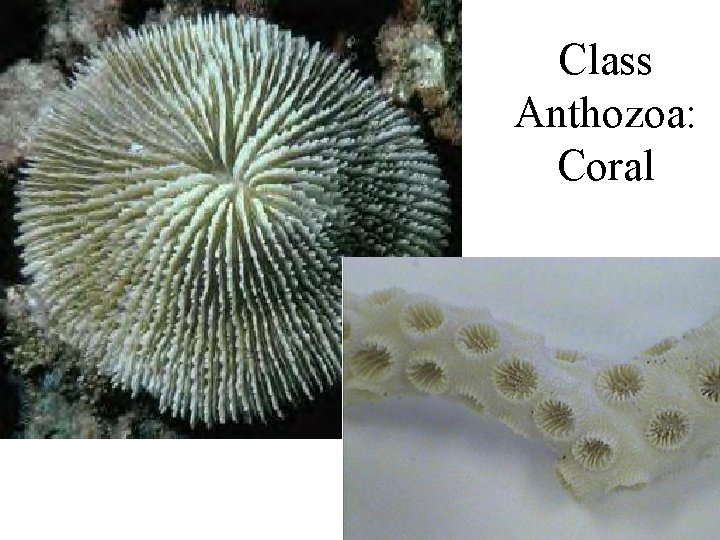
Class Anthozoa: Coral
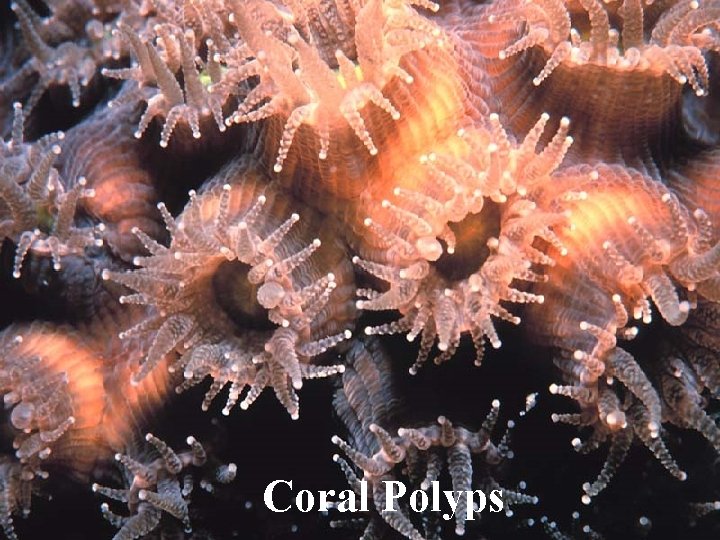
Coral Polyps

Ph. Ctenophora: comb jellies • 8 rows of ciliary plates • digestive tube – 2 openings • colloblasts (adhesive structures on tentacles)
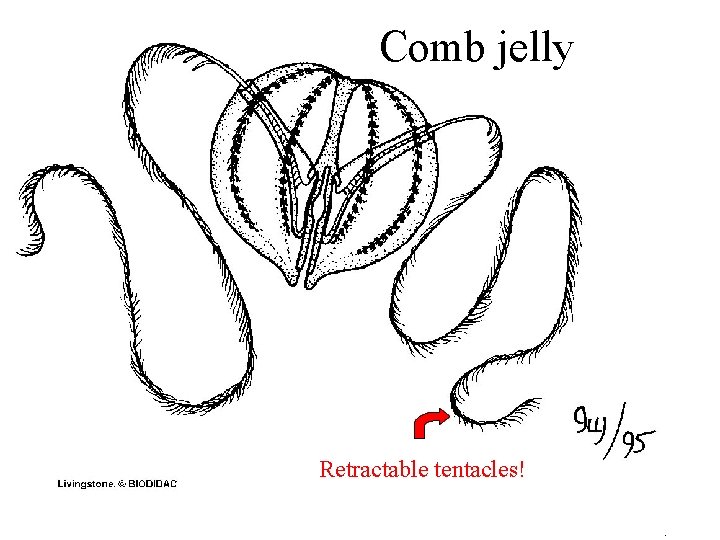
Comb jelly Retractable tentacles!
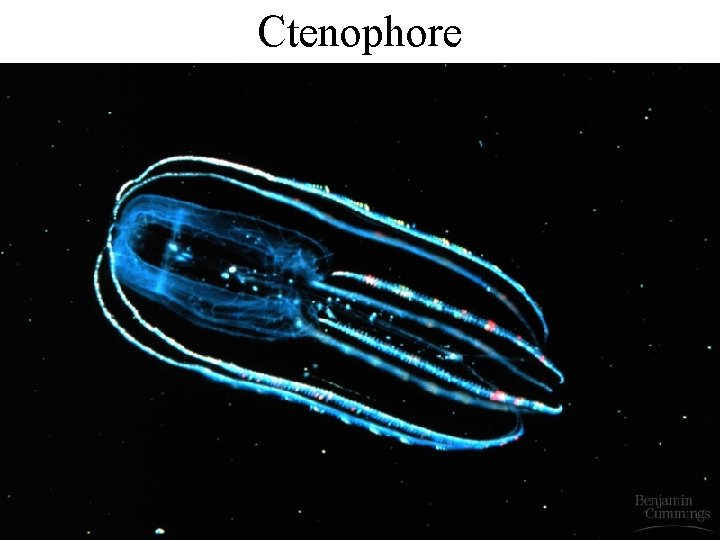
Ctenophore
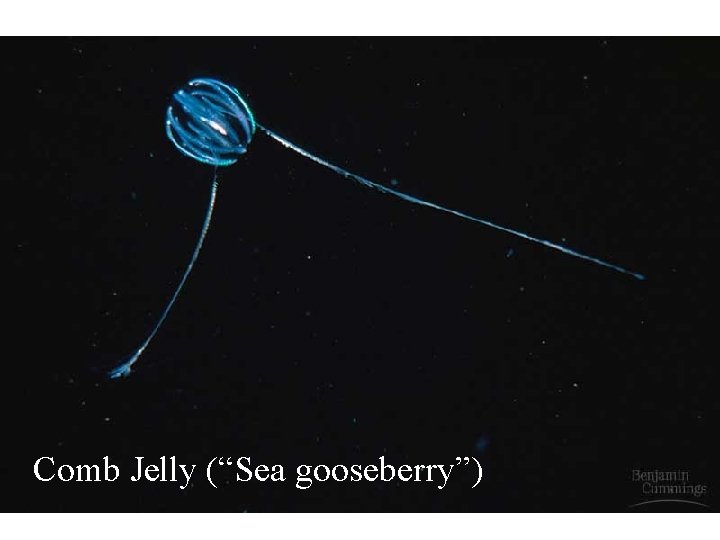
Comb Jelly (“Sea gooseberry”)

Q 3: Phylum Cnidaria is named for the characteristic 1) 2) 3) 4) bag-like structure medusa and polyp life stages two germ layers stinging cells

Q 4: True jellyfish belong to the class 1) 2) 3) 4) Hydrozoa Scyphozoa Anthozoa Ctenophora
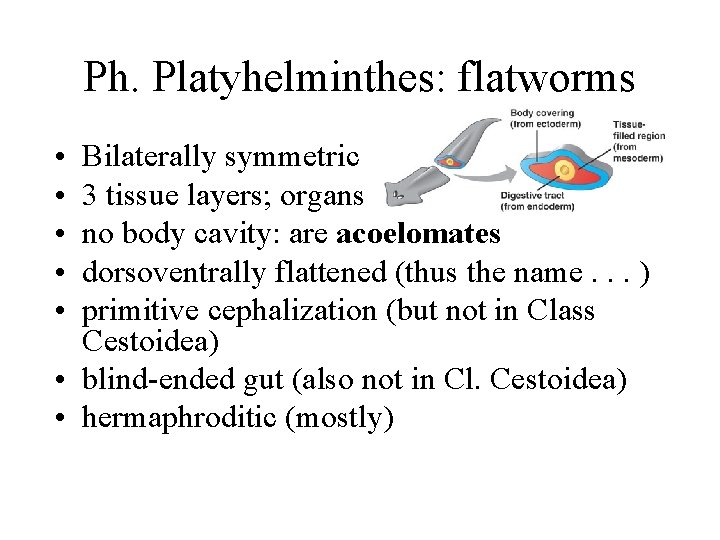
Ph. Platyhelminthes: flatworms • • • Bilaterally symmetric 3 tissue layers; organs no body cavity: are acoelomates dorsoventrally flattened (thus the name. . . ) primitive cephalization (but not in Class Cestoidea) • blind-ended gut (also not in Cl. Cestoidea) • hermaphroditic (mostly)
4 classes of flatworms: • Cl. Turbellaria: free-living flatworms, e. g. , Planaria • Cls. Trematoda & Monogenea: flukes • Cl. Cestoidea: tapeworms

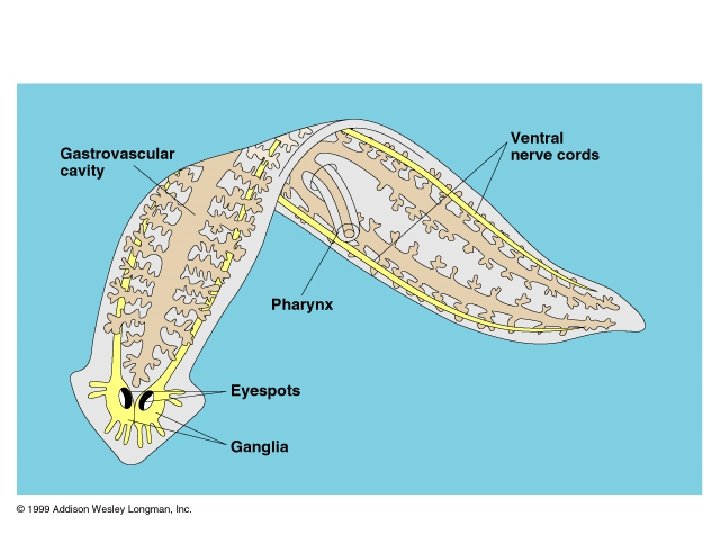
Planaria
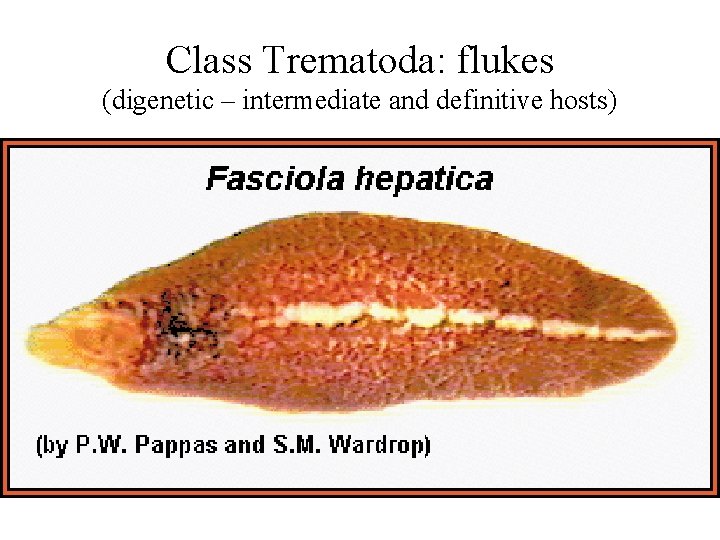
Class Trematoda: flukes (digenetic – intermediate and definitive hosts)
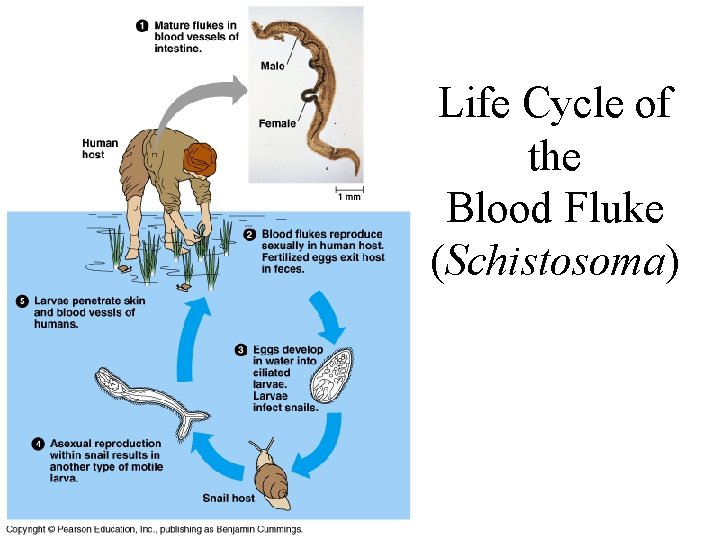
Life Cycle of the Blood Fluke (Schistosoma)
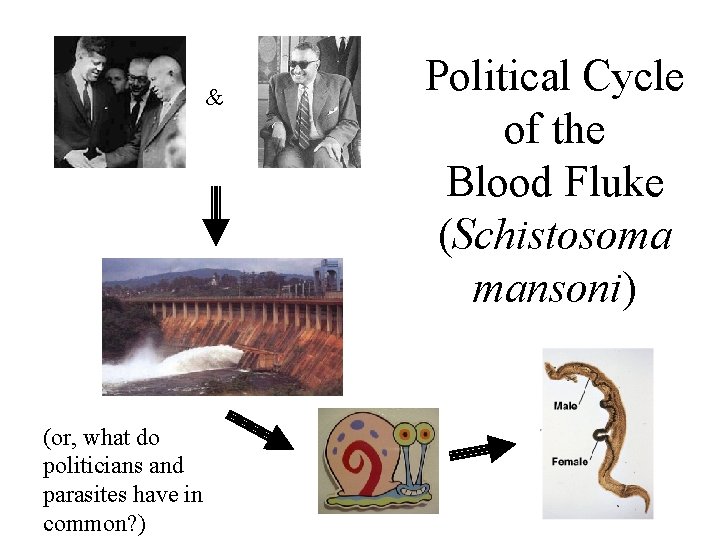
& (or, what do politicians and parasites have in common? ) Political Cycle of the Blood Fluke (Schistosoma mansoni)
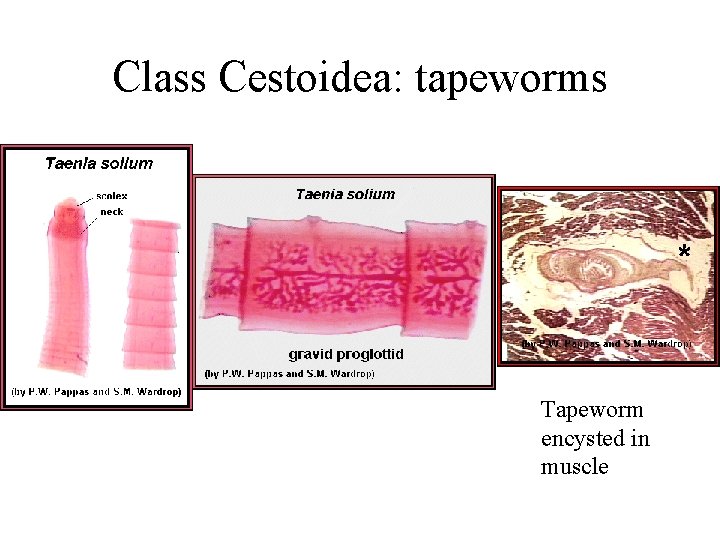
Class Cestoidea: tapeworms Tapeworm encysted in muscle
Q 5: Cestodes (tapeworms) differ from the other flatworms in that they 1) 2) 3) 4) lack digestive organs lack a cephalized nervous system have a segmented body plan all of the above
Ph. Rotifera: the rotifers • Pseudocoelomates • Mostly freshwater, but also on moss, lichens • very small! But have complete digestive tract • have a “crown of cilia” that draws food in toward their jaws

Rotifers

Rotifer
Ph. Acanthocephala – spiny-headed worms: • • barbed proboscis rudimentary gut intestinal parasites genomics suggests they are giant, modified rotifers
Ph. Nematoda: • • Unsegmented roundworms pseudocoelomates hydrostatic skeleton many are animal parasites, e. g. , pinworms, hook worms, Trichinella, Ascaris • many are plant parasites
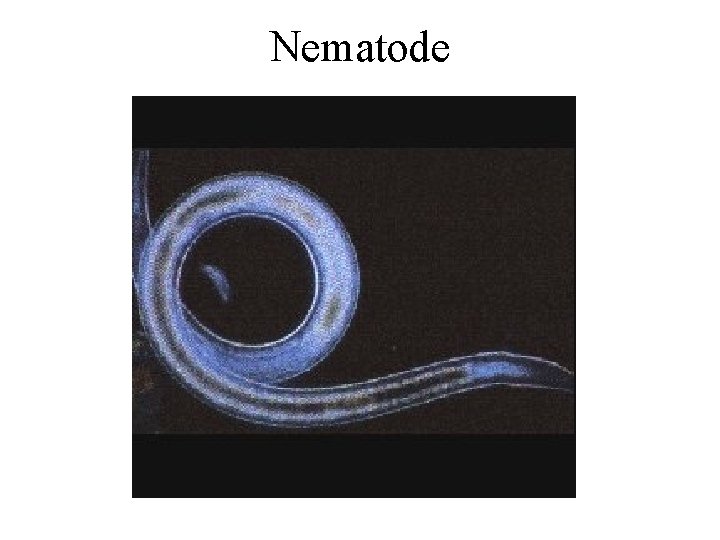
Nematode
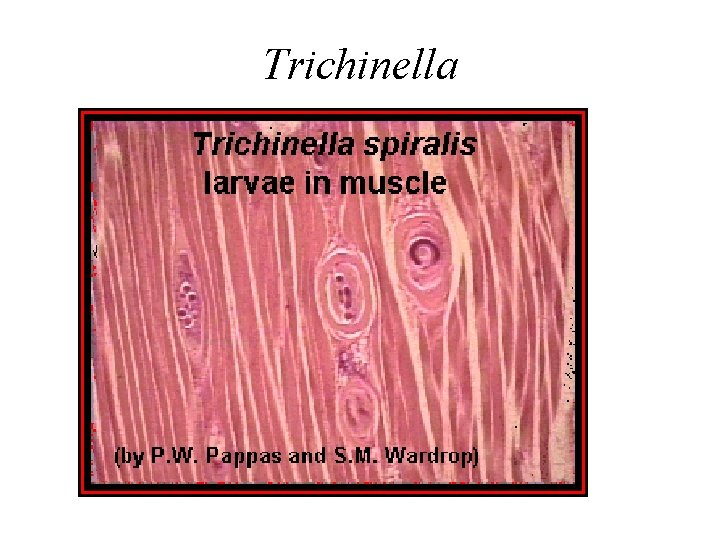
Trichinella
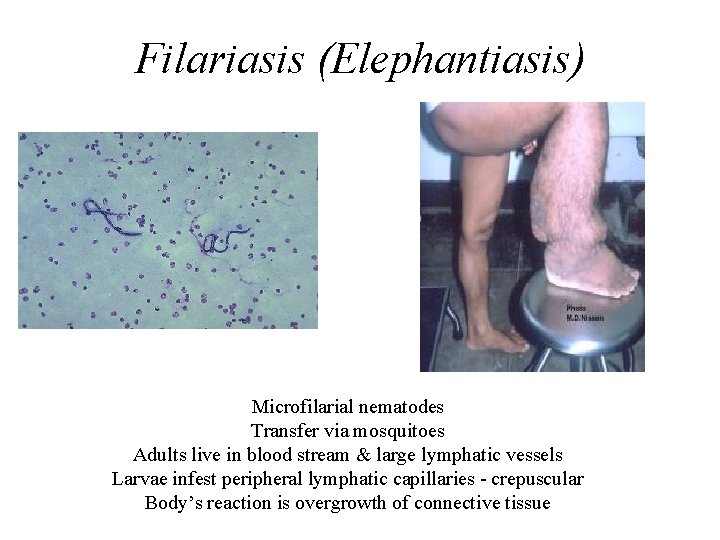
Filariasis (Elephantiasis) Microfilarial nematodes Transfer via mosquitoes Adults live in blood stream & large lymphatic vessels Larvae infest peripheral lymphatic capillaries - crepuscular Body’s reaction is overgrowth of connective tissue
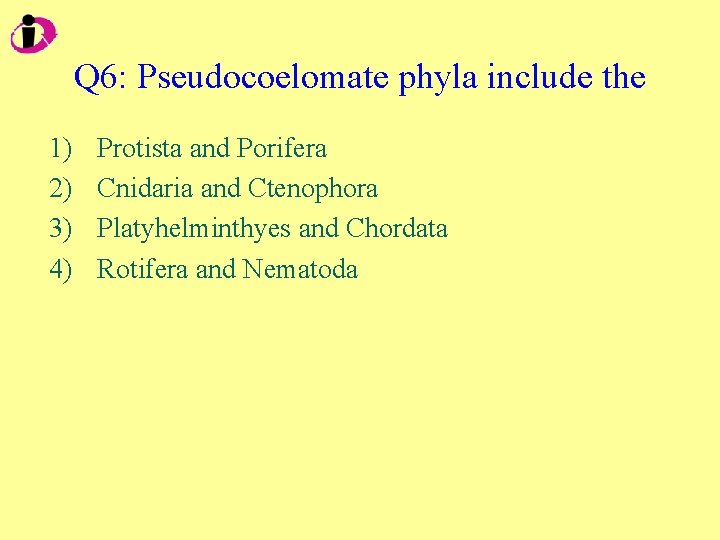
Q 6: Pseudocoelomate phyla include the 1) 2) 3) 4) Protista and Porifera Cnidaria and Ctenophora Platyhelminthyes and Chordata Rotifera and Nematoda
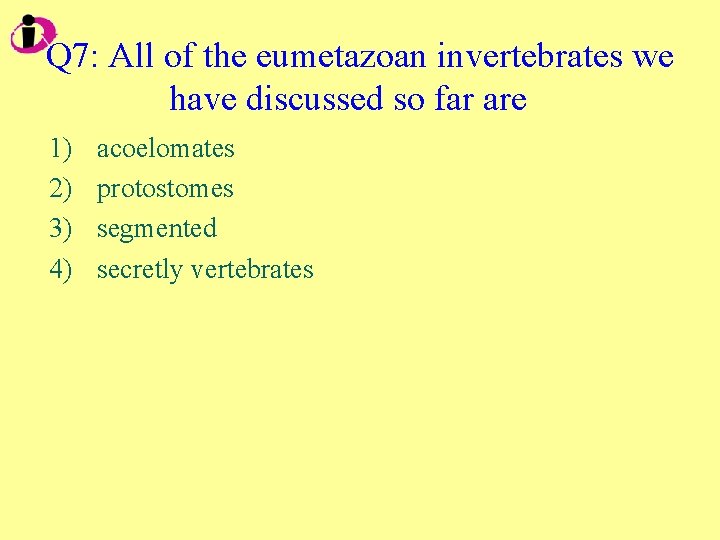
Q 7: All of the eumetazoan invertebrates we have discussed so far are 1) 2) 3) 4) acoelomates protostomes segmented secretly vertebrates
- Slides: 51