
Invertebrate Animals What Characteristics Define the Animal Kingdom
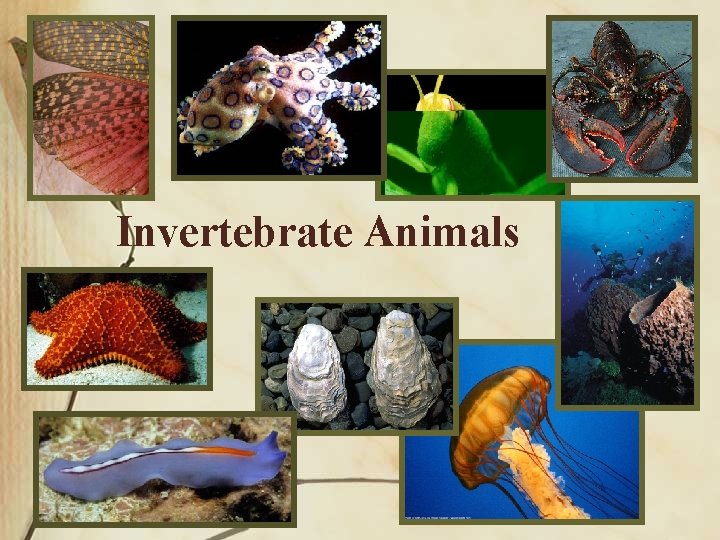
Invertebrate Animals
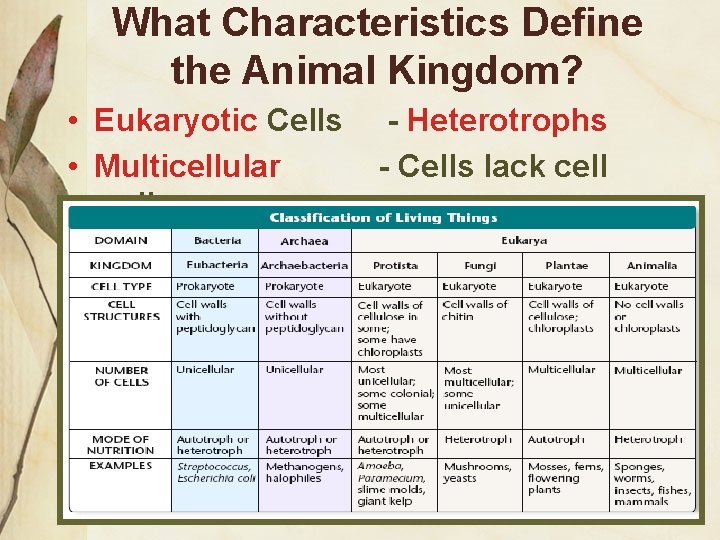
What Characteristics Define the Animal Kingdom? • Eukaryotic Cells • Multicellular walls - Heterotrophs - Cells lack cell
Invertebrate or Vertebrate? • Inverts have no backbones – can be microscopic to very large – 95% of animals are inverts • Vertebrates have a backbone – 5% of animals – Birds, reptiles, fishes, amphibians, mammals
What are some animals that are invertebrates? • • Worms Mollusks Insects Crustaceans Arachnids Jellyfish Sponges Starfish

Probable Animal Ancestor Protists – any organism that is not a plant, an animal, a fungus or a prokaryote
Classification • Protists are a very diverse groups of organisms • Different groups of Protists evolved independently from archaebacteria • Protists are generally classified by the way they obtain food. There are three main categories of Protists • Animal-like (Protozoa) • Plant-like (Algae) • Fungus-like
Animal-Like Protists (Protozoans) • Classified by their method of movement. • There are four phyla of Protozoans • Zooflagellates • Sarcodines • Ciliates • Sporozoans
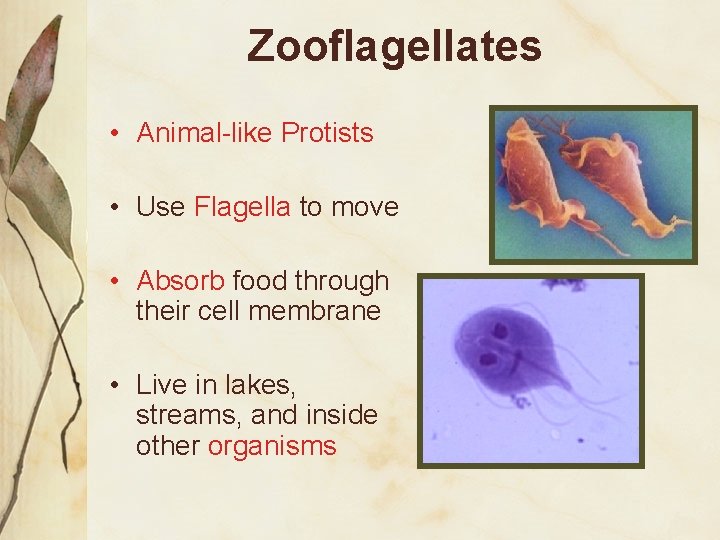
Zooflagellates • Animal-like Protists • Use Flagella to move • Absorb food through their cell membrane • Live in lakes, streams, and inside other organisms
• Form the basis of many food chains • Asexual reproduction by means of binary fission • Ex. Giardia- water borne protozoa that causes severe intestinal distress – Trichonympha –helps termites digest wood
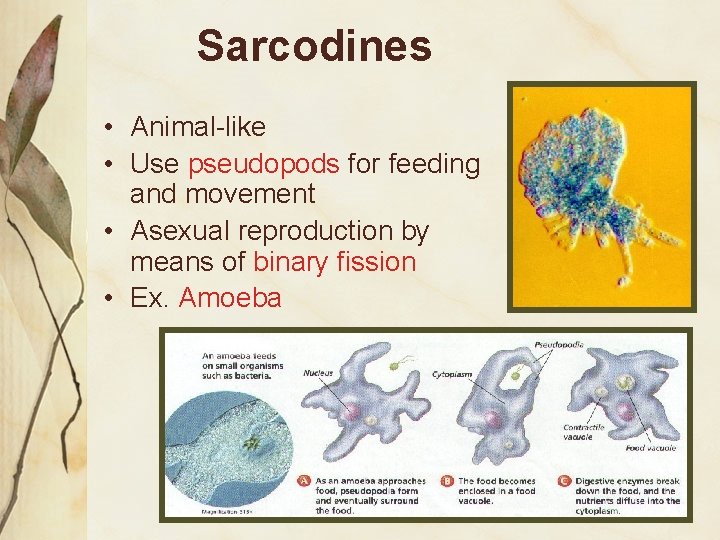
Sarcodines • Animal-like • Use pseudopods for feeding and movement • Asexual reproduction by means of binary fission • Ex. Amoeba
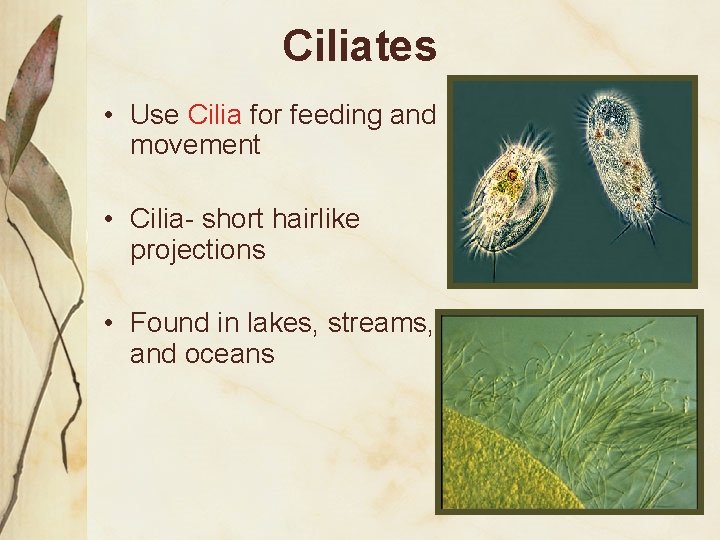
Ciliates • Use Cilia for feeding and movement • Cilia- short hairlike projections • Found in lakes, streams, and oceans
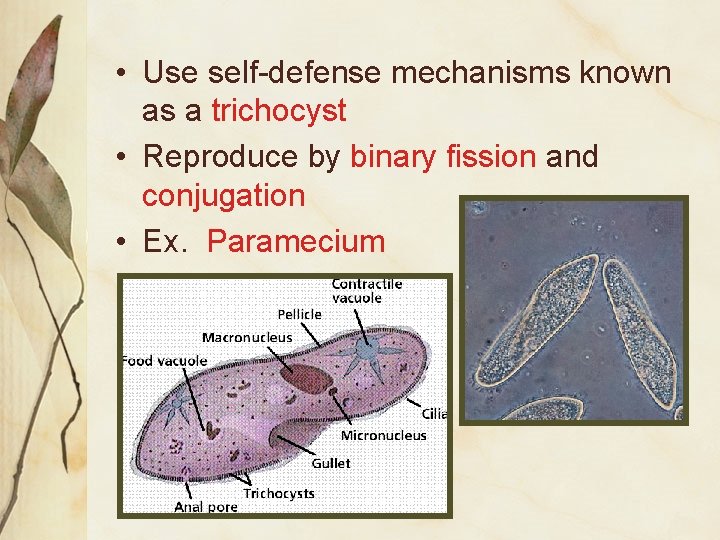
• Use self-defense mechanisms known as a trichocyst • Reproduce by binary fission and conjugation • Ex. Paramecium
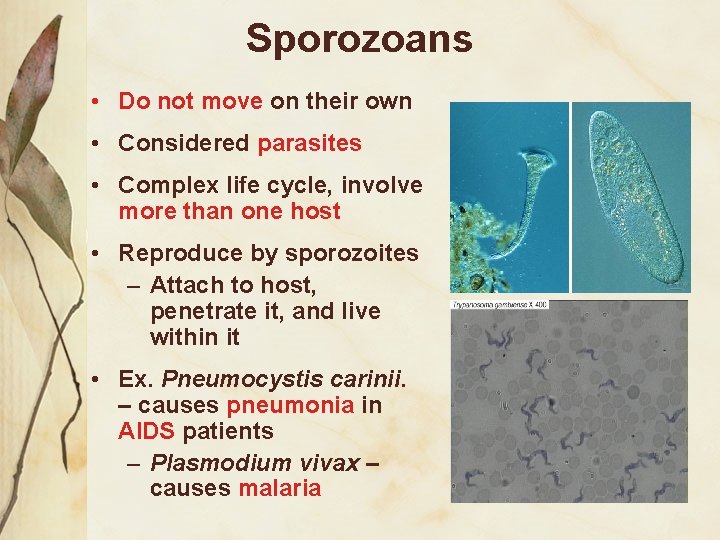
Sporozoans • Do not move on their own • Considered parasites • Complex life cycle, involve more than one host • Reproduce by sporozoites – Attach to host, penetrate it, and live within it • Ex. Pneumocystis carinii. – causes pneumonia in AIDS patients – Plasmodium vivax – causes malaria
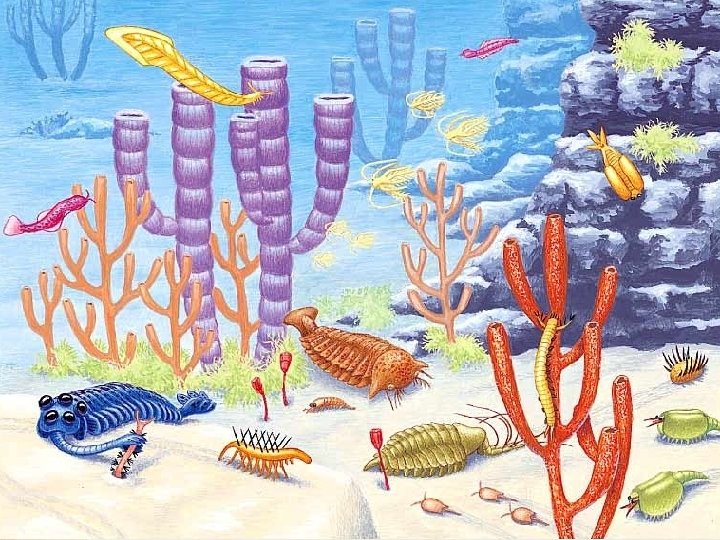
Cambrian Explosion - a period in time where the first known representatives of most animal phyla evolved • • • 600 million years ago Great increase in diversity Better fossil record More skeletons /symmetry No backbones
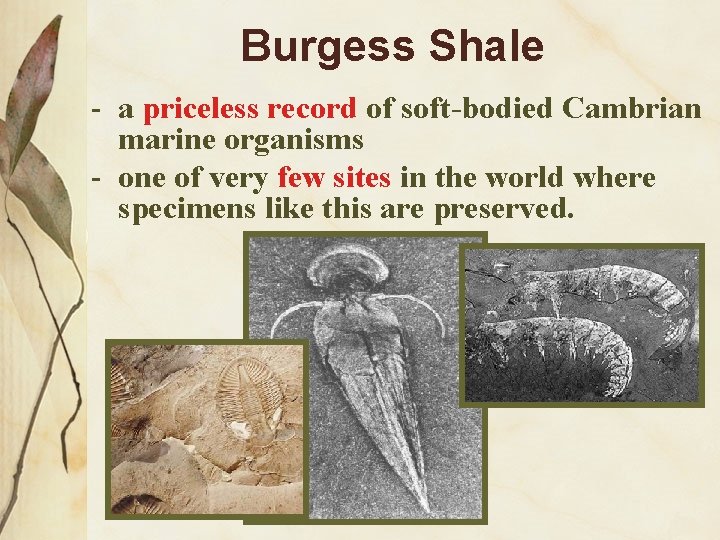
Burgess Shale - a priceless record of soft-bodied Cambrian marine organisms - one of very few sites in the world where specimens like this are preserved.
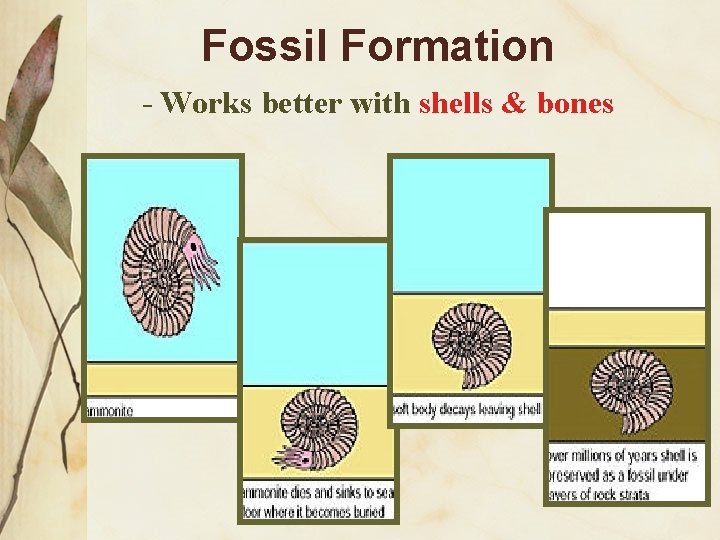
Fossil Formation - Works better with shells & bones
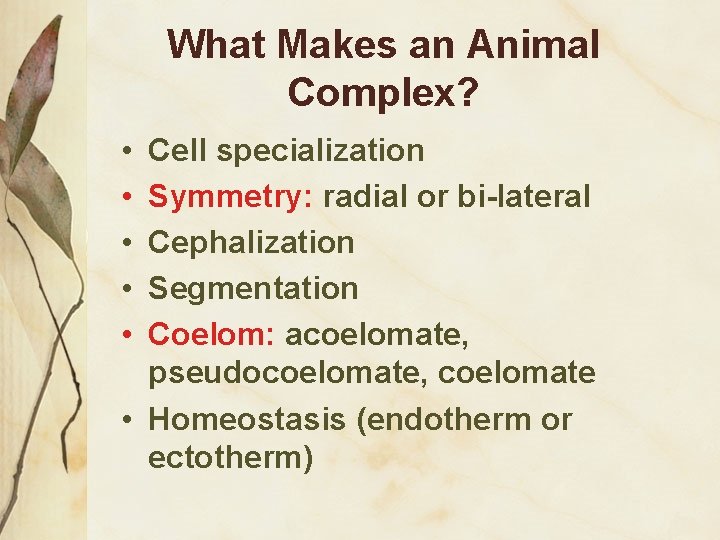
Evolutionary Trends - Trends are towards typically increasing complexity - Example – Sponge → Worms → Arthropods → etc
What Makes an Animal Complex? • • • Cell specialization Symmetry: radial or bi-lateral Cephalization Segmentation Coelom: acoelomate, pseudocoelomate, coelomate • Homeostasis (endotherm or ectotherm)
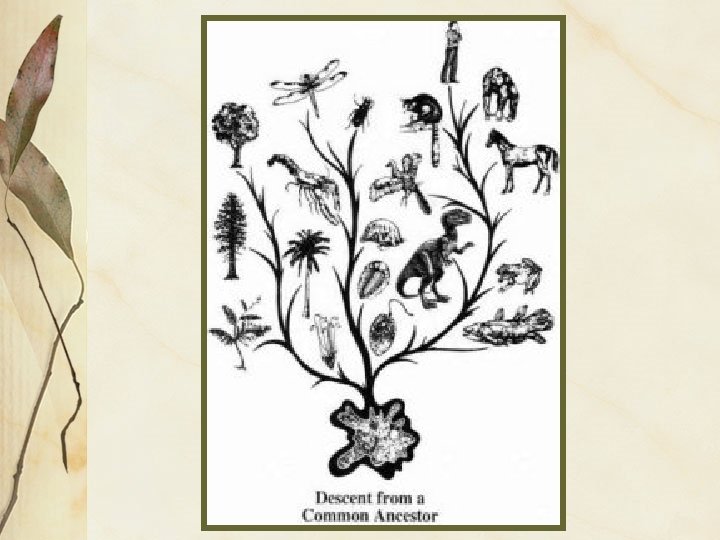
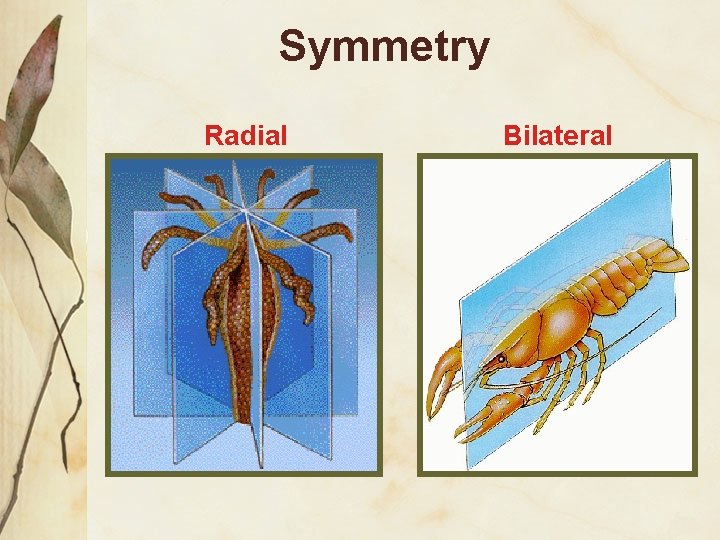
Symmetry Radial Bilateral
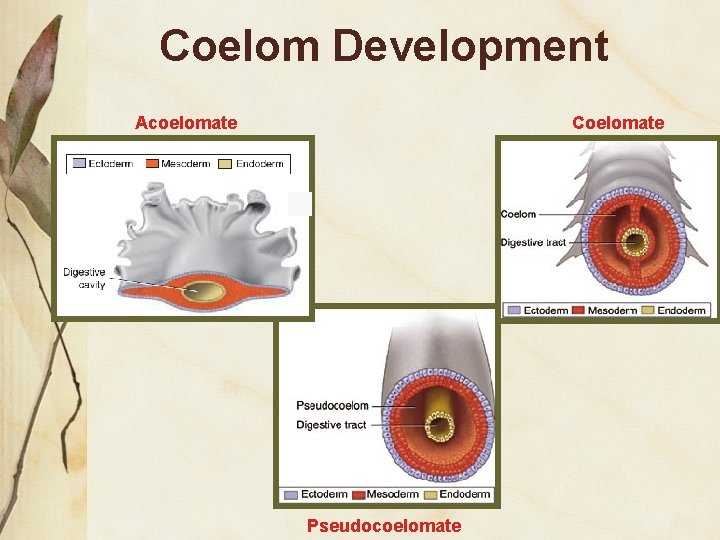
Coelom Development Acoelomate Coelomate Pseudocoelomate
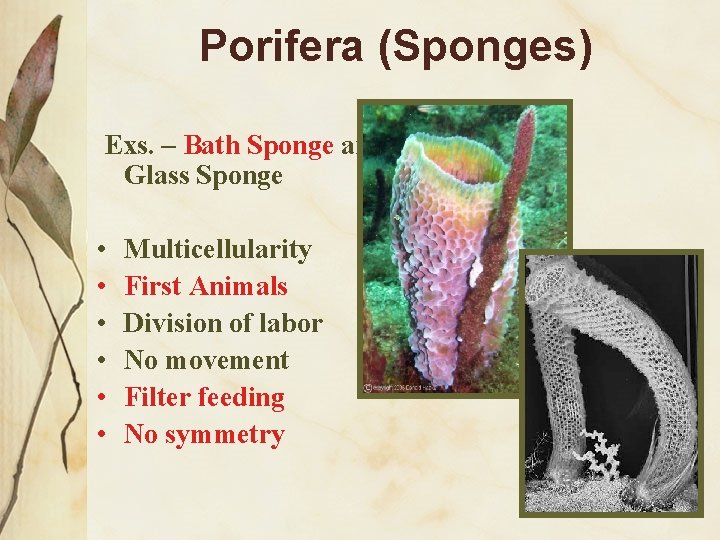
Porifera (Sponges) Exs. – Bath Sponge and Glass Sponge • • • Multicellularity First Animals Division of labor No movement Filter feeding No symmetry
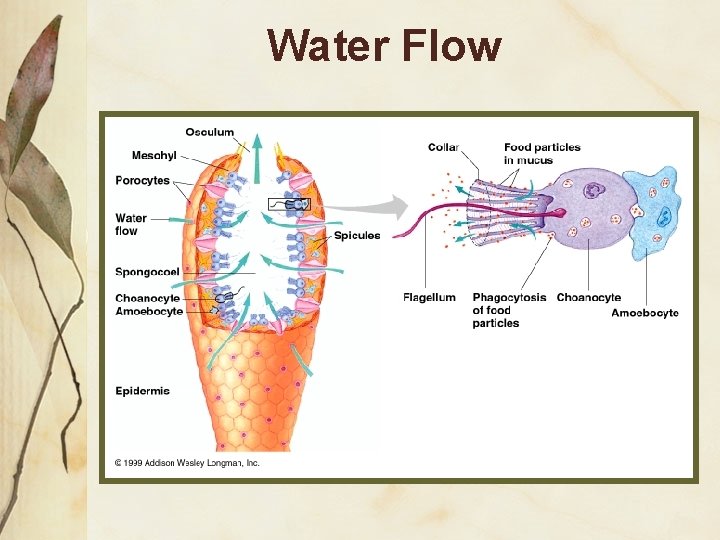
Water Flow
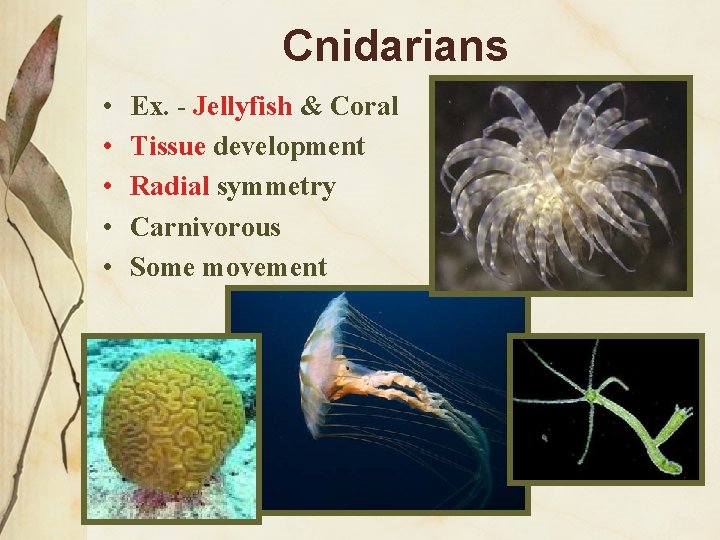
Cnidarians • • • Ex. - Jellyfish & Coral Tissue development Radial symmetry Carnivorous Some movement
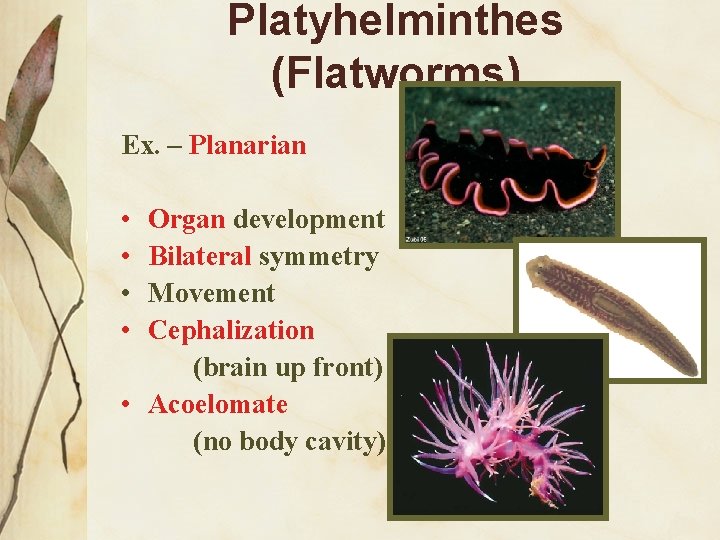
Platyhelminthes (Flatworms) Ex. – Planarian • • Organ development Bilateral symmetry Movement Cephalization (brain up front) • Acoelomate (no body cavity)
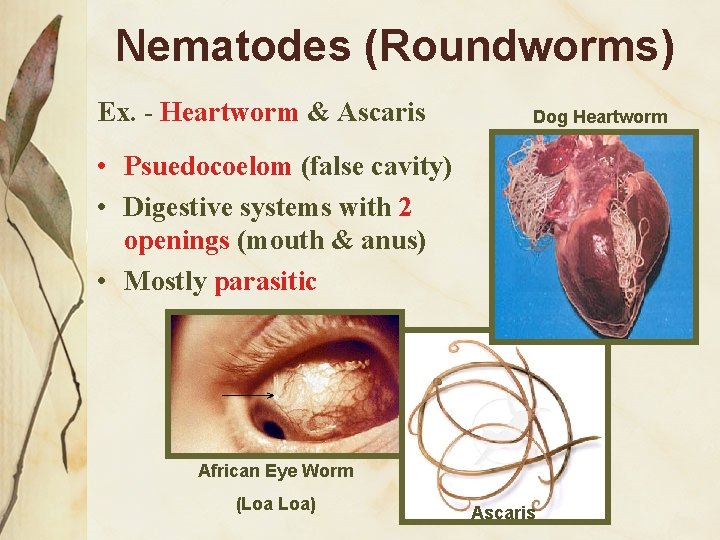
Nematodes (Roundworms) Ex. - Heartworm & Ascaris Dog Heartworm • Psuedocoelom (false cavity) • Digestive systems with 2 openings (mouth & anus) • Mostly parasitic African Eye Worm (Loa Loa) Ascaris
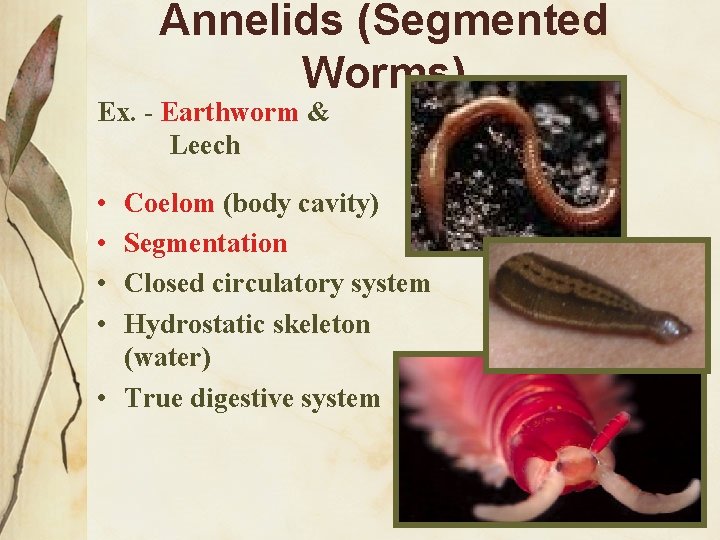
Annelids (Segmented Worms) Ex. - Earthworm & Leech • • Coelom (body cavity) Segmentation Closed circulatory system Hydrostatic skeleton (water) • True digestive system
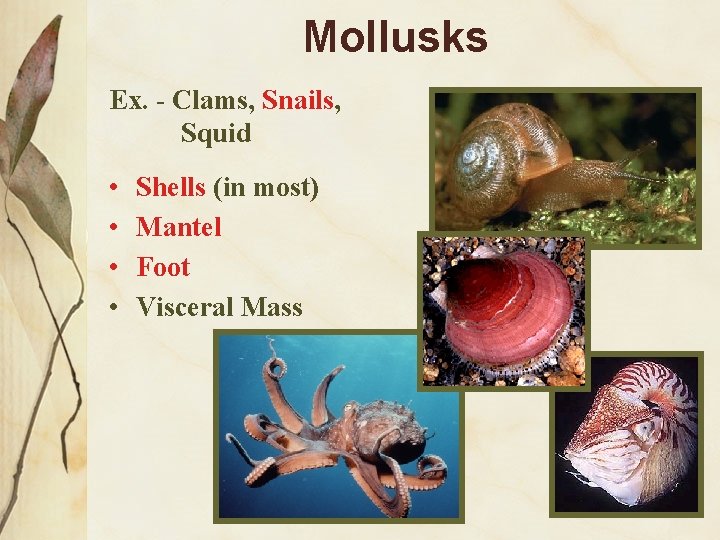
Mollusks Ex. - Clams, Snails, Squid • • Shells (in most) Mantel Foot Visceral Mass
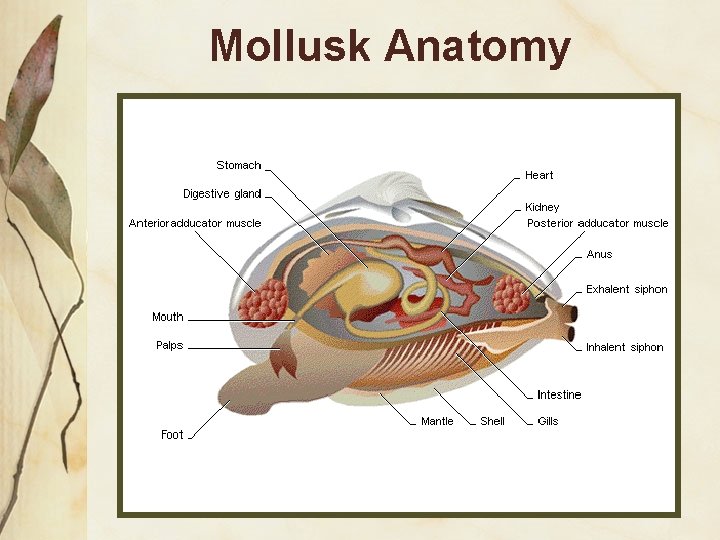
Mollusk Anatomy
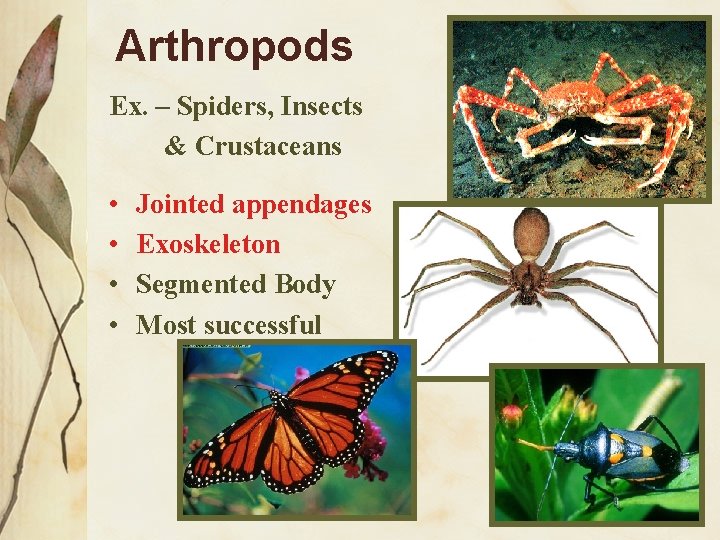
Arthropods Ex. – Spiders, Insects & Crustaceans • • Jointed appendages Exoskeleton Segmented Body Most successful
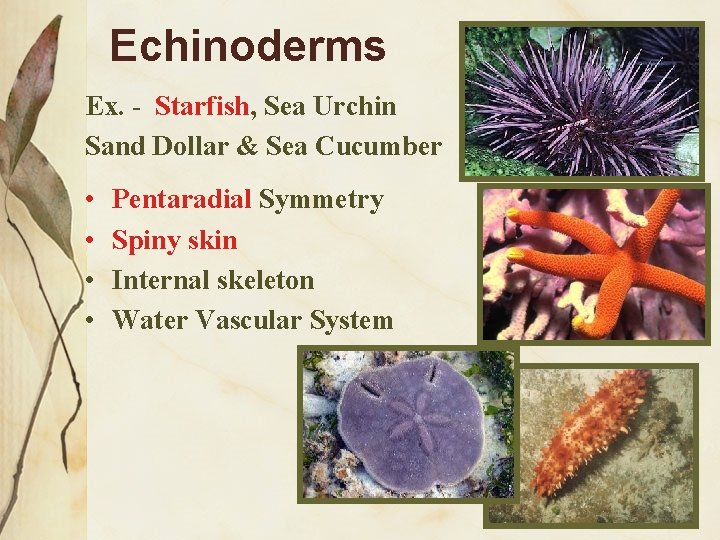
Echinoderms Ex. - Starfish, Sea Urchin Sand Dollar & Sea Cucumber • • Pentaradial Symmetry Spiny skin Internal skeleton Water Vascular System
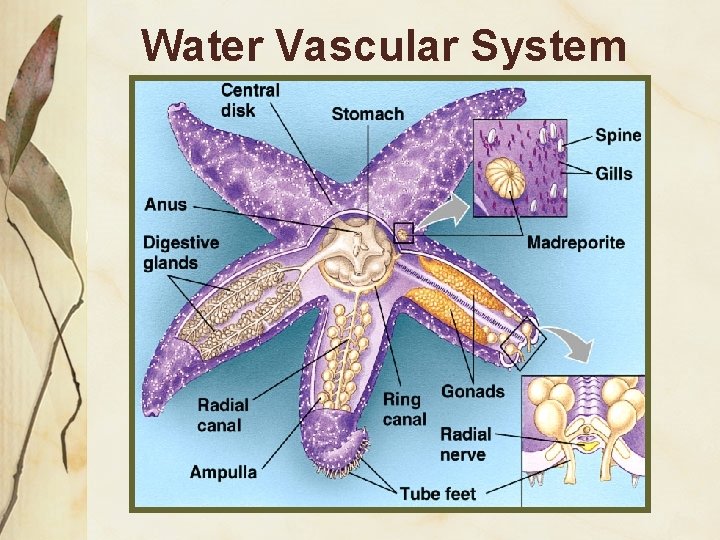
Water Vascular System
Biological Processes of Invertebrates (Things that must be done to keep them alive)
Feeding/Digestion • Function - Obtain energy & Nutrients • Examples: – Filter feeding (sponges) – Parasitism (roundworm) – Predation (octopus)
Respiration • Function - release energy from food, but needs oxygen • Examples Moist Skin (worm) Gills (clam) Trachea/Book Lungs (spider)

Moist Skin
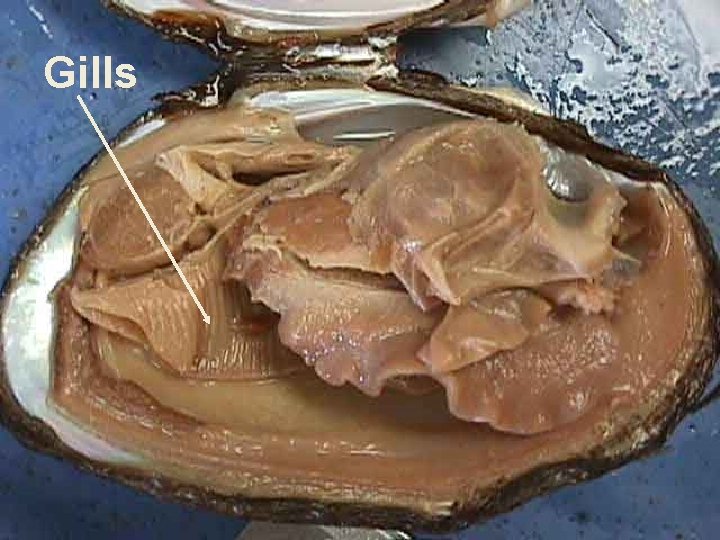
Gills
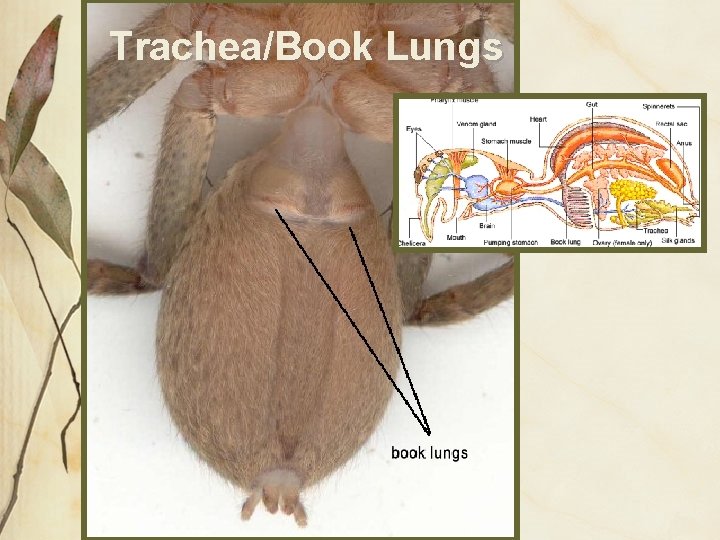
Trachea/Book Lungs
Circulation • Function - distribute nutrients & gases (O 2 & CO 2) • Examples: – Diffusion (flatworm) – Open System (arthropod) – Closed System (octopus)
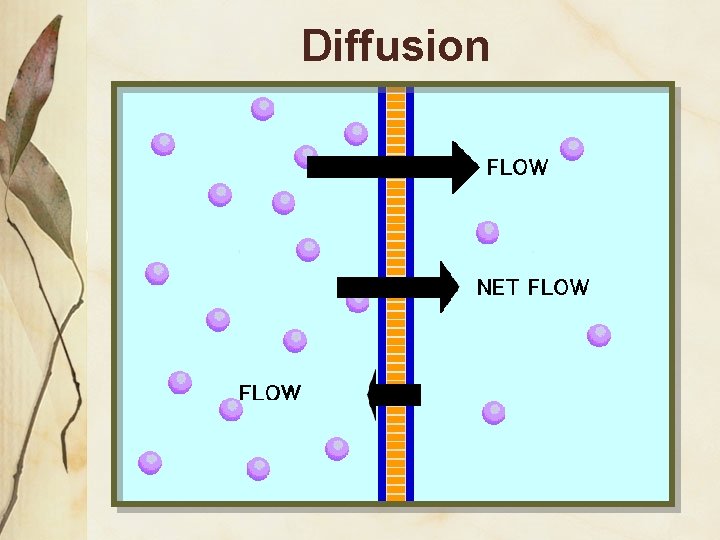
Diffusion
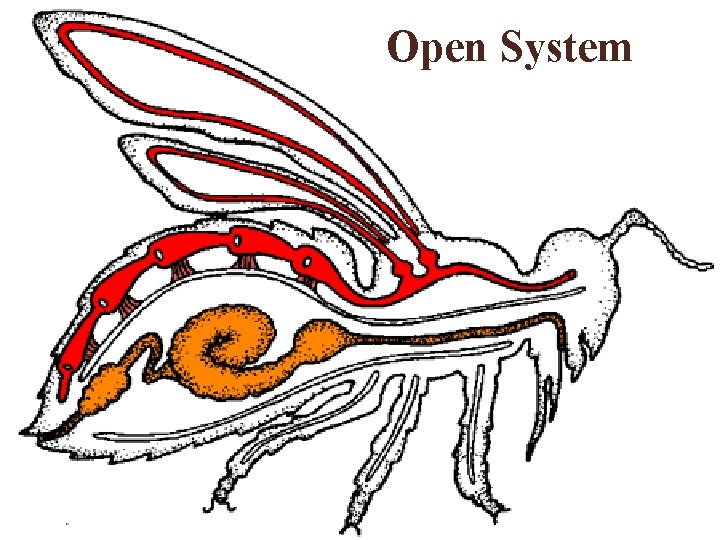
Open System
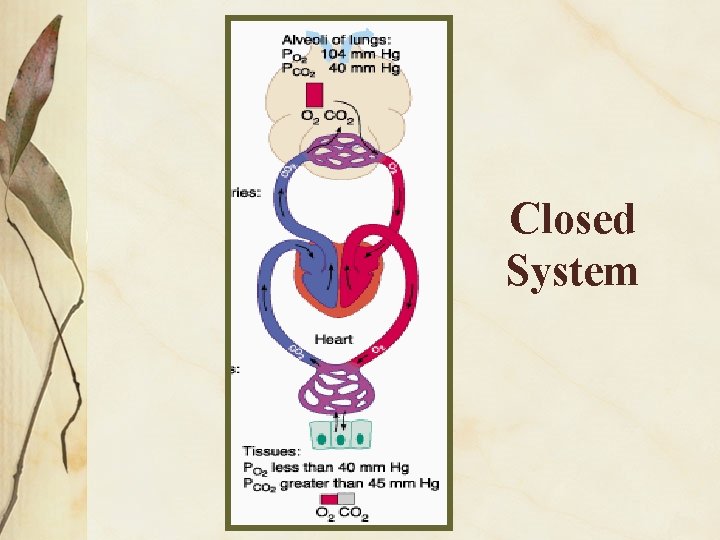
Closed System
Sensory / Response • Function - Sense the environment • Example: – Eyespot (flatworm) – Cephalization (“flatworm up”) • Brain (earthworm)
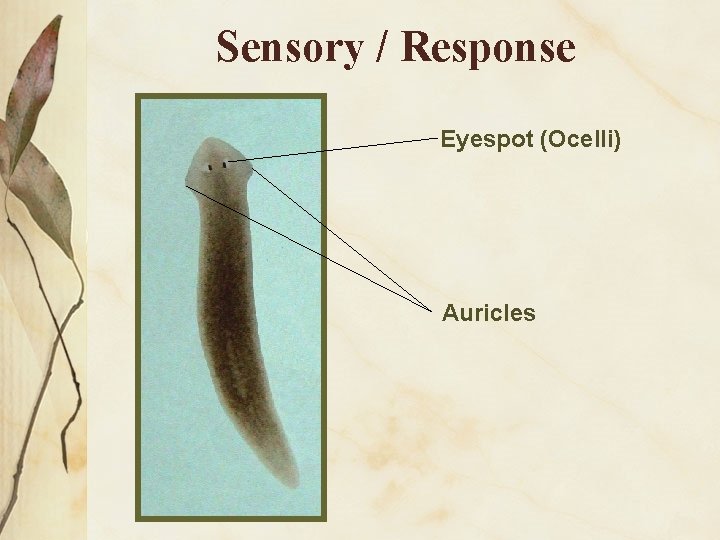
Sensory / Response Eyespot (Ocelli) Auricles

Cephalization
Movement/Support • Function – Form body/ Give shape • Examples: – No skeleton/ Hydrostatic (earthworm) – Exoskeleton (insect) – Endoskeleton (vertebrate)

Hydrostatic Skeleton
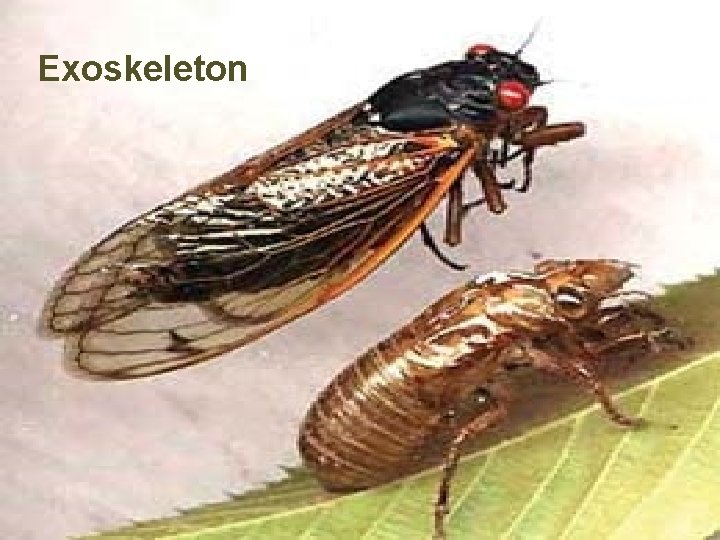
Exoskeleton
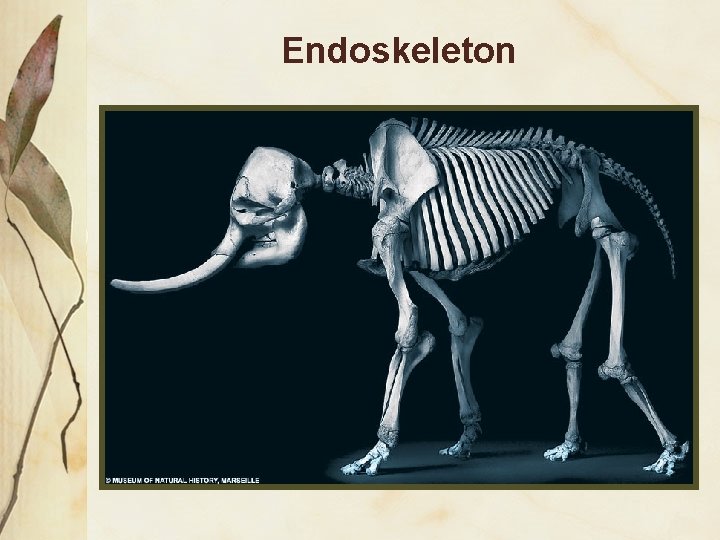
Endoskeleton
Reproduction • Function - Continuation of the species • Examples: – Asexual - 1 parent (sponges) – Sexual - 2 parents
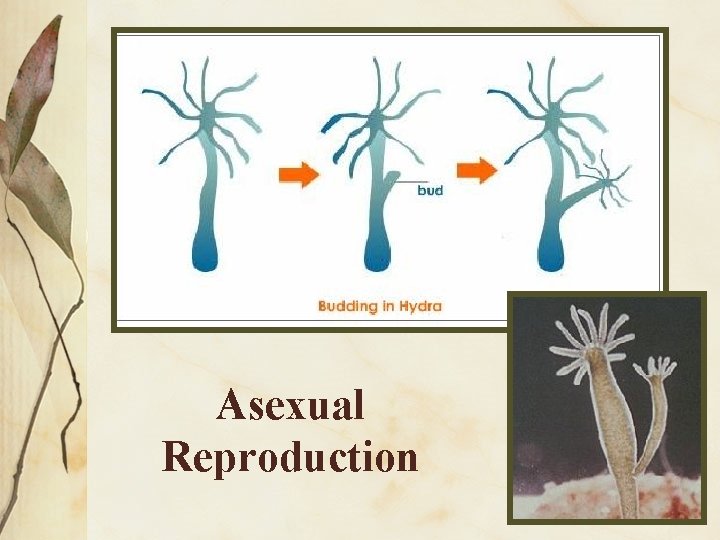
Asexual Reproduction
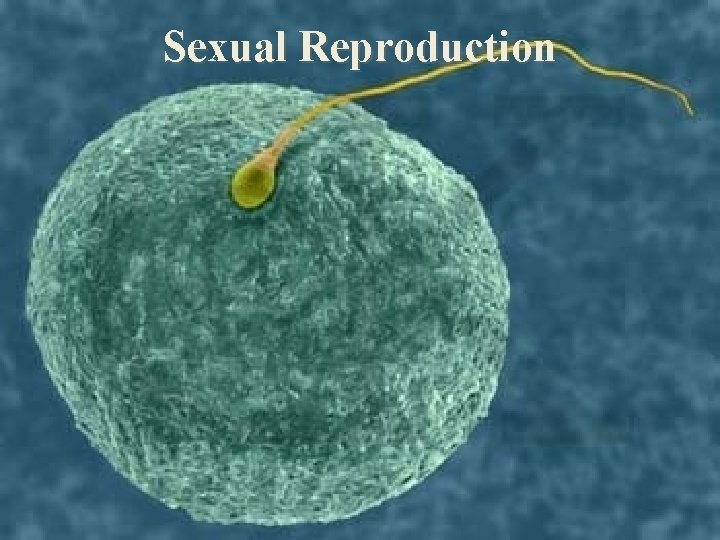
Sexual Reproduction
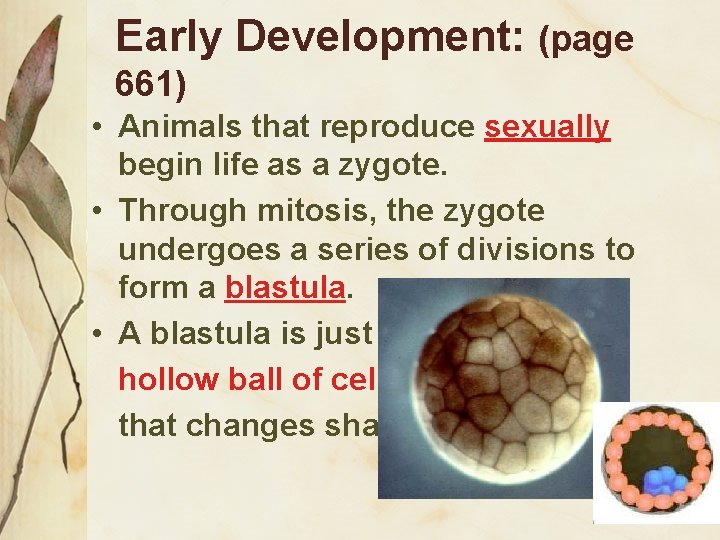
Early Development: (page 661) • Animals that reproduce sexually begin life as a zygote. • Through mitosis, the zygote undergoes a series of divisions to form a blastula. • A blastula is just a hollow ball of cells that changes shape.
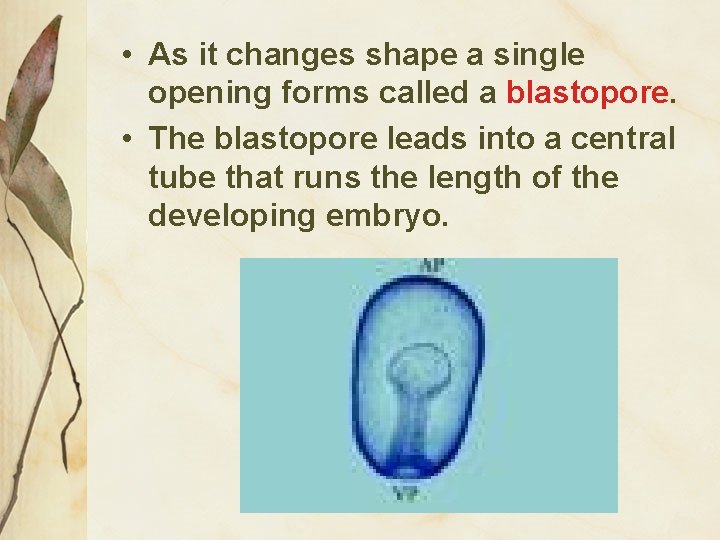
• As it changes shape a single opening forms called a blastopore. • The blastopore leads into a central tube that runs the length of the developing embryo.
• This tube becomes the digestive tract and can form in one of two ways: 1. ) a protosome - an animal whose mouth develops from the blastopore; most invertebrates • 2. ) a deuterosome - an animal whose anus is formed from the blastopore. • This includes echinoderms and all vertebrates
During early development, the cells of most animal embryos differentiate into 3 layers.
The 3 germ layers are: • Endoderm - innermost layer that develops into the linings of the digestive tract and respiratory system • Mesoderm - middle layer that develops into the muscles, circulatory, reproductive, and excretory system • Ectoderm - outermost layer, develops into sense organs,

Germ Layers
- Slides: 59