
Inventory Management 1 Learning Objectives Define the term
Inventory Management 1
Learning Objectives • • Define the term inventory and list the major reasons for holding inventories; and list the main requirements for effective inventory management. Discuss the nature and importance of service inventories Discuss the objectives of inventory management. Describe the A-B-C approach and explain how it is useful. 2
Learning Objectives • • • Describe the basic EOQ model and its assumptions and solve typical problems. Describe the economic production quantity model and solve typical problems. Describe reorder point models and solve typical problems. 3
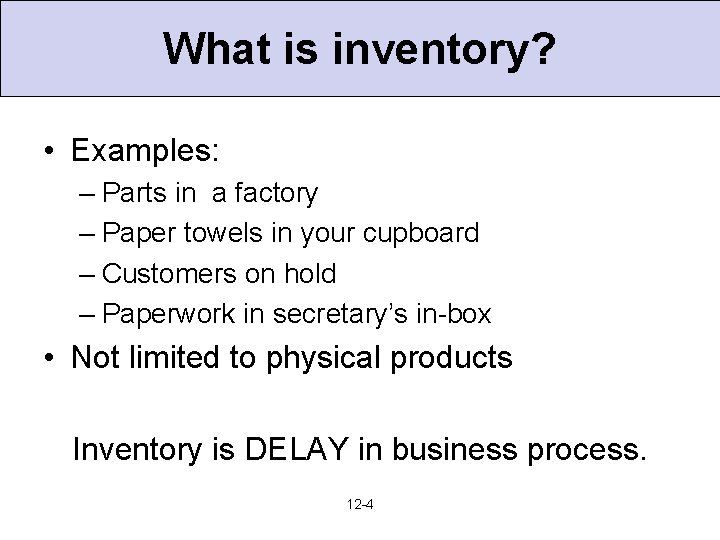
What is inventory? • Examples: – Parts in a factory – Paper towels in your cupboard – Customers on hold – Paperwork in secretary’s in-box • Not limited to physical products Inventory is DELAY in business process. 12 -4
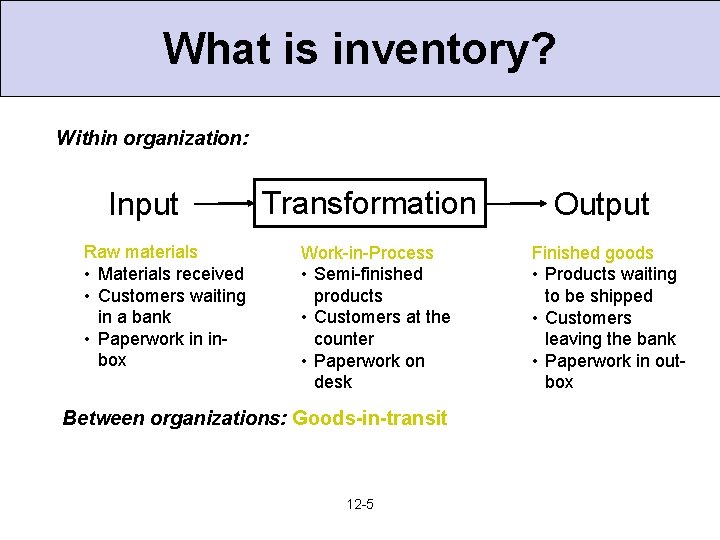
What is inventory? Within organization: Input Raw materials • Materials received • Customers waiting in a bank • Paperwork in inbox Transformation Work-in-Process • Semi-finished products • Customers at the counter • Paperwork on desk Between organizations: Goods-in-transit 12 -5 Output Finished goods • Products waiting to be shipped • Customers leaving the bank • Paperwork in outbox
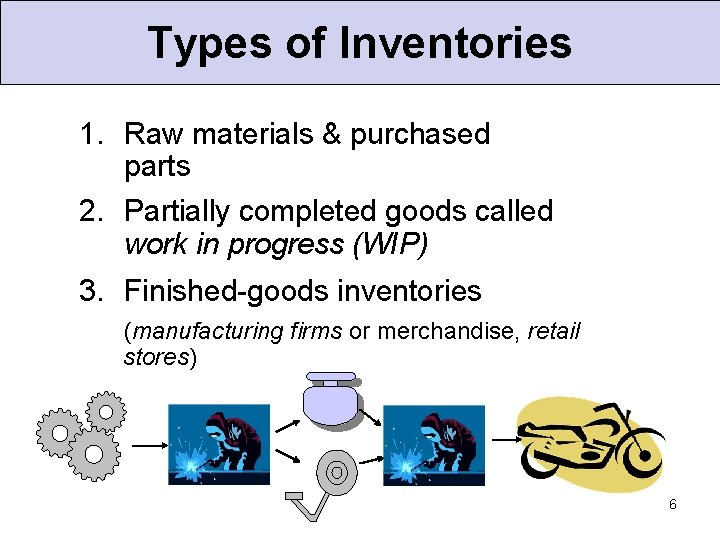
Types of Inventories 1. Raw materials & purchased parts 2. Partially completed goods called work in progress (WIP) 3. Finished-goods inventories (manufacturing firms or merchandise, retail stores) 6
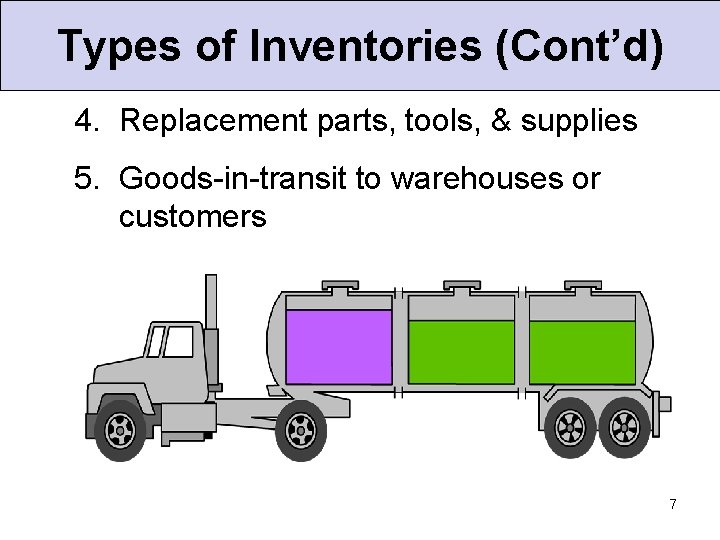
Types of Inventories (Cont’d) 4. Replacement parts, tools, & supplies 5. Goods-in-transit to warehouses or customers 7
Functions of Inventory • To meet anticipated demand (anticipation stock) • To maintain continuity of operations (buffer stock) • To protect against stock-outs, i. e. decrease the risk of shortages due to delayed delivery and unexpected increases in demand, (safety stock) • To take advantage of quantity discounts 8

Objective of Inventory Control • To achieve satisfactory levels of customer service while keeping inventory costs within reasonable bounds (limits), there are 2 concerns: 1. Level of customer service • Right goods (in sufficient quantities) • Right place • Right time 2. Costs of ordering and carrying inventory 9
Effective Inventory Management • A system to keep track of inventory • A reliable forecast of demand • Knowledge of lead times • Reasonable estimates of – Holding costs – Ordering costs – Shortage costs • A classification system 10
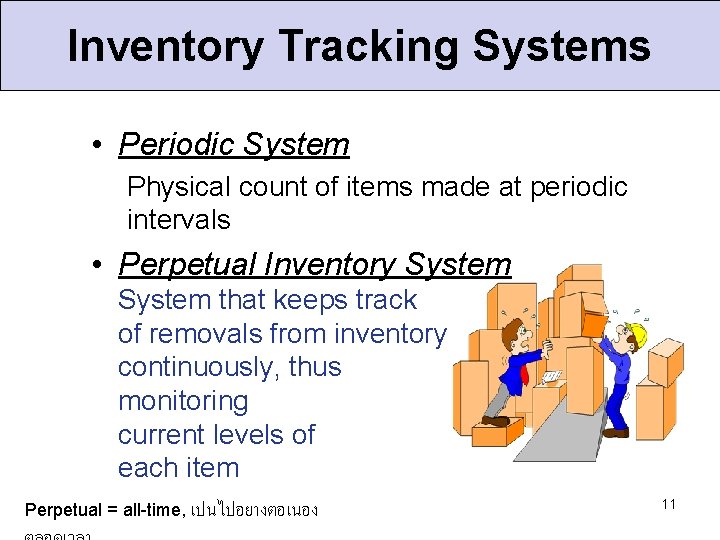
Inventory Tracking Systems • Periodic System Physical count of items made at periodic intervals • Perpetual Inventory System that keeps track of removals from inventory continuously, thus monitoring current levels of each item Perpetual = all-time, เปนไปอยางตอเนอง 11
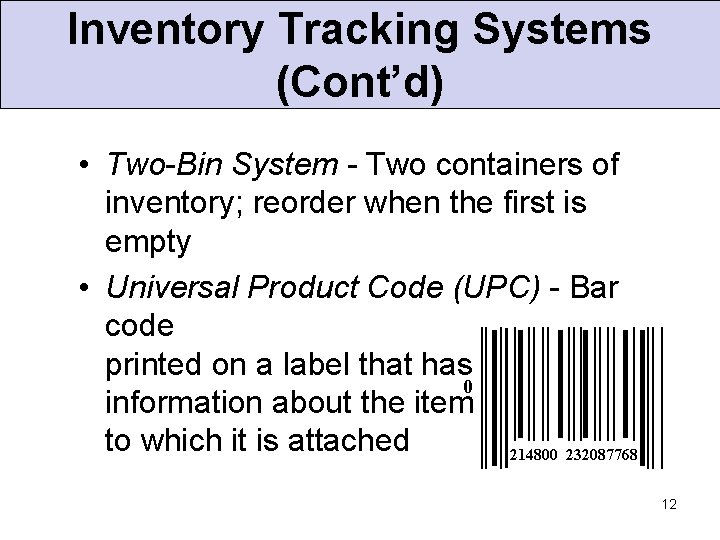
Inventory Tracking Systems (Cont’d) • Two-Bin System - Two containers of inventory; reorder when the first is empty • Universal Product Code (UPC) - Bar code printed on a label that has 0 information about the item to which it is attached 214800 232087768 12
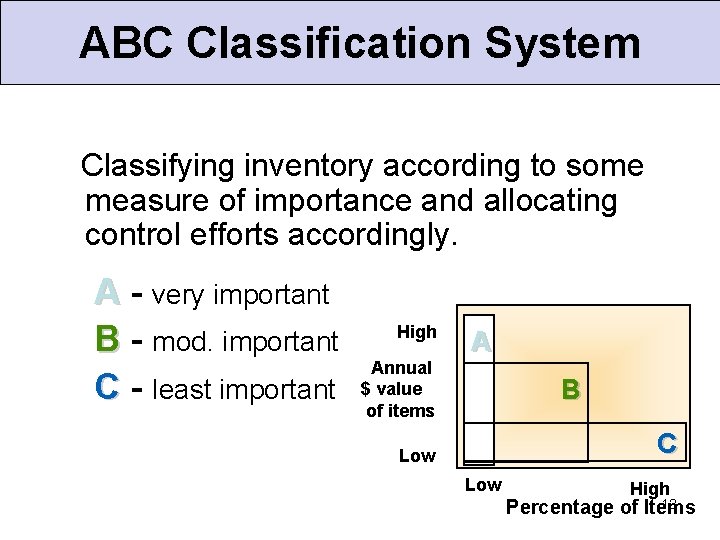
ABC Classification System Classifying inventory according to some measure of importance and allocating control efforts accordingly. A - very important B - mod. important C - least important High Annual $ value of items A B C Low High 13 Percentage of Items
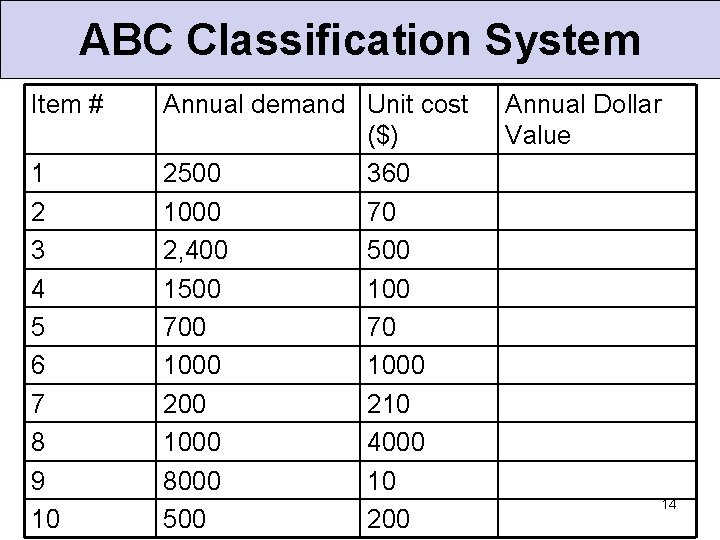
ABC Classification System Item # 1 2 3 4 5 6 7 8 9 10 Annual demand Unit cost ($) 2500 360 1000 70 2, 400 500 100 70 1000 200 210 1000 4000 8000 10 500 200 Annual Dollar Value 14
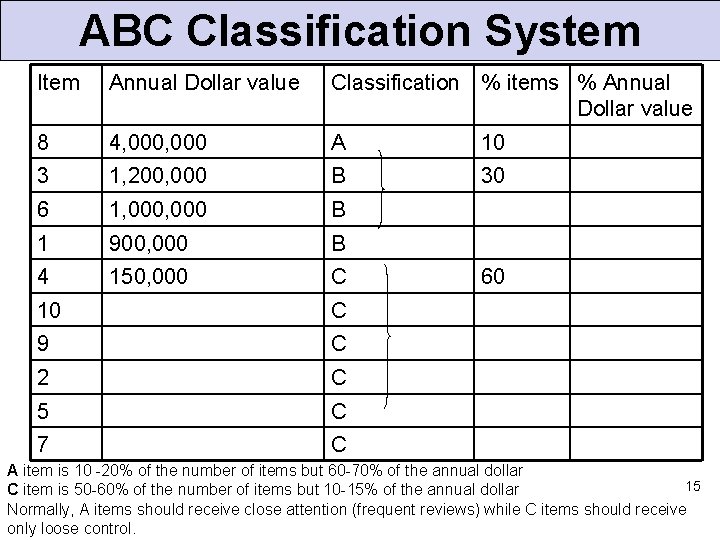
ABC Classification System Item Annual Dollar value Classification % items % Annual Dollar value 8 4, 000 A 10 3 1, 200, 000 B 30 6 1, 000 B 1 900, 000 B 4 150, 000 C 10 C 9 C 2 C 5 C 7 C 60 A item is 10 -20% of the number of items but 60 -70% of the annual dollar 15 C item is 50 -60% of the number of items but 10 -15% of the annual dollar Normally, A items should receive close attention (frequent reviews) while C items should receive only loose control.
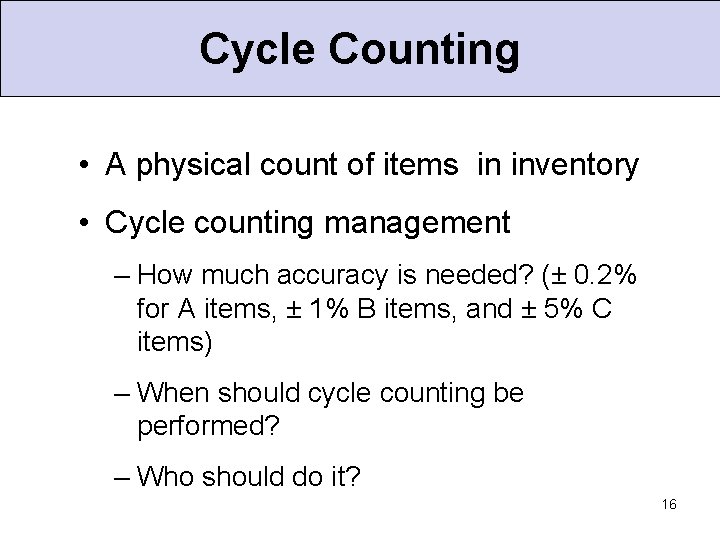
Cycle Counting • A physical count of items in inventory • Cycle counting management – How much accuracy is needed? (± 0. 2% for A items, ± 1% B items, and ± 5% C items) – When should cycle counting be performed? – Who should do it? 16
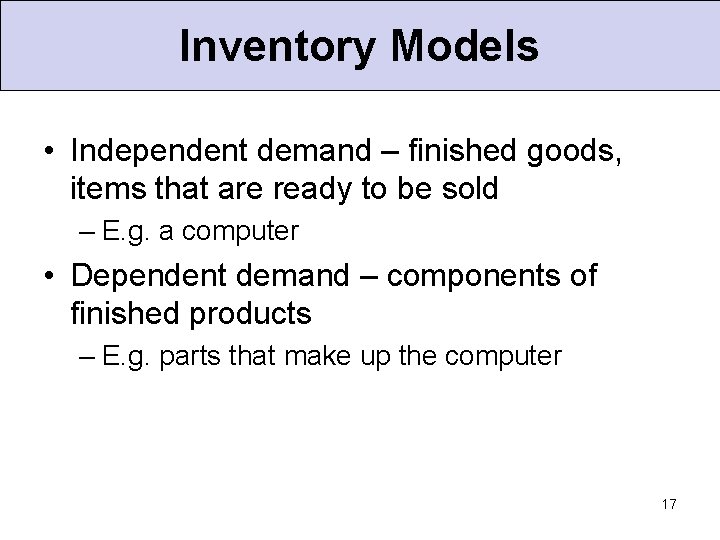
Inventory Models • Independent demand – finished goods, items that are ready to be sold – E. g. a computer • Dependent demand – components of finished products – E. g. parts that make up the computer 17
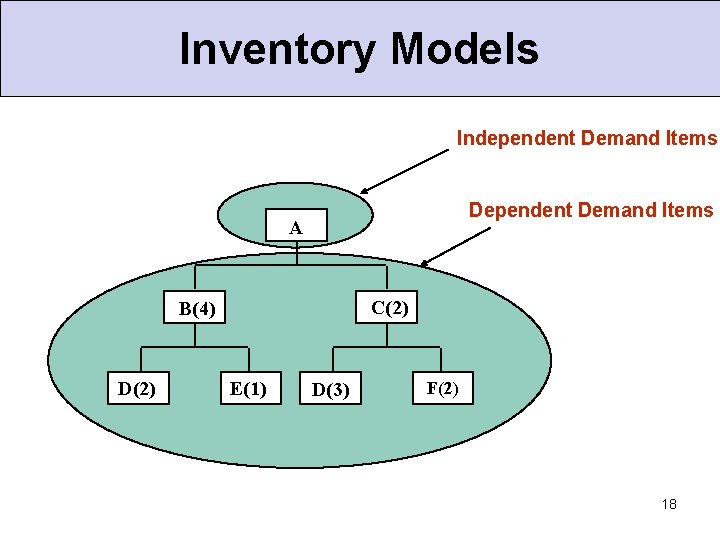
Inventory Models Independent Demand Items Dependent Demand Items A C(2) B(4) D(2) E(1) D(3) F(2) 18
Economic Order Quantity Models • Economic order quantity (EOQ) model – The order size that minimizes total annual cost • Economic production model • Quantity discount model 19
Assumptions of EOQ Model • Only one product is involved • Annual demand requirements known • Demand is even throughout the year • Lead time does not vary • Each order is received in a single delivery • There are no quantity discounts 20
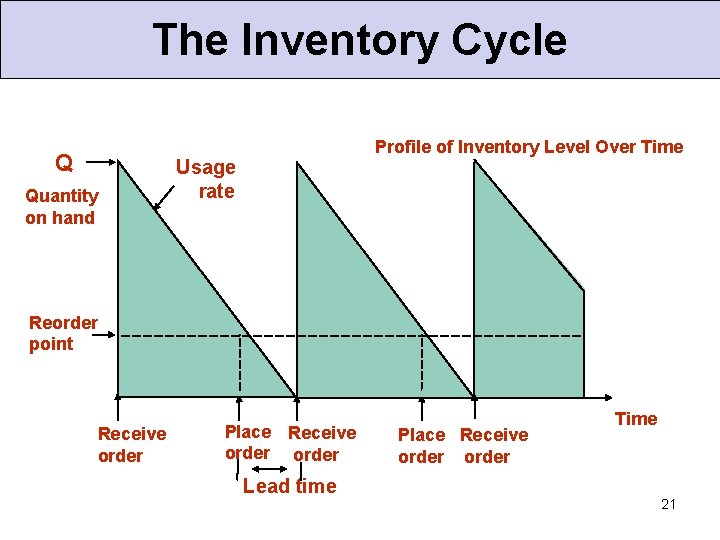
The Inventory Cycle Q Quantity on hand Profile of Inventory Level Over Time Usage rate Reorder point Receive order Place Receive order Lead time Place Receive order Time 21
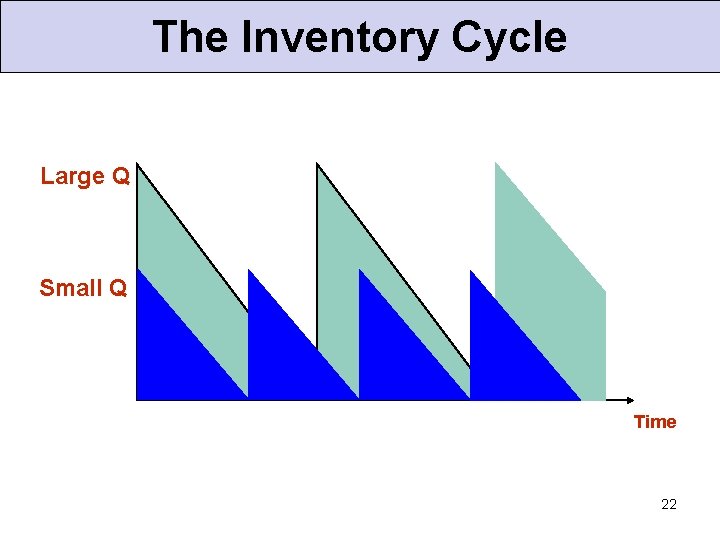
The Inventory Cycle Large Q Small Q Time 22
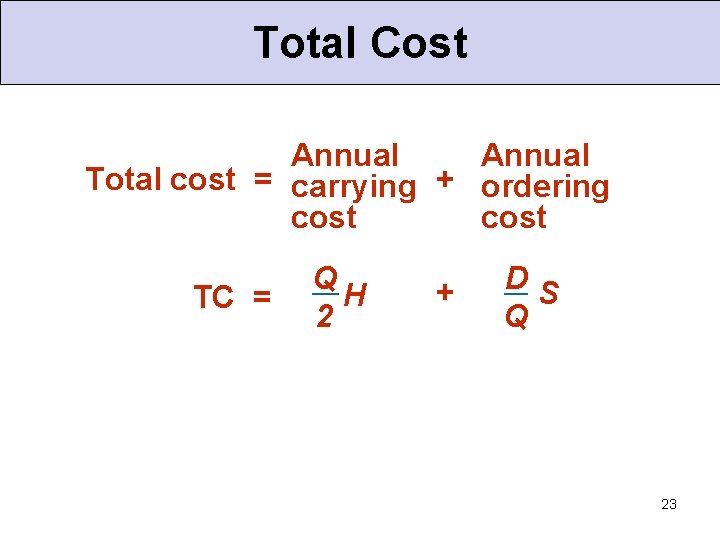
Total Cost Annual Total cost = carrying + ordering cost TC = Q H 2 + DS Q 23
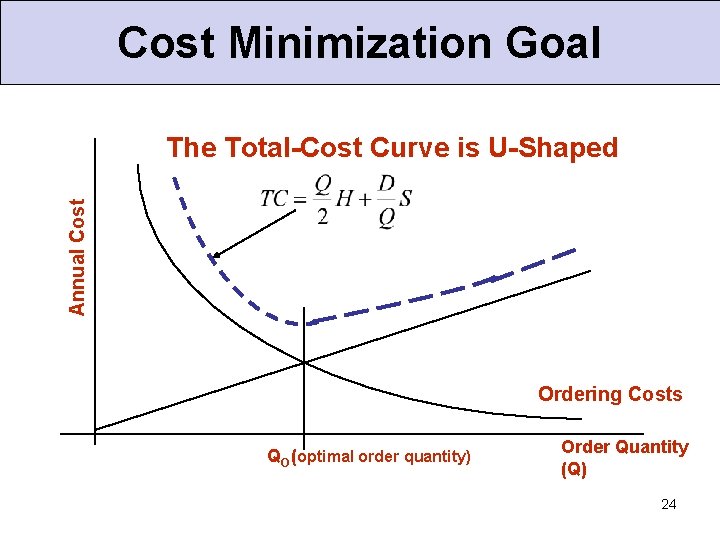
Cost Minimization Goal Annual Cost The Total-Cost Curve is U-Shaped Ordering Costs QO (optimal order quantity) Order Quantity (Q) 24
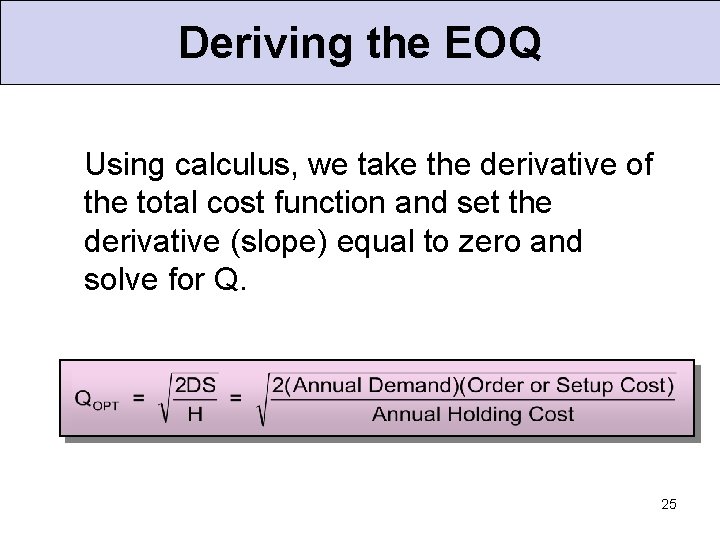
Deriving the EOQ Using calculus, we take the derivative of the total cost function and set the derivative (slope) equal to zero and solve for Q. 25
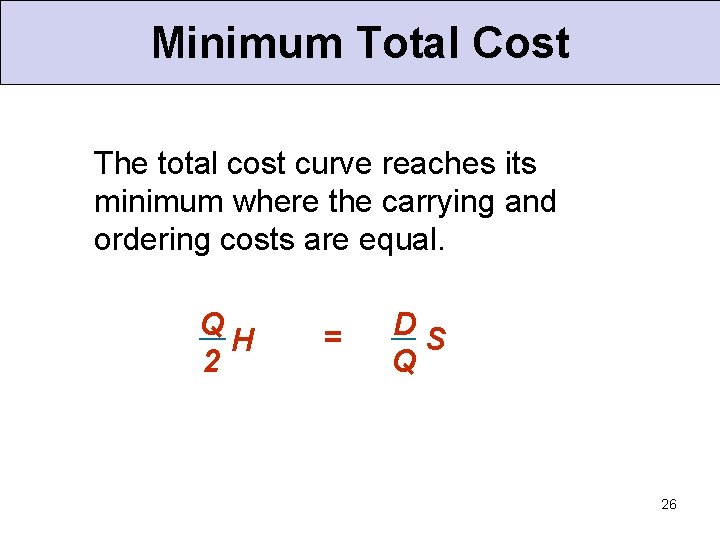
Minimum Total Cost The total cost curve reaches its minimum where the carrying and ordering costs are equal. Q H 2 = DS Q 26
Economic Production Quantity (EPQ) • Production done in batches or lots • Capacity to produce a part exceeds the part’s usage or demand rate • Assumptions of EPQ are similar to EOQ except orders are received incrementally during production 27
Economic Production Quantity Assumptions • • Only one item is involved Annual demand is known Usage rate is constant Usage occurs continually Production rate is constant Lead time does not vary No quantity discounts 28
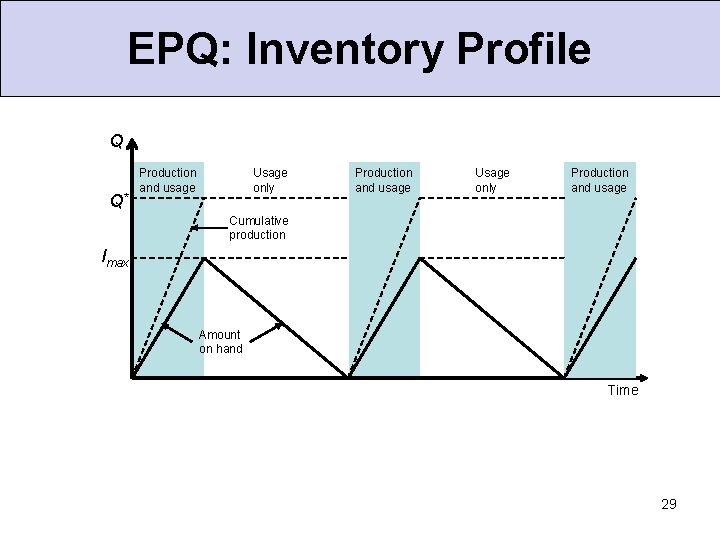
EPQ: Inventory Profile Q Q* Production and usage Usage only Production and usage Cumulative production Imax Amount on hand Time 29
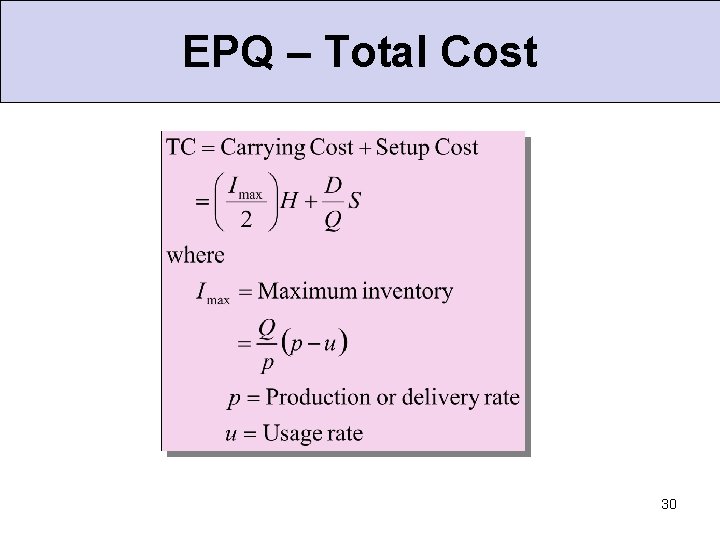
EPQ – Total Cost 30
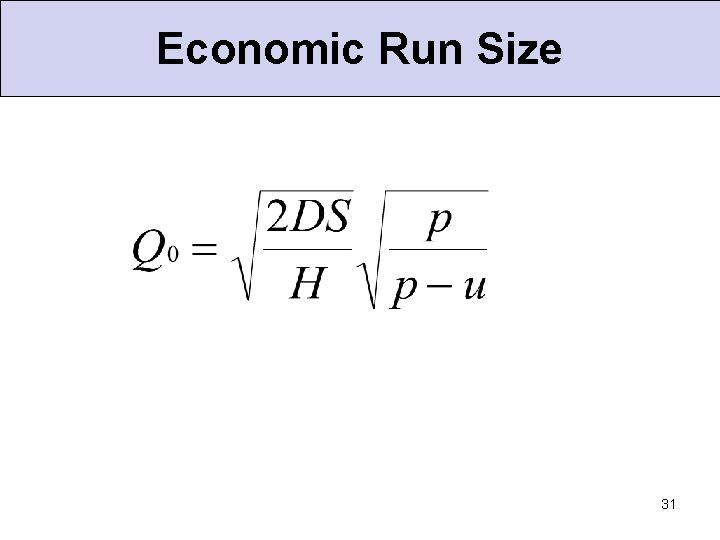
Economic Run Size 31
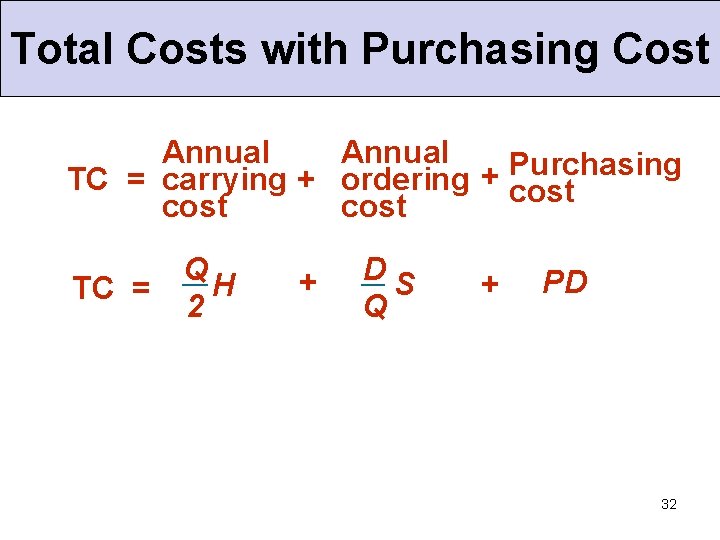
Total Costs with Purchasing Cost Annual Purchasing + TC = carrying + ordering cost Q H TC = 2 + DS Q + PD 32
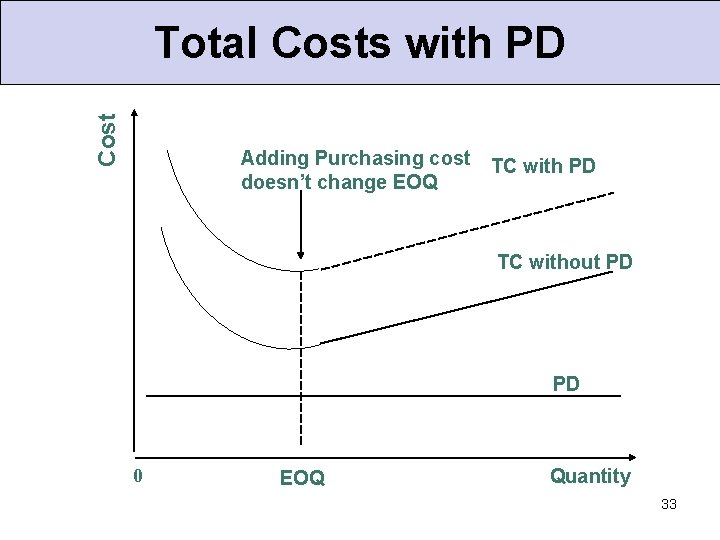
Cost Total Costs with PD Adding Purchasing cost doesn’t change EOQ TC with PD TC without PD PD 0 EOQ Quantity 33
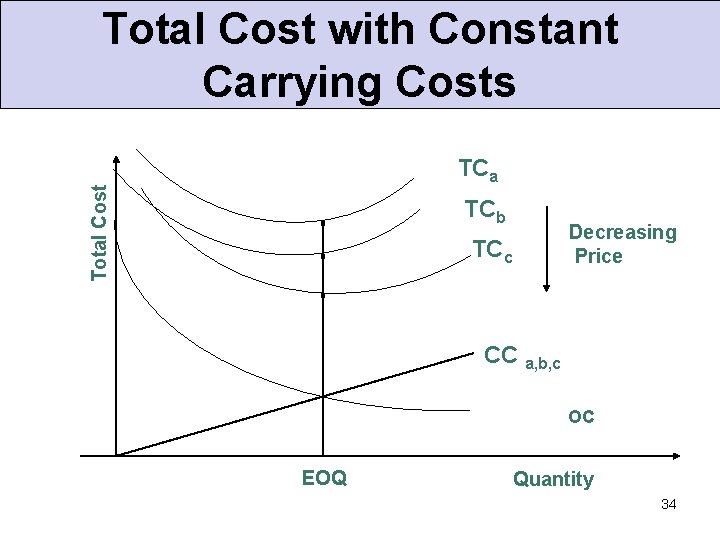
Total Cost with Constant Carrying Costs Total Cost TCa TCb Decreasing Price TCc CC a, b, c OC EOQ Quantity 34
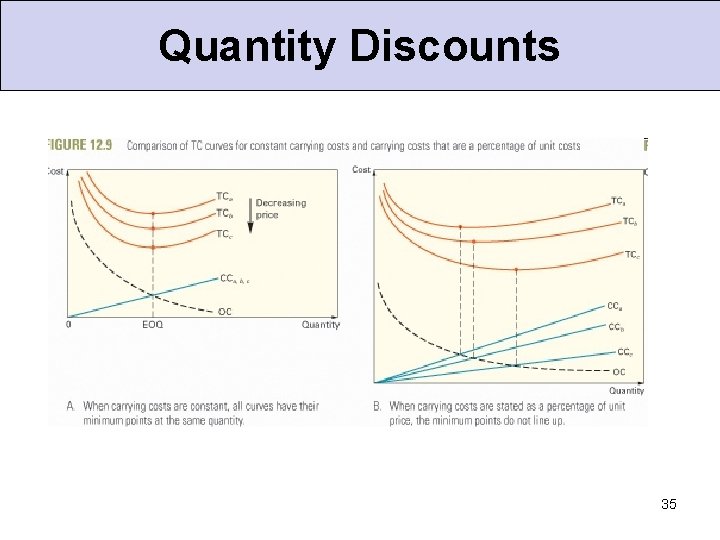
Quantity Discounts 35
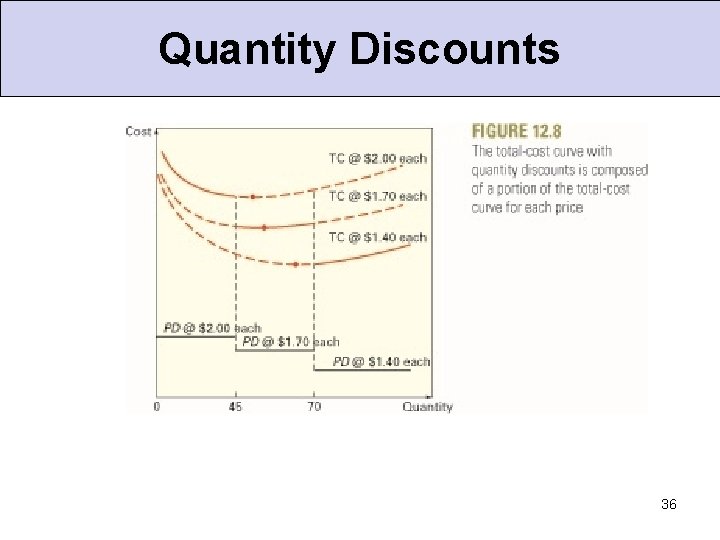
Quantity Discounts 36
When to Reorder • Reorder point – When the quantity on hand of an item drops to this amount, the item is reordered. – Determinants of the reorder point 1. 2. 3. 4. The rate of demand The lead time The extent of demand and/or lead time variability The degree of stockout risk acceptable to management 37
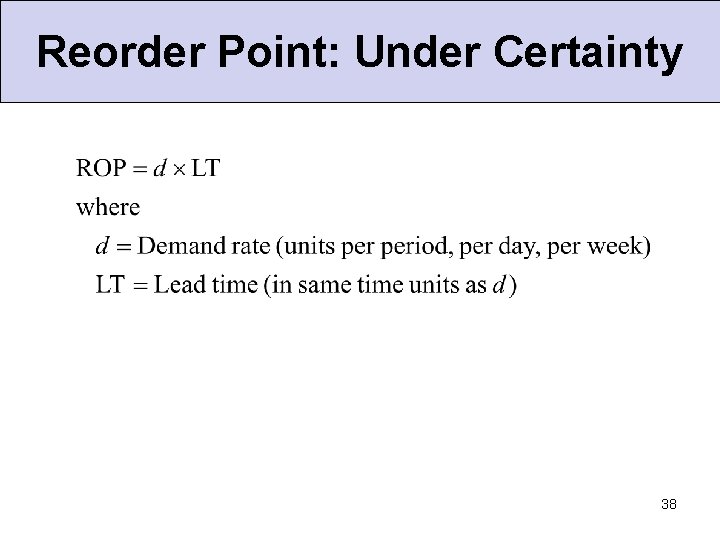
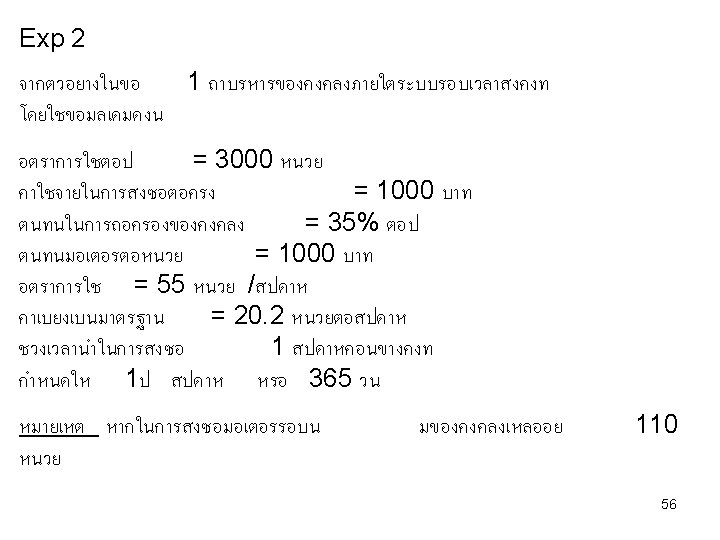
Reorder Point: Under Certainty 38
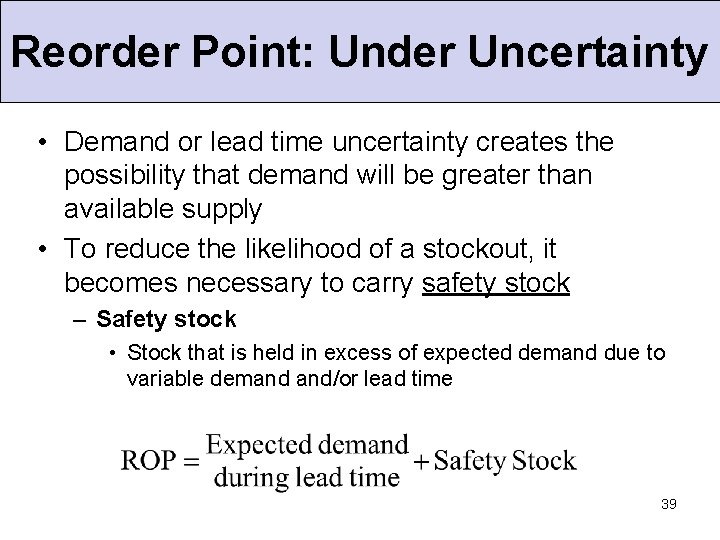
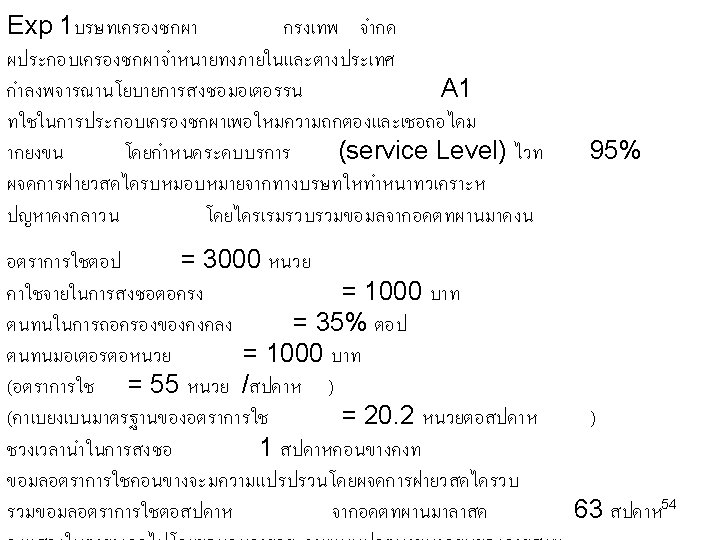
Reorder Point: Under Uncertainty • Demand or lead time uncertainty creates the possibility that demand will be greater than available supply • To reduce the likelihood of a stockout, it becomes necessary to carry safety stock – Safety stock • Stock that is held in excess of expected demand due to variable demand and/or lead time 39
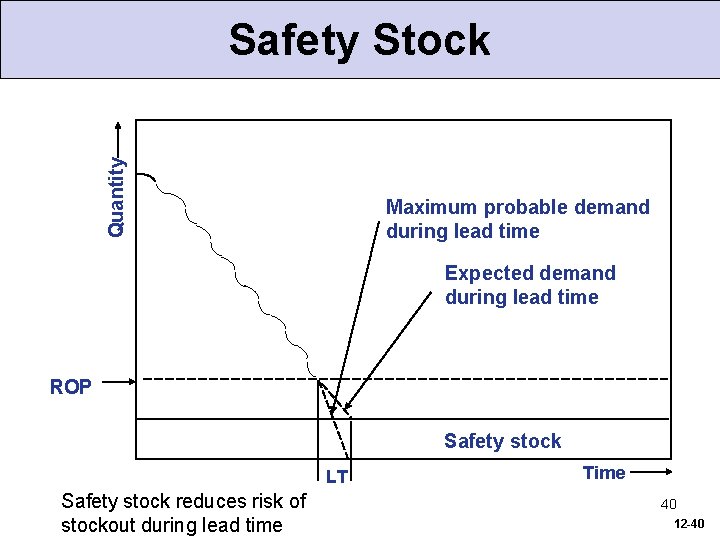
Quantity Safety Stock Maximum probable demand during lead time Expected demand during lead time ROP Safety stock LT Safety stock reduces risk of stockout during lead time Time 40 12 -40
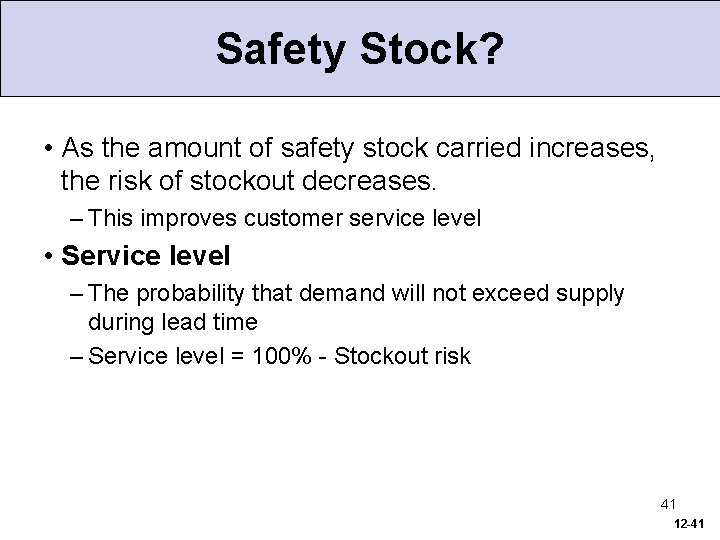
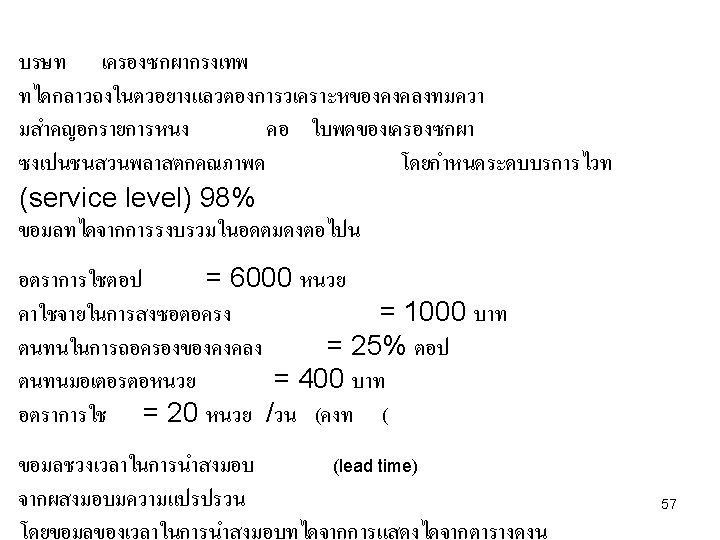
Safety Stock? • As the amount of safety stock carried increases, the risk of stockout decreases. – This improves customer service level • Service level – The probability that demand will not exceed supply during lead time – Service level = 100% - Stockout risk 41 12 -41
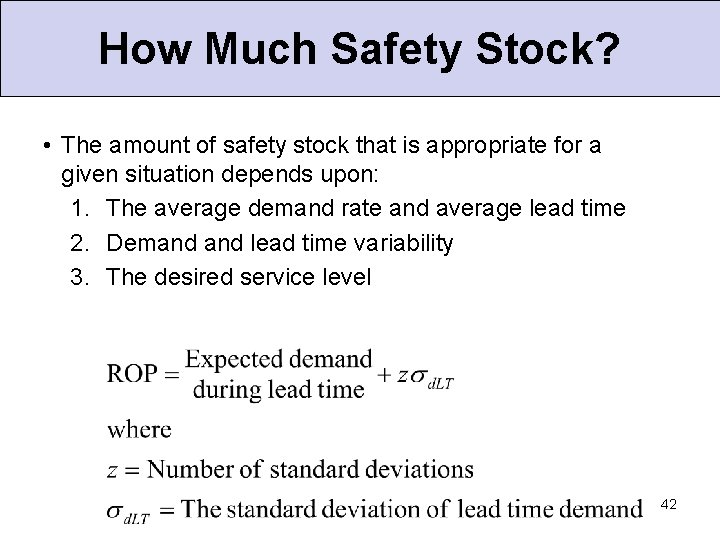
How Much Safety Stock? • The amount of safety stock that is appropriate for a given situation depends upon: 1. The average demand rate and average lead time 2. Demand lead time variability 3. The desired service level 42
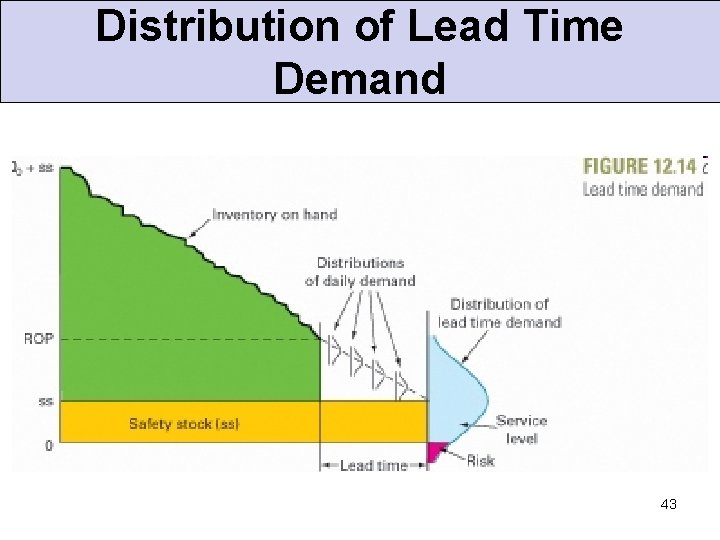
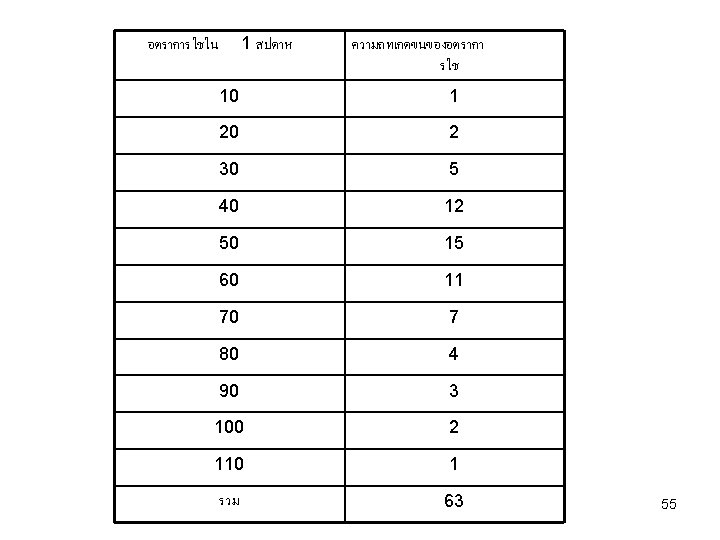
Distribution of Lead Time Demand 43
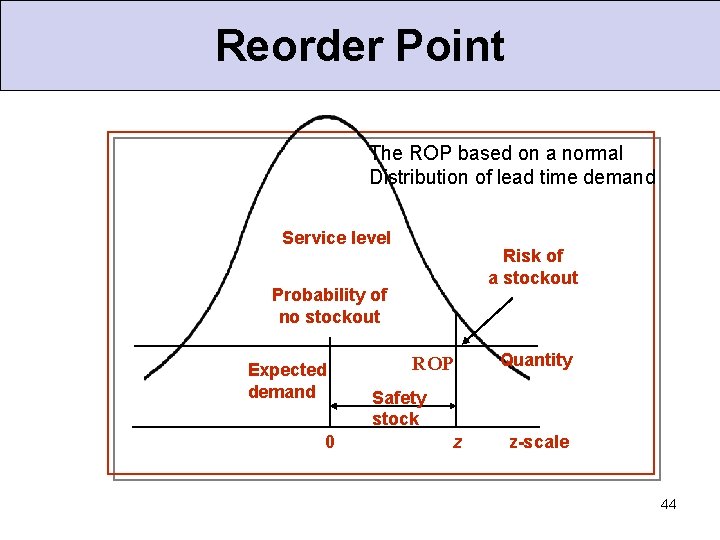
Reorder Point The ROP based on a normal Distribution of lead time demand Service level Risk of a stockout Probability of no stockout Expected demand 0 ROP Quantity Safety stock z z-scale 44
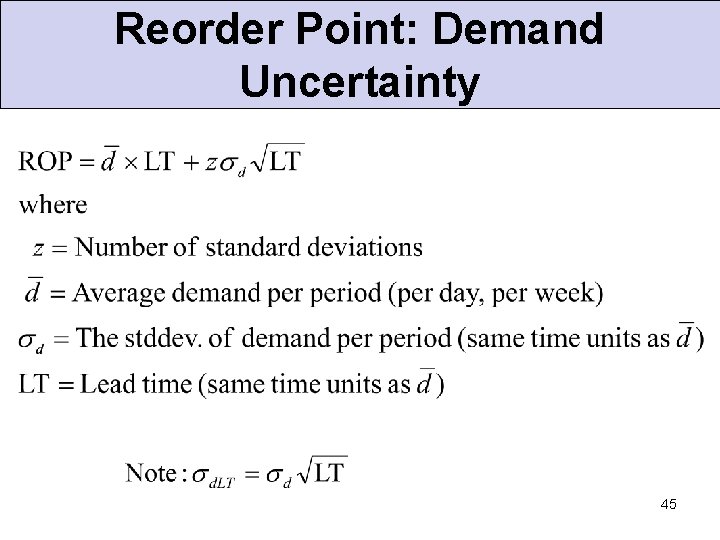
Reorder Point: Demand Uncertainty 45
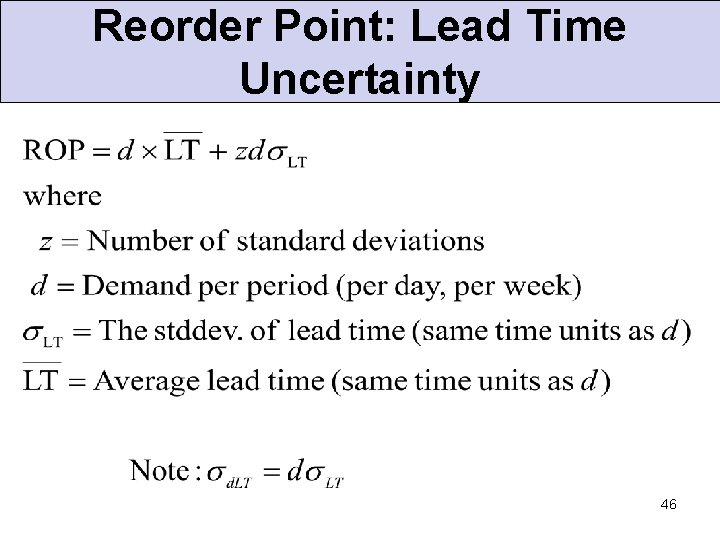
Reorder Point: Lead Time Uncertainty 46
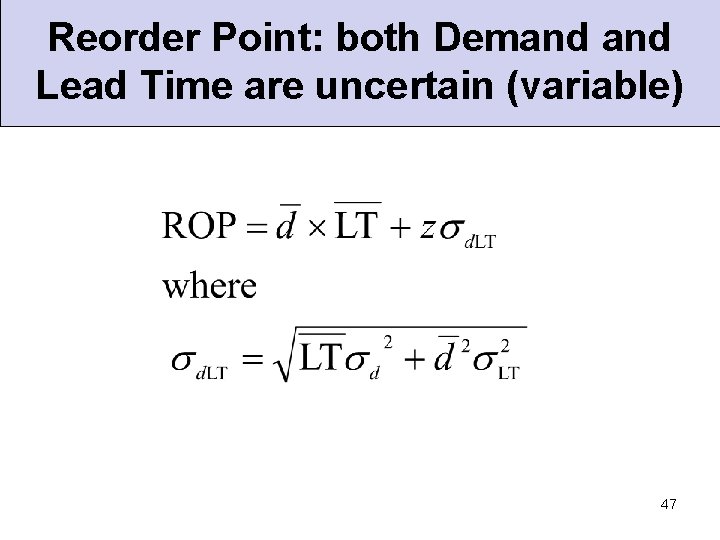
Reorder Point: both Demand Lead Time are uncertain (variable) 47
ROP equations of different cases 48
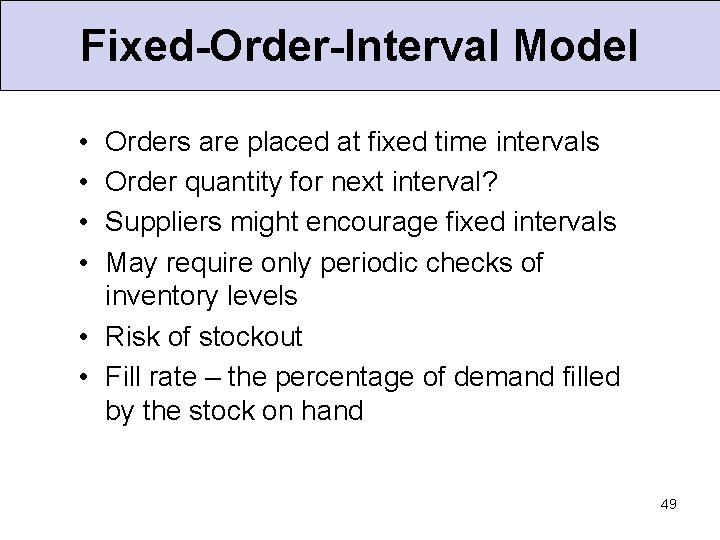
Fixed-Order-Interval Model • • Orders are placed at fixed time intervals Order quantity for next interval? Suppliers might encourage fixed intervals May require only periodic checks of inventory levels • Risk of stockout • Fill rate – the percentage of demand filled by the stock on hand 49
Fixed-Interval Benefits • Tight control of inventory items • Items from same supplier may yield savings in: – Ordering – Packing – Shipping costs • May be practical when inventories cannot be closely monitored 50
Fixed-Interval Disadvantages • Requires a larger safety stock • Increases carrying cost • Costs of periodic reviews 51
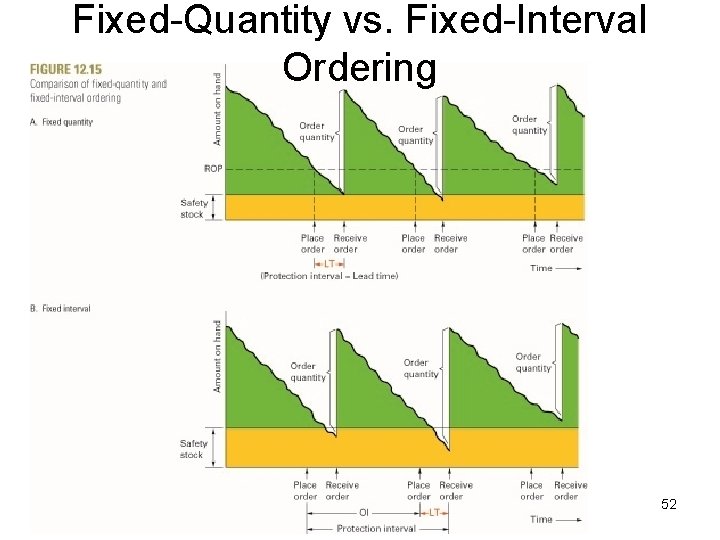
Fixed-Quantity vs. Fixed-Interval Ordering 52
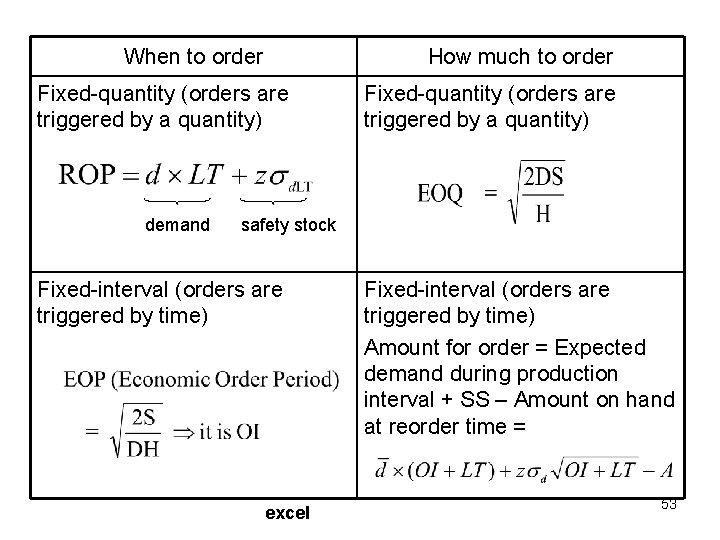
When to order How much to order Fixed-quantity (orders are triggered by a quantity) demand Fixed-quantity (orders are triggered by a quantity) safety stock Fixed-interval (orders are triggered by time) excel Fixed-interval (orders are triggered by time) Amount for order = Expected demand during production interval + SS – Amount on hand at reorder time = 53
- Slides: 58