
Inventory Costs What costs are in the inventory
- Slides: 8
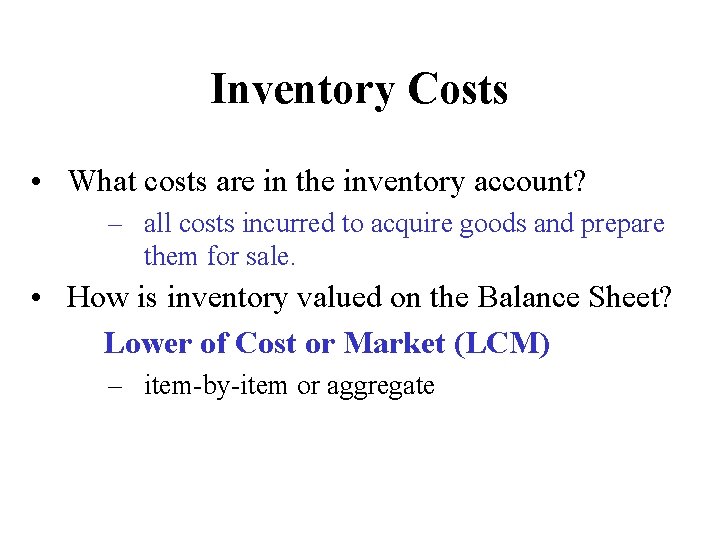
Inventory Costs • What costs are in the inventory account? – all costs incurred to acquire goods and prepare them for sale. • How is inventory valued on the Balance Sheet? Lower of Cost or Market (LCM) – item-by-item or aggregate
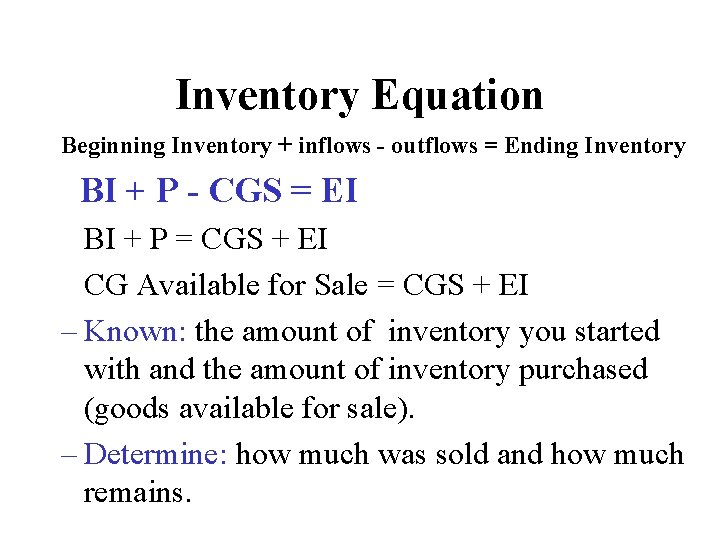
Inventory Equation Beginning Inventory + inflows - outflows = Ending Inventory BI + P - CGS = EI BI + P = CGS + EI CG Available for Sale = CGS + EI – Known: the amount of inventory you started with and the amount of inventory purchased (goods available for sale). – Determine: how much was sold and how much remains.
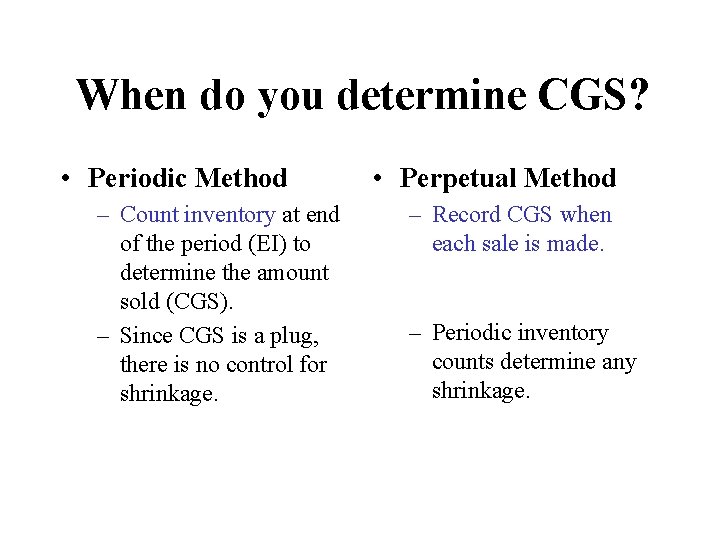
When do you determine CGS? • Periodic Method – Count inventory at end of the period (EI) to determine the amount sold (CGS). – Since CGS is a plug, there is no control for shrinkage. • Perpetual Method – Record CGS when each sale is made. – Periodic inventory counts determine any shrinkage.
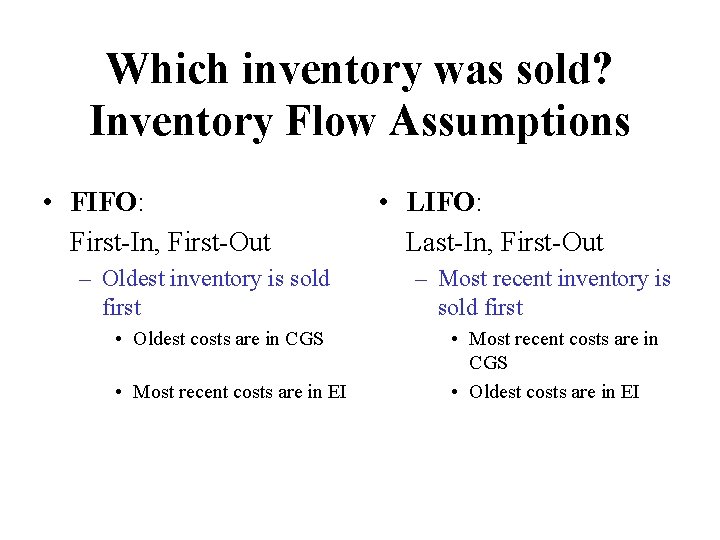
Which inventory was sold? Inventory Flow Assumptions • FIFO: First-In, First-Out – Oldest inventory is sold first • Oldest costs are in CGS • Most recent costs are in EI • LIFO: Last-In, First-Out – Most recent inventory is sold first • Most recent costs are in CGS • Oldest costs are in EI
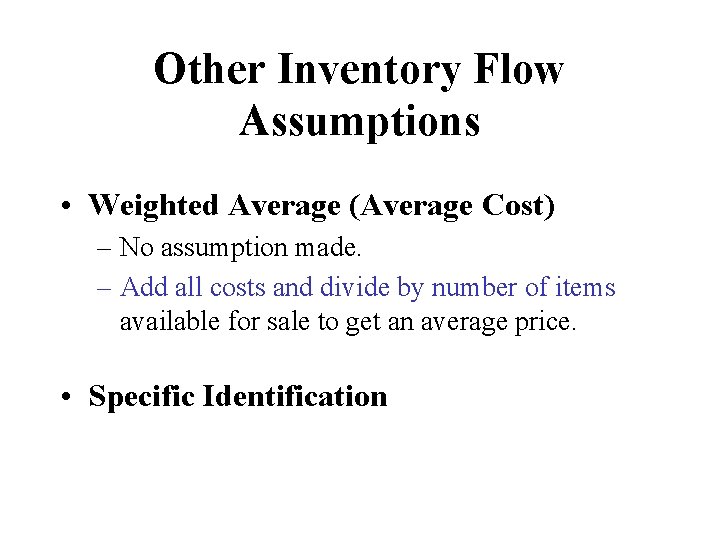
Other Inventory Flow Assumptions • Weighted Average (Average Cost) – No assumption made. – Add all costs and divide by number of items available for sale to get an average price. • Specific Identification
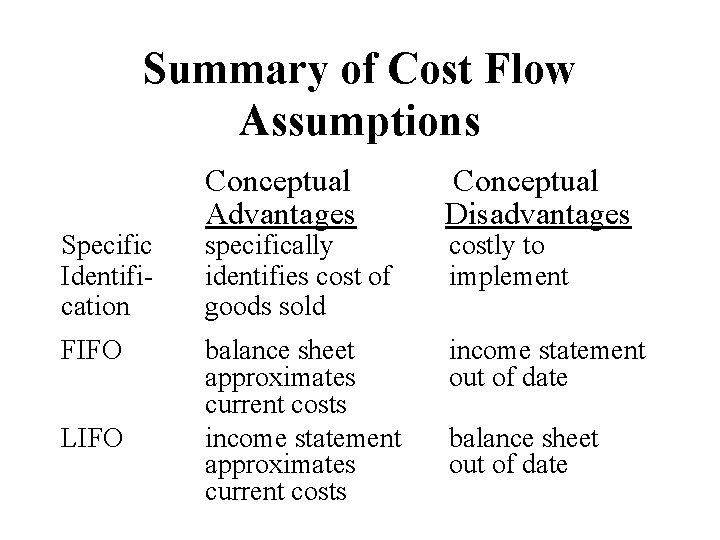
Summary of Cost Flow Assumptions Specific Identification FIFO LIFO Conceptual Advantages Conceptual Disadvantages balance sheet approximates current costs income statement out of date specifically identifies cost of goods sold costly to implement balance sheet out of date
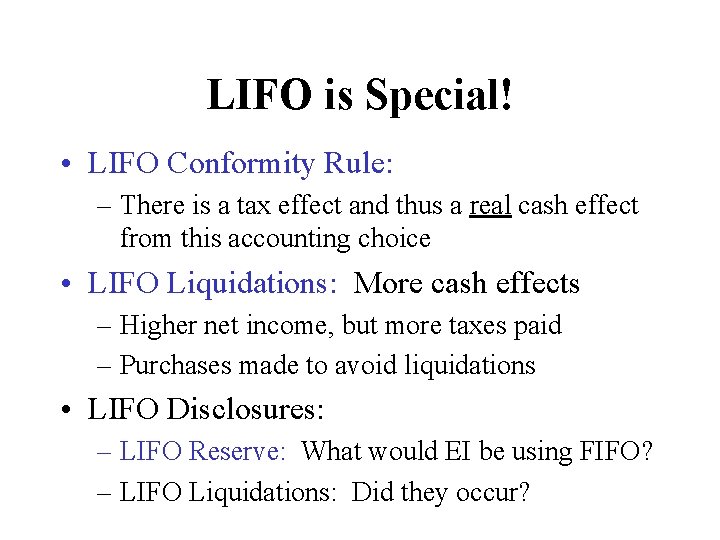
LIFO is Special! • LIFO Conformity Rule: – There is a tax effect and thus a real cash effect from this accounting choice • LIFO Liquidations: More cash effects – Higher net income, but more taxes paid – Purchases made to avoid liquidations • LIFO Disclosures: – LIFO Reserve: What would EI be using FIFO? – LIFO Liquidations: Did they occur?
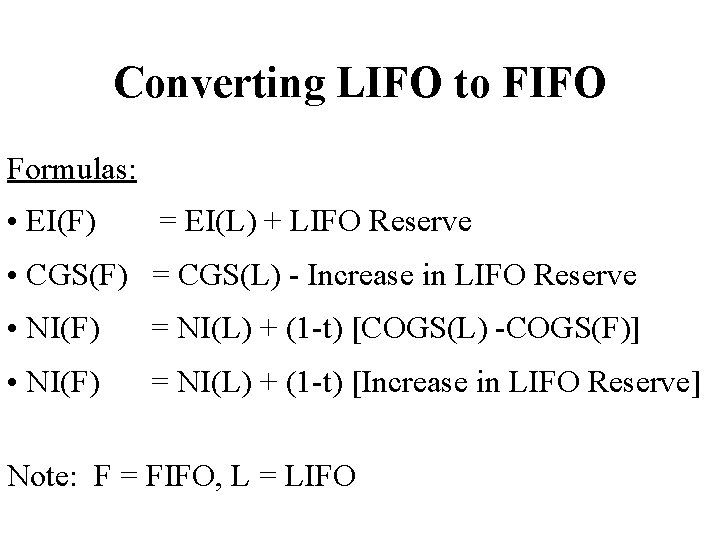
Converting LIFO to FIFO Formulas: • EI(F) = EI(L) + LIFO Reserve • CGS(F) = CGS(L) - Increase in LIFO Reserve • NI(F) = NI(L) + (1 -t) [COGS(L) -COGS(F)] • NI(F) = NI(L) + (1 -t) [Increase in LIFO Reserve] Note: F = FIFO, L = LIFO