
Inventory Basics WHEN SHOULD ITEMS BE COUNTED INTO
Inventory Basics WHEN SHOULD ITEMS BE COUNTED INTO INVENTORY? WHAT COSTS ATTACH TO INVENTORY? WHAT IS THE DIFFERENCE BETWEEN PERIODIC AND PERPETUAL INVENTORY?
What constitutes inventory? �Goods in Transit Items shipped free on board (FOB) destination are not counted in inventory until they are received. They do not belong to the purchaser until they arrive. Items shipped free on board (FOB) shipping point are counted into inventory once they are placed on the common carrier. �Consigned Goods Consigned goods are items placed with another company who sells the items on behalf of the company for a fee. Ownership has not transferred and these items should be counted into inventory Ex: Jewelry stores or sports memorabilia. �Damaged or Obsolete Goods Damaged and obsolete items should not be counted into inventory as though they were viable items to be sold. If some residual sale can be made, they are valued at sales price less the cost of making the sale called “net realizable value. ” Ex: football jerseys for the team that did not win the title game.
What costs attach to inventory? �Purchase price less any sales discount or sales allowance �Plus Insurance when goods are shipping FOB shipping point Freight cost when shipping FOB shipping point Any other costs including tariffs, storage costs, refurbishment costs. �The focus is whatever costs are needed to bring an item to its location in a salable condition
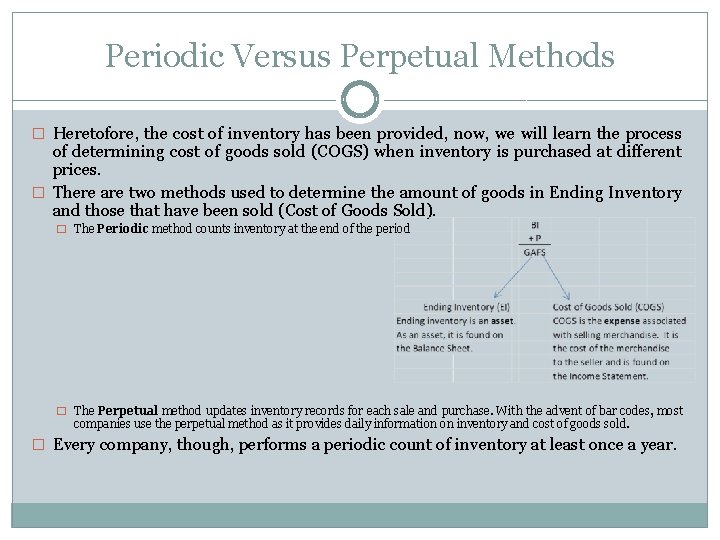
Periodic Versus Perpetual Methods � Heretofore, the cost of inventory has been provided, now, we will learn the process of determining cost of goods sold (COGS) when inventory is purchased at different prices. � There are two methods used to determine the amount of goods in Ending Inventory and those that have been sold (Cost of Goods Sold). � The Periodic method counts inventory at the end of the period � The Perpetual method updates inventory records for each sale and purchase. With the advent of bar codes, most companies use the perpetual method as it provides daily information on inventory and cost of goods sold. � Every company, though, performs a periodic count of inventory at least once a year.
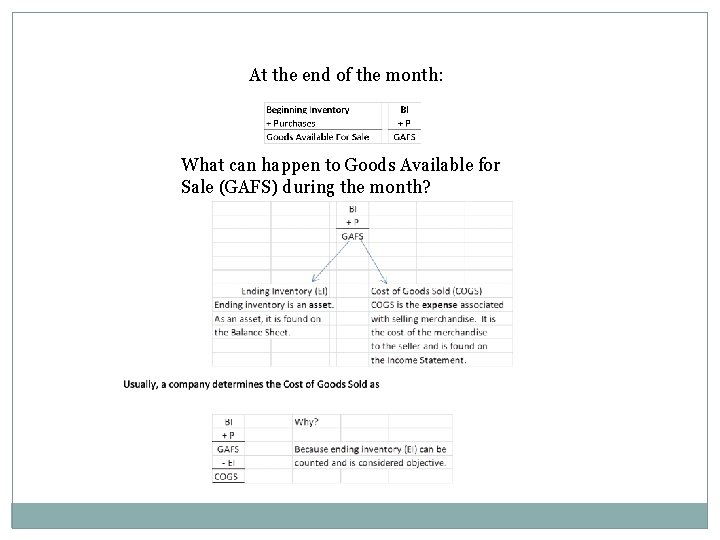
At the end of the month: What can happen to Goods Available for Sale (GAFS) during the month?
Inventory Methods USING AN EXAMPLE, WE WILL WALK THROUGH THE FOUR INVENTORY METHODS, SPECIFIC IDENTIFICATION, FIRST IN, FIRST OUT, LAST IN, FIRST OUT, AND WEIGHTED AVERAGE
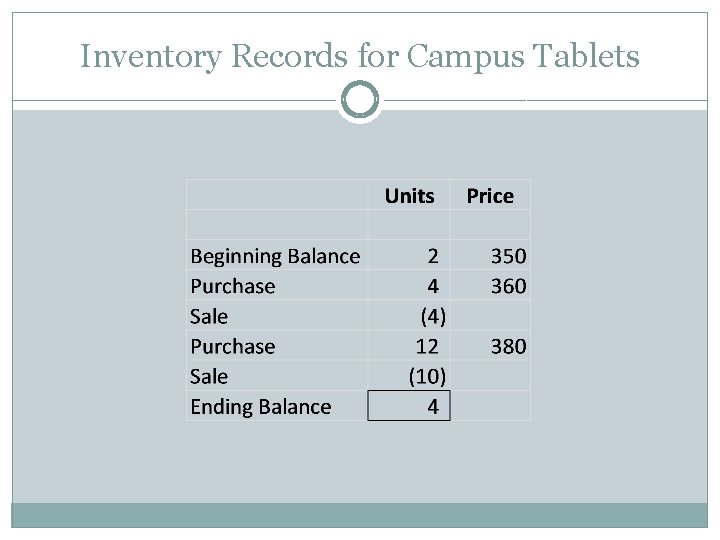
Inventory Records for Campus Tablets
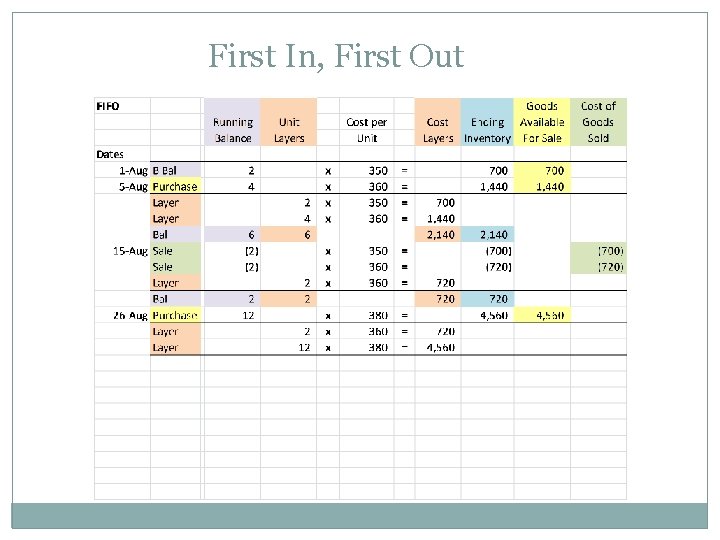
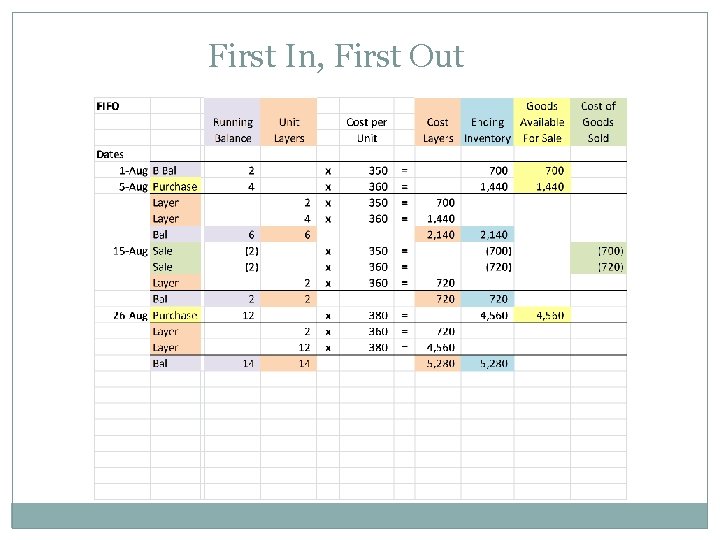
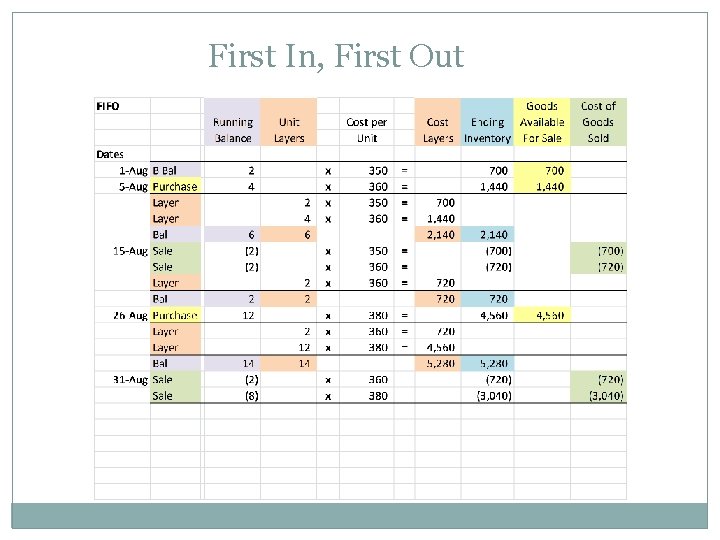
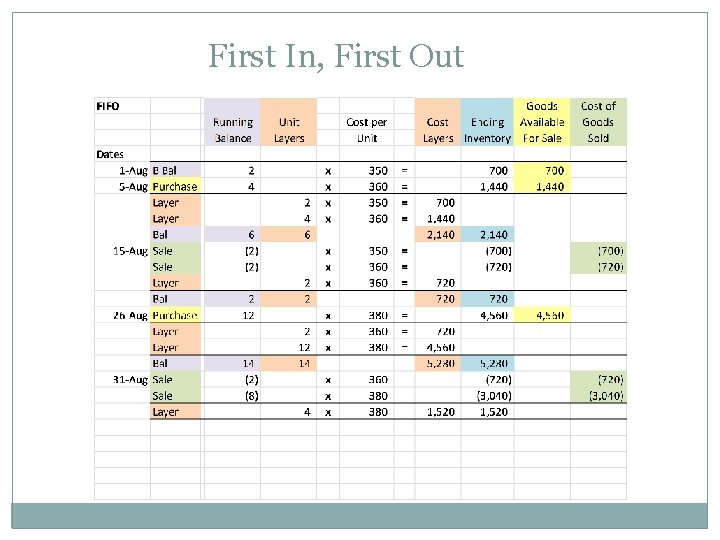
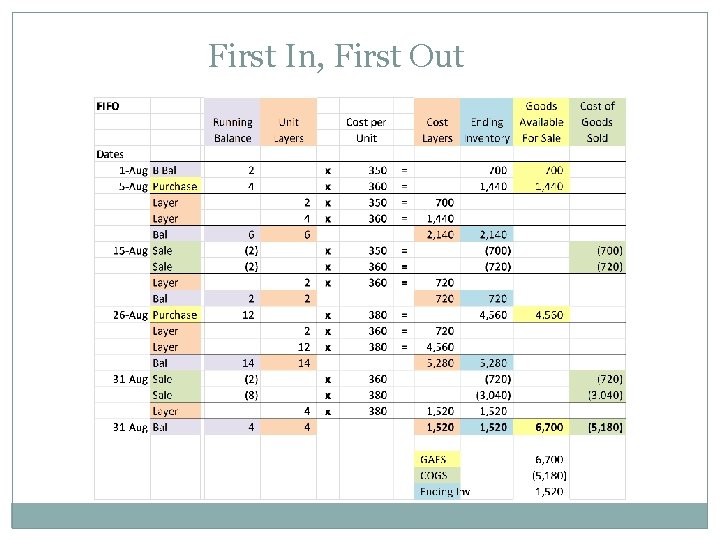
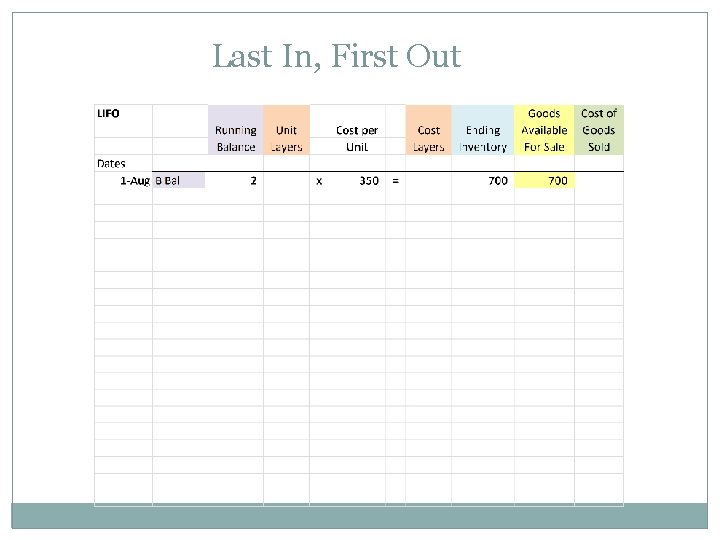
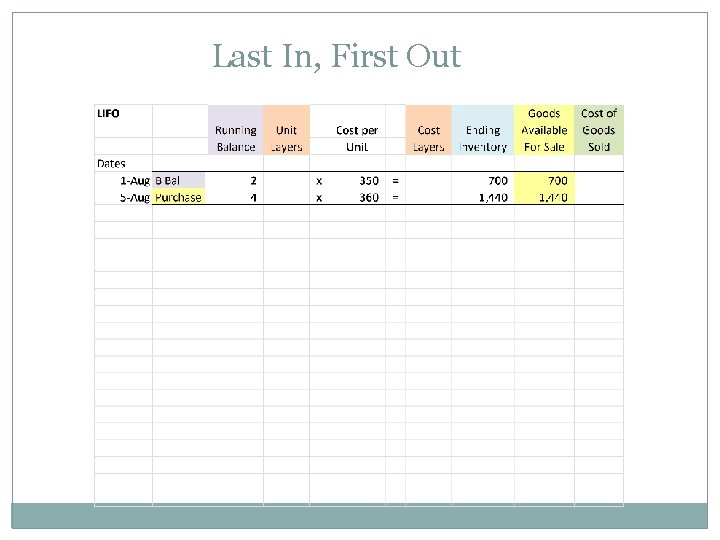
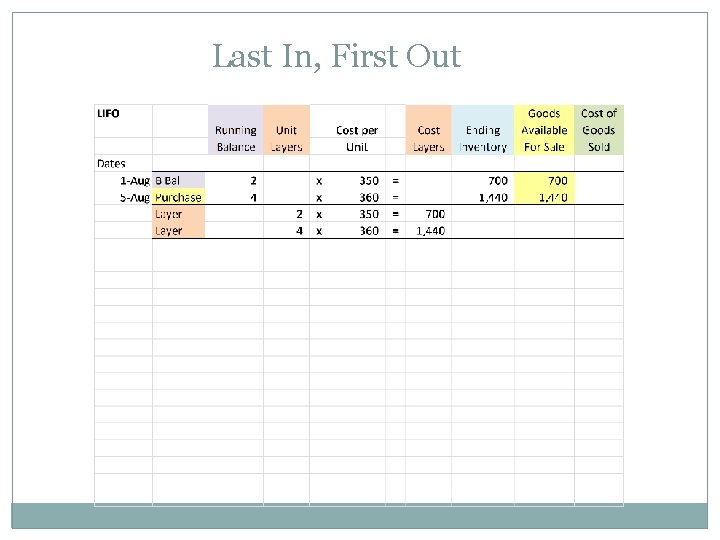
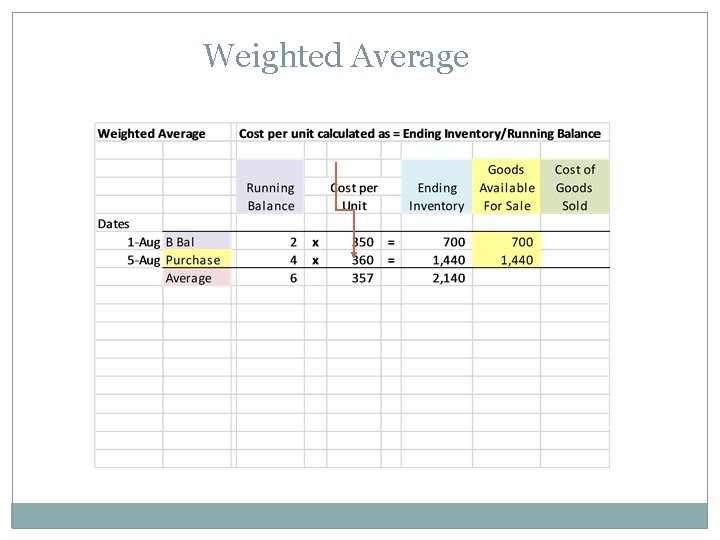
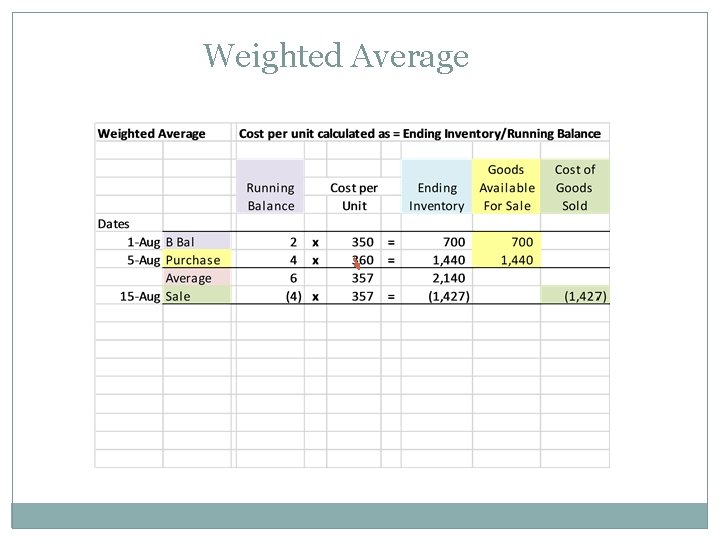
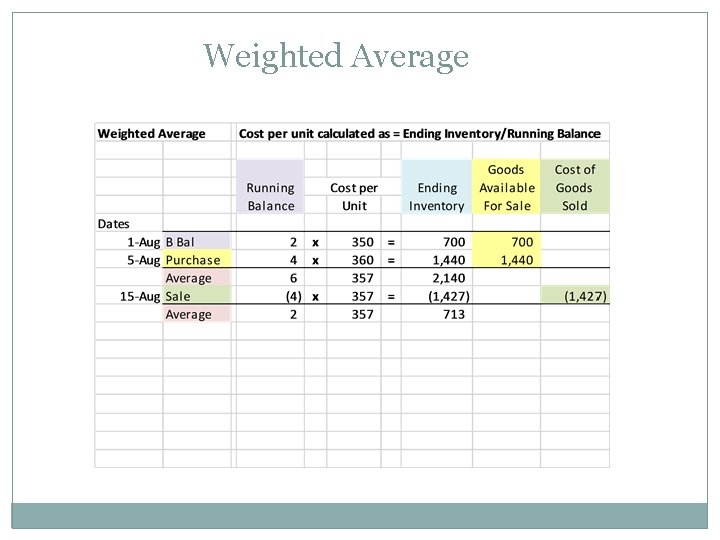
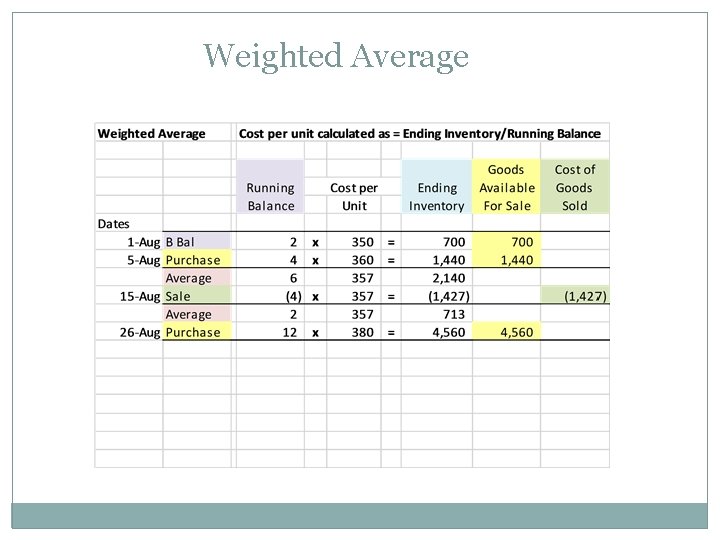
Inventory Methods � When inventory is purchased at different prices, what price do we use as cost of goods sold? There are four (4) methods � Comparing and contrasting, we will look at the four (4) inventory methods to determine how each will affect cost of goods sold and ending inventory. � We will find goods available for sale will be the same for each � The reasons for choosing one method over another revolves around profit planning, tax implications, practical considerations, etc. Companies can choose any method but must remain consistent in their use of a method. � The method chosen is not required to mimic the actual flow of goods. Ex A grocery store’s flow of merchandise is first in first out but it can cost its inventory using the weighted average method or first in first out
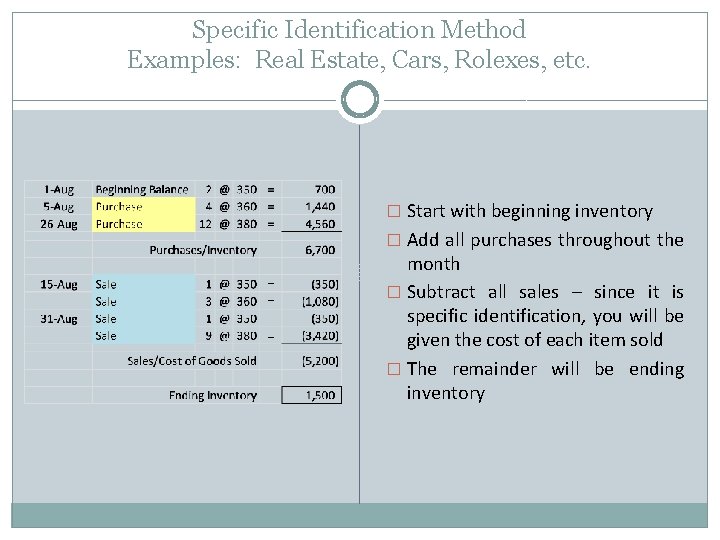
Specific Identification Method Examples: Real Estate, Cars, Rolexes, etc. � Start with beginning inventory � Add all purchases throughout the month � Subtract all sales – since it is specific identification, you will be given the cost of each item sold � The remainder will be ending inventory
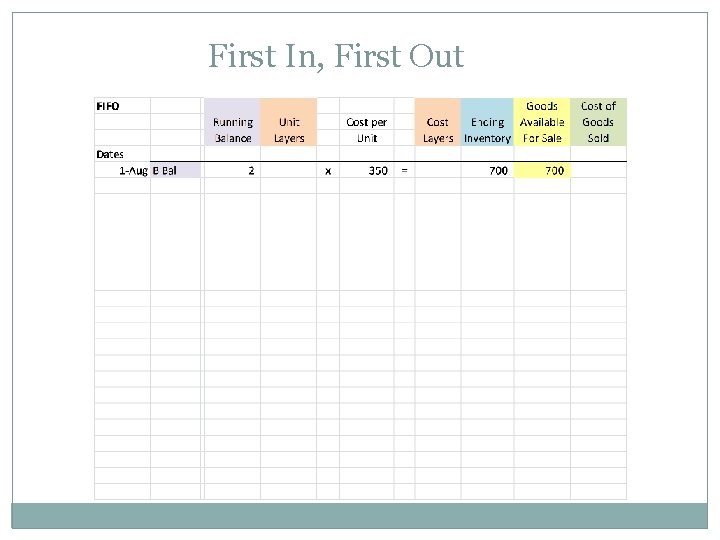
First In, First Out
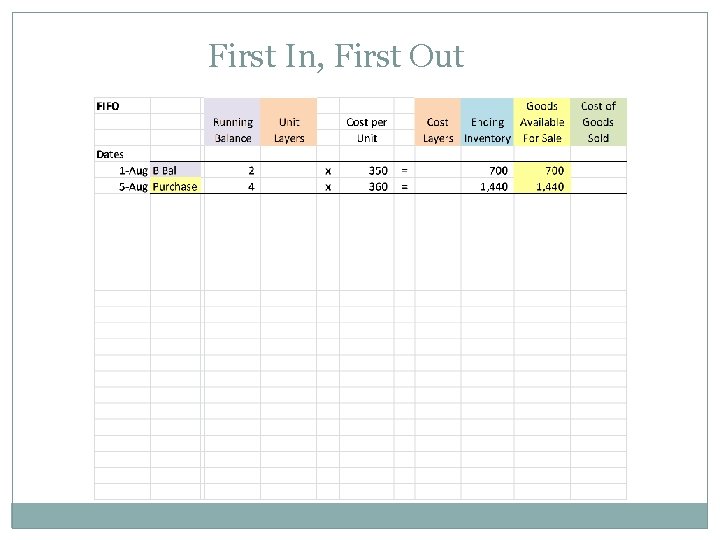
First In, First Out
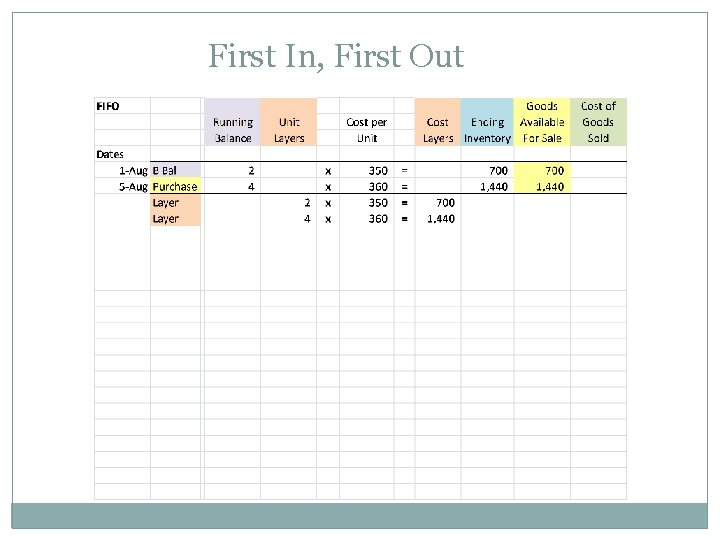
First In, First Out
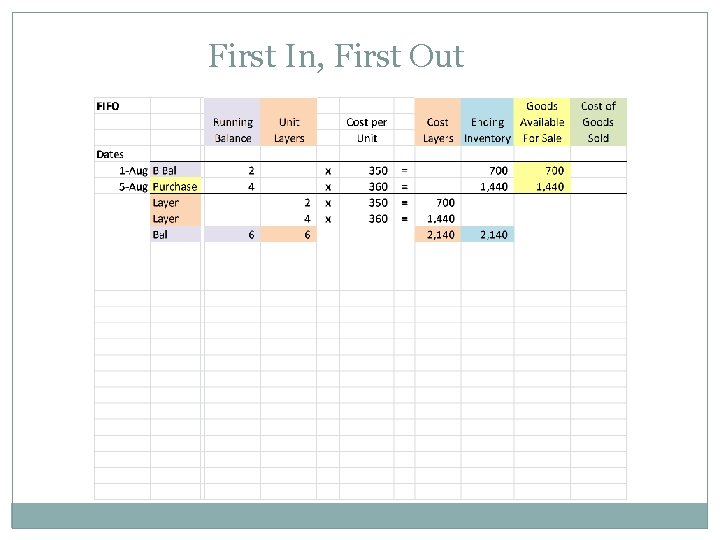
First In, First Out
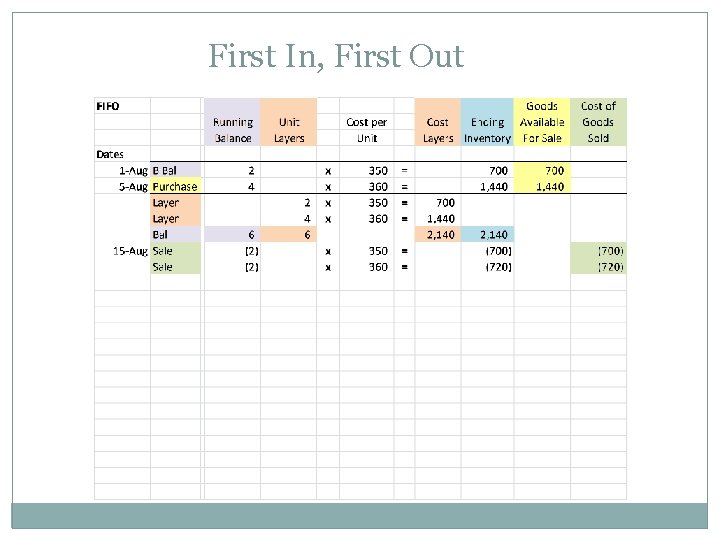
First In, First Out

First In, First Out
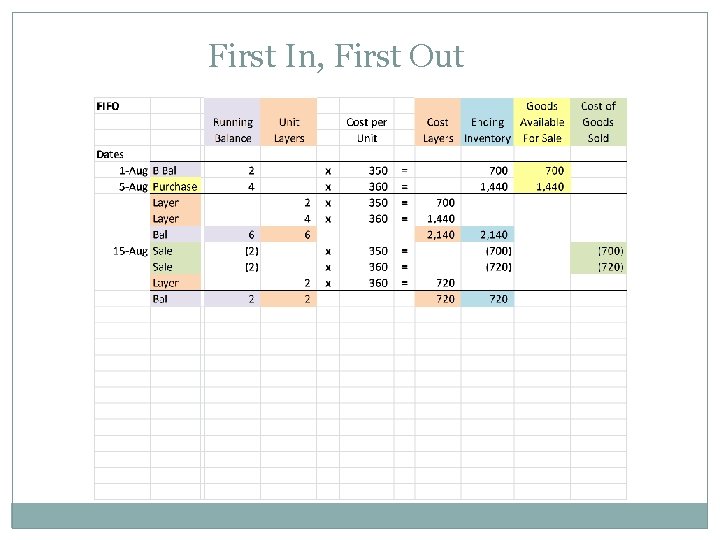
First In, First Out
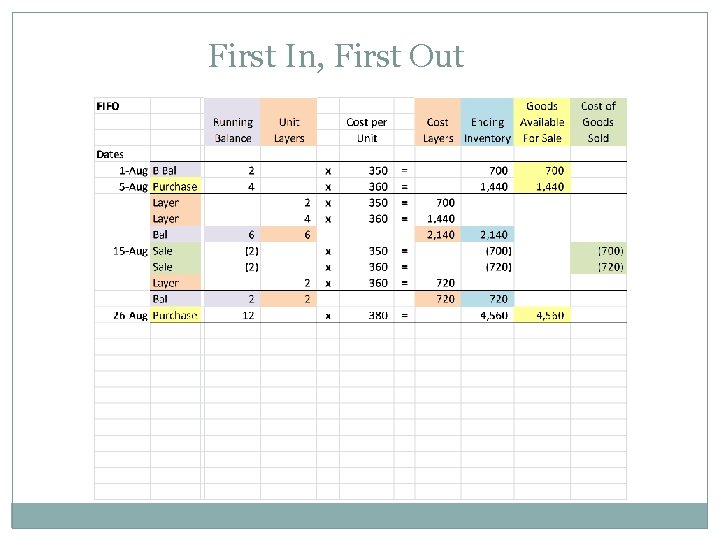
First In, First Out
First In, First Out
First In, First Out
First In, First Out
First In, First Out
First In, First Out
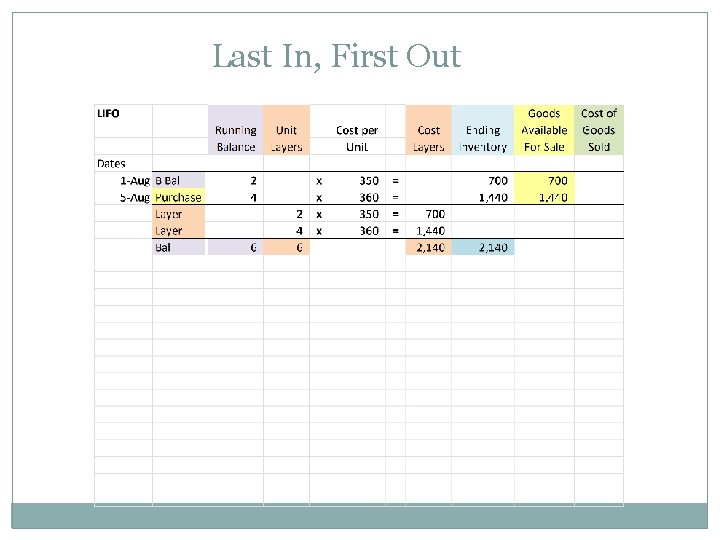
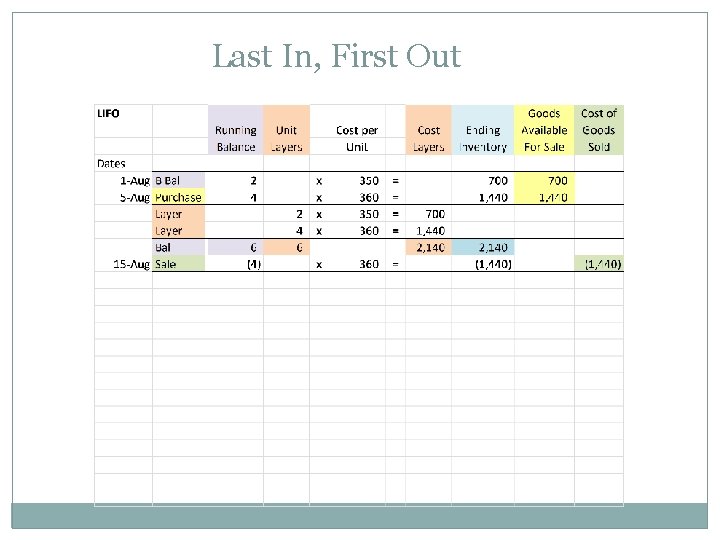
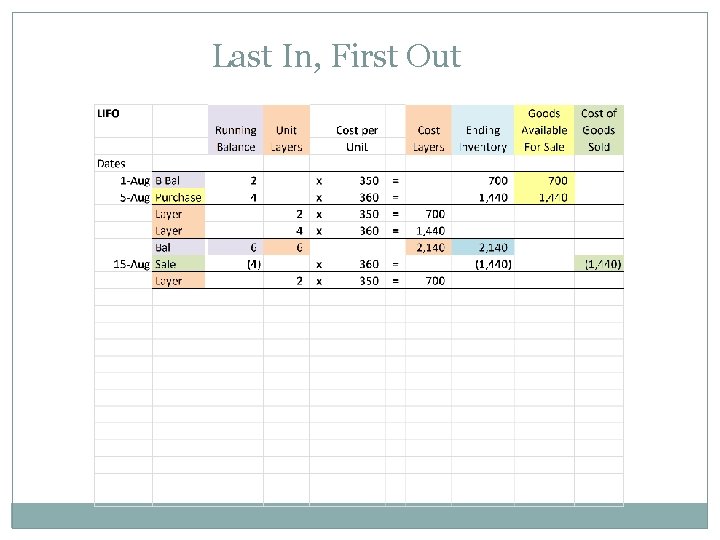
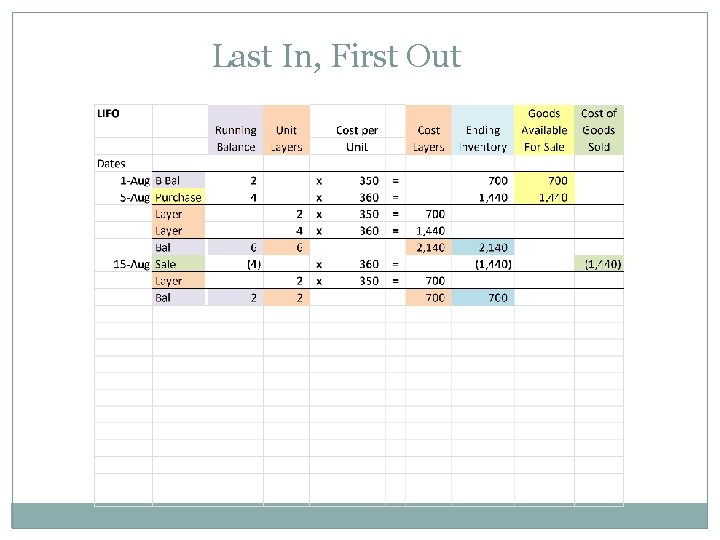
Last In, First Out
Last In, First Out
Last In, First Out
Last In, First Out
Last In, First Out
Last In, First Out
Last In, First Out
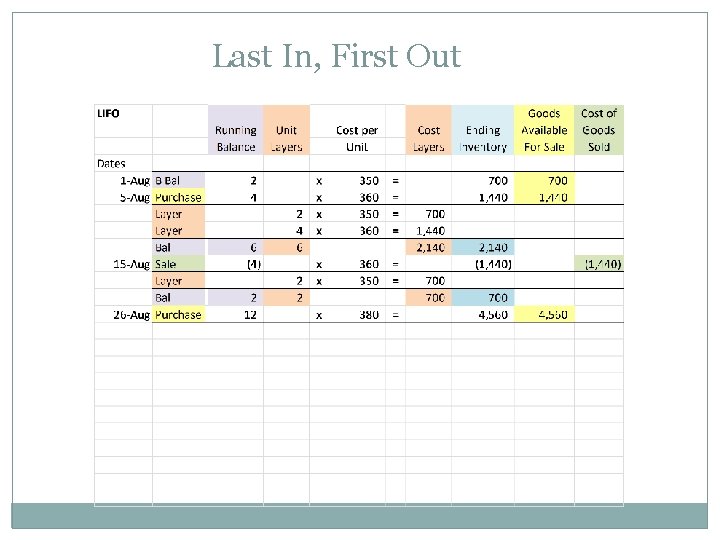
Last In, First Out
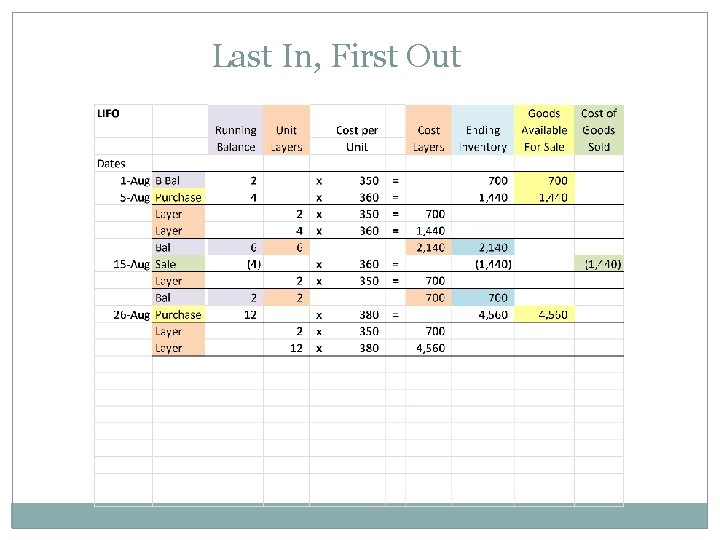
Last In, First Out
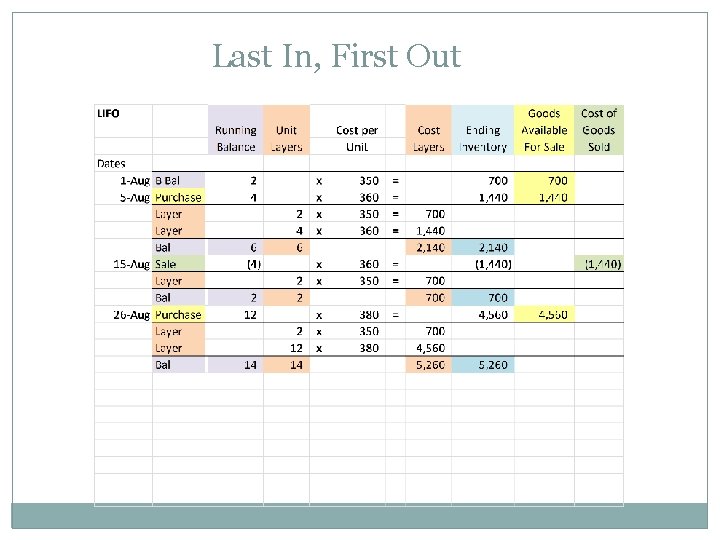
Last In, First Out
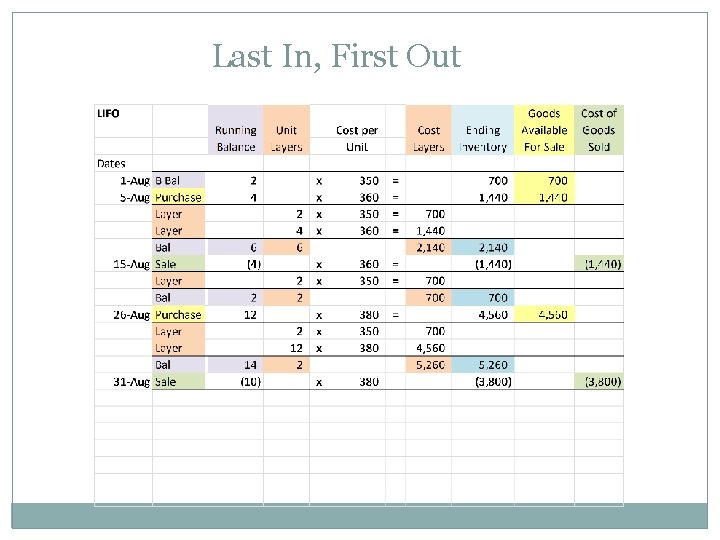
Last In, First Out
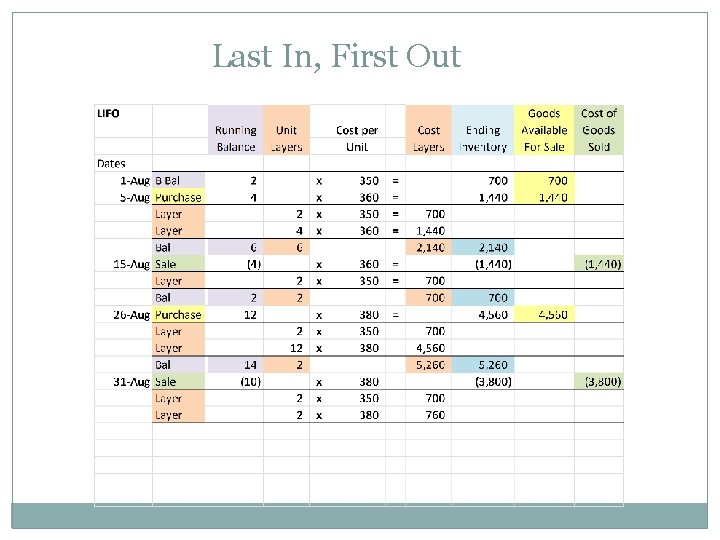
Last In, First Out
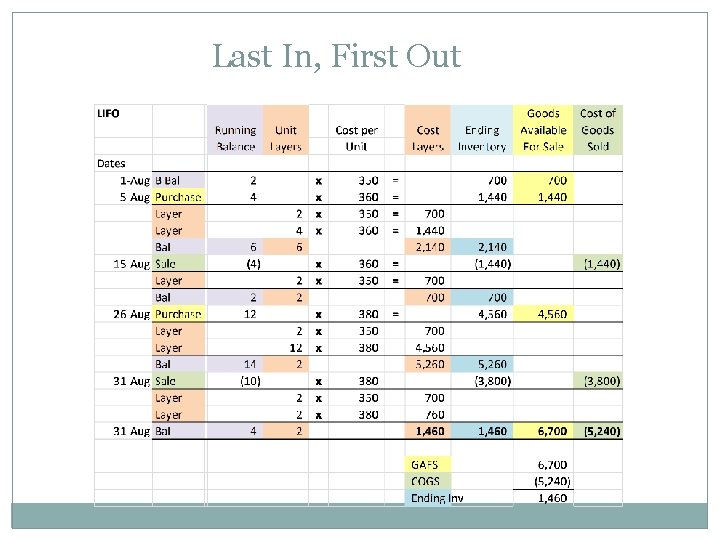
Last In, First Out
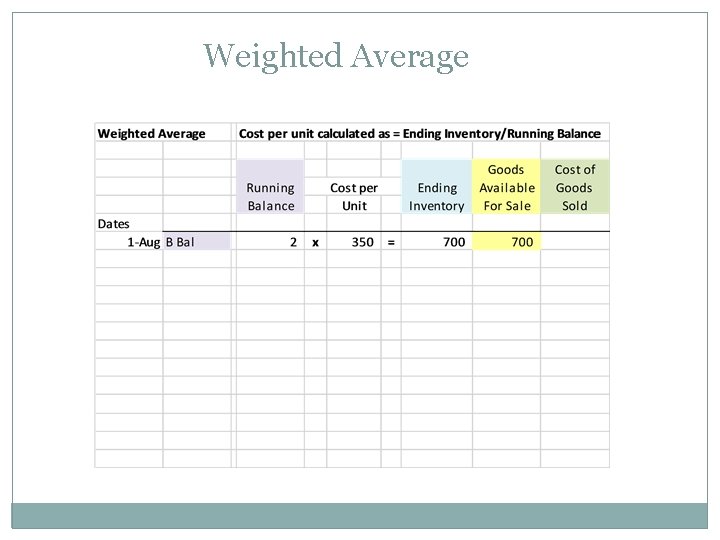
Weighted Average
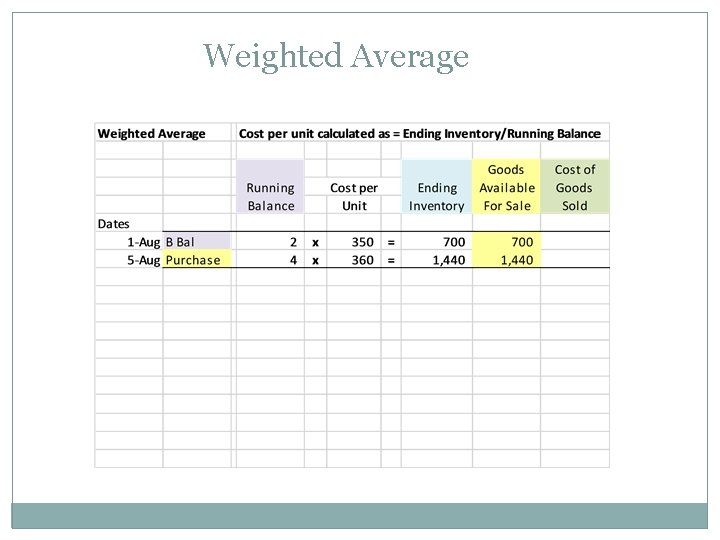
Weighted Average
Weighted Average
Weighted Average
Weighted Average
Weighted Average
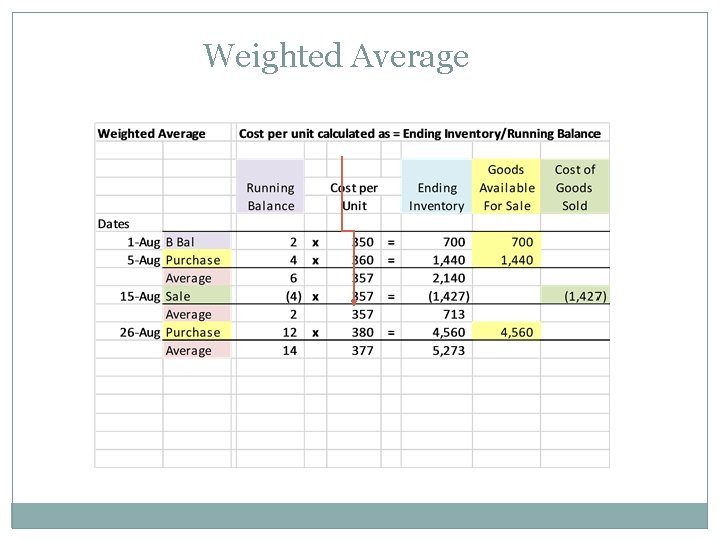
Weighted Average
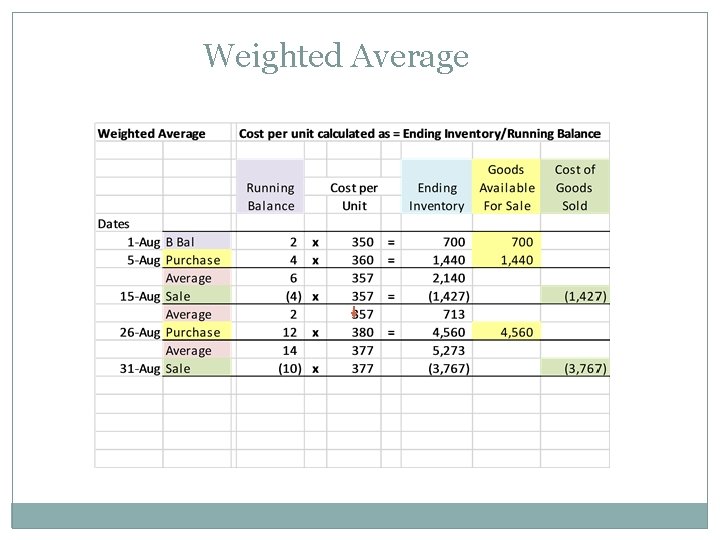
Weighted Average
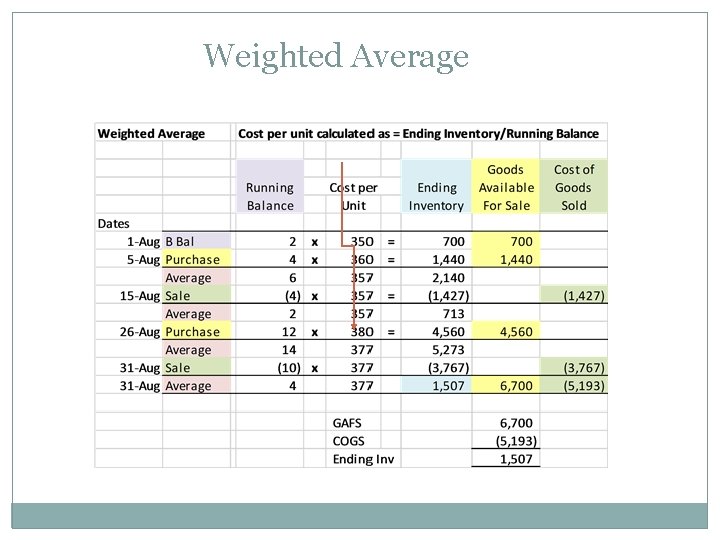
Weighted Average
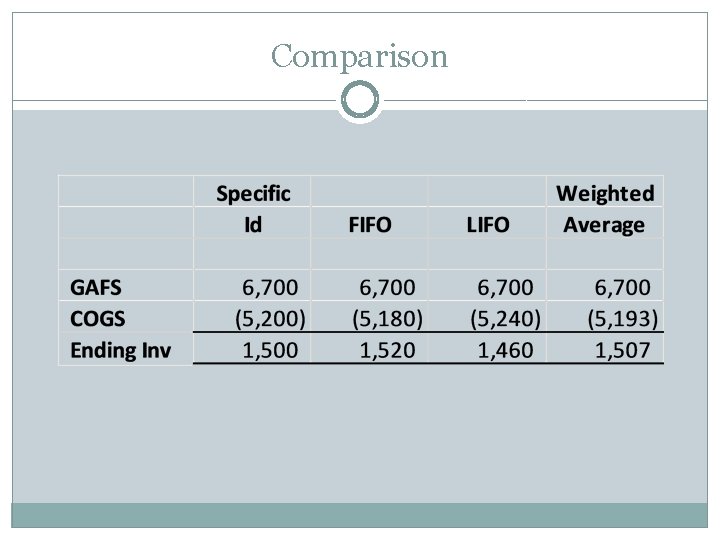
Comparison
Lower of Cost or Market � Heretofore, every account balance has been determined by historical cost (purchase price); however the value of items for sale are often subject to fast paced changes as well as consumer tastes. Therefore, their value can decline rapidly. This is our first exception to the cost principle. � Inventories must be valued at the lower of cost or market. (conservatism constraint). If the market value to replace an item (today’s purchase price) is lower than the original purchase amount, then the inventory item must be valued at market—today’s purchase price. If the market value is higher to replace an item than the original purchase price, then it remains in inventory at the original price � Lower of Cost or Market (LCM) can be applied to individual items, classes of items or inventory as a whole.
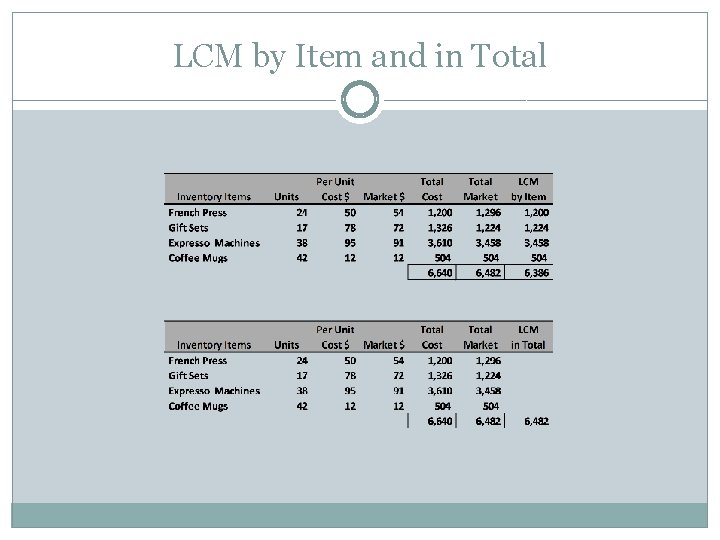
LCM by Item and in Total
Effects of Inventory Method on Ending Inventory and Cost of Goods Sold � The inventory method chosen will have an effect on the dollar value associated with ending inventory (what amount will be on the balance sheet? ) and the dollar value associated with cost of goods sold (what amount will be on the income statement as an expense? ) � Companies can choose any method for its own purposes—the one exception is if LIFO is used for tax purposes, it must also be used for financial statements � When the cost of purchasing inventory rises … FIFO: EI will be higher and COGS lower (EI higher and net income higher) – Profit planning – company is more profitable LIFO: EI will be lower and COGS higher (EI higher and net income lower) – Tax advantage—will pay lower taxes Weighted average: Yields a result between FIFO and LIFO – Smoother results � When the cost of purchasing inventory becomes cheaper … FIFO: EI will be lower and COGS higher (EI lower and net income lower) LIFO: EI will be higher and COGS lower (EI higher and net income higher) Weighted average: Yields a result between FIFO and LIFO – Smoother results
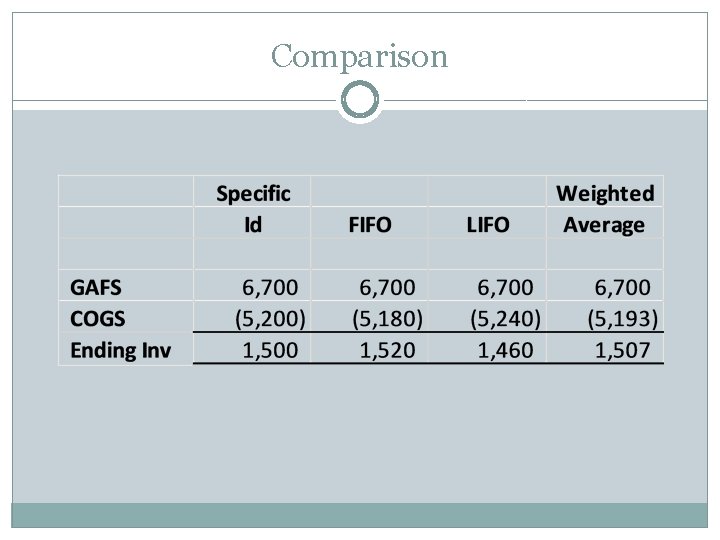
Comparison
- Slides: 49