
INVENTIONS In 1765 James Watt invented the first

- Slides: 11
• INVENTIONS: In 1765, James Watt invented the first steam engine Steam engines produced more power & allowed factories to be built in cities near workers Robert Fulton’s steamboat increased the speed of water travel The greatest improvement to transportation was the steampowered railroad
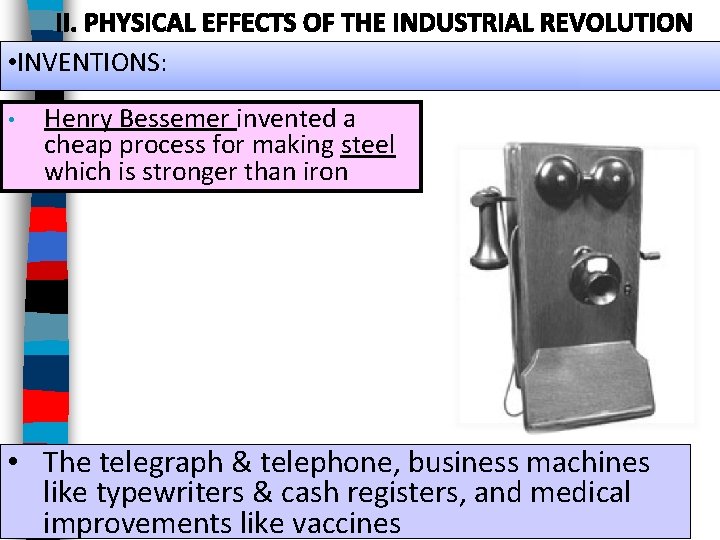
• INVENTIONS: • Henry Bessemer invented a cheap process for making steel which is stronger than iron • The telegraph & telephone, business machines like typewriters & cash registers, and medical improvements like vaccines
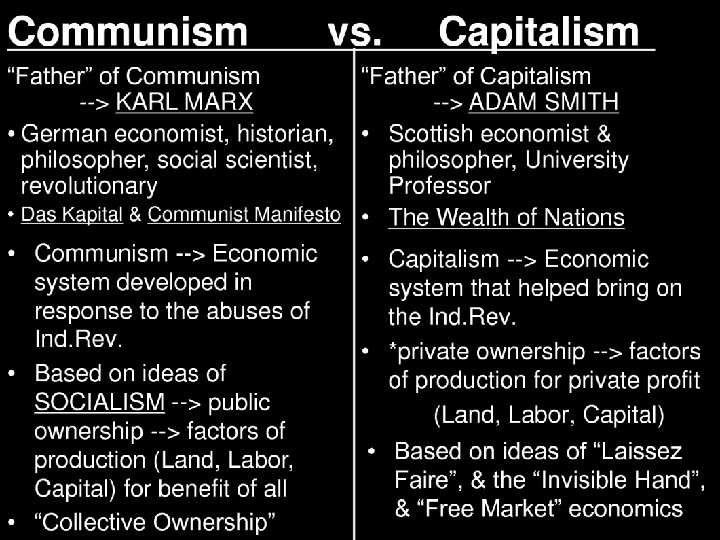
• Economist Adam Smith proposed the idea of laissezfaire economics (hands-off) that would encourage markets to work best without government involvement. • He wrote, The Wealth of Nations.
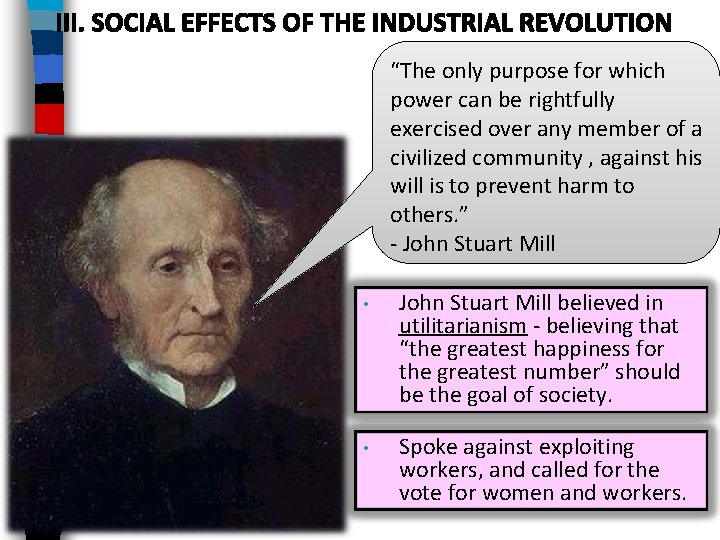
“The only purpose for which power can be rightfully exercised over any member of a civilized community , against his will is to prevent harm to others. ” - John Stuart Mill • John Stuart Mill believed in utilitarianism - believing that “the greatest happiness for the greatest number” should be the goal of society. • Spoke against exploiting workers, and called for the vote for women and workers.
KARL MARX – GERMAN PHILOSOPHER
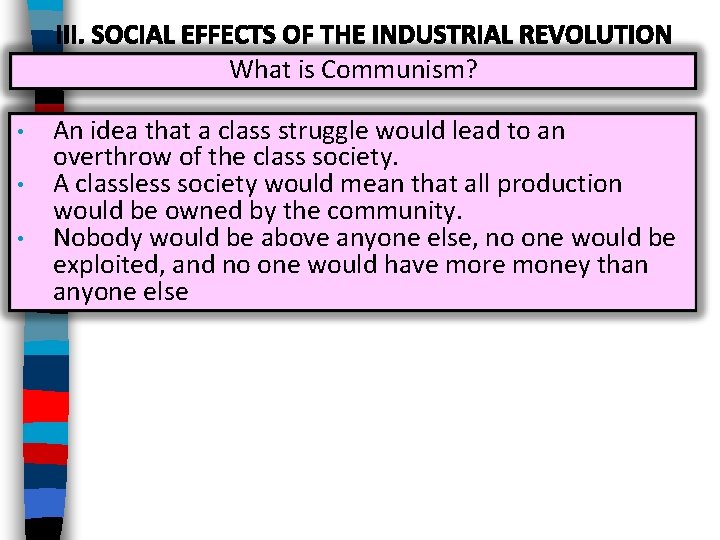
What is Communism? • • • An idea that a class struggle would lead to an overthrow of the class society. A classless society would mean that all production would be owned by the community. Nobody would be above anyone else, no one would be exploited, and no one would have more money than anyone else
• Marx wrote The Communist Manifesto – with Frederick Engels - this predicted that the ‘havenots’ will rise up (proletariat – working class people) against the ‘haves’ (bourgeoisie – middle class) and eliminate the class system.
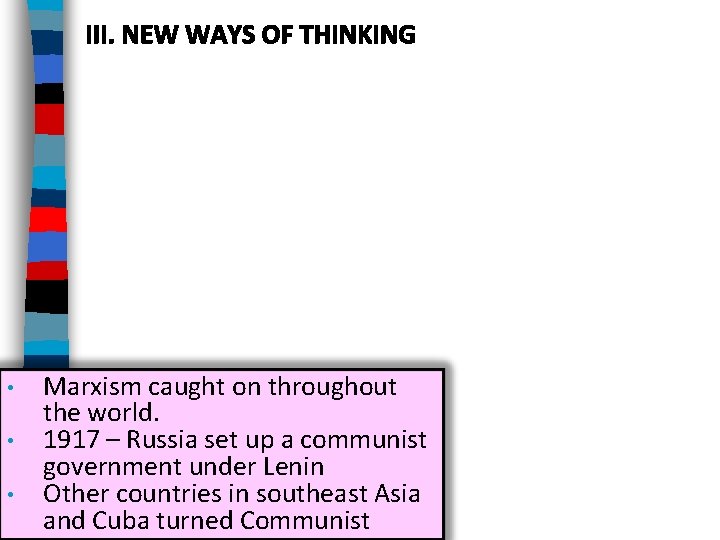
• • • Marxism caught on throughout the world. 1917 – Russia set up a communist government under Lenin Other countries in southeast Asia and Cuba turned Communist
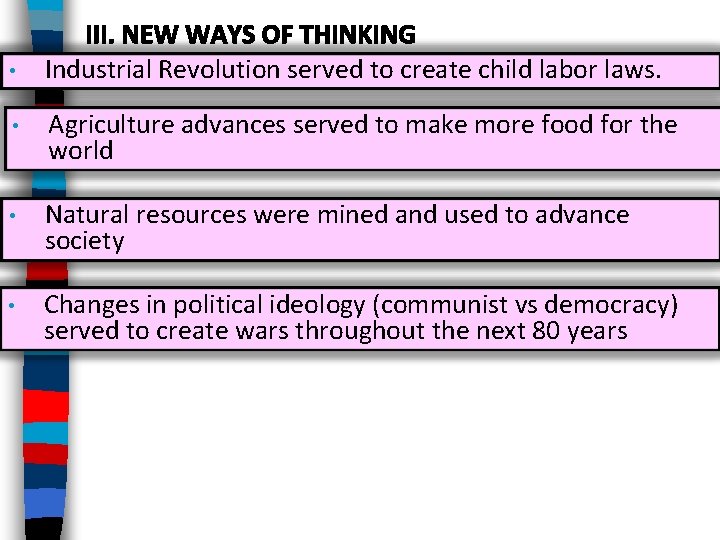
• Industrial Revolution served to create child labor laws. • Agriculture advances served to make more food for the world • Natural resources were mined and used to advance society • Changes in political ideology (communist vs democracy) served to create wars throughout the next 80 years
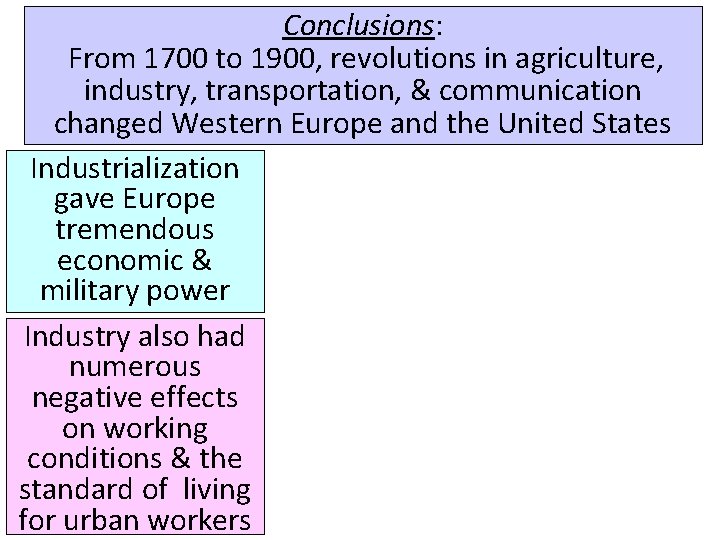
Conclusions: From 1700 to 1900, revolutions in agriculture, industry, transportation, & communication changed Western Europe and the United States Industrialization gave Europe tremendous economic & military power Industry also had numerous negative effects on working conditions & the standard of living for urban workers