
Invasive Species Invasive Species an organism that is

- Slides: 21
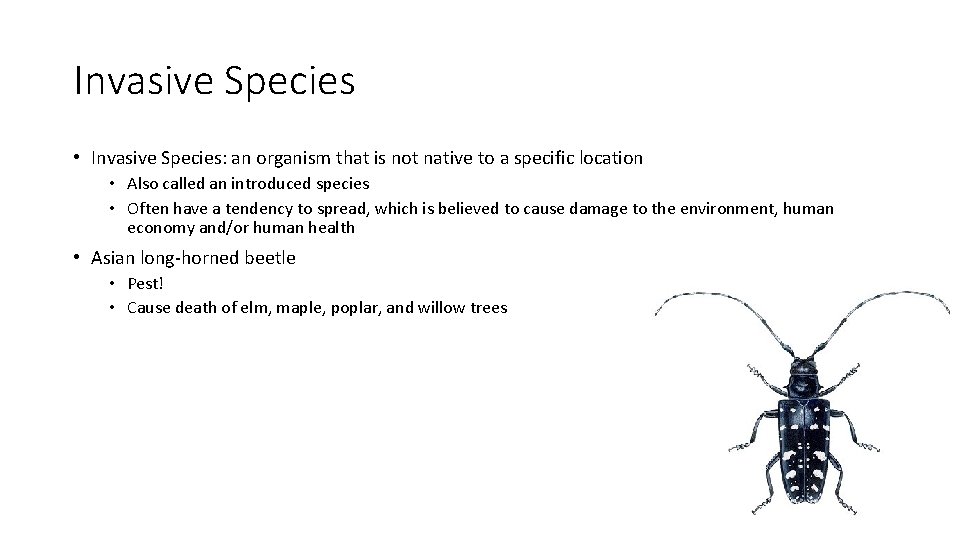
Invasive Species • Invasive Species: an organism that is not native to a specific location • Also called an introduced species • Often have a tendency to spread, which is believed to cause damage to the environment, human economy and/or human health • Asian long-horned beetle • Pest! • Cause death of elm, maple, poplar, and willow trees
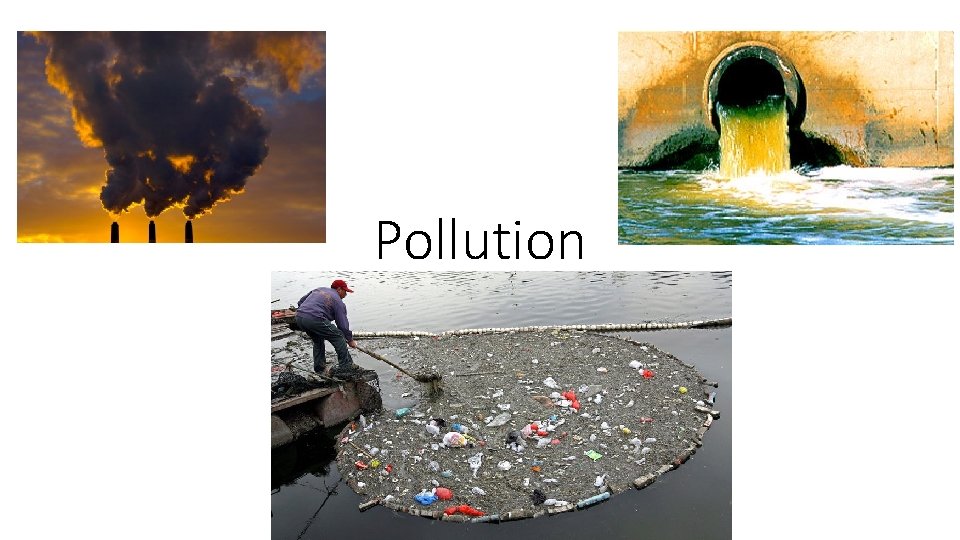
Pollution
• https: //www. youtube. com/watch? v=CVm 1 p. B 3 i. JOw • https: //www. youtube. com/watch? v=-OVNd 6 Fa 9 fg (0: 27 – 4: 10)
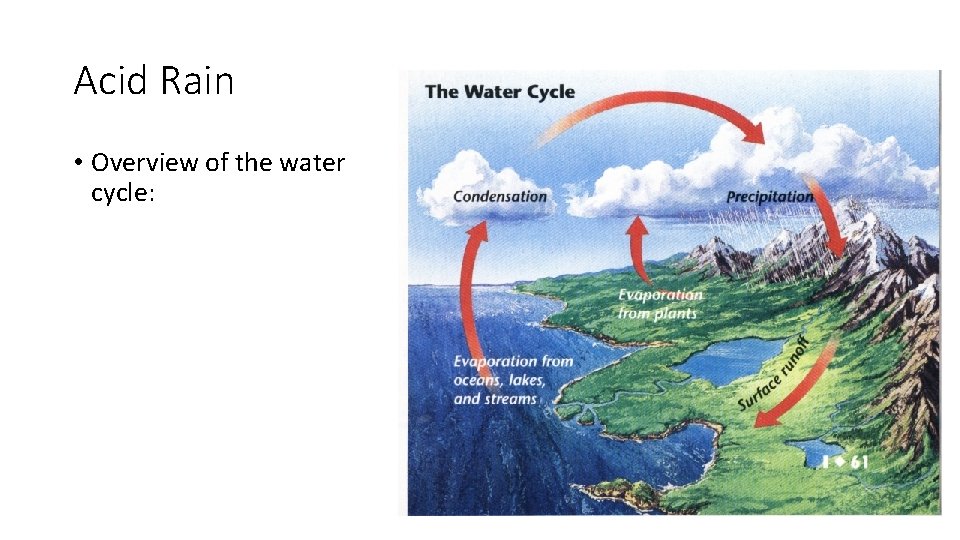
Acid Rain • Overview of the water cycle:
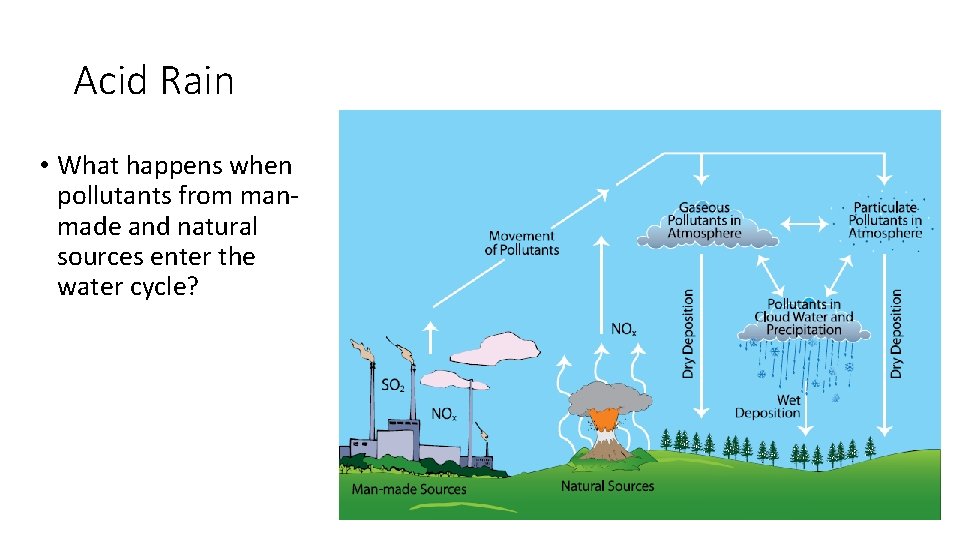
Acid Rain • What happens when pollutants from manmade and natural sources enter the water cycle?
Acid Rain • Pollutants come from: • Natural sources, such as volcanoes and decaying vegetation • Man-made sources, such as exhaust from vehicles and burning fossil fuels • Acid Rain: rain that is acidic and that is harmful to the environment
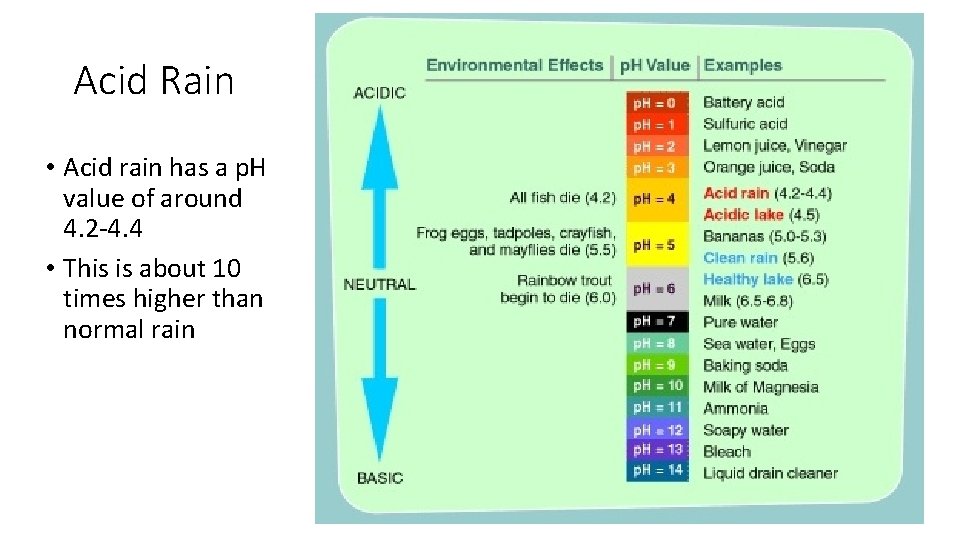
Acid Rain • Sulphur dioxide and nitrogen oxides are the gases involved • Form sulphuric acid and nitric acid • p. H Scale: a scale to measure how acidic or basic something is • 0 = most acidic • 7 = neutral • 14 = most basic
Acid Rain • Acid rain has a p. H value of around 4. 2 -4. 4 • This is about 10 times higher than normal rain
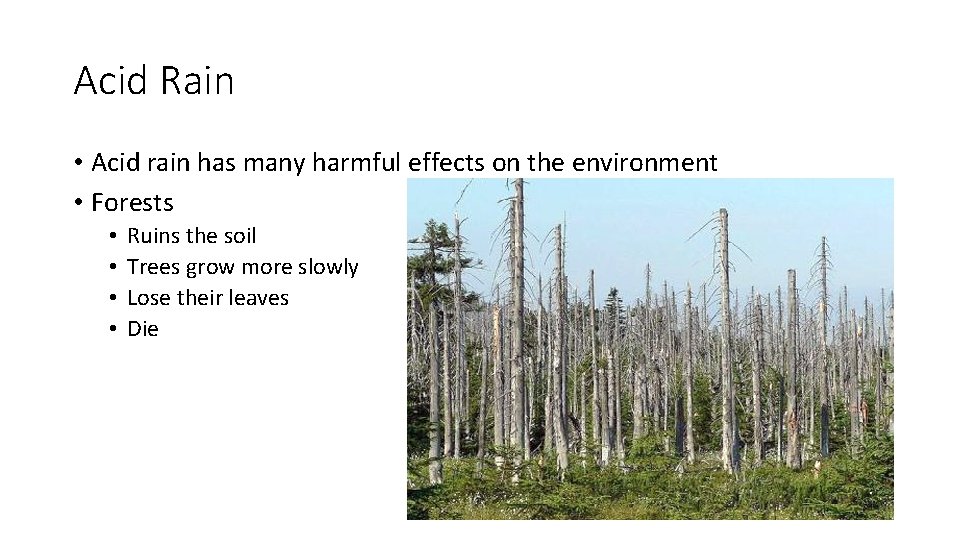
Acid Rain • Acid rain has many harmful effects on the environment • Forests • • Ruins the soil Trees grow more slowly Lose their leaves Die
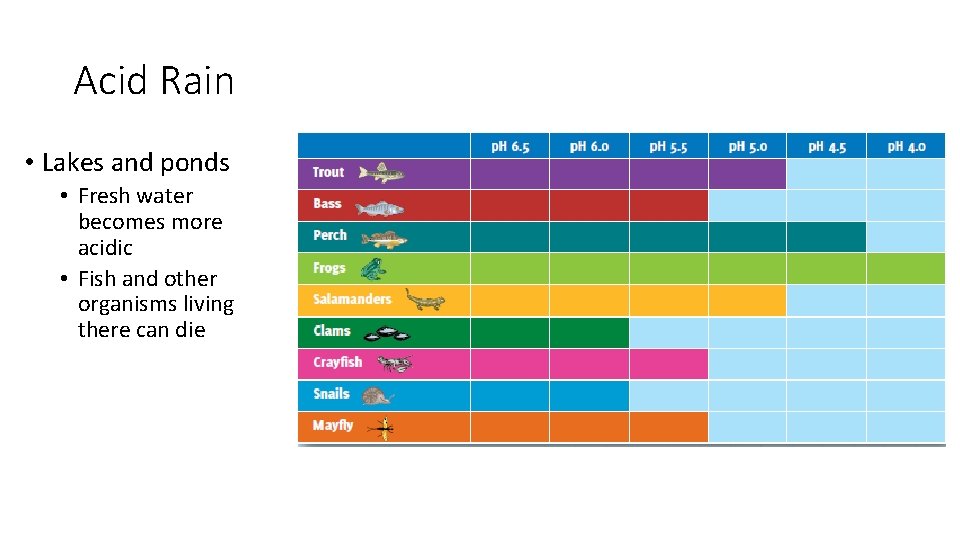
Acid Rain • Lakes and ponds • Fresh water becomes more acidic • Fish and other organisms living there can die
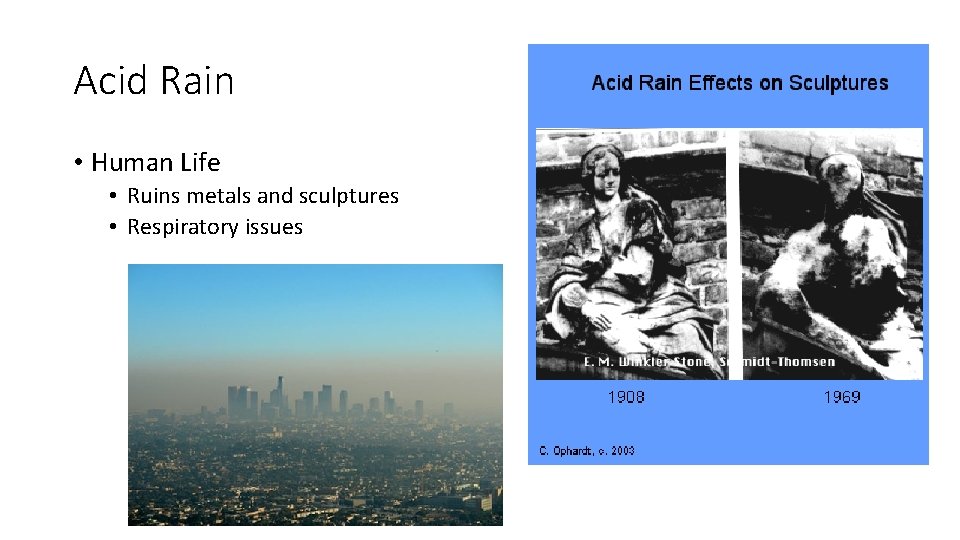
Acid Rain • Human Life • Ruins metals and sculptures • Respiratory issues
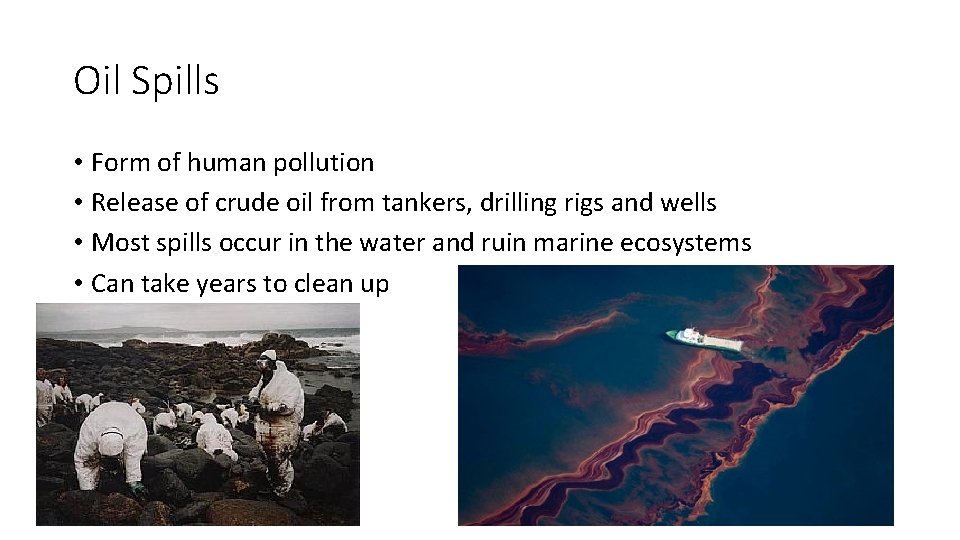
Oil Spills • Form of human pollution • Release of crude oil from tankers, drilling rigs and wells • Most spills occur in the water and ruin marine ecosystems • Can take years to clean up
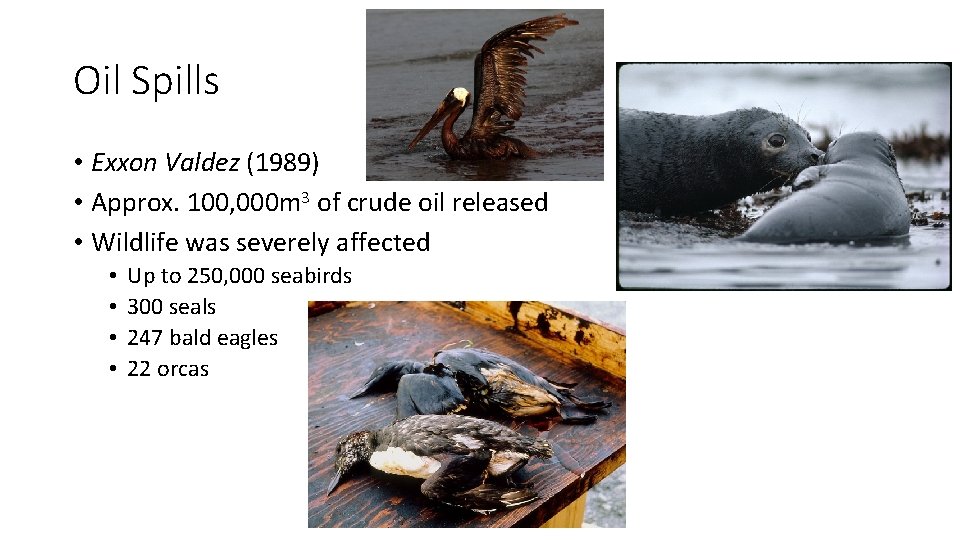
Oil Spills • Exxon Valdez (1989) • Approx. 100, 000 m 3 of crude oil released • Wildlife was severely affected • • Up to 250, 000 seabirds 300 seals 247 bald eagles 22 orcas
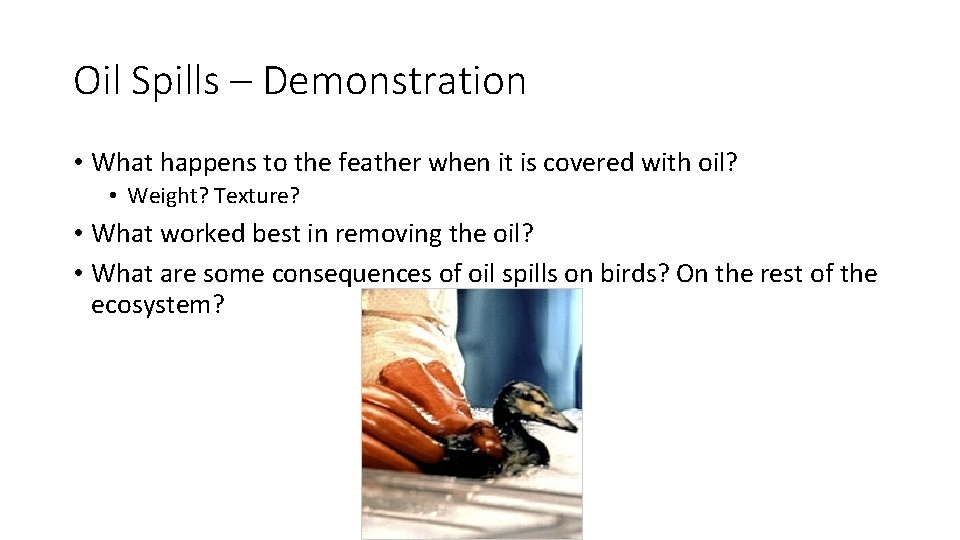
Oil Spills – Demonstration • What happens to the feather when it is covered with oil? • Weight? Texture? • What worked best in removing the oil? • What are some consequences of oil spills on birds? On the rest of the ecosystem?
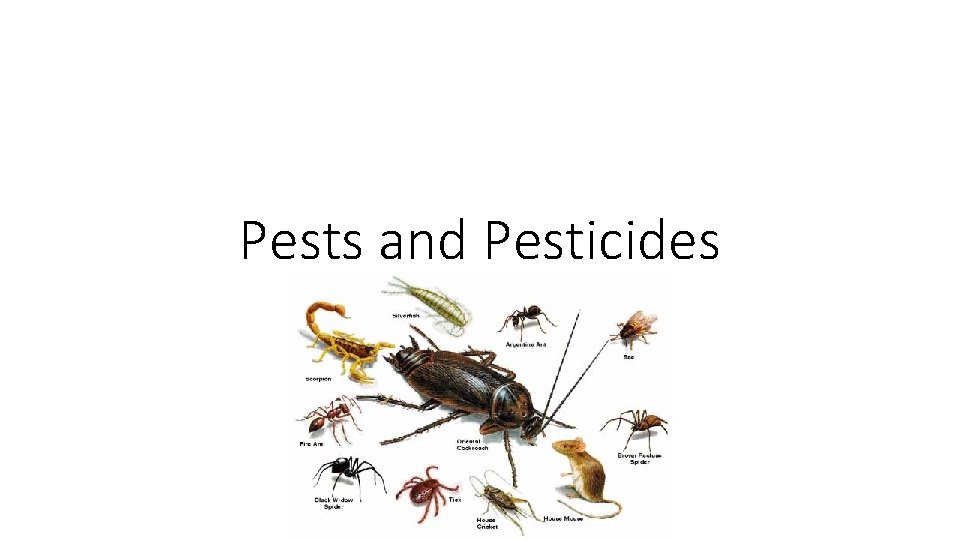
Pests and Pesticides
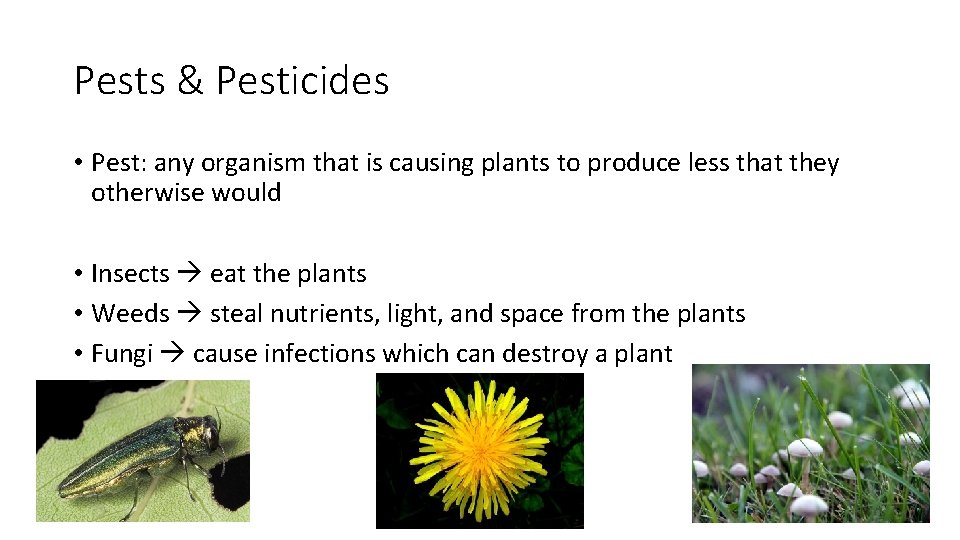
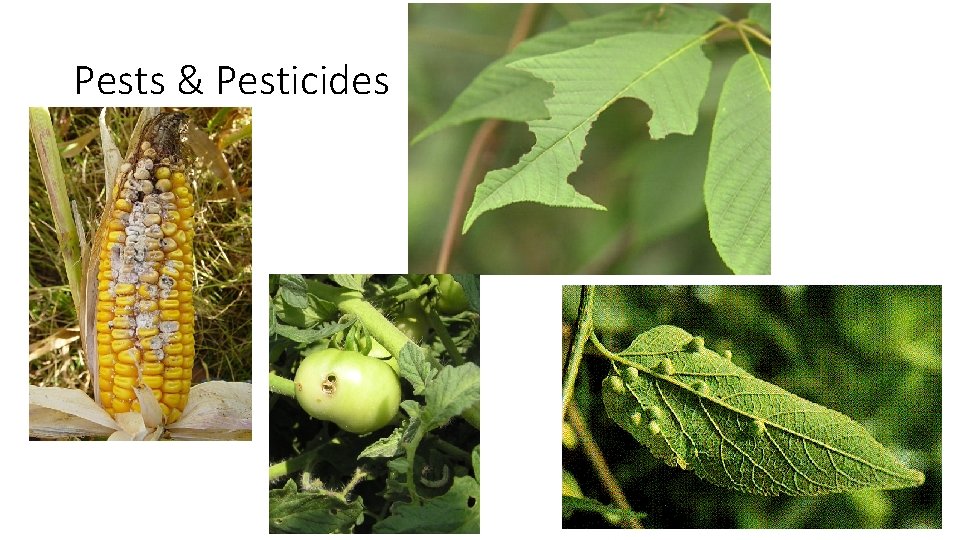
Pests & Pesticides • Pest: any organism that is causing plants to produce less that they otherwise would • Insects eat the plants • Weeds steal nutrients, light, and space from the plants • Fungi cause infections which can destroy a plant
Pests & Pesticides
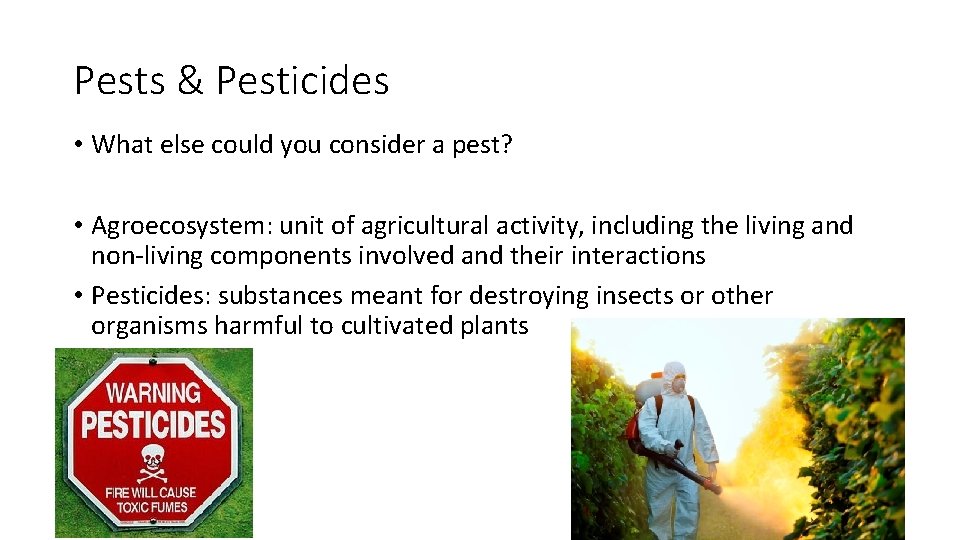
Pests & Pesticides • What else could you consider a pest? • Agroecosystem: unit of agricultural activity, including the living and non-living components involved and their interactions • Pesticides: substances meant for destroying insects or other organisms harmful to cultivated plants
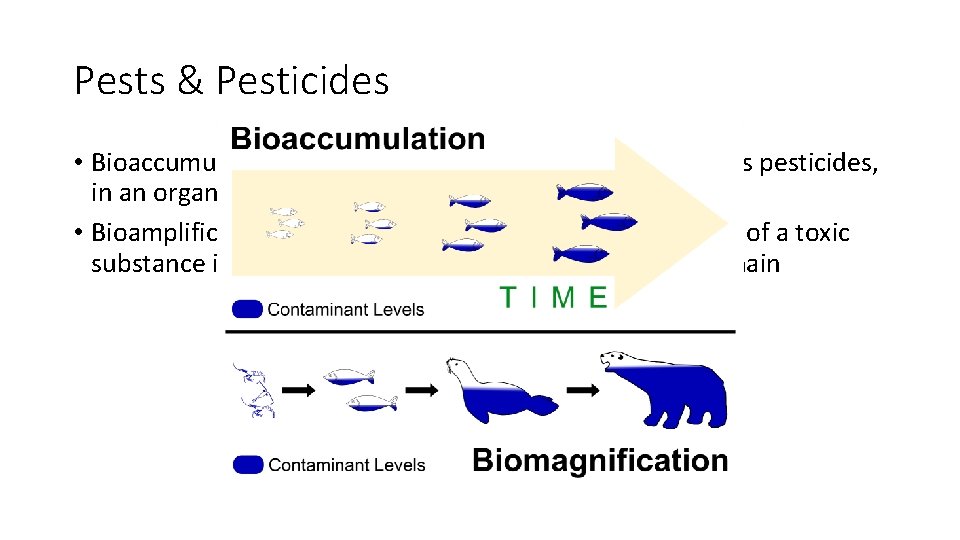
Pests & Pesticides • Bioaccumulation: the build-up of toxic substances, such as pesticides, in an organism • Bioamplification (or Biomagnification): the concentration of a toxic substance increases in organisms higher up in the food chain
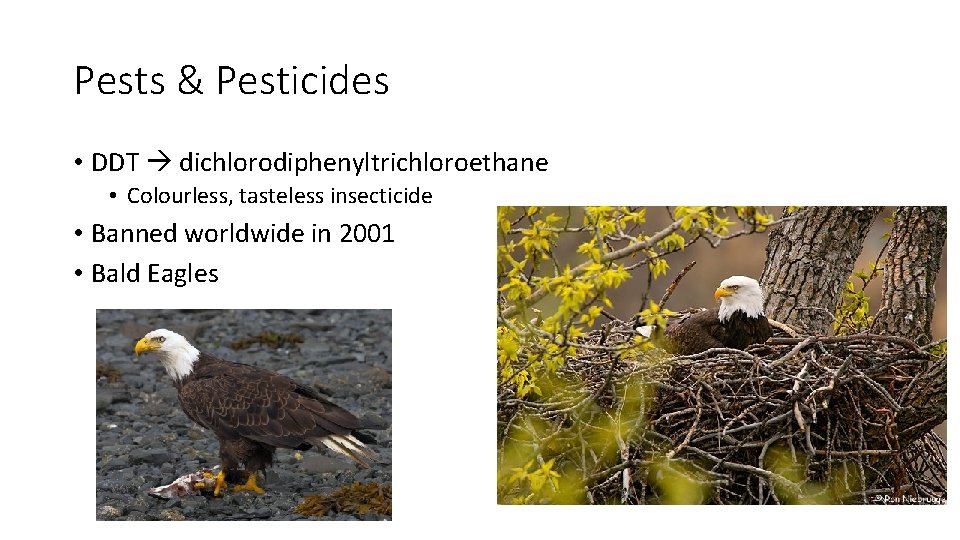
Pests & Pesticides • DDT dichlorodiphenyltrichloroethane • Colourless, tasteless insecticide • Banned worldwide in 2001 • Bald Eagles
Bioaccumulation Amount of chemical in prey x number of prey consumed = amount of chemical in predator • Amount of DDT in prey (mg) • Ex. 5 mg • Number of prey organisms consumed • Ex. 10 mice • Amount of DDT accumulated by predator (mg) • Ex. 50 mg