
Invasive Species Fighting the Frontlines to Prevent the

![Additional Field Guides and Resources • i. Map. Invasives [website] • New York Invasive](https://slidetodoc.com/presentation_image/3111449dca32dcea31f0f0b06a59a714/image-24.jpg "Additional Field Guides and Resources • i. Map. Invasives [website] • New York Invasive")
- Slides: 25
Invasive Species Fighting the Frontlines to Prevent the Spread
Presentation Outline • • What are Aquatic Invasive Species? Characteristics and Concerns Why should the public care? Strategies for management Species Examples Specimen Collection Protocol Additional Resources
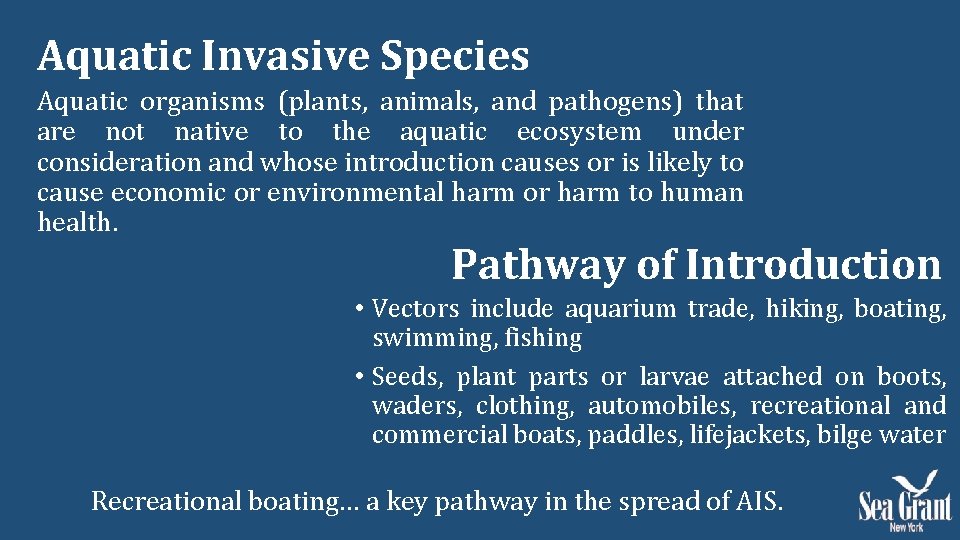
Aquatic Invasive Species Aquatic organisms (plants, animals, and pathogens) that are not native to the aquatic ecosystem under consideration and whose introduction causes or is likely to cause economic or environmental harm or harm to human health. Pathway of Introduction • Vectors include aquarium trade, hiking, boating, swimming, fishing • Seeds, plant parts or larvae attached on boots, waders, clothing, automobiles, recreational and commercial boats, paddles, lifejackets, bilge water Recreational boating… a key pathway in the spread of AIS.
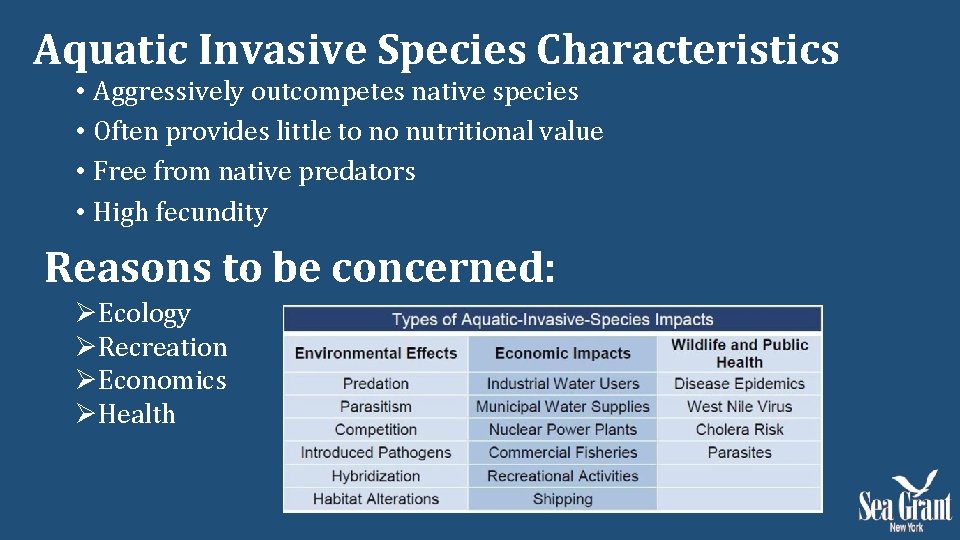
Aquatic Invasive Species Characteristics • Aggressively outcompetes native species • Often provides little to no nutritional value • Free from native predators • High fecundity Reasons to be concerned: ØEcology ØRecreation ØEconomics ØHealth
Why should the public care? • Invasive species almost always out-compete, damage or displace native species. • Invasive species are a factor in the decline of 49% of all threatened or endangered species. • The economic impact of invasive species in the U. S. is estimated over $120 billion annually. • Invasive species reduce agricultural crop yields and increase agricultural expenses. • Invasive species may increase human exposure to health risks such as Polychlorinated biphenyls (PCBs), cholera bacteria and other viruses.
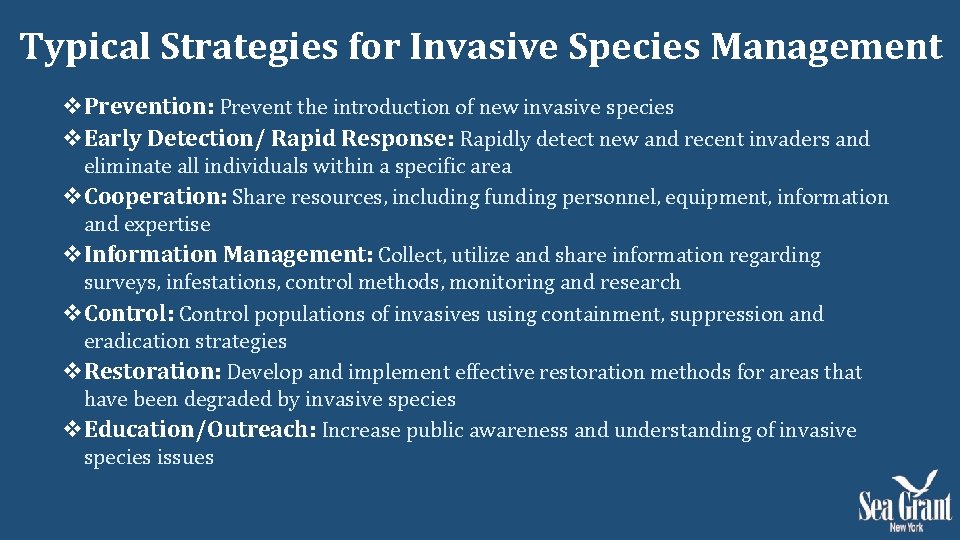
Typical Strategies for Invasive Species Management v. Prevention: Prevent the introduction of new invasive species v. Early Detection/ Rapid Response: Rapidly detect new and recent invaders and eliminate all individuals within a specific area v. Cooperation: Share resources, including funding personnel, equipment, information and expertise v. Information Management: Collect, utilize and share information regarding surveys, infestations, control methods, monitoring and research v. Control: Control populations of invasives using containment, suppression and eradication strategies v. Restoration: Develop and implement effective restoration methods for areas that have been degraded by invasive species v. Education/Outreach: Increase public awareness and understanding of invasive species issues
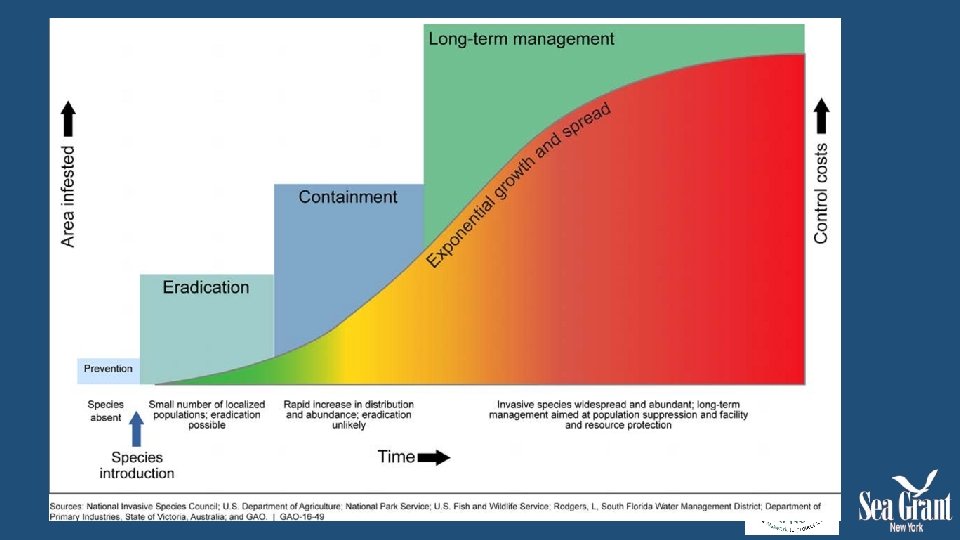
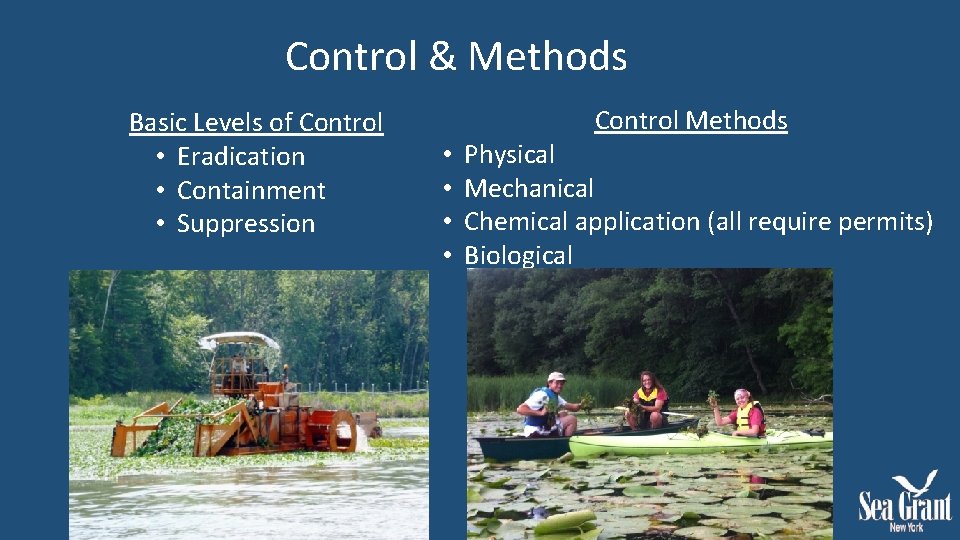
Control & Methods Basic Levels of Control • Eradication • Containment • Suppression Control Methods • • Physical Mechanical Chemical application (all require permits) Biological
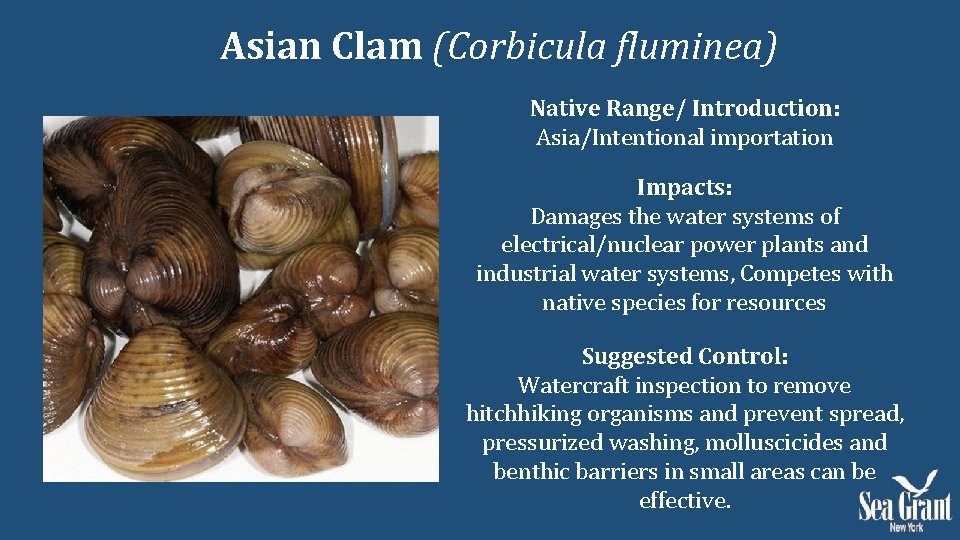
Asian Clam (Corbicula fluminea) Native Range/ Introduction: Asia/Intentional importation Impacts: Damages the water systems of electrical/nuclear power plants and industrial water systems, Competes with native species for resources Suggested Control: Watercraft inspection to remove hitchhiking organisms and prevent spread, pressurized washing, molluscicides and benthic barriers in small areas can be effective.
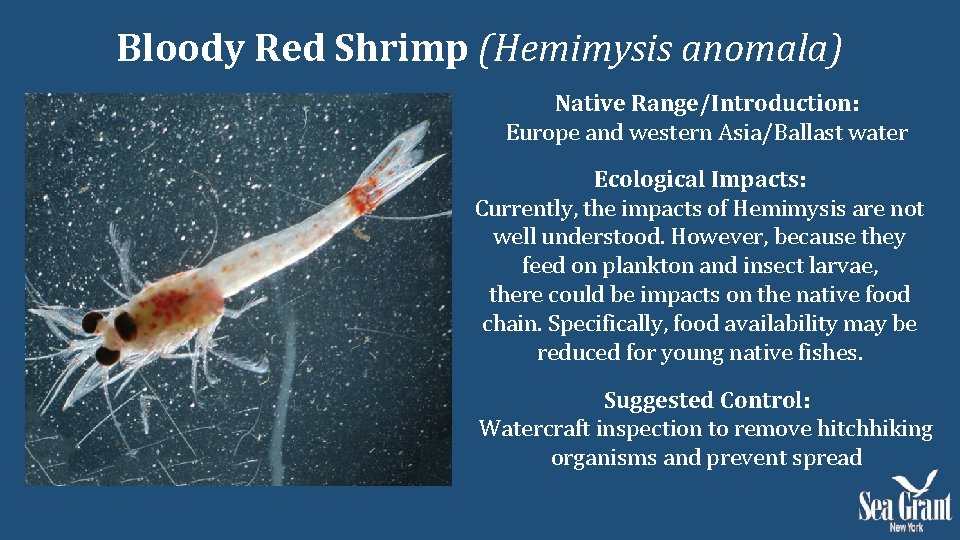
Bloody Red Shrimp (Hemimysis anomala) Native Range/Introduction: Europe and western Asia/Ballast water Ecological Impacts: Currently, the impacts of Hemimysis are not well understood. However, because they feed on plankton and insect larvae, there could be impacts on the native food chain. Specifically, food availability may be reduced for young native fishes. Suggested Control: Watercraft inspection to remove hitchhiking organisms and prevent spread
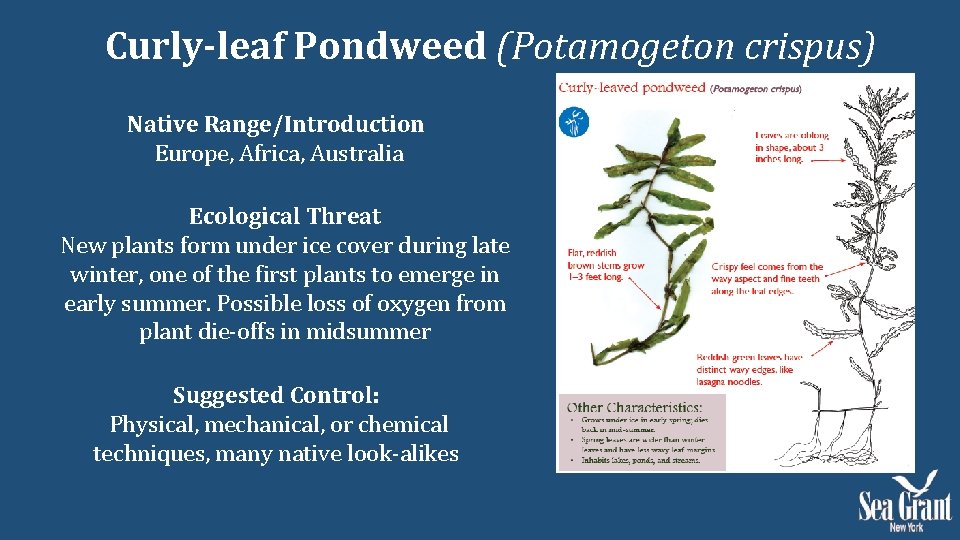
Curly-leaf Pondweed (Potamogeton crispus) Native Range/Introduction Europe, Africa, Australia Ecological Threat New plants form under ice cover during late winter, one of the first plants to emerge in early summer. Possible loss of oxygen from plant die-offs in midsummer Suggested Control: Physical, mechanical, or chemical techniques, many native look-alikes
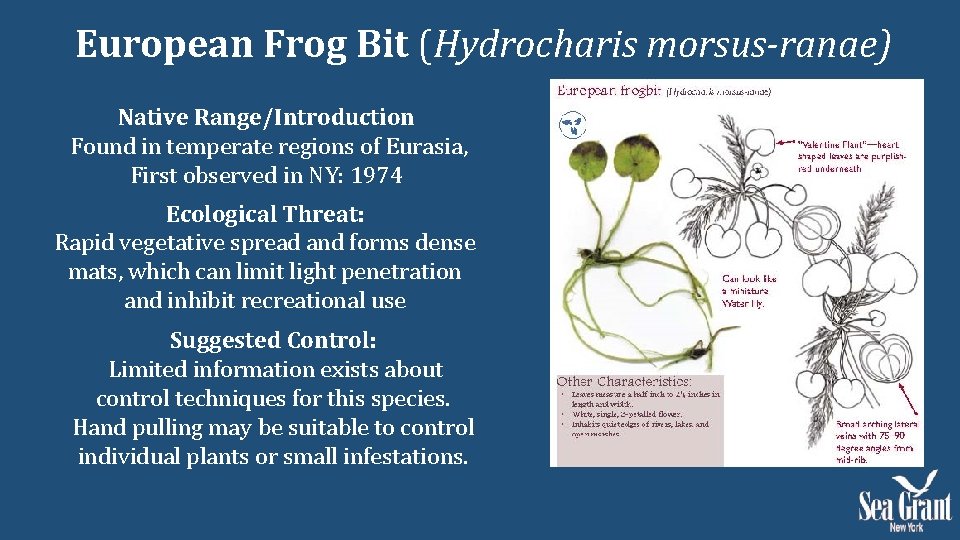
European Frog Bit (Hydrocharis morsus-ranae) Native Range/Introduction Found in temperate regions of Eurasia, First observed in NY: 1974 Ecological Threat: Rapid vegetative spread and forms dense mats, which can limit light penetration and inhibit recreational use Suggested Control: Limited information exists about control techniques for this species. Hand pulling may be suitable to control individual plants or small infestations.
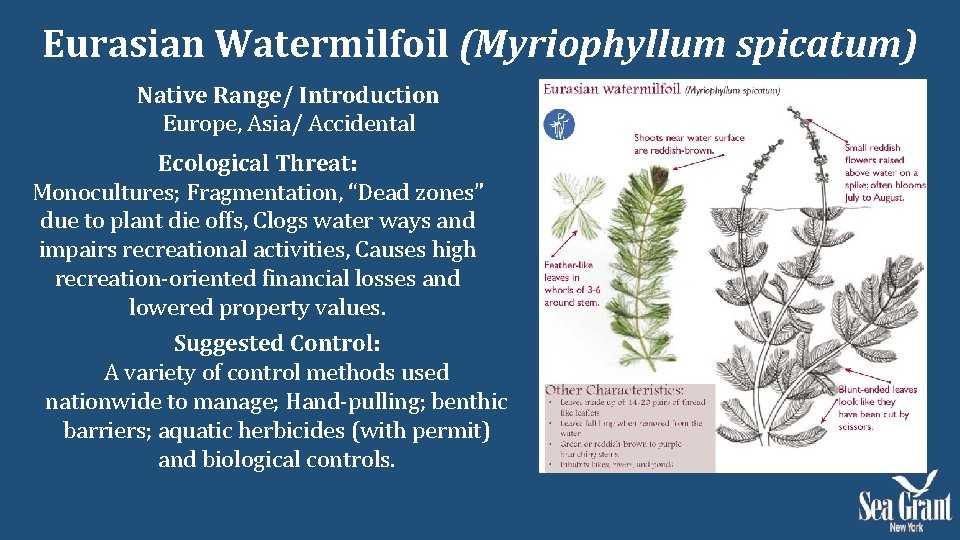
Eurasian Watermilfoil (Myriophyllum spicatum) Native Range/ Introduction Europe, Asia/ Accidental Ecological Threat: Monocultures; Fragmentation, “Dead zones” due to plant die offs, Clogs water ways and impairs recreational activities, Causes high recreation-oriented financial losses and lowered property values. Suggested Control: A variety of control methods used nationwide to manage; Hand-pulling; benthic barriers; aquatic herbicides (with permit) and biological controls.
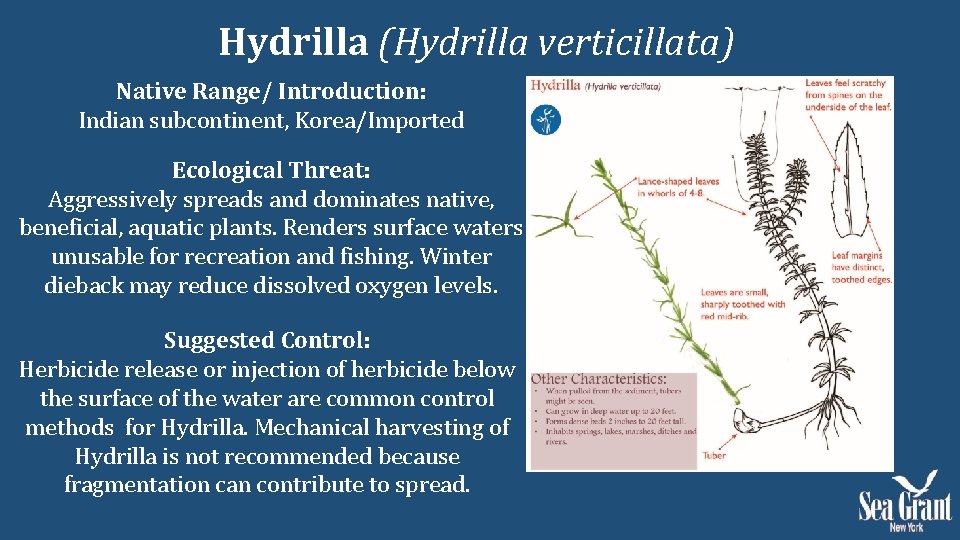
Hydrilla (Hydrilla verticillata) Native Range/ Introduction: Indian subcontinent, Korea/Imported Ecological Threat: Aggressively spreads and dominates native, beneficial, aquatic plants. Renders surface waters unusable for recreation and fishing. Winter dieback may reduce dissolved oxygen levels. Suggested Control: Herbicide release or injection of herbicide below the surface of the water are common control methods for Hydrilla. Mechanical harvesting of Hydrilla is not recommended because fragmentation can contribute to spread.
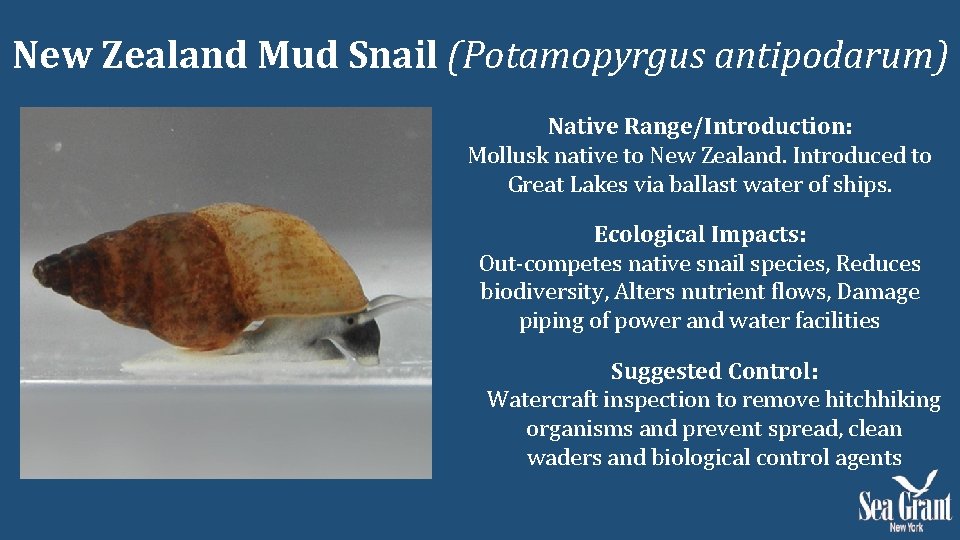
New Zealand Mud Snail (Potamopyrgus antipodarum) Native Range/Introduction: Mollusk native to New Zealand. Introduced to Great Lakes via ballast water of ships. Ecological Impacts: Out-competes native snail species, Reduces biodiversity, Alters nutrient flows, Damage piping of power and water facilities Suggested Control: Watercraft inspection to remove hitchhiking organisms and prevent spread, clean waders and biological control agents
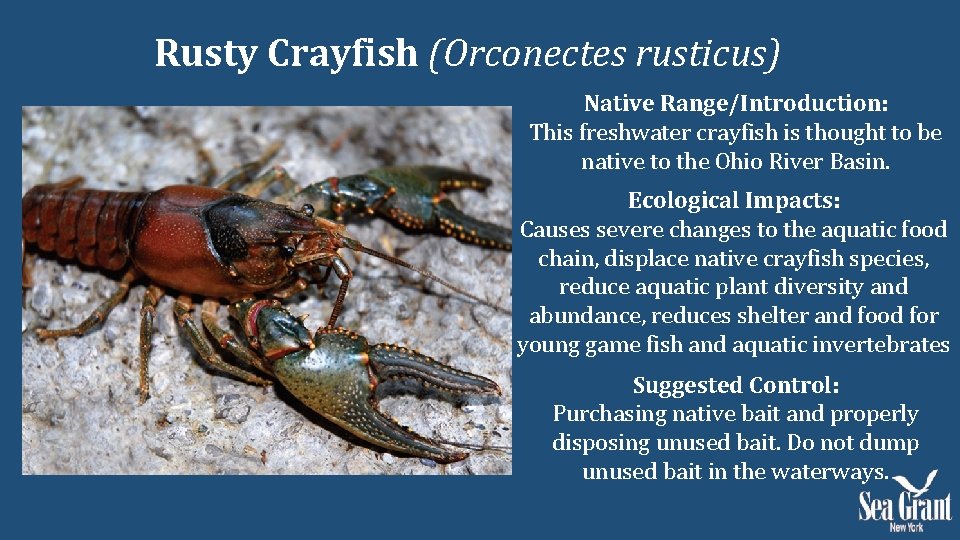
Rusty Crayfish (Orconectes rusticus) Native Range/Introduction: This freshwater crayfish is thought to be native to the Ohio River Basin. Ecological Impacts: Causes severe changes to the aquatic food chain, displace native crayfish species, reduce aquatic plant diversity and abundance, reduces shelter and food for young game fish and aquatic invertebrates Suggested Control: Purchasing native bait and properly disposing unused bait. Do not dump unused bait in the waterways.
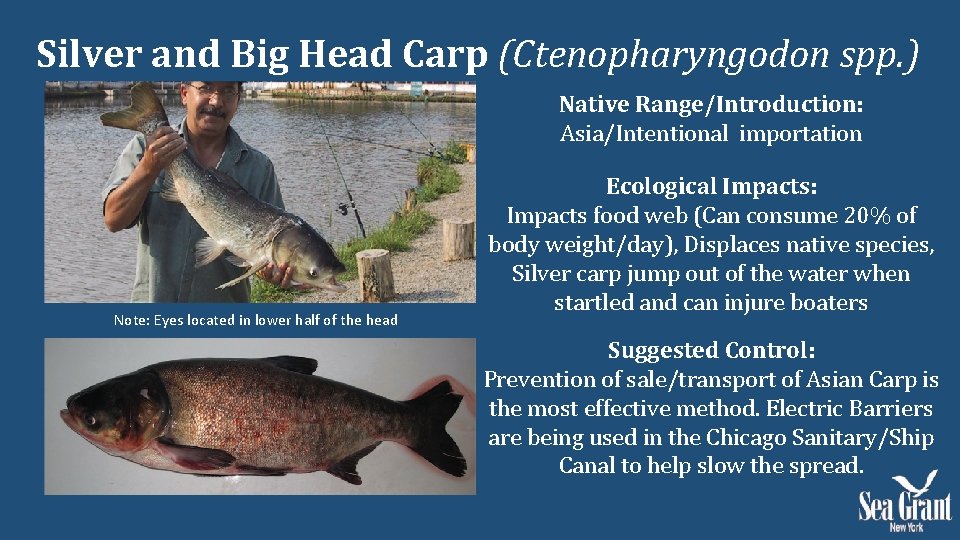
Silver and Big Head Carp (Ctenopharyngodon spp. ) Native Range/Introduction: Asia/Intentional importation Note: Eyes located in lower half of the head Ecological Impacts: Impacts food web (Can consume 20% of body weight/day), Displaces native species, Silver carp jump out of the water when startled and can injure boaters Suggested Control: Prevention of sale/transport of Asian Carp is the most effective method. Electric Barriers are being used in the Chicago Sanitary/Ship Canal to help slow the spread.
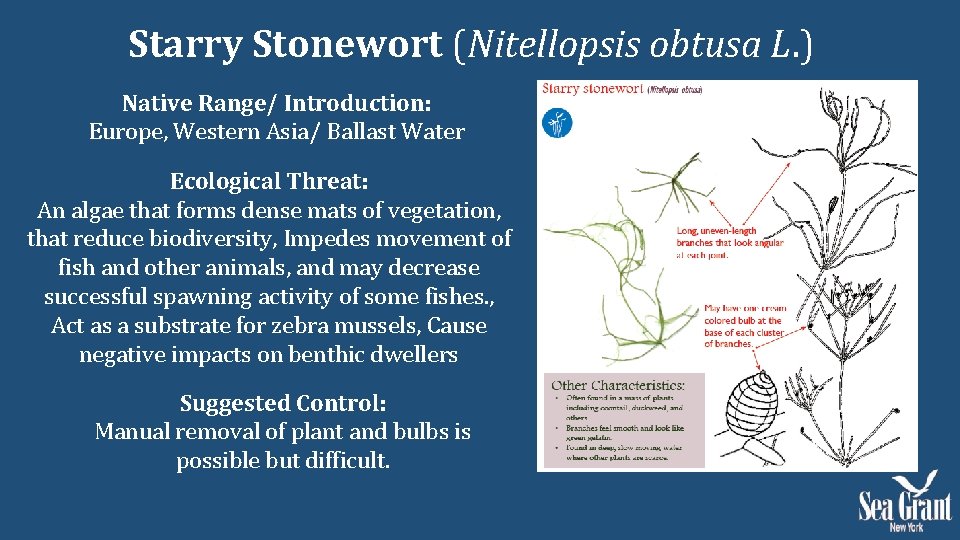
Starry Stonewort (Nitellopsis obtusa L. ) Native Range/ Introduction: Europe, Western Asia/ Ballast Water Ecological Threat: An algae that forms dense mats of vegetation, that reduce biodiversity, Impedes movement of fish and other animals, and may decrease successful spawning activity of some fishes. , Act as a substrate for zebra mussels, Cause negative impacts on benthic dwellers Suggested Control: Manual removal of plant and bulbs is possible but difficult.
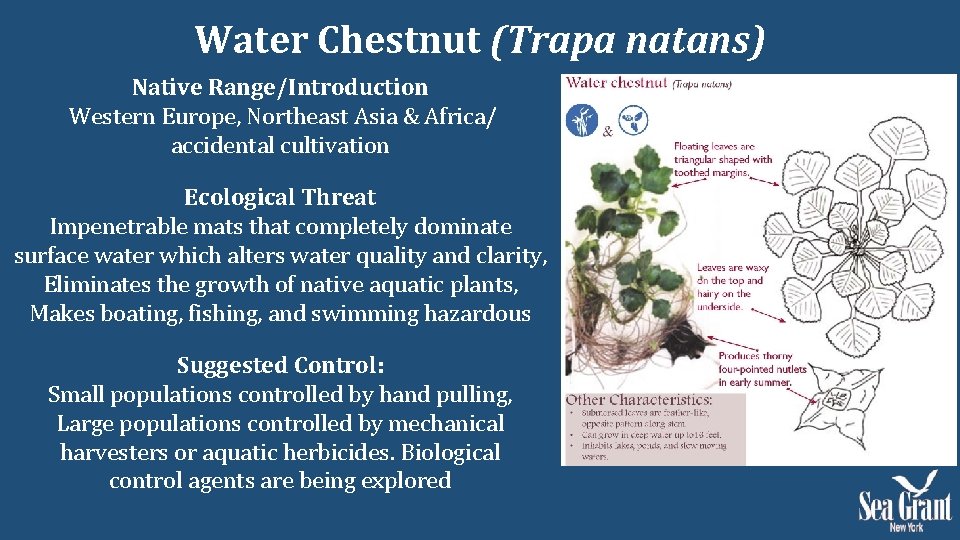
Water Chestnut (Trapa natans) Native Range/Introduction Western Europe, Northeast Asia & Africa/ accidental cultivation Ecological Threat Impenetrable mats that completely dominate surface water which alters water quality and clarity, Eliminates the growth of native aquatic plants, Makes boating, fishing, and swimming hazardous Suggested Control: Small populations controlled by hand pulling, Large populations controlled by mechanical harvesters or aquatic herbicides. Biological control agents are being explored
What should a steward do when observing water and hitchhiking organisms/debris? If you discover an aquatic species that you cannot identify or you suspect may be an invasive species, follow AIS identification and specimen collection protocols as designated and refer the boater to additional Clean~Drain~Dry materials.
Specimen Collection Approach Ø Obtain Positive ID of Organisms: document the organism- photograph or draw, where it was found and size Ø Send photo to designated contact (lake association president, PRISM coordinator, etc. ) and send sample if requested
Specimen Collection Approach Ø “Bag and Tag” specimen collection approach is followed: • Using the provided waterproof permanent marker, write the date; time; steward name and contact information, name of waterbody, name of launch site on a Ziploc bag provided as part of your steward supplies. • Place sample in bag with moist paper towel, double bag if necessary • Submit “Bag and Tag” collection to coordinator • Update data records and i. Map. Invasives. org database when results are received
Additional Field Guides and Resources • i. Map. Invasives [website] • New York Invasive Species Information [website] • Northeast Aquatic Nuisance Species Panel Online Guide [website] • Partnership for Regional Invasive Species Management Websites: • Adirondack Park Invasive Plant Program [APIPP] • • Capital/Mohawk [Cap. Mo PRISM] Catskill Regional Invasive Species Partnership [CRISP] Finger Lakes [FL PRISM] Lower Hudson [LH-PRISM] Long Island Invasive Species Management Area [LIISMA] St. Lawrence Eastern Lake Ontario [SLELO PRISM] Western New York [WNY PRISM] Please see Section #7 AIS Resources & References in your NYS Watercraft Inspection Steward Program Handbook.
This template was developed by New York Sea Grant for use by New York State Watercraft Inspection Steward Programs. All materials were reviewed by an Advisory Committee. Funding: This publication, prepared by the New York Sea Grant Extension Program for the Cornell University Statewide Invasive Species Outreach Education Program, was funded by US Fish & Wildlife Service Great Lakes Restoration Initiative monies to the Finger Lakes-Lake Ontario Watershed Protection Alliance. The New York State Watercraft Inspection Steward Program Handbook supports the “Stop Aquatic Hitchhikers!TM” campaign led by Wildlife Forever with support from the National Aquatic Nuisance Species Task Force, state and federal agencies and conservation partners across the U. S. We thank them for use of the Stop Aquatic Hitchhikers!TM logo.