
INVASIVE PLANTS IN ST LUCIE COUNTY ENVIRONMENTAL REGULATIONS

- Slides: 7
INVASIVE PLANTS IN ST. LUCIE COUNTY ENVIRONMENTAL REGULATIONS ENVIRONMENTAL RESOURCES DEPARTMENT
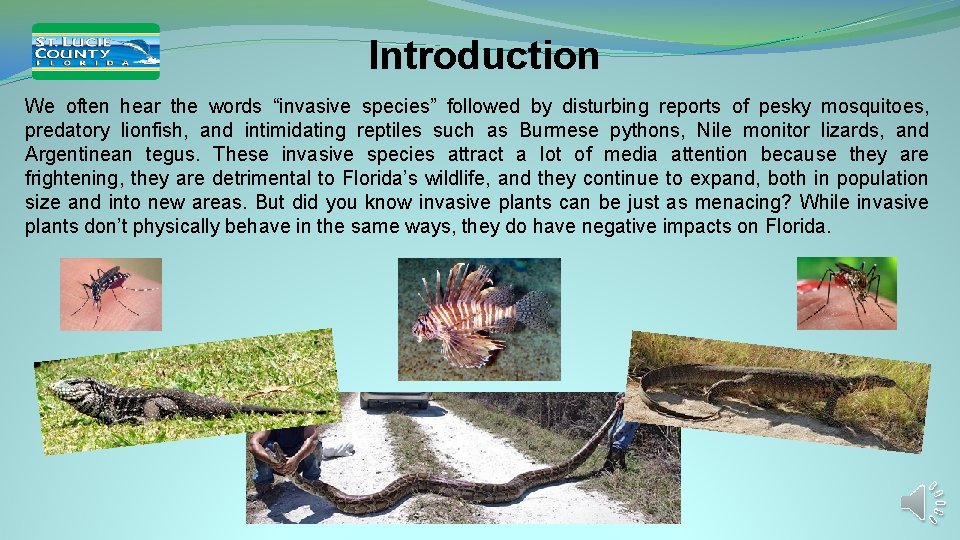
Introduction We often hear the words “invasive species” followed by disturbing reports of pesky mosquitoes, predatory lionfish, and intimidating reptiles such as Burmese pythons, Nile monitor lizards, and Argentinean tegus. These invasive species attract a lot of media attention because they are frightening, they are detrimental to Florida’s wildlife, and they continue to expand, both in population size and into new areas. But did you know invasive plants can be just as menacing? While invasive plants don’t physically behave in the same ways, they do have negative impacts on Florida.
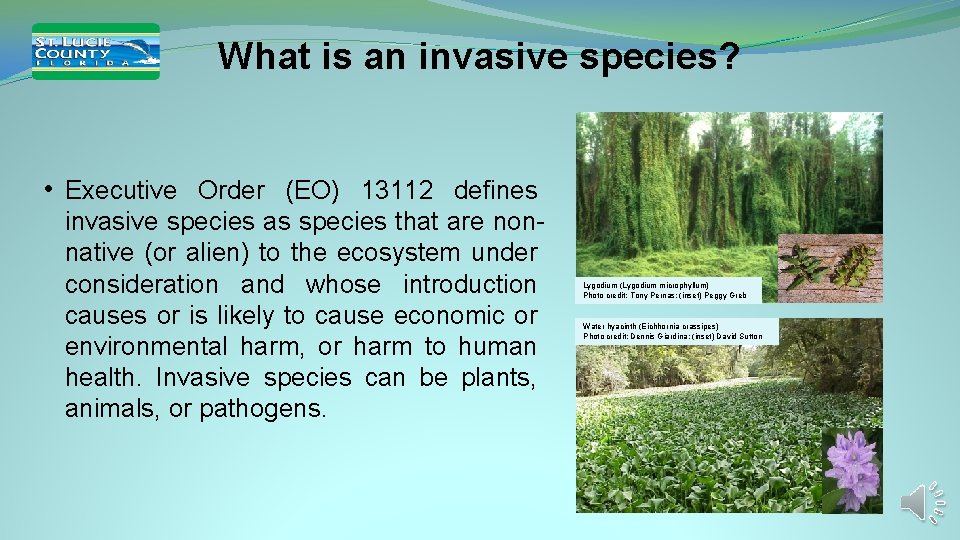
What is an invasive species? • Executive Order (EO) 13112 defines invasive species as species that are nonnative (or alien) to the ecosystem under consideration and whose introduction causes or is likely to cause economic or environmental harm, or harm to human health. Invasive species can be plants, animals, or pathogens. Lygodium (Lygodium microphyllum) Photo credit: Tony Pernas; (inset) Peggy Greb Water hyacinth (Eichhornia crassipes) Photo credit: Dennis Giardina; (inset) David Sutton
Native, Invasive, & Other Plant Definitions • Native: A plant that is a part of the balance of nature that has developed over hundreds or thousands of years in a particular region or ecosystem (USDA, NRCS). • Invasive: A plant that is non-native and able to establish on many sites, grow quickly, and spread to the point of disrupting plant communities or ecosystems (USDA, NRCS). • Non-native (or Alien): A plant introduced with human help (intentionally or accidentally) to a new place or new type of habitat where it was not previously found (USDA, NRCS). • Exotic: A plant not native to the continent on which it is now found (plants from Europe are exotic in North America [USDA, NRCS] and vice versa).
Native, Invasive, & Other Plant Definitions • Weed: A weed is a plant (native or non-native) that is not valued in the place where it is growing (USDA Animal and Plant Health Inspection Service [APHIS]), and that poses a major threat to agriculture and/or natural ecosystems within the United States (USDA, NRCS). • Noxious: Any plant or plant product that can directly or indirectly injure or cause damage to crops (including nursery stock or plant products), livestock, poultry or other interests of agriculture, irrigation, navigation, the natural resources of the United States, the public health, or the environment. *Note: USDA APHIS maintains a list of federally-recognized noxious weeds. It is illegal to import Federally listed noxious weeds or transport them across state lines. Some states (Florida) or counties (St. Lucie County) maintain lists and have passed laws regarding responsibilities for their control.
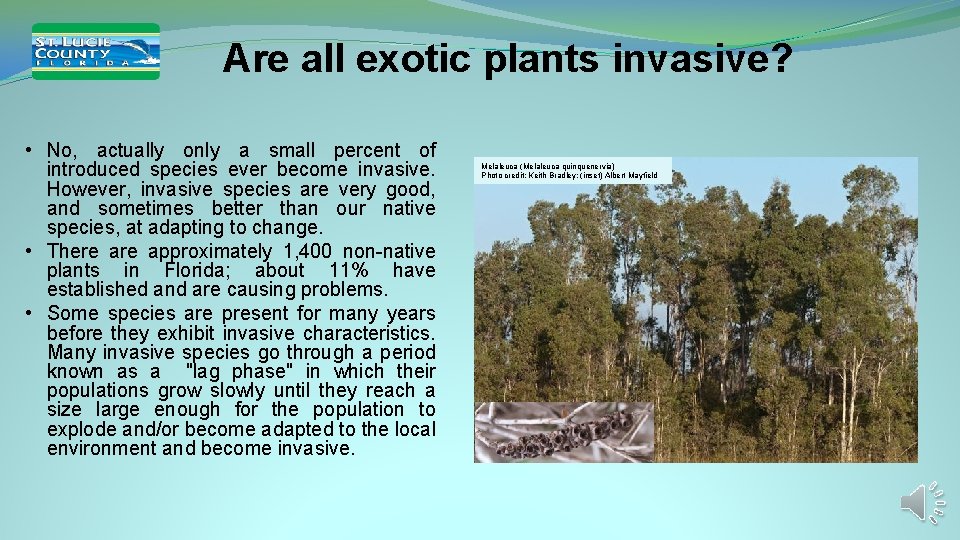
Are all exotic plants invasive? • No, actually only a small percent of introduced species ever become invasive. However, invasive species are very good, and sometimes better than our native species, at adapting to change. • There approximately 1, 400 non-native plants in Florida; about 11% have established and are causing problems. • Some species are present for many years before they exhibit invasive characteristics. Many invasive species go through a period known as a "lag phase" in which their populations grow slowly until they reach a size large enough for the population to explode and/or become adapted to the local environment and become invasive. Melaleuca (Melaleuca quinquenervia) Photo credit: Keith Bradley; (inset) Albert Mayfield
Thank you for watching! For information regarding removing Category I invasive plants, visit stlucieco. gov or call the Environmental Resources Department Monday-Friday, 8: 00 a. m. -5: 00 p. m. 772 -462 -2526.