
Invasive Mechanical Ventilation Essentials of safety Kim Fuzzard




- Slides: 26
Invasive Mechanical Ventilation: Essentials of safety Kim Fuzzard Clinical Educator Postgraduate Critical Care Nursing Course
Session Aim � Overview of fundamental safety for the intubated, mechanically ventilated adult patient in the Emergency Department. � Launch new BH i. Learn module Advanced Life Support for Adults ‘Airway & Breathing’
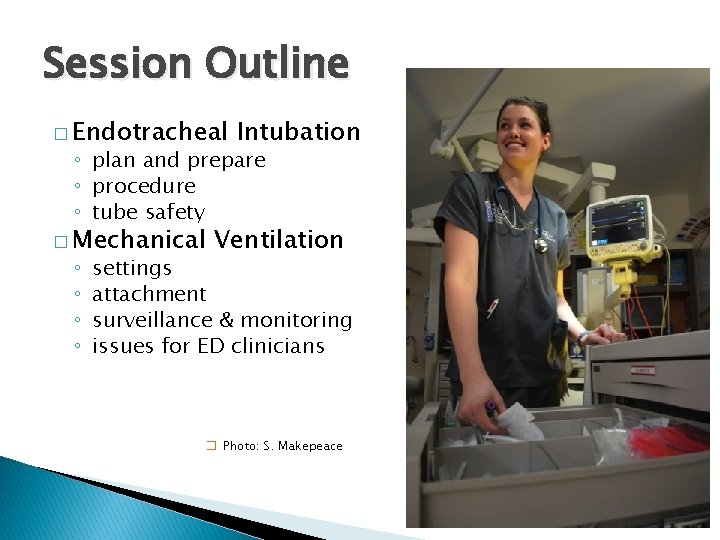
Session Outline � Endotracheal Intubation ◦ plan and prepare ◦ procedure ◦ tube safety � Mechanical ◦ ◦ Ventilation settings attachment surveillance & monitoring issues for ED clinicians � Photo: S. Makepeace
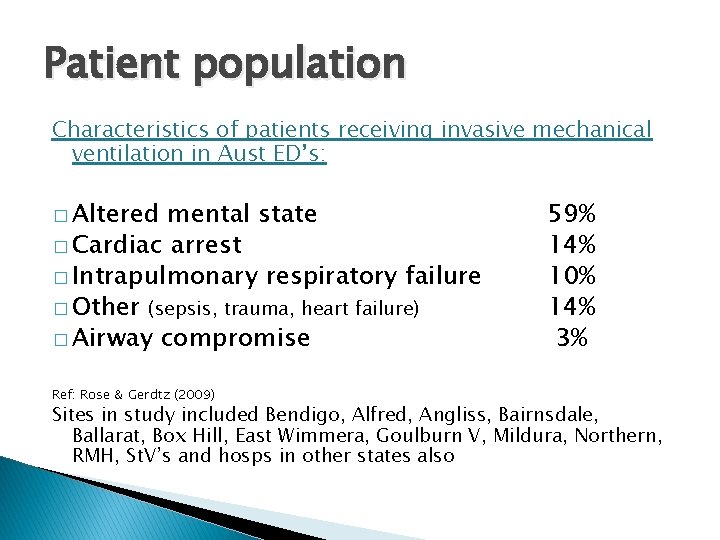
Patient population Characteristics of patients receiving invasive mechanical ventilation in Aust ED’s: � Altered mental state � Cardiac arrest � Intrapulmonary respiratory failure � Other (sepsis, trauma, heart failure) � Airway compromise Ref: Rose & Gerdtz (2009) 59% 14% 10% 14% 3% Sites in study included Bendigo, Alfred, Angliss, Bairnsdale, Ballarat, Box Hill, East Wimmera, Goulburn V, Mildura, Northern, RMH, St. V’s and hosps in other states also
Benefits and risks � Endotracheal intubation and invasive mechanical ventilation are required for the resuscitation of a range of patient presentations, however � Rose & Gerdtz (2007) � Care requires specialist expertise to avoid significant risks and ensure patient safety. � CENA (2013)
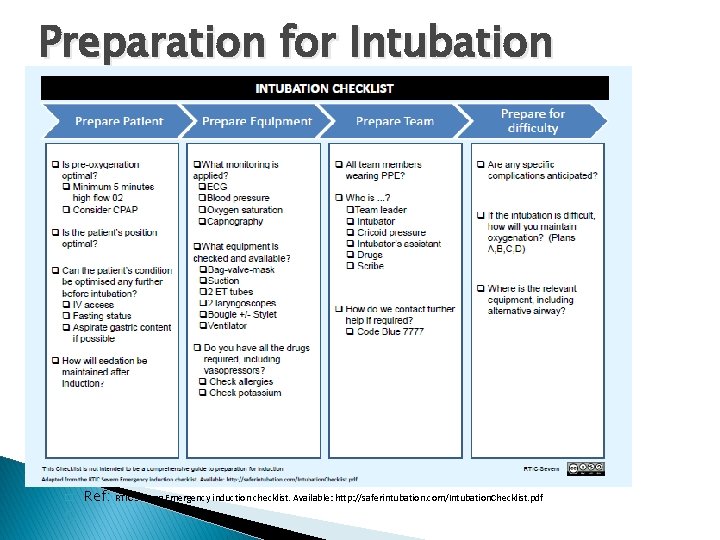
Preparation for Intubation � � � Ref: RTIC Severn Emergency induction checklist. Available: http: //saferintubation. com/Intubation. Checklist. pdf
BH i. Learn ALS module 1 � Airway and Breathing
Role Allocation
Intubation Overview
Confirming ETT Placement
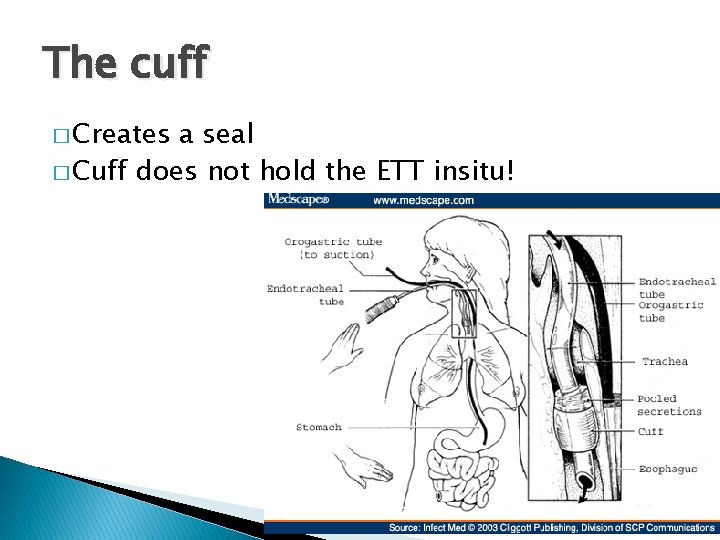
The cuff � Creates a seal � Cuff does not hold the ETT insitu!
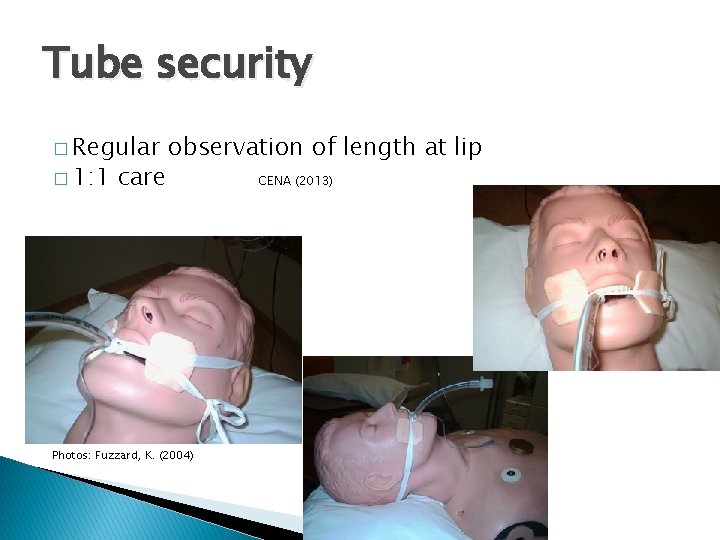
Tube security � Regular � 1: 1 care observation of length at lip Photos: Fuzzard, K. (2004) CENA (2013)
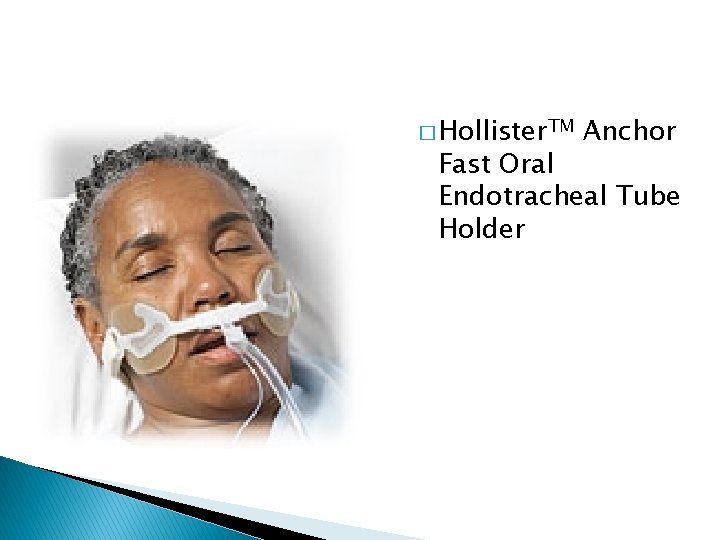
� Hollister. TM Anchor Fast Oral Endotracheal Tube Holder
Bob is 6’ tall. What is Bob holding?
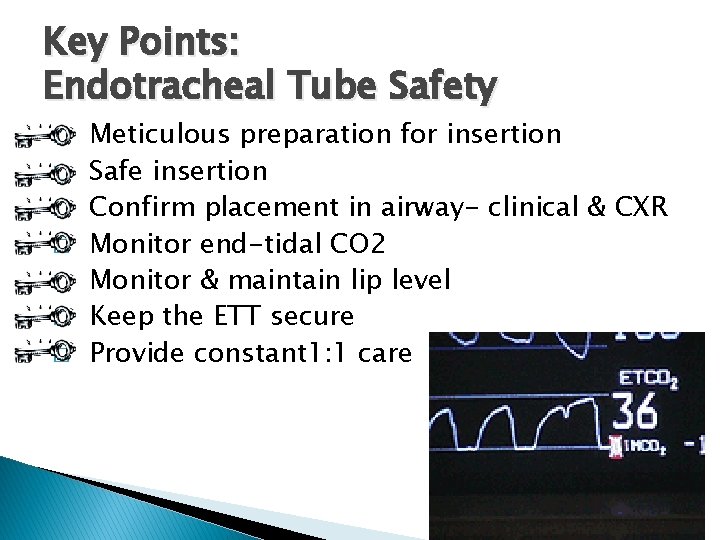
Key Points: Endotracheal Tube Safety � � � � Meticulous preparation for insertion Safe insertion Confirm placement in airway- clinical & CXR Monitor end-tidal CO 2 Monitor & maintain lip level Keep the ETT secure Provide constant 1: 1 care
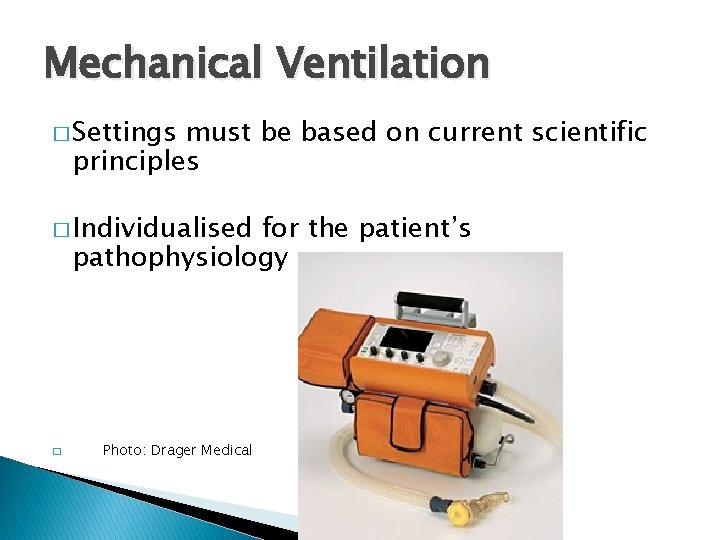
Mechanical Ventilation � Settings must be based on current scientific principles � Individualised for the patient’s pathophysiology � Photo: Drager Medical
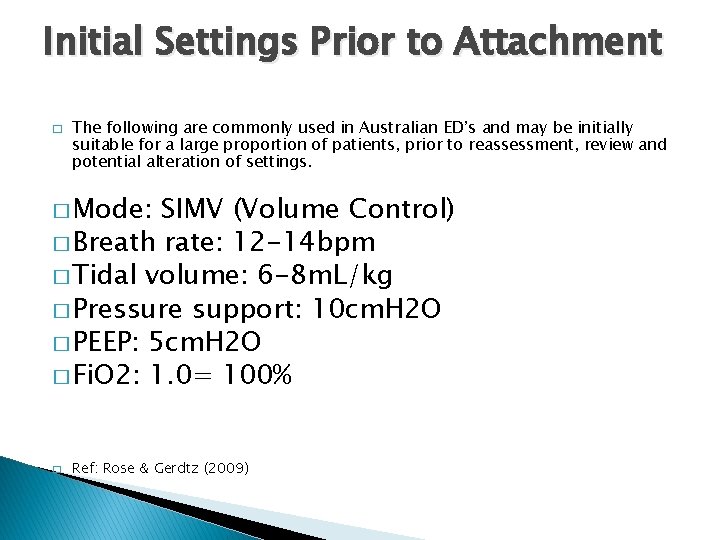
Initial Settings Prior to Attachment � The following are commonly used in Australian ED’s and may be initially suitable for a large proportion of patients, prior to reassessment, review and potential alteration of settings. � Mode: SIMV (Volume Control) � Breath rate: 12 -14 bpm � Tidal volume: 6 -8 m. L/kg � Pressure support: 10 cm. H 2 O � PEEP: 5 cm. H 2 O � Fi. O 2: 1. 0= 100% � Ref: Rose & Gerdtz (2009)
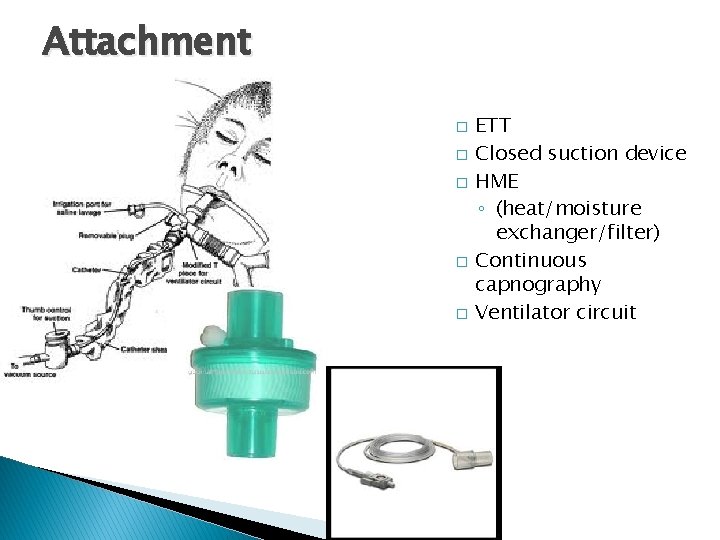
Attachment � � � ETT Closed suction device HME ◦ (heat/moisture exchanger/filter) Continuous capnography Ventilator circuit
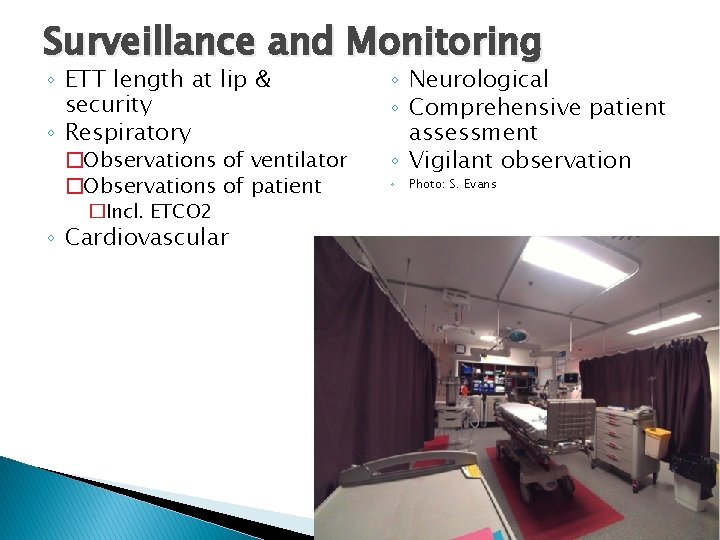
Surveillance and Monitoring ◦ ETT length at lip & security ◦ Respiratory �Observations of ventilator �Observations of patient �Incl. ETCO 2 ◦ Cardiovascular ◦ Neurological ◦ Comprehensive patient assessment ◦ Vigilant observation ◦ Photo: S. Evans
ED Care of the Mech Vent Pt � Patient re/assessment � Vent alarm setting & troubleshooting � CXR analysis � ABG analysis � Titration of ventilation � Careful positioning � Mouth, eye, pressure care � Psychological support pt & family � Weaning of ventilation � Extubation
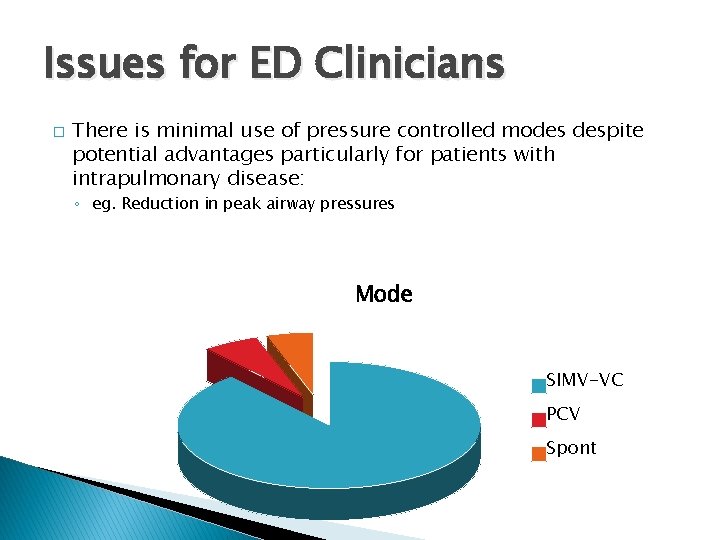
Issues for ED Clinicians � There is minimal use of pressure controlled modes despite potential advantages particularly for patients with intrapulmonary disease: ◦ eg. Reduction in peak airway pressures Mode SIMV-VC PCV Spont
Maintaining Clinical and Theoretical Expertise � Evidence – ED nurses have active involvement in decision-making & high levels of responsibility & autonomy Rose & Gerdtz (2009) � � Minimum standard- an evidence based competency education program � BUT � Optimum- relevant postgrad qualification CENA (2013) ◦ (Bendigo Health) � Potential issue: ◦ Lack of consistent exposure to ventilated pts Rose & Gerdtz (2009)
Protracted ED LOS � ED is not designed to provide ongoing care of the mechanically ventilated pt Marshall & Hodge (2011) Rose & Gerdtz (2009) � Transfer out to ICU asap when safe to do so CENA (2013), Marshall & Hodge (2011) Rose & Gerdtz (2009) � Transporting pts exposes them to additional risks & requires highly trained & skilled clinicians ACEM (2013)
We haven’t covered…. � Ventilation modes & parameters � Alarm setting � Sedation � Ongoing care & weaning � Ventilation of special pt populations ◦ eg. raised ICP, lung disease � Advanced ventilation strategies � Patient transport � And much more….
� “Mechanical ventilation is a complex and invasive intervention, which can have serious implications if not properly applied or resourced. ” � CENA (2013)
References & Resources � � � � � Rose & Gerdtz (2009) Use of invasive mechanical ventilation in Australian emergency departments. EMA 21, 108 -116 Rose & Gerdtz (2009) Mechanical Ventilation in Australian emergency departments: Survey of workforce profile, nursing role responsibility and education. AENJ 12: 38 -43 Rose & Gerdtz (2007) Invasive ventilation in the emergency department. Part 1: What nurses need to know. AENJ 10: 21 -25 Rose & Gerdtz (2007) Invasive ventilation in the emergency department. Part 2: Implications for patient safety. AENJ 10: 26 -29 CENA (2013) Position Statement: Mechanical ventilation [Accessed online 14/08/2014 http: //cena. org. au/CENA/Documents/CENA_Position_Statement_Mechanical_Ventilation. pdf] RTIC Severn Emergency induction checklist. Available: http: //saferintubation. com/Intubation. Checklist. pdf Bendigo Health (2014) ‘Airway & Breathing’ ALS e-learning module. Marshall & Hodge (2011) ‘Respiratory emergencies’ in Emergency & trauma care for nurses & paramedics. Eds: Curtis & Ramsden. Mosby: Sydney. ACEM (2013) Guidelines for transport of critically ill patients. [Accessed online 14/08/2014 https: //www. acem. org. au/getattachment/b 38 ea 874 -312 f-4355 -bd 66977521 f 194 c 3/P 03 -Guidelines-for-Transport-of-Critically-Ill-Pat. aspx