
Intuitive Business Transformation Milad Saad IBT The Roadmap
Intuitive Business Transformation Milad Saad
IBT The Roadmap to Intuitive Business Transformation embraces results-based collaboration, technology, and best practices to enable individuals, teams and subject matter experts to empower an organization to work together and lead in transforming the real estate, infrastructure, and facilities management functions for sustainable environmental improvements and significant savings by their respective organizations 2
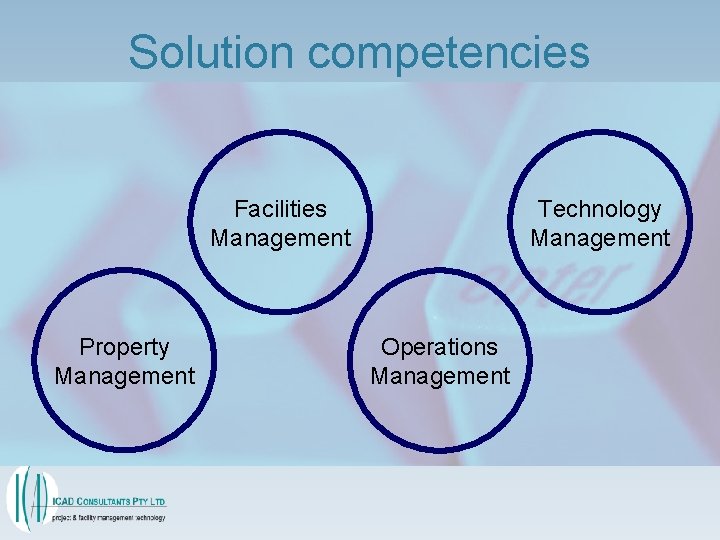
Solution competencies Facilities Management Property Management Technology Management Operations Management
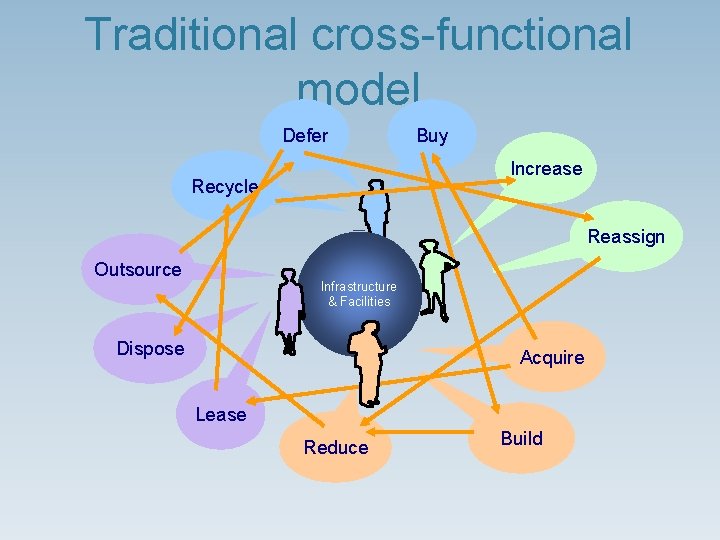
Traditional cross-functional model Defer Buy Increase Recycle Reassign Outsource Infrastructure & Facilities Dispose Acquire Lease Reduce Build
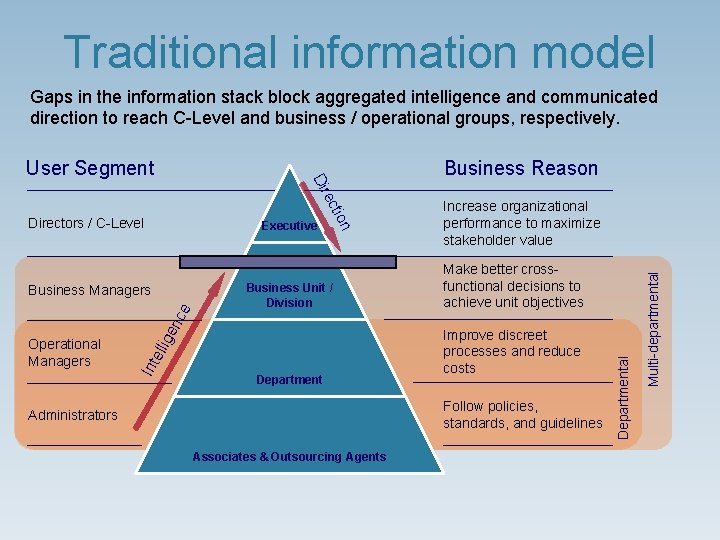
Traditional information model Gaps in the information stack block aggregated intelligence and communicated direction to reach C-Level and business / operational groups, respectively. Department Make better crossfunctional decisions to achieve unit objectives Improve discreet processes and reduce costs Follow policies, standards, and guidelines Administrators Associates & Outsourcing Agents Multi-departmental Business Unit / Division Increase organizational performance to maximize stakeholder value Departmental Int elli ge nc e Business Managers n Executive tio ec Directors / C-Level Operational Managers Business Reason Dir User Segment
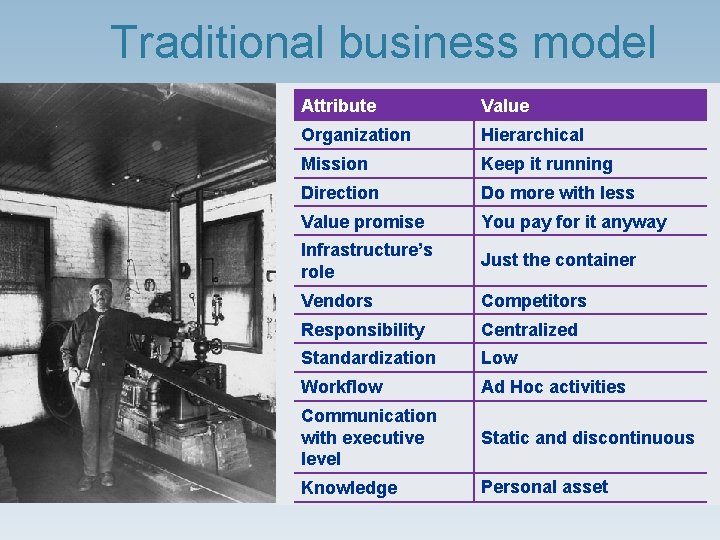
Traditional business model Attribute Value Organization Hierarchical Mission Keep it running Direction Do more with less Value promise You pay for it anyway Infrastructure’s role Just the container Vendors Competitors Responsibility Centralized Standardization Low Workflow Ad Hoc activities Communication with executive level Static and discontinuous Knowledge Personal asset
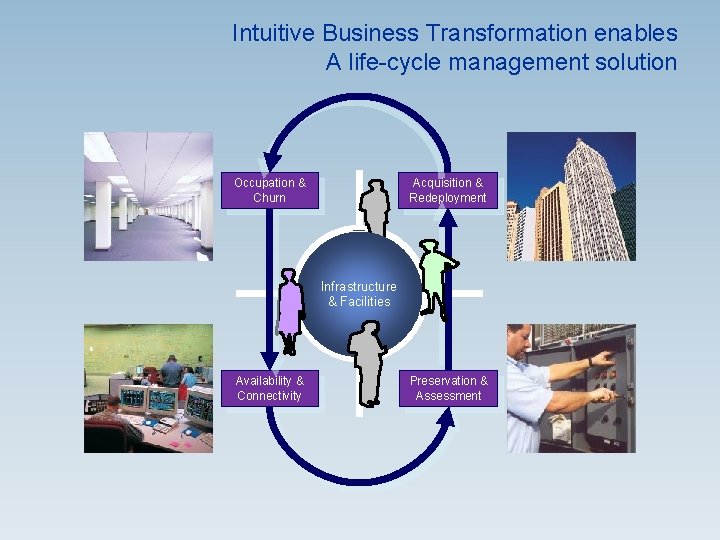
Intuitive Business Transformation enables A life-cycle management solution Occupation & Churn Acquisition & Redeployment Infrastructure & Facilities Availability & Connectivity Preservation & Assessment
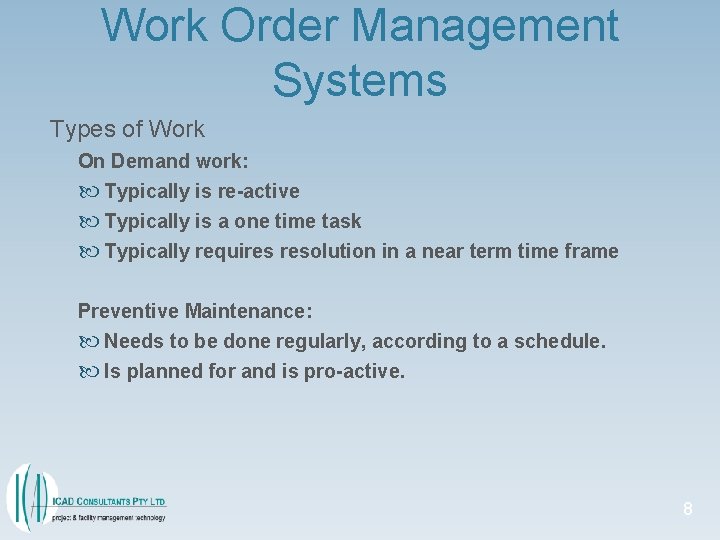
Work Order Management Systems Types of Work On Demand work: Typically is re-active Typically is a one time task Typically requires resolution in a near term time frame Preventive Maintenance: Needs to be done regularly, according to a schedule. Is planned for and is pro-active. 8
Configurable workflows based on SLAs Inputs: how SLAs are matched to service requests Request Parameters – Requestor, Problem Type, Division, Department, Site, Employee Standard, Problem Type Priority Level Outputs: how SLAs dictate workflow Dispatching options – automatically to a Supervisor or Work Team, or with an in -process Dispatch step Service Window, Time to Complete, Time to Respond automated escalations Automation – create work request, work order, or issue order Optional Workflow Steps – Estimation, Scheduling, Approvals, Notifications, Verification 9
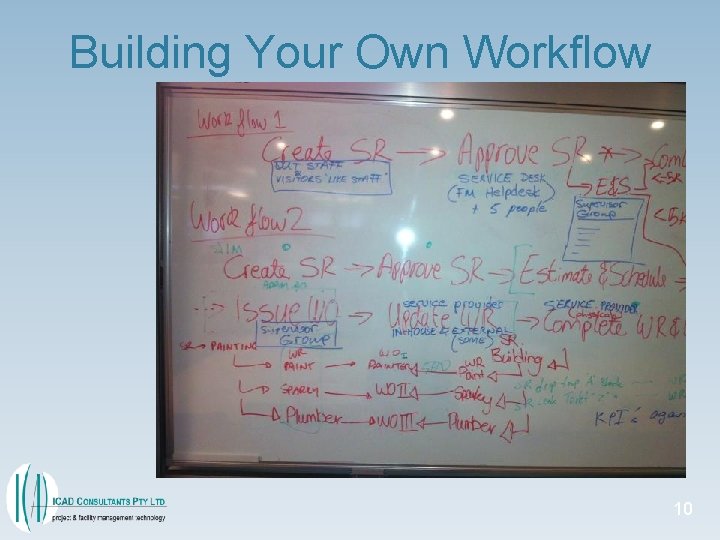
Building Your Own Workflow 10
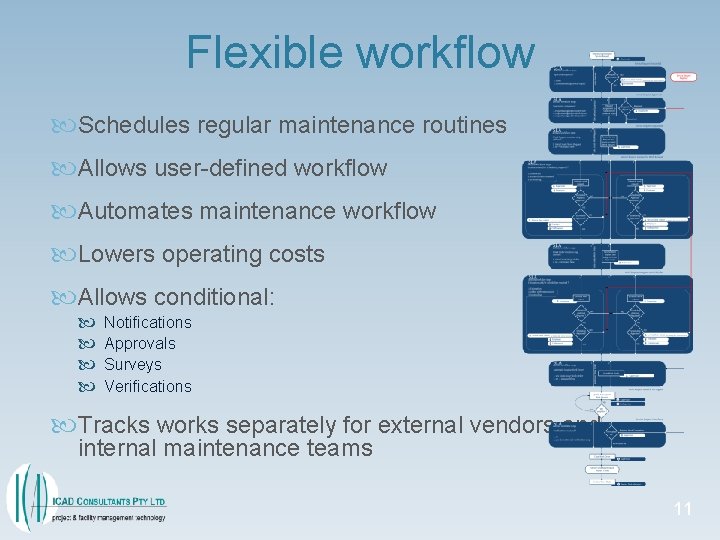
Flexible workflow Schedules regular maintenance routines Allows user-defined workflow Automates maintenance workflow Lowers operating costs Allows conditional: Notifications Approvals Surveys Verifications Tracks works separately for external vendors and internal maintenance teams 11
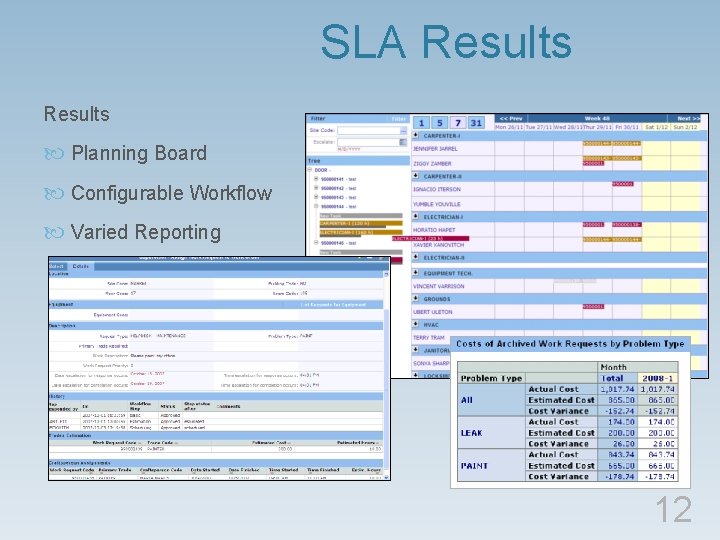
SLA Results Planning Board Configurable Workflow Varied Reporting 12
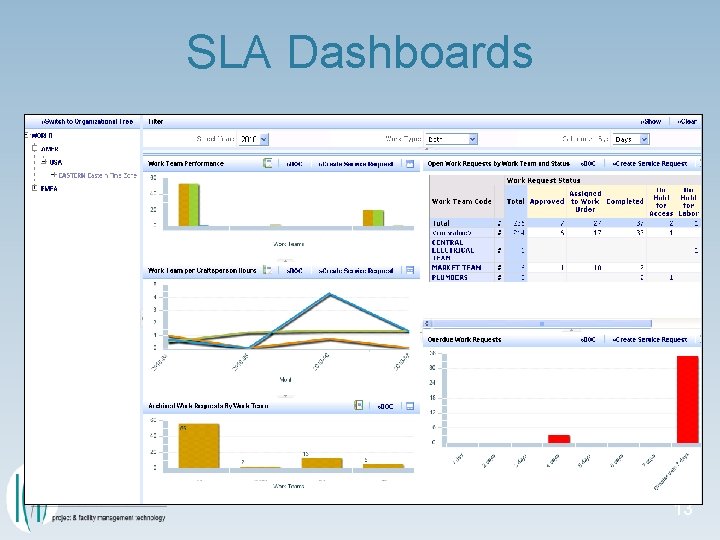
SLA Dashboards 13
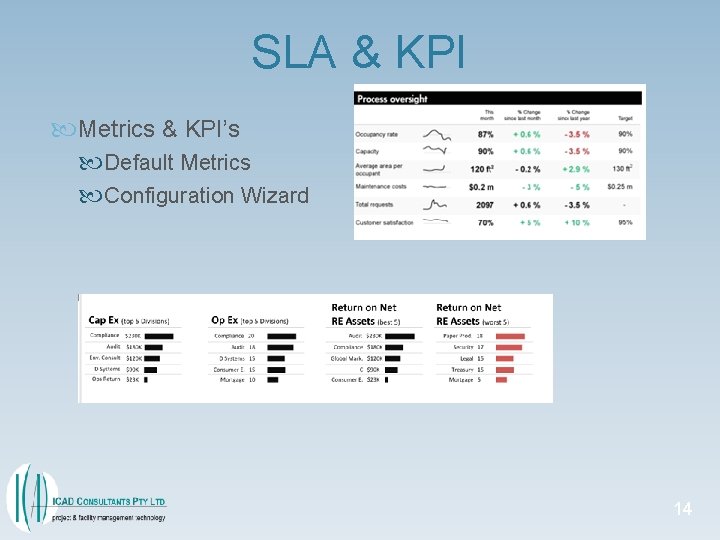
SLA & KPI Metrics & KPI’s Default Metrics Configuration Wizard 14
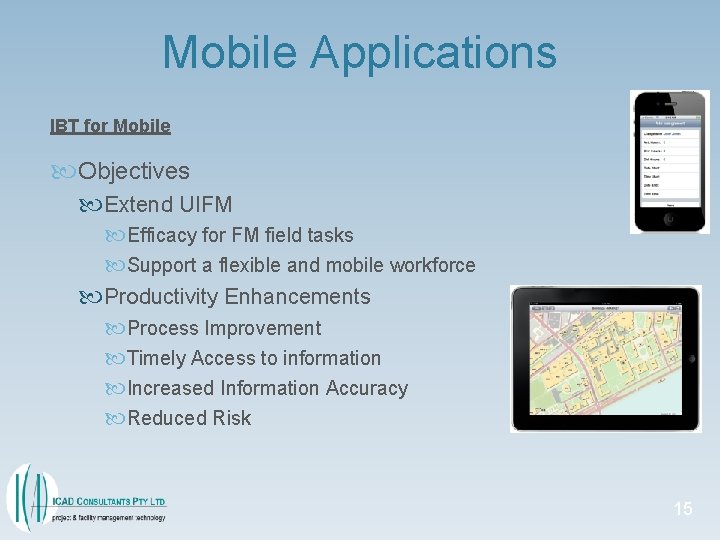
Mobile Applications IBT for Mobile Objectives Extend UIFM Efficacy for FM field tasks Support a flexible and mobile workforce Productivity Enhancements Process Improvement Timely Access to information Increased Information Accuracy Reduced Risk 15
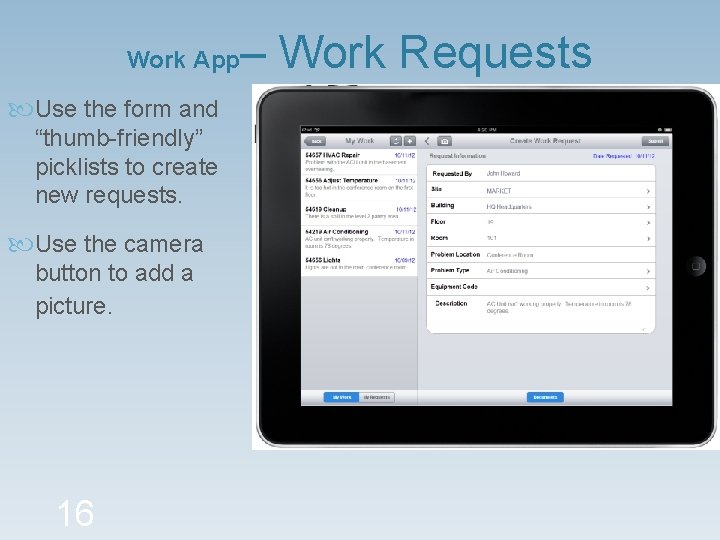
Work App Use the form and “thumb-friendly” picklists to create new requests. Use the camera button to add a picture. 16 – Work Requests
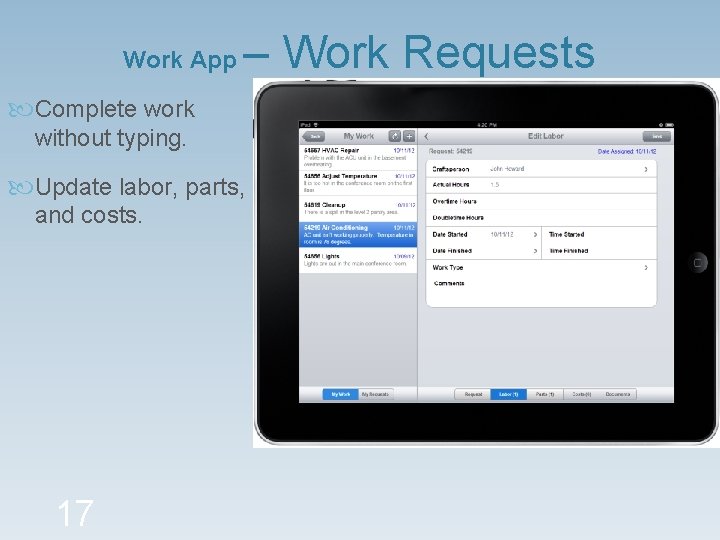
Work App – Work Requests Complete work without typing. Update labor, parts, and costs. 17
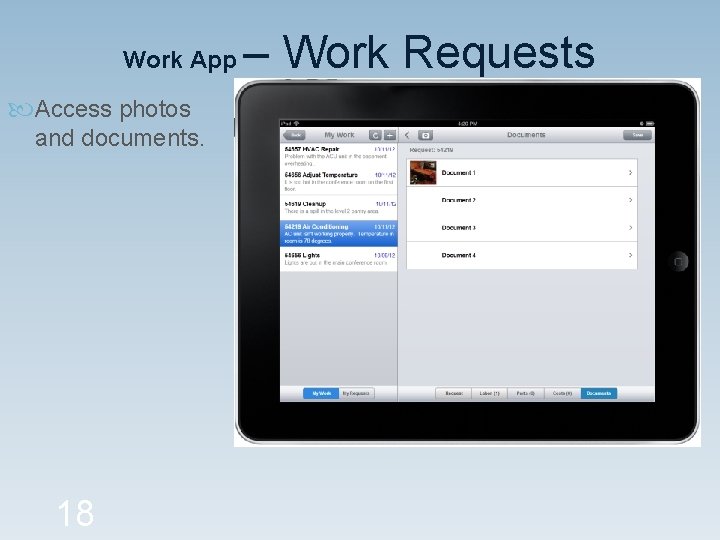
Work App Access photos and documents. 18 – Work Requests
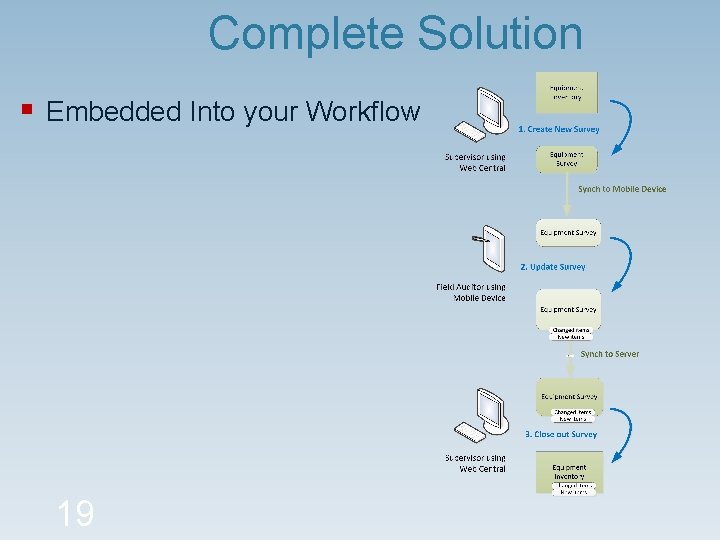
Complete Solution § Embedded Into your Workflow 19
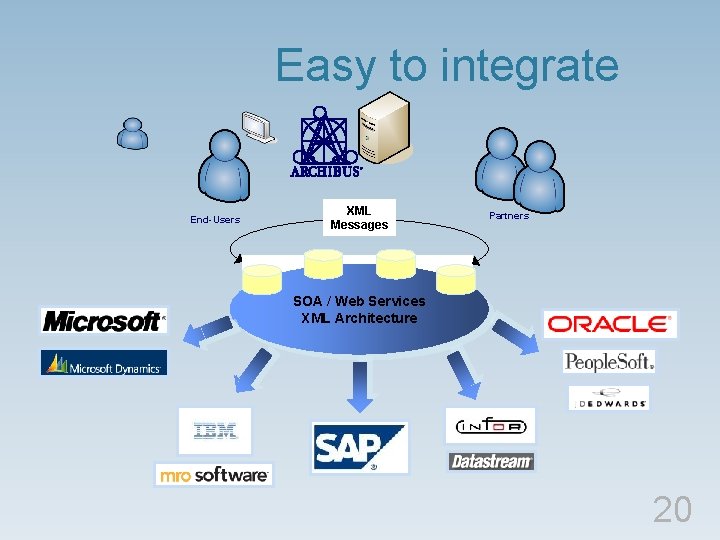
Easy to integrate End-Users XML Messages Partners SOA / Web Services XML Architecture 20
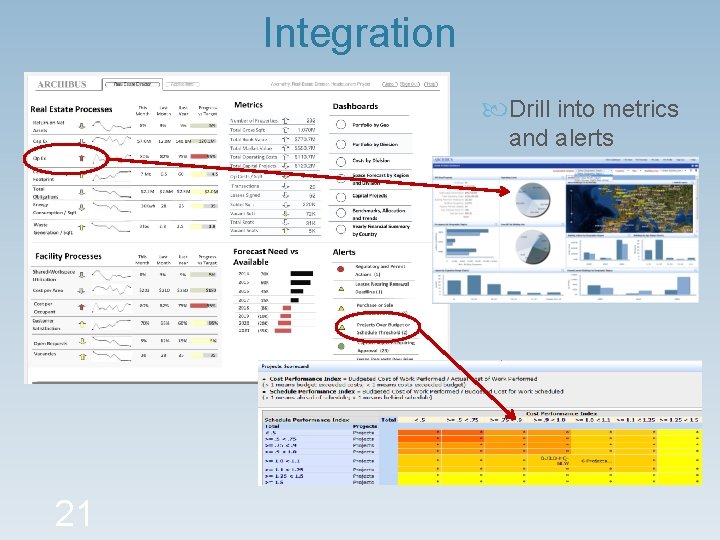
Integration Drill into metrics and alerts 21
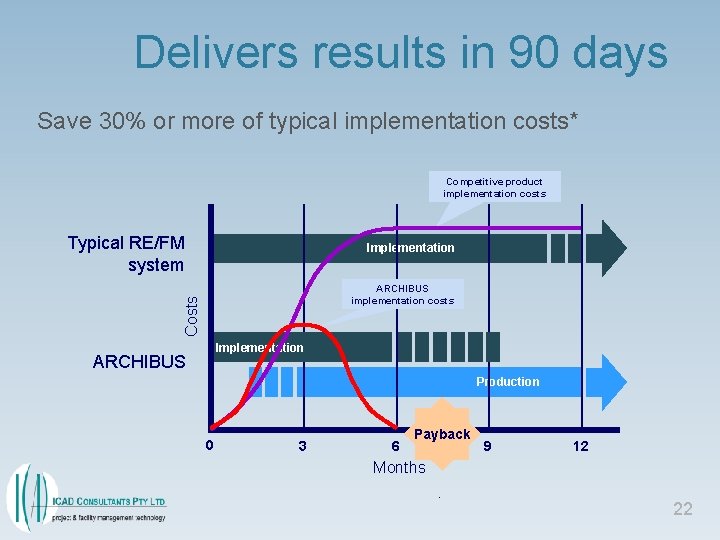
Delivers results in 90 days Save 30% or more of typical implementation costs* Competitive product implementation costs Typical RE/FM system Implementation Costs ARCHIBUS implementation costs Implementation ARCHIBUS Production 0 3 6 Payback 9 12 Months. 22
Summary Developing maintenance contracts based on flexible Service Level Agreement (SLA). Enhance work practice by building and configuring workflow to adapt business processes. Improve responses and customer satisfaction by monitoring and reporting KPIs. Build on technology to minimise administrative tasks and maximise saving. Build on technology to schedule repetitive tasks and reporting to authorities. Optimize Business Intelligence processes through integration with mobile and GIS technology. 23

Questions 24

25
- Slides: 25