
Introductory Clinical Pharmacology Chapter 18 Nonopioid Analgesics Nonsteroidal
- Slides: 12
Introductory Clinical Pharmacology Chapter 18 Nonopioid Analgesics: Nonsteroidal Anti-Inflammatory Drugs Copyright © 2008 Lippincott Williams & Wilkins.
NSAIDs: Actions and Uses • Non-Steroidal Anti-Inflamatory Drugs • NSAIDs inhibit two related enzymes: – Inhibit activity of cyclooxygenase-1 (COX-1): Enzyme helps to maintain the stomach lining • What do you think a possible side effect of this could be? ? ? – Inhibit activity of cyclooxygenase-2 (COX-2): Enzyme triggers pain and inflammation Copyright © 2008 Lippincott Williams & Wilkins.
Medications to Recognize: NSAIDs: Actions and Uses • Ibuprofen (Advil/Motrin) and naproxen: Block COX-2 produces pain relief; inhibit COX -1 causes adverse reactions, including unwanted GI reactions such as stomach irritation and ulcers • Celecoxib (Celebrex): Inhibits only COX-2; less potential for GI adverse reactions • Used for: Osteoarthritis, rheumatoid arthritis, and other musculoskeletal disorders; mild to moderate pain; primary dysmenorrhea; fever reduction Copyright © 2008 Lippincott Williams & Wilkins.
NSAIDs: Adverse Reactions • Gastrointestinal system reactions – Nausea, vomiting, dyspepsia, diarrhea, constipation, epigastric pain, indigestion, abdominal distress or discomfort, intestinal ulceration, stomatitis Copyright © 2008 Lippincott Williams & Wilkins.
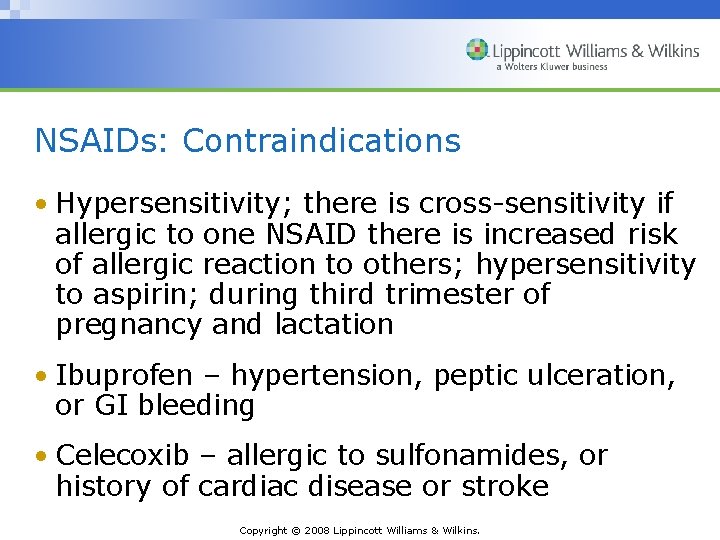
NSAIDs: Contraindications • Hypersensitivity; there is cross-sensitivity if allergic to one NSAID there is increased risk of allergic reaction to others; hypersensitivity to aspirin; during third trimester of pregnancy and lactation • Ibuprofen – hypertension, peptic ulceration, or GI bleeding • Celecoxib – allergic to sulfonamides, or history of cardiac disease or stroke Copyright © 2008 Lippincott Williams & Wilkins.
NSAIDs: Precautions • Cautious use: Pregnancy (pregnancy category B Copyright © 2008 Lippincott Williams & Wilkins.
NSAIDs: Interactions • Anticoagulants: Increased risk of bleeding Copyright © 2008 Lippincott Williams & Wilkins.
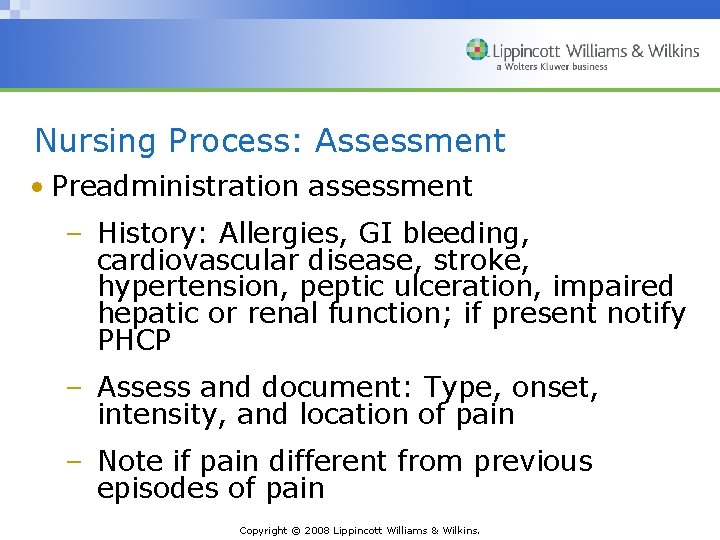
Nursing Process: Assessment • Preadministration assessment – History: Allergies, GI bleeding, cardiovascular disease, stroke, hypertension, peptic ulceration, impaired hepatic or renal function; if present notify PHCP – Assess and document: Type, onset, intensity, and location of pain – Note if pain different from previous episodes of pain Copyright © 2008 Lippincott Williams & Wilkins.
Nursing Process: Assessment (cont’d) • Ongoing assessment – Monitor: Pain relief; reassess pain rating 3060 minutes following administration of the drug – Persisting pain: Assess and document severity, location, and intensity; monitor vital signs at least every 4 hours – Assess for decrease in inflammation and mobility in joints – Report: Any adverse reactions (dark stools, prolonged bleeding) Copyright © 2008 Lippincott Williams & Wilkins.
Nursing Process: Implementation – NSAID administered with food, milk, or antacids Copyright © 2008 Lippincott Williams & Wilkins.
Nursing Process: Evaluation • Relief from pain and discomfort; better mobility • Body temperature: Normal • Adverse reactions: Identified, reported, and managed • Patient verbalizes understanding of treatment regimen and adverse effects of the drug Copyright © 2008 Lippincott Williams & Wilkins.
End of Presentation Copyright © 2008 Lippincott Williams & Wilkins.