
IntroductionToIntelligentControl M Yamakita Dept of Mechanical and Control
- Slides: 20
Introduction To Intelligent Control M. Yamakita Dept. of Mechanical and Control Systems Eng. Tokyo Inst. Of Tech. 2/20/2021 1
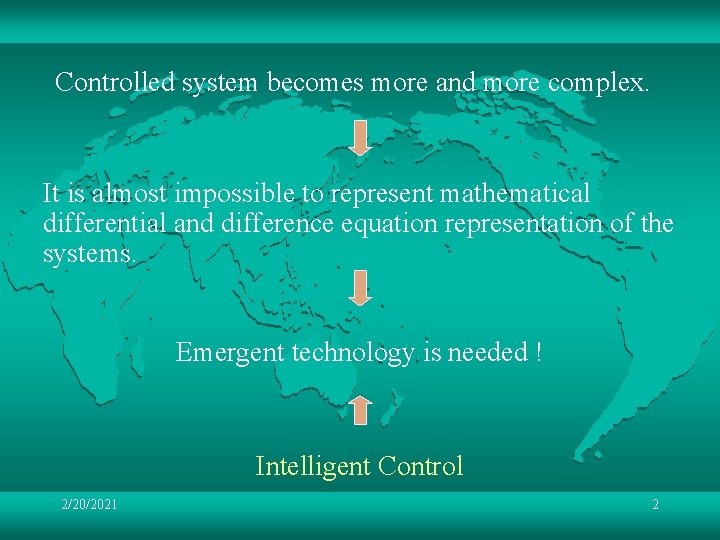
Controlled system becomes more and more complex. It is almost impossible to represent mathematical differential and difference equation representation of the systems. Emergent technology is needed ! Intelligent Control 2/20/2021 2
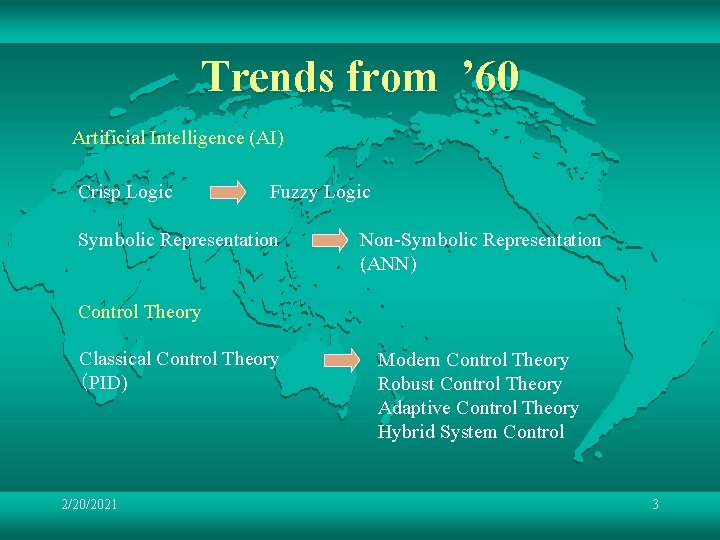
Trends from ’ 60 Artificial Intelligence (AI) Crisp Logic Fuzzy Logic Symbolic Representation Non-Symbolic Representation (ANN) Control Theory Classical Control Theory (PID) 2/20/2021 Modern Control Theory Robust Control Theory Adaptive Control Theory Hybrid System Control 3
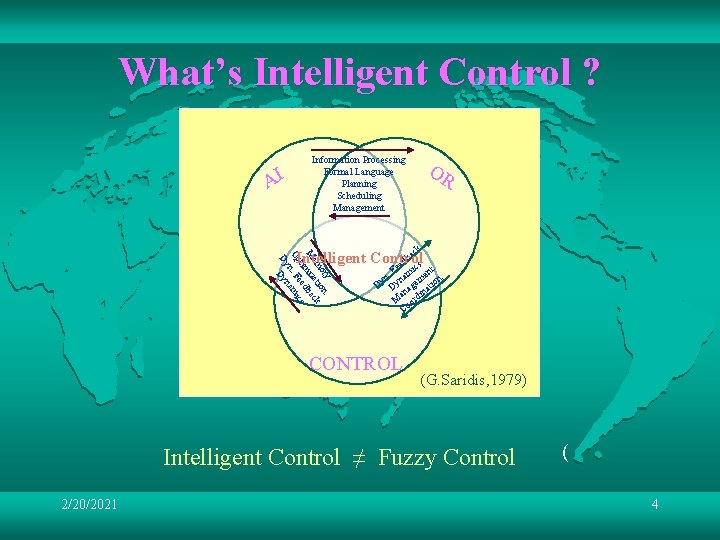
What’s Intelligent Control ? AI Information Processing Formal Language Planning Scheduling Management OR k y or on em ati ck M miz dba ti ee cs Op n. F ami Dy Dyn ac Intelligent Control db s e c e i nt F n. nam me on y D Dy age ati an in M oord C CONTROL (G. Saridis, 1979) Intelligent Control ≠ Fuzzy Control 2/20/2021 ( 4
Structure Of Intelligent Control 1. Hierarchical Intelligent Control (Albus, Saridis) 2. Reactive Intelligent Control (Brooks) (Subsumption Architecture) 2/20/2021 5
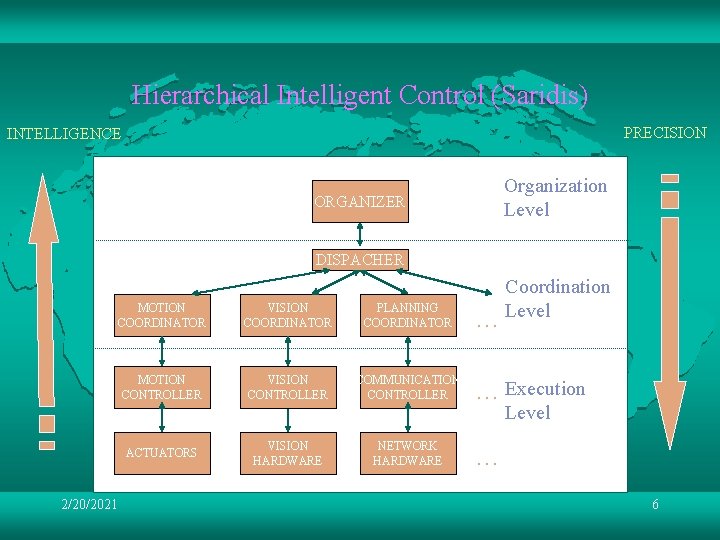
Hierarchical Intelligent Control (Saridis) PRECISION INTELLIGENCE Organization Level ORGANIZER DISPACHER 2/20/2021 MOTION COORDINATOR VISION COORDINATOR PLANNING COORDINATOR MOTION CONTROLLER VISION CONTROLLER COMMUNICATION CONTROLLER ACTUATORS VISION HARDWARE NETWORK HARDWARE … Coordination Level … Execution Level … 6
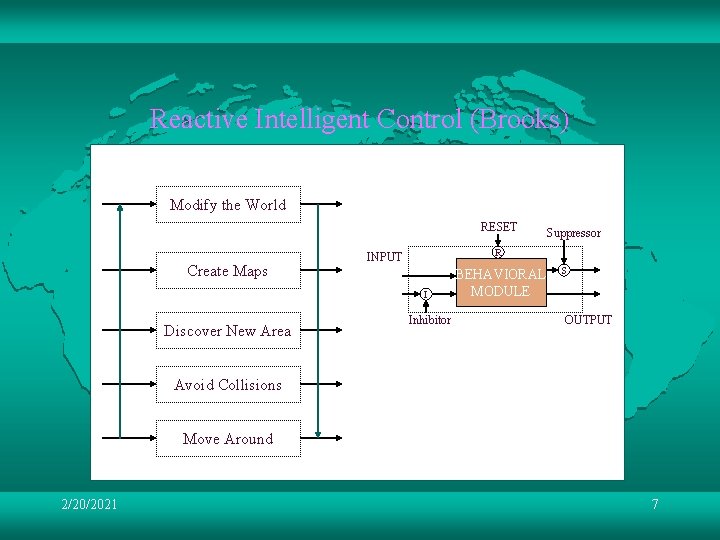
Reactive Intelligent Control (Brooks) Modify the World RESET Create Maps R INPUT I Discover New Area Suppressor Inhibitor BEHAVIORAL MODULE S OUTPUT Avoid Collisions Move Around 2/20/2021 7
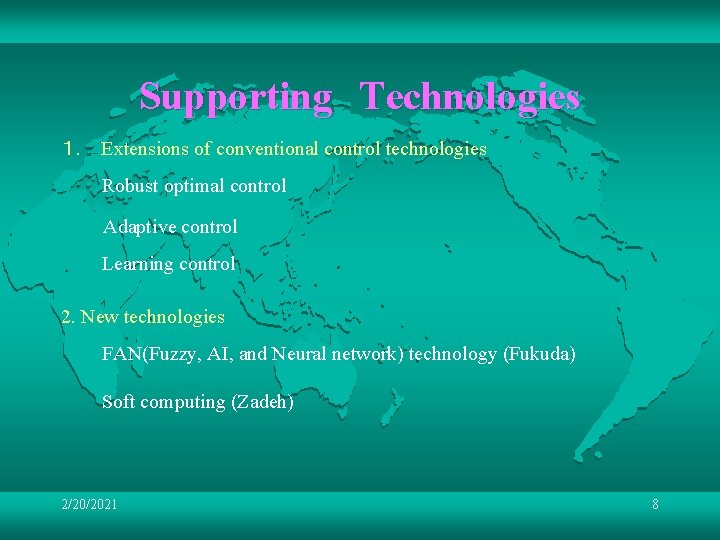
Supporting Technologies 1. Extensions of conventional control technologies Robust optimal control Adaptive control Learning control 2. New technologies FAN(Fuzzy, AI, and Neural network) technology (Fukuda) Soft computing (Zadeh) 2/20/2021 8
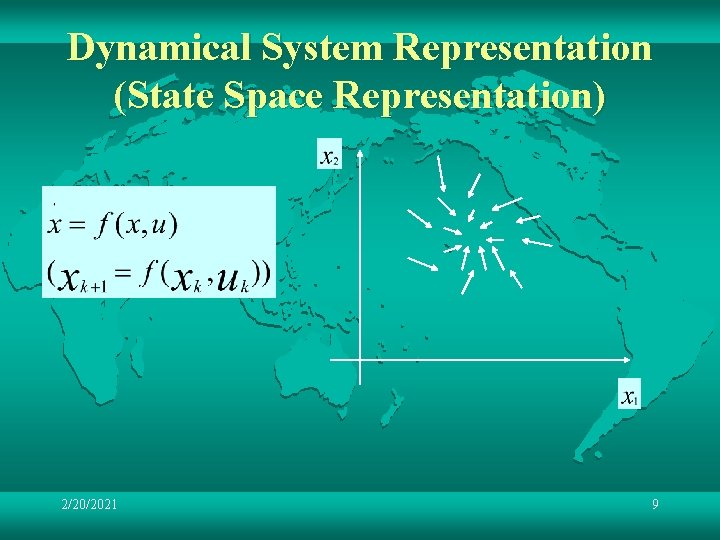
Dynamical System Representation (State Space Representation) 2/20/2021 9
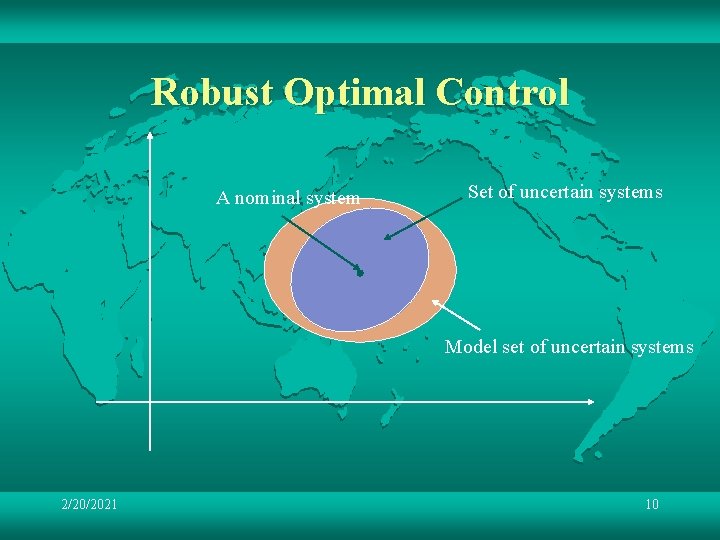
Robust Optimal Control A nominal system Set of uncertain systems Model set of uncertain systems 2/20/2021 10
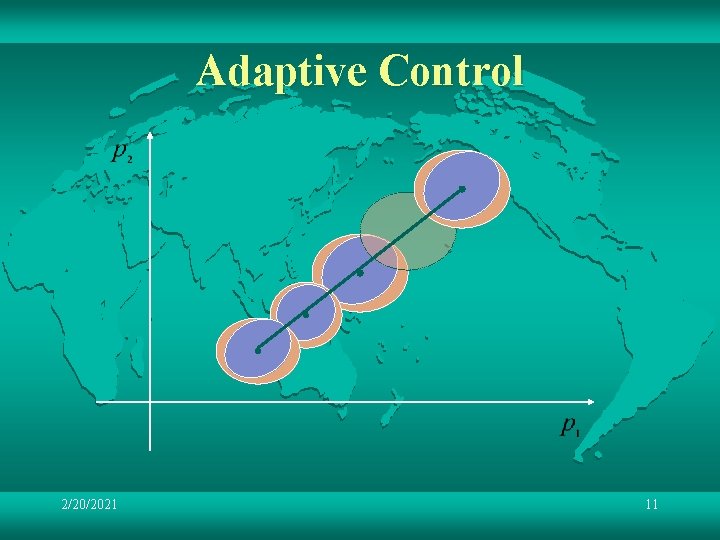
Adaptive Control 2/20/2021 11
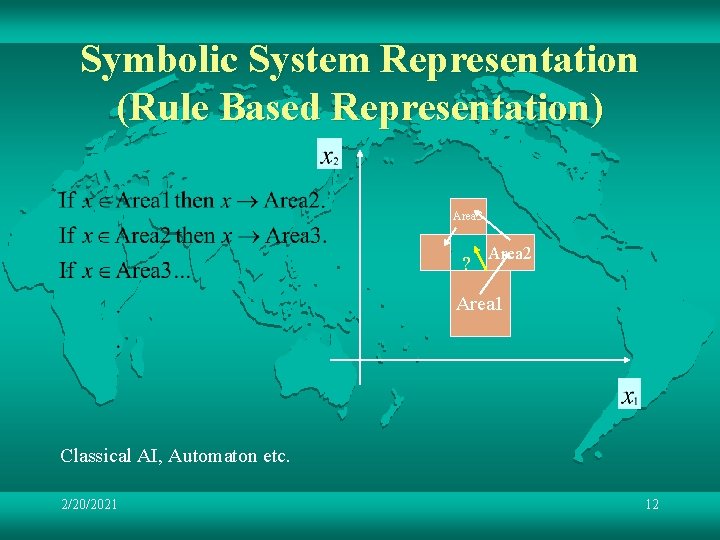
Symbolic System Representation (Rule Based Representation) Area 3 ? Area 2 Area 1 Classical AI, Automaton etc. 2/20/2021 12
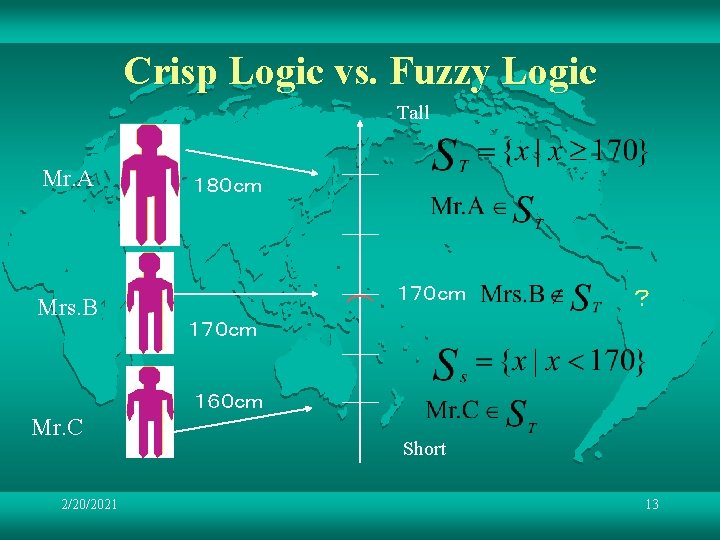
Crisp Logic vs. Fuzzy Logic Tall Mr. A ( Mrs. B 180cm 170cm ? 170cm 160cm Mr. C 2/20/2021 Short 13
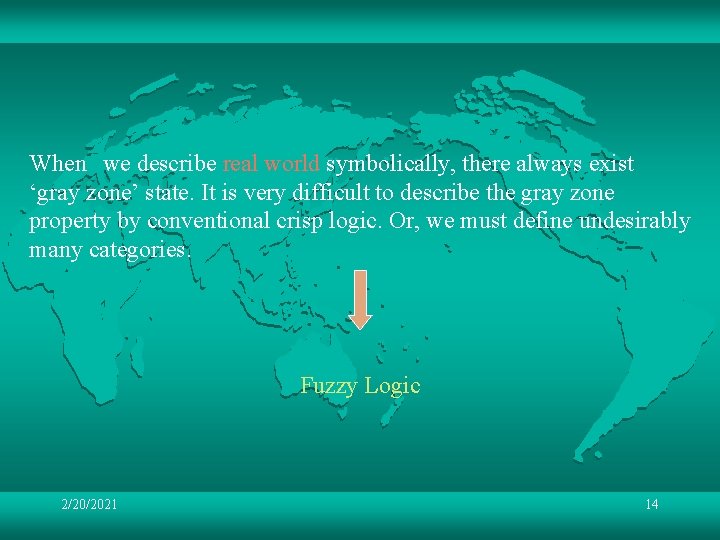
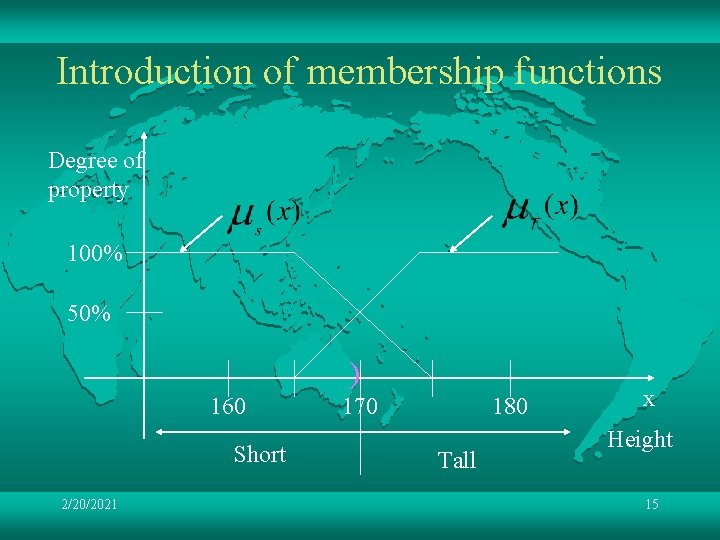
When we describe real world symbolically, there always exist ‘gray zone’ state. It is very difficult to describe the gray zone property by conventional crisp logic. Or, we must define undesirably many categories. Fuzzy Logic 2/20/2021 14
Introduction of membership functions Degree of property 100% 50% ) 160 Short 2/20/2021 170 180 Tall x Height 15
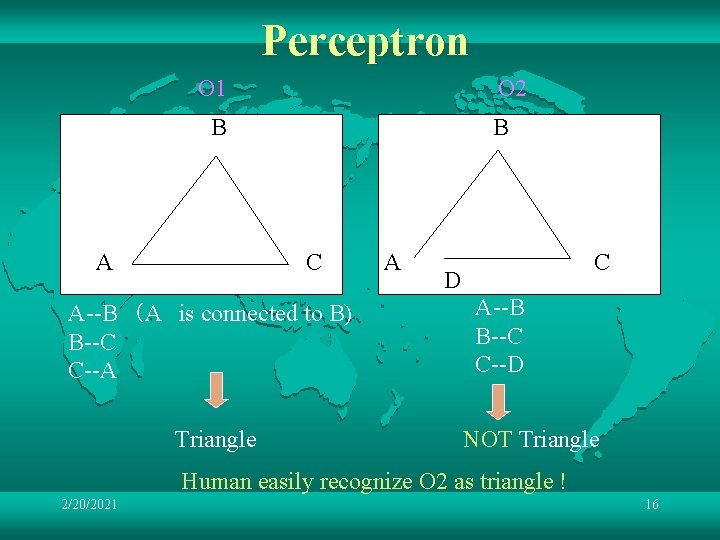
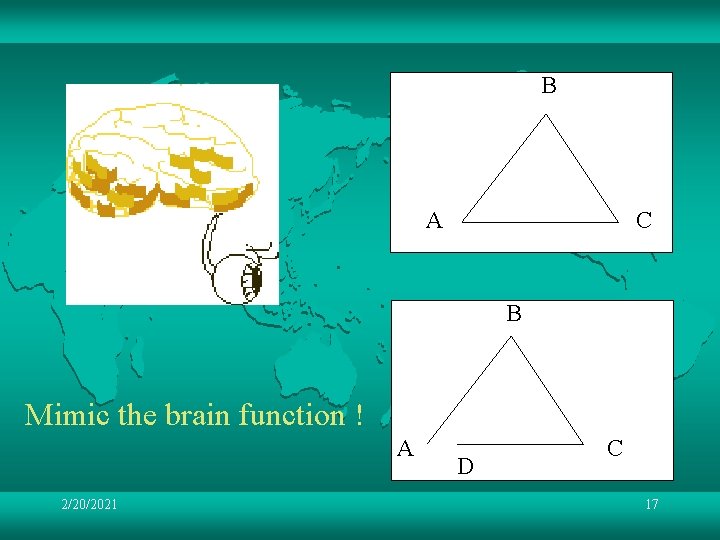
Perceptron O 1 O 2 B A B C A--B (A is connected to B) B--C C--A Triangle A C D A--B B--C C--D NOT Triangle Human easily recognize O 2 as triangle ! 2/20/2021 16
B A C B Mimic the brain function ! A 2/20/2021 D C 17
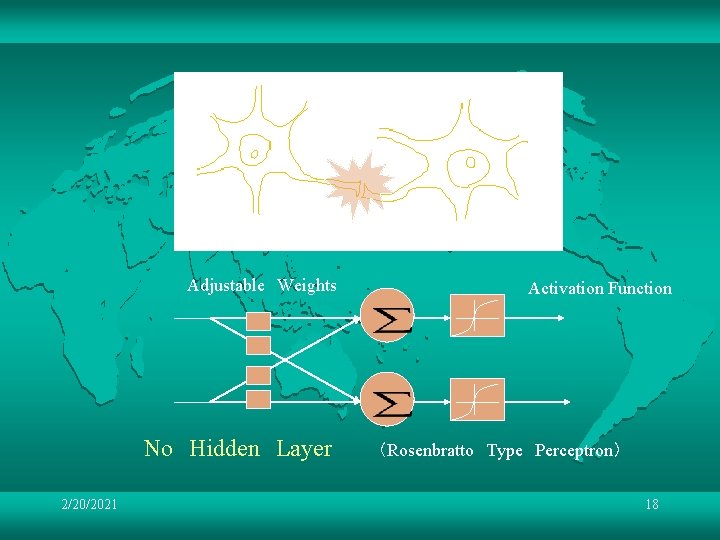
Adjustable Weights No Hidden Layer 2/20/2021 Activation Function (Rosenbratto Type Perceptron) 18
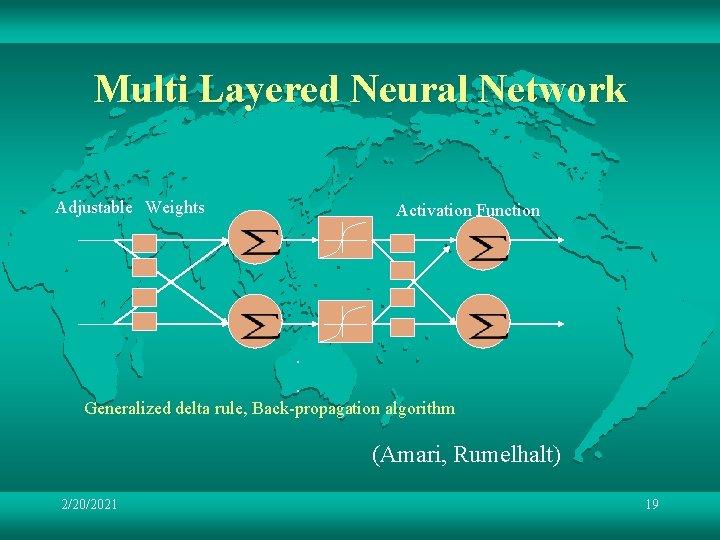
Multi Layered Neural Network Adjustable Weights Activation Function . . Generalized delta rule, Back-propagation algorithm (Amari, Rumelhalt) 2/20/2021 19
References 1. M. M. Gupta, N. k. Sinha:Intelligent Control Systems, IEEE Press. (1996) 2. K. Furuta et. :Intelligent Control, Corona Pub. (1988) (in Japanese) 3. B. Widrow, E. Walach: Adaptive Inverse Control, Prentice Hall (1996) 2/20/2021 20