
Introduction www sdtnorthamerica com What is Ultrasound ultrasound
- Slides: 15
Introduction www. sdtnorthamerica. com
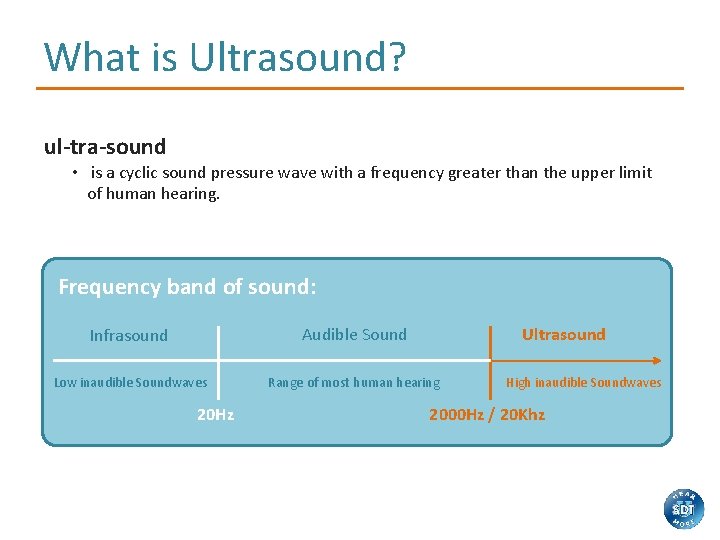
What is Ultrasound? ul-tra-sound • is a cyclic sound pressure wave with a frequency greater than the upper limit of human hearing. Frequency band of sound: Infrasound Audible Sound Low inaudible Soundwaves Range of most human hearing 20 Hz Ultrasound High inaudible Soundwaves 2000 Hz / 20 Khz
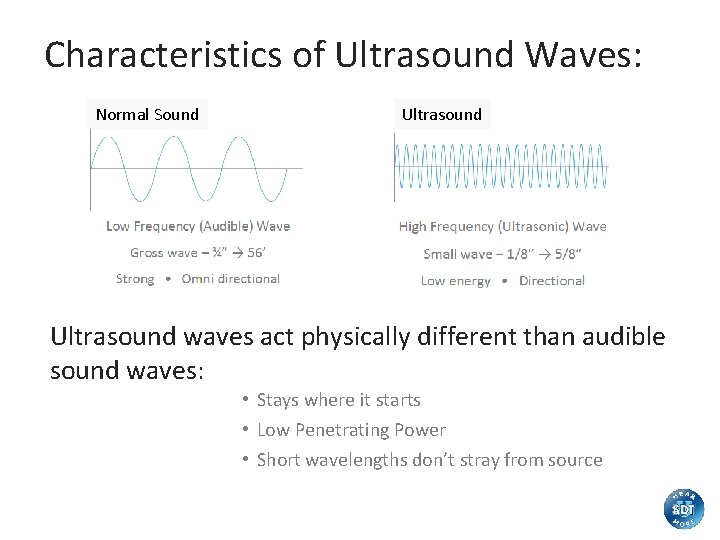
Characteristics of Ultrasound Waves: Normal Sound Ultrasound waves act physically different than audible sound waves: • Stays where it starts • Low Penetrating Power • Short wavelengths don’t stray from source
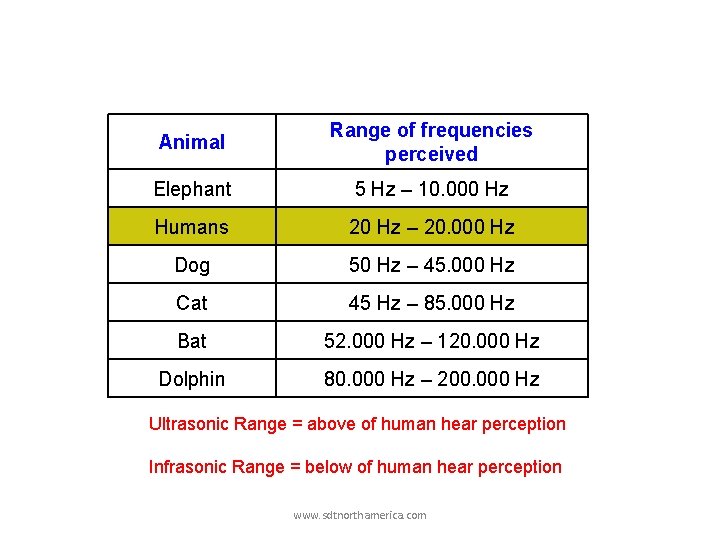
Sound Perception Animal Range of frequencies perceived Elephant 5 Hz – 10. 000 Hz Humans 20 Hz – 20. 000 Hz Dog 50 Hz – 45. 000 Hz Cat 45 Hz – 85. 000 Hz Bat 52. 000 Hz – 120. 000 Hz Dolphin 80. 000 Hz – 200. 000 Hz Ultrasonic Range = above of human hear perception Infrasonic Range = below of human hear perception www. sdtnorthamerica. com
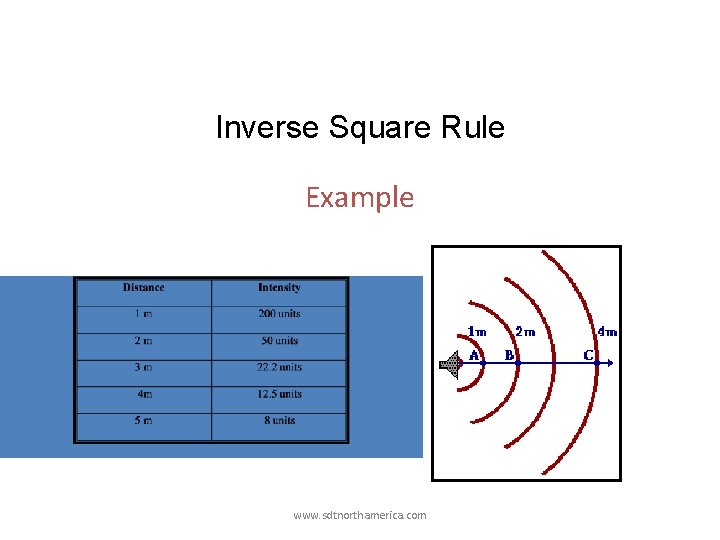
Intensity and Distance Inverse Square Rule Example www. sdtnorthamerica. com
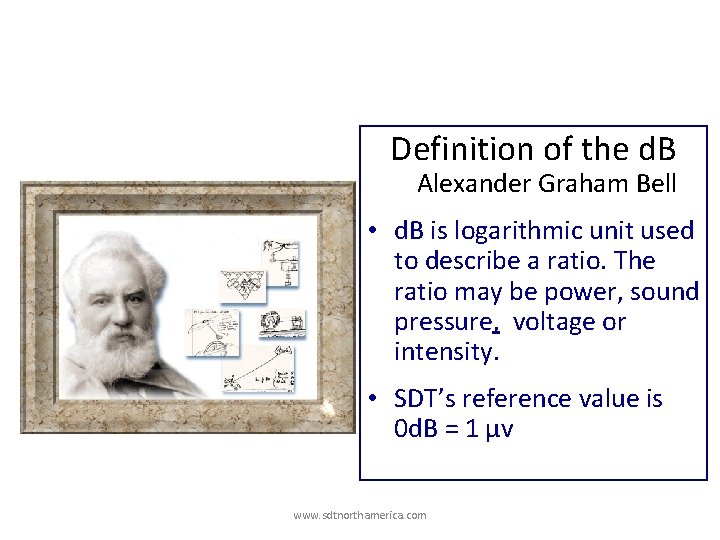
The Decibel Definition of the d. B Alexander Graham Bell • d. B is logarithmic unit used to describe a ratio. The ratio may be power, sound pressure, voltage or intensity. • SDT’s reference value is 0 d. B = 1 µv www. sdtnorthamerica. com
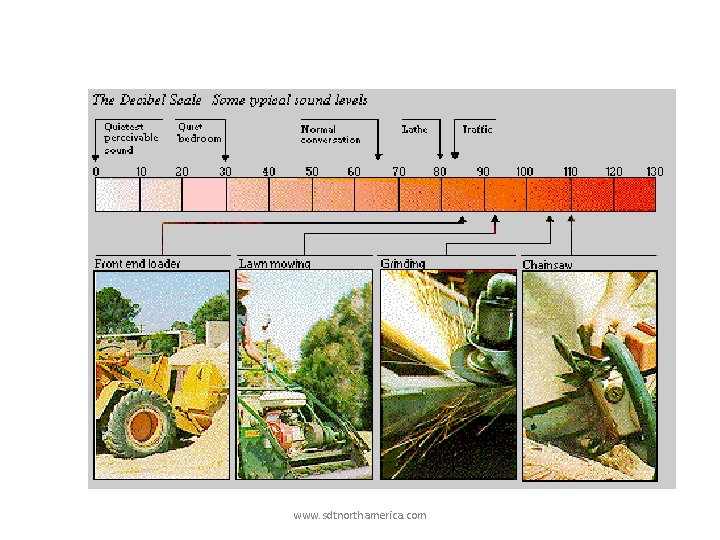
The Decibel Scale www. sdtnorthamerica. com
Ultrasound Applications Generalities www. sdtnorthamerica. com
Ultrasound Sources Naturally occurring ultrasound (Passive) • Friction • Turbulence • Electrical www. sdtnorthamerica. com
Passive Ultrasound • Friction – – Bearings Gear meshing Coupling Sheaves and Belts • Turbulence – Leaks • Internal - External • Electrical www. sdtnorthamerica. com
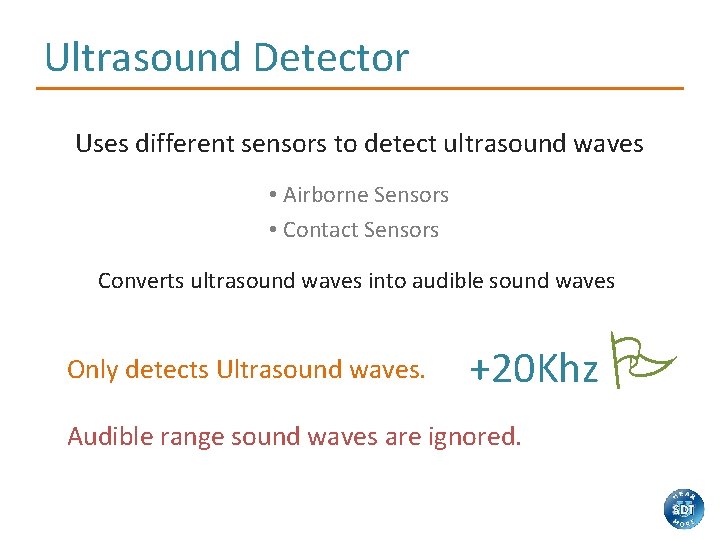
Ultrasound Detector Uses different sensors to detect ultrasound waves • Airborne Sensors • Contact Sensors Converts ultrasound waves into audible sound waves Only detects Ultrasound waves. +20 Khz Audible range sound waves are ignored. P
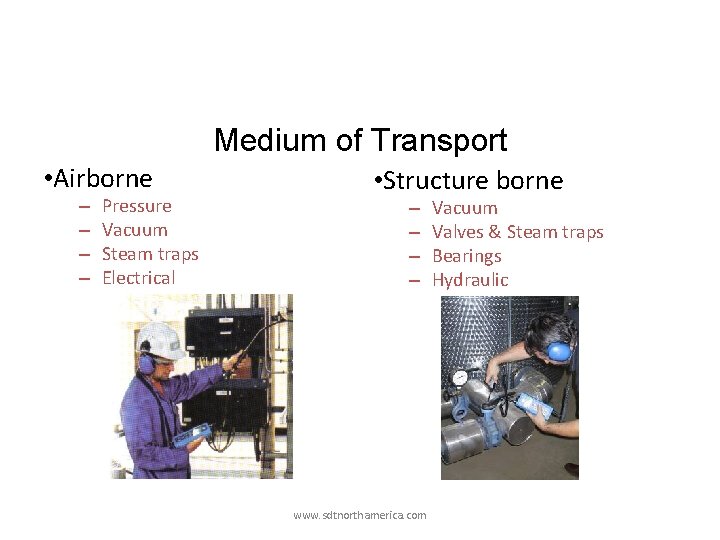
Introduction Medium of Transport • Airborne – – Pressure Vacuum Steam traps Electrical • Structure borne – – www. sdtnorthamerica. com Vacuum Valves & Steam traps Bearings Hydraulic
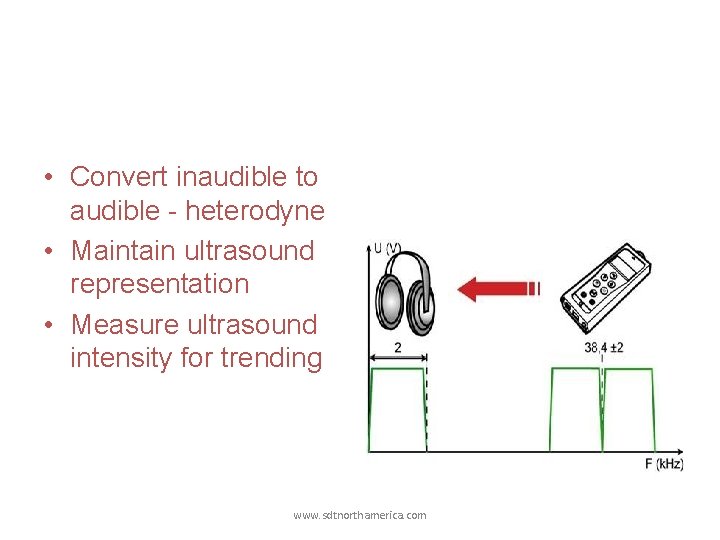
How it Works • Convert inaudible to audible - heterodyne • Maintain ultrasound representation • Measure ultrasound intensity for trending www. sdtnorthamerica. com
Standard Uses • Compressed Air Leaks • Steam Traps • Condition Monitoring – Bearings, Motors, Fans • Acoustic Lubrication • Electrical Inspections • Tightness Testing ?
Sources of Natural Ultrasonic Noises Turbulence • • Leaks in Pressurized Systems Leaks in Vacuum Systems Leaks in Hydraulic Systems Leaks in Steam Systems Friction and Impacts • Wear from Mechanical Parts • Couplings, Gears, Bearings Electrical Arcing • Faults in Electrical Systems • Arcing, Tracking, Corona Discharge, RTV Interference