
Introduction What is a Community A community is
- Slides: 39
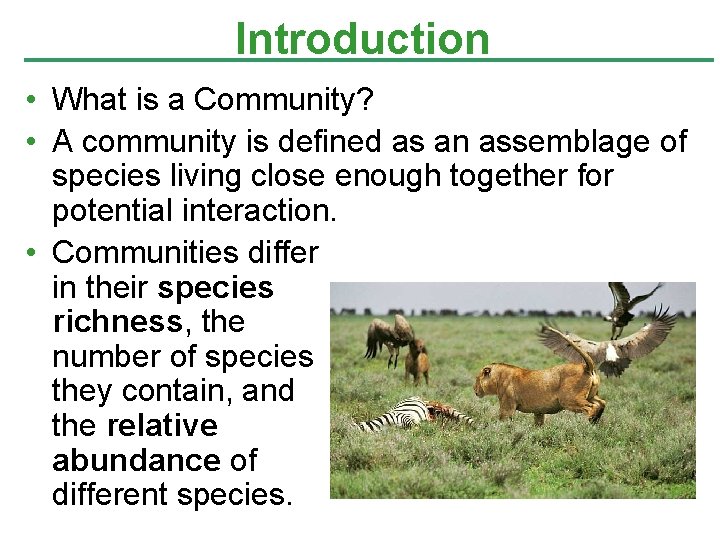
Introduction • What is a Community? • A community is defined as an assemblage of species living close enough together for potential interaction. • Communities differ in their species richness, the number of species they contain, and the relative abundance of different species.
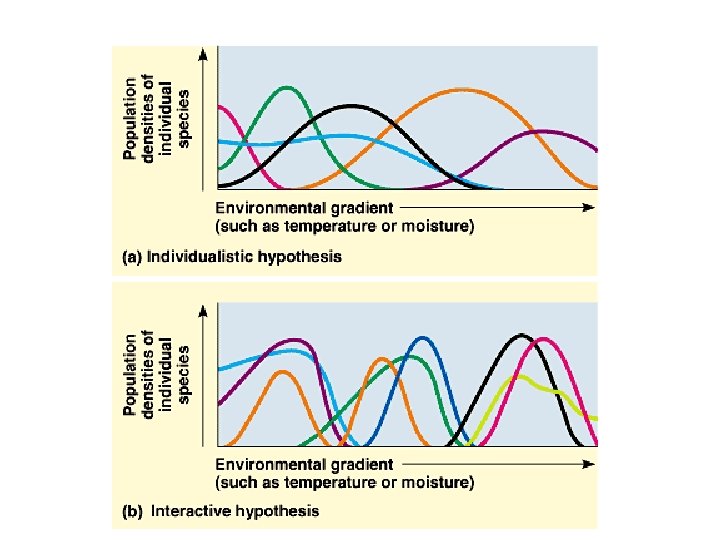
• The rivet model of communities is a reincarnation of the interactive model. • The redundancy model states that most species in a community are not closely associated with one another.
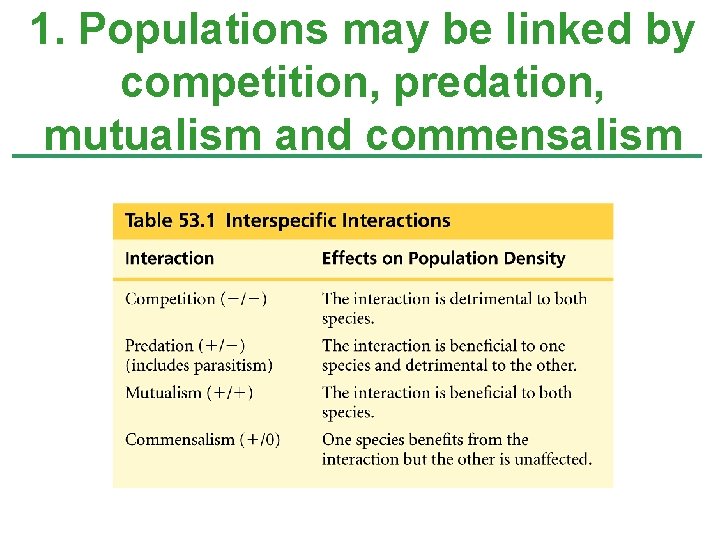
1. Populations may be linked by competition, predation, mutualism and commensalism
• Competition. – Interspecific competition for resources can occur when resources are in short supply. • There is potential for competition between any two species that need the same limited resource. – The competitive exclusion principle: two species with similar needs for same limiting resources cannot coexist in the same place.
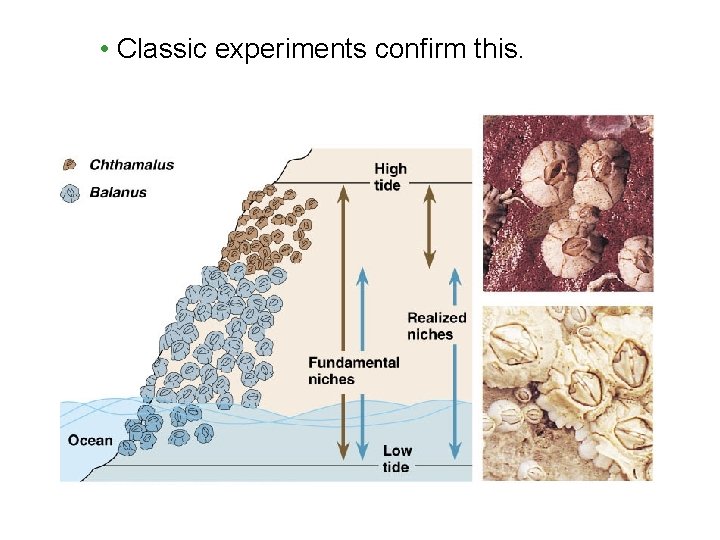
– The ecological niche is the sum total of an organism’s use of abiotic/biotic resources in the environment. • An organism’s niche is its role in the environment. • The competitive exclusion principle can be restated to say that two species cannot coexist in a community if their niches are identical.
• Classic experiments confirm this.
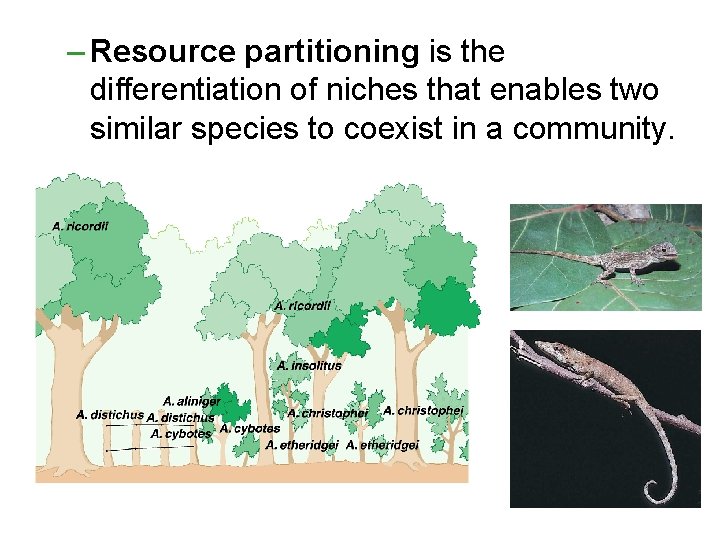
– Resource partitioning is the differentiation of niches that enables two similar species to coexist in a community. Fig. 53. 2
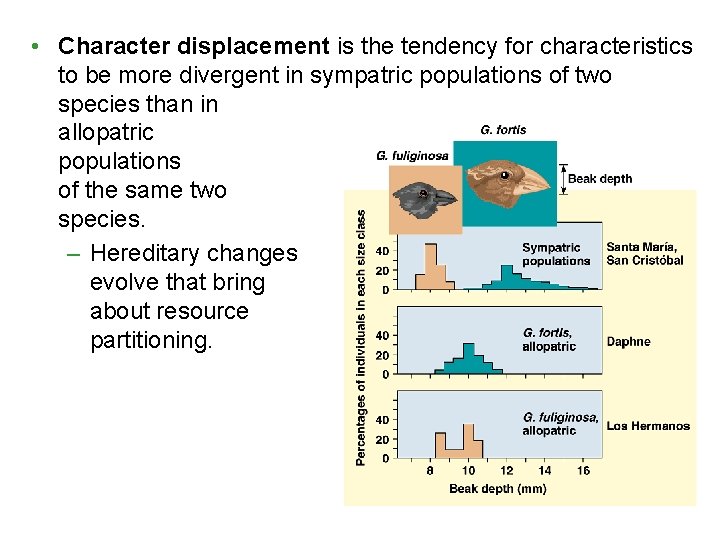
• Character displacement is the tendency for characteristics to be more divergent in sympatric populations of two species than in allopatric populations of the same two species. – Hereditary changes evolve that bring about resource partitioning.
• Predation. – A predator eats prey. – Herbivory, in which animals eat plants. – In parasitism, predators live on/in a host and depend on the host for nutrition. – Predator adaptations: many important feeding adaptations of predators are both obvious and familiar. • Claws, teeth, fangs, poison, heat-sensing organs, speed, and agility.
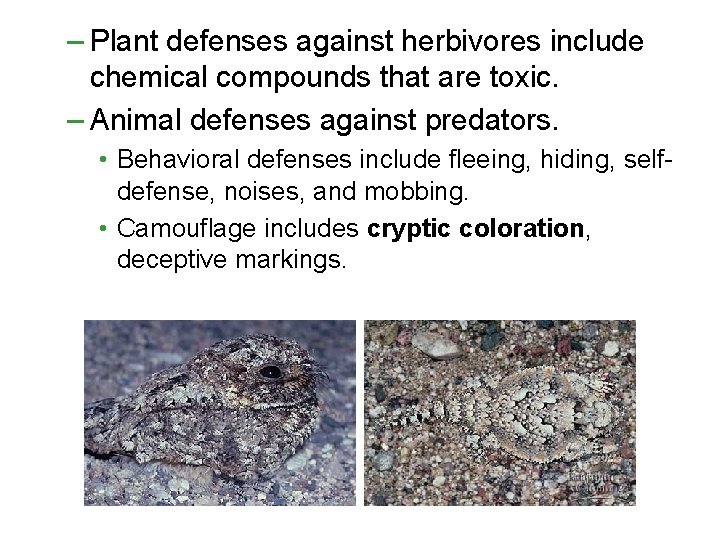
– Plant defenses against herbivores include chemical compounds that are toxic. – Animal defenses against predators. • Behavioral defenses include fleeing, hiding, selfdefense, noises, and mobbing. • Camouflage includes cryptic coloration, deceptive markings.
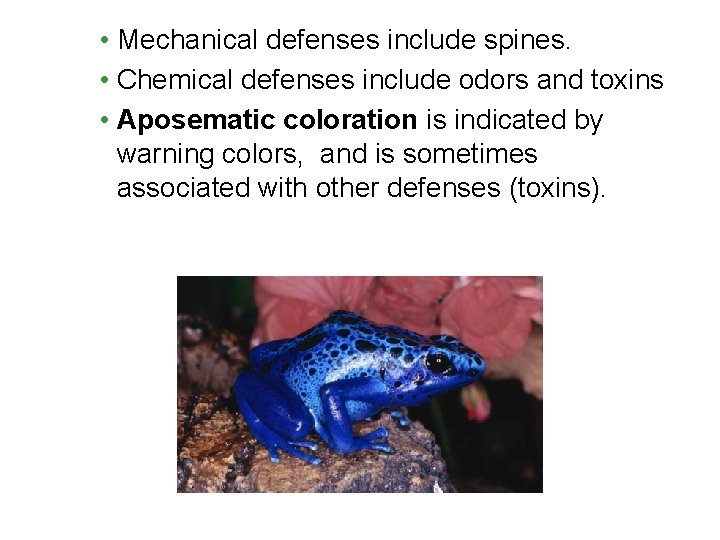
• Mechanical defenses include spines. • Chemical defenses include odors and toxins • Aposematic coloration is indicated by warning colors, and is sometimes associated with other defenses (toxins).
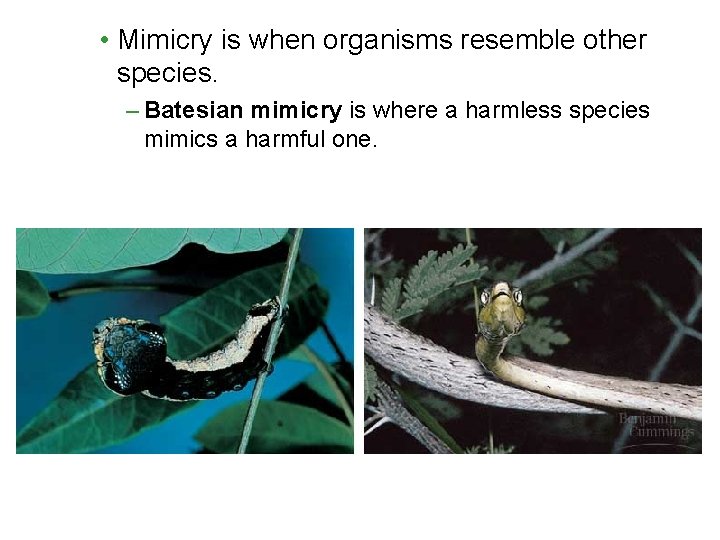
• Mimicry is when organisms resemble other species. – Batesian mimicry is where a harmless species mimics a harmful one.
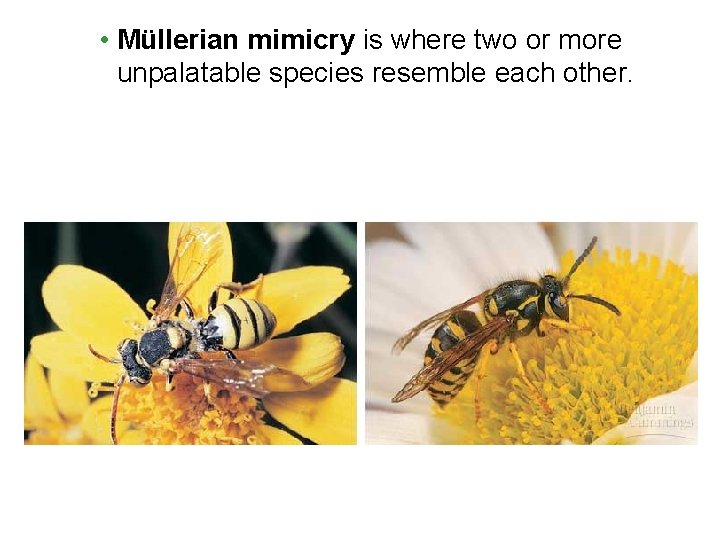
• Müllerian mimicry is where two or more unpalatable species resemble each other.
– Parasites and pathogens as predators. • A parasite derives nourishment from a host, which is harmed in the process. • Endoparasites live inside the host and ectoparasites live on the surface of the host. • Parasitoidism is a special type of parasitism where the parasite eventually kills the host. • Pathogens are disease-causing organisms that can be considered predators.
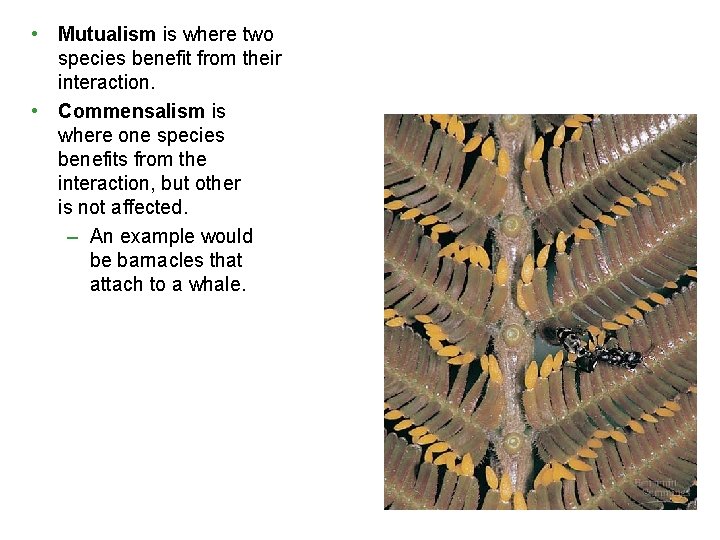
• Mutualism is where two species benefit from their interaction. • Commensalism is where one species benefits from the interaction, but other is not affected. – An example would be barnacles that attach to a whale.
• Coevolution and interspecific interactions. – Coevolution refers to reciprocal evolutionary adaptations of two interacting species. • When one species evolves, it exerts selective pressure on the other to evolve to continue the interaction.
2. Trophic structure is a key factor in community dynamics • The trophic structure of a community is determined by the feeding relationships between organisms. • The transfer of food energy from its source in photosynthetic organisms through herbivores and carnivores is called the food chain.
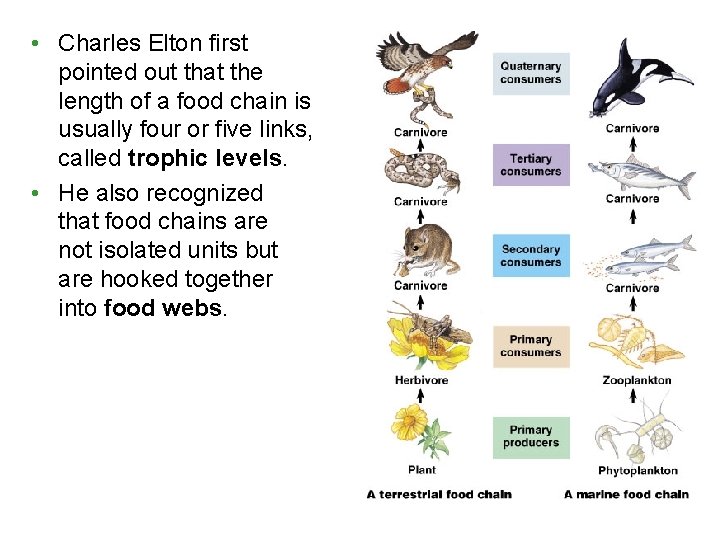
• Charles Elton first pointed out that the length of a food chain is usually four or five links, called trophic levels. • He also recognized that food chains are not isolated units but are hooked together into food webs.
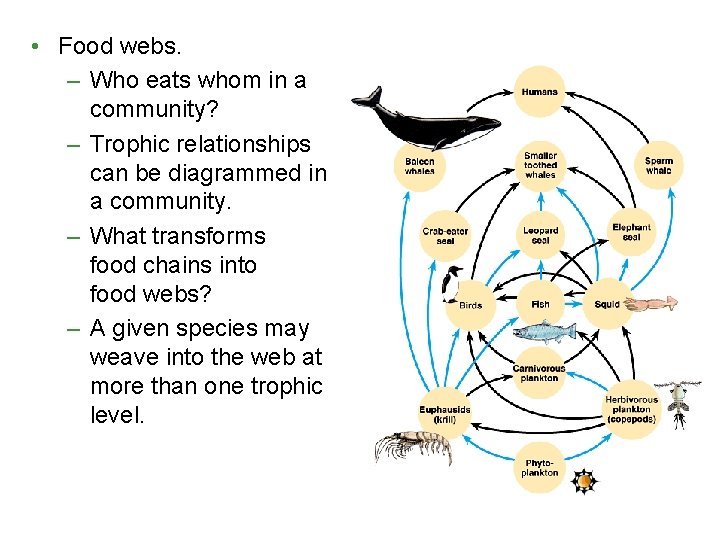
• Food webs. – Who eats whom in a community? – Trophic relationships can be diagrammed in a community. – What transforms food chains into food webs? – A given species may weave into the web at more than one trophic level.
• Dominant species are those in a community that have the highest abundance or highest biomass (the sum weight of all individuals in a population). – If we remove a dominant species from a community, it can change the entire community structure.
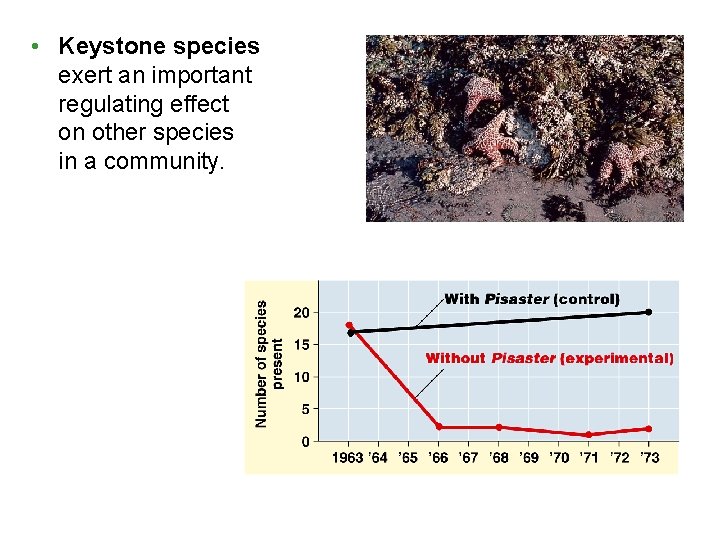
• Keystone species exert an important regulating effect on other species in a community.
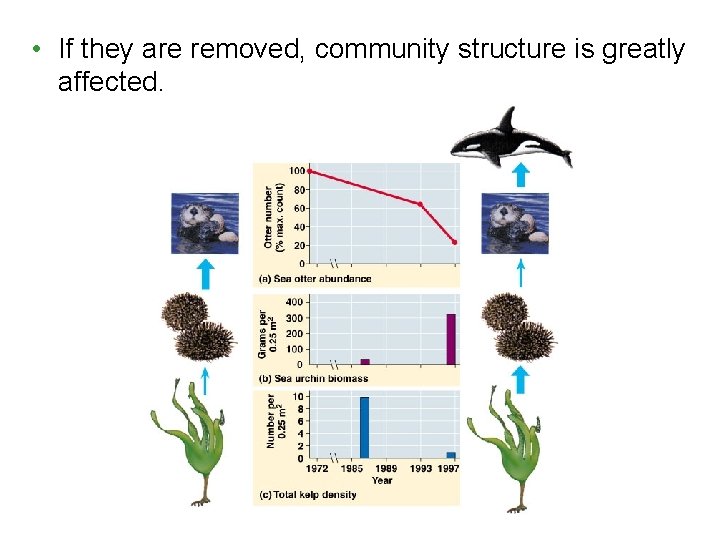
• If they are removed, community structure is greatly affected.
Introduction • Disturbances affect community structure and stability. – Stability is the ability of a community to persist in the face of disturbance.
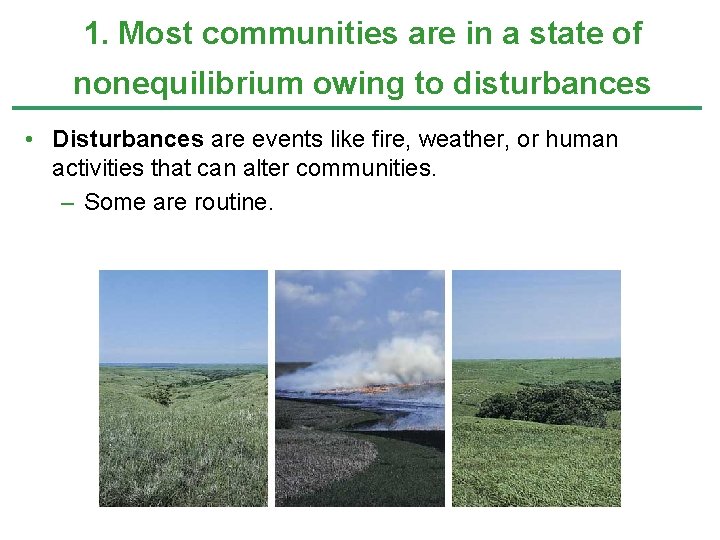
1. Most communities are in a state of nonequilibrium owing to disturbances • Disturbances are events like fire, weather, or human activities that can alter communities. – Some are routine.
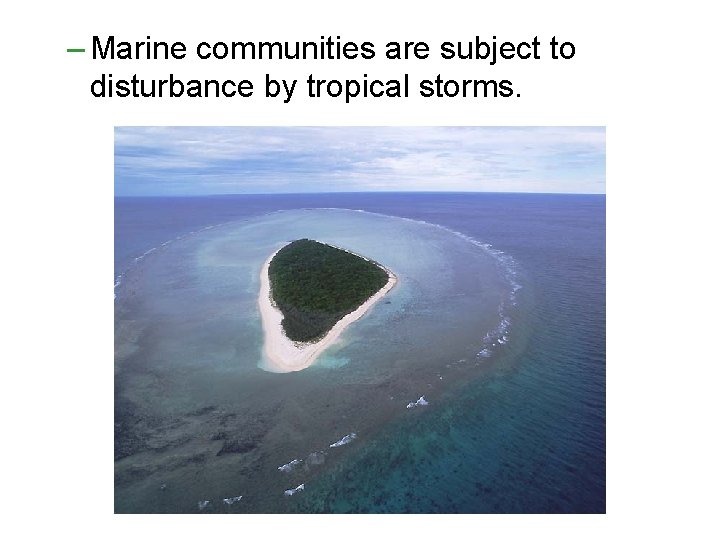
– Marine communities are subject to disturbance by tropical storms.
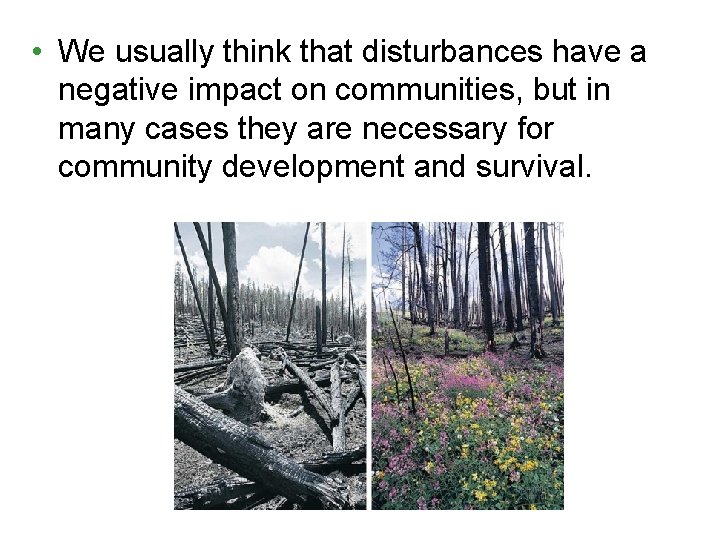
• We usually think that disturbances have a negative impact on communities, but in many cases they are necessary for community development and survival.
2. Humans are the most widespread agents of disturbance • Human activities cause more disturbance than natural events and usually reduce species diversity in communities.
3. Ecological succession is the sequence of community changes after a disturbance • Ecological succession is the transition in species composition over ecological time. • Primary succession begins in a lifeless area where soil has not yet formed.
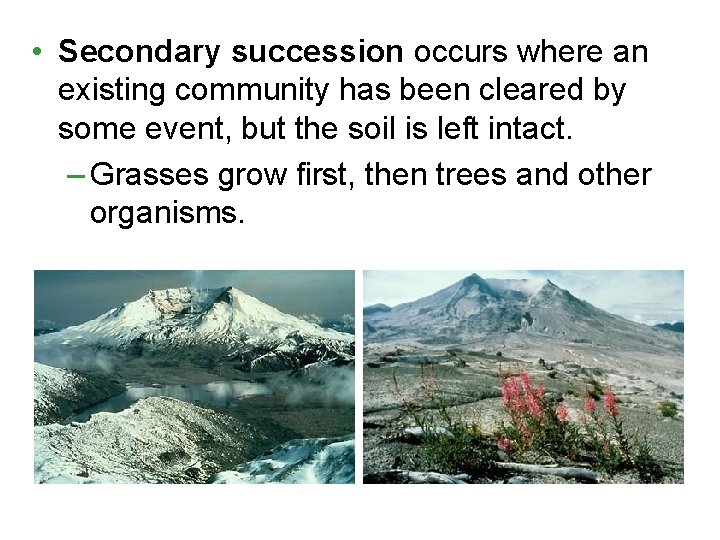
• Secondary succession occurs where an existing community has been cleared by some event, but the soil is left intact. – Grasses grow first, then trees and other organisms.
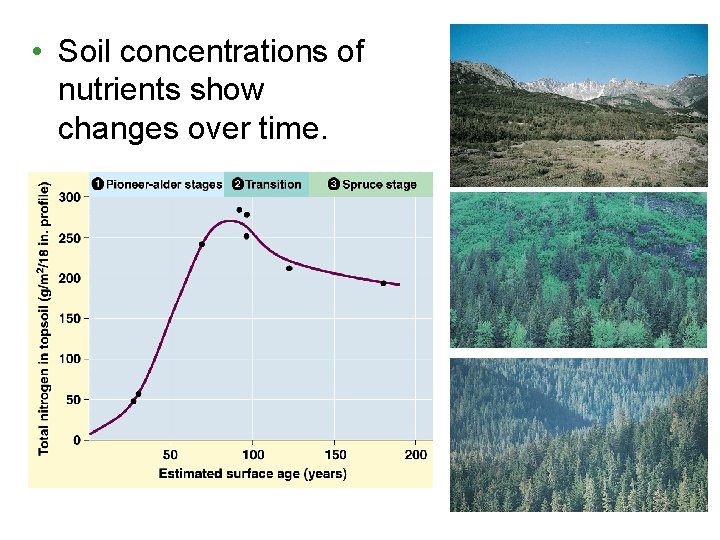
• Soil concentrations of nutrients show changes over time.
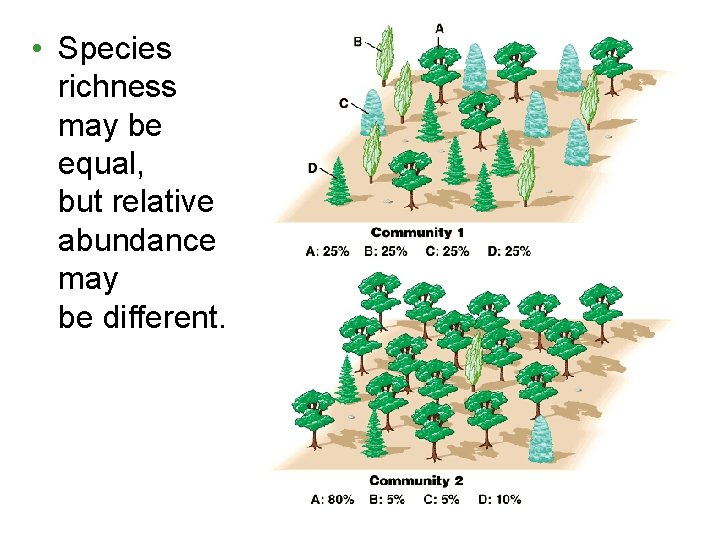
1. Community biodiversity measures the number of species and their relative abundance • The variety of different kinds of organisms that make up a community has two components. – Species richness, the total number of species in the community. – Relative abundance of the different species. – Imagine two small forest communities with 100 individuals distributed among four different tree species.
• Species richness may be equal, but relative abundance may be different.
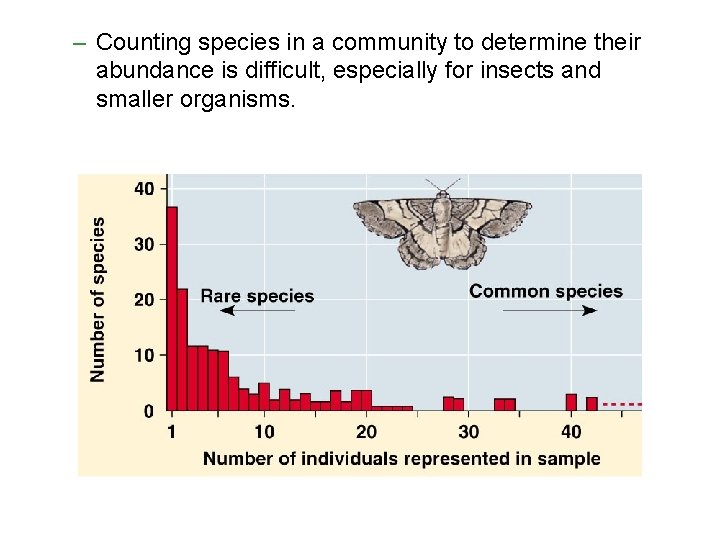
– Counting species in a community to determine their abundance is difficult, especially for insects and smaller organisms.
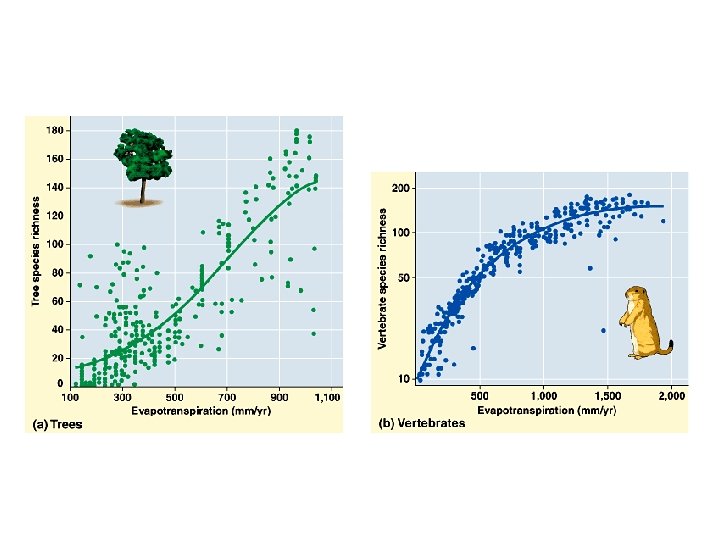
2. Species richness generally declines along an equatorial-polar gradient • Tropical habitats support much larger numbers of species of organisms than do temperate and polar regions.
• What causes these gradients? – The two key factors are probably evolutionary history and climate. – Organisms have a history in an area where they are adapted to the climate. • Energy and water may factor into this phenomenon.
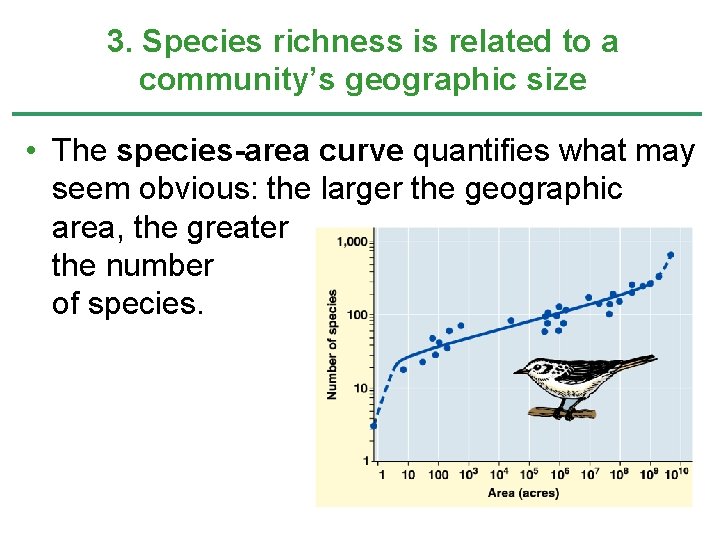
3. Species richness is related to a community’s geographic size • The species-area curve quantifies what may seem obvious: the larger the geographic area, the greater the number of species.
4. Species richness on islands depends on island size and distance from the mainland • Because of their size and isolation, islands provide great opportunities for studying some of the biogeographic factors that affect the species diversity of communities. – Imagine a newly formed island some distance from the mainland. • Robert Mac. Arthur and E. O. Wilson developed a hypothesis of island biogeography to identify the determinants of species diversity on an island.