
Introduction to Work Measurement Sections 1 Time Standards
- Slides: 23
Introduction to Work Measurement Sections: 1. Time Standards and How They Are Determined – part 1 2. Prerequisites for Valid Time – part 2 3. Allowances in Time – part 2
Introduction – Some Definitions § Time Study, Work Measurement: § often used interchangeably § meaning: time to complete a unit of work
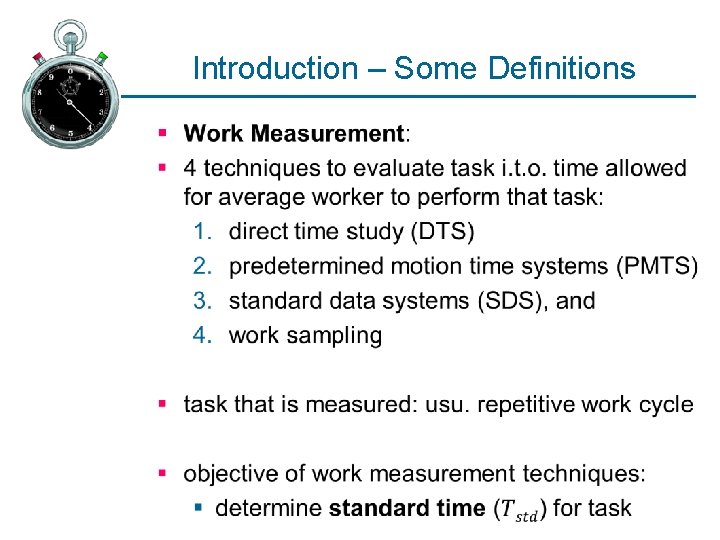
Introduction – Some Definitions §
Introduction to Work Measurement 1. Time Standards and How They Are Determined
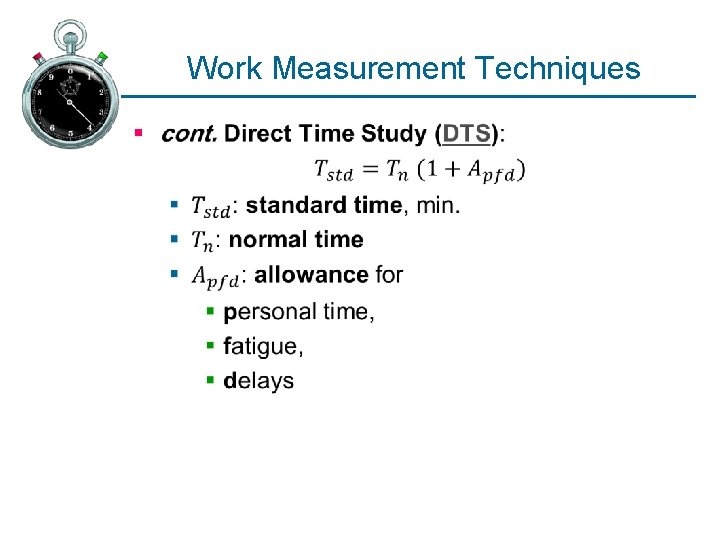
Time Standards and How They Are Determined § standard time for given task: § amount of time allowed for average worker, § to process 1 work unit § using standard method § and working at normal pace § includes also additional time: allowance, § worker’s personal needs § worker fatigue, § and unavoidable delays during the shift § std. time aka allowed time
Time Standards and How They Are Determined § Applications in which time standards are useful: § Low productivity: need for improvement § Repeat orders § set time standard for 1 st order § same standard used for successive orders § Long production runs § time to set standard: divided over more parts § average cost of work measurement ↓ § Repetitive work cycles: justifies work measurement § Short cycle times (work cycles): require less time to set standards
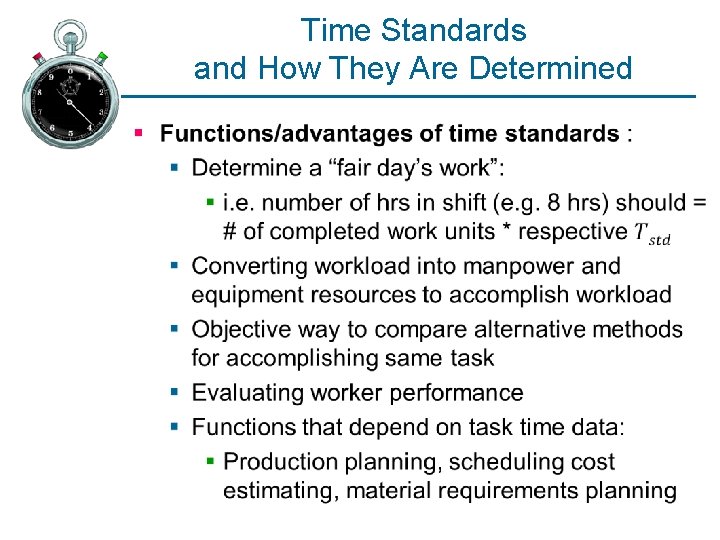
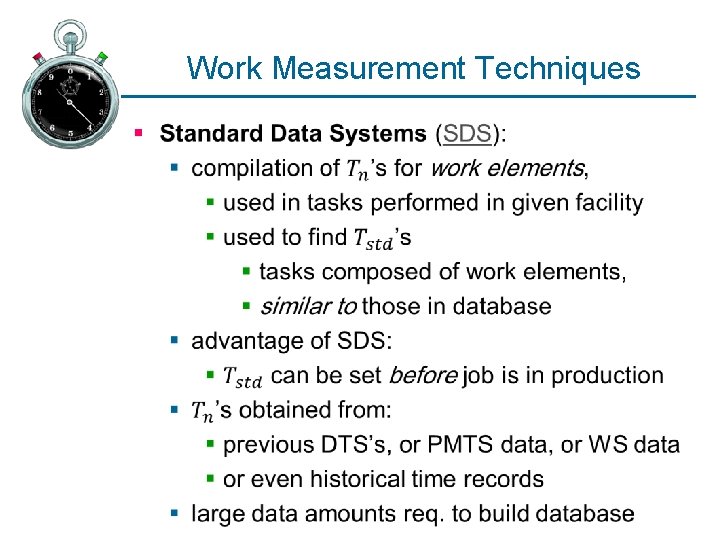
Time Standards and How They Are Determined §
Methods to Determine Time Standards
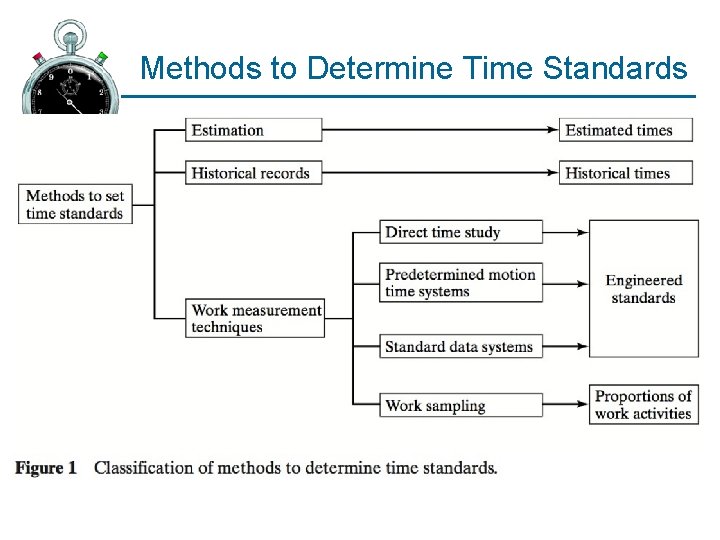
Methods to Determine Time Standards § Methods (vary i. t. o. accuracy and reliability): § Estimation: § department foreman determines time that should be allowed for given task § least accurate of techniques (subjective) § Historical records of previous production runs: § records of previous identical/similar job orders used to determine time standards § average time/part calculated from worker “time cards” § disadvantage: don’t indicate work efficiency § Work measurement techniques: most acc. (next)
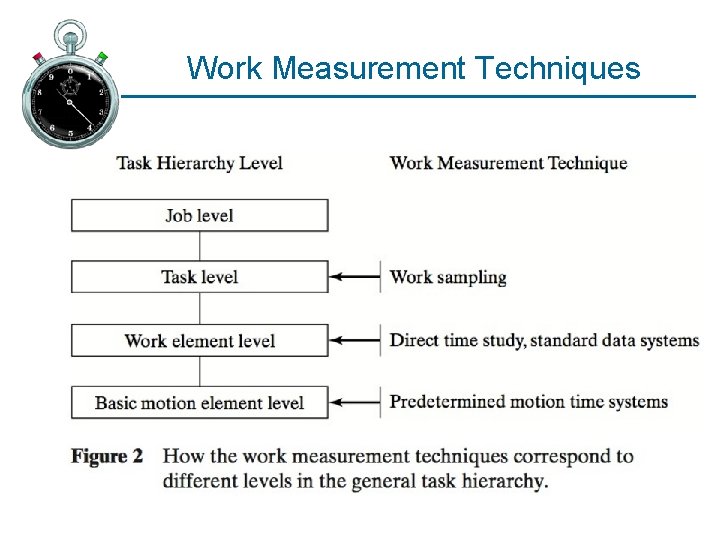
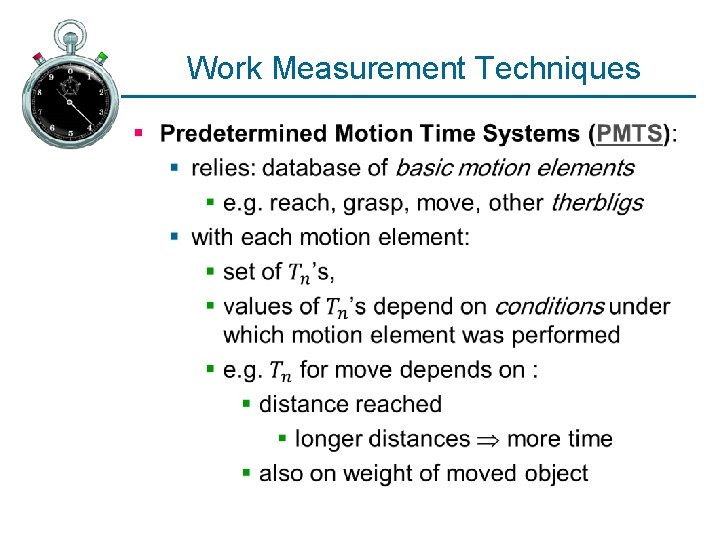
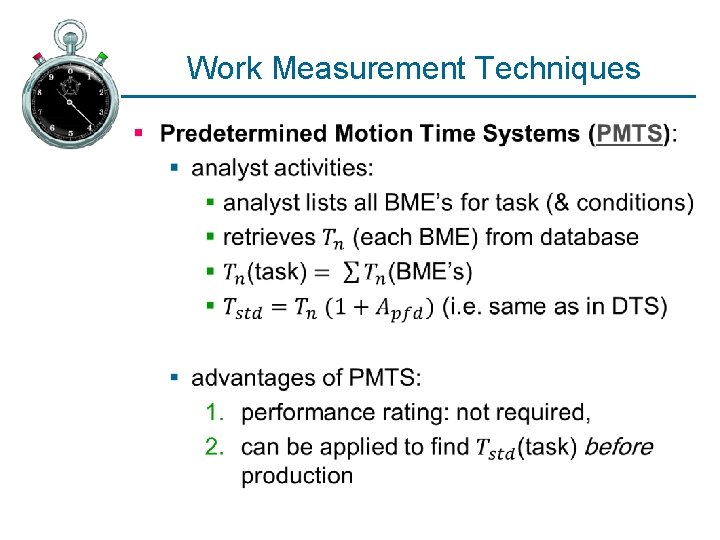
Methods to Determine Time Standards § Cont. Methods (see figure 1) § Work measurement techniques § Work sampling: § different from other 3 techniques § determines proportions of time spent in various categories of work activity § uses randomized observations of subjects § Other 3 techniques (DTS, PMTS, SDS): § establish time/engineering standards: § based on time values adjusted for worker performance § effort needed to find best method
Work Measurement Techniques
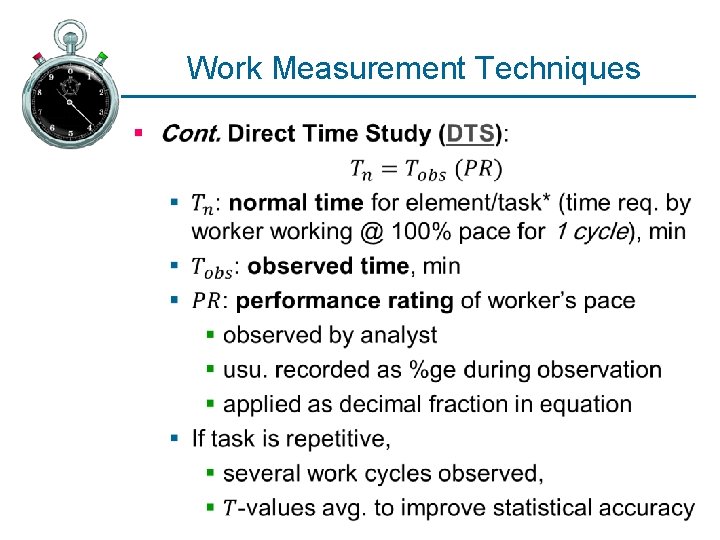
Work Measurement Techniques § Direct Time Study (DTS): § direct observation of task § using stopwatch/chronometric device § records time taken to accomplish task § task usu. divided into work elements § each work element is timed separately § time study analyst (while observing worker): § evaluates worker’s performance (pace) § records pace to each work element time § this’s called performance rating
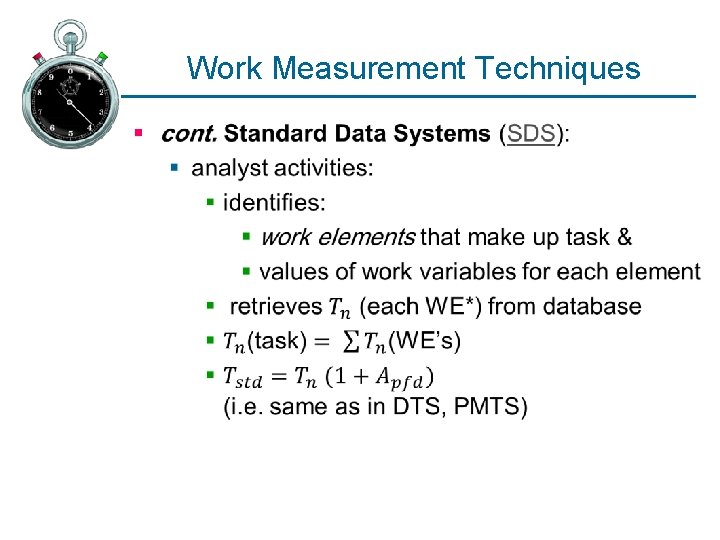
Work Measurement Techniques §
Work Measurement Techniques §
Work Measurement Techniques §
Work Measurement Techniques §
Work Measurement Techniques §
Work Measurement Techniques §
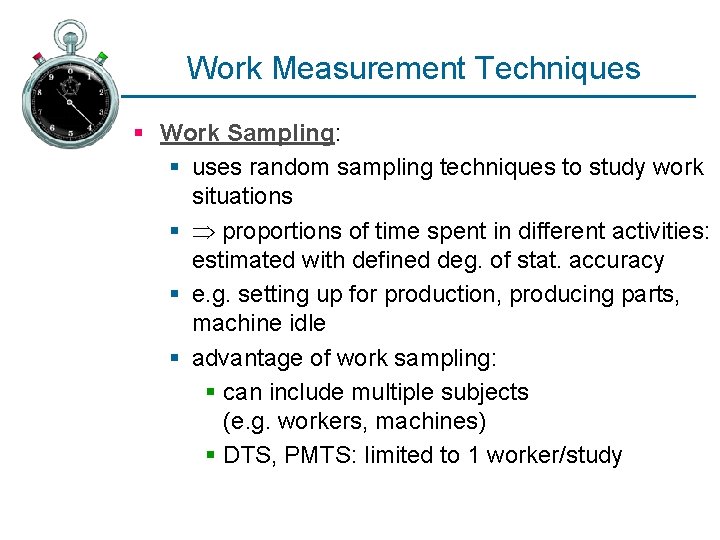
Work Measurement Techniques § Work Sampling: § uses random sampling techniques to study work situations § proportions of time spent in different activities: estimated with defined deg. of stat. accuracy § e. g. setting up for production, producing parts, machine idle § advantage of work sampling: § can include multiple subjects (e. g. workers, machines) § DTS, PMTS: limited to 1 worker/study
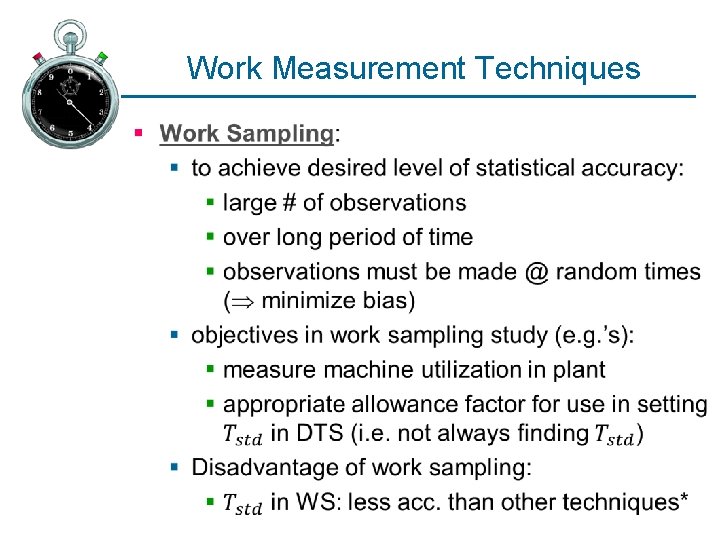
Work Measurement Techniques §
Work Measurement Techniques §
Work Measurement Techniques
Work Measurement Techniques § Useful videos to watch on work measurement: https: //youtu. be/Qz. ZKXC 5 KJr. I https: //youtu. be/hz. YXt. Zn 1 MMw https: //youtu. be/c. Wrs. DCIWRgc § Useful video to watch on time motion study: https: //youtu. be/IUu 9 CNu. KGYY https: //youtu. be/O 77 el. B 7 -CYE (second half)