
Introduction to WISHA n Occupational Safety Health Act




- Slides: 81
Introduction to WISHA n Occupational Safety & Health Act u OSHA - 1970 n Washington Industrial Safety & Health Act u WISHA - 1973 F RCW 49. 17 F Safety & health standards F Compliance officers F Consultants
WISHA Purpose “. . . to assure, insofar as may reasonably be possible, safe and healthful working conditions for every man and woman working in the state of Washington. . . ” – RCW 49. 17. 010
WISHA Compliance n Safety & Health Inspections u Imminent danger u Fatality / catastrophe u Serious injury u Complaints and referrals u Scheduled inspections u Follow-up inspections n Jurisdiction u All employers in the state of Washington u Exceptions
WISHA Consultation n Consultation visit by employer invitation u Free u Confidential u No citations u No penalties u Letter explains findings u Follow-up serious hazards Workshops n Special classes n Video/film library n
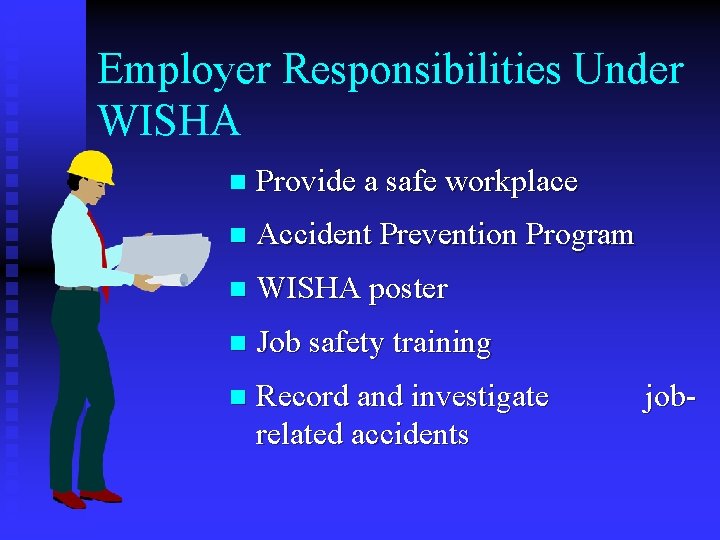
Employer Responsibilities Under WISHA n Provide a safe workplace n Accident Prevention Program n WISHA poster n Job safety training n Record and investigate related accidents job-
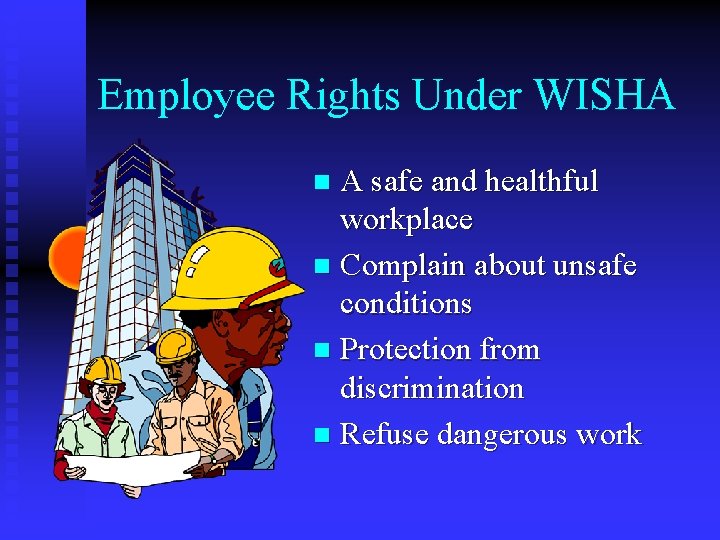
Employee Rights Under WISHA A safe and healthful workplace n Complain about unsafe conditions n Protection from discrimination n Refuse dangerous work n
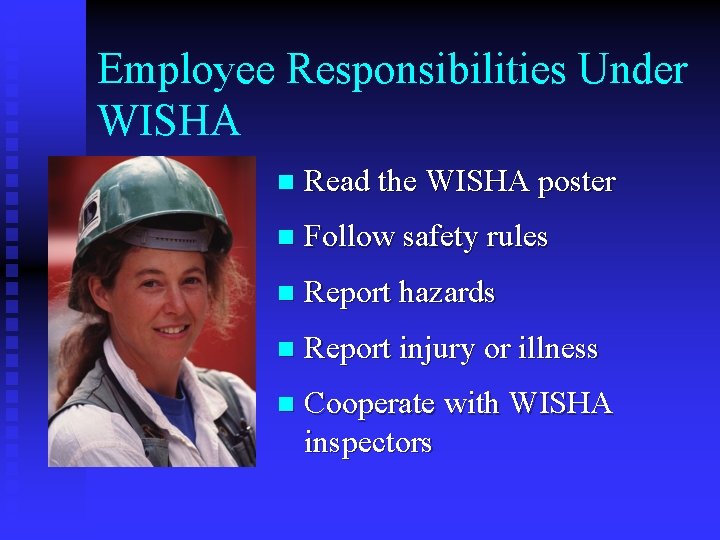
Employee Responsibilities Under WISHA n Read the WISHA poster n Follow safety rules n Report hazards n Report injury or illness n Cooperate with WISHA inspectors
Accident Prevention Program n Policies & procedures to: u Involve workers and management in workplace safety u Identify and eliminate hazards u Plan for emergencies u Orient new employees to the job u Train all employees to improve safety knowledge
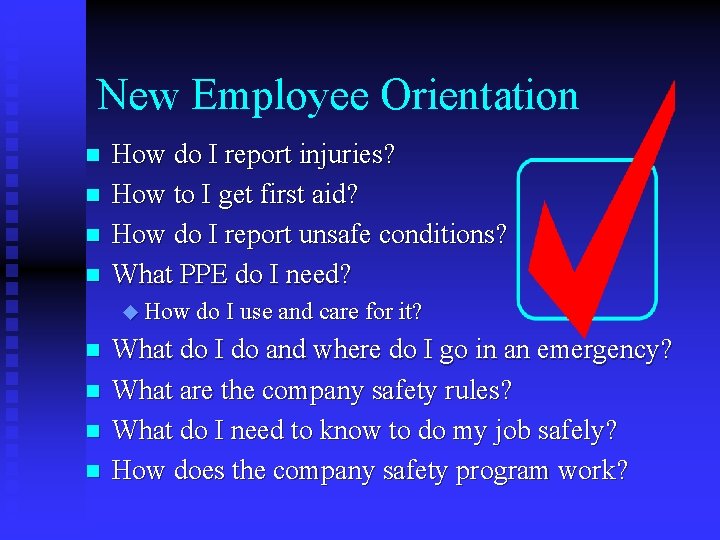
New Employee Orientation n n How do I report injuries? How to I get first aid? How do I report unsafe conditions? What PPE do I need? u How do I use and care for it? n n What do I do and where do I go in an emergency? What are the company safety rules? What do I need to know to do my job safely? How does the company safety program work?
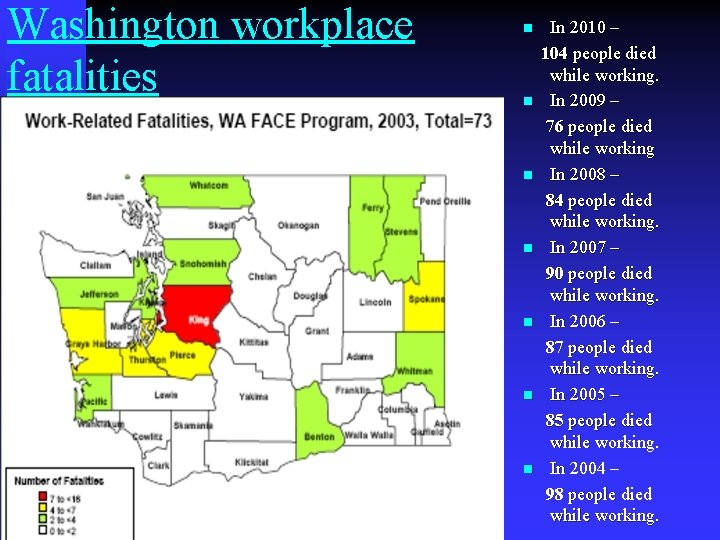
Washington workplace fatalities n n • n n n In 2010 – 104 people died while working. In 2009 – 76 people died while working In 2008 – 84 people died while working. In 2007 – 90 people died while working. In 2006 – 87 people died while working. In 2005 – 85 people died while working. In 2004 – 98 people died while working.
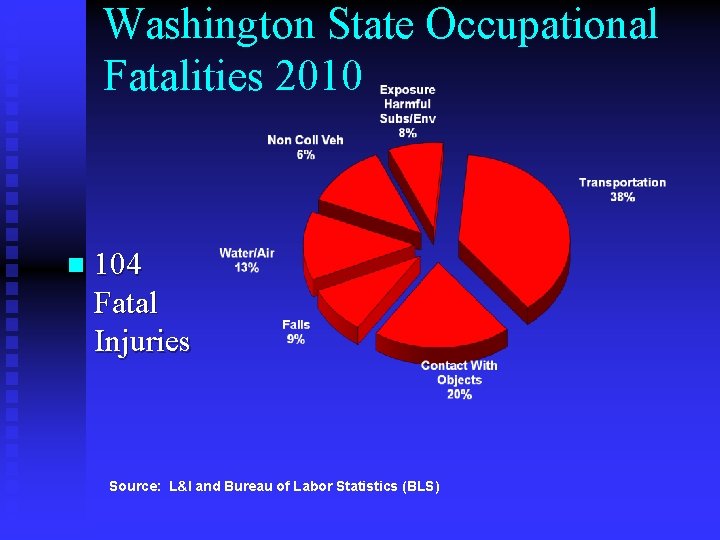
Washington State Occupational Fatalities 2010 n 104 Fatal Injuries Source: L&I and Bureau of Labor Statistics (BLS)
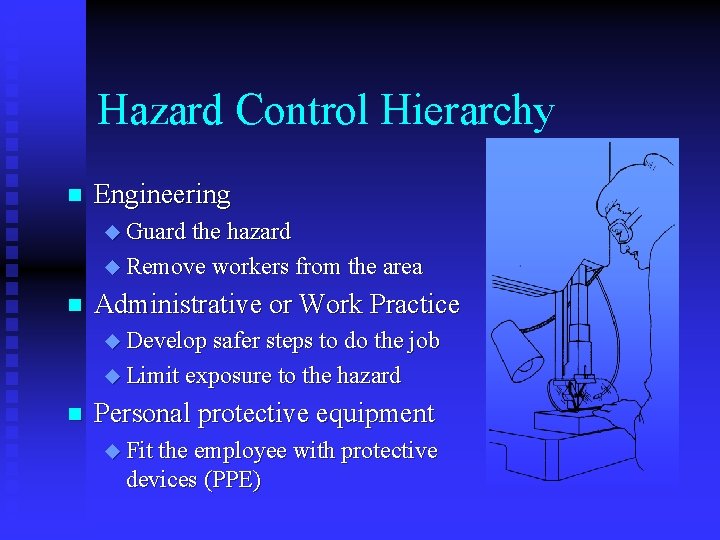
Hazard Control Hierarchy n Engineering u Guard the hazard u Remove workers from the area n Administrative or Work Practice u Develop safer steps to do the job u Limit exposure to the hazard n Personal protective equipment u Fit the employee with protective devices (PPE)
Common Workplace Hazards n Cited by WISHA compliance u Not a comprehensive list u Refer to WAC safety & health standards u Request a WISHA consultation.
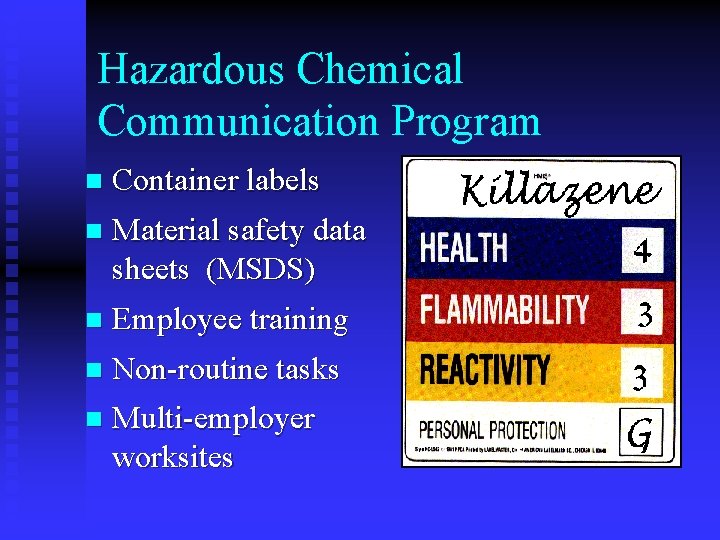
Hazardous Chemical Communication Program n Container labels n Material safety data sheets (MSDS) n Employee training n Non-routine tasks n Multi-employer worksites
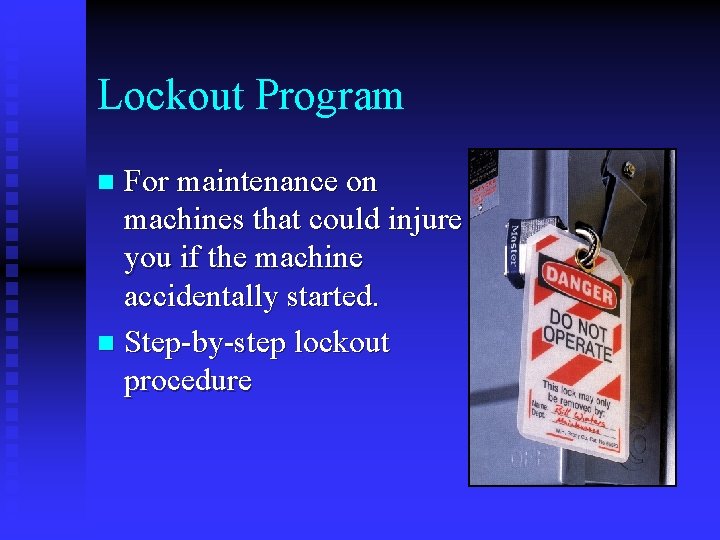
Lockout Program For maintenance on machines that could injure you if the machine accidentally started. n Step-by-step lockout procedure n
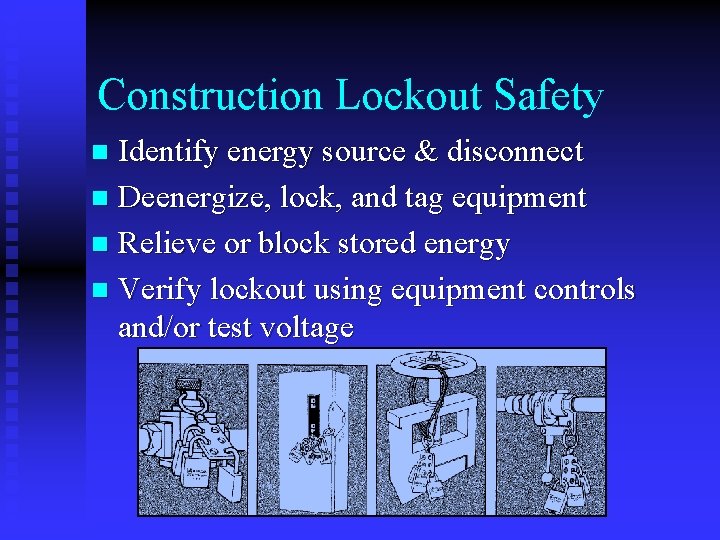
Construction Lockout Safety Identify energy source & disconnect n Deenergize, lock, and tag equipment n Relieve or block stored energy n Verify lockout using equipment controls and/or test voltage n
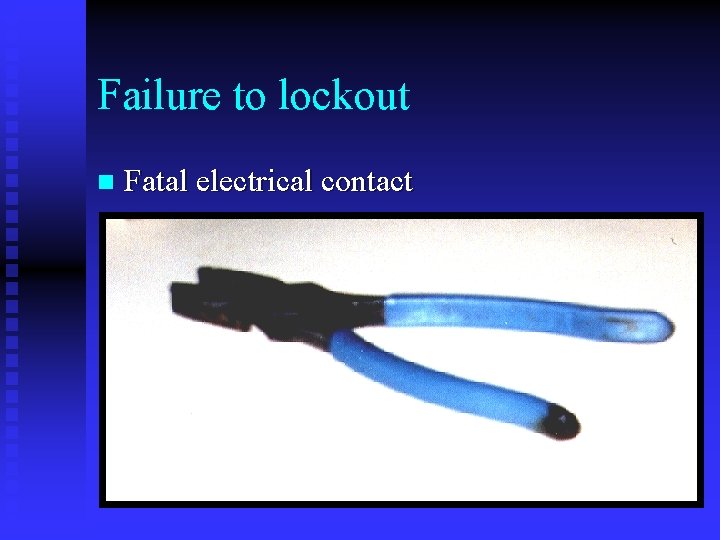
Failure to lockout n Fatal electrical contact
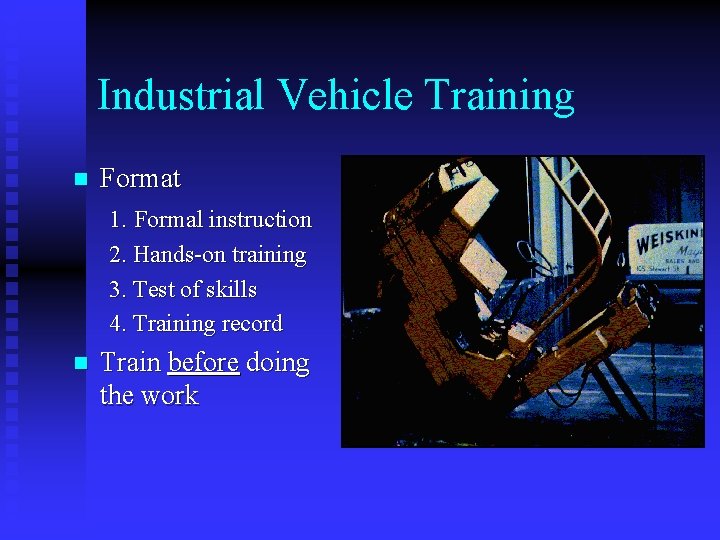
Industrial Vehicle Training n Format 1. Formal instruction 2. Hands-on training 3. Test of skills 4. Training record n Train before doing the work
Forklift Safety n n n Forks lowered when unattended Use cage for elevated work platform Overhead guard & backrest extension Follow load label Sound horn at obstructed view “Out of Service” for safety defects
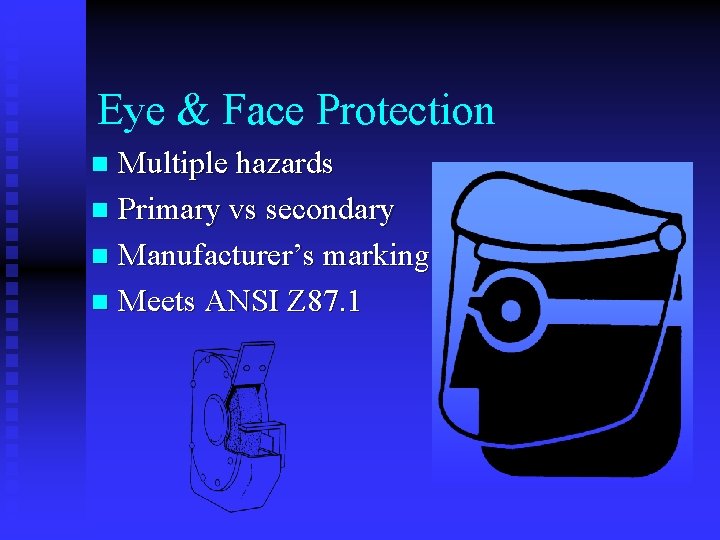
Eye & Face Protection Multiple hazards n Primary vs secondary n Manufacturer’s marking n Meets ANSI Z 87. 1 n
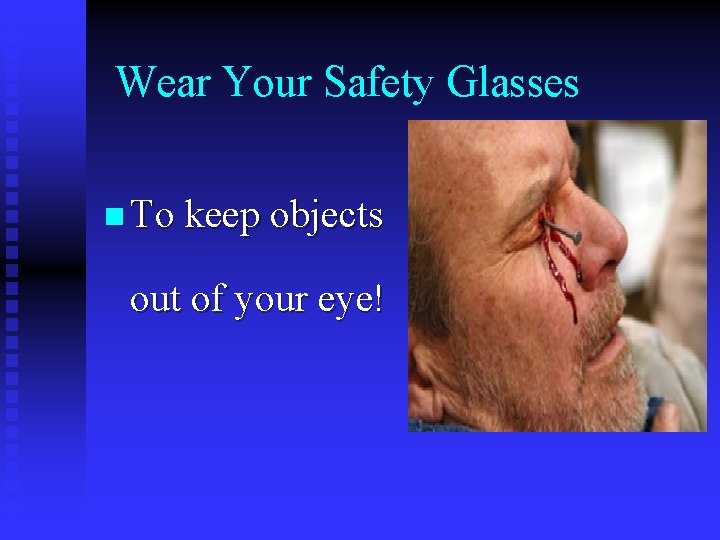
Wear Your Safety Glasses n To keep objects out of your eye!
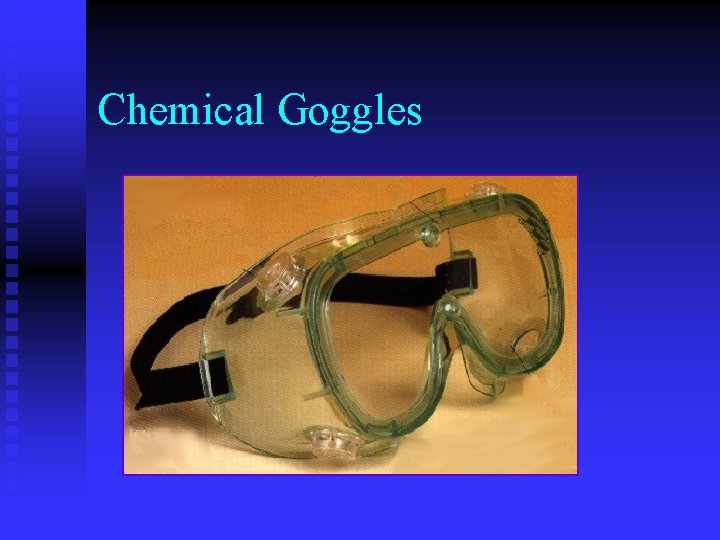
Chemical Goggles
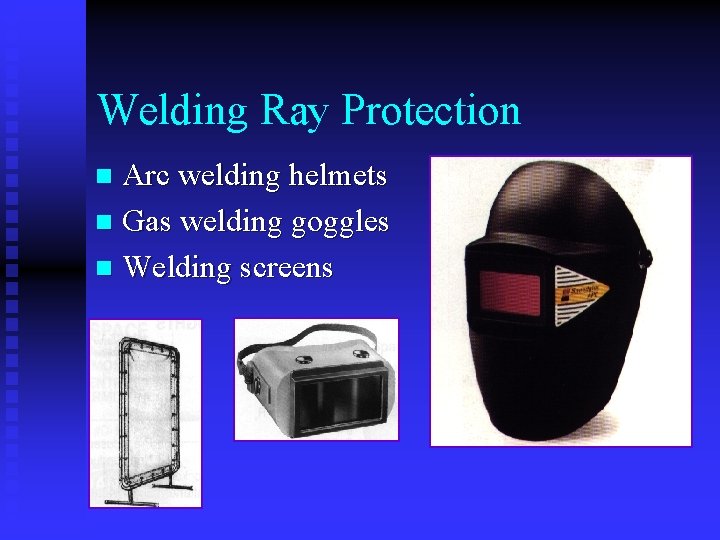
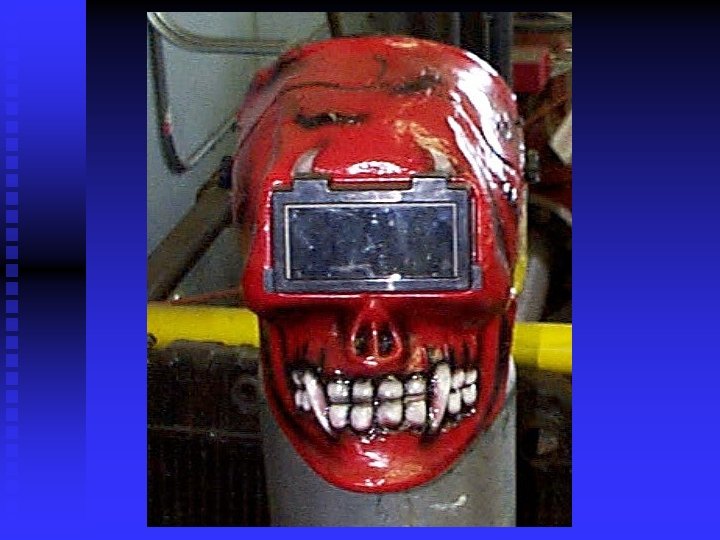
Welding Ray Protection Arc welding helmets n Gas welding goggles n Welding screens n
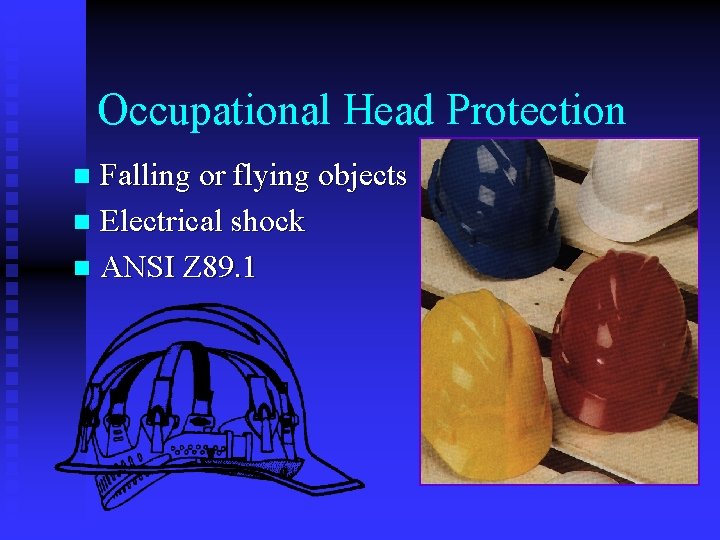
Occupational Head Protection Falling or flying objects n Electrical shock n ANSI Z 89. 1 n
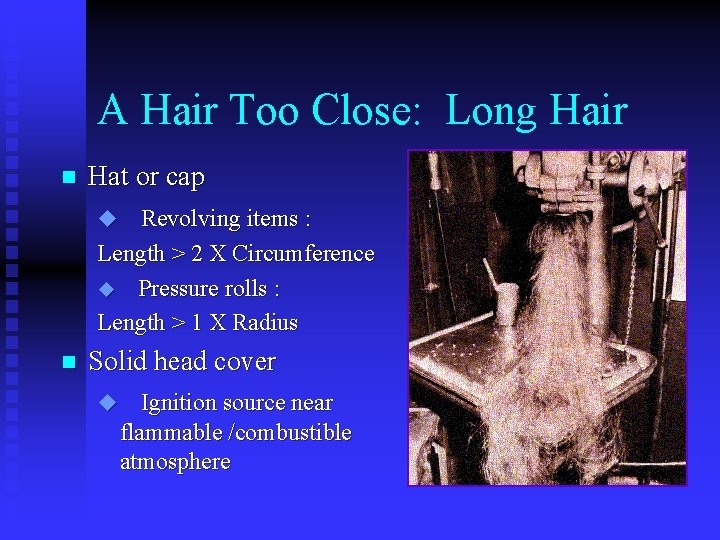
A Hair Too Close: Long Hair n Hat or cap u Revolving items : Length > 2 X Circumference u Pressure rolls : Length > 1 X Radius n Solid head cover u Ignition source near flammable /combustible atmosphere
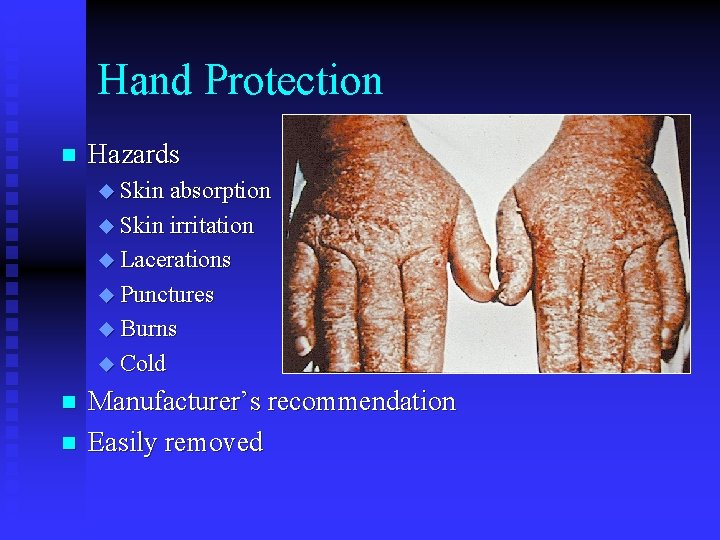
Hand Protection n Hazards u Skin absorption u Skin irritation u Lacerations u Punctures u Burns u Cold n n Manufacturer’s recommendation Easily removed
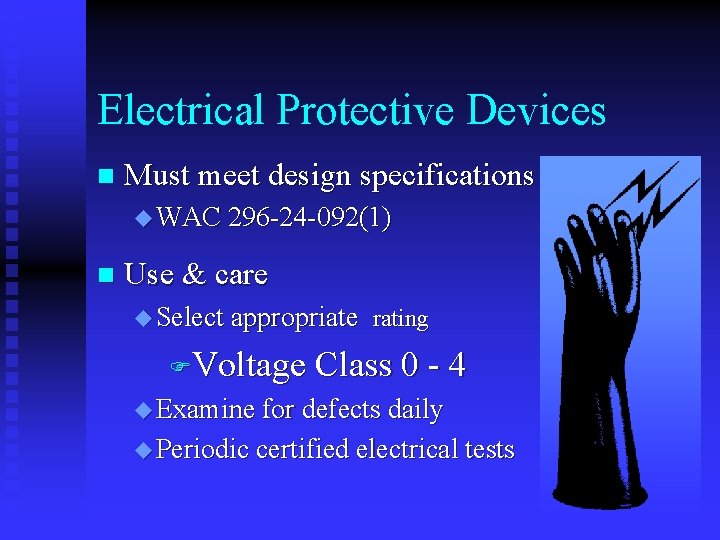
Electrical Protective Devices n Must meet design specifications u WAC 296 -24 -092(1) n Use & care u Select appropriate rating FVoltage Class 0 - 4 u Examine for defects daily u Periodic certified electrical tests
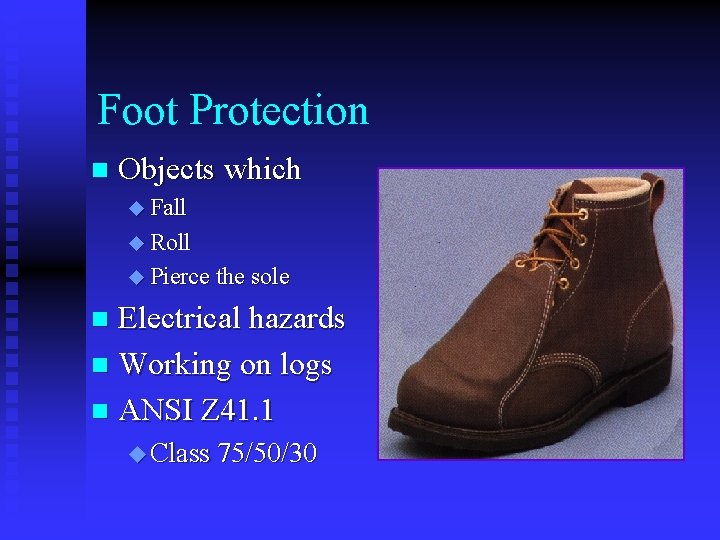
Foot Protection n Objects which u Fall u Roll u Pierce the sole Electrical hazards n Working on logs n ANSI Z 41. 1 n u Class 75/50/30
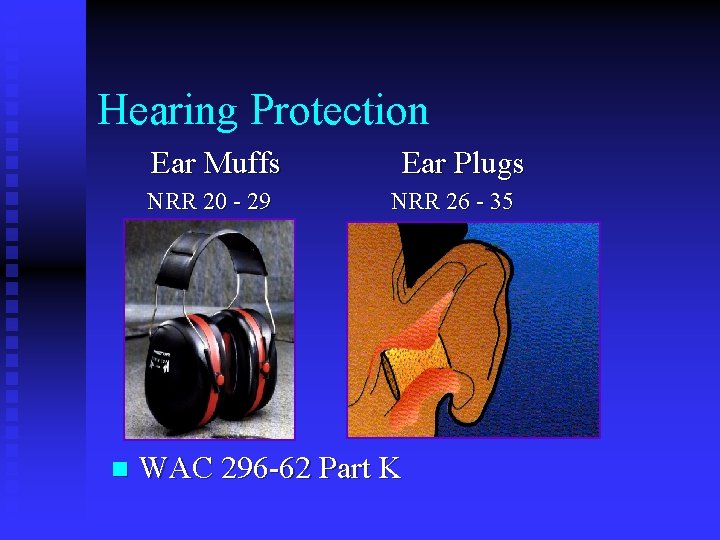
Hearing Protection Ear Muffs NRR 20 - 29 n Ear Plugs NRR 26 - 35 WAC 296 -62 Part K
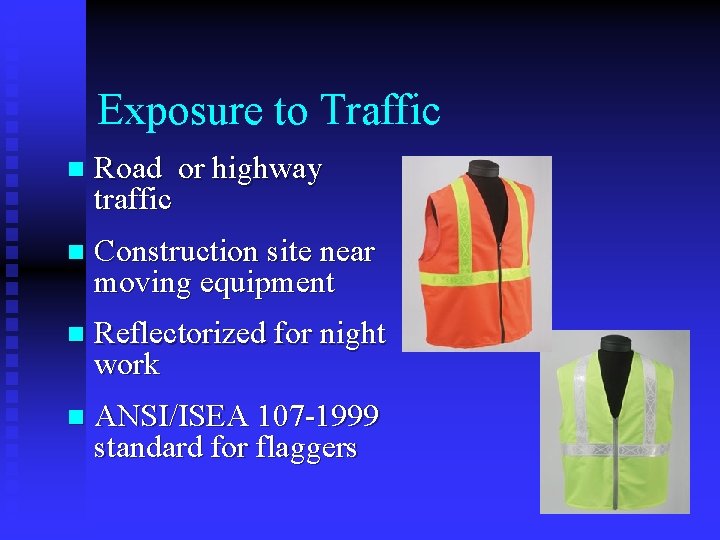
Exposure to Traffic n Road or highway traffic n Construction site near moving equipment n Reflectorized for night work n ANSI/ISEA 107 -1999 standard for flaggers
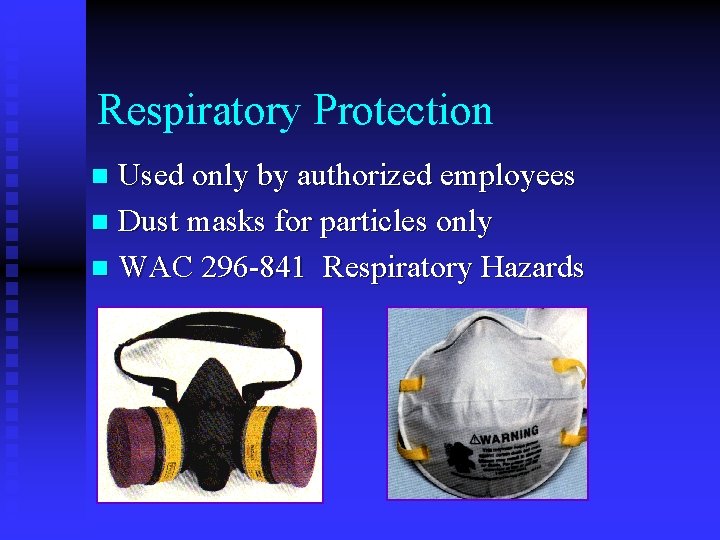
Respiratory Protection Used only by authorized employees n Dust masks for particles only n WAC 296 -841 Respiratory Hazards n
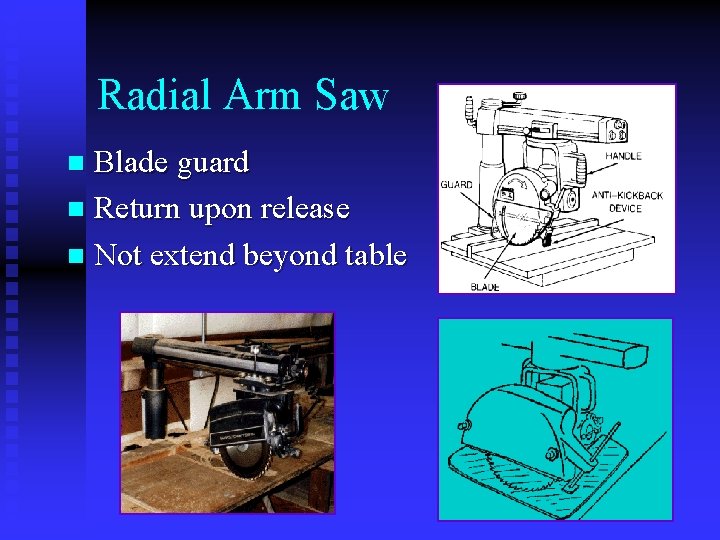
Radial Arm Saw Blade guard n Return upon release n Not extend beyond table n
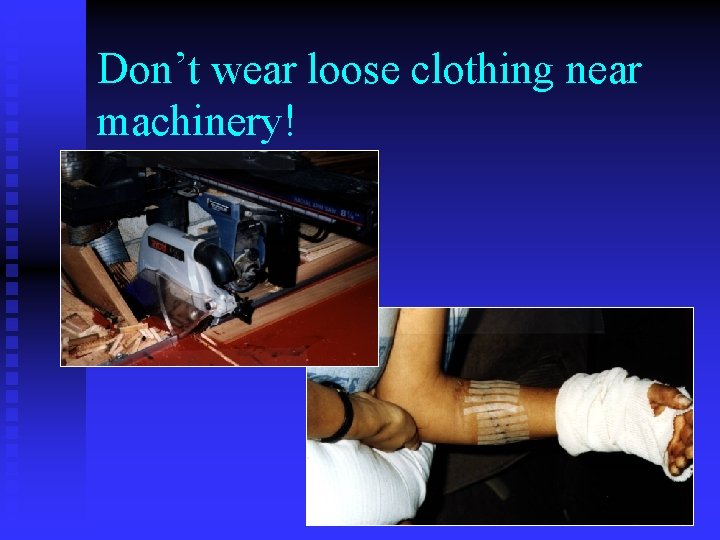
Don’t wear loose clothing near machinery!
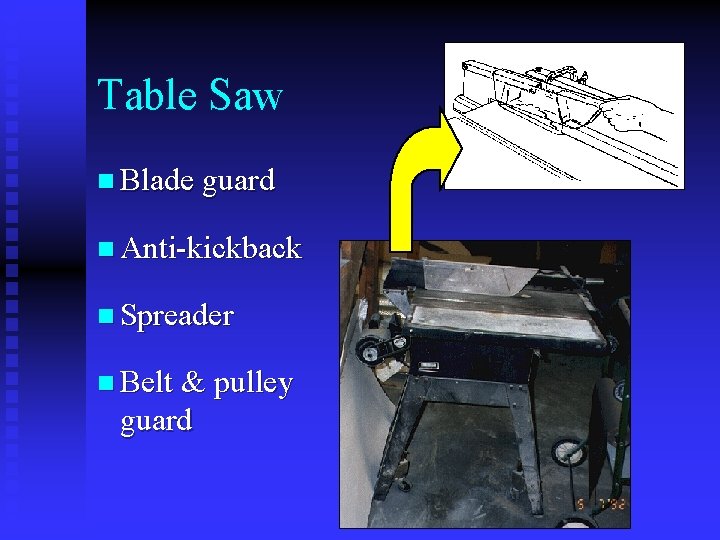
Table Saw n Blade guard n Anti-kickback n Spreader n Belt & pulley guard
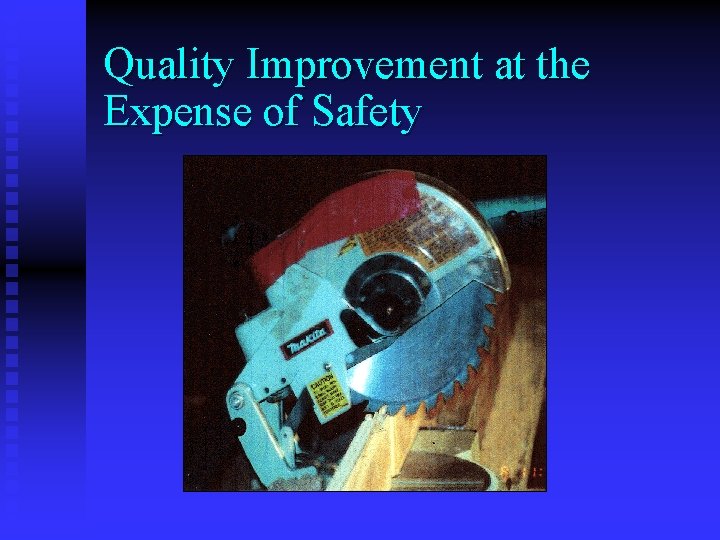
Quality Improvement at the Expense of Safety
Machine Guarding Power Transmission n Nip Points u Belt & pulley u Gears u Chain & sprocket
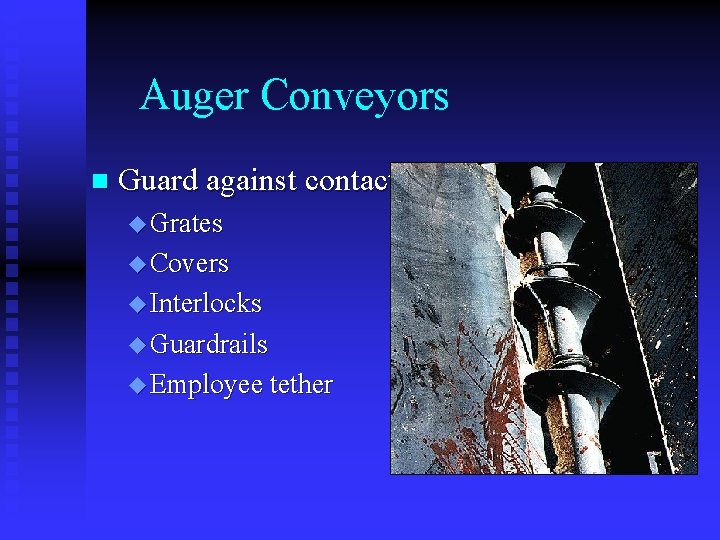
Auger Conveyors n Guard against contact u Grates u Covers u Interlocks u Guardrails u Employee tether
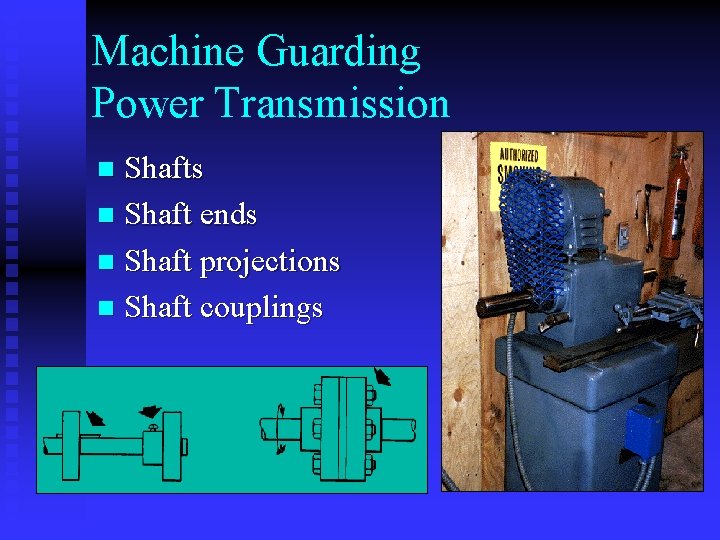
Machine Guarding Power Transmission Shafts n Shaft ends n Shaft projections n Shaft couplings n
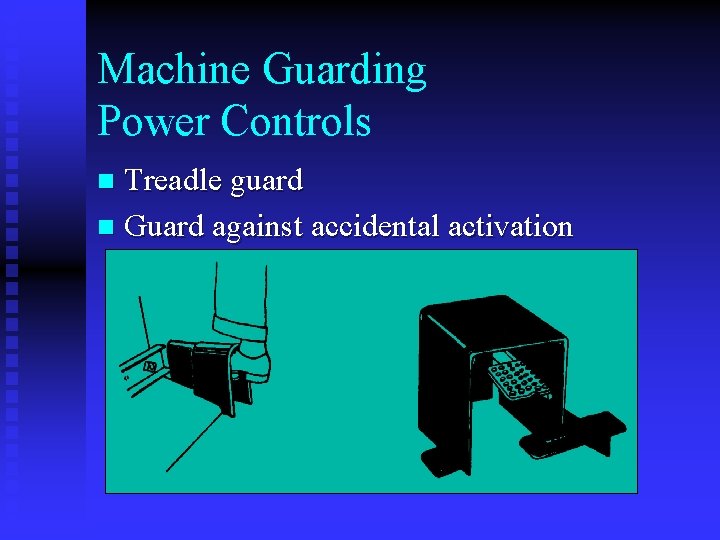
Machine Guarding Power Controls Treadle guard n Guard against accidental activation n
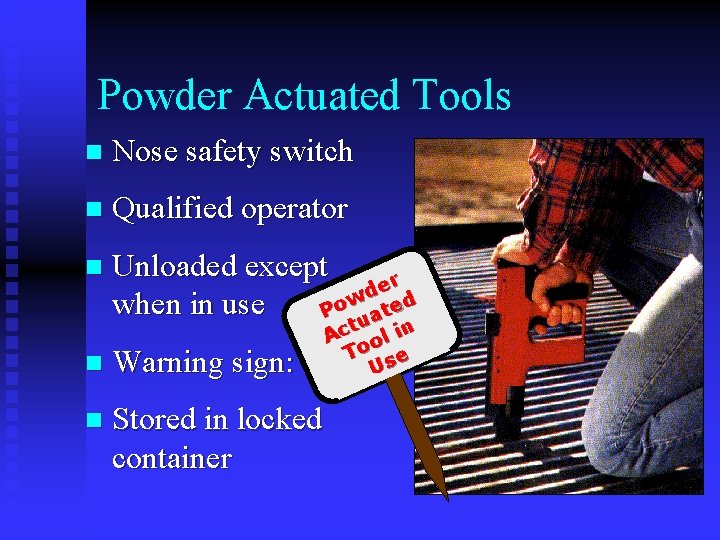
Powder Actuated Tools n Nose safety switch n Qualified operator n Unloaded except er d when in use Po ate u n Warning sign: n Stored in locked container t Ac ol in To se U
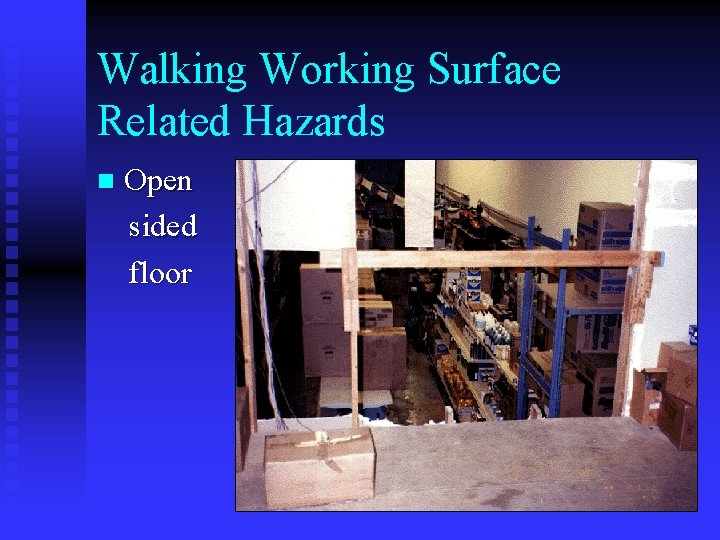
Walking Working Surface Related Hazards n Open sided floor
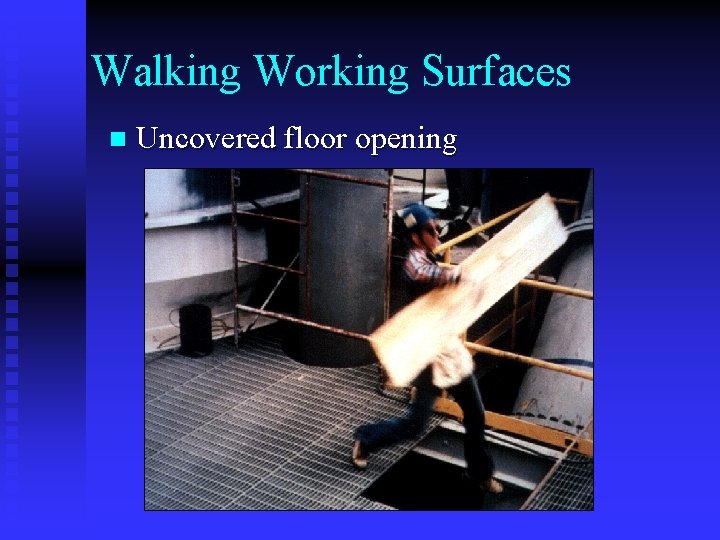
Walking Working Surfaces n Uncovered floor opening
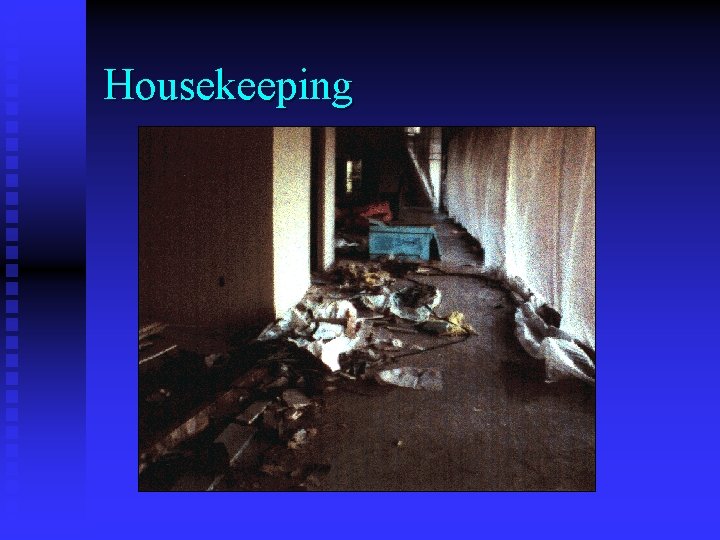
Housekeeping
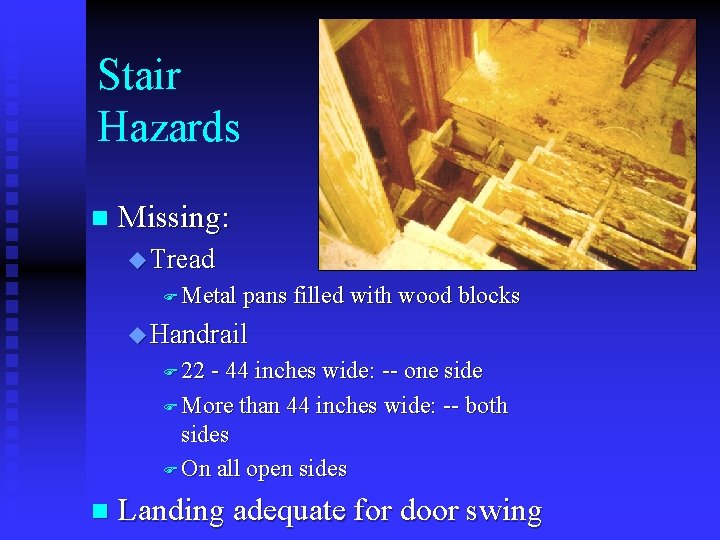
Stair Hazards n Missing: u Tread F Metal pans filled with wood blocks u Handrail F 22 - 44 inches wide: -- one side F More than 44 inches wide: -- both sides F On all open sides n Landing adequate for door swing
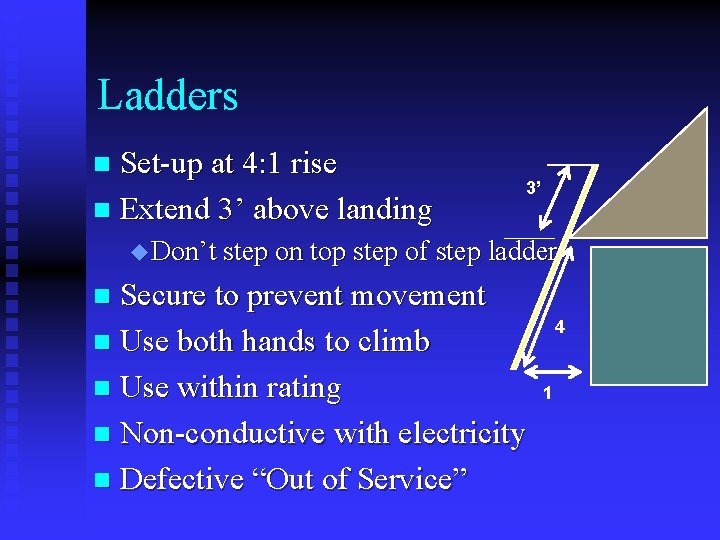
Ladders Set-up at 4: 1 rise n Extend 3’ above landing n 3’ u Don’t step on top step of step ladder Secure to prevent movement n Use both hands to climb n Use within rating n Non-conductive with electricity n Defective “Out of Service” n 4 1
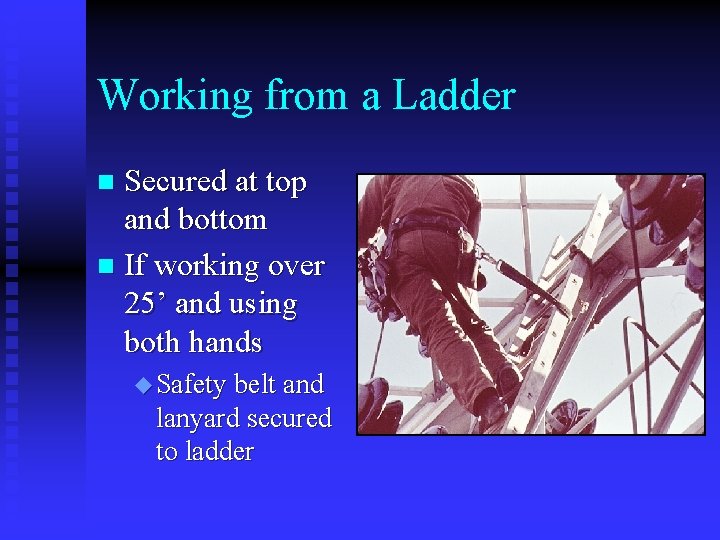
Working from a Ladder Secured at top and bottom n If working over 25’ and using both hands n u Safety belt and lanyard secured to ladder
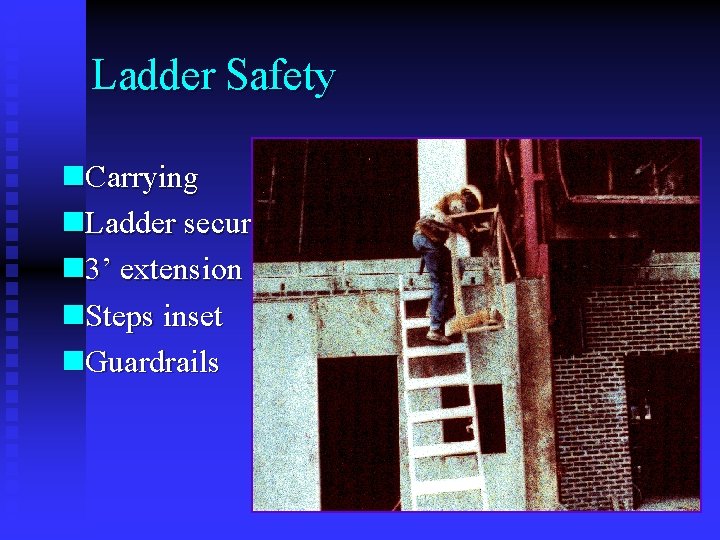
Ladder Safety n. Carrying n. Ladder secured n 3’ extension n. Steps inset n. Guardrails
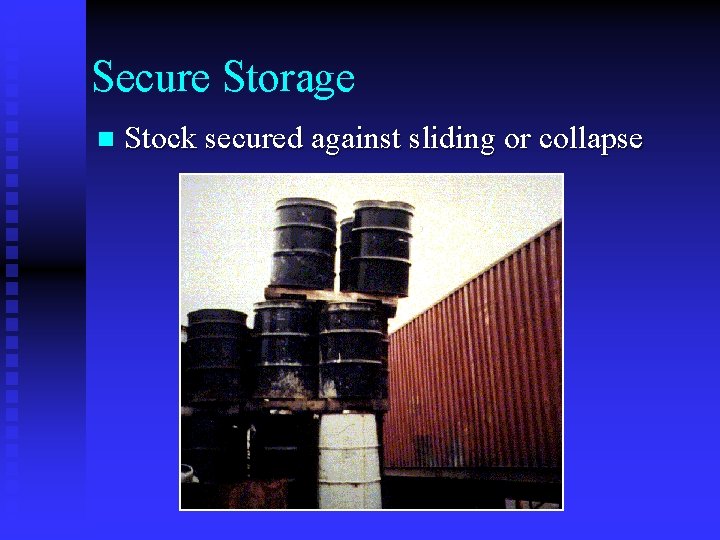
Secure Storage n Stock secured against sliding or collapse
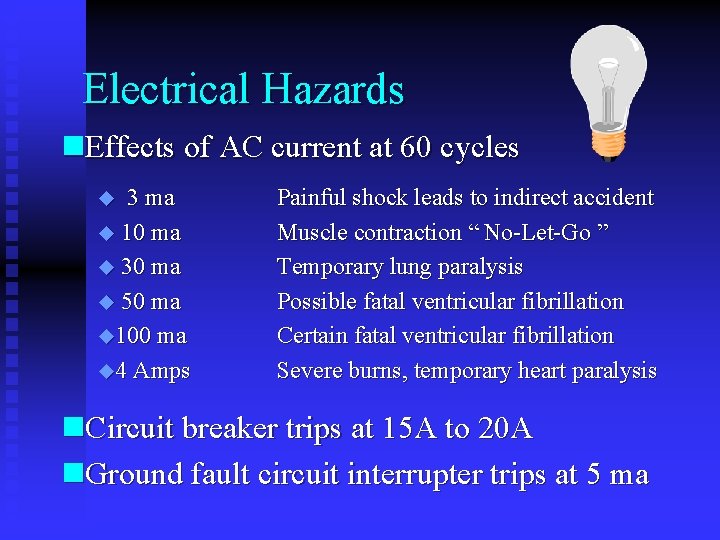
Electrical Hazards n. Effects of AC current at 60 cycles 3 ma u 10 ma u 30 ma u 50 ma u 100 ma u 4 Amps u Painful shock leads to indirect accident Muscle contraction “ No-Let-Go ” Temporary lung paralysis Possible fatal ventricular fibrillation Certain fatal ventricular fibrillation Severe burns, temporary heart paralysis n. Circuit breaker trips at 15 A to 20 A n. Ground fault circuit interrupter trips at 5 ma
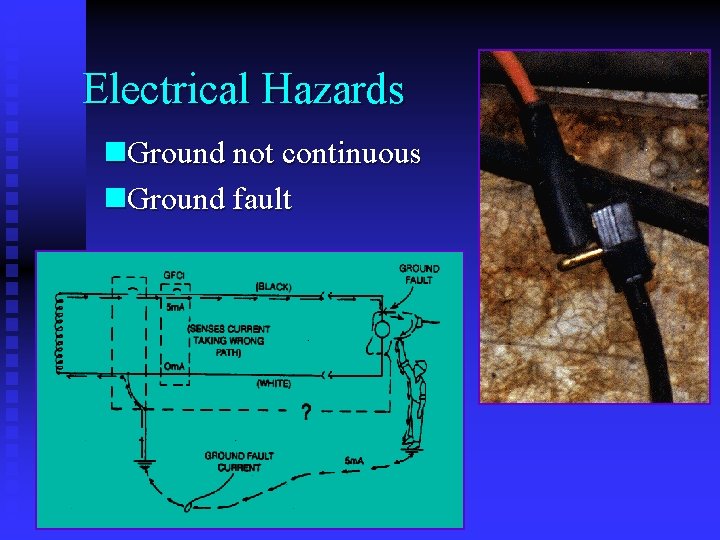
Electrical Hazards n. Ground not continuous n. Ground fault
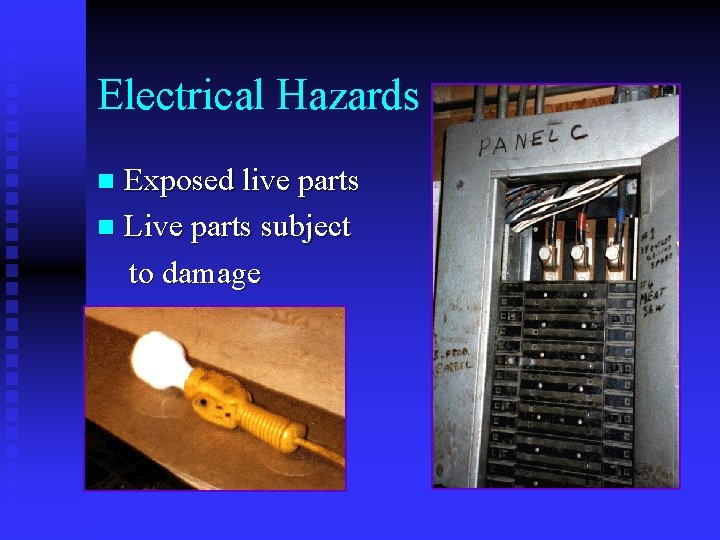
Electrical Hazards Exposed live parts n Live parts subject to damage n
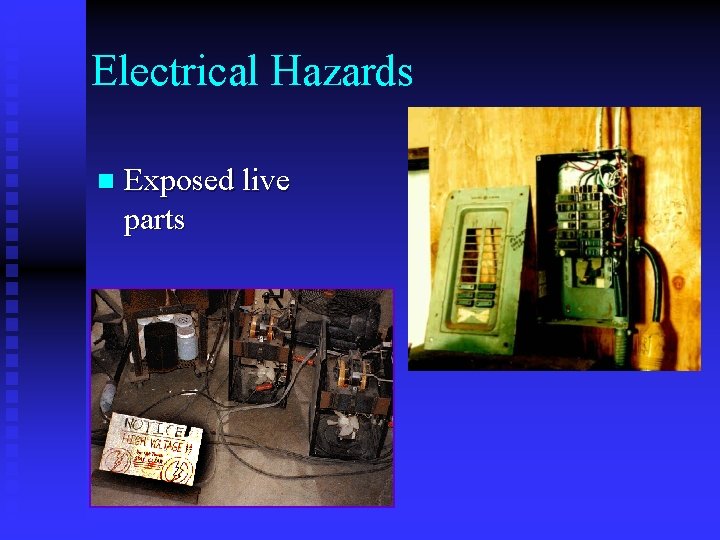
Electrical Hazards n Exposed live parts
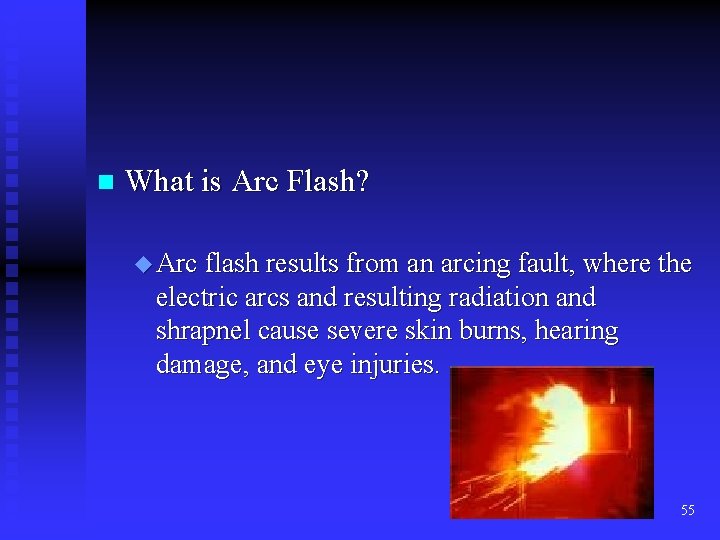
n What is Arc Flash? u Arc flash results from an arcing fault, where the electric arcs and resulting radiation and shrapnel cause severe skin burns, hearing damage, and eye injuries. 55
Why are we so interested in Arc Flash now? u Numerous workers are injured and/or killed each year while working on energized equipment. Many of these casualties are a result of arc flash. u Working on energized equipment has become commonplace in many industries. 56
Injuries that can result from an arc flash: u Burns u Respiratory system damage u Hearing damage u Skin penetration from flying debris u Eye and face injuries 57
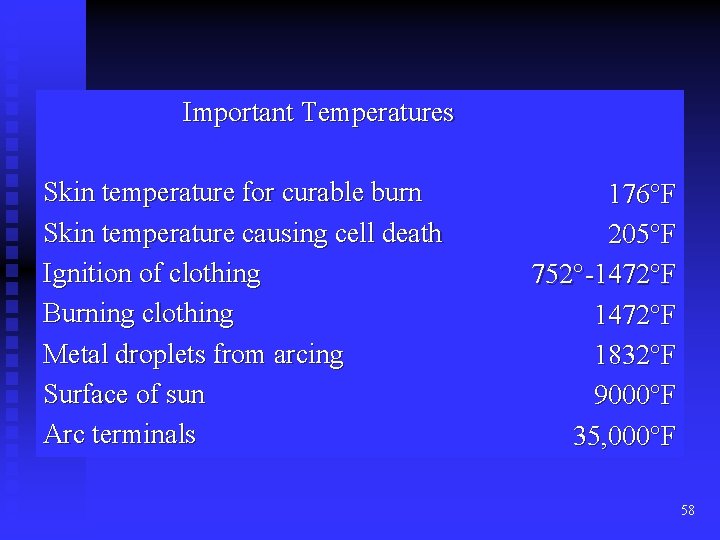
Important Temperatures Skin temperature for curable burn Skin temperature causing cell death Ignition of clothing Burning clothing Metal droplets from arcing Surface of sun Arc terminals 176°F 205°F 752°-1472°F 1832°F 9000°F 35, 000°F 58
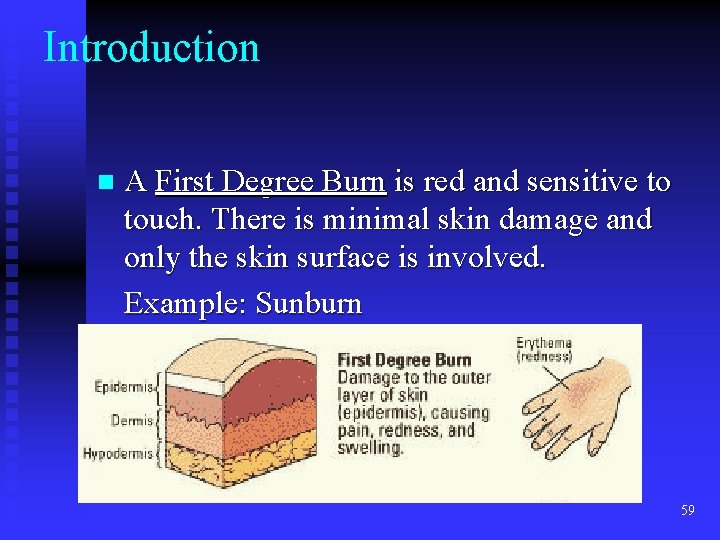
Introduction n A First Degree Burn is red and sensitive to touch. There is minimal skin damage and only the skin surface is involved. Example: Sunburn 59
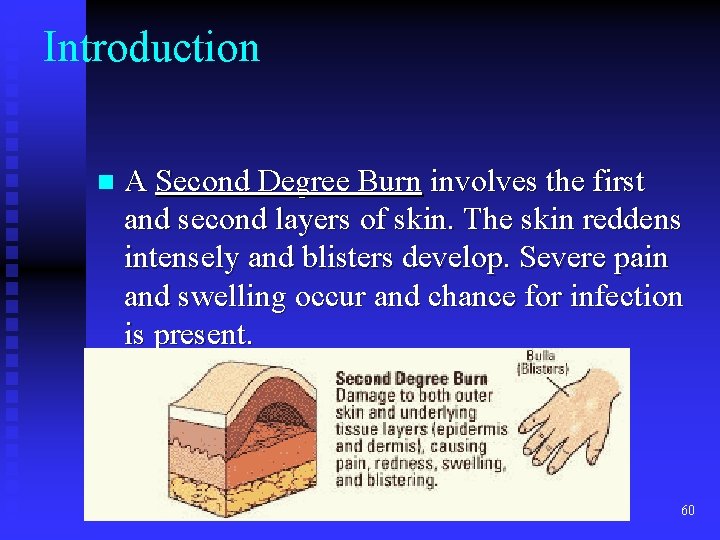
Introduction n A Second Degree Burn involves the first and second layers of skin. The skin reddens intensely and blisters develop. Severe pain and swelling occur and chance for infection is present. 60
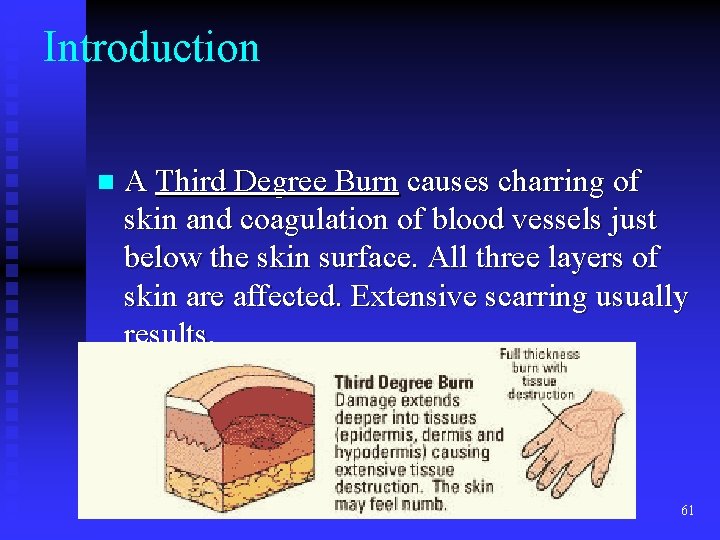
Introduction n A Third Degree Burn causes charring of skin and coagulation of blood vessels just below the skin surface. All three layers of skin are affected. Extensive scarring usually results. 61
Introduction n Skin damage will occur based on the intensity of the heat generated by an electrical arc accident. The heat reaching the skin of the worker is dependant on the following three factors: • Power of the arc at the arc location • Distance of the worker to the arc • Time duration of the arc exposure 62
Introduction n The intent of NFPA 70 E regarding arc flash is to provide guidelines which will limit injury to the onset of second degree burns. 63
Introduction Inhalation Injuries In addition to burns, an arc flash can cause inhalation injuries. More than a hundred known toxic substances are present in fire smoke. When inhalation injuries are combined with external burns the chance of death can increase significantly. 64
The pressure of an arc blast is caused by the expansion of the metal as it vaporizes and the heating of the air by the arc energy. This accounts for the expulsion of molten metal up to 10 feet away. n In addition, the sudden expansion of an arc blast creates loud sounds that can cause hearing damage. n 65
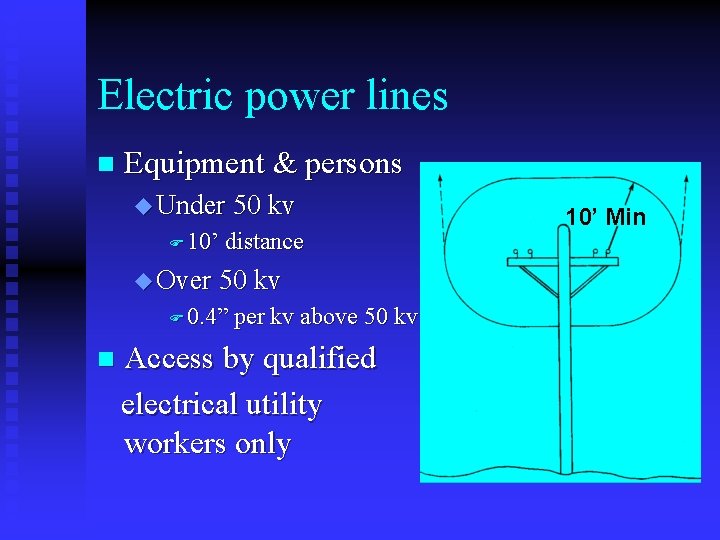
Electric power lines n Equipment & persons u Under 50 kv F 10’ distance u Over 50 kv F 0. 4” n per kv above 50 kv Access by qualified electrical utility workers only 10’ Min
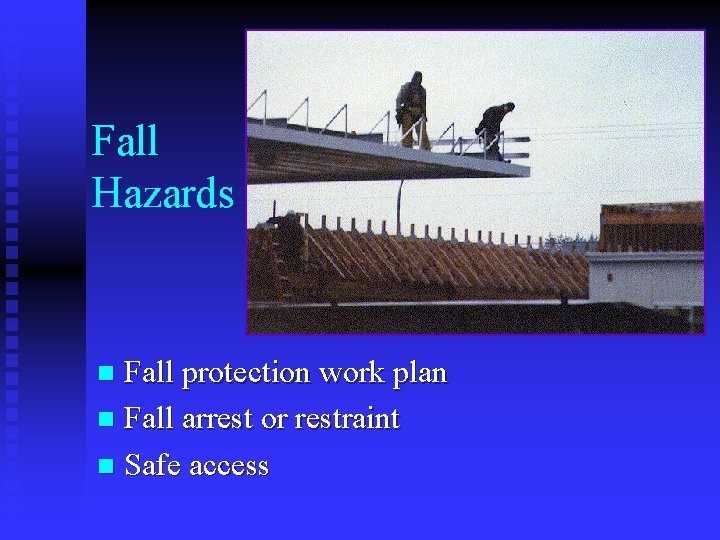
Fall Hazards Fall protection work plan n Fall arrest or restraint n Safe access n
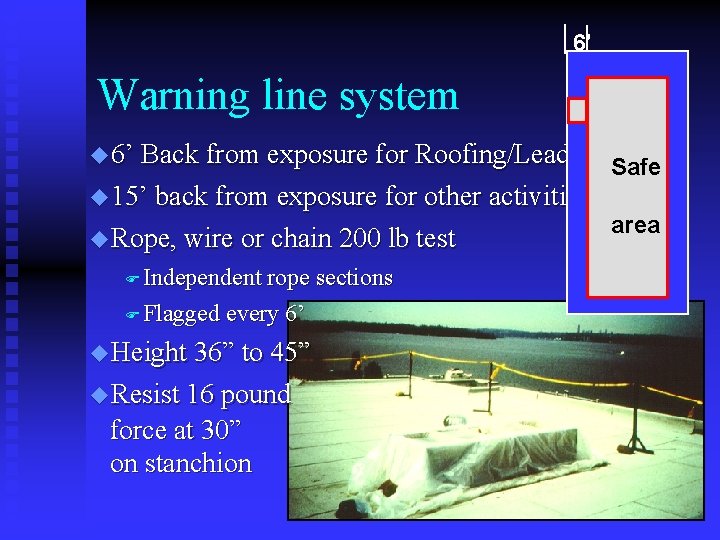
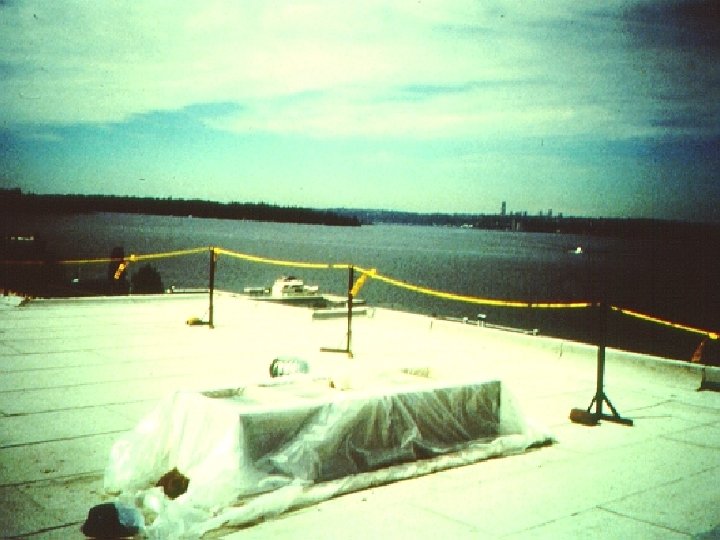
6’ Warning line system u 6’ Back from exposure for Roofing/Leading E u 15’ back from exposure for other activities u Rope, wire or chain 200 lb test F Independent rope sections F Flagged every 6’ u Height 36” to 45” u Resist 16 pound force at 30” on stanchion Safe area
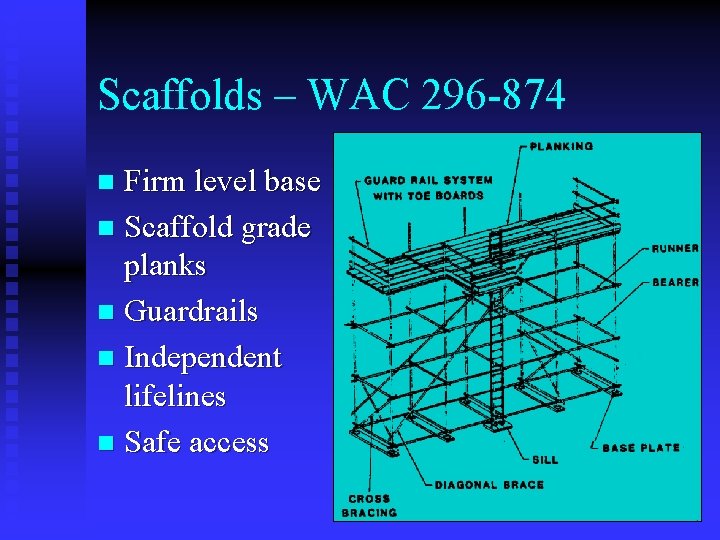
Scaffolds – WAC 296 -874 Firm level base n Scaffold grade planks n Guardrails n Independent lifelines n Safe access n
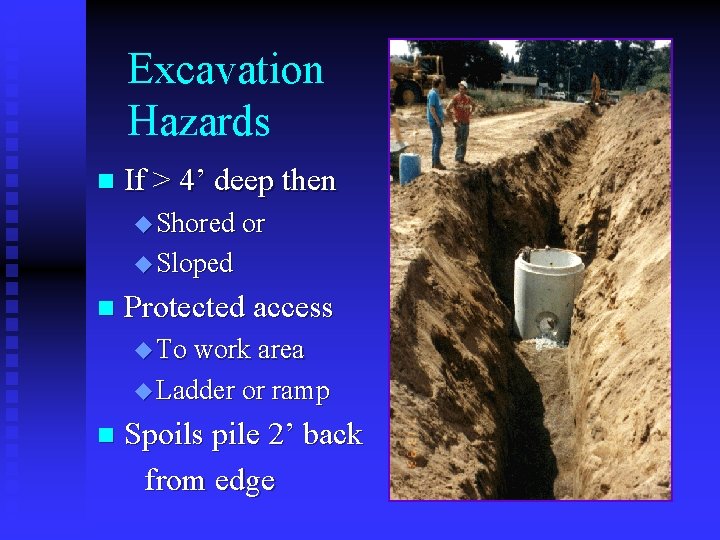
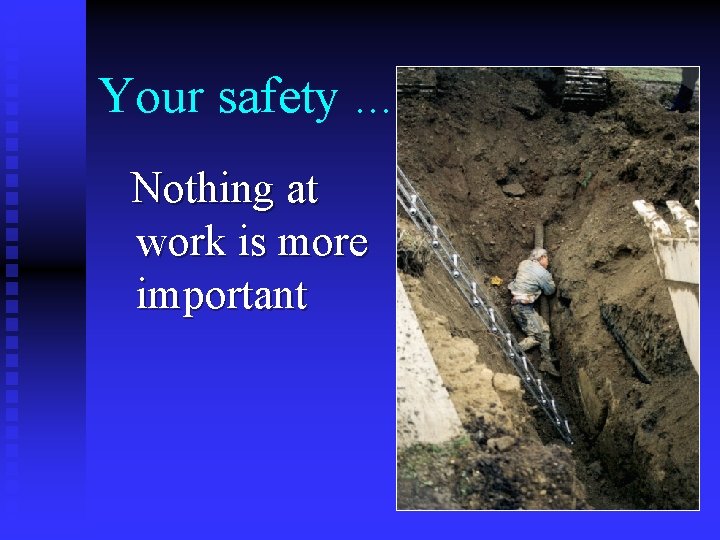
Excavation Hazards n If > 4’ deep then u Shored or u Sloped n Protected access u To work area u Ladder or ramp n Spoils pile 2’ back from edge
Your safety. . . Nothing at work is more important
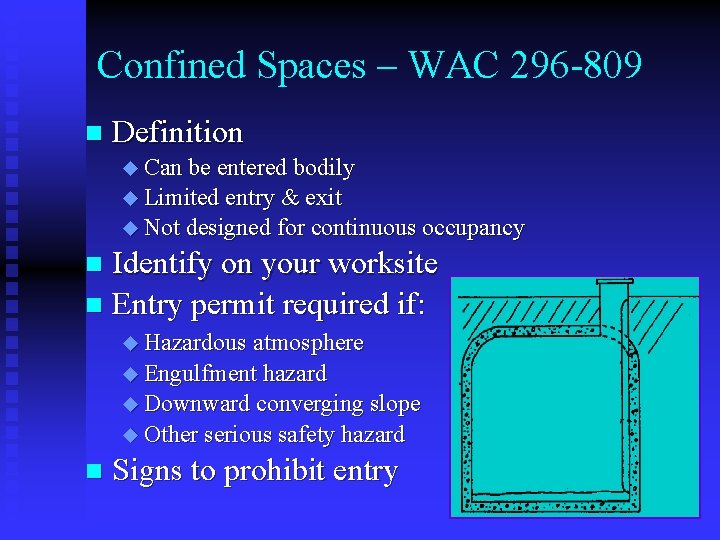
Confined Spaces – WAC 296 -809 n Definition u Can be entered bodily u Limited entry & exit u Not designed for continuous occupancy Identify on your worksite n Entry permit required if: n u Hazardous atmosphere u Engulfment hazard u Downward converging slope u Other serious safety hazard n Signs to prohibit entry
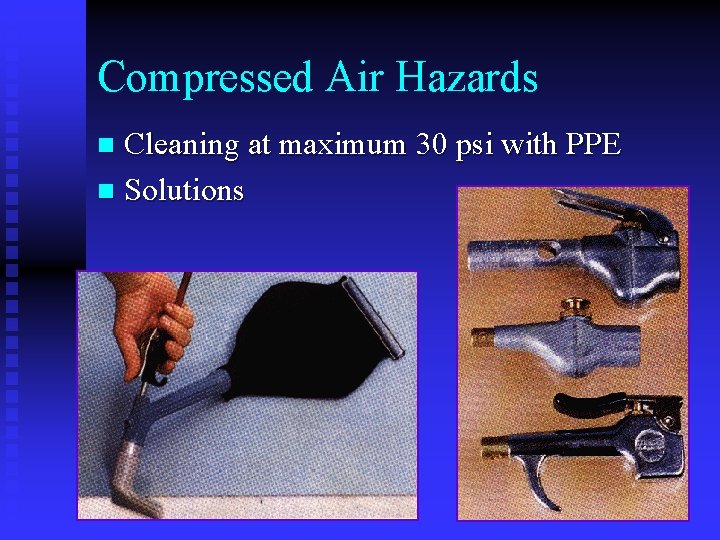
Compressed Air Hazards Cleaning at maximum 30 psi with PPE n Solutions n
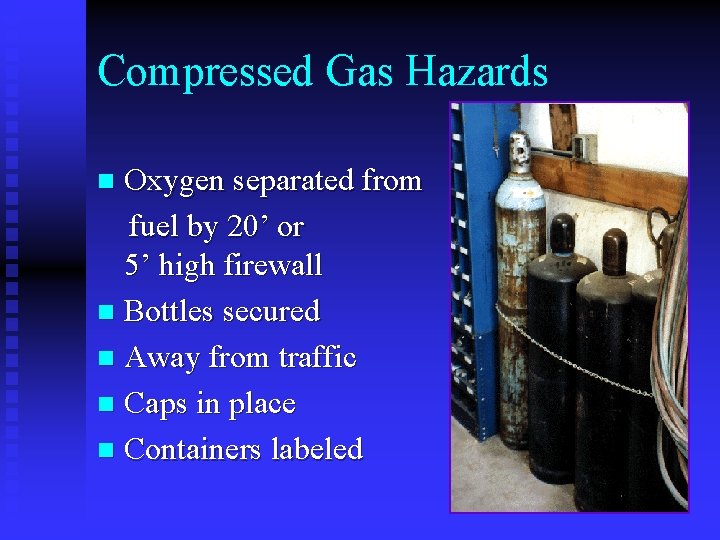
Compressed Gas Hazards Oxygen separated from fuel by 20’ or 5’ high firewall n Bottles secured n Away from traffic n Caps in place n Containers labeled n
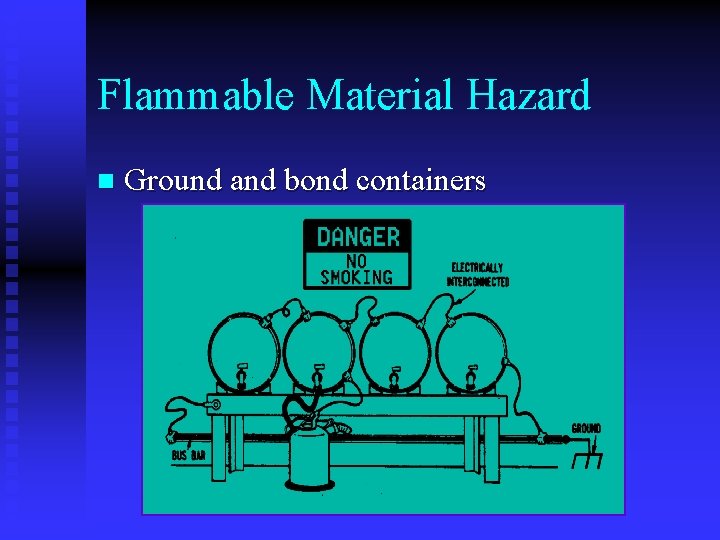
Flammable Material Hazard n Ground and bond containers
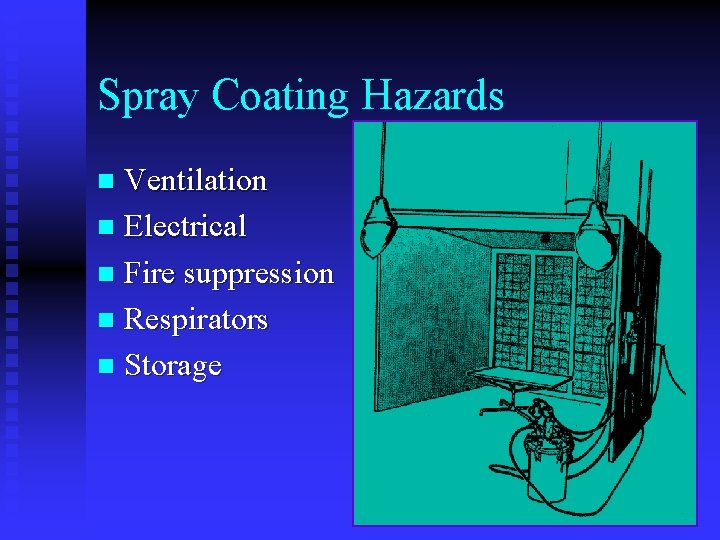
Spray Coating Hazards Ventilation n Electrical n Fire suppression n Respirators n Storage n
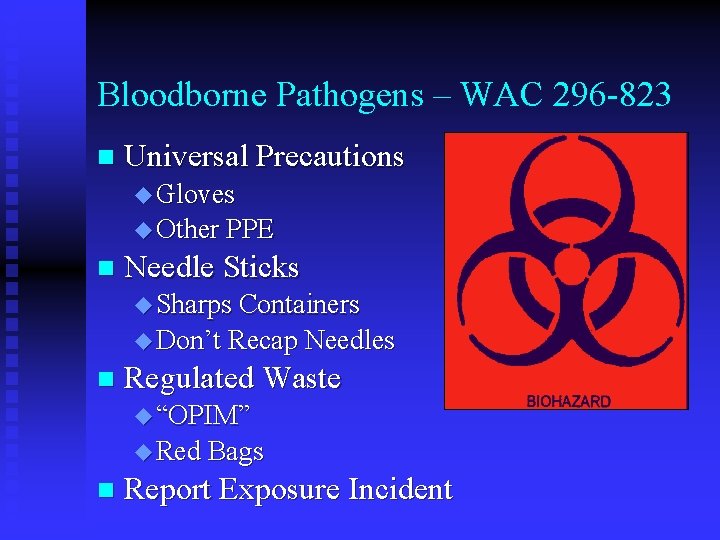
Bloodborne Pathogens – WAC 296 -823 n Universal Precautions u Gloves u Other PPE n Needle Sticks u Sharps Containers u Don’t Recap Needles n Regulated Waste u “OPIM” u Red Bags n Report Exposure Incident
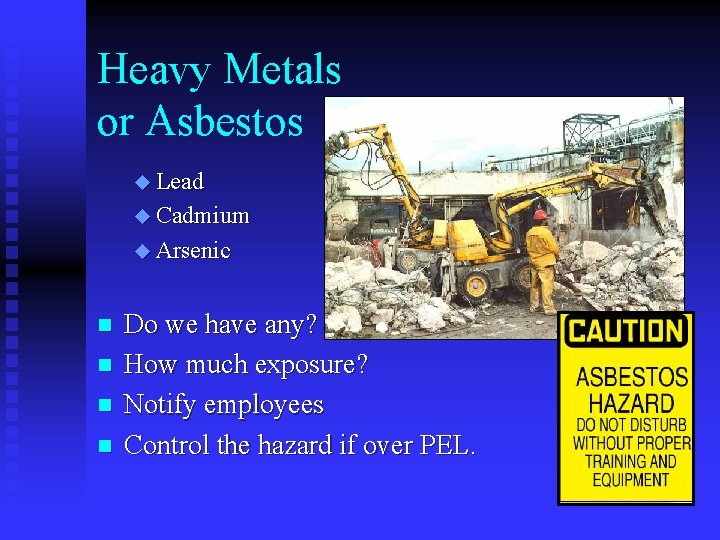
Heavy Metals or Asbestos u Lead u Cadmium u Arsenic n n Do we have any? How much exposure? Notify employees Control the hazard if over PEL.
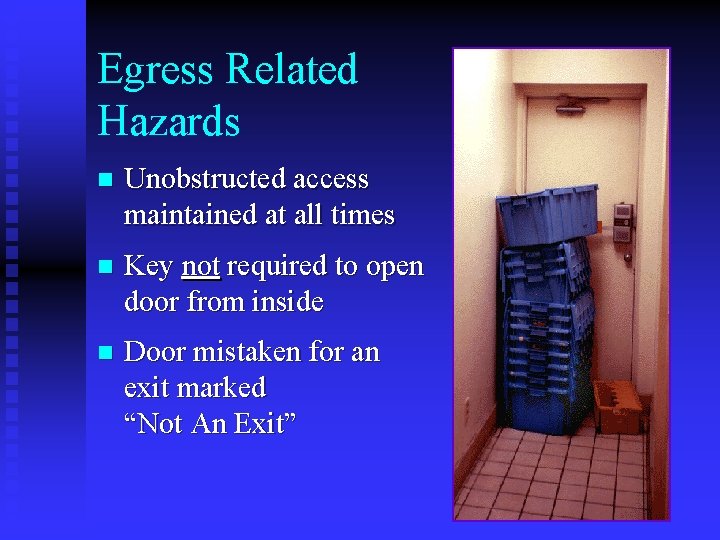
Egress Related Hazards n Unobstructed access maintained at all times n Key not required to open door from inside n Door mistaken for an exit marked “Not An Exit”
The End