
Introduction to Waves The location of energy sources
- Slides: 12
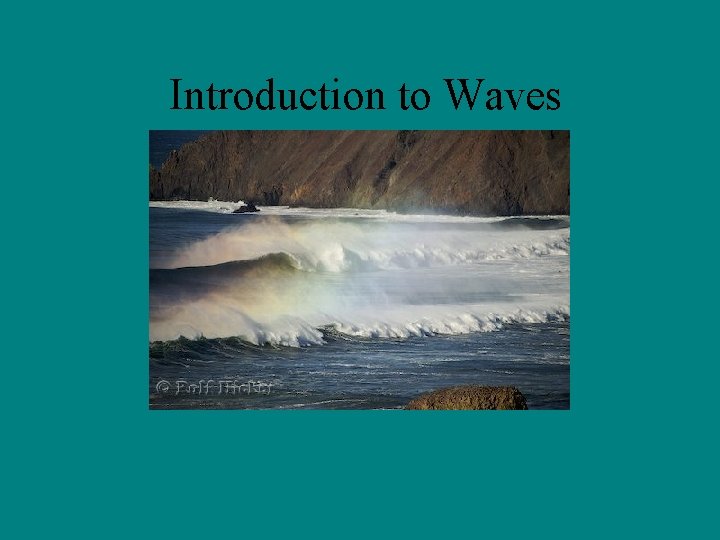
Introduction to Waves
The location of energy sources may be different than where they are needed. • The energy must be transferred from one location to another by some means such as……
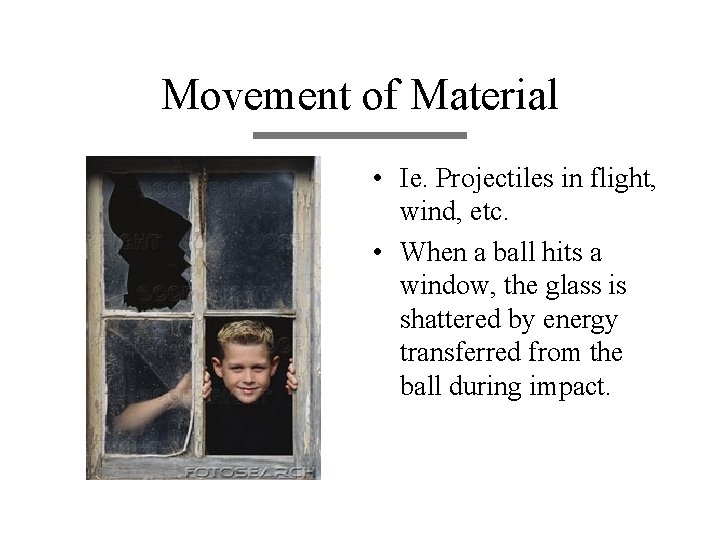
Movement of Material • Ie. Projectiles in flight, wind, etc. • When a ball hits a window, the glass is shattered by energy transferred from the ball during impact.
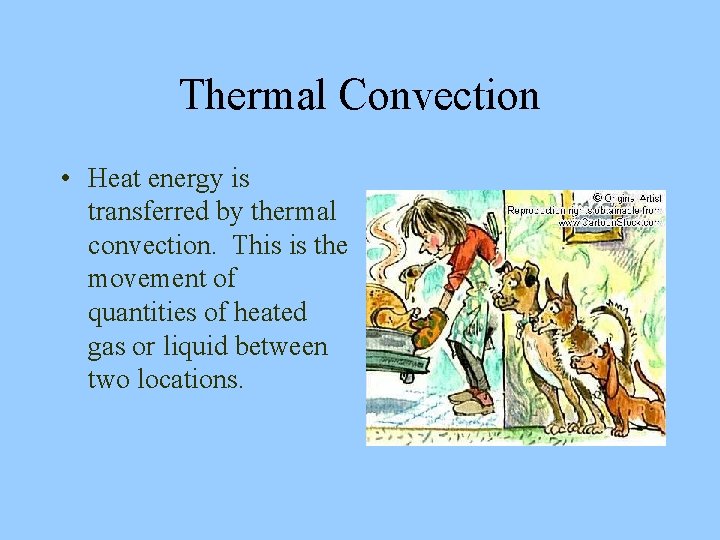
Thermal Convection • Heat energy is transferred by thermal convection. This is the movement of quantities of heated gas or liquid between two locations.
Waves • Ie. Sound waves, light waves, water waves, etc. The ideas and language used to describe waves are the same, regardless of the kinds of waves involved.
What is a wave? • The basic concept in the use of the term wave is that the wave involves some quantity or disturbance that changes in magnitude with respect to time at a given location and changes in magnitude from place to place at a given time. • A wave is a disturbance that propagates through a medium or space (vacuum).
Some waves are electromagnetic waves • Electromagnetic waves can travel through a material or through a vacuum. • Examples include visible light, microwaves, radio waves, x-rays, infrared rays and ultraviolet waves. • V = 3. 00 x 108 m/s in air or a vacuum
Some waves are mechanical waves • Mechanical waves require a material medium for their propagation (movement). • Sound waves, ocean waves, and earthquakes are mechanical waves. • Mechanical waves can be transverse, longitudinal, or surface waves.
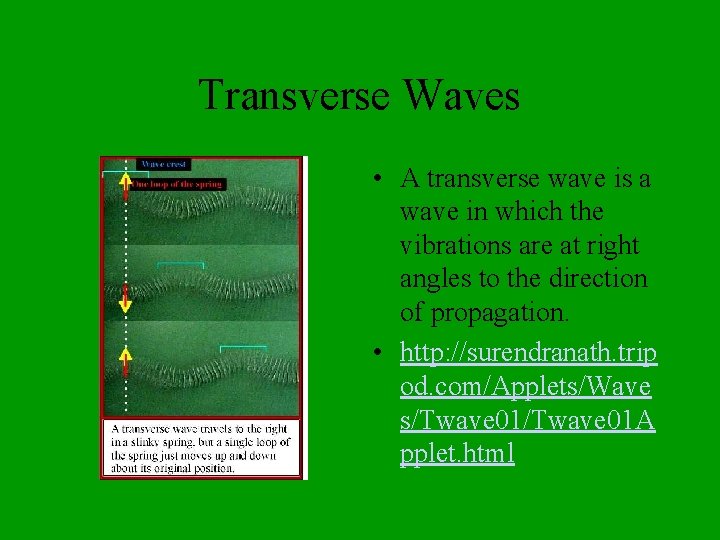
Transverse Waves • A transverse wave is a wave in which the vibrations are at right angles to the direction of propagation. • http: //surendranath. trip od. com/Applets/Wave s/Twave 01 A pplet. html
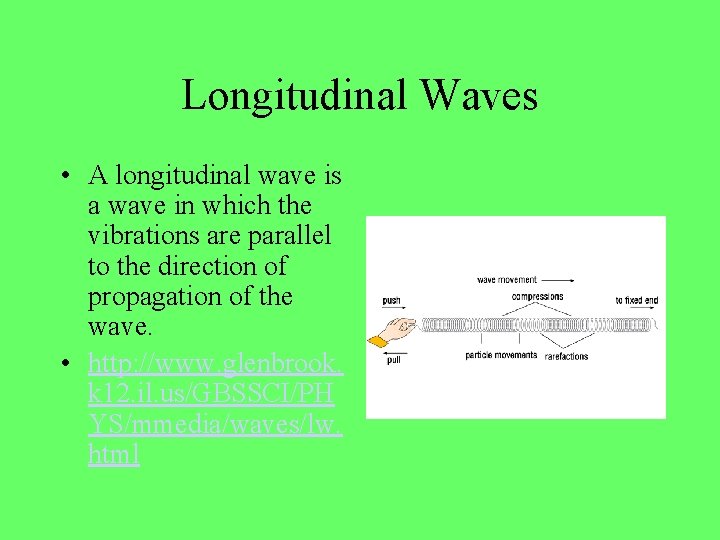
Longitudinal Waves • A longitudinal wave is a wave in which the vibrations are parallel to the direction of propagation of the wave. • http: //www. glenbrook. k 12. il. us/GBSSCI/PH YS/mmedia/waves/lw. html
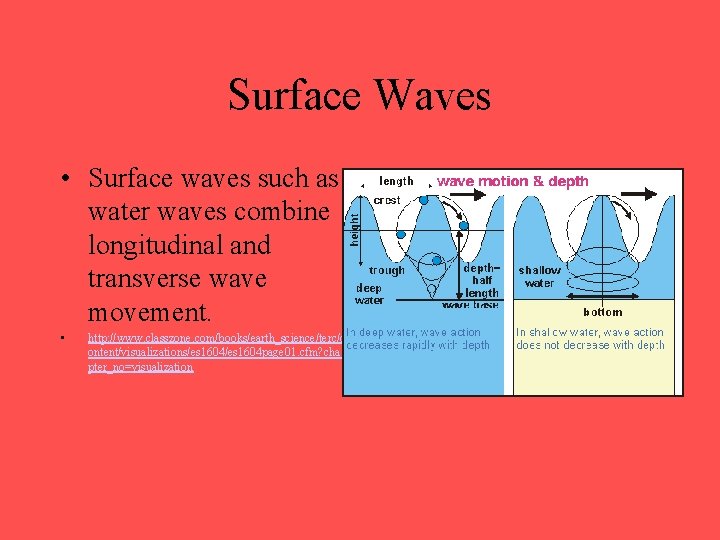
Surface Waves • Surface waves such as water waves combine longitudinal and transverse wave movement. • http: //www. classzone. com/books/earth_science/terc/c ontent/visualizations/es 1604 page 01. cfm? cha pter_no=visualization
Define the following wave terms • • Elastic medium Disturbance Pulse Crest Trough Compression rarefaction • • • Speed Frequency Period Wavelength Amplitude Phase