
Introduction to Visual Perception Visual Illusions What is
- Slides: 32
Introduction to Visual Perception Visual Illusions
What is Visual Perception? The active process of organising and interpreting sensory stimuli sent from the senses It is used to create a meaningful mental representation of the world It forms the basis of our behaviour. It includes the structures involved in vision, including the eyes, receptors, nerve pathways and the visual cortex
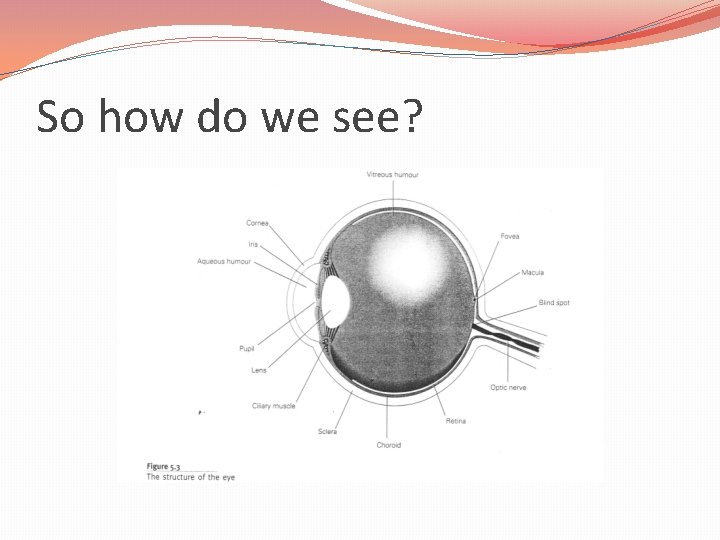
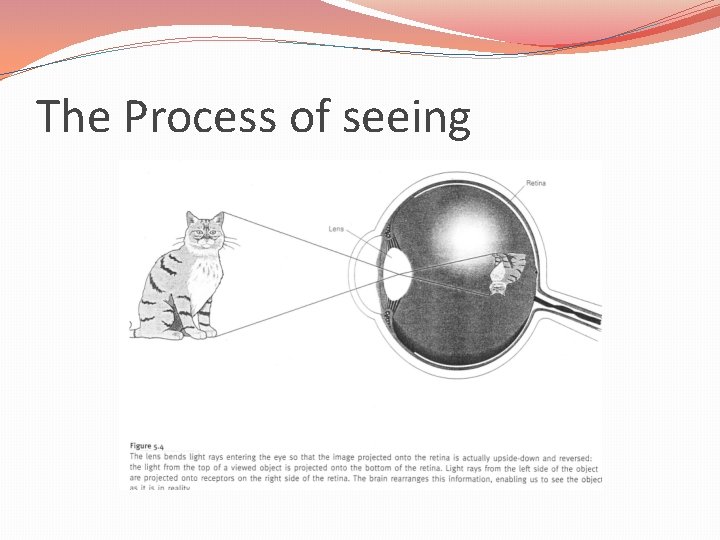
So how do we see?
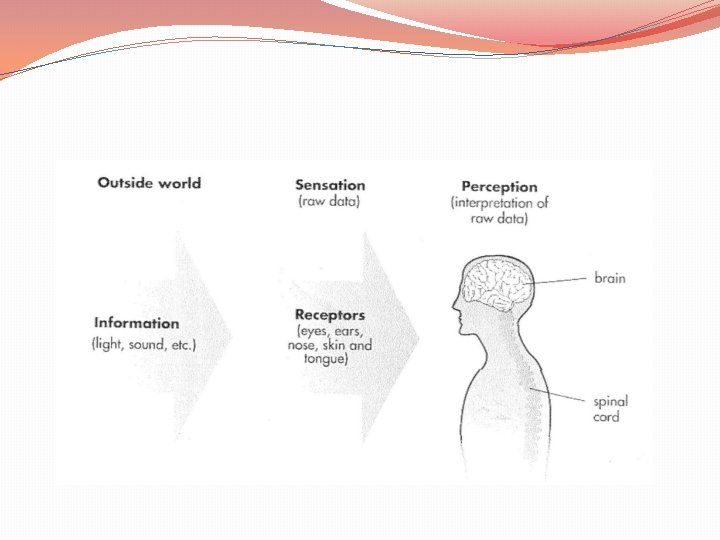
The Process of seeing
How do Visual Illusions work? Visual illusions are mistaken perceptions of visual stimuli. We misjudge the length, position, size or direction in a visual illusion. The brain is tricked – which means that we perceive is different to reality.
So how do organise information? �Visual perception relies on three key principles to organise information �Gestalt principles �Depth perception �Perceptual constancies
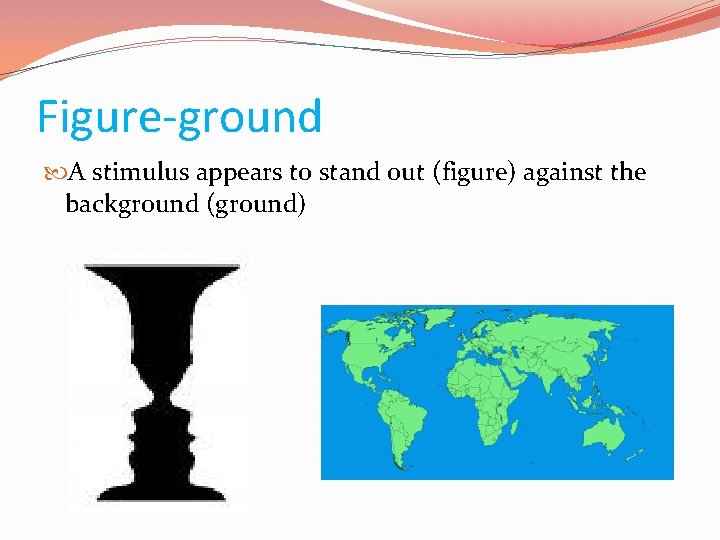
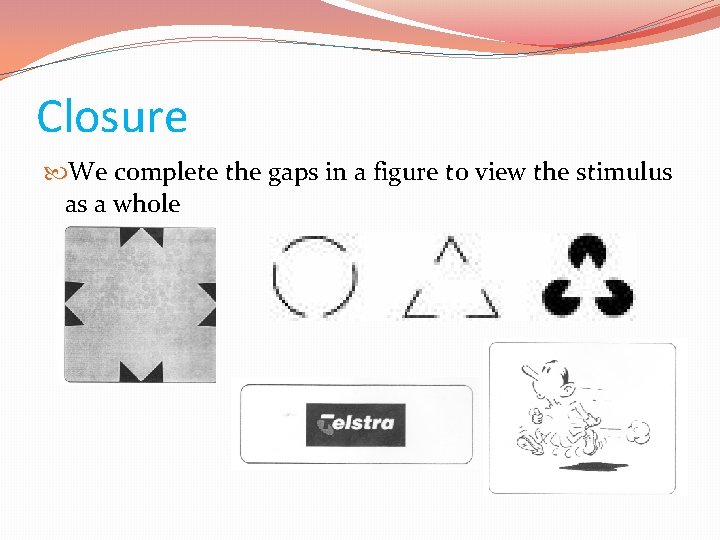
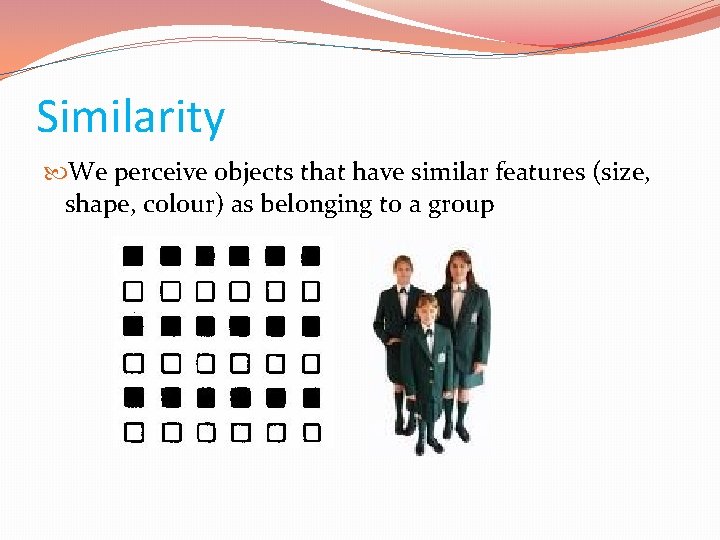
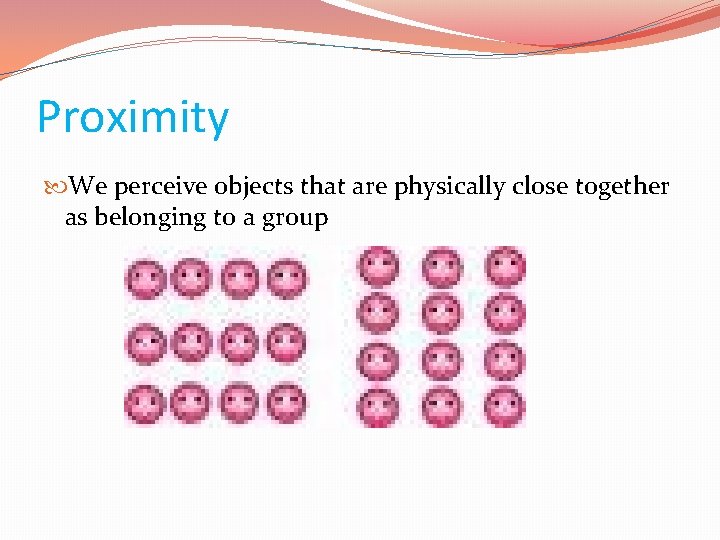
Gestalt Principles It is believed that we organise stimuli into categories or groups to understand them Figure –ground Closure Similarity Proximity
Figure-ground A stimulus appears to stand out (figure) against the background (ground)
Closure We complete the gaps in a figure to view the stimulus as a whole
Similarity We perceive objects that have similar features (size, shape, colour) as belonging to a group
Proximity We perceive objects that are physically close together as belonging to a group
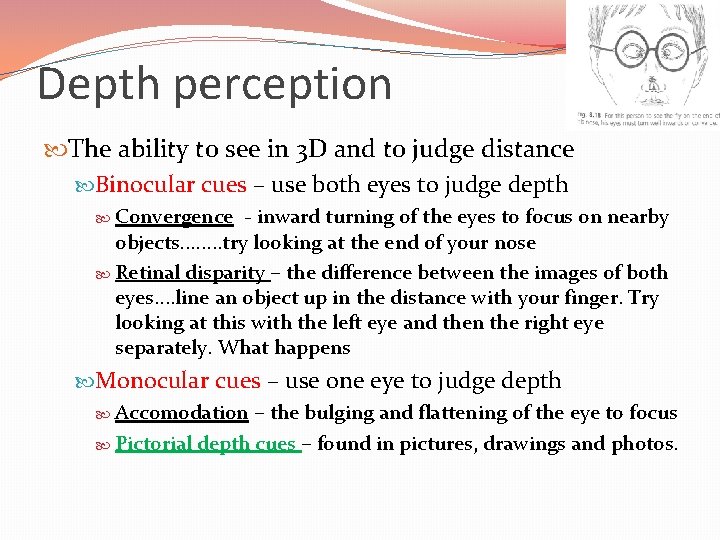
Depth perception The ability to see in 3 D and to judge distance Binocular cues – use both eyes to judge depth Convergence - inward turning of the eyes to focus on nearby objects. . . . try looking at the end of your nose Retinal disparity – the difference between the images of both eyes. . line an object up in the distance with your finger. Try looking at this with the left eye and then the right eye separately. What happens Monocular cues – use one eye to judge depth Accomodation – the bulging and flattening of the eye to focus Pictorial depth cues – found in pictures, drawings and photos.
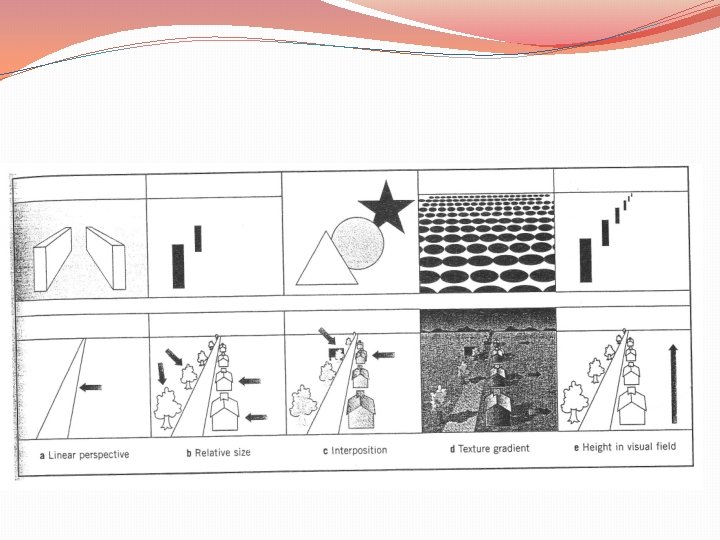
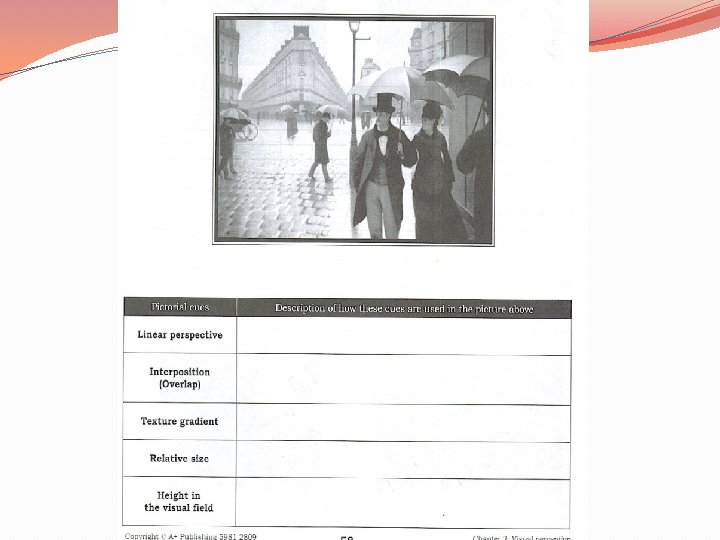
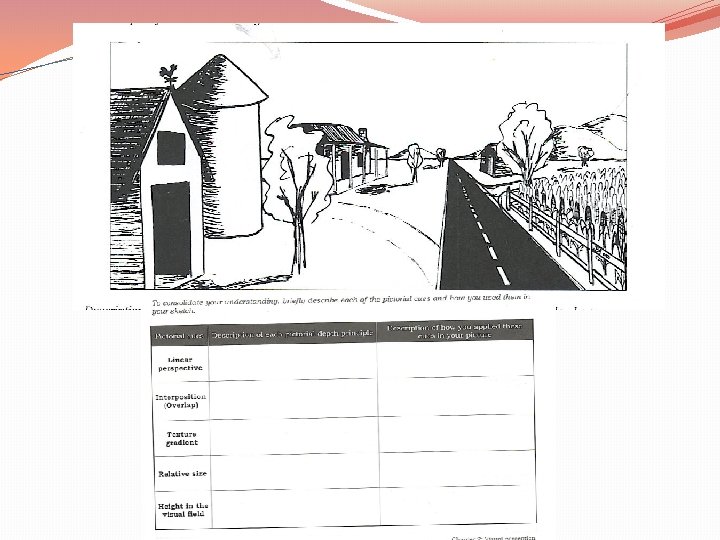
Pictorial depth cues There are many cues that we use in pictures to understand depth Linear perspective Relative size Interposition Height in the visual field Texture gradient
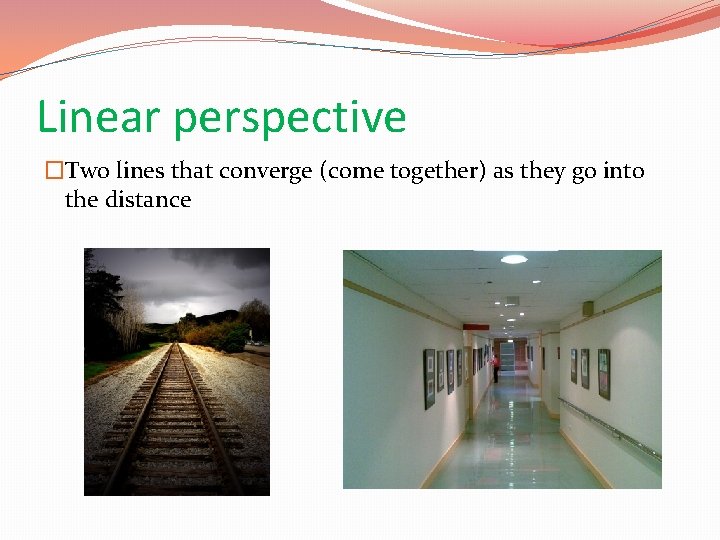
Linear perspective �Two lines that converge (come together) as they go into the distance
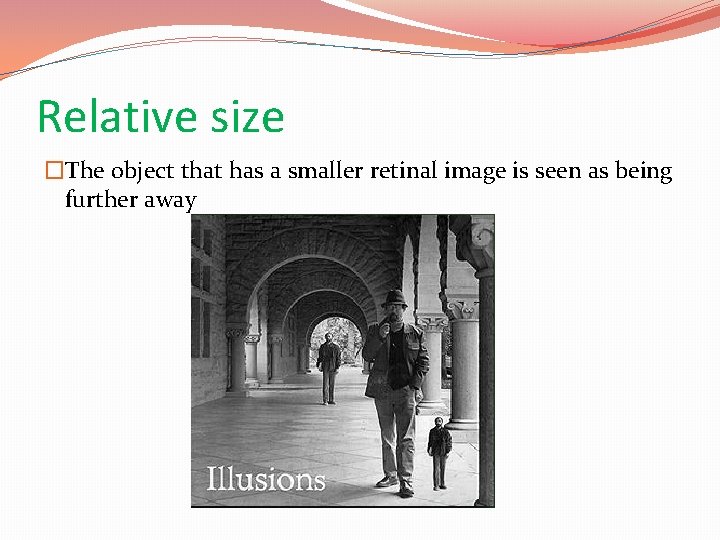
Relative size �The object that has a smaller retinal image is seen as being further away
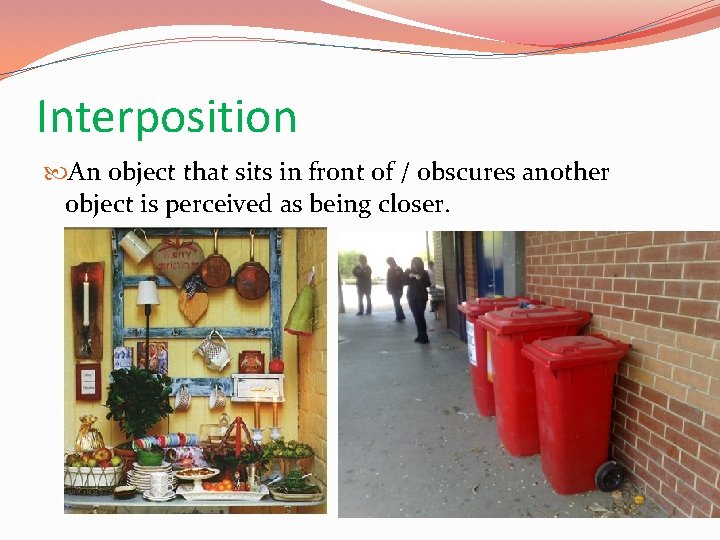
Interposition An object that sits in front of / obscures another object is perceived as being closer.
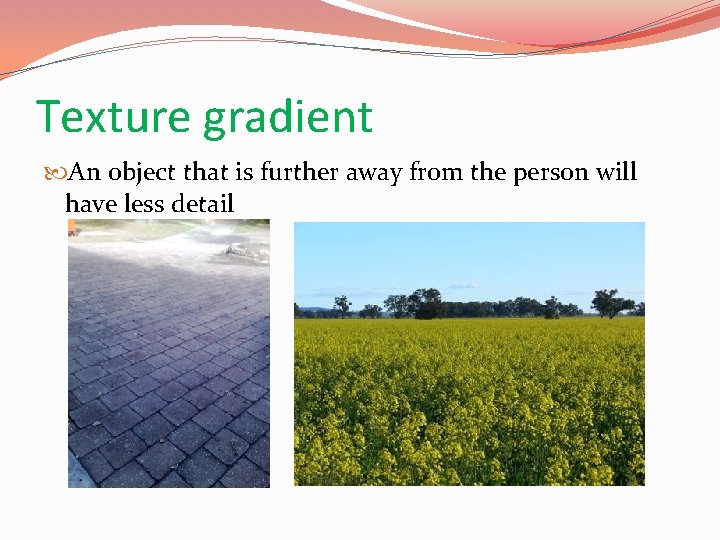
Texture gradient An object that is further away from the person will have less detail
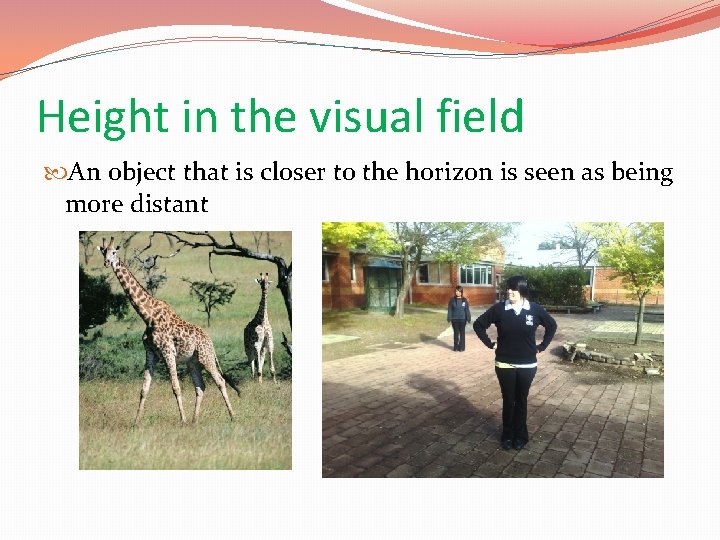
Height in the visual field An object that is closer to the horizon is seen as being more distant
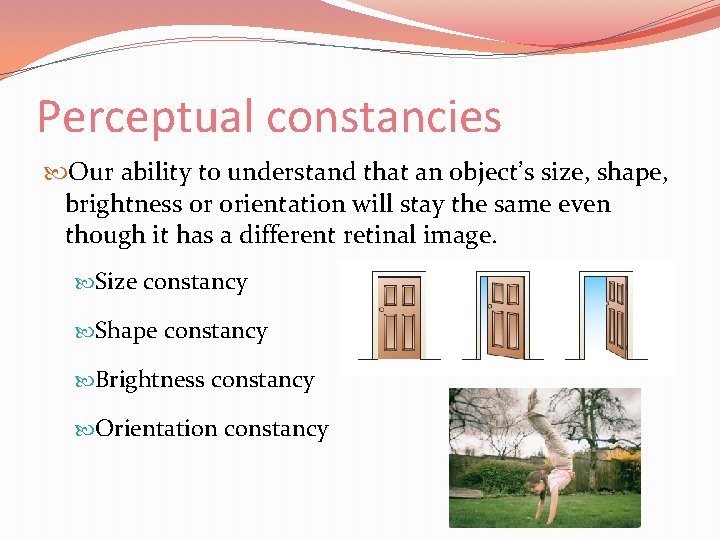
Perceptual constancies Our ability to understand that an object’s size, shape, brightness or orientation will stay the same even though it has a different retinal image. Size constancy Shape constancy Brightness constancy Orientation constancy
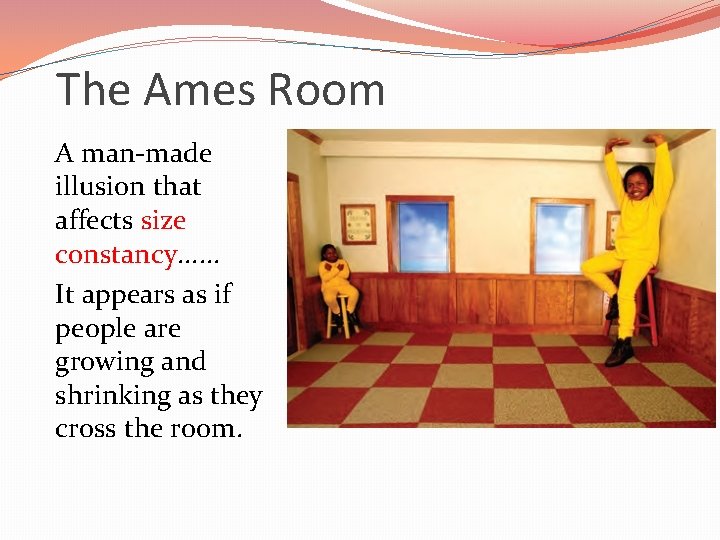
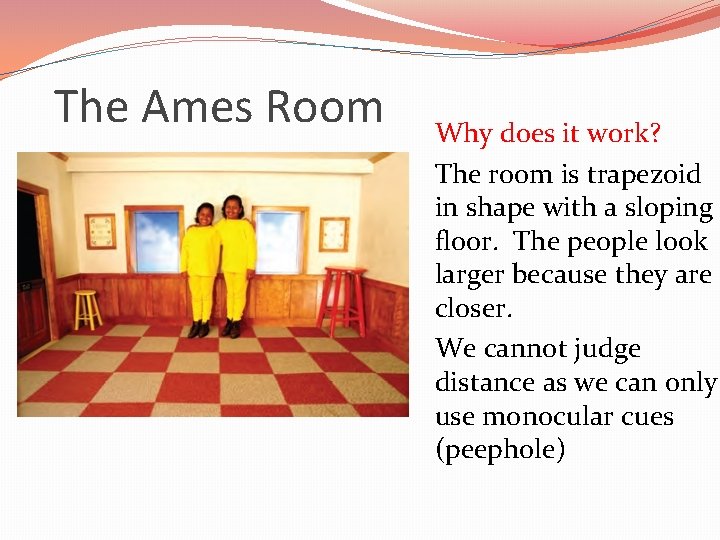
The Ames Room A man-made illusion that affects size constancy. . . It appears as if people are growing and shrinking as they cross the room.
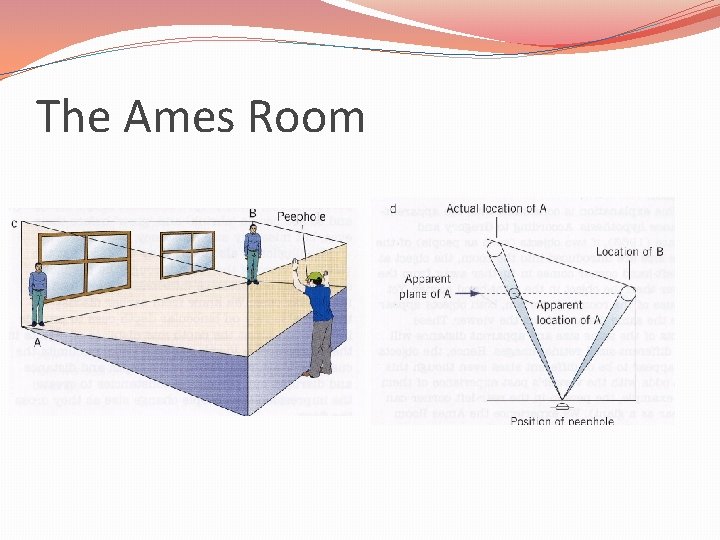
The Ames Room Why does it work? The room is trapezoid in shape with a sloping floor. The people look larger because they are closer. We cannot judge distance as we can only use monocular cues (peephole)
The Ames Room
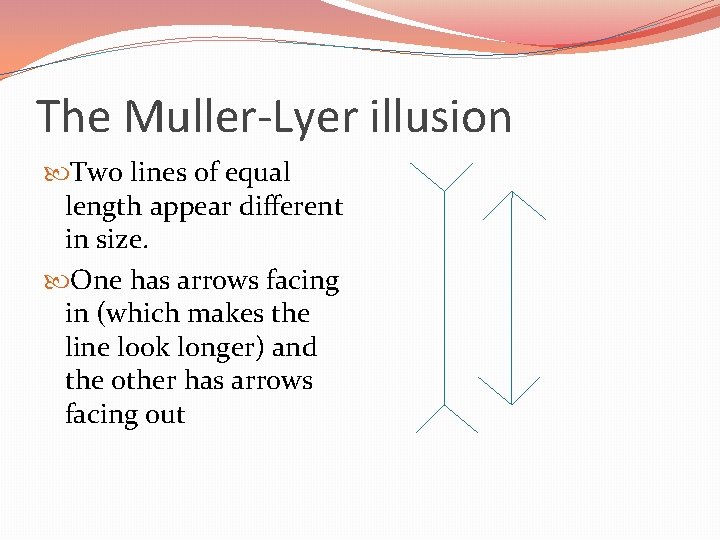
The Muller-Lyer illusion Two lines of equal length appear different in size. One has arrows facing in (which makes the line look longer) and the other has arrows facing out
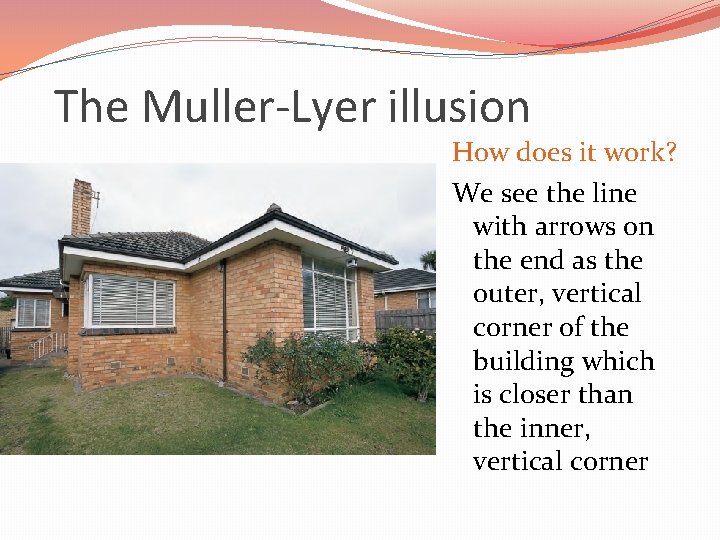
The Muller-Lyer illusion How does it work? We see the line with arrows on the end as the outer, vertical corner of the building which is closer than the inner, vertical corner
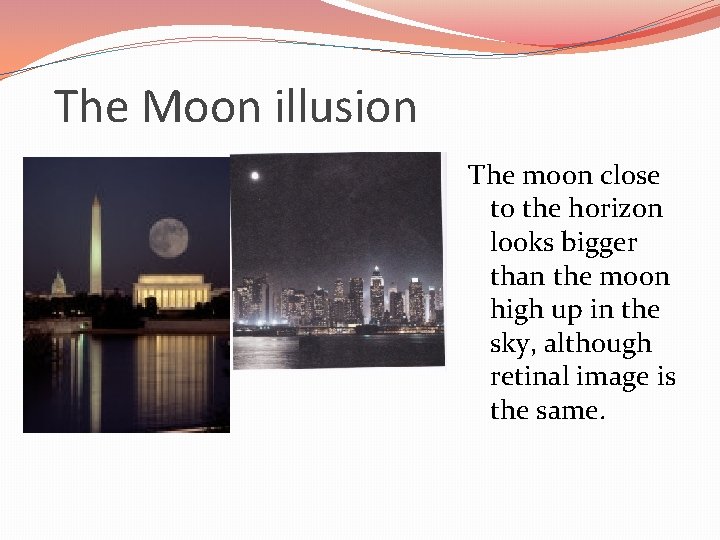
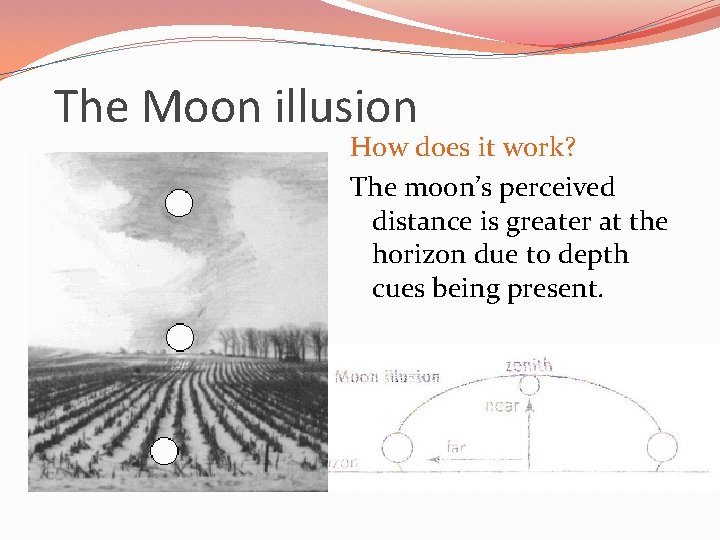
The Moon illusion The moon close to the horizon looks bigger than the moon high up in the sky, although retinal image is the same.
The Moon illusion How does it work? The moon’s perceived distance is greater at the horizon due to depth cues being present.
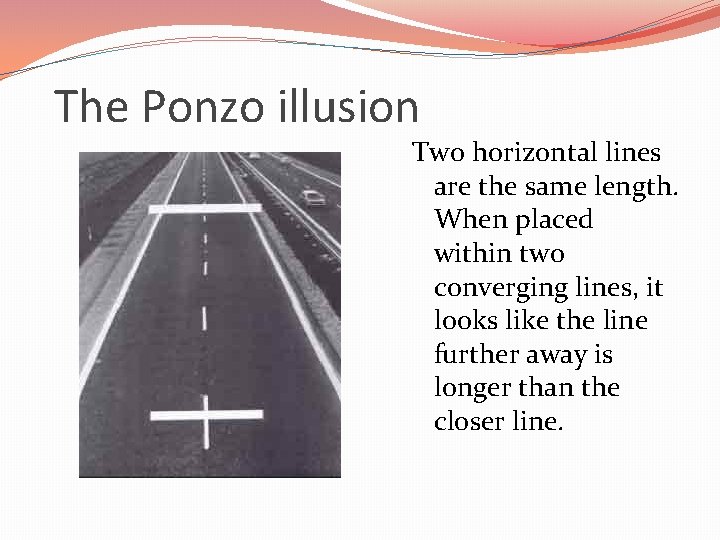
The Ponzo illusion Two horizontal lines are the same length. When placed within two converging lines, it looks like the line further away is longer than the closer line.
The Ponzo illusion How does it work? The top line looks to be further away because we use our pictorial depth cues (linear perspective, Height in the visual field) Also due to size constancy the distant top line appears to be enlarged.