
Introduction to Virology Nature of Viruses Viral genome














- Slides: 19
Introduction to Virology
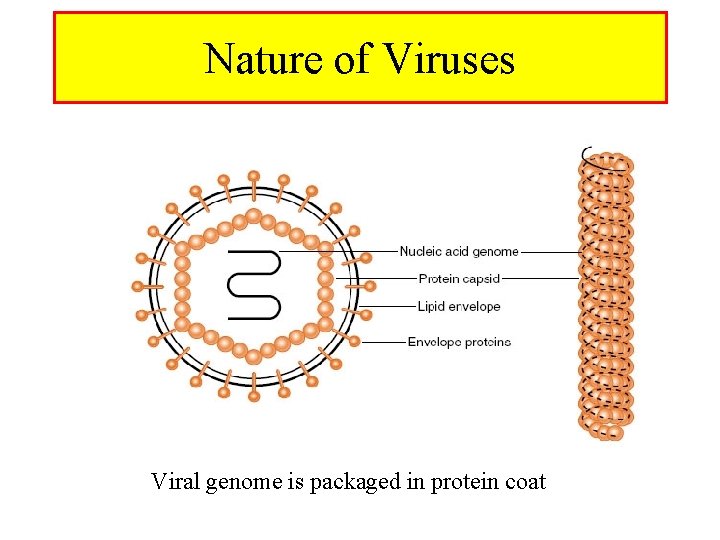
Nature of Viruses Viral genome is packaged in protein coat
Virus Genomes
Nature of Viruses • Viruses need a living cell to survive • Viral genome is released inside the cytoplasm of the host cell • Virus genomes are made of DNA or RNA – Not both – Single stranded (ss) OR double stranded (ds)
Why Study Viruses
Why Study Viruses • Viruses are capable of infecting all forms of life – Vertebrates, prokaryotes, fungi, algae • Most abundant form of life – Bacteriophages are extremely abundant – Estimated 1031 tailed bacteriophages • Excellent molecular biology tools
Viruses And Molecular Biology • Study of viruses small DNA viruses led to discovery of promoters for eukaryotic RNA polymerases • Study of cancer producing viruses led to discovery of many cellular oncogenes • RNA splicing in eukaryotic cells was discovered by studying m. RNA from DNA viruses • Understanding of cellular DNA replication was facilitated by studying phages and DNA viral replication
Major Virology Milestones
Major Virology Milestones • “Phage” group made significant discoveries/contributions to the field of molecular biology • Bacteriophages hold promise as antibiotics • Particularly in antibiotic resistant bacteria • Immune reaction to phages remains a serious obstacle • Study of tumor viruses let to a clearer understanding of cancer
Viruses As Vectors • Viruses can be engineered to carry exogenous genes • The exogenous genes can be inserted in the host’s genome • When utilizing a virus to insert genes into a host, we refer to that virus as a Vector Virus • Vector virus hold promise as therapeutic agents • Immune response remains an issue
Detection And Measurement of Viruses • Plaque Forming Assay • Initially done with bacteriophages and bacteria
Detection And Measurement of Viruses • Hemagglutination Assay • Rapid and convenient
Detection And Measurement of Viruses