
Introduction to Translation Grammatical Equivalence Grammatical Disticntions Languages
- Slides: 27
Introduction to Translation Grammatical Equivalence
Grammatical Disticntions � Languages - use grammatical systems to express distinctions in different areas; such as: Time Number Person Voice, etc.
What is Grammar? � Grammar is a set of rules which determine the way in which units such as words and phrases can be combined in a language. � Languages differ widely in the range of basic categories of grammar.
Grammatical vs. Lexical Categories � Grammar has two dimensions: - Morphology: covers the structure of words and its changes to indicate differences in grammatical systems. E. g. man/men car/cars child/children - Syntax: cover grammatical structure of groups, clauses and sentences, word classes (V. , adv. , adj. ), functional elements (subject, object, predicator. E. g. She had forgotten about the party. (statement) Had she forgotten about the party? (question)
Grammatical vs. Lexical Categories � Choices of structure in any language can be expressed grammatically or lexically. � Choices made from closed systems (number, pronoun…) are considered grammatical. � Choices made from open-ended sets of items are considered lexical.
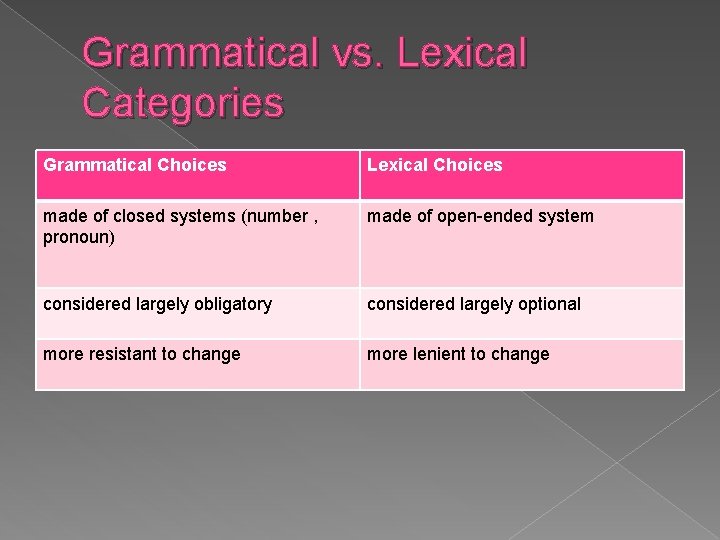
Grammatical vs. Lexical Categories Grammatical Choices Lexical Choices made of closed systems (number , pronoun) made of open-ended system considered largely obligatory considered largely optional more resistant to change more lenient to change
Grammatical vs. Lexical Categories � It is much easier to introduce a new word or expression than to introduce a new rule or grammatical category. � However, a very small number of text types (poems, ads, jokes) might occasionally manipulate grammatical rules to create special effect.
Grammatical vs. Lexical Categories � Changing grammatical systems are not acceptable in most contexts, which makes translation harder forcing the translator to use a grammatical choice that is not close to the one used in the ST.
Diversity of Grammatical Categories across Languages � It is difficult to find a grammatical category that is regularly and uniformly expressed in all languages. � Even categories such as time and number are obligatory in some languages and optional in others.
Diversity of Grammatical Categories across Languages � Differences in the grammatical structures of the SL and TL often result in some change in the information during the process of translation. Changes may take the form of: 1 - adding to the TT information that is not mentioned in the ST. 2 - omitting information specified in the ST.
Diversity of Grammatical Categories across Languages � These changes might lead to problems in the translation process. As adding and omitting information may indicate the importance of an insignificant ones and vice versa.
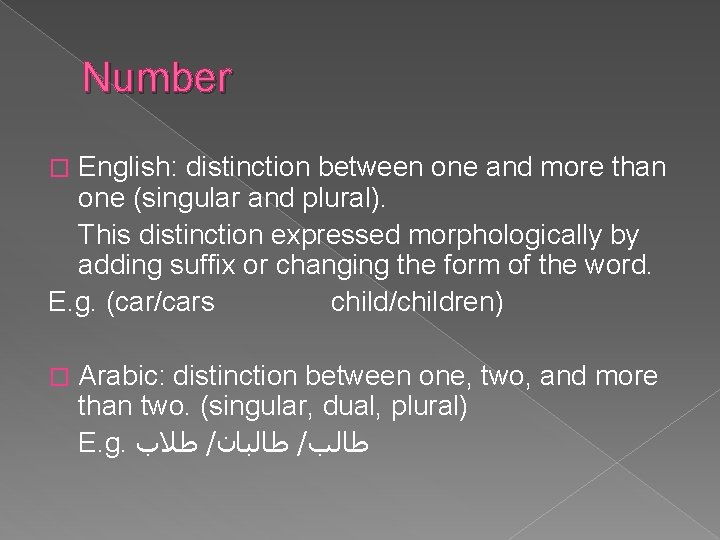
Grammatical Categories Number � The idea of countability is probably universal being accessible to all human beings and is expressed lexically in all languages. However, not all languages have a grammatical category of number.
Number English: distinction between one and more than one (singular and plural). This distinction expressed morphologically by adding suffix or changing the form of the word. E. g. (car/cars child/children) � � Arabic: distinction between one, two, and more than two. (singular, dual, plural) E. g. ﻃﻼﺏ / ﻃﺎﻟﺒﺎﻥ / ﻃﺎﻟﺐ
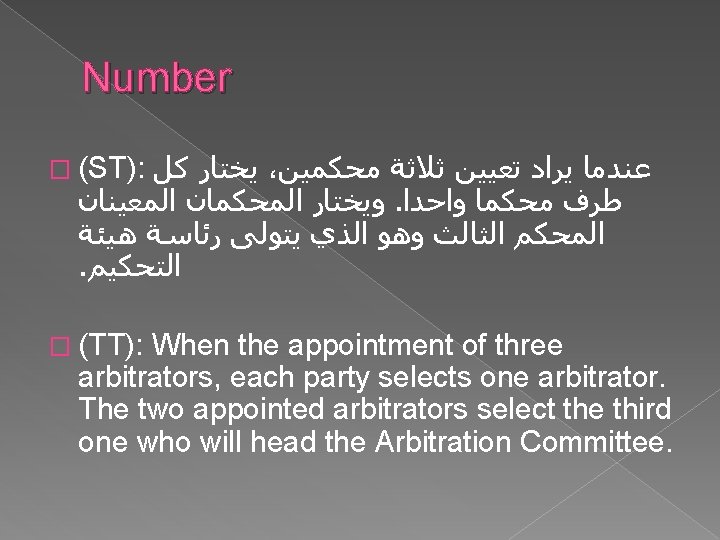
Number �A translator working on a language which has number distinctions into a language with no category of number has two main options: 1 - omit the relevant information on number; 2 - encode it lexically.
Number � The translator must be careful not to overspecify information in order not to produce an unnatural text.
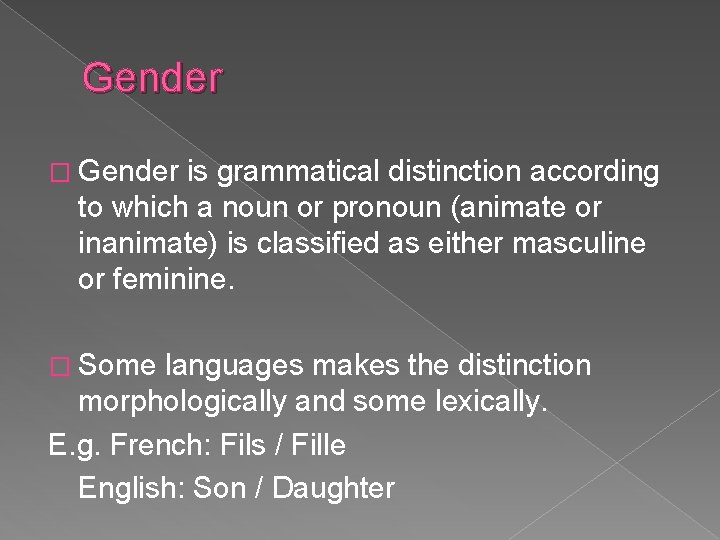
Gender � Gender is grammatical distinction according to which a noun or pronoun (animate or inanimate) is classified as either masculine or feminine. � Some languages makes the distinction morphologically and some lexically. E. g. French: Fils / Fille English: Son / Daughter
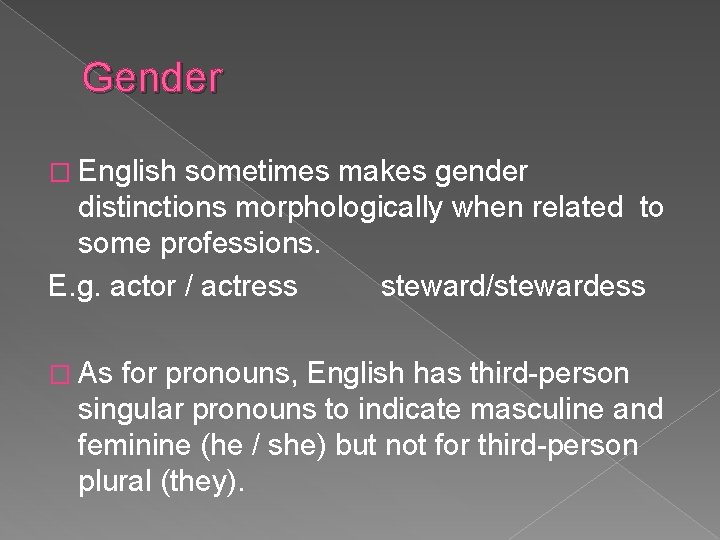
Gender � English sometimes makes gender distinctions morphologically when related to some professions. E. g. actor / actress steward/stewardess � As for pronouns, English has third-person singular pronouns to indicate masculine and feminine (he / she) but not for third-person plural (they).
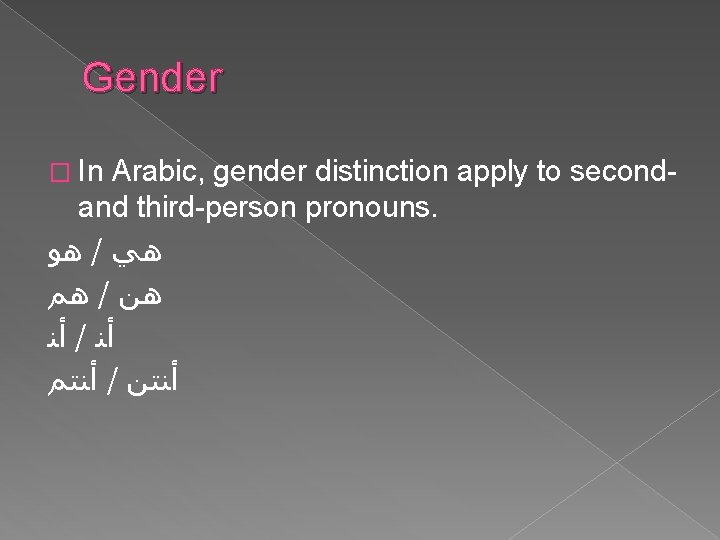
Gender � In Arabic, gender distinction apply to secondand third-person pronouns. ﻫﻮ / ﻫﻲ ﻫﻢ / ﻫﻦ ﺃﻨ / ﺃﻨ ﺃﻨﺘﻢ / ﺃﻨﺘﻦ
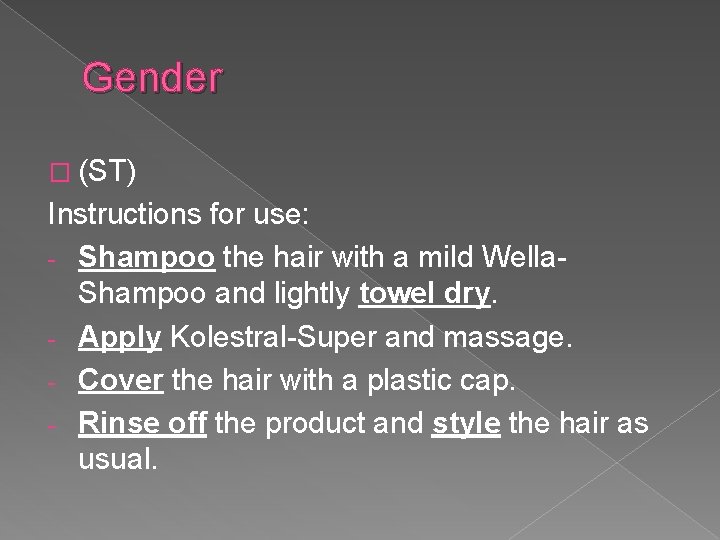
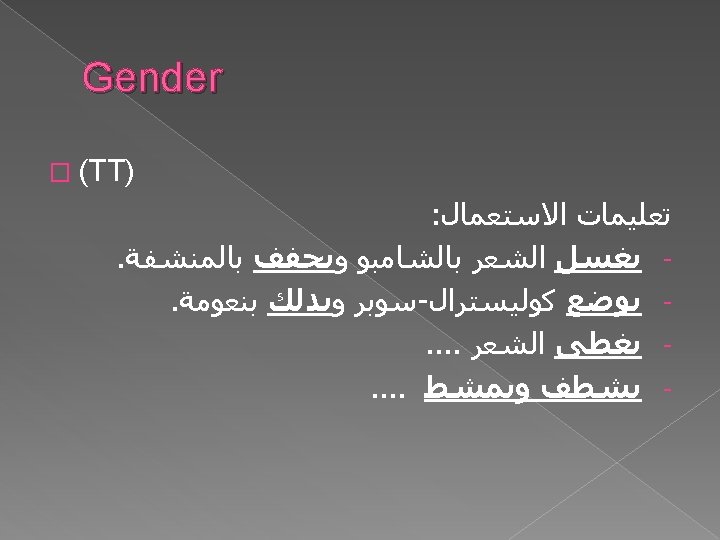
Gender � (ST) Instructions for use: - Shampoo the hair with a mild Wella. Shampoo and lightly towel dry. - Apply Kolestral-Super and massage. - Cover the hair with a plastic cap. - Rinse off the product and style the hair as usual.
Person � This category relates to the notion of participant roles. In most languages participant roles are systematically defined through closed system of pronouns.
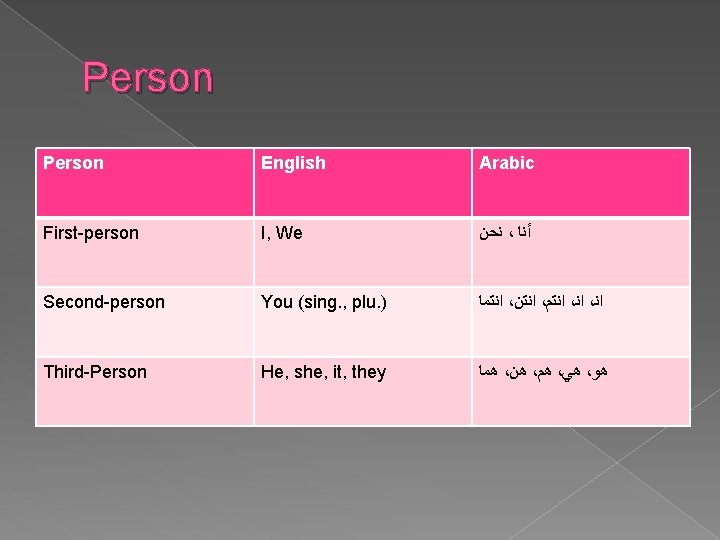
Person English Arabic First-person I, We ﻧﺤﻦ ، ﺃﻨﺎ Second-person You (sing. , plu. ) ﺍﻧﺘﻤﺎ ، ﺍﻧﺘﻦ ، ﺍﻧﺘﻢ ، ﺍﻧ Third-Person He, she, it, they ﻫﻤﺎ ، ﻫﻦ ، ﻫﻢ ، ﻫﻲ ، ﻫﻮ
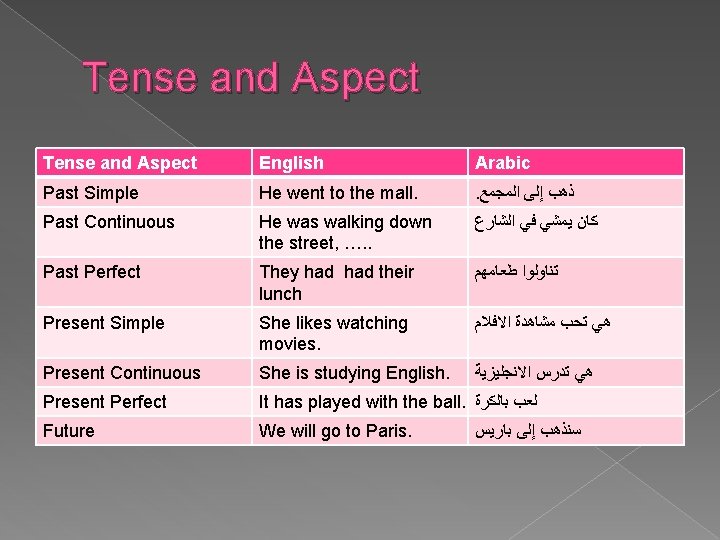
Tense and Aspect � Tense and aspect are grammatical categories in a large number of languages. � The form of the verb indicates time (past, present, future) and aspect (completion, continuation, momentariness)
Tense and Aspect English Arabic Past Simple He went to the mall. . ﺫﻫﺐ ﺇﻟﻰ ﺍﻟﻤﺠﻤﻊ Past Continuous He was walking down the street, …. . ﻛﺎﻥ ﻳﻤﺸﻲ ﻓﻲ ﺍﻟﺸﺎﺭﻉ Past Perfect They had their lunch ﺗﻨﺎﻭﻟﻮﺍ ﻃﻌﺎﻣﻬﻢ Present Simple She likes watching movies. ﻫﻲ ﺗﺤﺐ ﻣﺸﺎﻫﺪﺓ ﺍﻻﻓﻼﻡ Present Continuous She is studying English. ﻫﻲ ﺗﺪﺭﺱ ﺍﻻﻧﺠﻠﻴﺰﻳﺔ Present Perfect It has played with the ball. ﻟﻌﺐ ﺑﺎﻟﻜﺮﺓ Future We will go to Paris. ﺳﻨﺬﻫﺐ ﺇﻟﻰ ﺑﺎﺭﻳﺲ
Voice � Passive voice is used in English frequently, especially in technical and scientific texts. Therefore, when translating passive voice into other languages that don’t include such grammatical category, or doesn’t use it as frequent as English, it might generate a difficulty.
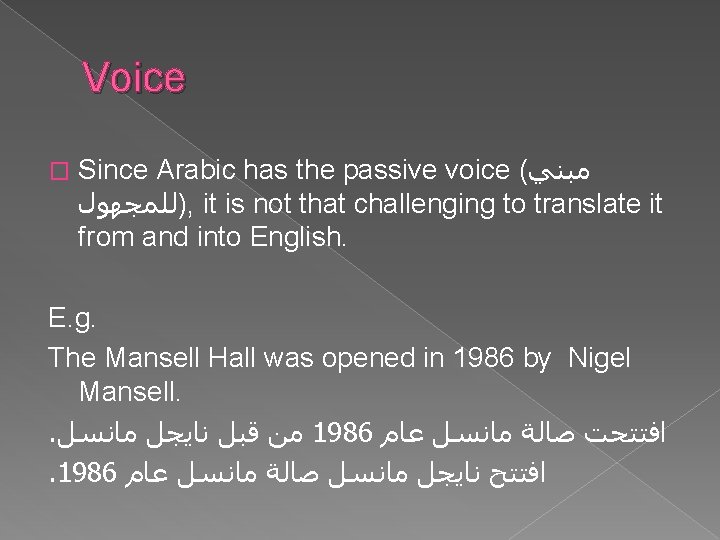
Voice � Since Arabic has the passive voice ( ﻣﺒﻨﻲ )ﻟﻠﻤﺠﻬﻮﻝ , it is not that challenging to translate it from and into English. E. g. The Mansell Hall was opened in 1986 by Nigel Mansell. . ﻣﻦ ﻗﺒﻞ ﻧﺎﻳﺠﻞ ﻣﺎﻧﺴﻞ 1986 ﺍﻓﺘﺘﺤﺖ ﺻﺎﻟﺔ ﻣﺎﻧﺴﻞ ﻋﺎﻡ . 1986 ﺍﻓﺘﺘﺢ ﻧﺎﻳﺠﻞ ﻣﺎﻧﺴﻞ ﺻﺎﻟﺔ ﻣﺎﻧﺴﻞ ﻋﺎﻡ