
Introduction to Toxicity and LD 50 Based on
Introduction to Toxicity and LD 50 Based on How Toxic is Toxic? Chem. Matters, Dec. 2014 Chemical Hazard Awareness Module Supplement Sponsored by WA State Department of Ecology (http: //www. ecy. wa. gov/greenchemistry/)
Toxicity • Toxicity is a property of a chemical • How toxic a substance is depends on: – How it enters the body • Mouth, skin, lungs, injection? – How much is taken • “The dose makes the poison. ”
Measuring Toxicity • LD 50 – dose required to kill 50% of a test population – “LD” = lethal dose – Measures acute, or short-term, toxicity – Units: mg of substance per kg body mass (mg/kg)
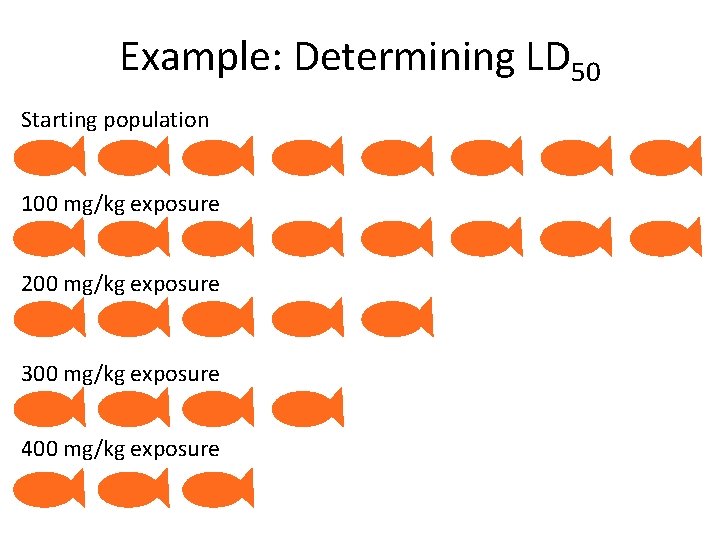
Example: Determining LD 50 Starting population 100 mg/kg exposure 200 mg/kg exposure 300 mg/kg exposure 400 mg/kg exposure

Example: Determining LD 50 Starting population 100 mg/kg exposure 200 mg/kg exposure 300 mg/kg exposure 400 mg/kg exposure LD 50

LD 50 and humans • Lower LD 50 means more toxic • To know lethal dose for human – Need weight in kg (1 kg = 2. 2 lbs) If 1 g of substance kills 5 out 10 rats with weights of 1 kg, how much of the substance would have the same effect on a human weighing 45 kg (~100 lbs)?
LD 50 and humans • Lower LD 50 means more toxic • To know lethal dose for human – Need weight in kg (1 kg = 2. 2 lbs) If 1 g of substance kills 5 out 10 rats with weights of 1 kg, how much of the substance would have the same effect on a human weighing 45 kg (~100 lbs)? Answer: 45 g
Everyday Products • Common everyday products can be toxic – Even too much water can be toxic • Knowing LD 50 values of toxins of concern can help • Examples: – Vitamin D in milk – Sodium fluoride in toothpaste – Caffeine Fun link: http: //www. caffeineinformer. com/deathby-caffeine
Limitations of LD 50 • Only for acute toxicity • Cannot provide information on chronic, or long-term, toxicity – Example: Lead will build up in the body over time and result in poisoning when concentration becomes too high.
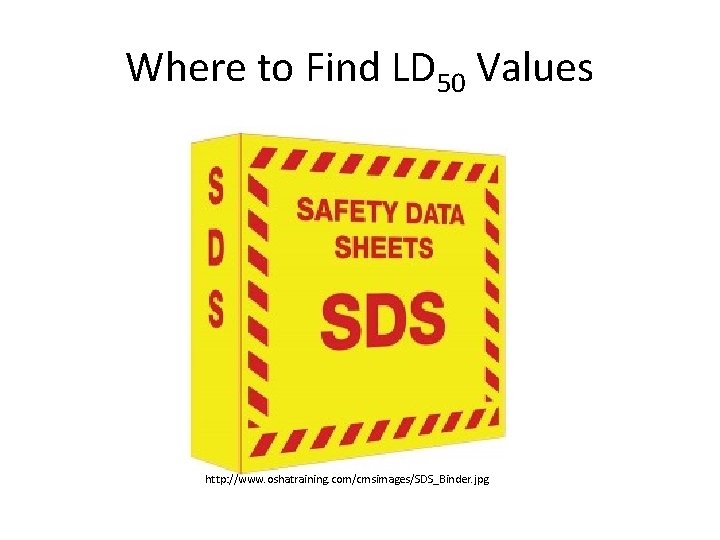
Where to Find LD 50 Values http: //www. oshatraining. com/cmsimages/SDS_Binder. jpg
Toxic vs. Hazardous • Toxicity is a property of a chemical that cannot be changed • Hazards can vary and depend on – Transportation – Storage – Use • Lab safety rules are used to minimize hazards
Toxic vs. Poisonous • Poisoning is a result of toxicity • Poisonousness results from – Type of exposure – Dose – Toxicity of substance – Natural processes to remove chemical from body – Natural differences between individuals
LD 50 versus LC 50 • LD = Lethal Dose • LC = Lethal Concentration – Used in measuring aquatic toxicity – Same concept as for humans, but applied to aquatic organisms • Fish, crustacea, daphnia, algae

- Slides: 14