
Introduction to Thermal Radiation and Radiation Heat Transfer
- Slides: 51
Introduction to Thermal Radiation and Radiation Heat Transfer
Thermal Radiation • • Occurs in solids, liquids, and gases Occurs at the speed of light Has no attenuation in a vacuum Can occur between two bodies with a colder medium in between • Occurs in combination with conduction and convection, and significant where large temperature differences occur • Applications: Furnace with boiler tubes, radiant dryers, oven baking, designing heaters for manufacturing, estimating heat gains through windows, infrared cameras, metal cooling during manufacturing, Greenhouse effect, thermos design, among others.
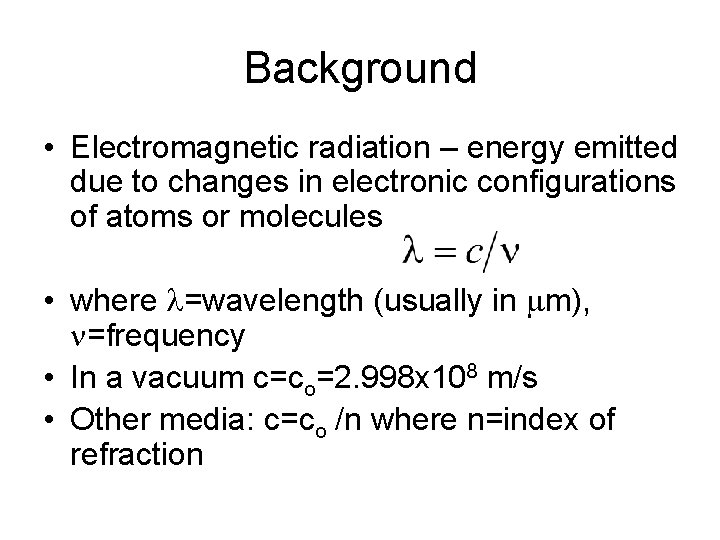
Background • Electromagnetic radiation – energy emitted due to changes in electronic configurations of atoms or molecules • where l=wavelength (usually in mm), n=frequency • In a vacuum c=co=2. 998 x 108 m/s • Other media: c=co /n where n=index of refraction
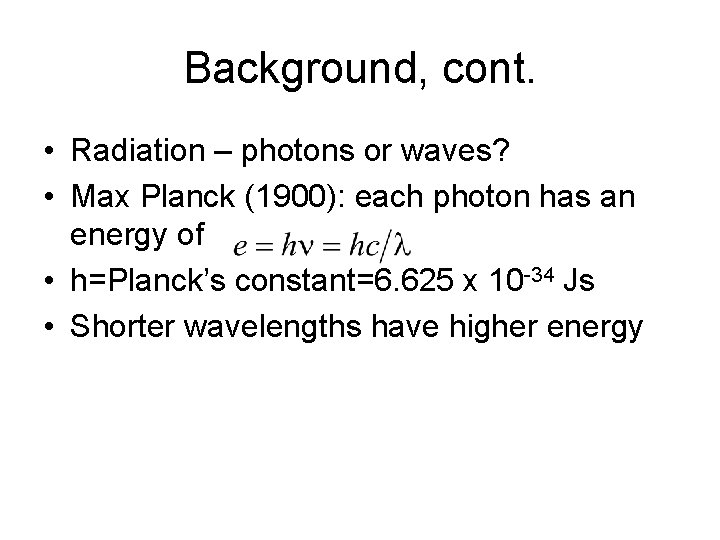
Background, cont. • Radiation – photons or waves? • Max Planck (1900): each photon has an energy of • h=Planck’s constant=6. 625 x 10 -34 Js • Shorter wavelengths have higher energy
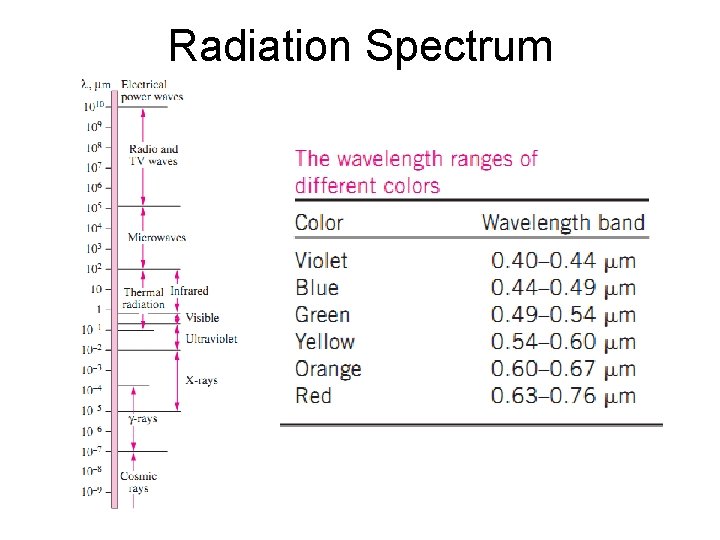
Radiation Spectrum
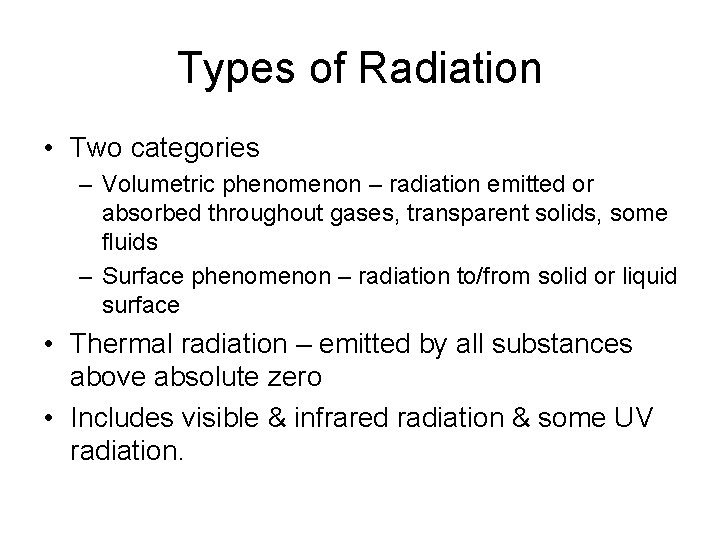
Types of Radiation • Two categories – Volumetric phenomenon – radiation emitted or absorbed throughout gases, transparent solids, some fluids – Surface phenomenon – radiation to/from solid or liquid surface • Thermal radiation – emitted by all substances above absolute zero • Includes visible & infrared radiation & some UV radiation.
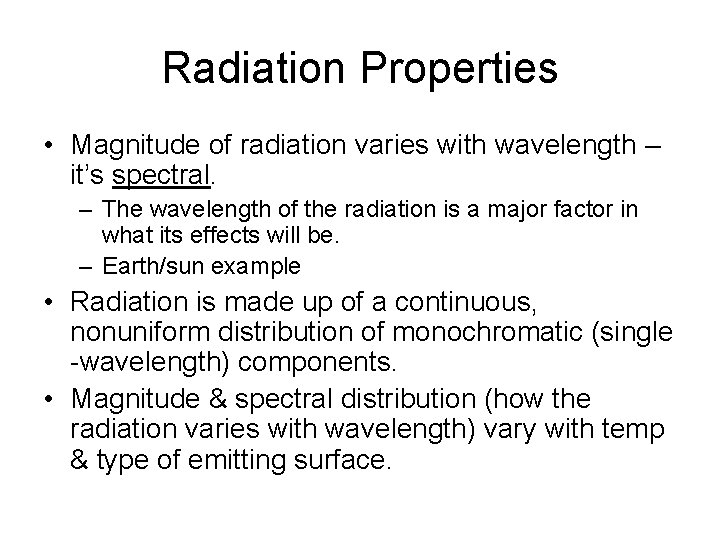
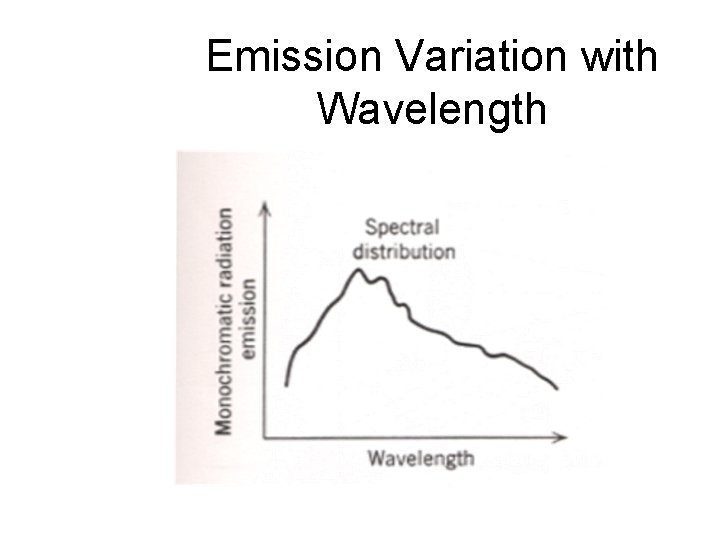
Radiation Properties • Magnitude of radiation varies with wavelength – it’s spectral. – The wavelength of the radiation is a major factor in what its effects will be. – Earth/sun example • Radiation is made up of a continuous, nonuniform distribution of monochromatic (single -wavelength) components. • Magnitude & spectral distribution (how the radiation varies with wavelength) vary with temp & type of emitting surface.
Emission Variation with Wavelength
Blackbody Radiation • Blackbody – a perfect emitter & absorber of radiation; it absorbs all incident radiation, and no surface can emit more for a given temperature and wavelength • Emits radiation uniformly in all directions – no directional distribution – it’s diffuse • Example of a blackbody: large cavity with a small hole
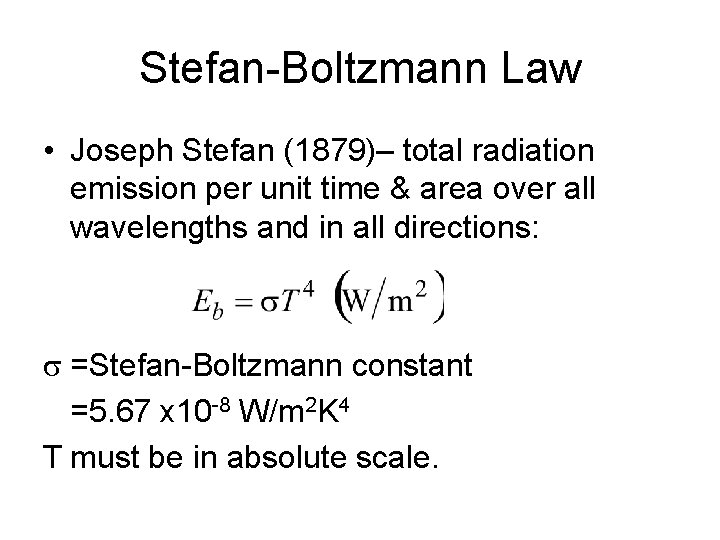
Stefan-Boltzmann Law • Joseph Stefan (1879)– total radiation emission per unit time & area over all wavelengths and in all directions: s =Stefan-Boltzmann constant =5. 67 x 10 -8 W/m 2 K 4 T must be in absolute scale.
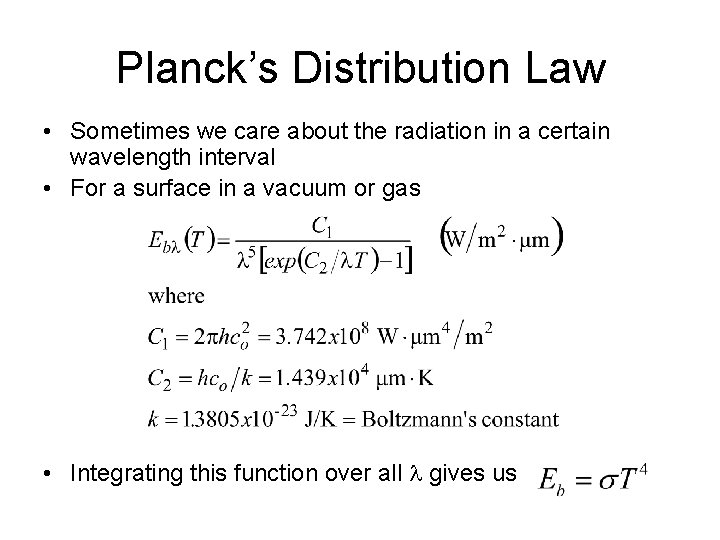
Planck’s Distribution Law • Sometimes we care about the radiation in a certain wavelength interval • For a surface in a vacuum or gas • Integrating this function over all l gives us
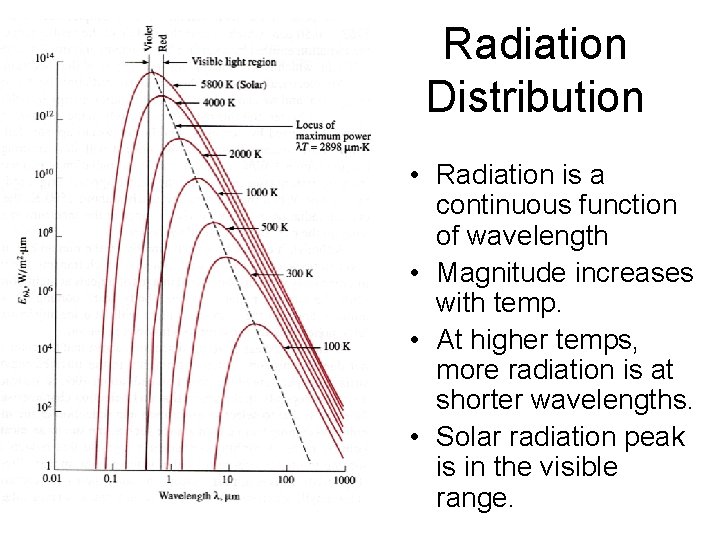
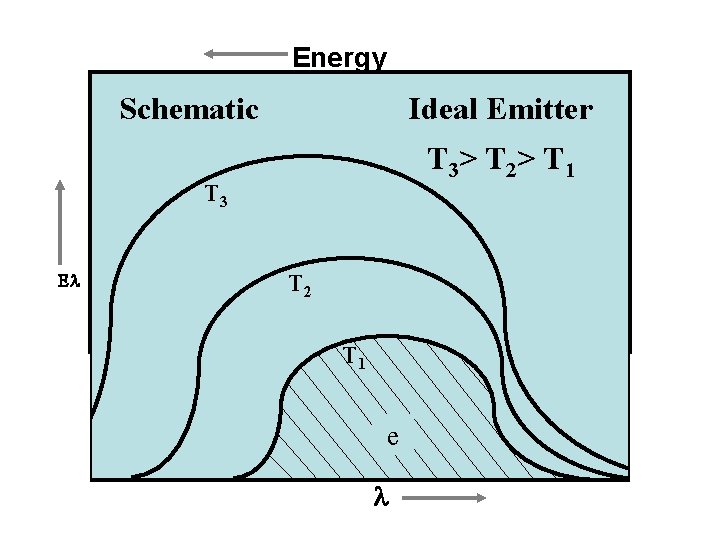
Radiation Distribution • Radiation is a continuous function of wavelength • Magnitude increases with temp. • At higher temps, more radiation is at shorter wavelengths. • Solar radiation peak is in the visible range.
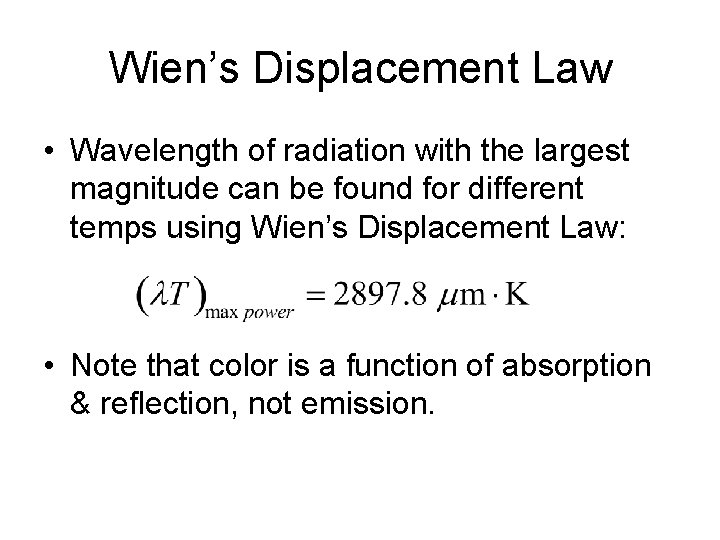
Wien’s Displacement Law • Wavelength of radiation with the largest magnitude can be found for different temps using Wien’s Displacement Law: • Note that color is a function of absorption & reflection, not emission.
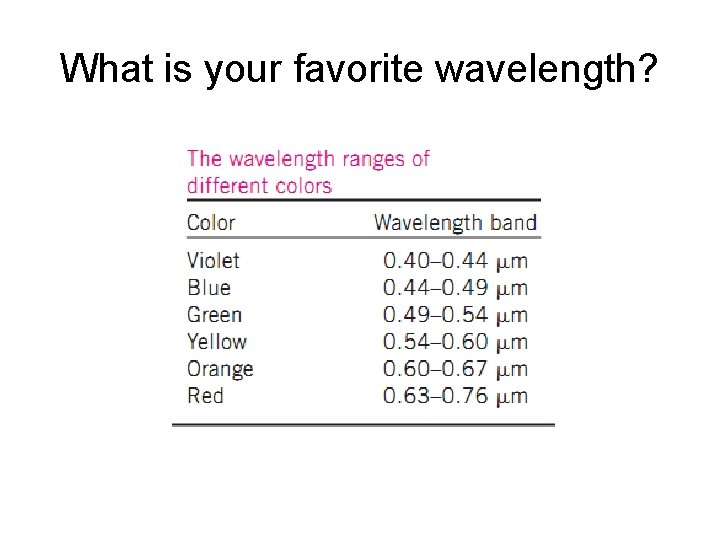
What is your favorite wavelength?
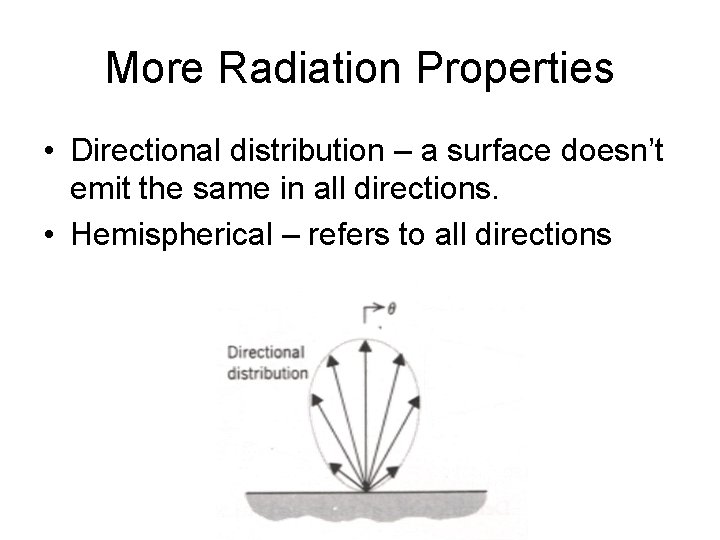
More Radiation Properties • Directional distribution – a surface doesn’t emit the same in all directions. • Hemispherical – refers to all directions
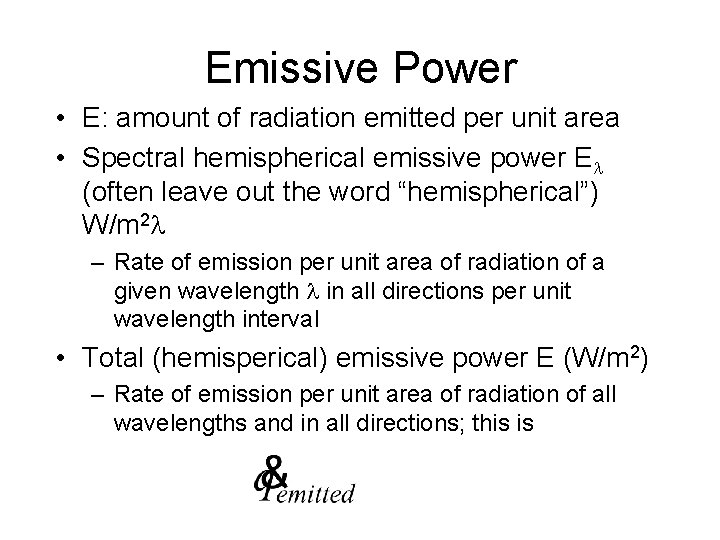
Emissive Power • E: amount of radiation emitted per unit area • Spectral hemispherical emissive power El (often leave out the word “hemispherical”) W/m 2 l – Rate of emission per unit area of radiation of a given wavelength l in all directions per unit wavelength interval • Total (hemisperical) emissive power E (W/m 2) – Rate of emission per unit area of radiation of all wavelengths and in all directions; this is
Diffuse emitters • Diffuse emitter: intensity is the same in all directions
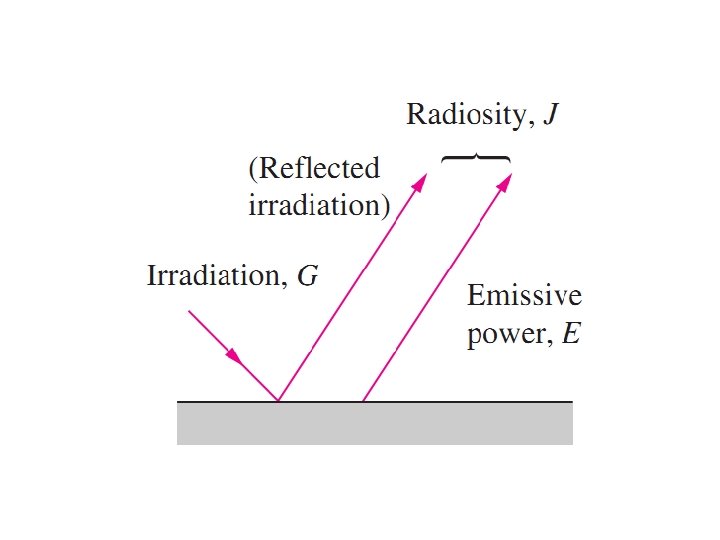
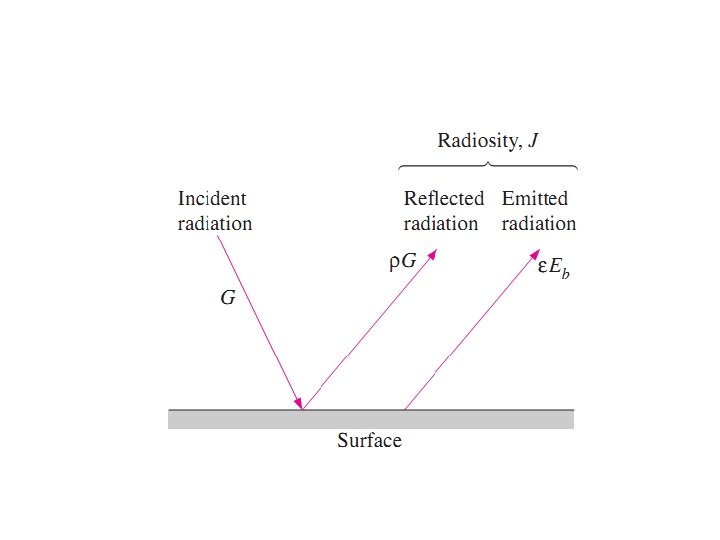
Irradiation • Irradiation: radiation incident on (hitting) a surface per unit area
Radiosity • Radiosity: all radiation leaving a surface per unit area, both emitted and reflected
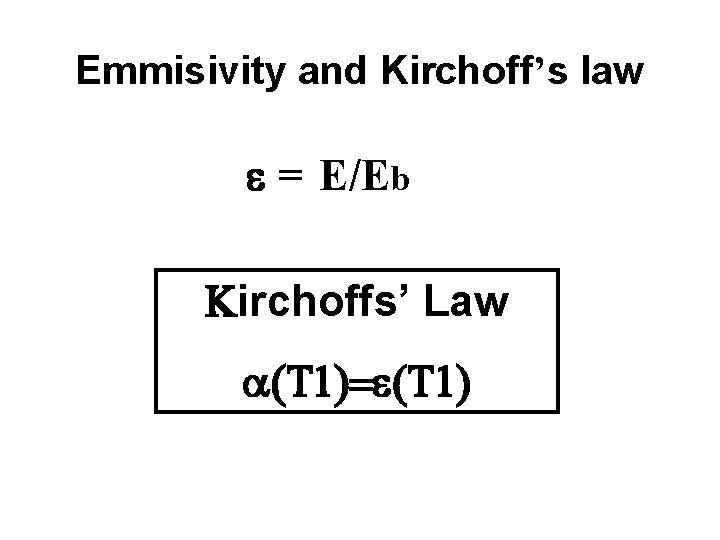
Emmisivity and Kirchoff’s law e = E/Eb Kirchoffs’ Law a(T 1)=e(T 1)
Energy Schematic Ideal Emitter T 3> T 2> T 1 T 3 El T 2 T 1 e l
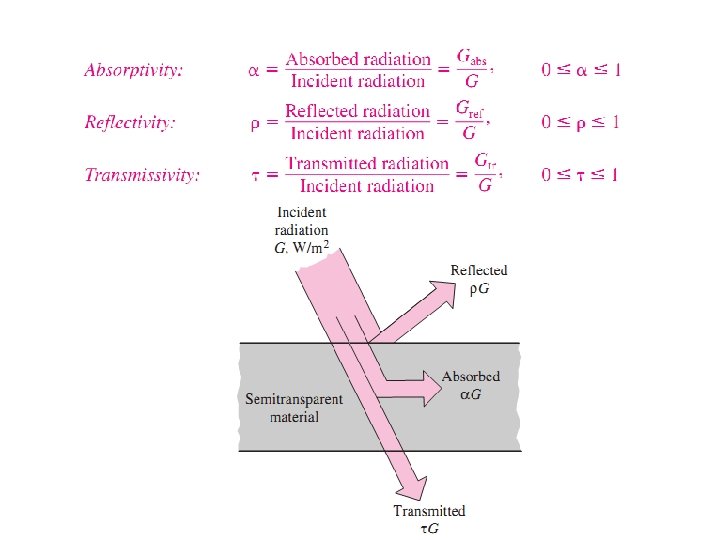
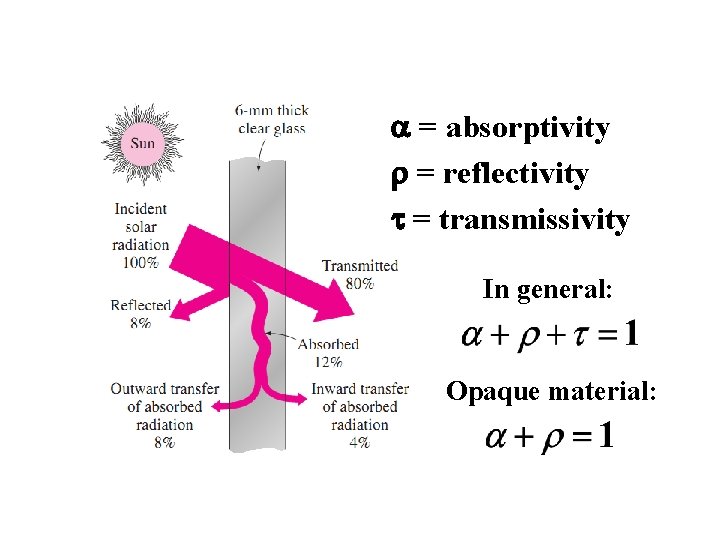
a = absorptivity r = reflectivity t = transmissivity In general: Opaque material:
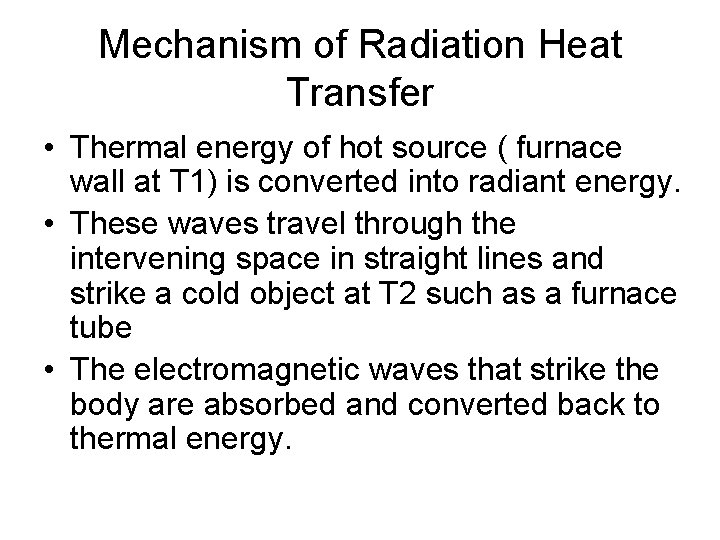
Mechanism of Radiation Heat Transfer • Thermal energy of hot source ( furnace wall at T 1) is converted into radiant energy. • These waves travel through the intervening space in straight lines and strike a cold object at T 2 such as a furnace tube • The electromagnetic waves that strike the body are absorbed and converted back to thermal energy.
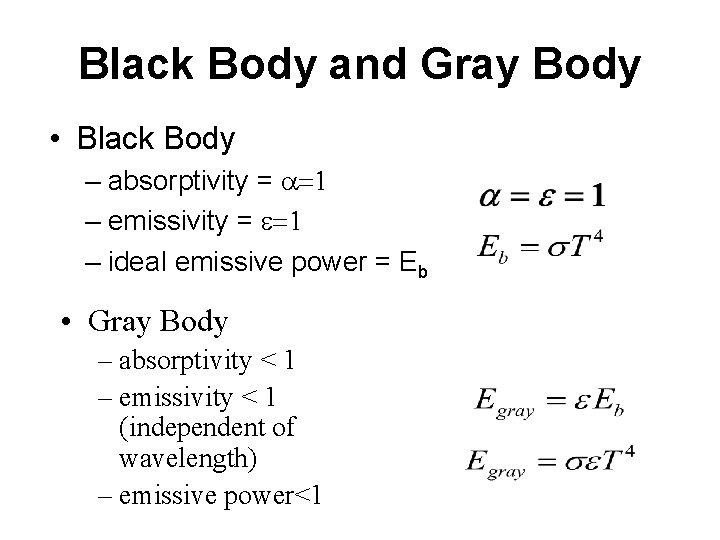
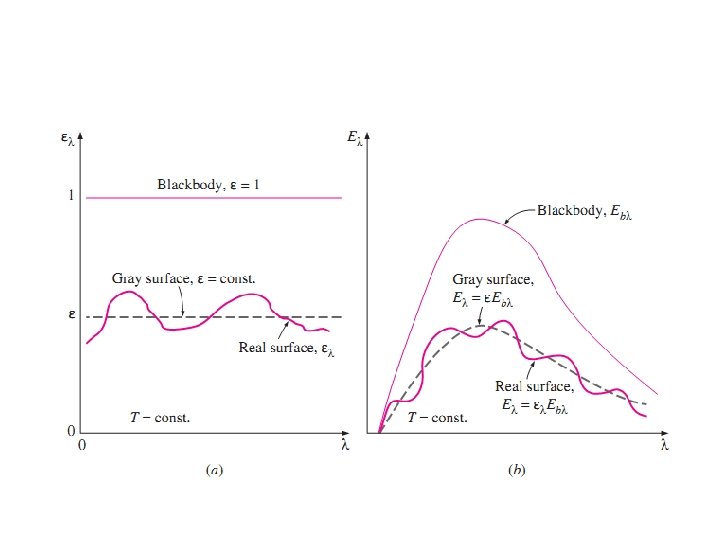
Black Body and Gray Body • Black Body – absorptivity = a=1 – emissivity = e=1 – ideal emissive power = Eb • Gray Body – absorptivity < 1 – emissivity < 1 (independent of wavelength) – emissive power<1
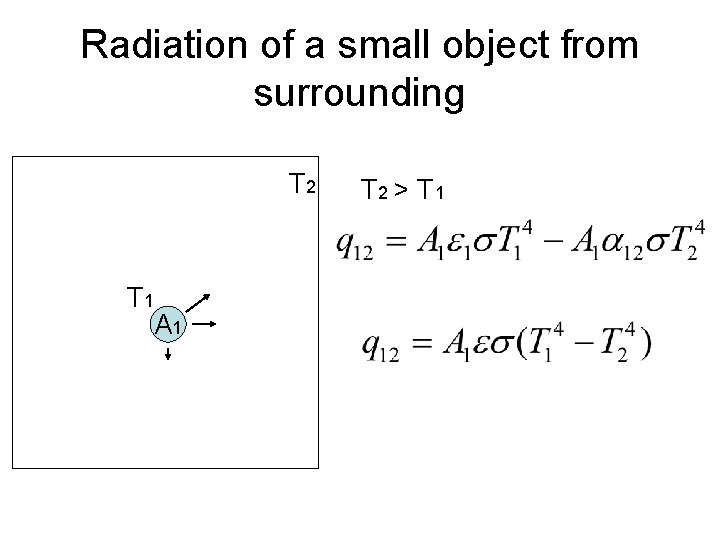
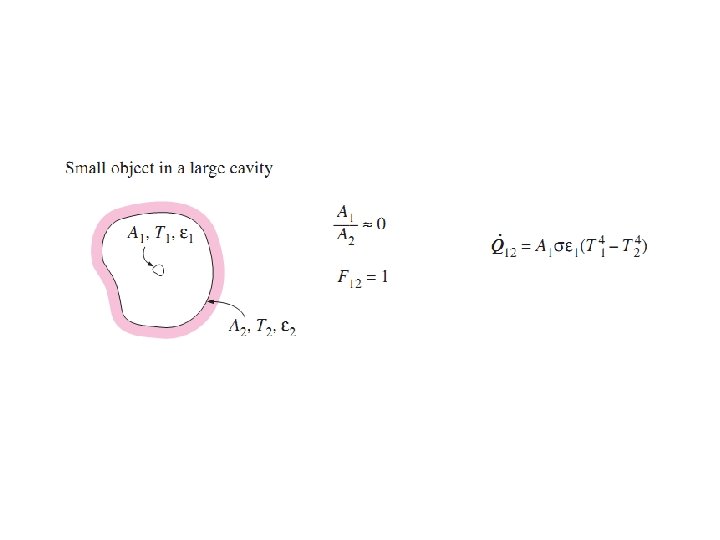
Radiation of a small object from surrounding T 2 T 1 A 1 T 2 > T 1
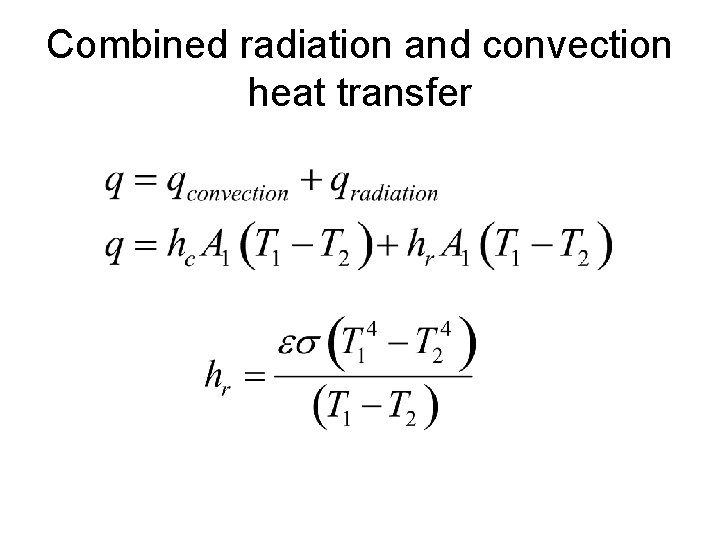
Combined radiation and convection heat transfer
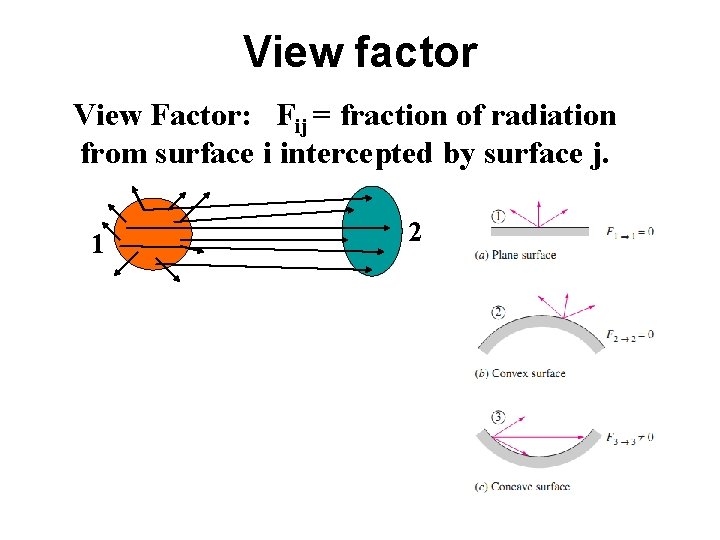
View factor View Factor: Fij = fraction of radiation from surface i intercepted by surface j. 1 2
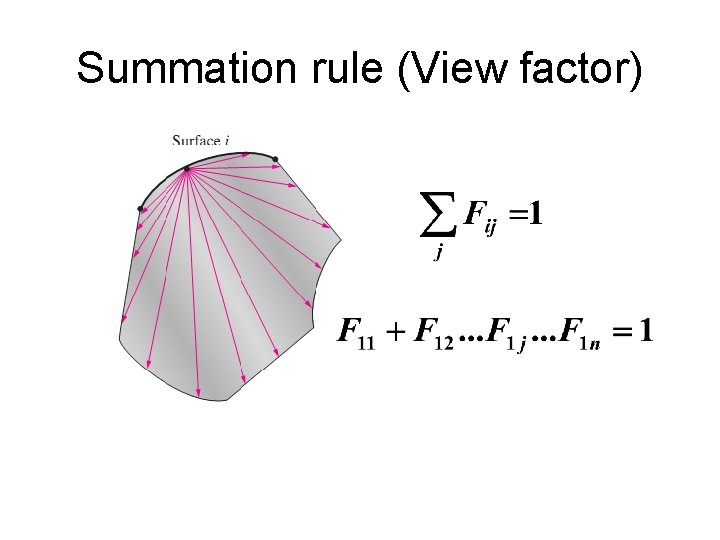
Summation rule (View factor)
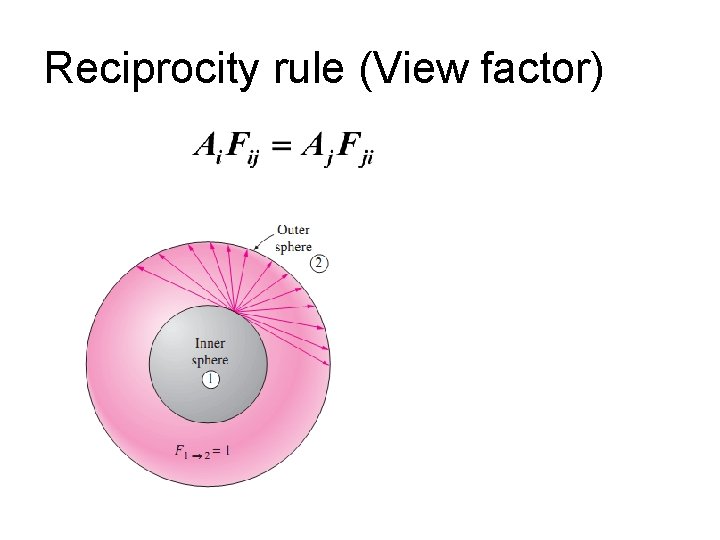
Reciprocity rule (View factor)
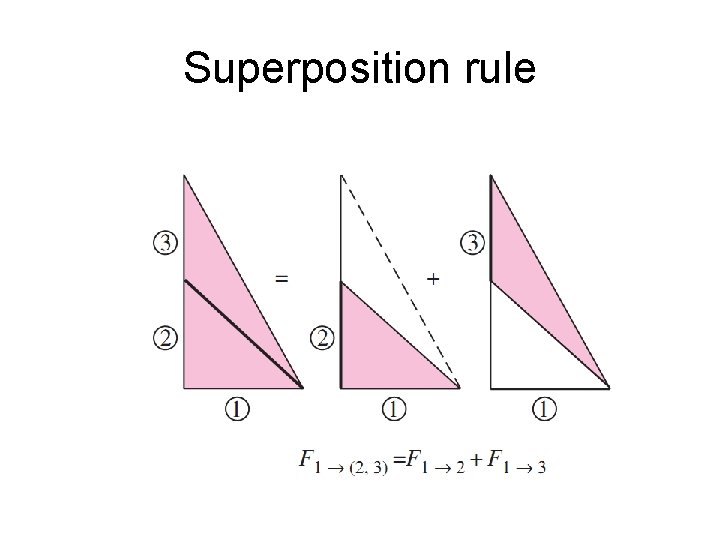
Superposition rule
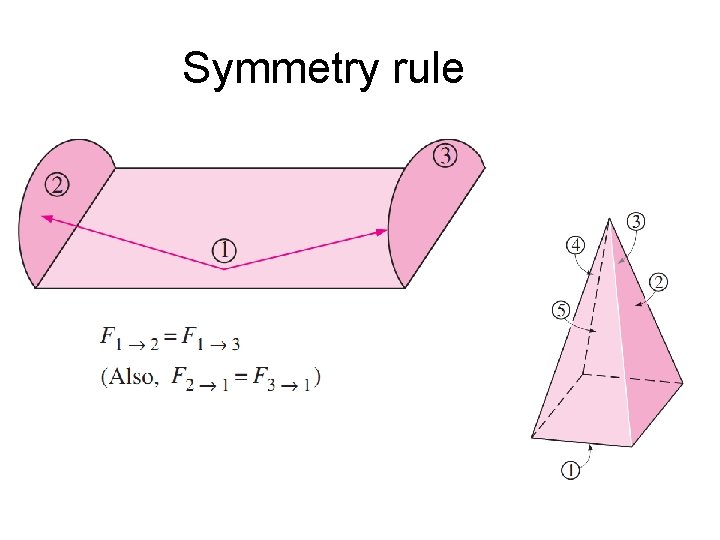
Symmetry rule
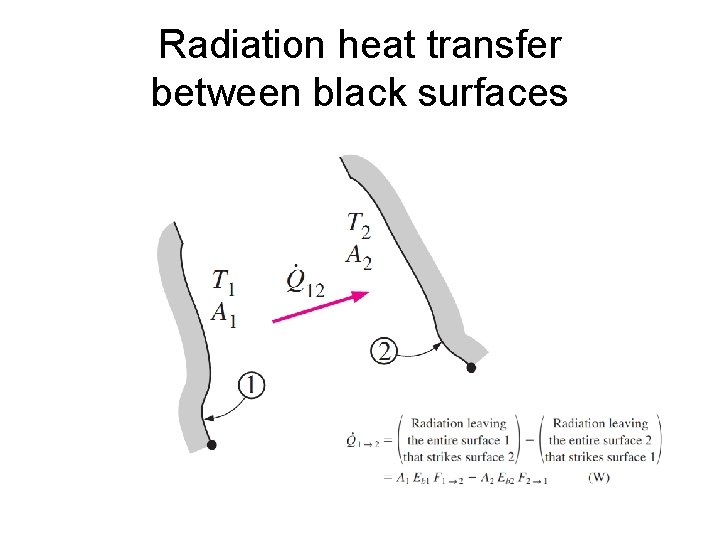
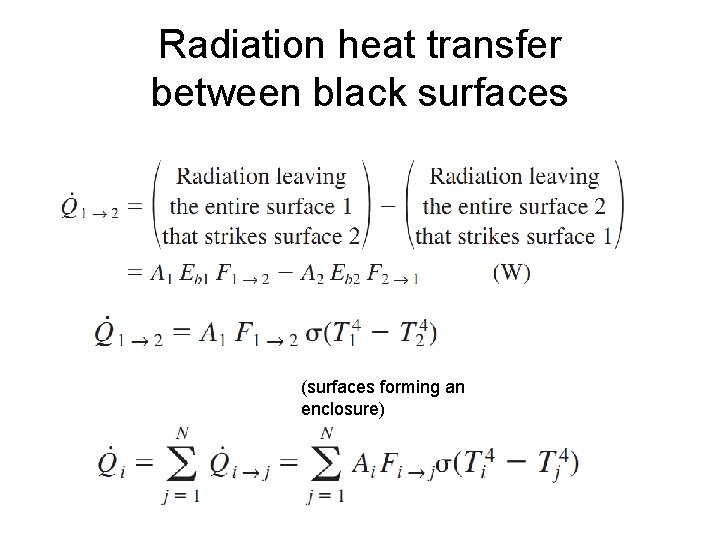
Radiation heat transfer between black surfaces
Radiation heat transfer between black surfaces (surfaces forming an enclosure)
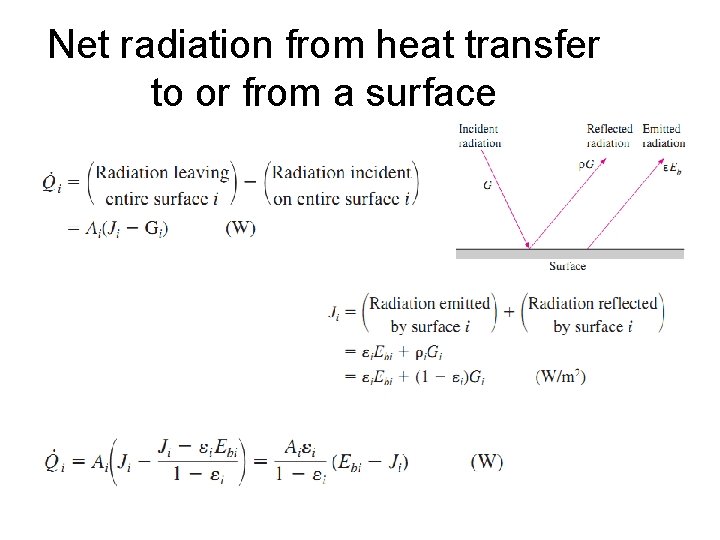
Net radiation from heat transfer to or from a surface
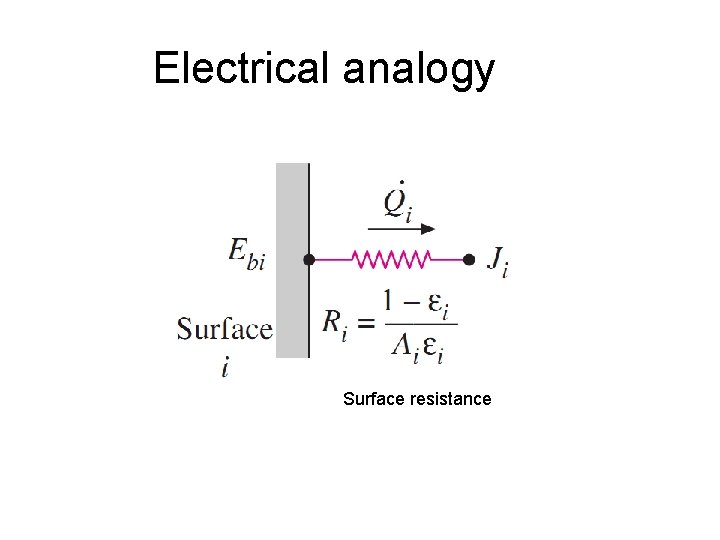
Electrical analogy Surface resistance
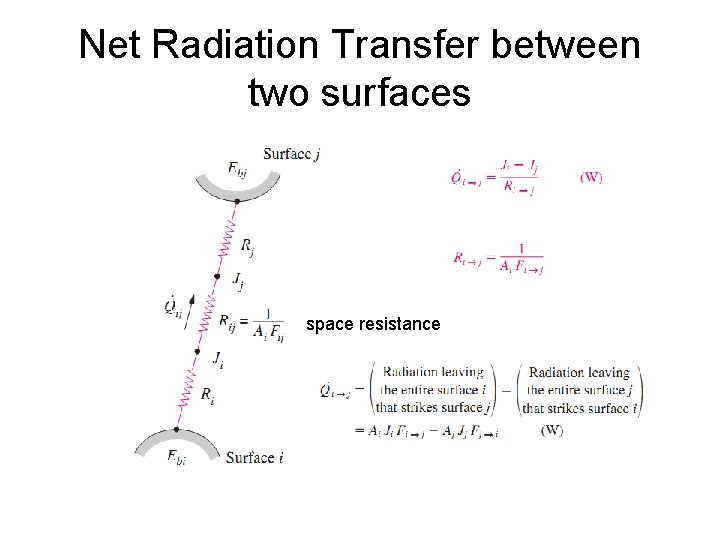
Net Radiation Transfer between two surfaces space resistance
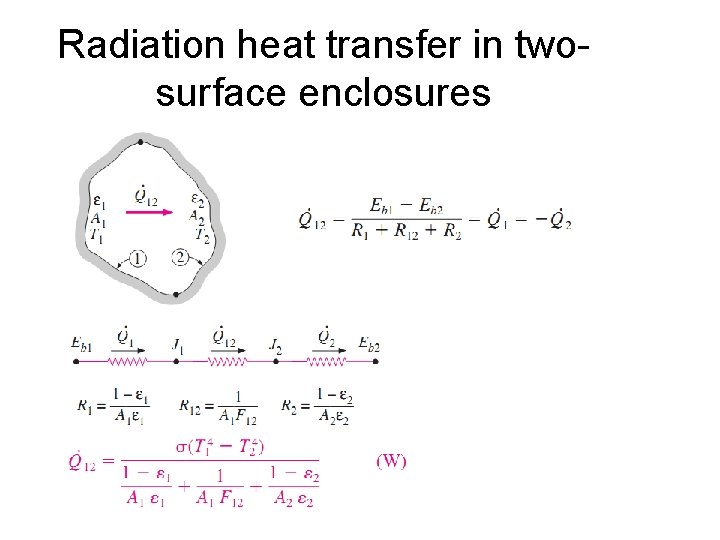
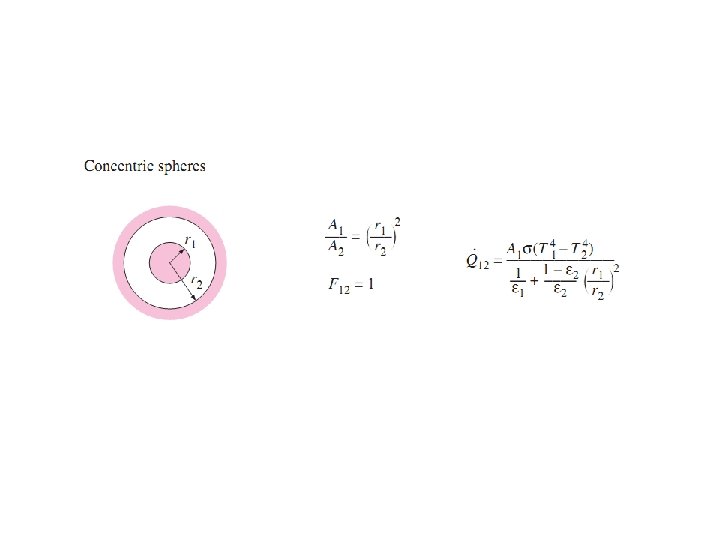
Radiation heat transfer in twosurface enclosures
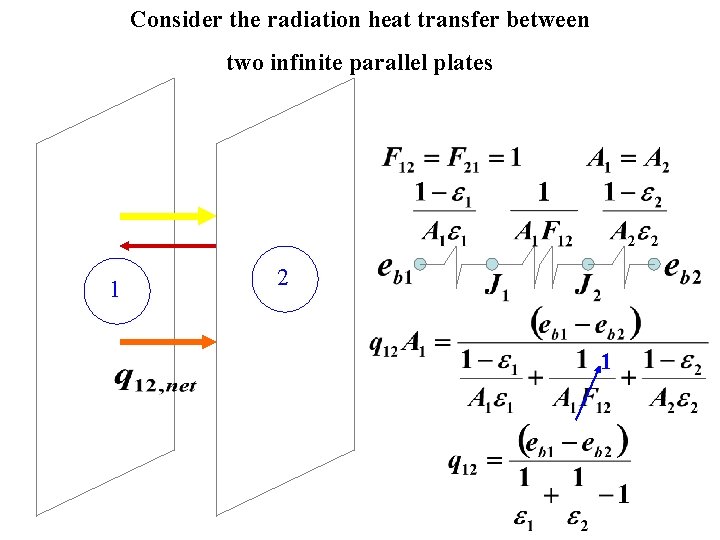
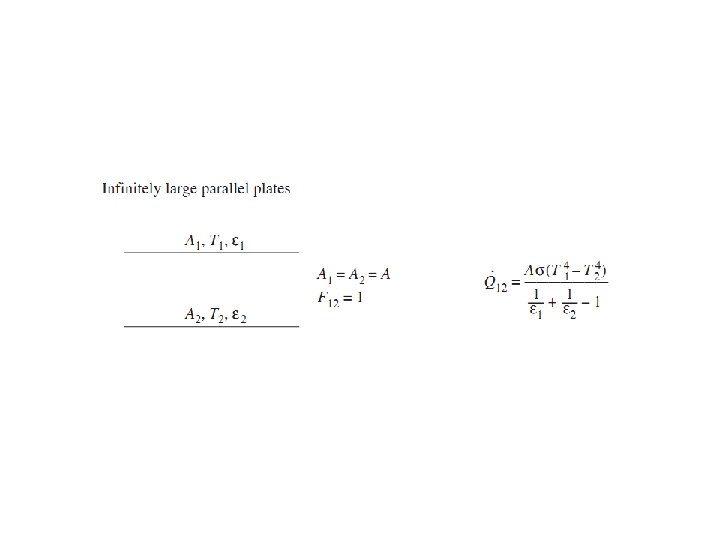
Consider the radiation heat transfer between two infinite parallel plates 1 2 1
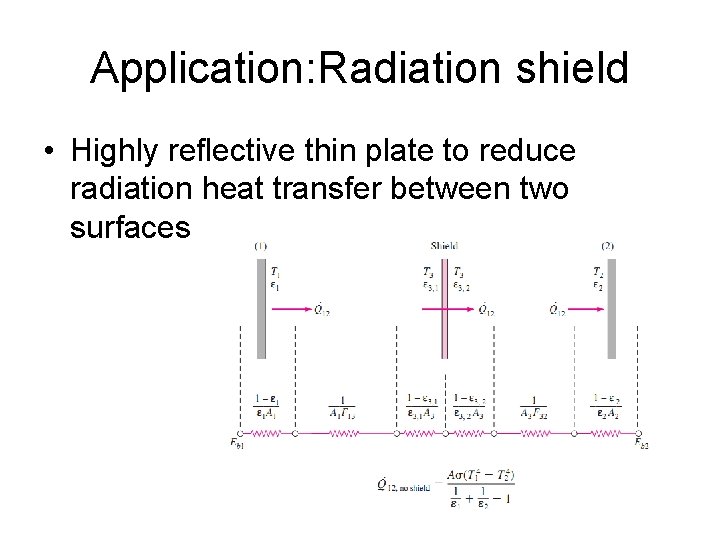
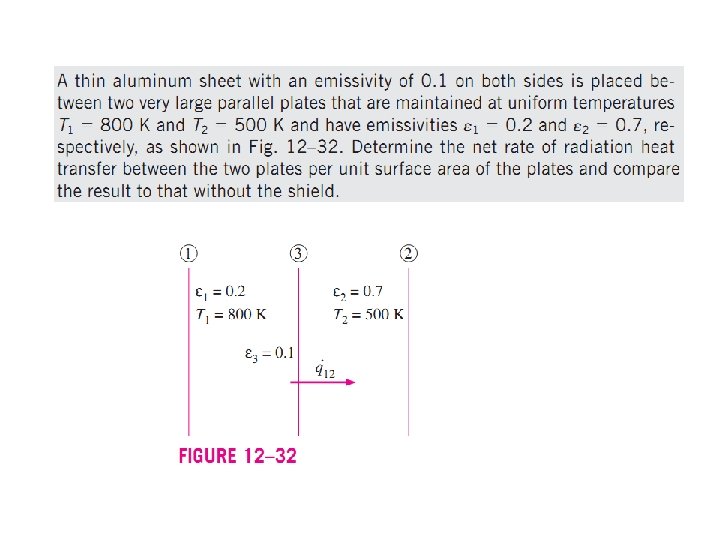
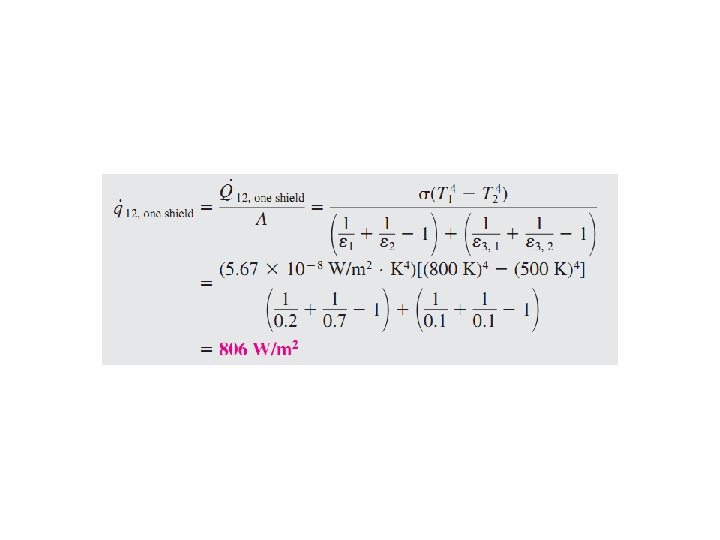
Application: Radiation shield • Highly reflective thin plate to reduce radiation heat transfer between two surfaces
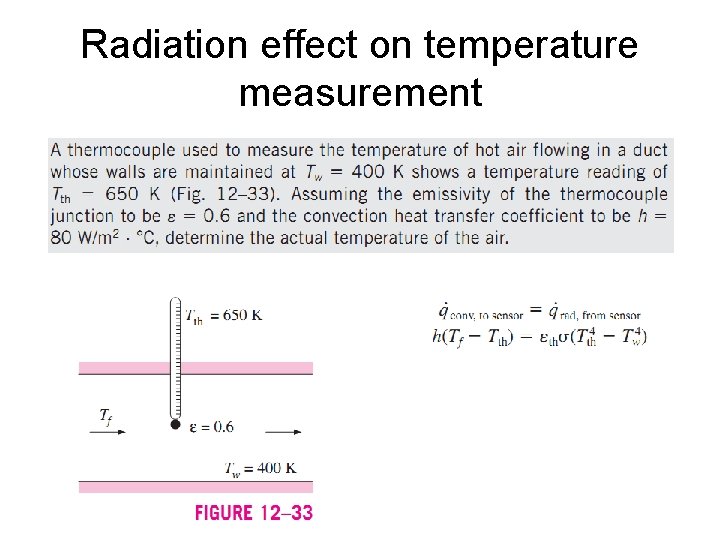
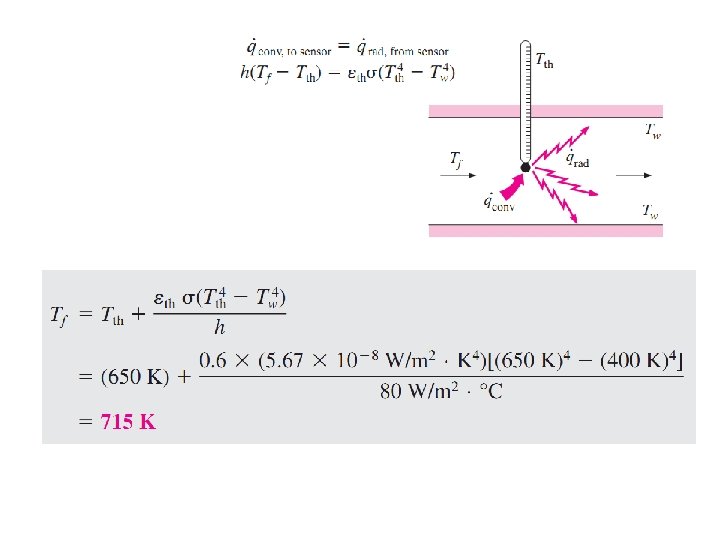
Radiation effect on temperature measurement