
Introduction to the UN human rights system UN
- Slides: 21
Introduction to the UN human rights system UN TRAINING FOR TRANS ACTIVISTS 22 -24 SEPTEMBER 2015
Aims of the session To be equipped with a ‘mental map’ to of the UN system and how it functions To be able to determine how the UN could be relevant in your particular context
History
History League of Nations failed to prevent World War I UN created after World War 2 50 States drew up UN Charter – based on text drafted by China, the Soviet Union, the UK and the US Officially established on 24 October 1945
An inter-governmental organisation made up of member States 193 Member States must apply and be ‘a peace-loving State’ Security Council recommends membership GA vote – 2/3 majority Most recent member: South Sudan 2011 Non-member States: Holy See and Palestine – permanent observers
UN system Political versus technical: 1. Political bodies – discussions between States 2. Expert bodies – technical discussions between independent experts
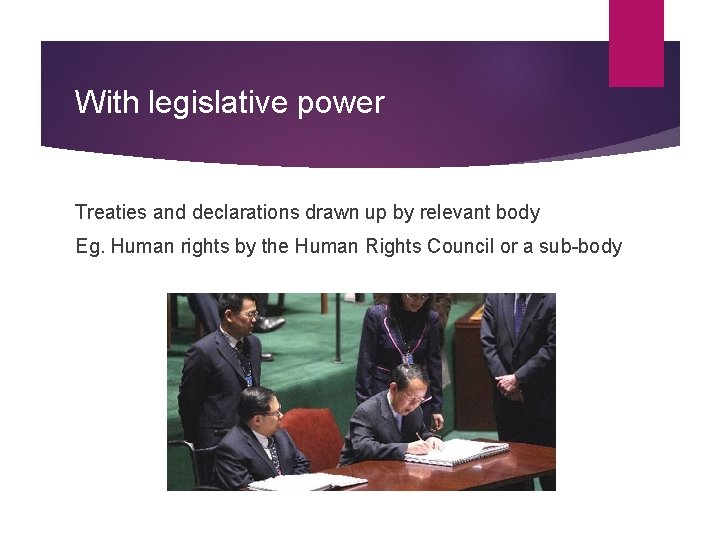
With legislative power Treaties and declarations drawn up by relevant body Eg. Human rights by the Human Rights Council or a sub-body
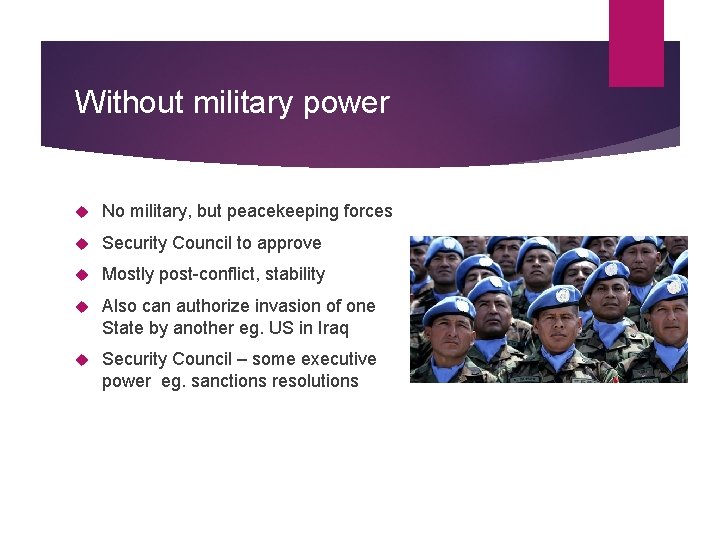
Without military power No military, but peacekeeping forces Security Council to approve Mostly post-conflict, stability Also can authorize invasion of one State by another eg. US in Iraq Security Council – some executive power eg. sanctions resolutions
Judicial power International Court of Justice only! To settle legal disputes submitted by States Advisory opinions on request of UN organs / agencies International law
Three pillars of the UN Peace and Security Maintenance of peace and security – develop friendly relations amongst nations Development Promotion of development, eg. sustainable development goals Human Rights Promotion and protection of human rights by States and individuals
Universal Declaration on Human Rights Following World War II January 1947 – Commission on Human Rights first met and definition of human rights was its first priority 8 -member committee prepared draft text Commission revised draft based on Member States’ comments After 1400 votes, the General Assembly adopted the UDHR on 10 December 1948 without a single vote against, but 8 abstentions Overwhelming support
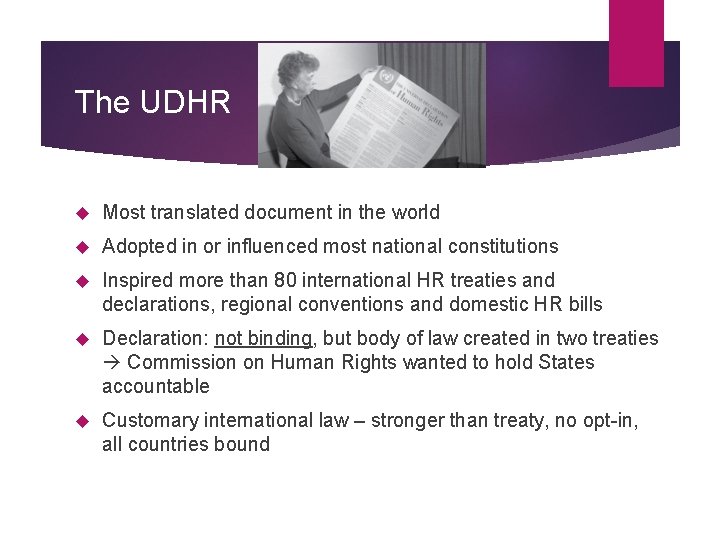
The UDHR Most translated document in the world Adopted in or influenced most national constitutions Inspired more than 80 international HR treaties and declarations, regional conventions and domestic HR bills Declaration: not binding, but body of law created in two treaties Commission on Human Rights wanted to hold States accountable Customary international law – stronger than treaty, no opt-in, all countries bound
The International Bill of Rights Universal Declaration of Human Rights + International Covenant on Economic, Social and Cultural Rights + International Covenant on Civil and Political Rights
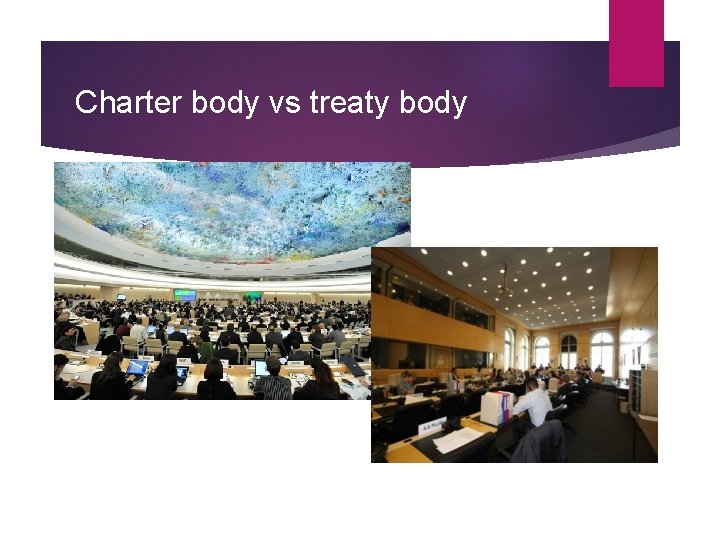
Charter body vs treaty body
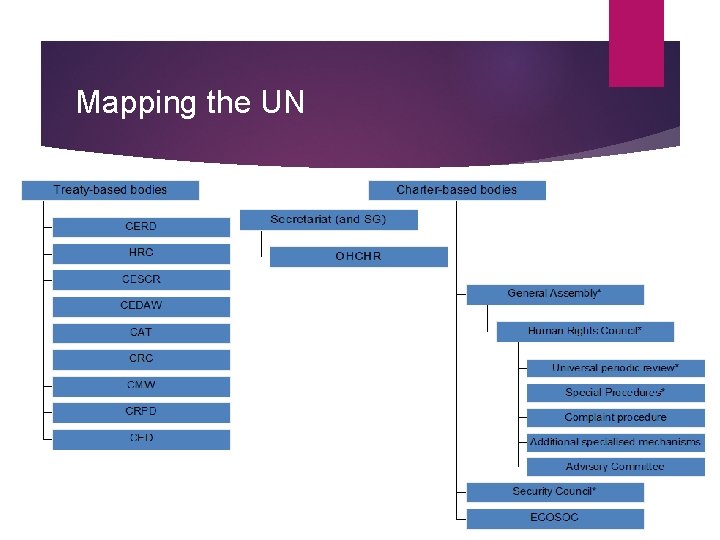
Mapping the UN
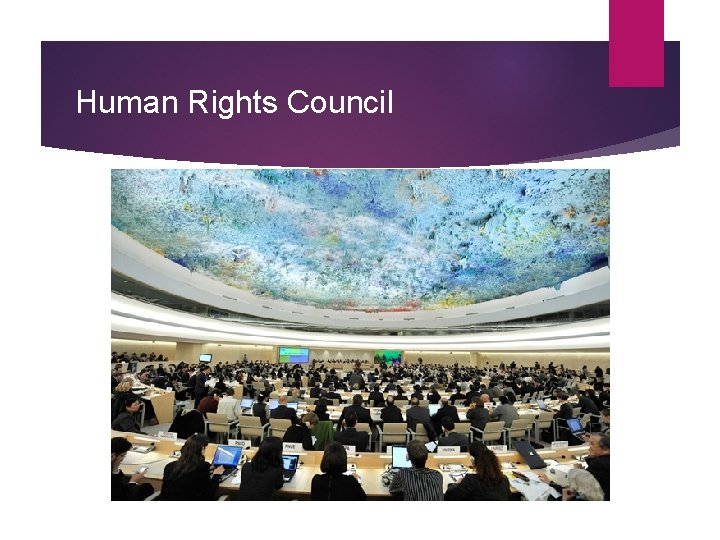
Human Rights Council
Human Rights Council Political Advantage: - statements, decisions, resolutions have more weight - resolutions applies to all member states (UN Charter) Disadvantage: more difficult to reach agreement on sensitive issues or country situations 3 sessions per year – 3 to 4 weeks Accessible for NGOs, eg. speaking right Monitoring on issues or countries by experts – Special Procedures to take action
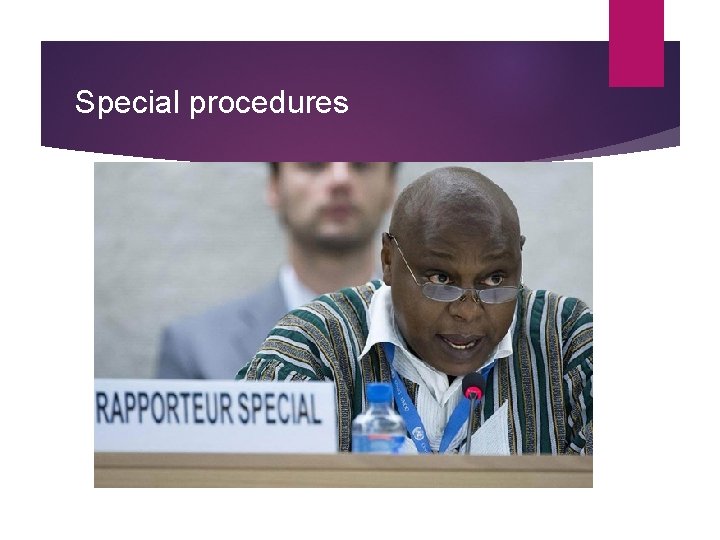
Special procedures
Universal Periodic Review (UPR) Working Group Improvement of the human rights situation on the ground; Fulfillment of the State's human rights obligations - UDHR Sharing of best practice among States and other stakeholders; Cooperation in the promotion and protection of human rights. Peer-to-peer, political
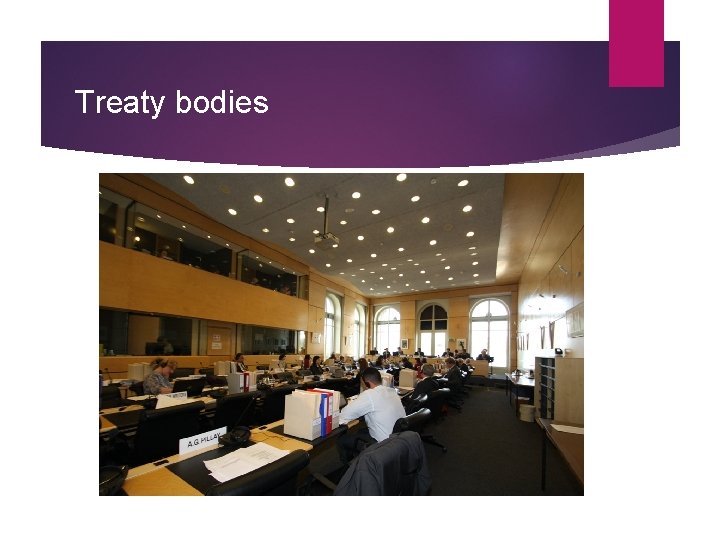
Treaty bodies
Exercise: engaging the UN Question: what are the distinct values of engaging with the mechanism your group has been assigned? Each group will discuss one key mechanism assigned from: Human Rights Council Special procedures UPR Treaty bodies