
Introduction to the U S Legal System Bryce
Introduction to the U. S. Legal System Bryce Pilz Fall 2008 BY: dbking (flickr) http: //creativecommons. org/licenses/by/2. 0/deed. en Class 1 – September 5, 2008 SI 519/Pub. Pol 688 IP Info Law 2008
U. S. Constitution • Created in 1787, ratified in 1788. • Replaced Articles of Confederation • Represents compromise between Virginia Plan (big states) and NJ Plan (small states) • Bill of Rights – 1791 – Promise made during ratification
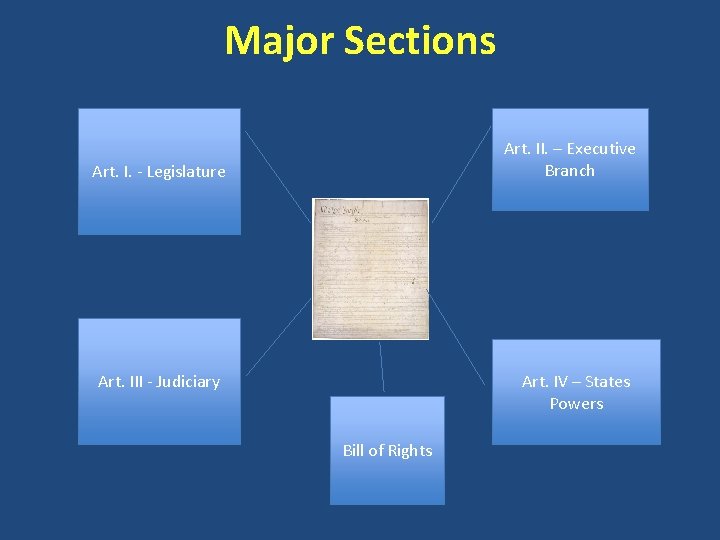
Major Sections Art. II. – Executive Branch Art. I. - Legislature Art. III - Judiciary Art. IV – States Powers Bill of Rights
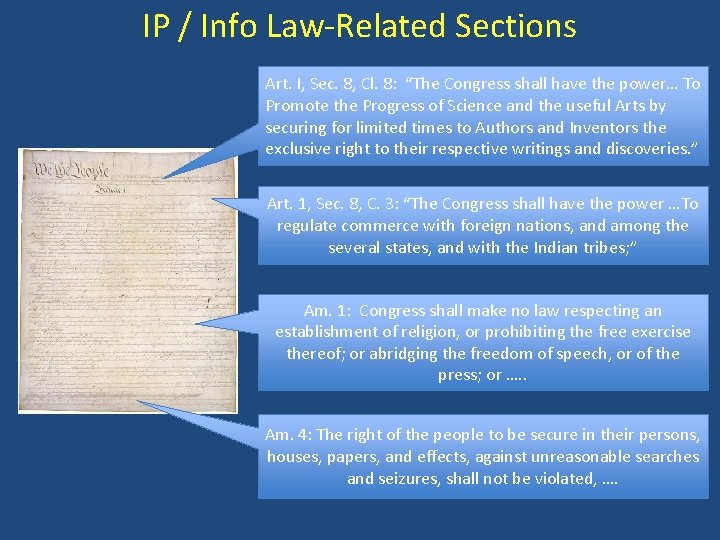
IP / Info Law-Related Sections Art. I, Sec. 8, Cl. 8: “The Congress shall have the power… To Promote the Progress of Science and the useful Arts by securing for limited times to Authors and Inventors the exclusive right to their respective writings and discoveries. ” Art. 1, Sec. 8, C. 3: “The Congress shall have the power …To regulate commerce with foreign nations, and among the several states, and with the Indian tribes; ” Am. 1: Congress shall make no law respecting an establishment of religion, or prohibiting the free exercise thereof; or abridging the freedom of speech, or of the press; or …. . Am. 4: The right of the people to be secure in their persons, houses, papers, and effects, against unreasonable searches and seizures, shall not be violated, ….
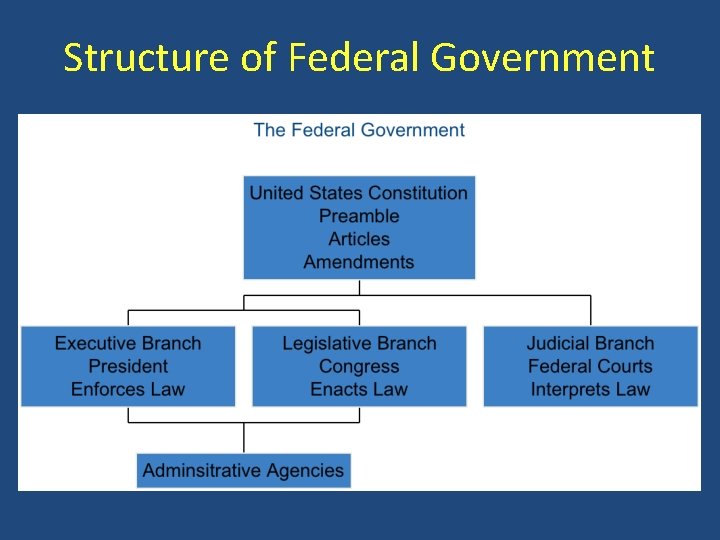
Structure of Federal Government
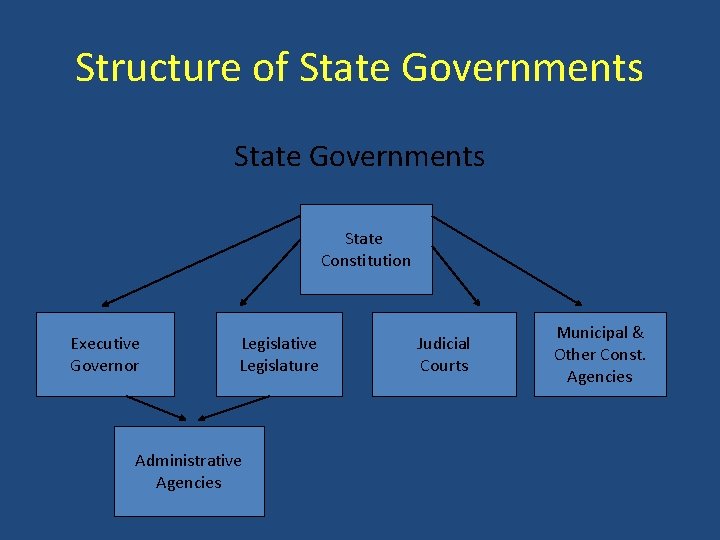
Structure of State Governments State Constitution Executive Governor Legislative Legislature Administrative Agencies Judicial Courts Municipal & Other Const. Agencies
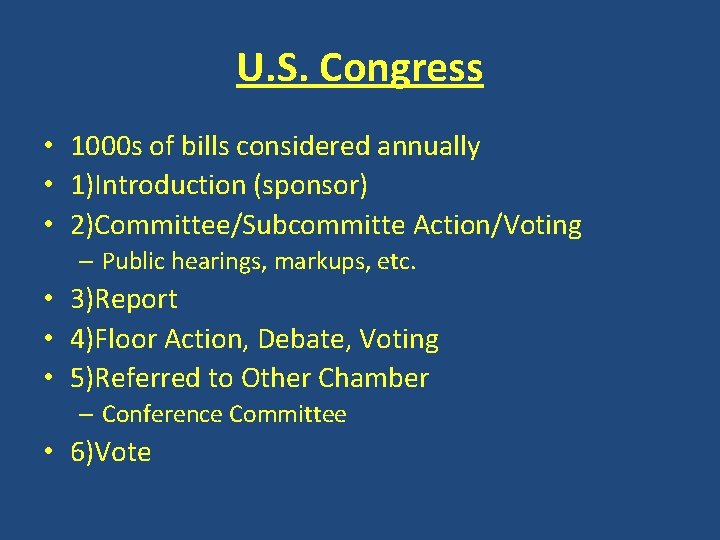
U. S. Congress • 1000 s of bills considered annually • 1)Introduction (sponsor) • 2)Committee/Subcommitte Action/Voting – Public hearings, markups, etc. • 3)Report • 4)Floor Action, Debate, Voting • 5)Referred to Other Chamber – Conference Committee • 6)Vote
U. S. Congress • Congressmen and women receive information from lobbyists and other interested parties • Listen to constituents • Bills an contain numerous laws, so horsetrading can occur • Example: Patent Reform Bills of 2005, 2006, 2007 and 2008
Relevant Statutes Patent Act (1952) Copyright Act (1976) DMCA (1998) Lanham Trademark Act (1946) Federal and State Freedom of Information Acts • State Privacy Statutes • • •
The Courts • Federal: (1) Federal subject matter (U. S. Const. , or Federal Law), or (2) suits between citizens of different states involving a dispute over a certain threshold ($75, 000) • States: Everything else. • Ex) contract dispute (Mi. cit. v. Mi. Cit, $100 k) • Ex) patent litigation (Mi. cit. v. Mi. cit. , $100 M)
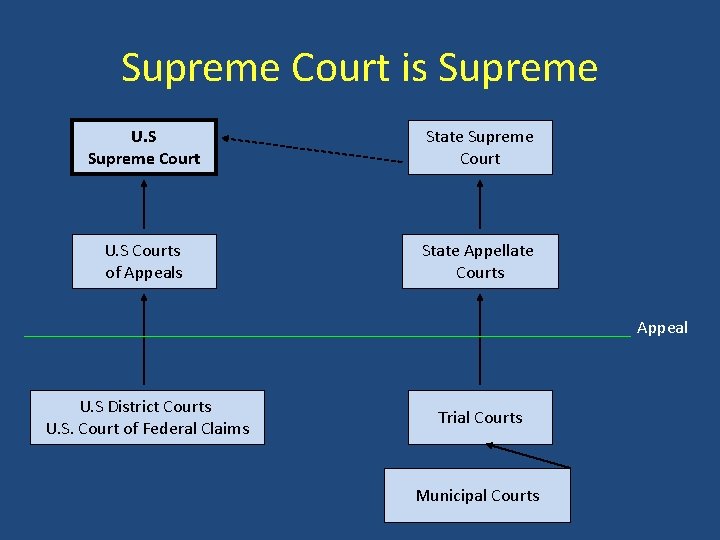
Supreme Court is Supreme U. S Supreme Court State Supreme Court U. S Courts of Appeals State Appellate Courts Appeal U. S District Courts U. S. Court of Federal Claims Trial Courts Municipal Courts
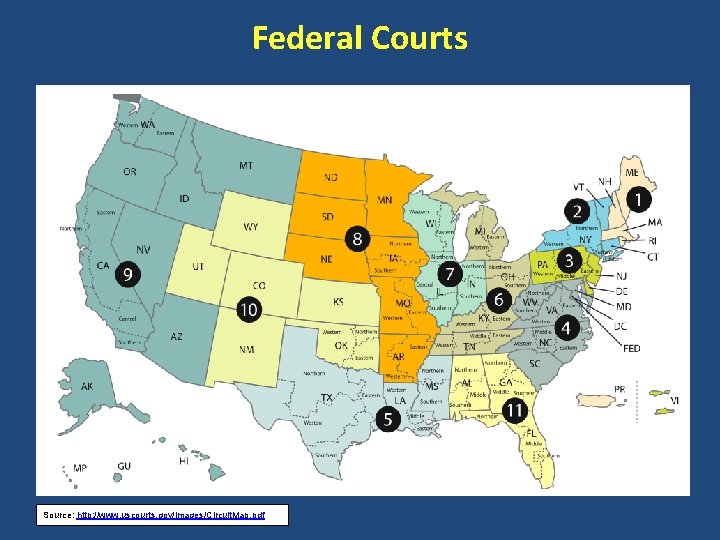
Federal Courts Source: http: //www. uscourts. gov/images/Circuit. Map. pdf
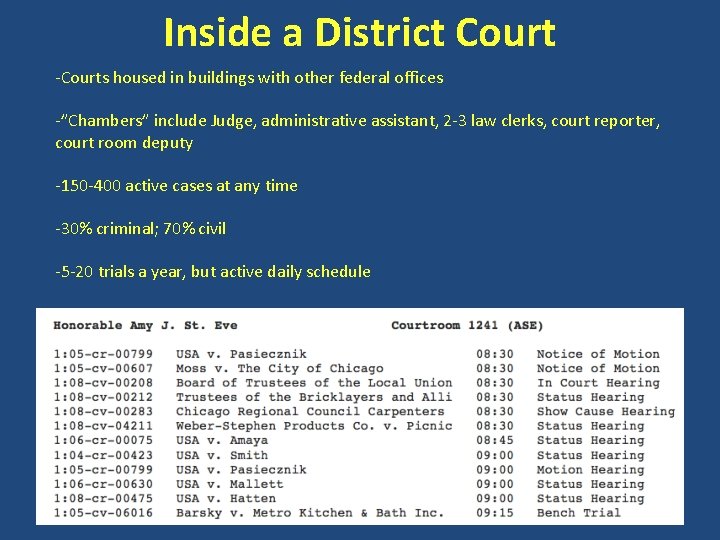
Inside a District Court -Courts housed in buildings with other federal offices -”Chambers” include Judge, administrative assistant, 2 -3 law clerks, court reporter, court room deputy -150 -400 active cases at any time -30% criminal; 70% civil -5 -20 trials a year, but active daily schedule
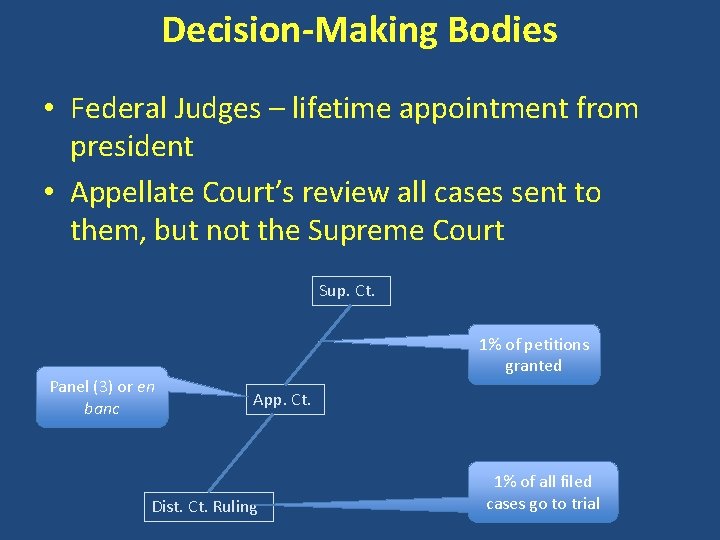
Decision-Making Bodies • Federal Judges – lifetime appointment from president • Appellate Court’s review all cases sent to them, but not the Supreme Court Sup. Ct. Panel (3) or en banc 1% of petitions granted App. Ct. Dist. Ct. Ruling 1% of all filed cases go to trial
Decision-Making Process • Court is bound by Mandatory Authority – E. g. , cases from a higher-court in jurisdiction • Often, no Mandatory Authority directly “on point” – Court consults Persuasive Authority • E. g. , cases from higher-courts in other jurisdictions, cases from “horizontal” courts, secondary authority • E. g. , Judge St. Eve in N. D. Ill.
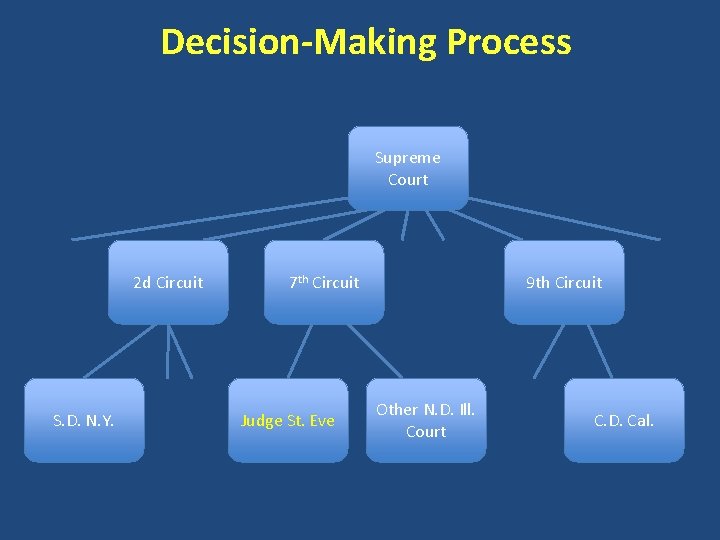
Decision-Making Process Supreme Court 2 d Circuit S. D. N. Y. 7 th Circuit Judge St. Eve 9 th Circuit Other N. D. Ill. Court C. D. Cal.
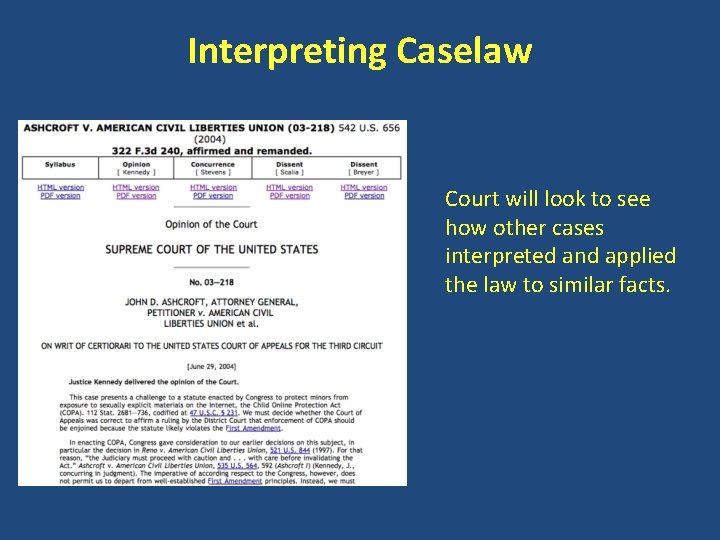
Interpreting Caselaw Court will look to see how other cases interpreted and applied the law to similar facts.
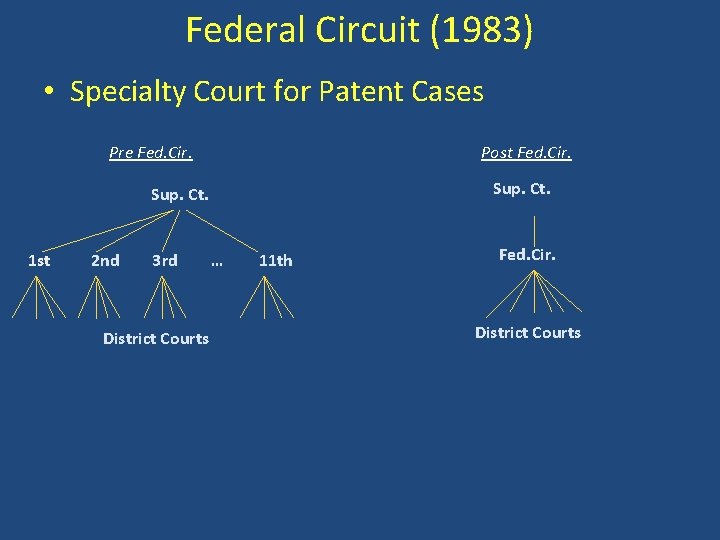
Federal Circuit (1983) • Specialty Court for Patent Cases Pre Fed. Cir. Post Fed. Cir. Sup. Ct. 1 st 2 nd 3 rd District Courts … 11 th Fed. Cir. District Courts
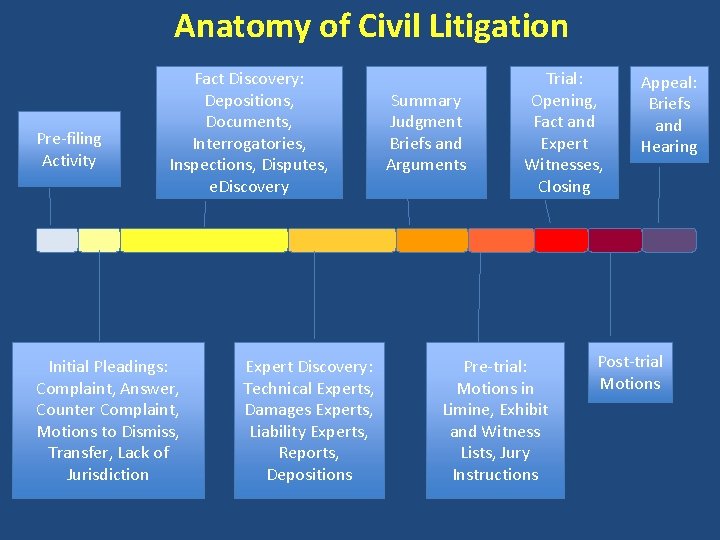
Anatomy of Civil Litigation Pre-filing Activity Fact Discovery: Depositions, Documents, Interrogatories, Inspections, Disputes, e. Discovery Initial Pleadings: Complaint, Answer, Counter Complaint, Motions to Dismiss, Transfer, Lack of Jurisdiction Expert Discovery: Technical Experts, Damages Experts, Liability Experts, Reports, Depositions Summary Judgment Briefs and Arguments Trial: Opening, Fact and Expert Witnesses, Closing Pre-trial: Motions in Limine, Exhibit and Witness Lists, Jury Instructions Appeal: Briefs and Hearing Post-trial Motions
Litigation Stats • Average IP case takes over 2 years to trial – Districts vary: “Rocket dockets” v. slow dockets • Average patent case costs over $5 M to trial • What does all this mean?
- Slides: 20