
Introduction to the t statistic Steps to calculate


- Slides: 13
Introduction to the t statistic
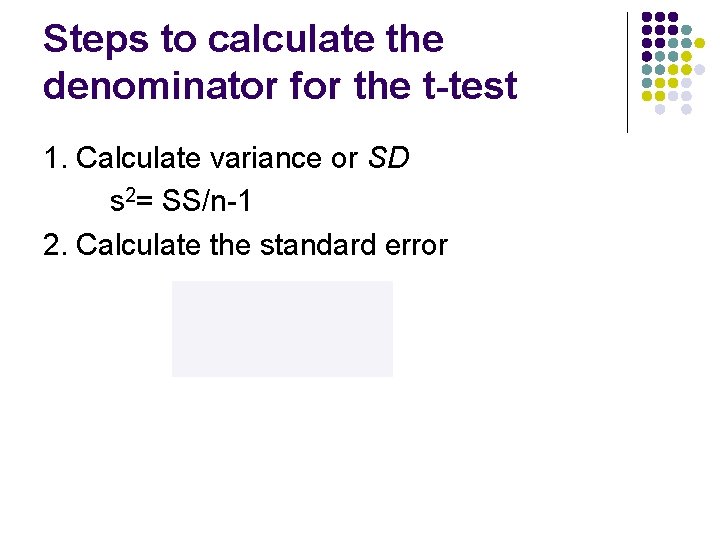
Steps to calculate the denominator for the t-test 1. Calculate variance or SD s 2= SS/n-1 2. Calculate the standard error
T-test Procedure l l l Set the hypotheses (null and alternative) Set the decision criteria (by selecting the alpha level, directionality, and critical values). Compute the test-statistic (t) Compare obtained t-statistic to critical value(s) Make a statistical decision Concluding statement
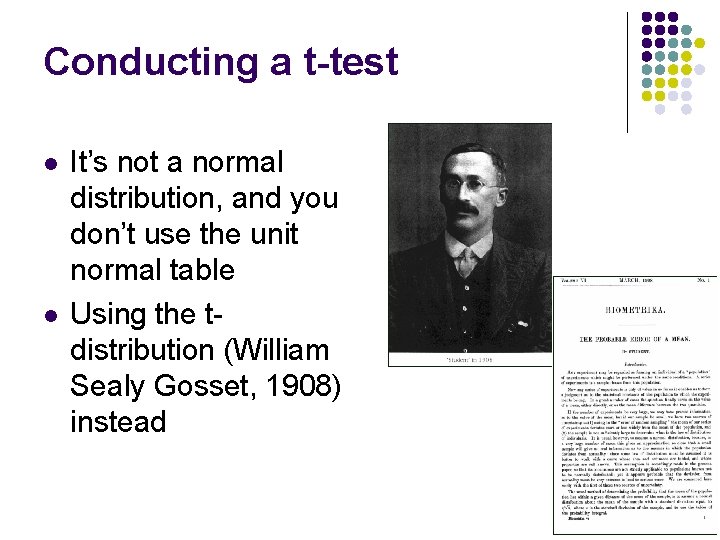
Conducting a t-test l l It’s not a normal distribution, and you don’t use the unit normal table Using the tdistribution (William Sealy Gosset, 1908) instead
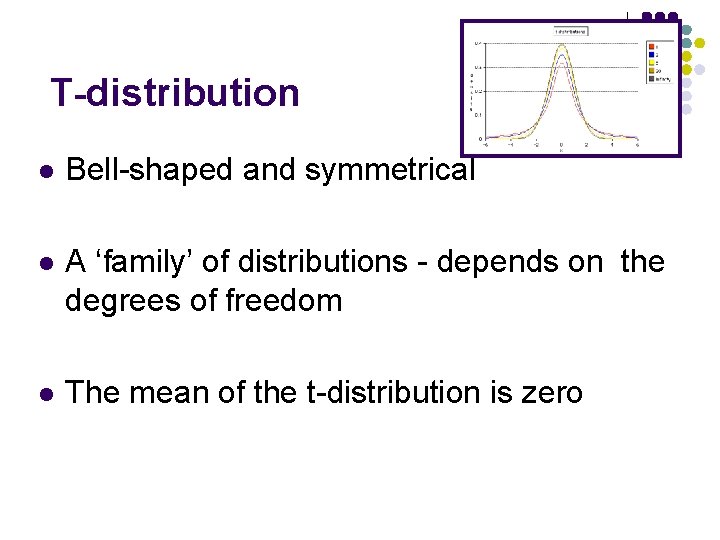
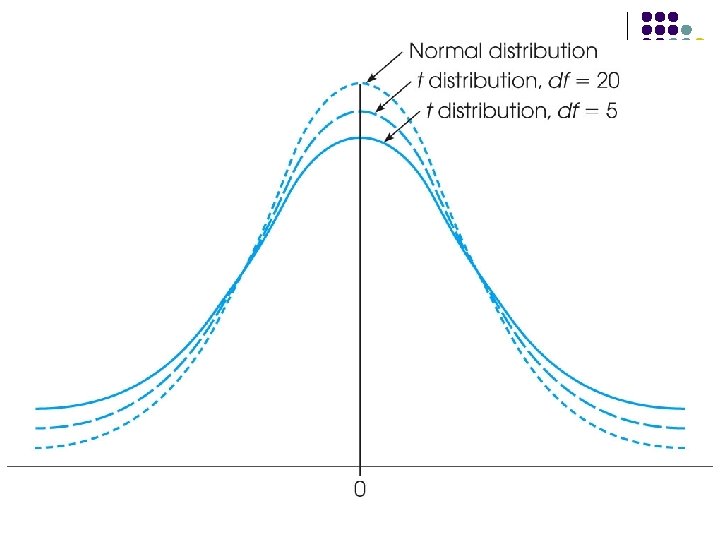
T-distribution l Bell-shaped and symmetrical l A ‘family’ of distributions - depends on the degrees of freedom l The mean of the t-distribution is zero
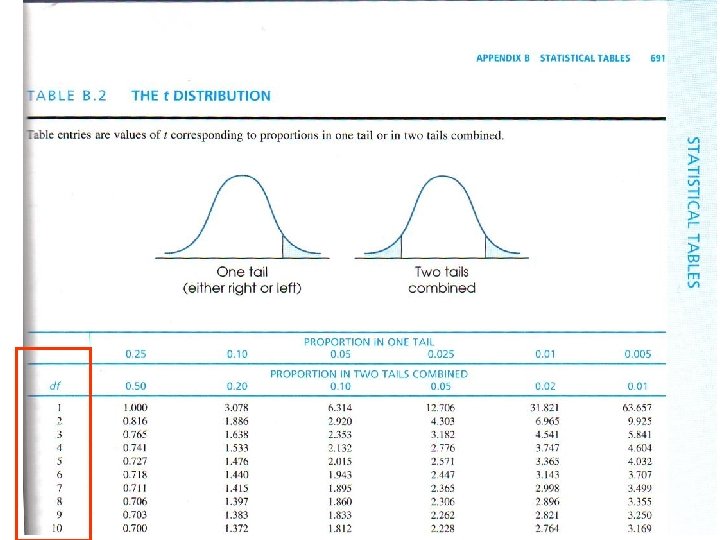
T-distribution table l When the df is NOT listed in the table provided in Appendix B, you should look up the critical t for both of the surrounding df values listed and use the LARGER value for t
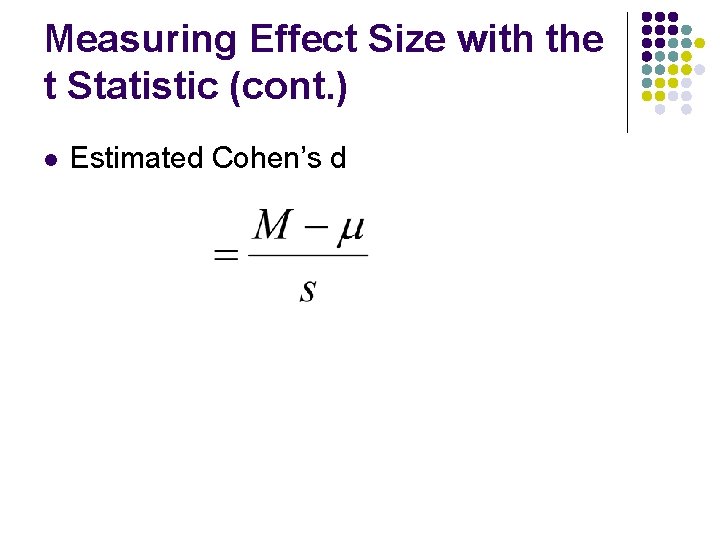
Measuring Effect Size with the t Statistic (cont. ) l Estimated Cohen’s d
Measuring Effect Size with the t Statistic (cont. ) l percentage of variance accounted for = r 2 (aka 2)
Assumptions for a One-sample t. Test 1. Independent observations 2. The sample data come from a normal population distribution
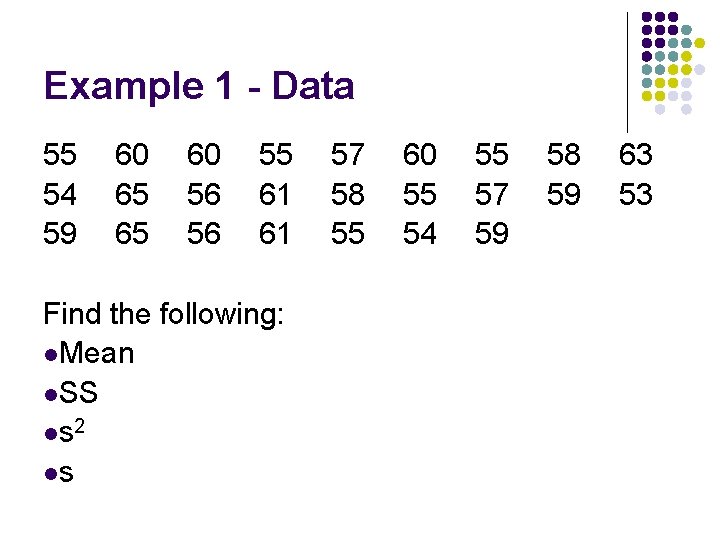
Example 1 l The legal highway limit near populated areas in many parts of the US is 55 mph. To determine whether people exceed the 55 mph, suppose a state monitored the speeds of 25 cars at selected highway locations. Can we conclude that the average speed is higher than the 55 mph limit?
Example 1 - Data 55 54 59 60 65 65 60 56 56 55 61 61 Find the following: l. Mean l. SS ls 2 ls 57 58 55 60 55 54 55 57 59 58 59 63 53