
Introduction to the Solar System The solar system
- Slides: 15
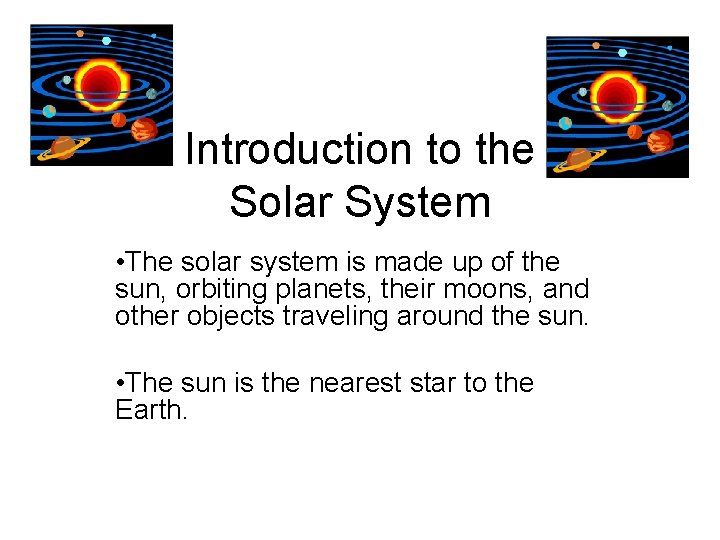
Introduction to the Solar System • The solar system is made up of the sun, orbiting planets, their moons, and other objects traveling around the sun. • The sun is the nearest star to the Earth.
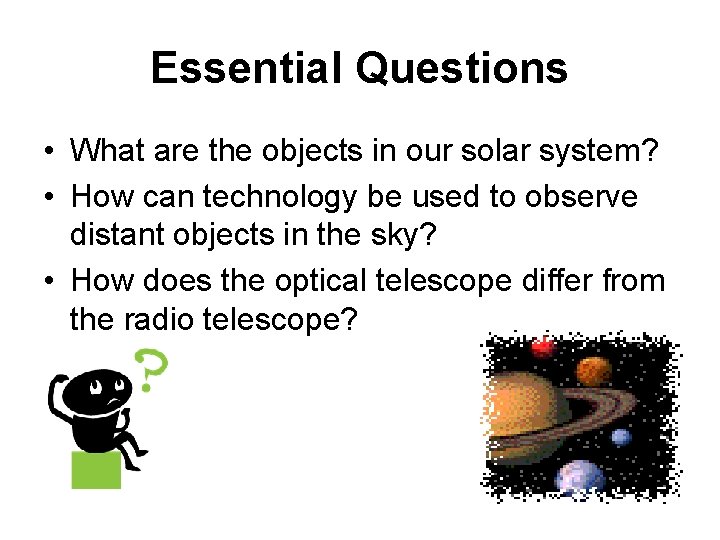
Essential Questions • What are the objects in our solar system? • How can technology be used to observe distant objects in the sky? • How does the optical telescope differ from the radio telescope?
What is a planet? • A planet is a large body of rock or gas in space that moves around a star. • A planet DOES NOT produce light of its own. That is why planets almost never twinkle as stars twinkle. • You can see planets in the night sky because of the sun’s light reflecting or bouncing off of them.
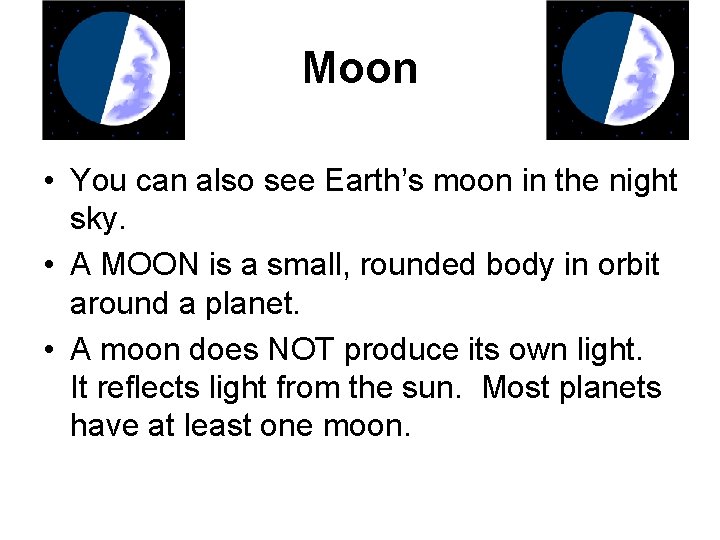
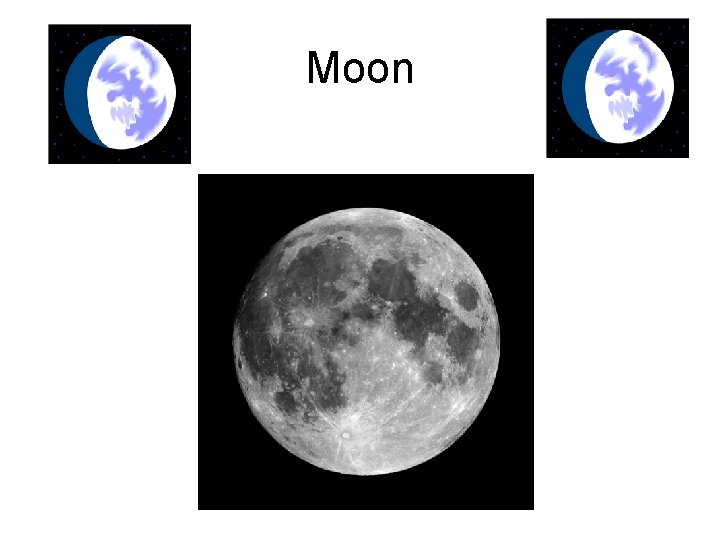
Moon • You can also see Earth’s moon in the night sky. • A MOON is a small, rounded body in orbit around a planet. • A moon does NOT produce its own light. It reflects light from the sun. Most planets have at least one moon.
Moon
Earth’s Year • The farther a planet is from the sun, the longer it takes to orbit. The time it takes to complete one trip around the sun is called a YEAR. • Earth’s year is about 365 days long. Mercury makes a complete orbit in just 88 days. Neptune takes about 165 Earth years to complete its orbit around the sun.
Sun, Moon, and Sky • For thousands of years, people have been observing the sun, the moon, and other objects in the sky. • Scientists did not learn how these objects move until a few hundred years ago. • Why do you think they took so long?
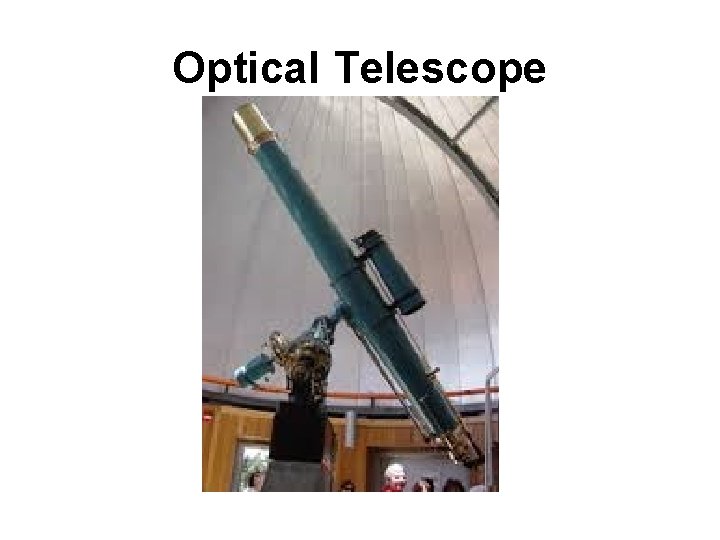
Telescopes • A telescope is a tool that makes distant objects appear larger, brighter, and sharper. • Telescopes help scientists study stars, the moon, and the planets. • Scientists have used telescopes to discover that stars have regular patterns, and planets move among the stars.
Never Look at the Sun • NEVER look straight at the sun, especially with a telescope. Doing so can damage your eyes. • It is SAFE to look at other stars that are more distant than the sun.
Optical Telescope
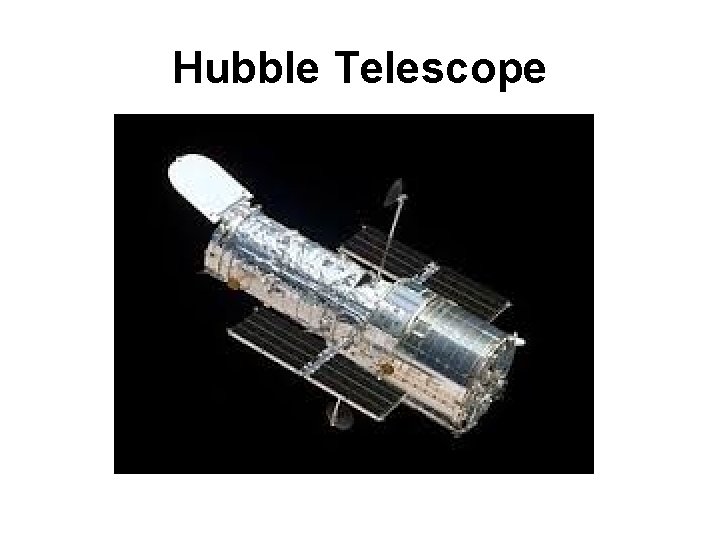
Hubble Telescope
Hubble Space Telescope • It is different from other telescopes because it is in space. • It moves around the Earth every 97 minutes. • It was launched into space in 1990. • It is the size of a school bus. • It takes photographs of space from beyond Earth’s atmosphere.
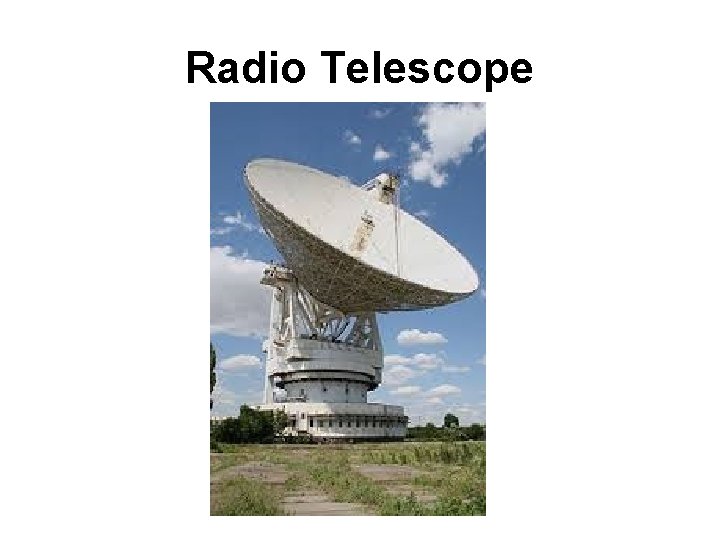
Radio Telescope • This type of telescope collects radio waves instead of light. • Computers use the radio waves to make pictures of space. • As more powerful telescopes are invented, scientists learn more about objects in space.
Radio Telescope
Essential Questions • What are the objects in our solar system? • How can technology be used to observe distant objects in the sky? • How does the optical telescope differ from the radio telescope?