
Introduction to the Six Kingdoms Archaeabacteria Type of
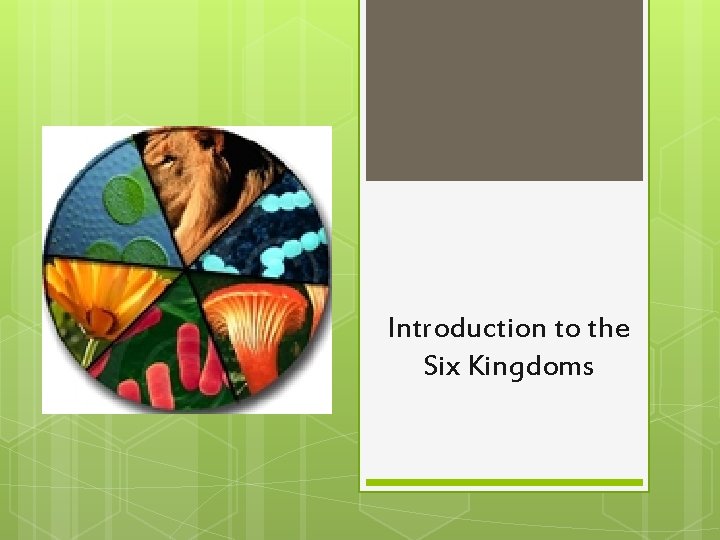
Introduction to the Six Kingdoms
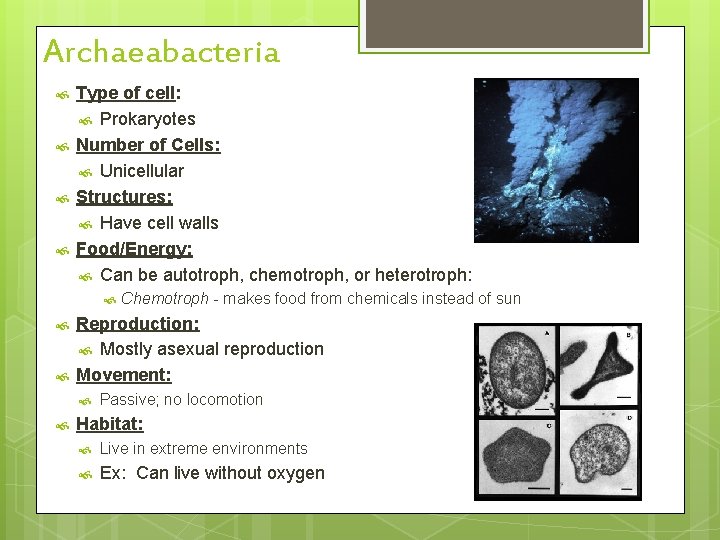
Archaeabacteria Type of cell: Prokaryotes Number of Cells: Unicellular Structures: Have cell walls Food/Energy: Can be autotroph, chemotroph, or heterotroph: Reproduction: Mostly asexual reproduction Movement: Chemotroph - makes food from chemicals instead of sun Passive; no locomotion Habitat: Live in extreme environments Ex: Can live without oxygen
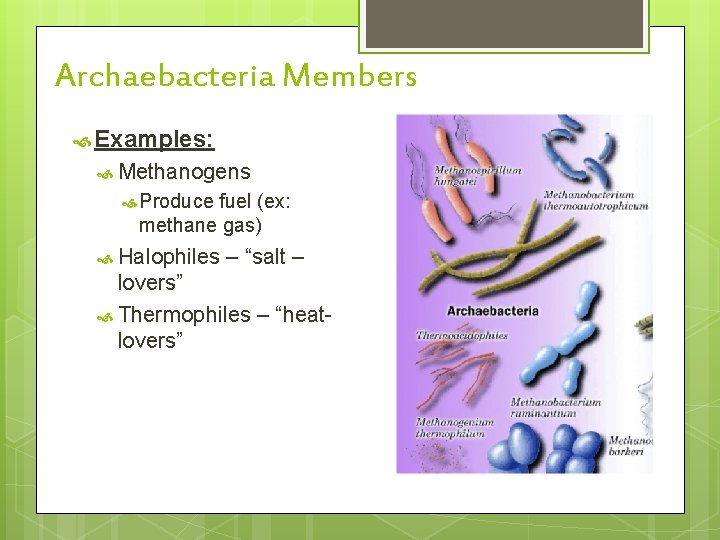
Archaebacteria Members Examples: Methanogens Produce fuel (ex: methane gas) Halophiles – “salt – lovers” Thermophiles – “heatlovers”
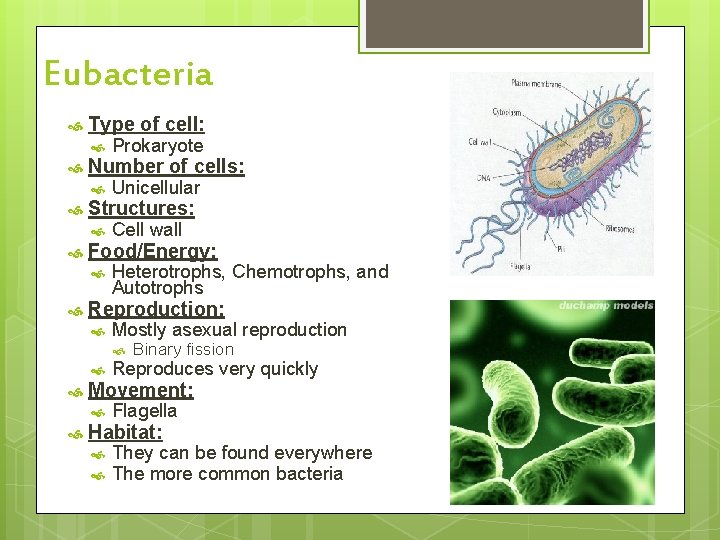
Eubacteria Type of cell: Number of cells: Cell wall Food/Energy: Unicellular Structures: Prokaryote Heterotrophs, Chemotrophs, and Autotrophs Reproduction: Mostly asexual reproduction Reproduces very quickly Movement: Binary fission Flagella Habitat: They can be found everywhere The more common bacteria

Eubacteria Members Three main shapes: Round, Can Rod, Spiral E. coli be: Harmful Many Ex: cause illness TB, strep, tetanus, food poisoning Streptococcus Helpful Decomposers (recycling) Used in making food Produce fuel Environmental cleanup Lactobacillus (used in yogurt)
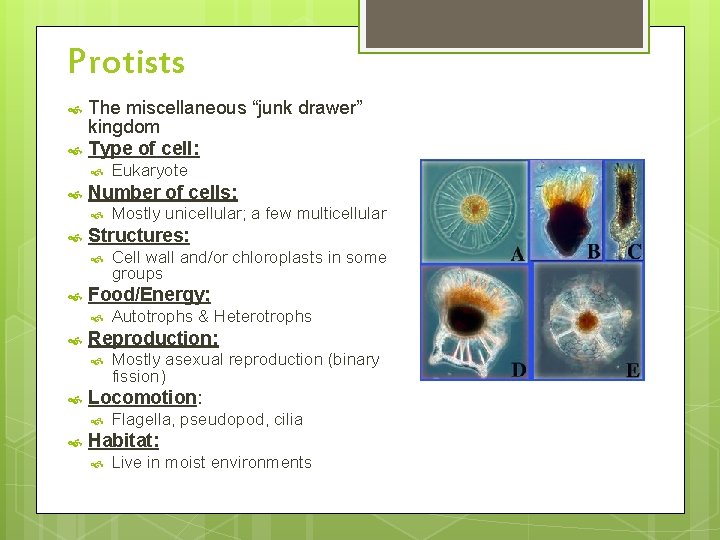
Protists The miscellaneous “junk drawer” kingdom Type of cell: Number of cells: Mostly asexual reproduction (binary fission) Locomotion: Autotrophs & Heterotrophs Reproduction: Cell wall and/or chloroplasts in some groups Food/Energy; Mostly unicellular; a few multicellular Structures: Eukaryote Flagella, pseudopod, cilia Habitat: Live in moist environments
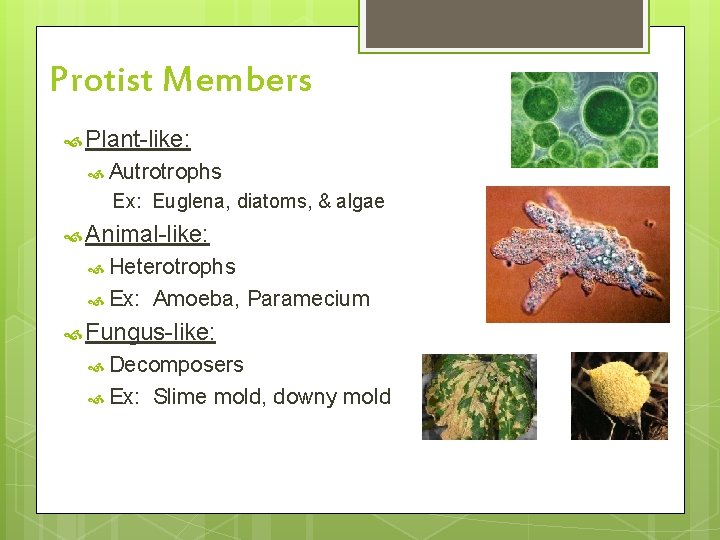
Protist Members Plant-like: Autrotrophs Ex: Euglena, diatoms, & algae Animal-like: Heterotrophs Ex: Amoeba, Paramecium Fungus-like: Decomposers Ex: Slime mold, downy mold
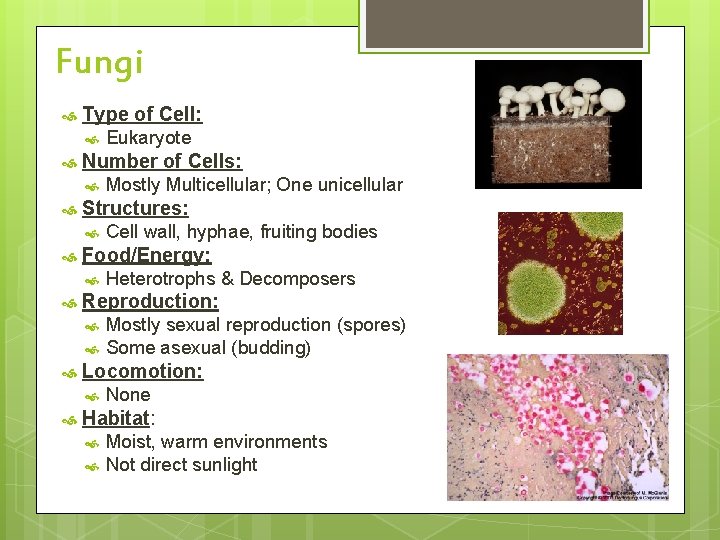
Fungi Type of Cell: Number of Cells: Mostly sexual reproduction (spores) Some asexual (budding) Locomotion: Heterotrophs & Decomposers Reproduction: Cell wall, hyphae, fruiting bodies Food/Energy: Mostly Multicellular; One unicellular Structures: Eukaryote None Habitat: Moist, warm environments Not direct sunlight
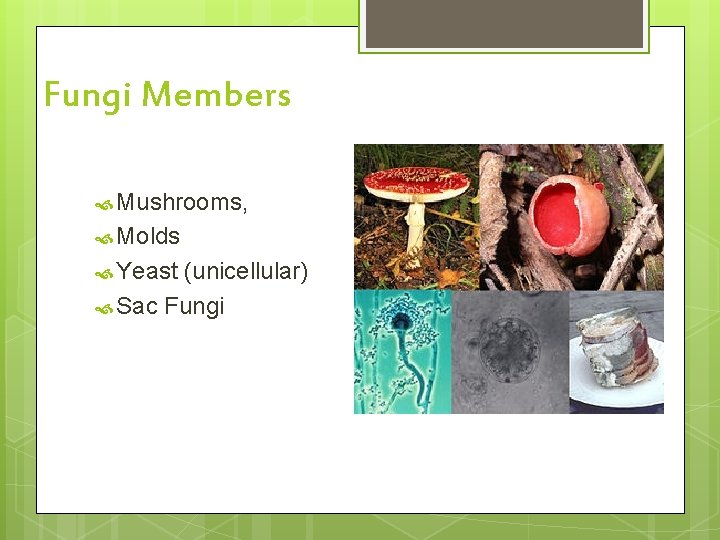
Fungi Members Mushrooms, Molds Yeast (unicellular) Sac Fungi
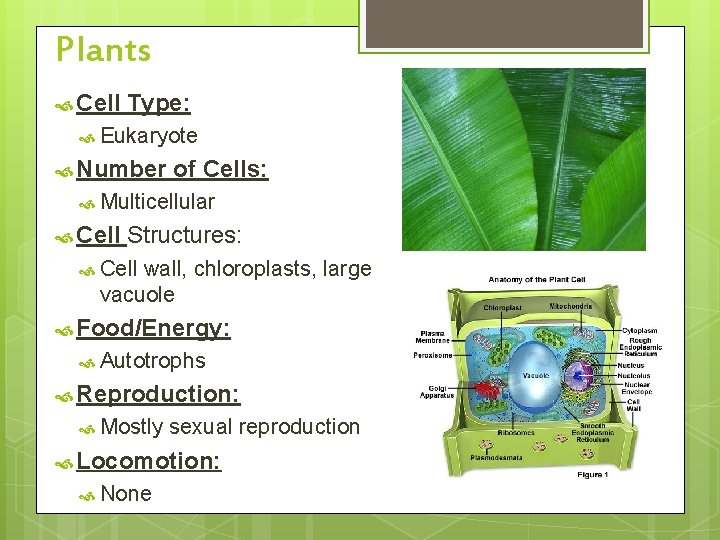
Plants Cell Type: Eukaryote Number of Cells: Multicellular Cell Structures: Cell wall, chloroplasts, large vacuole Food/Energy: Autotrophs Reproduction: Mostly sexual reproduction Locomotion: None
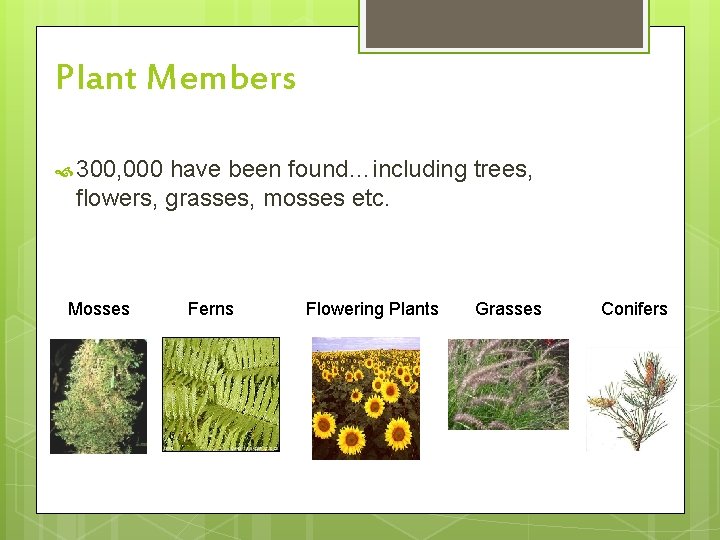
Plant Members 300, 000 have been found…including trees, flowers, grasses, mosses etc. Mosses Ferns Flowering Plants Grasses Conifers
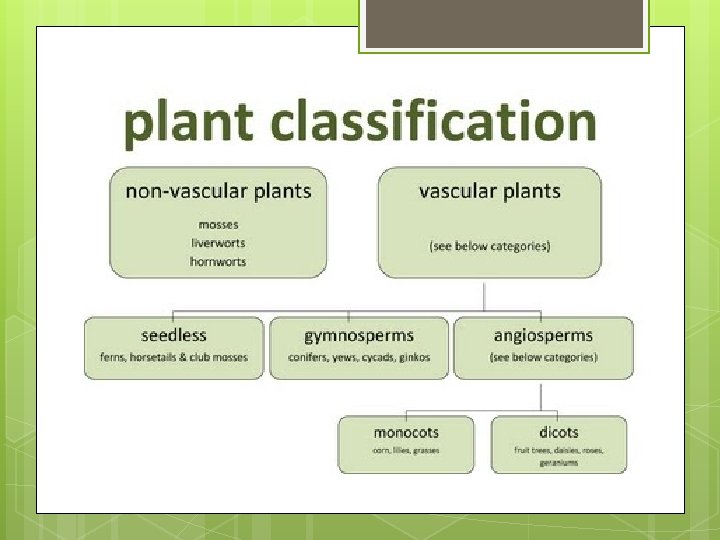
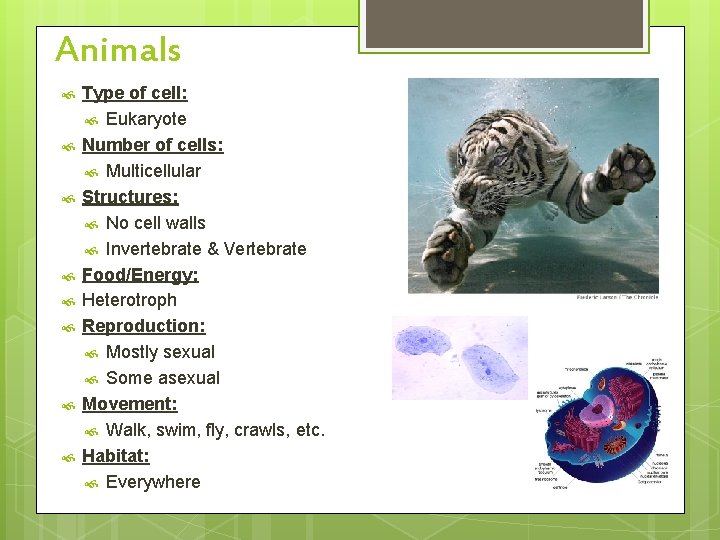
Animals Type of cell: Eukaryote Number of cells: Multicellular Structures: No cell walls Invertebrate & Vertebrate Food/Energy: Heterotroph Reproduction: Mostly sexual Some asexual Movement: Walk, swim, fly, crawls, etc. Habitat: Everywhere
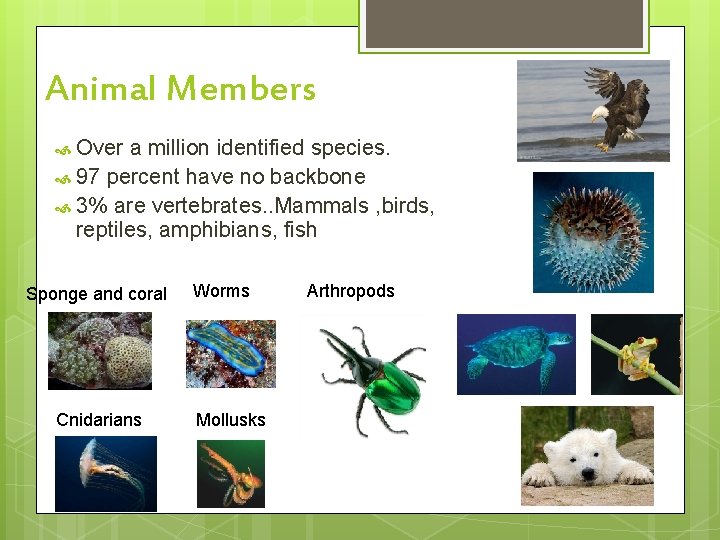
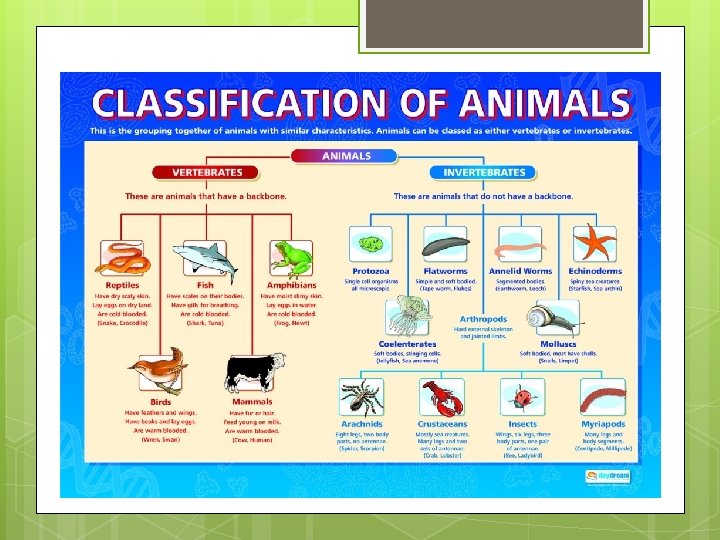
Animal Members Over a million identified species. 97 percent have no backbone 3% are vertebrates. . Mammals , birds, reptiles, amphibians, fish Sponge and coral Cnidarians Worms Mollusks Arthropods
- Slides: 15