
Introduction to the provinces and territories of Canada



- Slides: 18
Introduction to the provinces and territories of Canada
• • • Alberta British Columbia Manitoba New Brunswick Newfoundland Nova Scotia Ontario Prince Edward Island Quebec Saskatchewan 10 Provinces
• Alberta is a western Canadian prairie province and home of the Calgary Stampede. Rich in oil and gas resources, Alberta has supported conservative political parties since the 1920 s. • Major industries: Agriculture, forestry, telecommunications and oil and gas Alberta
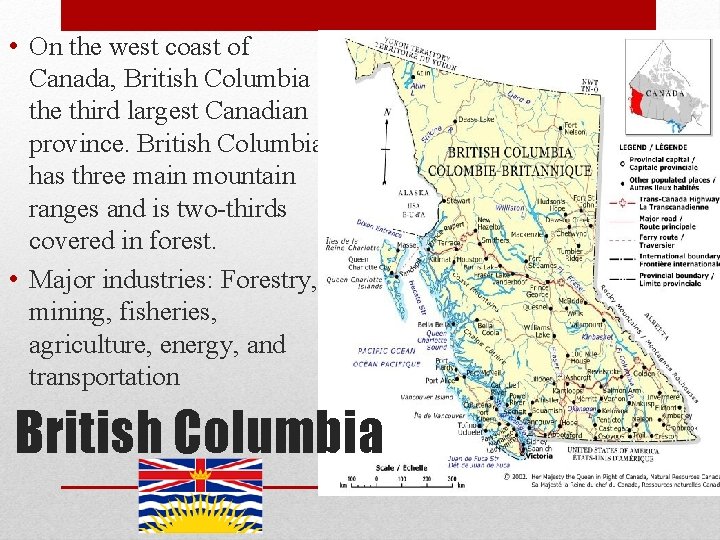
• On the west coast of Canada, British Columbia is the third largest Canadian province. British Columbia has three main mountain ranges and is two-thirds covered in forest. • Major industries: Forestry, mining, fisheries, agriculture, energy, and transportation British Columbia
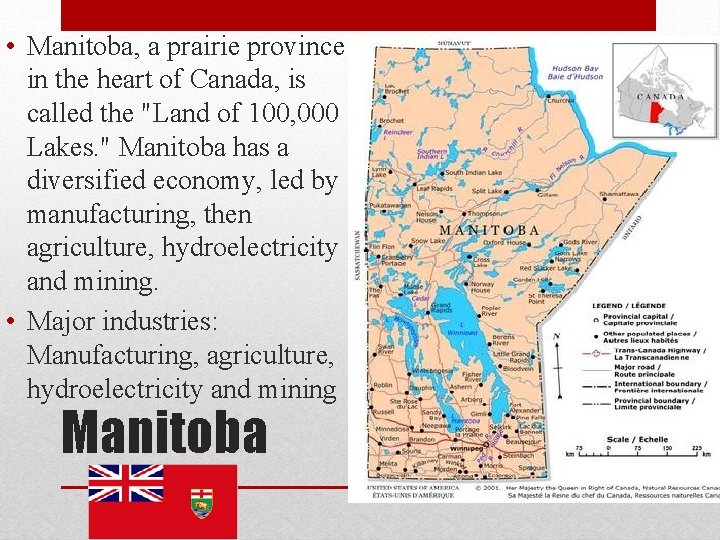
• Manitoba, a prairie province in the heart of Canada, is called the "Land of 100, 000 Lakes. " Manitoba has a diversified economy, led by manufacturing, then agriculture, hydroelectricity and mining. • Major industries: Manufacturing, agriculture, hydroelectricity and mining Manitoba
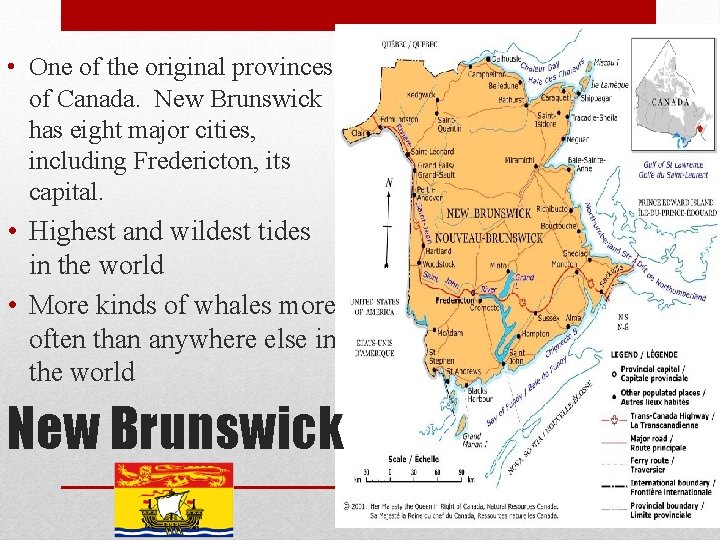
• One of the original provinces of Canada. New Brunswick has eight major cities, including Fredericton, its capital. • Highest and wildest tides in the world • More kinds of whales more often than anywhere else in the world New Brunswick
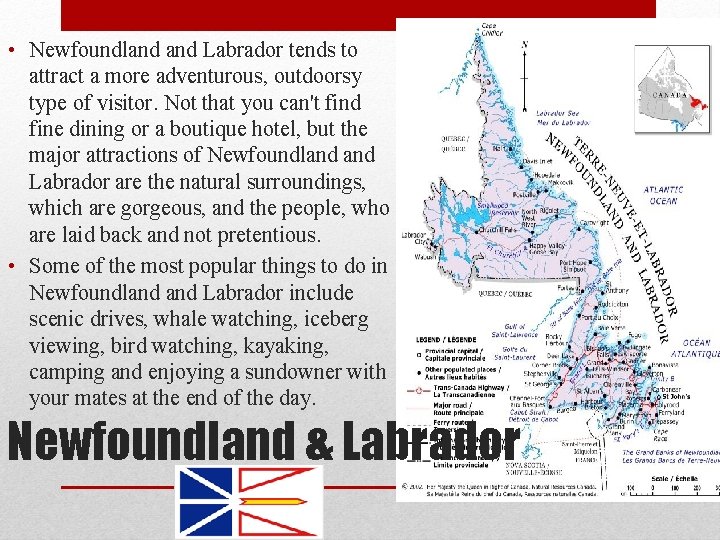
• Newfoundland Labrador tends to attract a more adventurous, outdoorsy type of visitor. Not that you can't find fine dining or a boutique hotel, but the major attractions of Newfoundland Labrador are the natural surroundings, which are gorgeous, and the people, who are laid back and not pretentious. • Some of the most popular things to do in Newfoundland Labrador include scenic drives, whale watching, iceberg viewing, bird watching, kayaking, camping and enjoying a sundowner with your mates at the end of the day. Newfoundland & Labrador
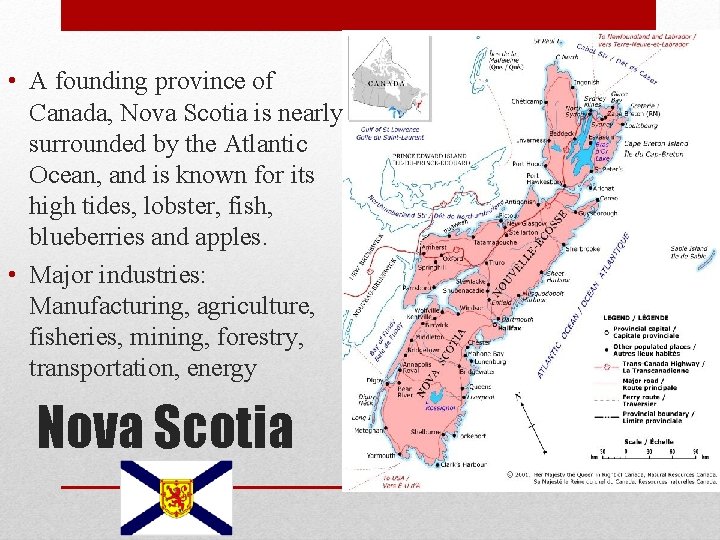
• A founding province of Canada, Nova Scotia is nearly surrounded by the Atlantic Ocean, and is known for its high tides, lobster, fish, blueberries and apples. • Major industries: Manufacturing, agriculture, fisheries, mining, forestry, transportation, energy Nova Scotia
• Ontario is the second largest province in Canada and about a third of Canada's population lives here. The economy in northern Ontario centers on natural resources, especially forestry and mining. The south is heavily industrialized, serving both Canadian and U. S. markets. Ontario accounts for about a quarter of all farm revenue in Canada, and service industries are also growing rapidly. Ontario
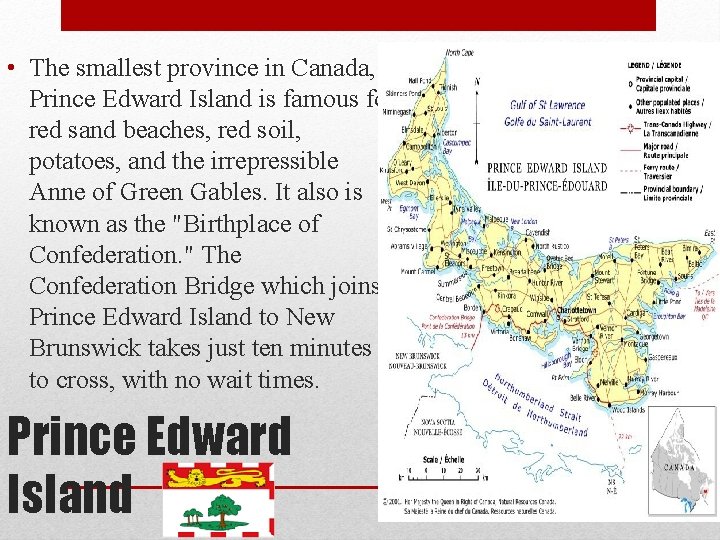
• The smallest province in Canada, Prince Edward Island is famous for red sand beaches, red soil, potatoes, and the irrepressible Anne of Green Gables. It also is known as the "Birthplace of Confederation. " The Confederation Bridge which joins Prince Edward Island to New Brunswick takes just ten minutes to cross, with no wait times. Prince Edward Island
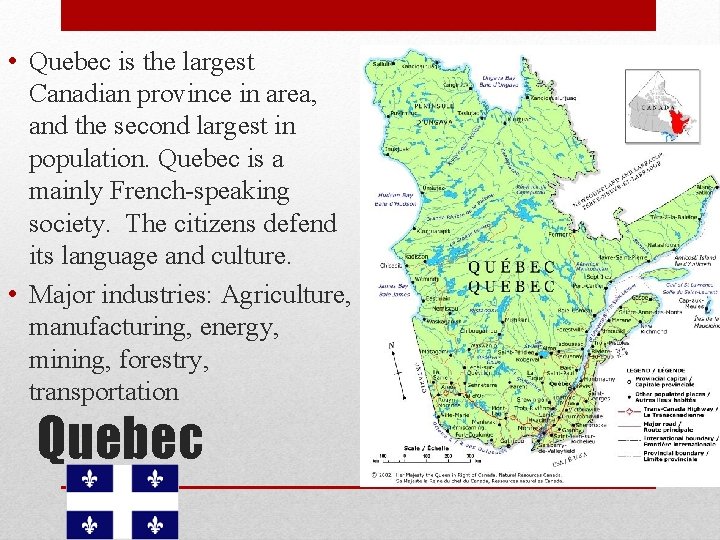
• Quebec is the largest Canadian province in area, and the second largest in population. Quebec is a mainly French-speaking society. The citizens defend its language and culture. • Major industries: Agriculture, manufacturing, energy, mining, forestry, transportation Quebec
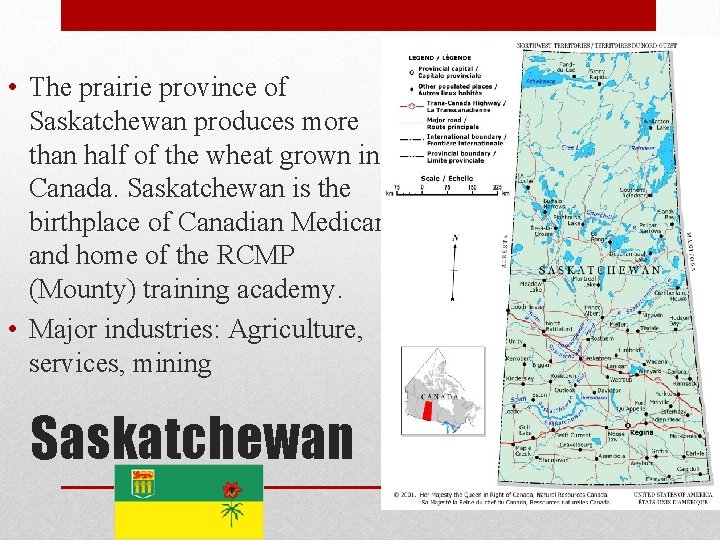
• The prairie province of Saskatchewan produces more than half of the wheat grown in Canada. Saskatchewan is the birthplace of Canadian Medicare and home of the RCMP (Mounty) training academy. • Major industries: Agriculture, services, mining Saskatchewan
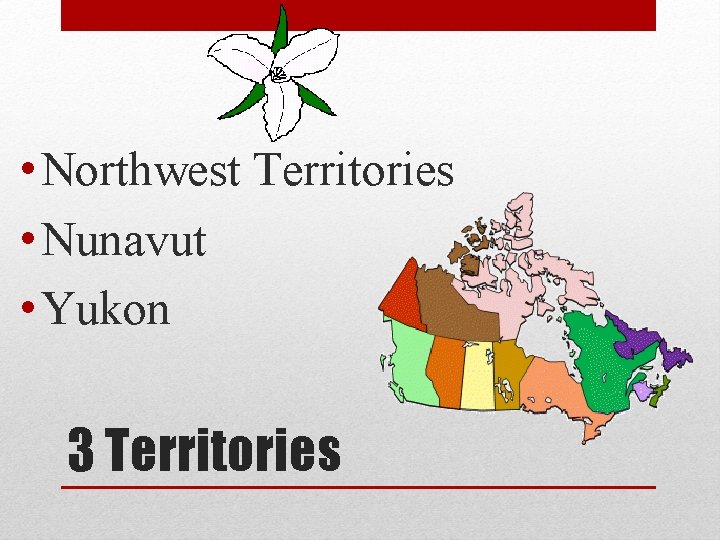
• Northwest Territories • Nunavut • Yukon 3 Territories
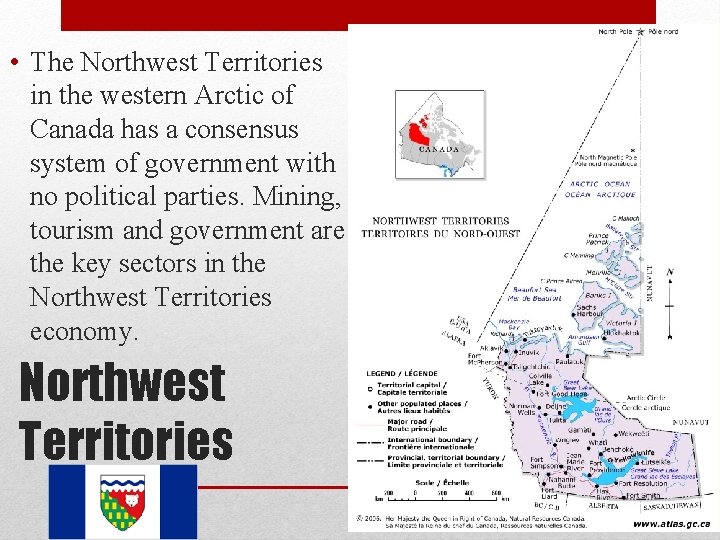
• The Northwest Territories in the western Arctic of Canada has a consensus system of government with no political parties. Mining, tourism and government are the key sectors in the Northwest Territories economy. Northwest Territories
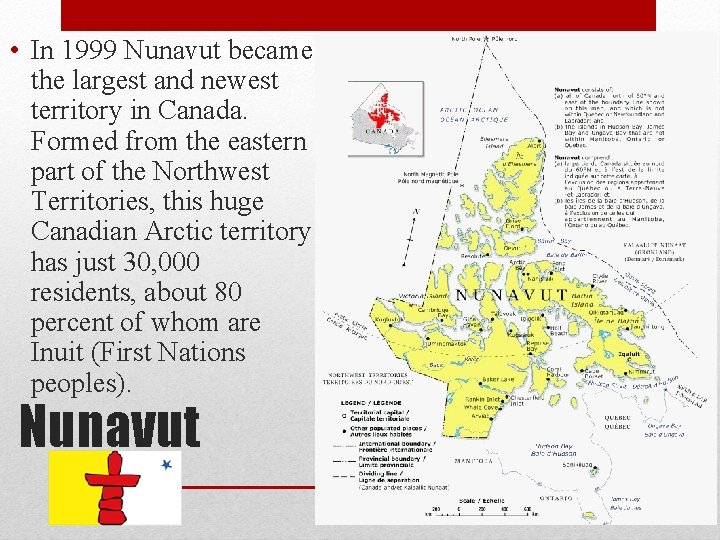
• In 1999 Nunavut became the largest and newest territory in Canada. Formed from the eastern part of the Northwest Territories, this huge Canadian Arctic territory has just 30, 000 residents, about 80 percent of whom are Inuit (First Nations peoples). Nunavut
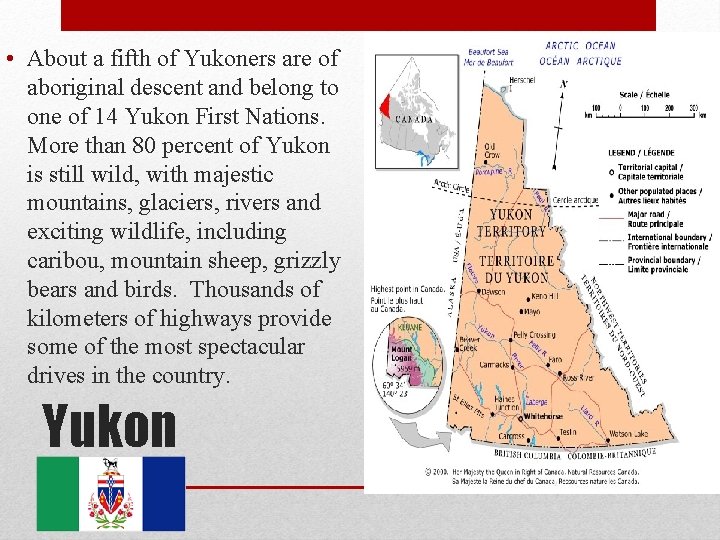
• About a fifth of Yukoners are of aboriginal descent and belong to one of 14 Yukon First Nations. More than 80 percent of Yukon is still wild, with majestic mountains, glaciers, rivers and exciting wildlife, including caribou, mountain sheep, grizzly bears and birds. Thousands of kilometers of highways provide some of the most spectacular drives in the country. Yukon
Now you must make a decision • • • Alberta British Columbia Manitoba New Brunswick Newfoundland & Labrador • Northwest Territories • Nova Scotia • Nunavut • Ontario • Prince Edward Island • Quebec • Saskatchewan • Yukon