
Introduction to the PatientReported Outcomes Measurement Information System
![PROMIS Banks (454 items) http: //www. assessmentcenter. net/ac 1/ • Emotional Distress [86] –](https://slidetodoc.com/presentation_image/0f89c86a51df4cbe0d53f9569efd44d6/image-3.jpg "PROMIS Banks (454 items) http: //www. assessmentcenter. net/ac 1/ • Emotional Distress [86] –")
- Slides: 19
Introduction to the Patient-Reported Outcomes Measurement Information System (PROMIS) UCLA Center for East-West Medicine 2428 Santa Monica Blvd. , Suite 208 Ron D. Hays, Ph. D. UCLA Department of Medicine February 11, 2010, ~12: 15 -1: 15 pm http: //twitter. com/Ron. DHays http: //gim. med. ucla. edu/Faculty. Pages/Hays/
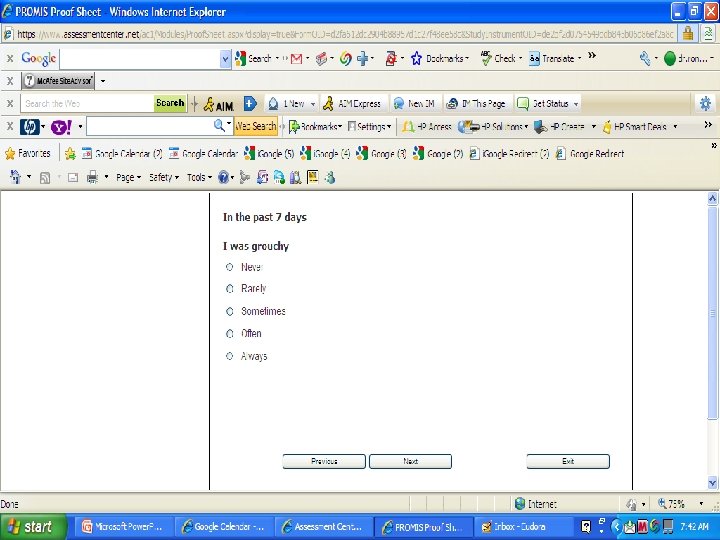
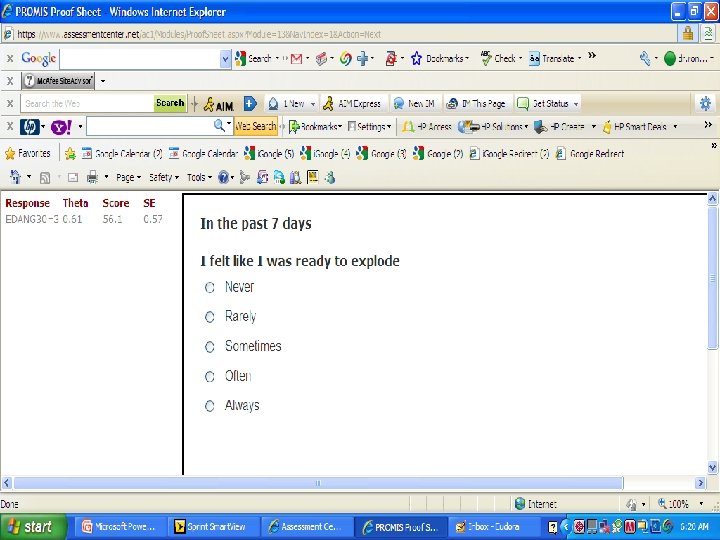
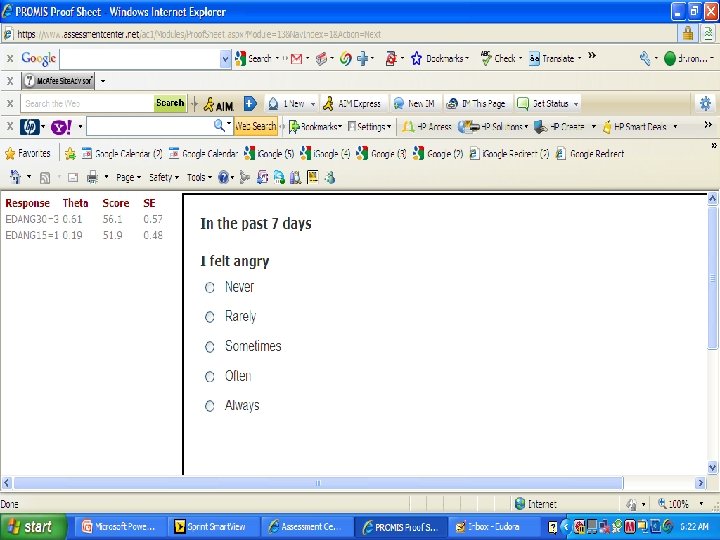
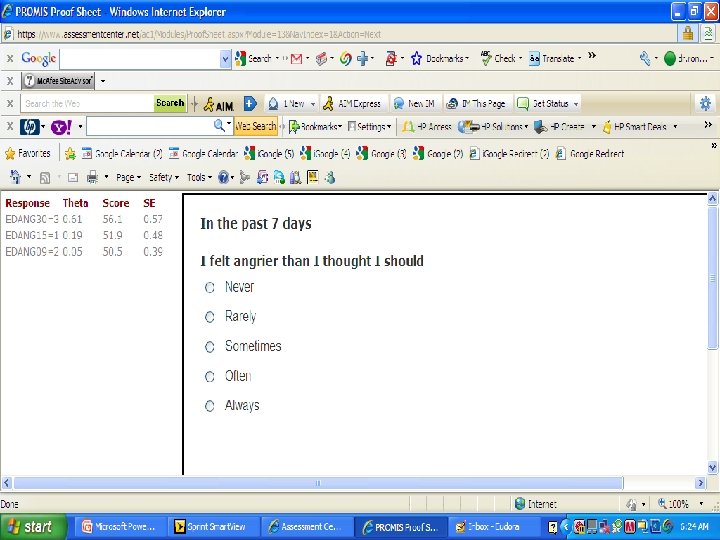
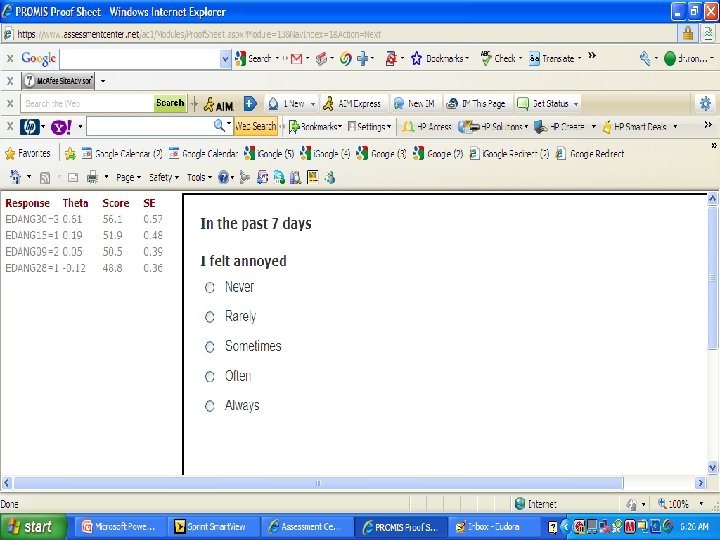
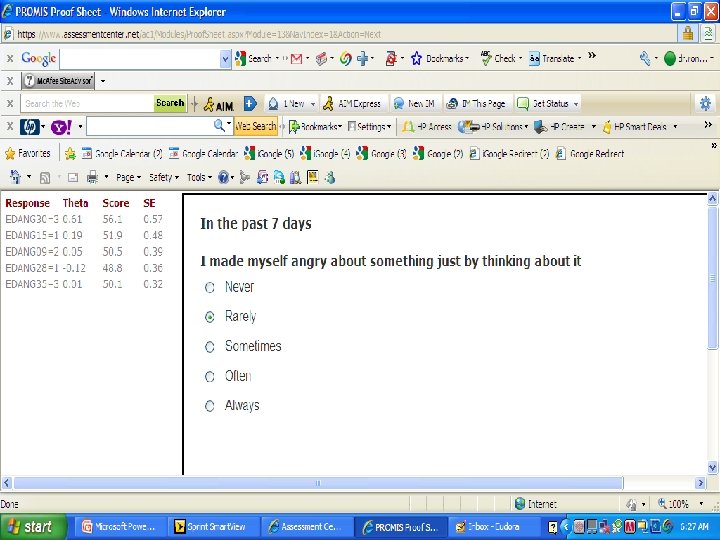
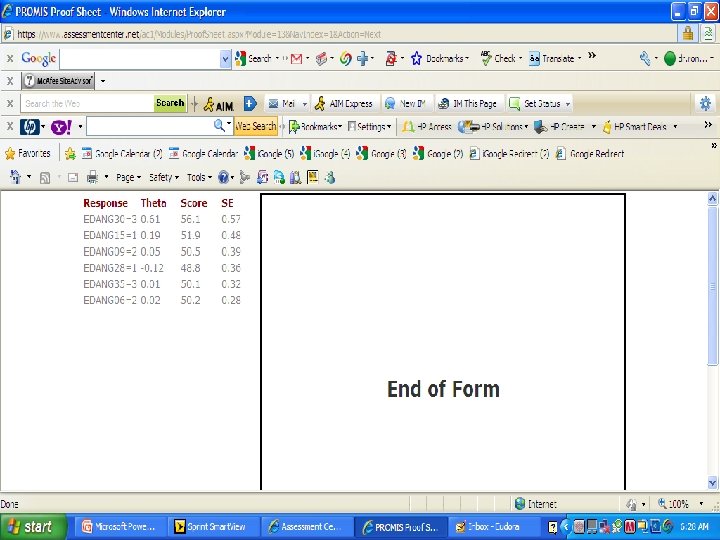
PROMIS • Patient-reported outcomes measurement information system (PROMIS) project – Item banks measuring patient-reported outcomes – Computer-adaptive testing (CAT) system • http: //www. nihpromis. org/
PROMIS Banks (454 items) http: //www. assessmentcenter. net/ac 1/ • Emotional Distress [86] – Depression (28) – Anxiety (29) – Anger (29) • Physical Function [124] • Pain [80] – Behavior (39) – Impact (41) • Fatigue [95] • Satisfaction with Participation in Discretionary Social Activities (12) • Satisfaction with Participation in Social Roles (14) • Sleep Disturbance (27) • Wake Disturbance (16)
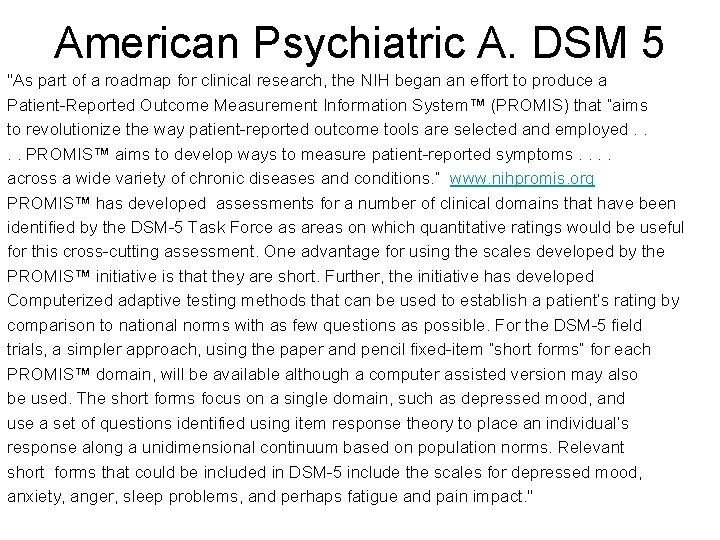
American Psychiatric A. DSM 5 "As part of a roadmap for clinical research, the NIH began an effort to produce a Patient-Reported Outcome Measurement Information System™ (PROMIS) that “aims to revolutionize the way patient-reported outcome tools are selected and employed. . PROMIS™ aims to develop ways to measure patient-reported symptoms. . across a wide variety of chronic diseases and conditions. ” www. nihpromis. org PROMIS™ has developed assessments for a number of clinical domains that have been identified by the DSM-5 Task Force as areas on which quantitative ratings would be useful for this cross-cutting assessment. One advantage for using the scales developed by the PROMIS™ initiative is that they are short. Further, the initiative has developed Computerized adaptive testing methods that can be used to establish a patient’s rating by comparison to national norms with as few questions as possible. For the DSM-5 field trials, a simpler approach, using the paper and pencil fixed-item “short forms” for each PROMIS™ domain, will be available although a computer assisted version may also be used. The short forms focus on a single domain, such as depressed mood, and use a set of questions identified using item response theory to place an individual’s response along a unidimensional continuum based on population norms. Relevant short forms that could be included in DSM-5 include the scales for depressed mood, anxiety, anger, sleep problems, and perhaps fatigue and pain impact. "
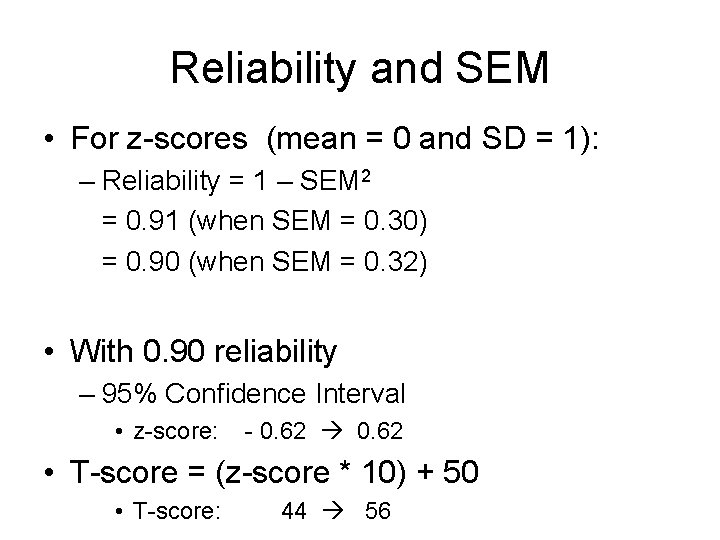
Reliability and SEM • For z-scores (mean = 0 and SD = 1): – Reliability = 1 – SEM 2 = 0. 91 (when SEM = 0. 30) = 0. 90 (when SEM = 0. 32) • With 0. 90 reliability – 95% Confidence Interval • z-score: - 0. 62 • T-score = (z-score * 10) + 50 • T-score: 44 56
Translational Tools for Clinical Studies of CAM Interventions • “T 1” Translation research: “apply discoveries generated during research in the laboratory, and in preclinical studies, to the development of trials and studies in humans. ” • “FOA is not to be used for randomized controlled trials of efficacy or effectiveness for CAM interventions, and applications that do propose such trials will be considered nonresponsive. ”
RFA-AT-10 -001 • National Center for Complementary and Alternative Medicine (NCCAM) – Dr. Partap S. Khalsa – Division of Extramural Research – Scientific/Research Contact • Due date: 03 -23 -10; Start date: 12 -01 -10 • 8 grants, 6 million total per year • 330 k direct costs/year; 5 -year duration
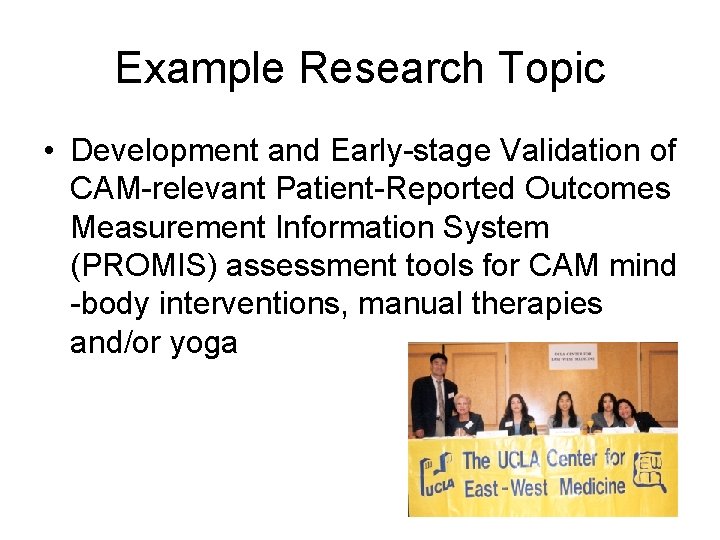
Example Research Topic • Development and Early-stage Validation of CAM-relevant Patient-Reported Outcomes Measurement Information System (PROMIS) assessment tools for CAM mind -body interventions, manual therapies and/or yoga
Focus • Item pool for evaluation of: – Spinal manipulation (osteopaths, physical therapists, chiropractors) – Massage (accupressure) – Acupuncture – Yoga • NHIS indicates that 1/3 of CAMS use for treatment of chronic pain disorders (back pain largest component)
Steps • • Review literature Focus groups Draft items Cognitive interviews Revise item pool Field test Finalize item pool for future studies
Example PROMIS Publications • Arthritis Res Ther. 2009; 11(6): R 191. Epub 2009 Dec 16. Better assessment of physical function: item improvement is neglected but essential. • Qual Life Res. 2010 Feb; 19(1): 125 -36. Epub 2009 Nov 26. Efficiency of static and computer adaptive short forms compared to full-length measures of depressive symptoms. • Pain. 2009 Nov; 146(1 -2): 158 -69. Epub 2009 Aug 15. Development and psychometric analysis of the PROMIS pain behavior item bank. • Qual Life Res. 2009 Sep; 18(7): 873 -80. Epub 2009 Jun 19. Development of physical and mental health summary scores from the patient-reported outcomes measurement information system (PROMIS) global items.
Thank you!