
Introduction to the Old English Period of British
Introduction to the Old English Period of British Literature (450 -1066 A. D. )
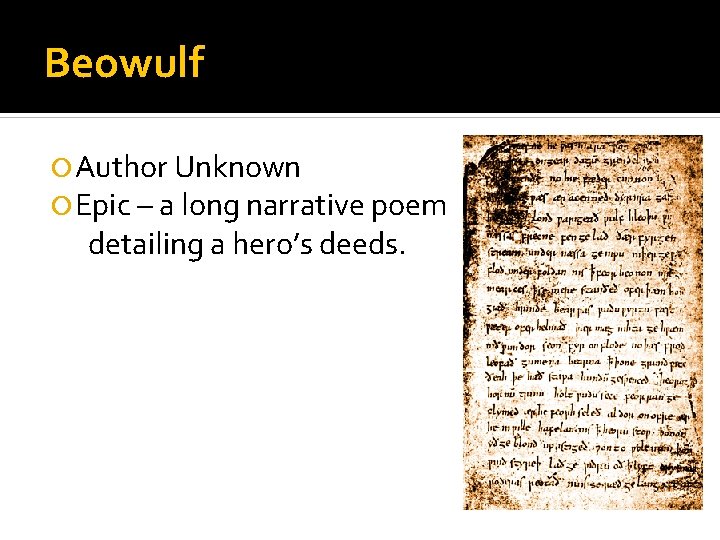
Beowulf Author Unknown Epic – a long narrative poem detailing a hero’s deeds.
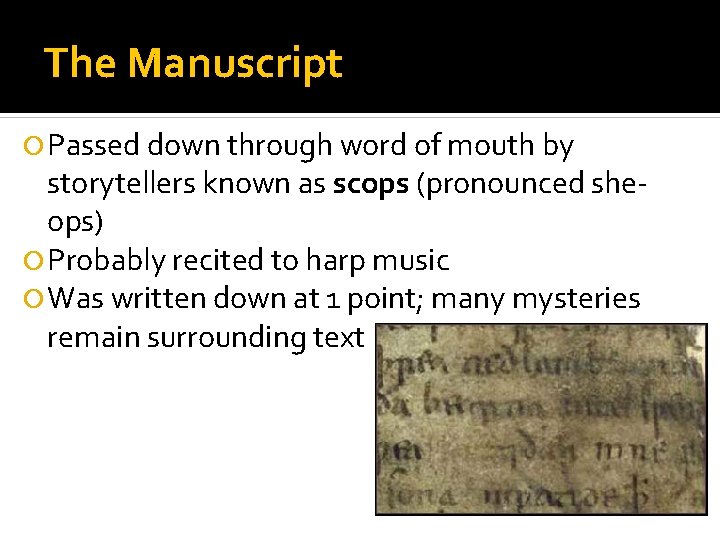
The Manuscript Passed down through word of mouth by storytellers known as scops (pronounced sheops) Probably recited to harp music Was written down at 1 point; many mysteries remain surrounding text
The Manuscript Events in the poem take place between late 5 th century & early 7 th century Composed in Old English or Anglo-Saxon Considered earliest major work of English poetry A single manuscript exists, now in British Library in London Caught fire in 1731, left pages burned and brittle

Original Style 3, 000 lines long Unrhymed, four-beat alliterative lines called alliterative verse Title added later, no title included in manuscript

Anglo Saxon Society Lived in tribes Kings were decided by deeds, not last names Spoke Old English Pagans before adopting Christianity Pagans = strong nature presence; strength of warrior Anglo Saxons mixed both beliefs – Beowulf contains traces of both beliefs
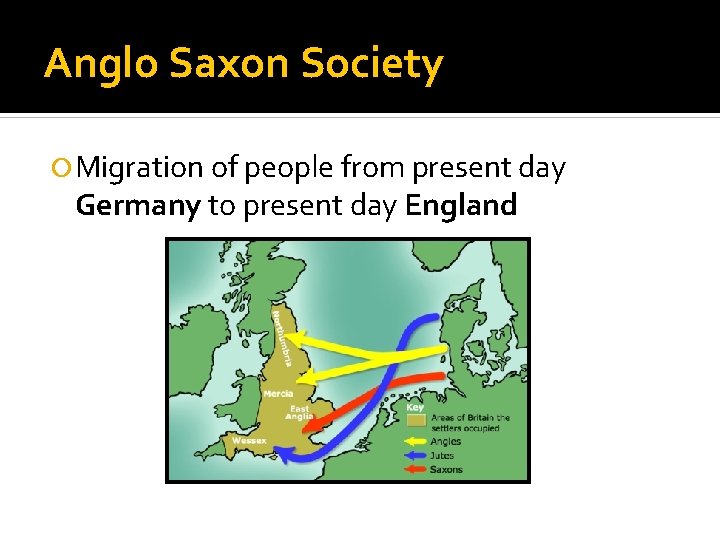
Anglo Saxon Society Migration of people from present day Germany to present day England
Anglo Saxon Society People Living on the British Isles Picts – Pre-Celtic Britons – Celtic Gaels – Celtic Roman armies conquered the Britons Romans introduced cities, stone roads, written scholarship, and Christianity. Romans abandoned Britain
Anglo Saxon Society Even when they adopted Christianity, they valued heroic ideals and traditional values Culture valued human contact, family, virtue, and a good story Valued heroic code over tribal loyalties Feared humiliation and loneliness Desired richness, power, and valued heroic actions of warriors
An Overview Story of noble warrior, Beowulf Becomes King of Geats Fights 3 major battles (Grendel, Grendel’s Mother, Dragon) He travels from Scandinavia (modern day Sweden) to Heorot (in modern day Denmark) Pronounced “hair-ut”
Heroic Code Warriors Strength, courage, loyalty Kings Generous to his thanes (warriors) Show hospitality Strong political leader Anyone can become king Society A good reputation
Protagonist Poem's Hero: Beowulf a mighty warrior from the land of the Geats (modern day Sweden) arrives in modern day Denmark (home of Speardanes or “Danes”) noble, courageous, bold, and stronger by far than any other living mortal
Beowulf Continued Arrives to build his reputation Important to Anglo Saxons When he arrives to Heorot, he has already defeated seamonsters
Antagonists Grendel nightmarish creature–half-beast, half-man–that strikes at night Born with dark heart and dark spirit Born out of chaos – from the lineage of the biblical Cain (who killed his own brother) Kings balance out chaos
Antagonists Continued Grendel's mother Disgusting creature Lives in swamp with her son Fire-breathing dragon Dragons believed to be former kings who were greedy Dragon is opposite of good king (ie: Beowulf)
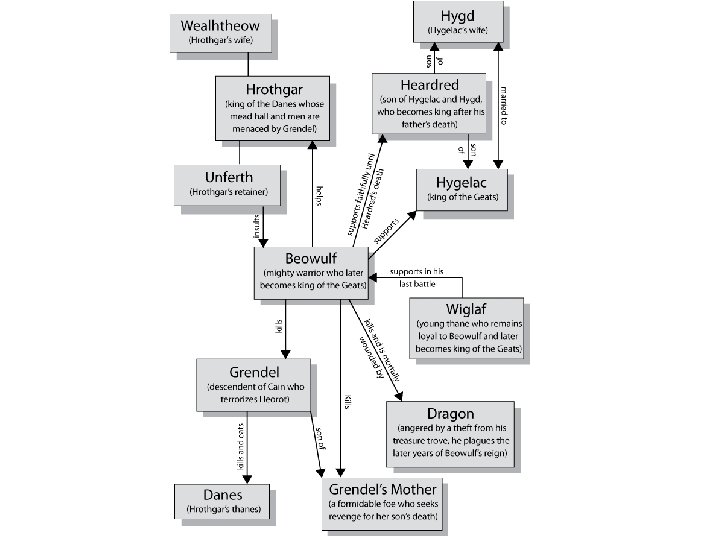
Other Characters King Hrothgar (Dane) Hroth = benefit of; gar= spear Who Beowulf travels to help Wiglaf (pronounced weeg-lauf) Wig= war/fight Young thane originally from Sweden (was a prisoner)– loyal to Beowulf in his last battle Edgetho (pronounced ej-thoe) Beowulf’s father who died when he was young
Tribes Danes Hrothgar and his thanes Geats Beowulf and his men Wulfing Tribe Hrothgar made peace with for Beowulf’s father
Themes Establishing Identity (Family Lineage vs. Individual Reputation) Good vs. Evil Strong Warrior vs. Strong King
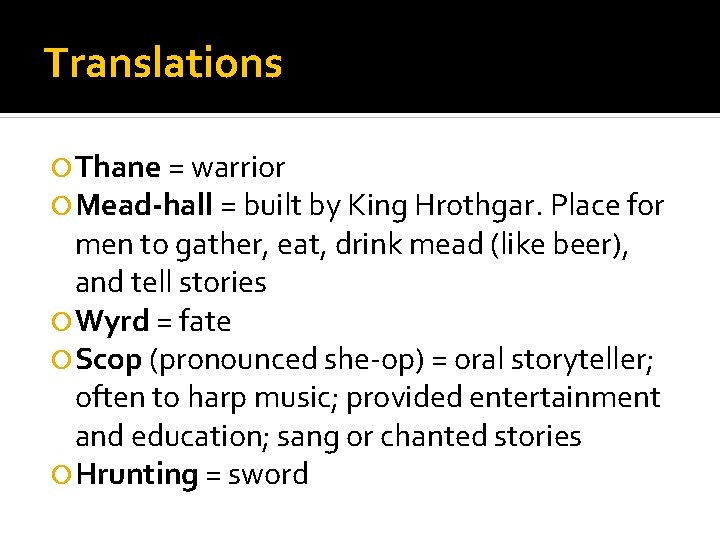
Translations Thane = warrior Mead-hall = built by King Hrothgar. Place for men to gather, eat, drink mead (like beer), and tell stories Wyrd = fate Scop (pronounced she-op) = oral storyteller; often to harp music; provided entertainment and education; sang or chanted stories Hrunting = sword
Beginning the story Heorot is the mead-hall King Hrothgar built his men after much military success Enjoyed prosperity there for a long time Until Grendel, monster who lives in the swamplands just outside Heorot, becomes angered by their celebrations He has been terrorizing Heorot for 12 years; Hrothgar’s men defenseless against him
Meanwhile. . Beowulf is well-known hero of Geatland not far from Denmark – the land of Danes He heard of the terror Grendel caused He brought 14 of his bravest men to help Traveled by sea to Denmark
Characteristic of an Epic Poem & its Hero
Anglo Saxon Literature Anglo-Saxon poetry used several devices, including: ▪ Metaphors: a comparison without “like” or “as” ▪ Similes: a comparison using “like” or “as” ▪ Alliteration: repetition of the initial consonant sound in a line of poetry ▪ Caesura: a pause in a line of poetry ▪ Repetition ▪ Kennings: a descriptive phrase or compound word that substitutes for one word Stories were often filled with violence and gore Most stories were about heroic warriors prevailing in battle Characters were driven by fate (wyrd) and their
Characteristics of Epic Poem Setting is vast scope, often involving more than 1 nation Plot is complicated by supernatural beings or events and may involve a long, dangerous journey Poem reflects timeless values (ex: courage, honor) Poem treats universal themes (ex: life and death; good and evil) Major characters often deliver long, serious speeches What are some examples of present day epics? Lord of the Rings Star Wars
Characteristics of Epic Hero Is of noble of birth or high position; often of great historical or legendary importance Character traits reflect important ideals of his society Performs courageous (sometimes superhuman) deeds that reflect the values of the era Actions of hero often determine the fate of a nation or group of people
- Slides: 26