
Introduction to the new mainframe Chapter 10 Overview
- Slides: 22
Introduction to the new mainframe Chapter 10 Overview of z/OS online workloads © Copyright IBM Corp. , 2005. All rights reserved.
Introduction to the new mainframe Chapter 10 objectives Be able to: Describe the role of large systems in a typical online business. • List the attributes common to most transactional systems. • Explain how databases are used in a typical online business. • Describe two models for network connectivity for large systems. • © Copyright IBM Corp. , 2005. All rights reserved.
Introduction to the new mainframe Key terms in this chapter • DBMS • multithreading • multitasking • root • segment • SQL • thread • transaction © Copyright IBM Corp. , 2005. All rights reserved.
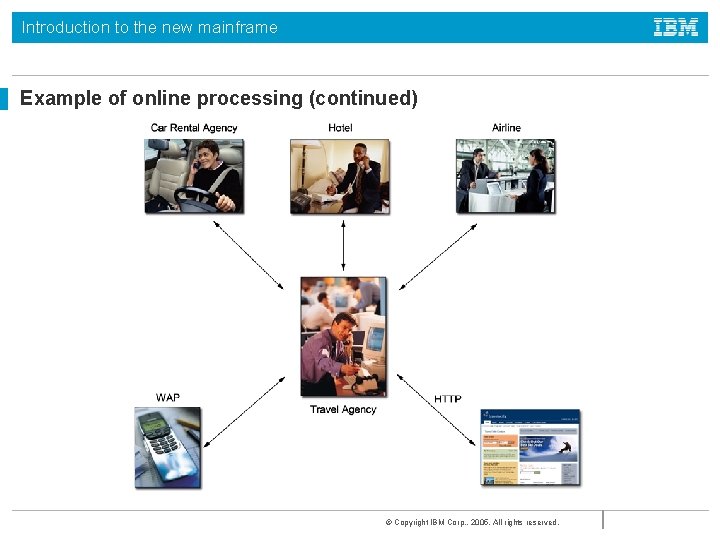
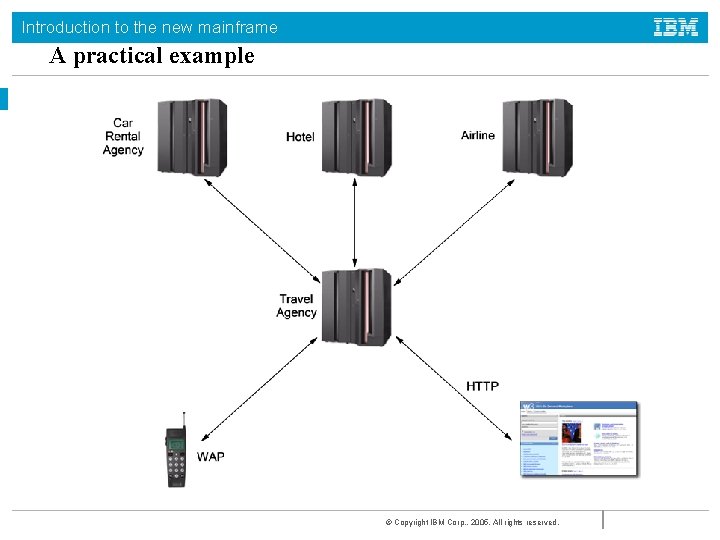
Introduction to the new mainframe Example of online processing: a travel agency Mainframe applications designed for: • • employee and customer information contacts with car rental companies hotels airline schedules Changes must be immediately reflected to application end-users (in real time) Contrast with batch processing © Copyright IBM Corp. , 2005. All rights reserved.
Introduction to the new mainframe Example of online processing (continued) © Copyright IBM Corp. , 2005. All rights reserved.
Introduction to the new mainframe A practical example © Copyright IBM Corp. , 2005. All rights reserved.
Introduction to the new mainframe Transactional systems Requirements: ACID • • Atomicity Consistency Isolation Durability © Copyright IBM Corp. , 2005. All rights reserved.
Introduction to the new mainframe Transactional systems: terminology • • Commit and roll back Multitasking and multithreading Thread Reentrancy © Copyright IBM Corp. , 2005. All rights reserved.
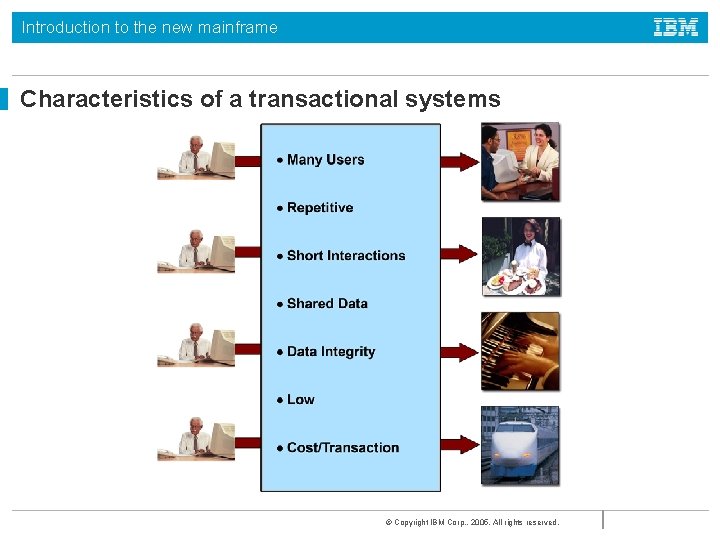
Introduction to the new mainframe Characteristics of a transactional systems © Copyright IBM Corp. , 2005. All rights reserved.
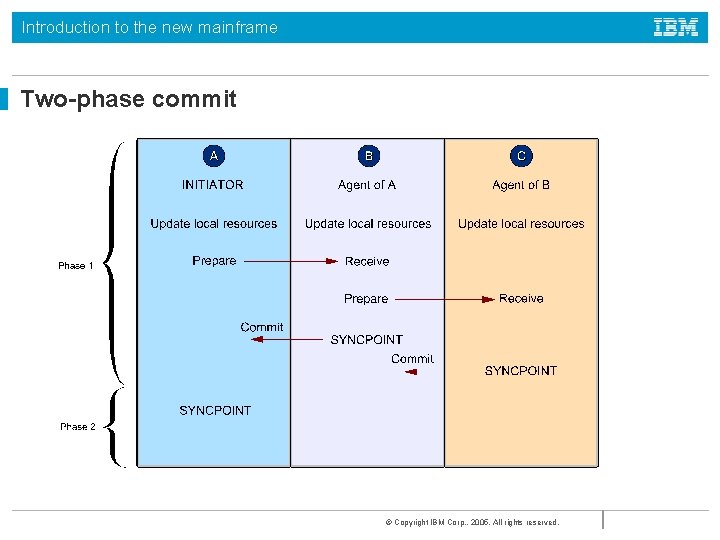
Introduction to the new mainframe Two-phase commit © Copyright IBM Corp. , 2005. All rights reserved.
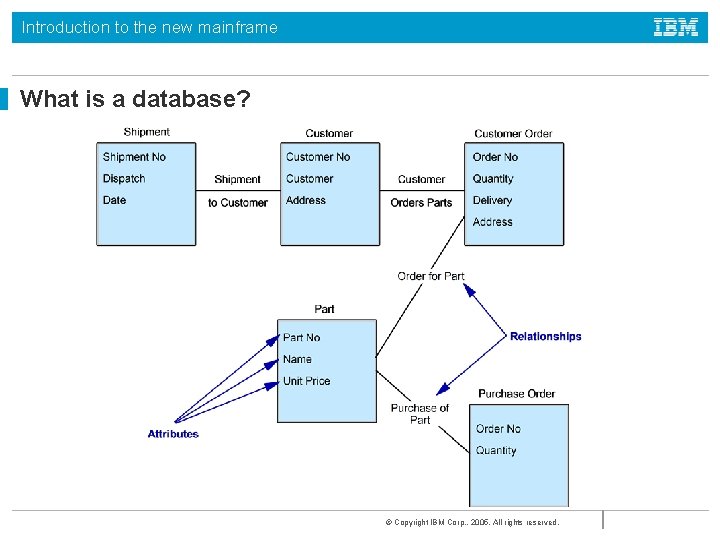
Introduction to the new mainframe What is a database? © Copyright IBM Corp. , 2005. All rights reserved.
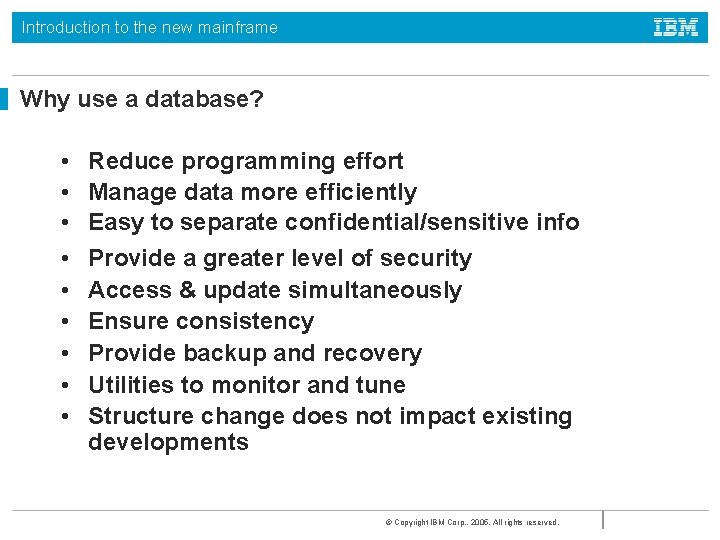
Introduction to the new mainframe Why use a database? • • • Reduce programming effort Manage data more efficiently Easy to separate confidential/sensitive info Provide a greater level of security Access & update simultaneously Ensure consistency Provide backup and recovery Utilities to monitor and tune Structure change does not impact existing developments © Copyright IBM Corp. , 2005. All rights reserved.
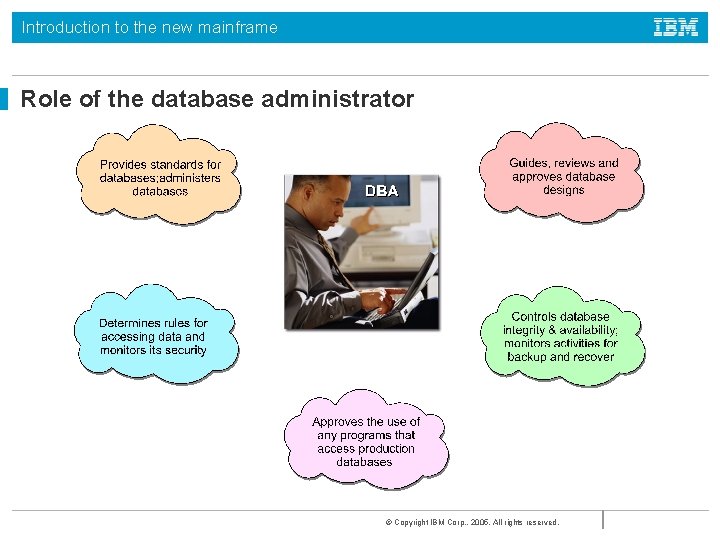
Introduction to the new mainframe Role of the database administrator © Copyright IBM Corp. , 2005. All rights reserved.
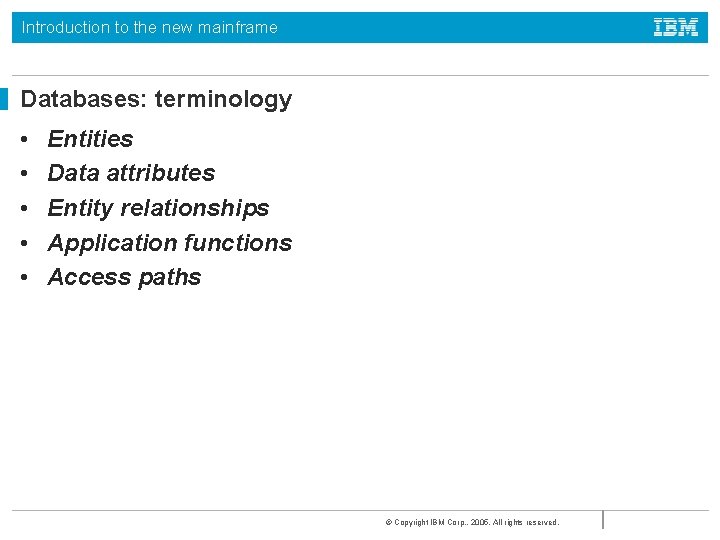
Introduction to the new mainframe Databases: terminology • • • Entities Data attributes Entity relationships Application functions Access paths © Copyright IBM Corp. , 2005. All rights reserved.
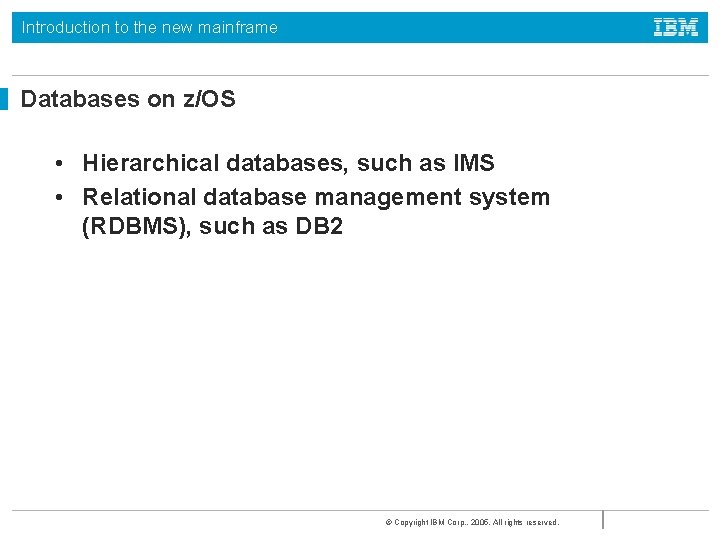
Introduction to the new mainframe Databases on z/OS • Hierarchical databases, such as IMS • Relational database management system (RDBMS), such as DB 2 © Copyright IBM Corp. , 2005. All rights reserved.
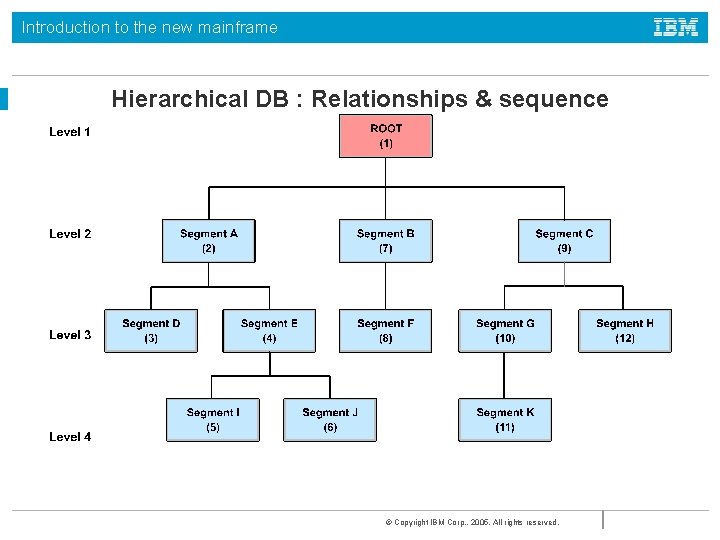
Introduction to the new mainframe Hierarchical DB : Relationships & sequence © Copyright IBM Corp. , 2005. All rights reserved.
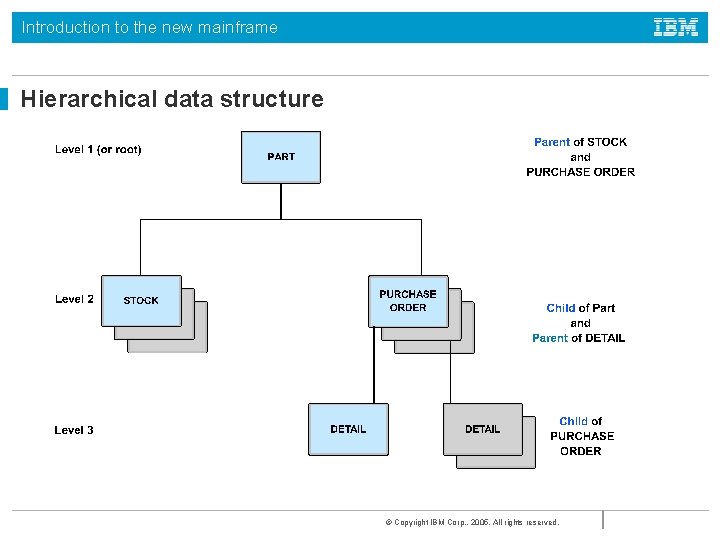
Introduction to the new mainframe Hierarchical data structure © Copyright IBM Corp. , 2005. All rights reserved.
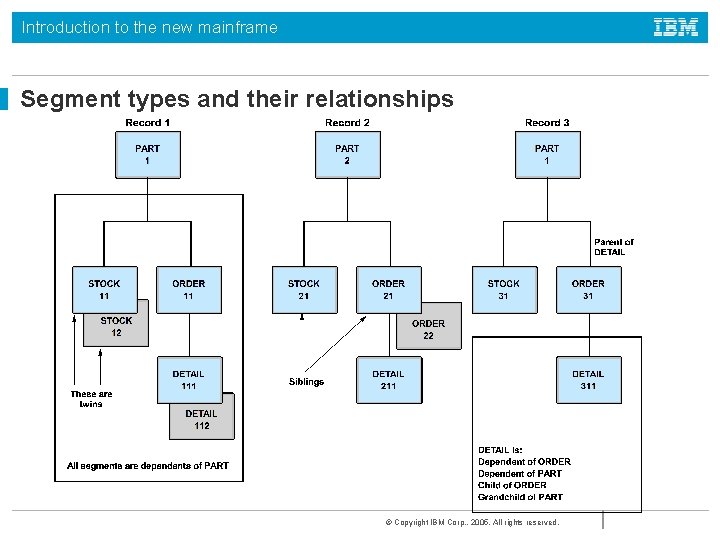
Introduction to the new mainframe Segment types and their relationships © Copyright IBM Corp. , 2005. All rights reserved.
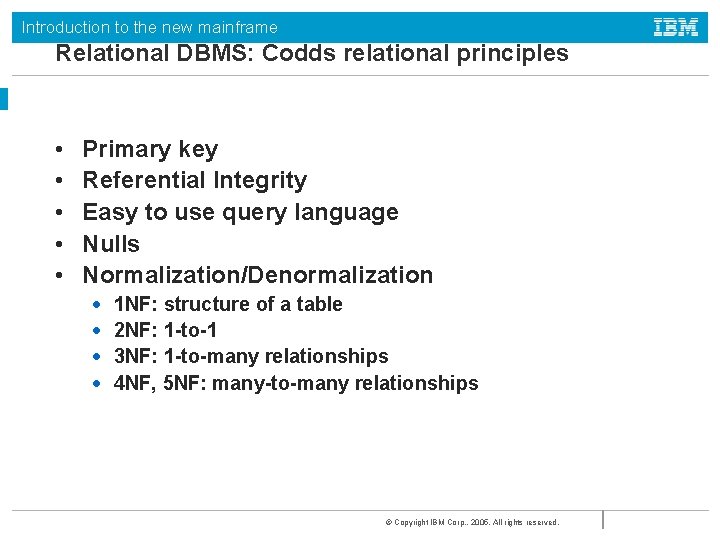
Introduction to the new mainframe Relational DBMS: Codds relational principles • • • Primary key Referential Integrity Easy to use query language Nulls Normalization/Denormalization • • 1 NF: structure of a table 2 NF: 1 -to-1 3 NF: 1 -to-many relationships 4 NF, 5 NF: many-to-many relationships © Copyright IBM Corp. , 2005. All rights reserved.
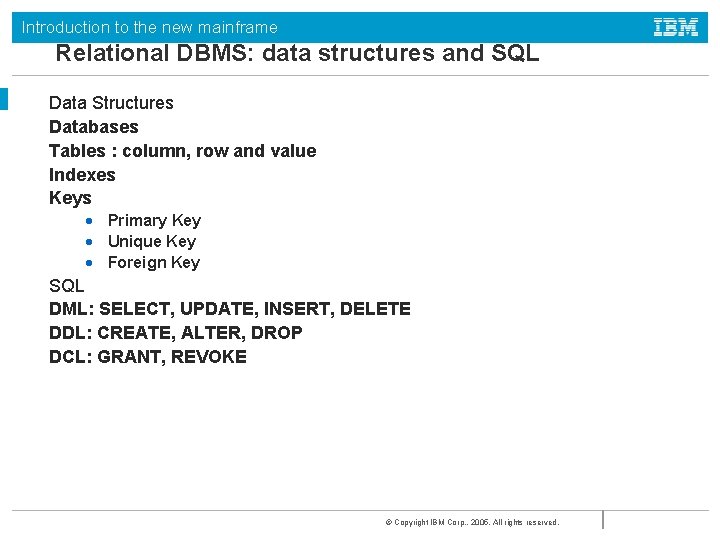
Introduction to the new mainframe Relational DBMS: data structures and SQL Data Structures Databases Tables : column, row and value Indexes Keys • Primary Key • Unique Key • Foreign Key SQL DML: SELECT, UPDATE, INSERT, DELETE DDL: CREATE, ALTER, DROP DCL: GRANT, REVOKE © Copyright IBM Corp. , 2005. All rights reserved.
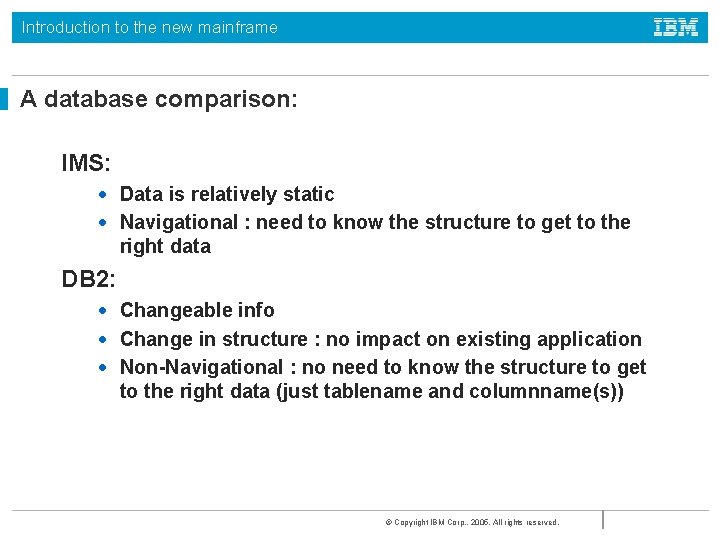
Introduction to the new mainframe A database comparison: IMS: • Data is relatively static • Navigational : need to know the structure to get to the right data DB 2: • Changeable info • Change in structure : no impact on existing application • Non-Navigational : no need to know the structure to get to the right data (just tablename and columnname(s)) © Copyright IBM Corp. , 2005. All rights reserved.
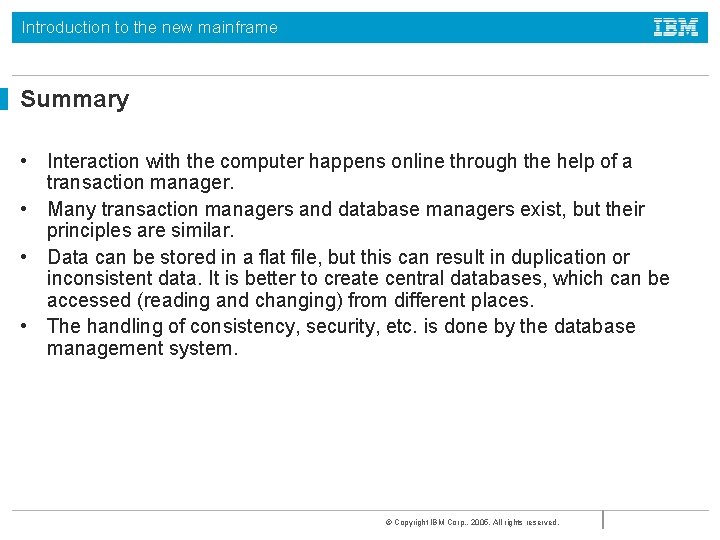
Introduction to the new mainframe Summary • Interaction with the computer happens online through the help of a transaction manager. • Many transaction managers and database managers exist, but their principles are similar. • Data can be stored in a flat file, but this can result in duplication or inconsistent data. It is better to create central databases, which can be accessed (reading and changing) from different places. • The handling of consistency, security, etc. is done by the database management system. © Copyright IBM Corp. , 2005. All rights reserved.