
Introduction to the Muscular System October 21 2019
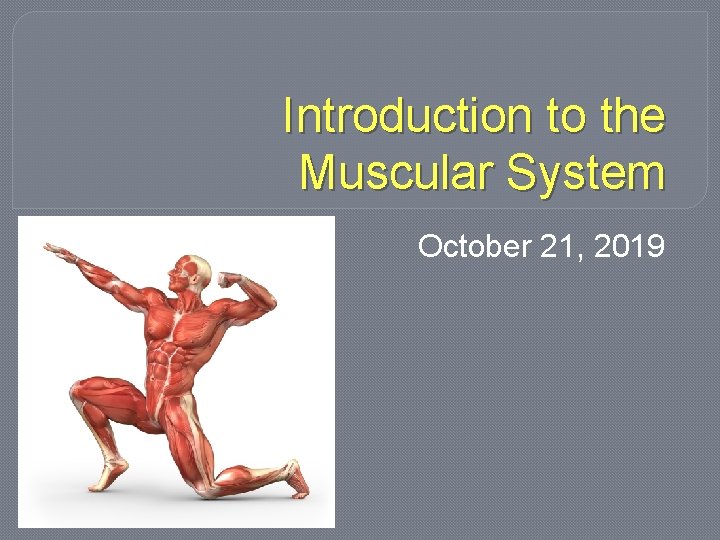
Introduction to the Muscular System October 21, 2019
Muscle Functions What are the functions of muscles?
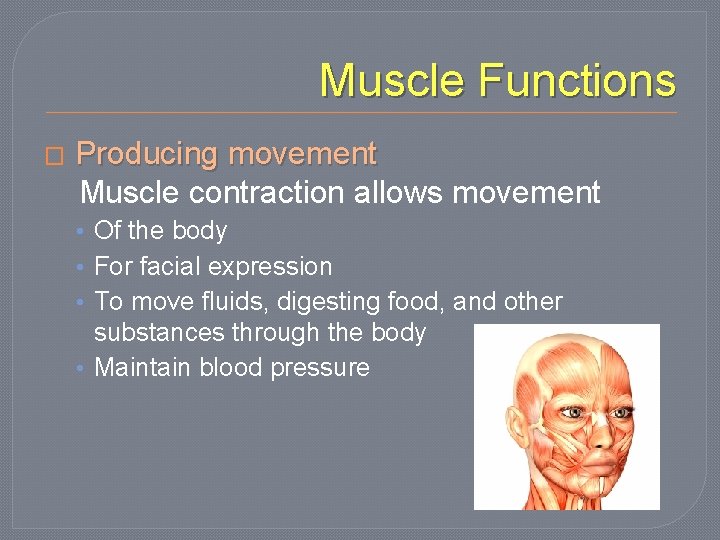
Muscle Functions � Producing movement Muscle contraction allows movement • Of the body • For facial expression • To move fluids, digesting food, and other substances through the body • Maintain blood pressure

Muscle Functions � Maintaining posture Muscles are constantly varying their contraction to maintain posture while we are seated or standing. � Stabilizing joints Muscle contraction helps keep joints in position
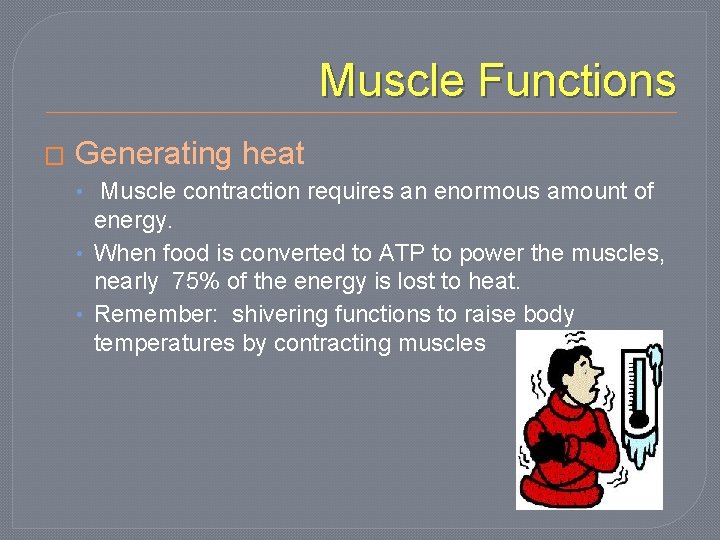
Muscle Functions � Generating heat • Muscle contraction requires an enormous amount of energy. • When food is converted to ATP to power the muscles, nearly 75% of the energy is lost to heat. • Remember: shivering functions to raise body temperatures by contracting muscles
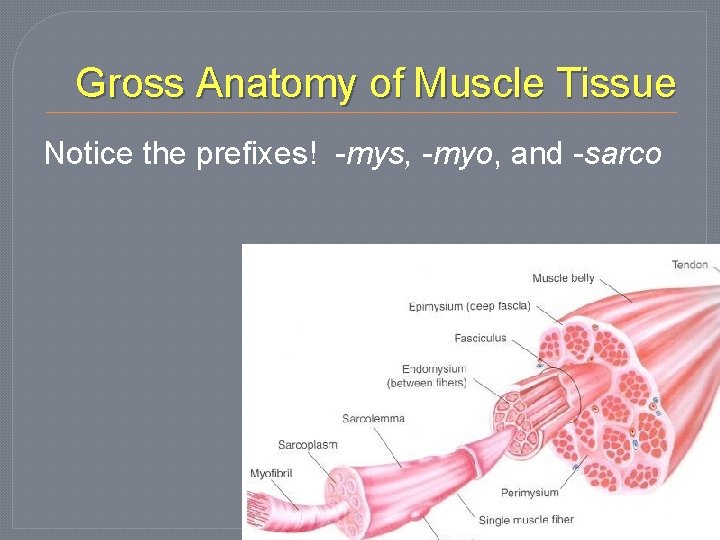
Gross Anatomy of Muscle Tissue Notice the prefixes! -mys, -myo, and -sarco
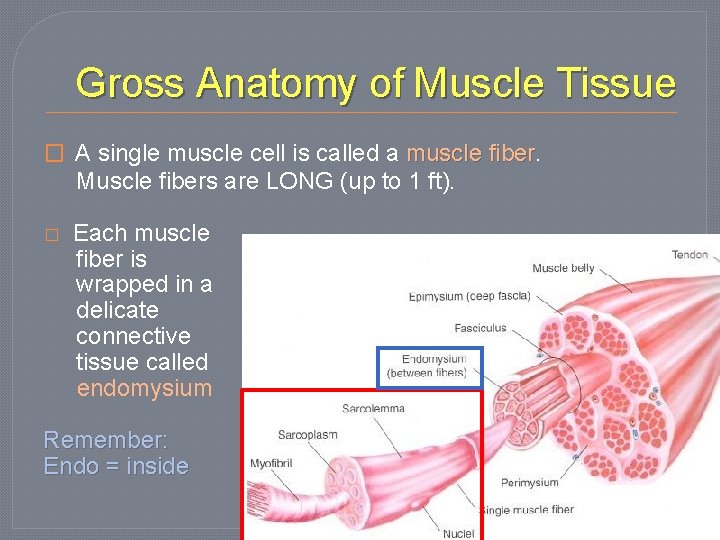
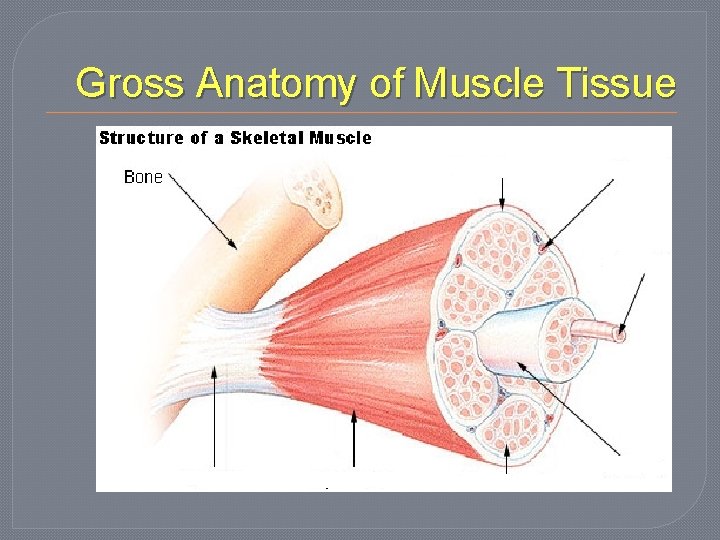
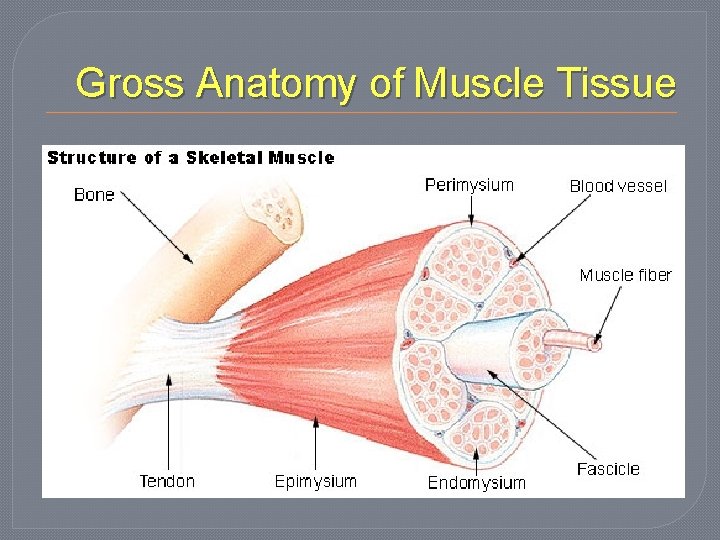
Gross Anatomy of Muscle Tissue � A single muscle cell is called a muscle fiber Muscle fibers are LONG (up to 1 ft). � Each muscle fiber is wrapped in a delicate connective tissue called endomysium Remember: Endo = inside
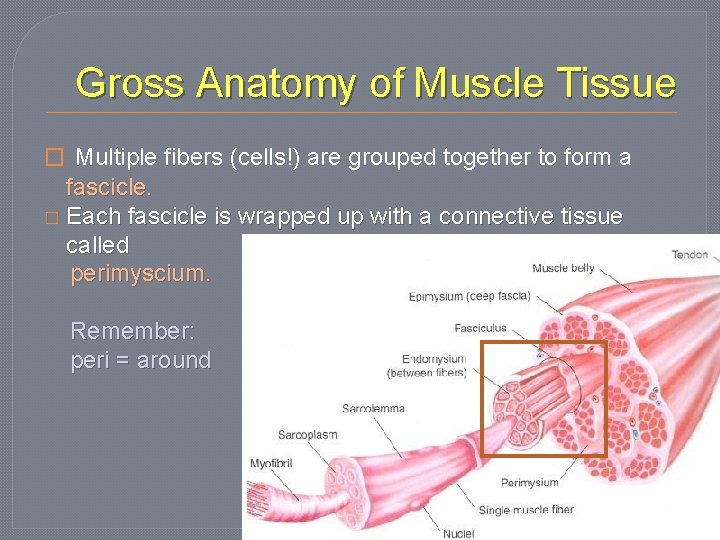
Gross Anatomy of Muscle Tissue � Multiple fibers (cells!) are grouped together to form a fascicle. � Each fascicle is wrapped up with a connective tissue called perimyscium. Remember: peri = around
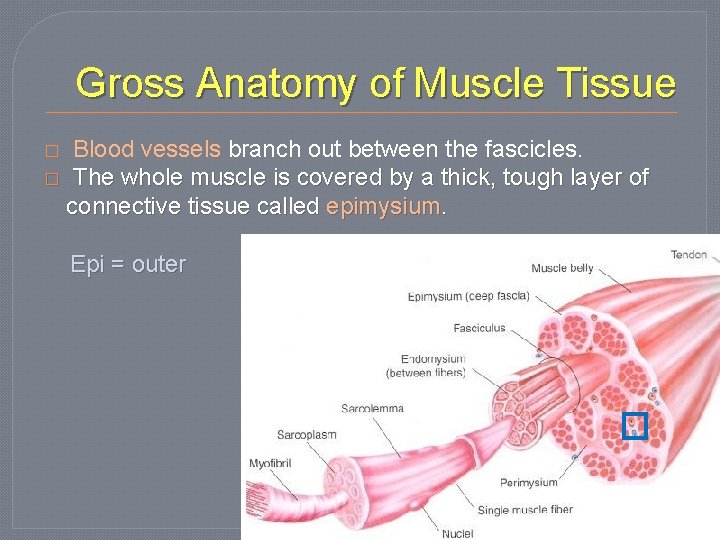
Gross Anatomy of Muscle Tissue Blood vessels branch out between the fascicles. � The whole muscle is covered by a thick, tough layer of connective tissue called epimysium. � Epi = outer
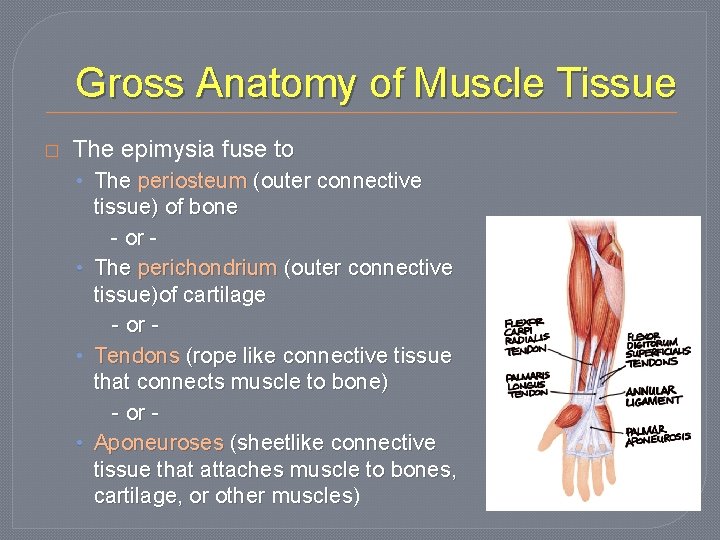
Gross Anatomy of Muscle Tissue � The epimysia fuse to • The periosteum (outer connective tissue) of bone - or • The perichondrium (outer connective tissue)of cartilage - or • Tendons (rope like connective tissue that connects muscle to bone) - or • Aponeuroses (sheetlike connective tissue that attaches muscle to bones, cartilage, or other muscles)
Gross Anatomy of Muscle Tissue
Gross Anatomy of Muscle Tissue
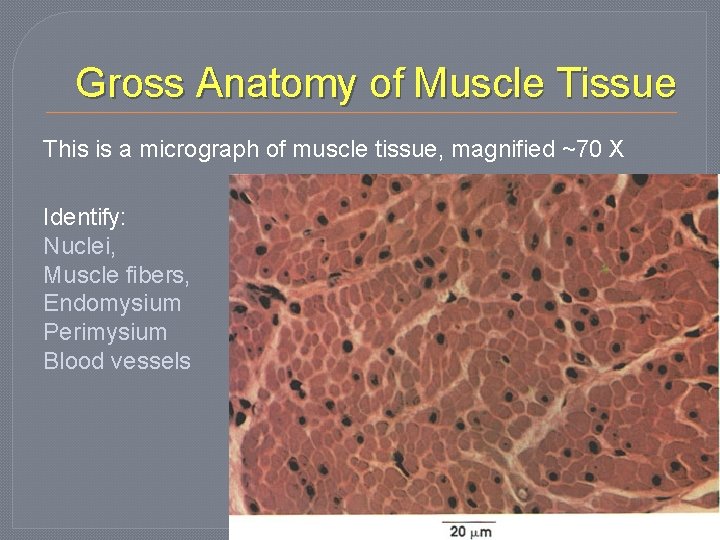
Gross Anatomy of Muscle Tissue This is a micrograph of muscle tissue, magnified ~70 X Identify: Nuclei, Muscle fibers, Endomysium Perimysium Blood vessels
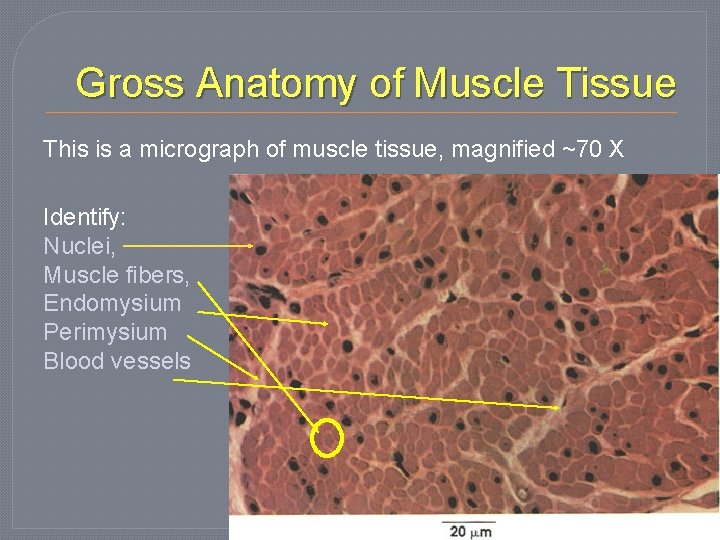
Gross Anatomy of Muscle Tissue This is a micrograph of muscle tissue, magnified ~70 X Identify: Nuclei, Muscle fibers, Endomysium Perimysium Blood vessels
Comparison of Skeletal, Smooth, and Cardiac Muscle What do you already know about the three types of muscles?
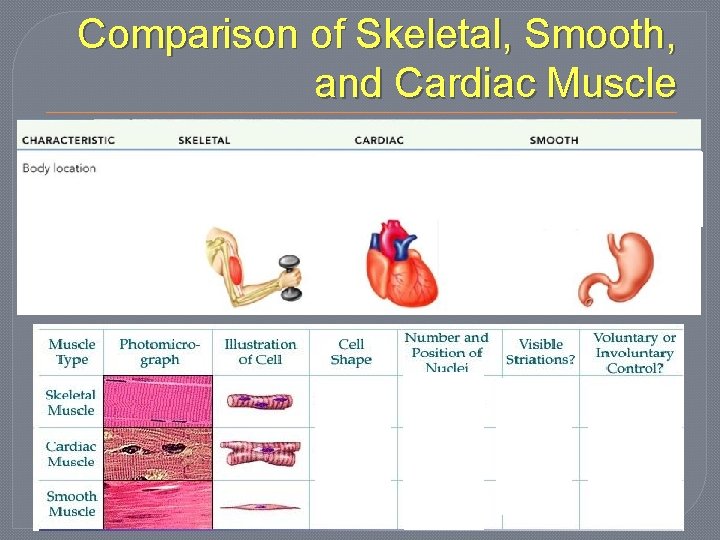
Comparison of Skeletal, Smooth, and Cardiac Muscle Attached to bones (or, in the face, to skin) Walls of heart Walls of hollow organs, airways, and arteries
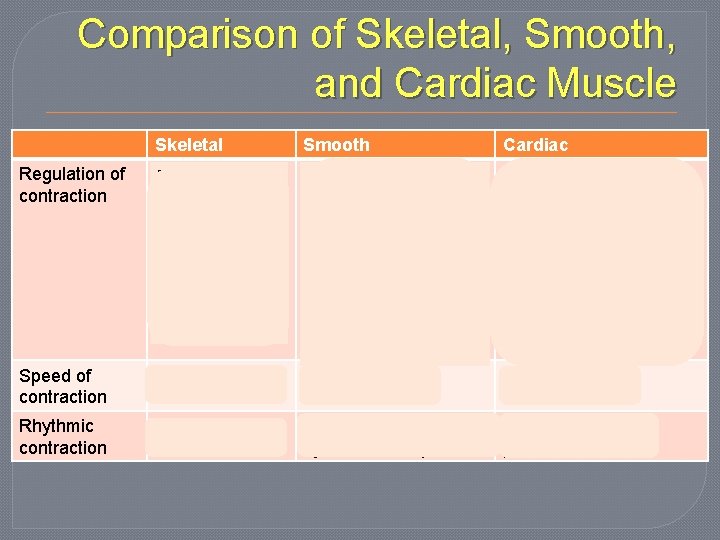
Comparison of Skeletal, Smooth, and Cardiac Muscle Skeletal Smooth Cardiac Nervous Muscle system excites contraction is contraction. stimulated by nervous No effect of system. hormones Hormones have no effect Nervous system Contraction can be excites or inhibits stimulated (excited) contraction. OR reduced (inhibited) by EITHER Hormones and other the nervous system chemicals (e. g. OR CO 2, OR hormones p. H, low O 2, ) may body chemicals (e. g. stimulate or inhibit p. H) contraction. Intrinsic regulation from a pacemaker within the heart. Speed of contraction Slow to fast Very slow Rhythmic contraction No Yes, can be triggered by stretch receptors Yes, has internal pacemaker Regulation of contraction Natural rhythm can be excited or inhibited by the nervous system OR by body hormones
Turn & Talk Relate at least 3 differences between skeletal, cardiac, and smooth muscle to differences in their function.
Quick Review 1) The connective tissue covering that encloses the sarcolemma of an individual muscle fiber is called the a) b) c) d) Epimysium Perimysium Endomysium periosteum
Quick Review 2) A fascicle is a) b) c) d) A muscle A bundle of muscle fibers A bundle of myofibrils A group of myofilaments
Quick Review 3) Muscle tissue that is involuntary a) b) c) d) e) cardiac muscle only Smooth muscle only Skeletal muscle only Cardiac and smooth muscle Cardiac and skeletal muscle
Quick Review 4) The muscle tissue that consists of single, very long, cylindrical, multinucleate cells with very obvious striations is: a) b) c) d) e) cardiac muscle only Smooth muscle only Skeletal muscle only Cardiac and smooth muscle Cardiac and skeletal muscle
Quick Review 5) Which of the following is NOT a function of the muscular system a) b) c) d) e) Producing movement Maintaining posture Stabilizing joints Generating heat hematopoiesis
- Slides: 23