
Introduction to the Mineral Exploration Activity What is
- Slides: 7
Introduction to the Mineral Exploration Activity
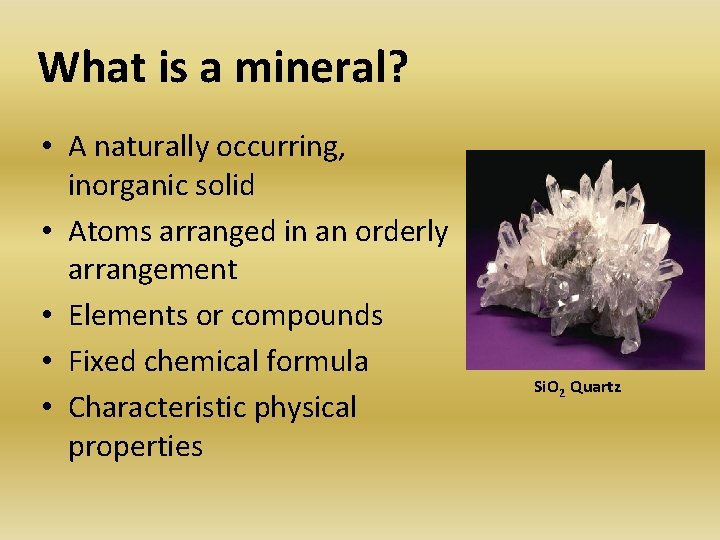
What is a mineral? • A naturally occurring, inorganic solid • Atoms arranged in an orderly arrangement • Elements or compounds • Fixed chemical formula • Characteristic physical properties Si. O 2 Quartz
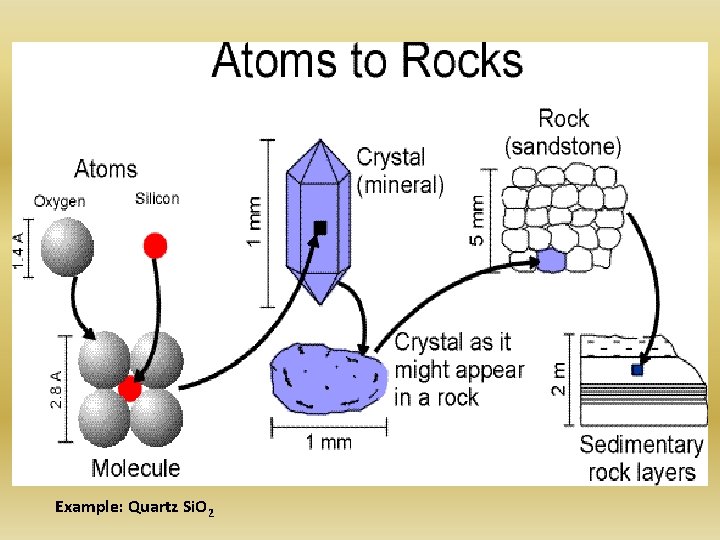
Example: Quartz Si. O 2
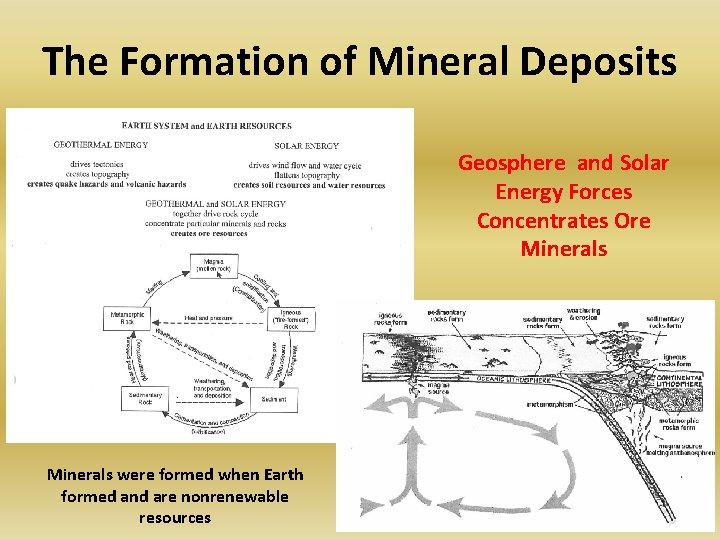
The Formation of Mineral Deposits Geosphere and Solar Energy Forces Concentrates Ore Minerals were formed when Earth formed and are nonrenewable resources
The Distribution of Mineral Deposits Earth’s Crust – Primarily rock of silica and oxygen (silicates) – 8 elements account for ~99% of the crust by mass – O 2, Si, Al, Fe, Ca, Mg, Na, K Oceans – Cover 2/3 of Earth’s surface, and is a reservoir for many elements and compounds. – Most are weathered from crustal rocks and carried to the oceans by rivers; some by wind or glaciers. – Concentrations of most minerals in the oceans, except Salt and Mg, are low and so are not economical to extract.
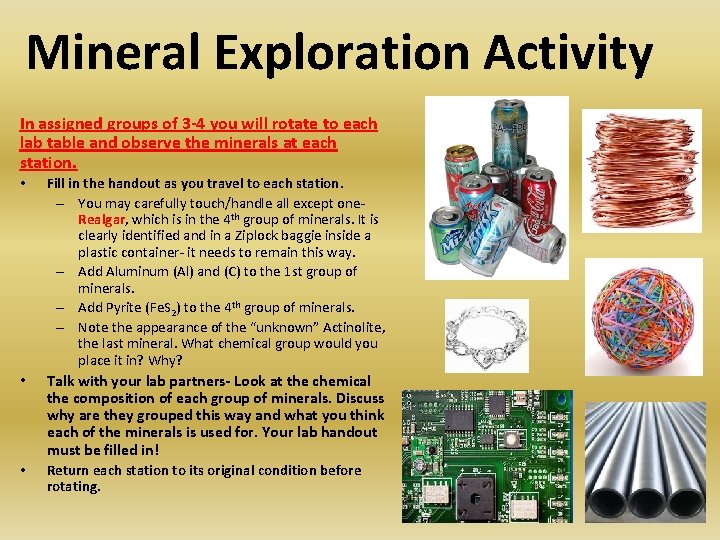
Mineral Exploration Activity In assigned groups of 3 -4 you will rotate to each lab table and observe the minerals at each station. • Fill in the handout as you travel to each station. – You may carefully touch/handle all except one. Realgar, which is in the 4 th group of minerals. It is clearly identified and in a Ziplock baggie inside a plastic container- it needs to remain this way. – Add Aluminum (Al) and (C) to the 1 st group of minerals. – Add Pyrite (Fe. S 2) to the 4 th group of minerals. – Note the appearance of the “unknown” Actinolite, the last mineral. What chemical group would you place it in? Why? • Talk with your lab partners- Look at the chemical the composition of each group of minerals. Discuss why are they grouped this way and what you think each of the minerals is used for. Your lab handout must be filled in! • Return each station to its original condition before rotating.