
INTRODUCTION TO THE MICROSCOPE History Types Care Parts


- Slides: 28
INTRODUCTION TO THE MICROSCOPE • History • Types • Care • Parts & functions • Focusing
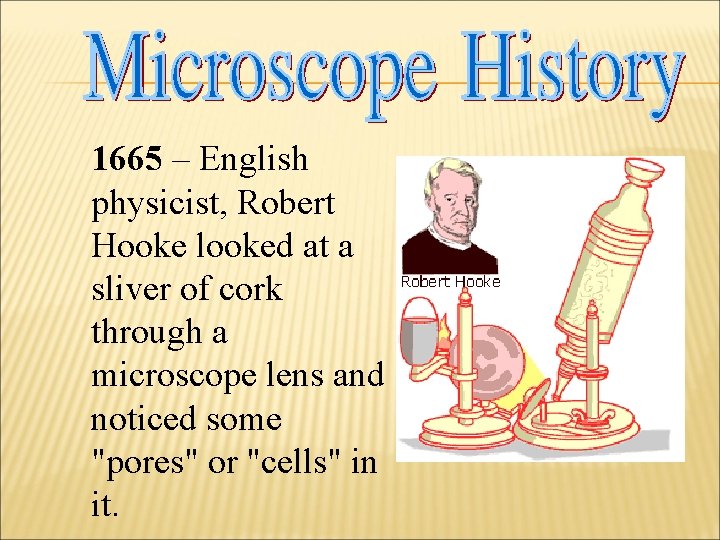
1665 – English physicist, Robert Hooke looked at a sliver of cork through a microscope lens and noticed some "pores" or "cells" in it.
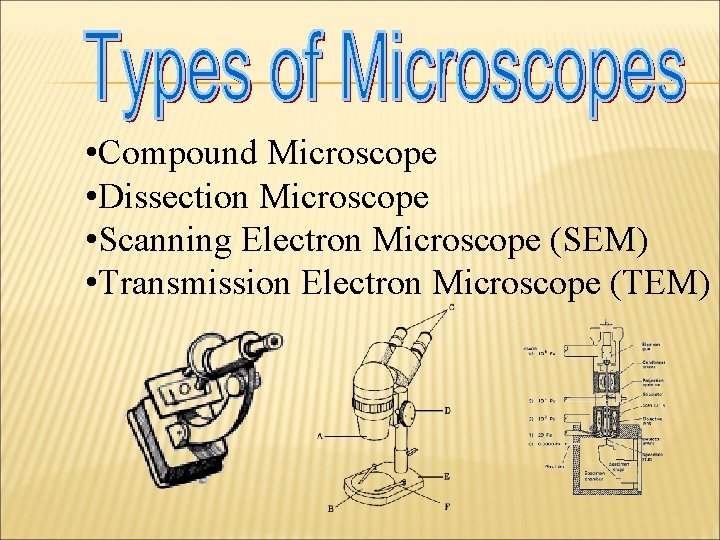
• Compound Microscope • Dissection Microscope • Scanning Electron Microscope (SEM) • Transmission Electron Microscope (TEM)
Always carry with 2 hands Never touch the lenses with your fingers. Only use lens paper for cleaning Keep objects clear of desk and cords When you are finished with your "scope", rotate the nosepiece so that it's on the low power objective, roll the stage down to lowest level, rubber band the cord, then replace the dust cover.
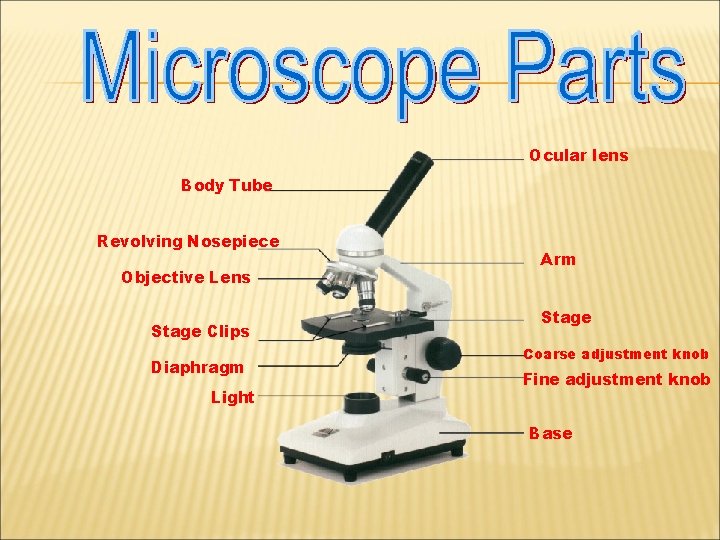
Ocular lens Body Tube Revolving Nosepiece Objective Lens Stage Clips Diaphragm Light Arm Stage Coarse adjustment knob Fine adjustment knob Base
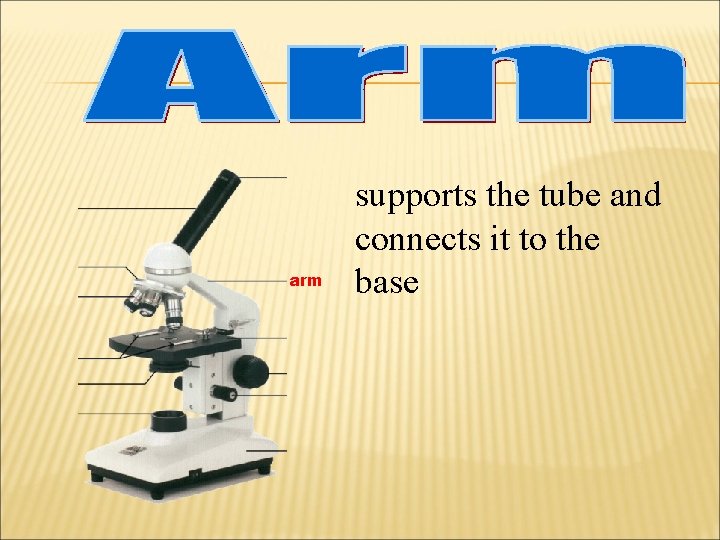
arm supports the tube and connects it to the base
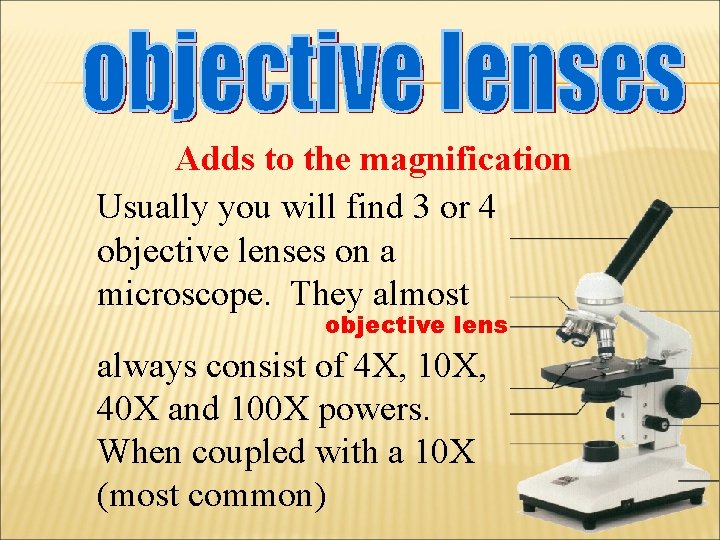
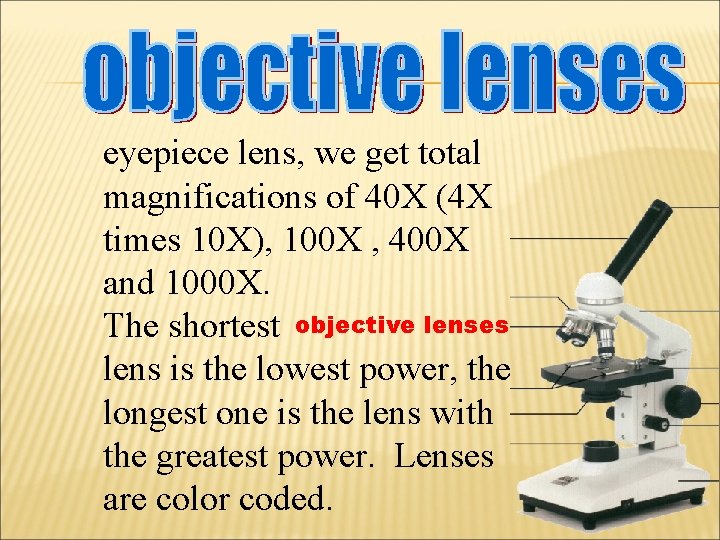
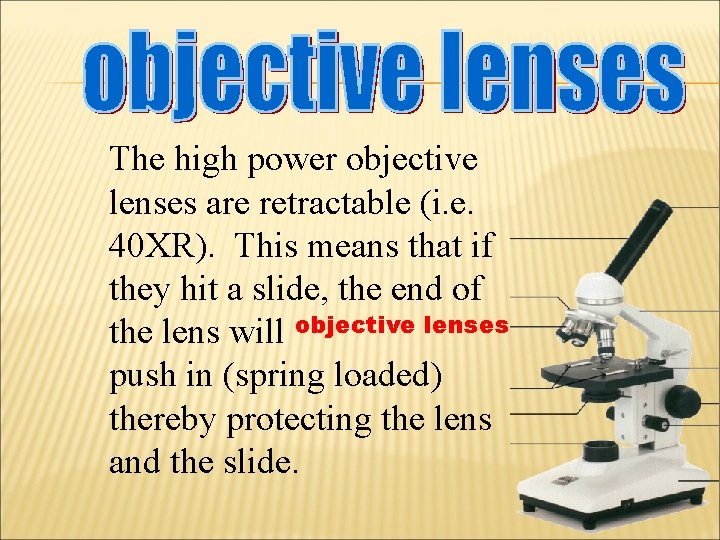
Adds to the magnification Usually you will find 3 or 4 objective lenses on a microscope. They almost objective lens always consist of 4 X, 10 X, 40 X and 100 X powers. When coupled with a 10 X (most common)
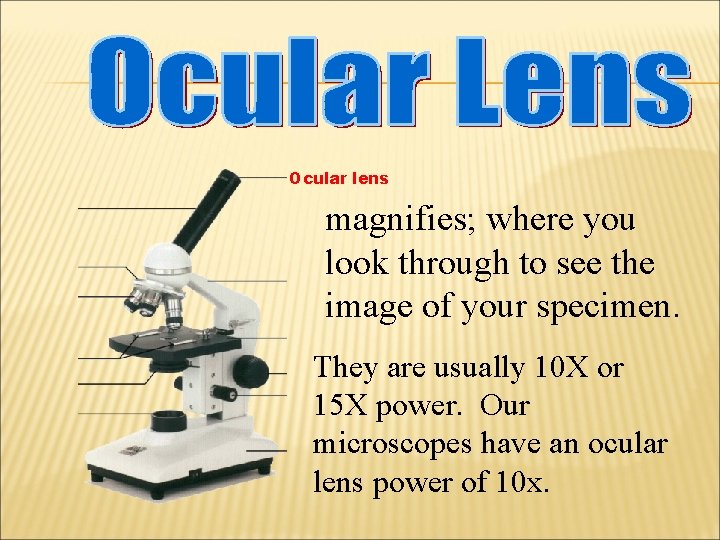
Ocular lens magnifies; where you look through to see the image of your specimen. They are usually 10 X or 15 X power. Our microscopes have an ocular lens power of 10 x.
the flat platform where you place your slides stage
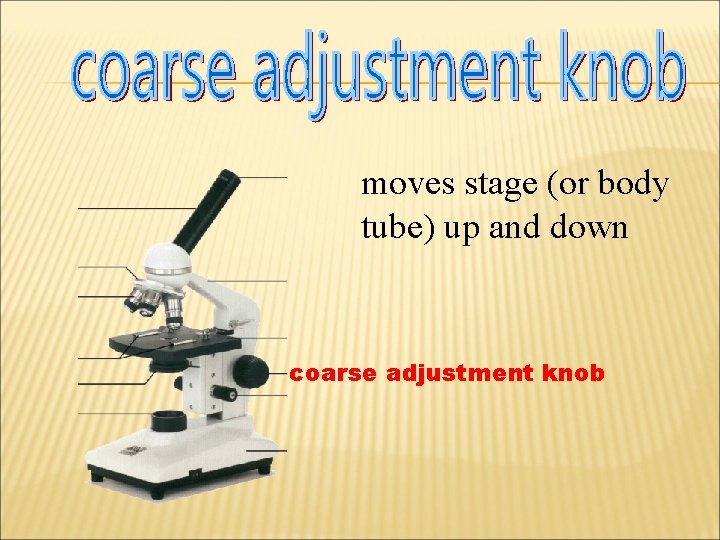
moves stage (or body tube) up and down coarse adjustment knob
eyepiece lens, we get total magnifications of 40 X (4 X times 10 X), 100 X , 400 X and 1000 X. The shortest objective lenses lens is the lowest power, the longest one is the lens with the greatest power. Lenses are color coded.
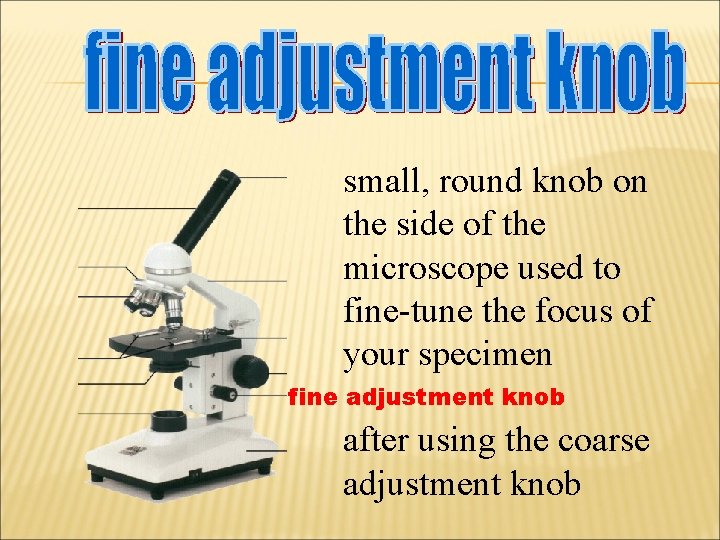
small, round knob on the side of the microscope used to fine-tune the focus of your specimen fine adjustment knob after using the coarse adjustment knob
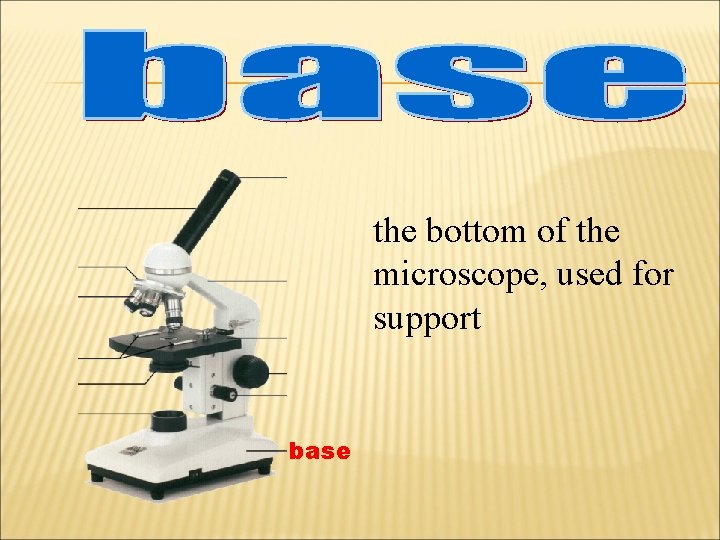
the bottom of the microscope, used for support base
The high power objective lenses are retractable (i. e. 40 XR). This means that if they hit a slide, the end of the lens will objective lenses push in (spring loaded) thereby protecting the lens and the slide.
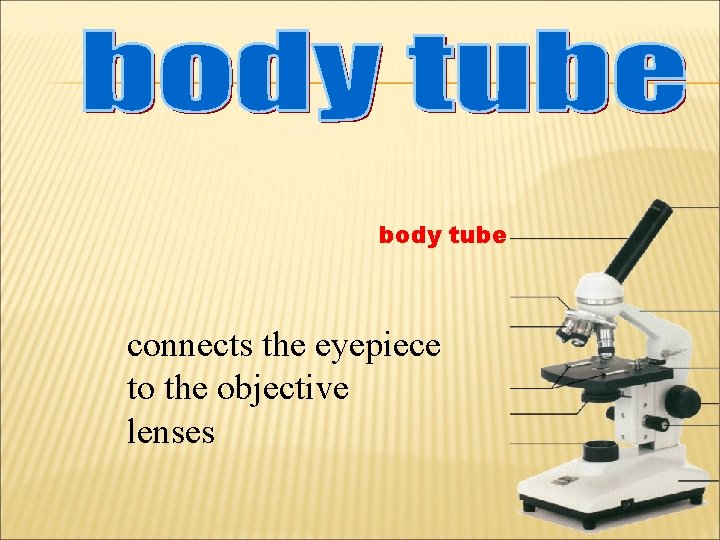
body tube connects the eyepiece to the objective lenses
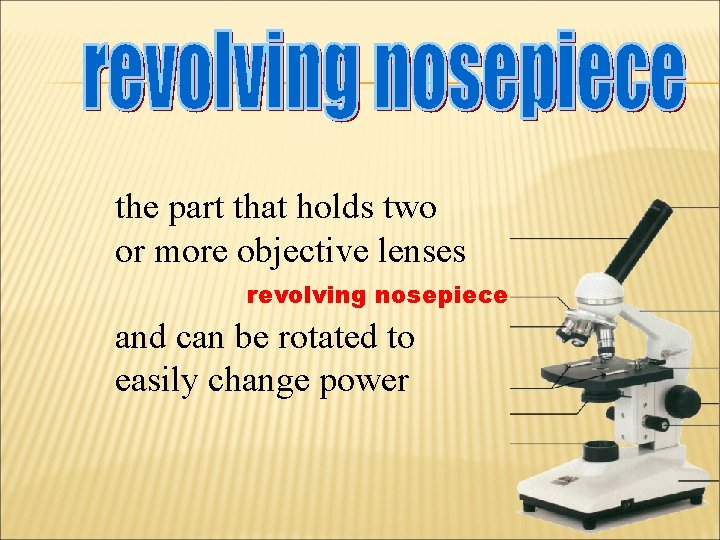
the part that holds two or more objective lenses revolving nosepiece and can be rotated to easily change power
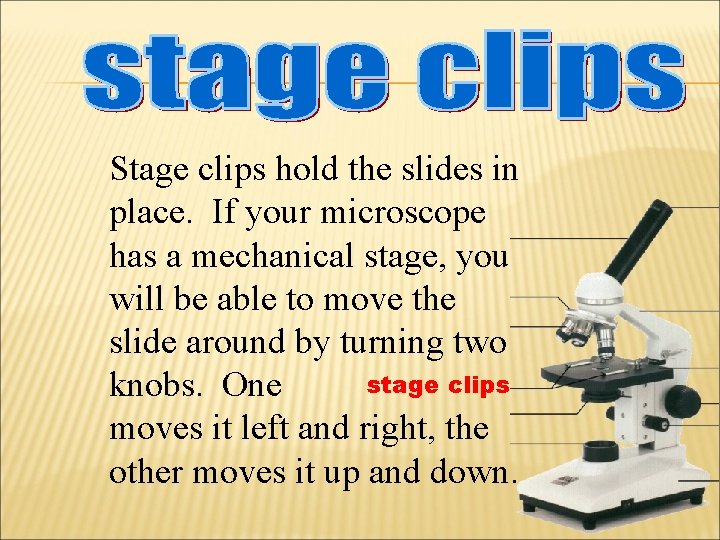
Stage clips hold the slides in place. If your microscope has a mechanical stage, you will be able to move the slide around by turning two stage clips knobs. One moves it left and right, the other moves it up and down.
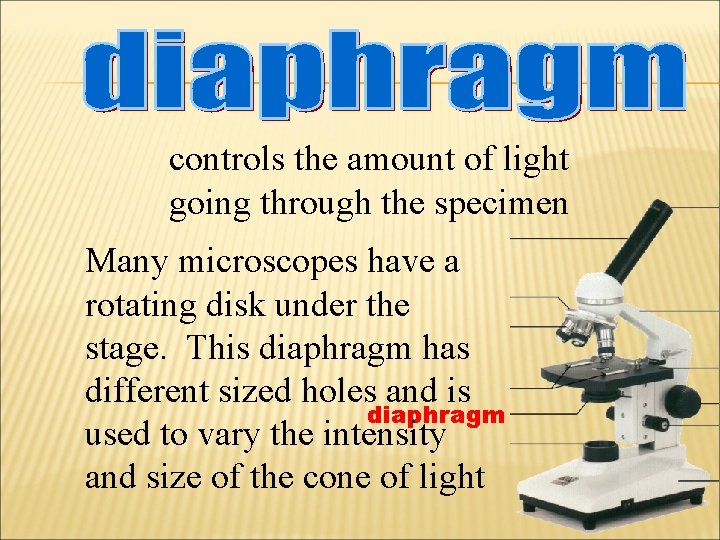
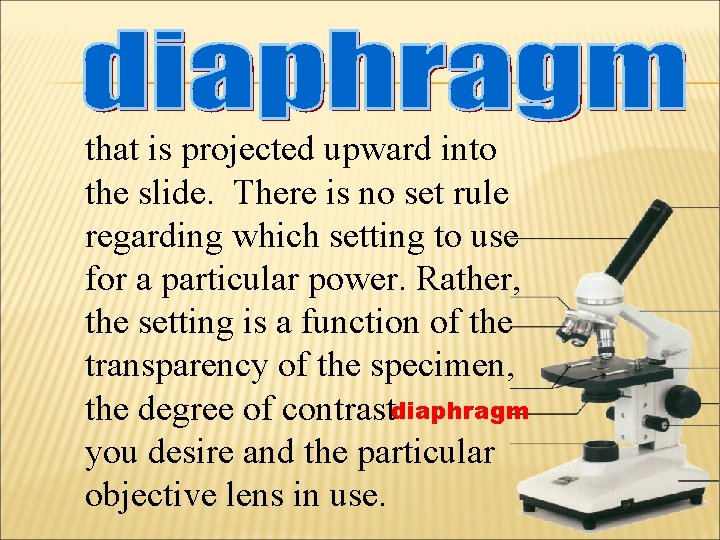
controls the amount of light going through the specimen Many microscopes have a rotating disk under the stage. This diaphragm has different sized holes and is diaphragm used to vary the intensity and size of the cone of light
that is projected upward into the slide. There is no set rule regarding which setting to use for a particular power. Rather, the setting is a function of the transparency of the specimen, the degree of contrast diaphragm you desire and the particular objective lens in use.
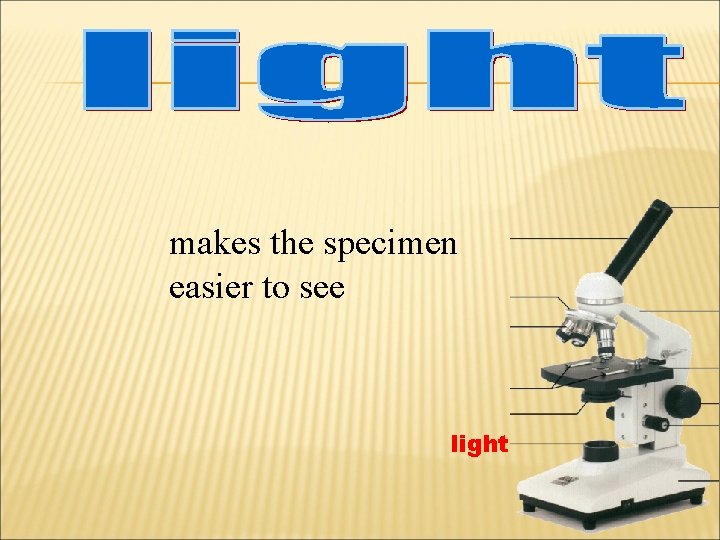
makes the specimen easier to see light
The proper way to focus a microscope is to start with the lowest power objective lens first and while looking from the side, crank the lens down as close to the specimen as possible without touching it. Now, look through the eyepiece lens and focus upward only until the image is sharp. If you can't get it in focus, repeat the process again.
Once the image is sharp with the low power lens, you should be able to simply click in the next power lens and do minor adjustments with the focus knob. If your microscope has a fine focus adjustment, turning it a bit should be all that's necessary. Continue with subsequent objective lenses and fine focus each time.
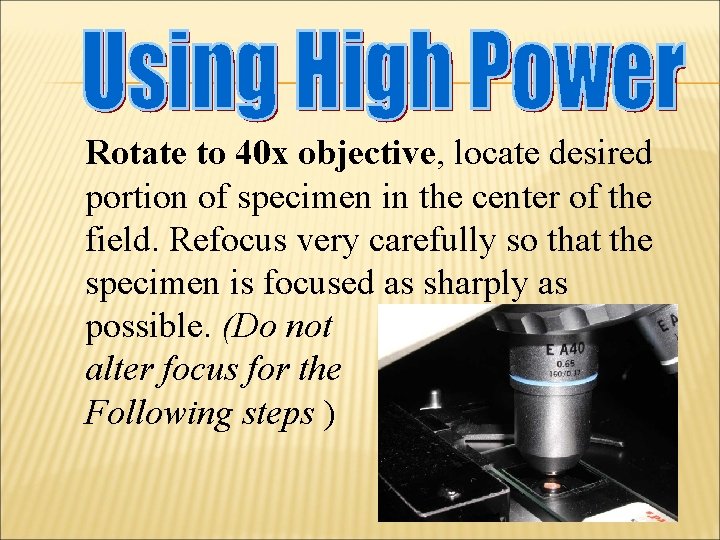
Rotate to 40 x objective, locate desired portion of specimen in the center of the field. Refocus very carefully so that the specimen is focused as sharply as possible. (Do not alter focus for the Following steps )
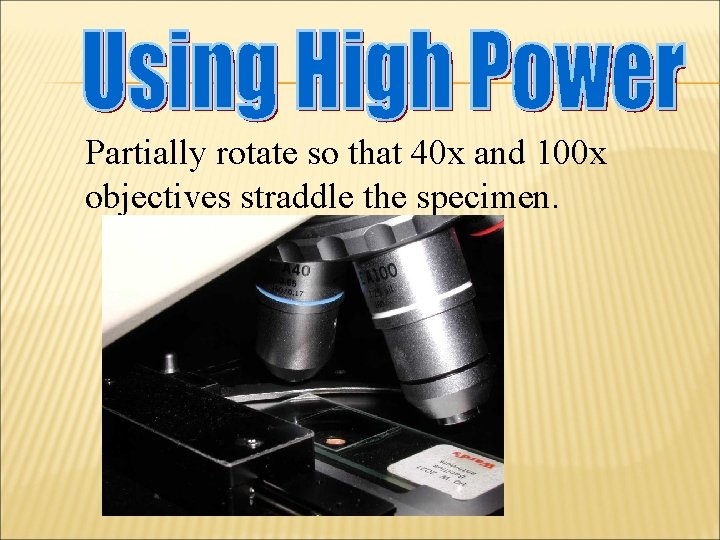
Partially rotate so that 40 x and 100 x objectives straddle the specimen.
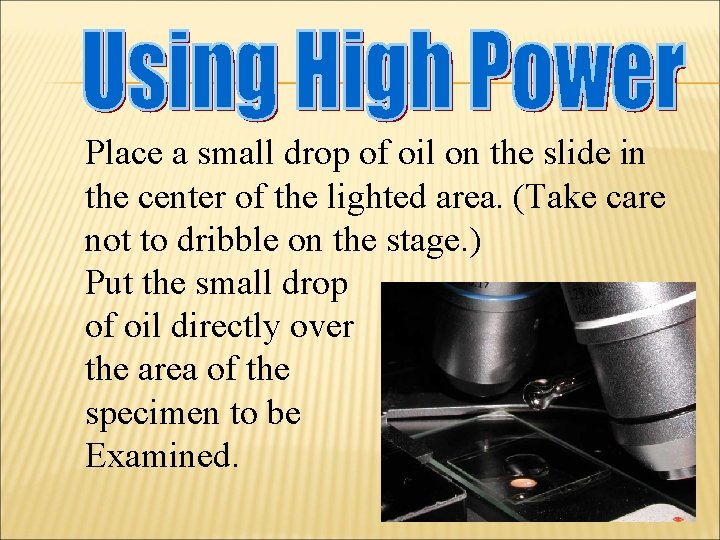
Place a small drop of oil on the slide in the center of the lighted area. (Take care not to dribble on the stage. ) Put the small drop of oil directly over the area of the specimen to be Examined.
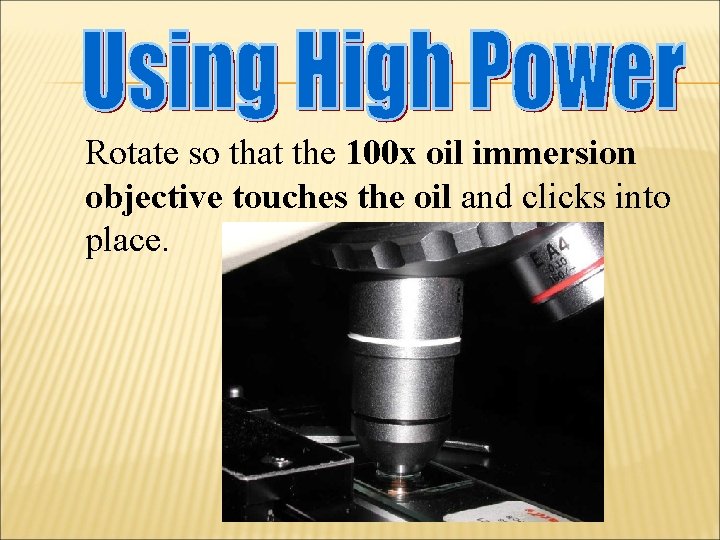
Rotate so that the 100 x oil immersion objective touches the oil and clicks into place.
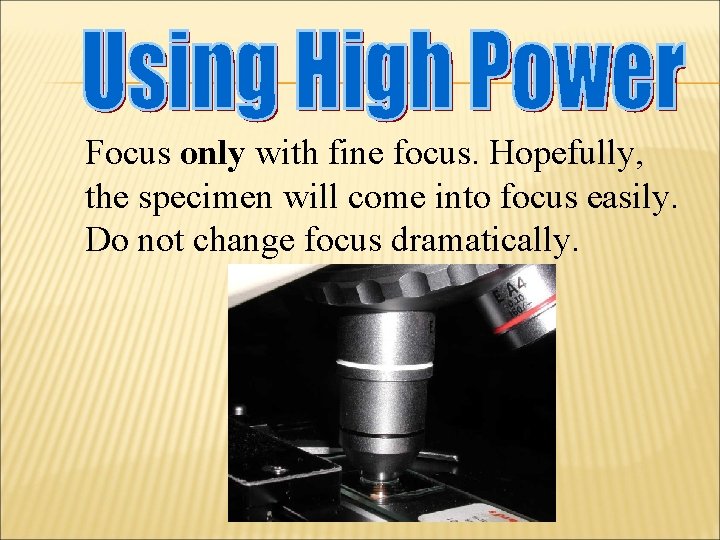
Focus only with fine focus. Hopefully, the specimen will come into focus easily. Do not change focus dramatically.
Clean up!: When you have finished for the day, wipe the 100 x oil immersion objective carefully with lens paper to remove all oil. Wipe oil from the slide thoroughly with a Kimwipe. Cleanse stage should any oil have spilled on it. Recap the immersion oil container securely, replace in drawer.