
Introduction to the Microscope Compound Microscope Dissection Microscope






- Slides: 26
Introduction to the Microscope
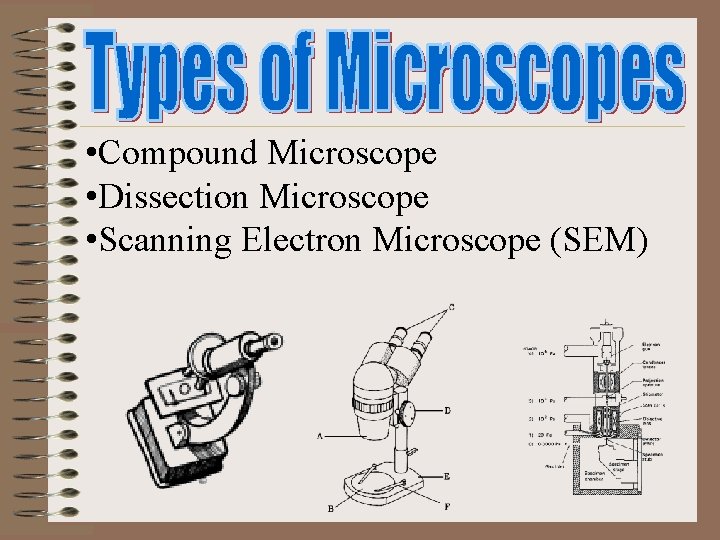
• Compound Microscope • Dissection Microscope • Scanning Electron Microscope (SEM)
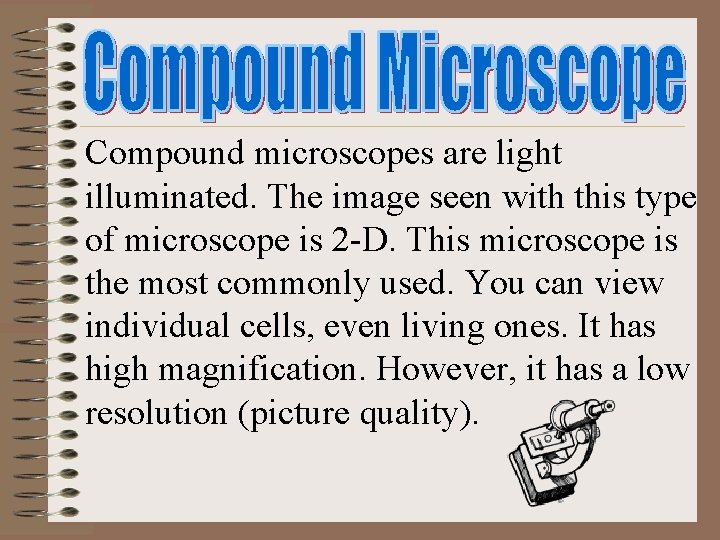
Compound microscopes are light illuminated. The image seen with this type of microscope is 2 -D. This microscope is the most commonly used. You can view individual cells, even living ones. It has high magnification. However, it has a low resolution (picture quality).
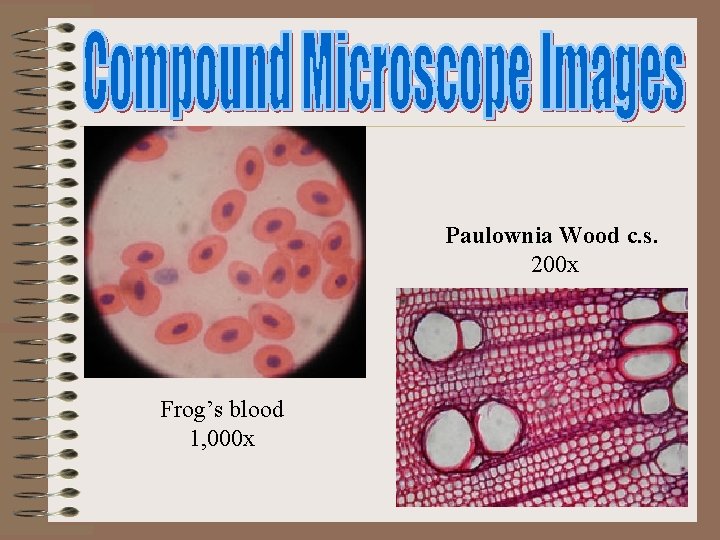
Paulownia Wood c. s. 200 x Frog’s blood 1, 000 x
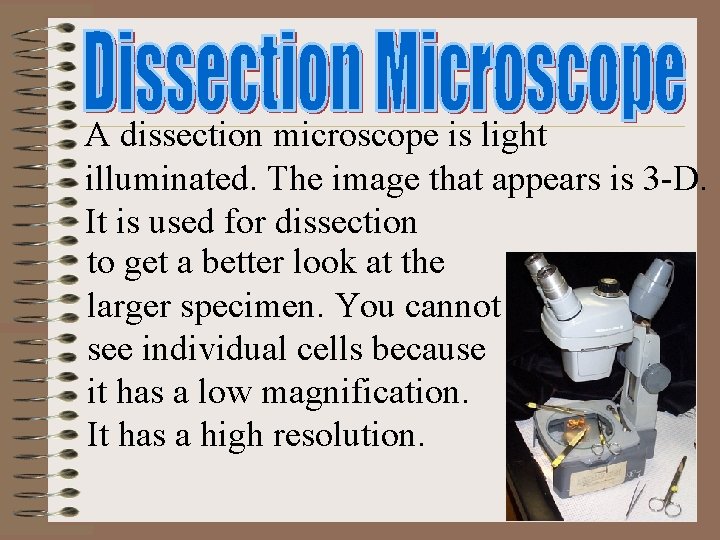
A dissection microscope is light illuminated. The image that appears is 3 -D. It is used for dissection to get a better look at the larger specimen. You cannot see individual cells because it has a low magnification. It has a high resolution.
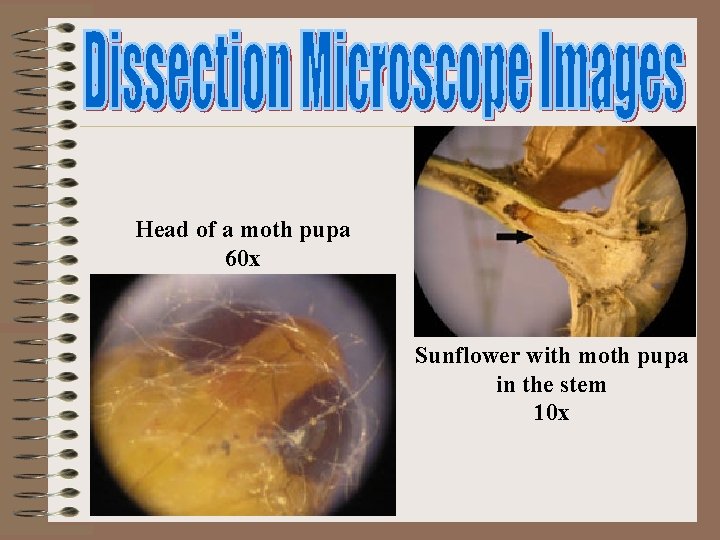
Head of a moth pupa 60 x Sunflower with moth pupa in the stem 10 x
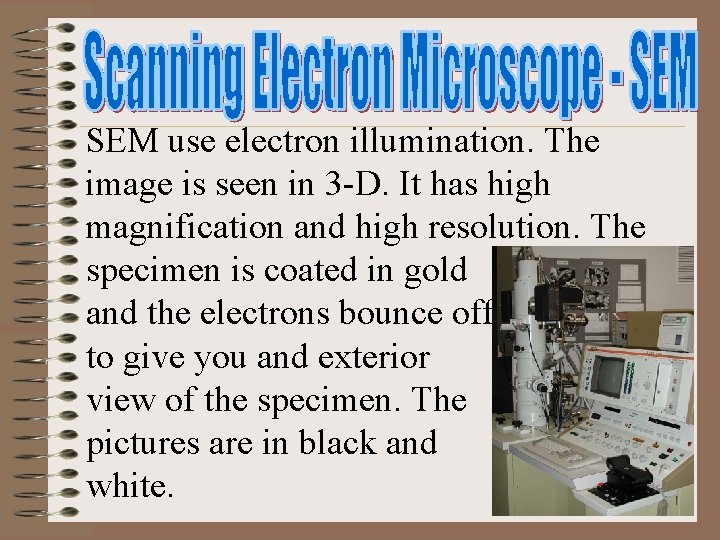
SEM use electron illumination. The image is seen in 3 -D. It has high magnification and high resolution. The specimen is coated in gold and the electrons bounce off to give you and exterior view of the specimen. The pictures are in black and white.
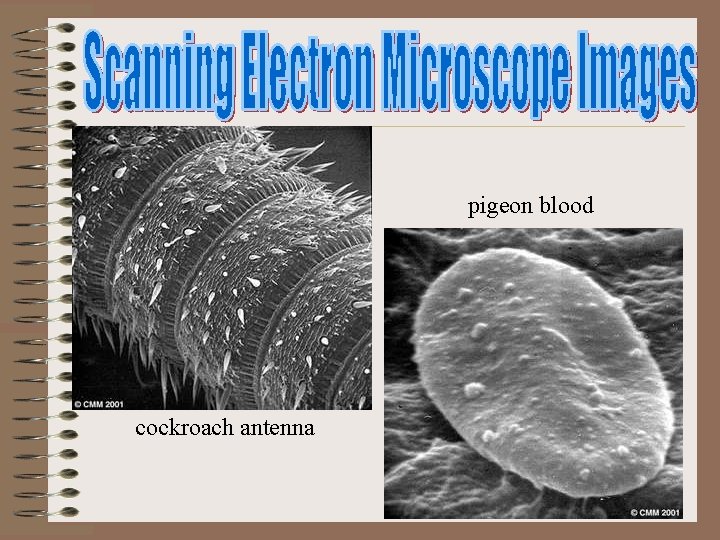
pigeon blood cockroach antenna
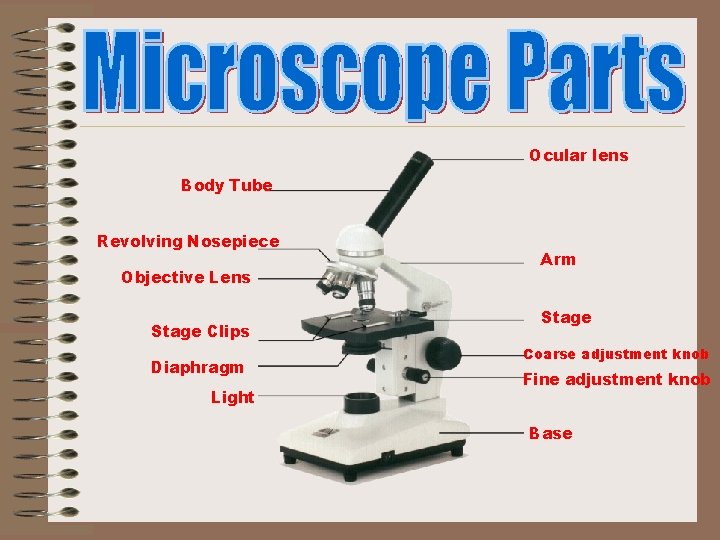
Ocular lens Body Tube Revolving Nosepiece Objective Lens Stage Clips Diaphragm Light Arm Stage Coarse adjustment knob Fine adjustment knob Base
body tube connects the eyepiece to the objective lenses
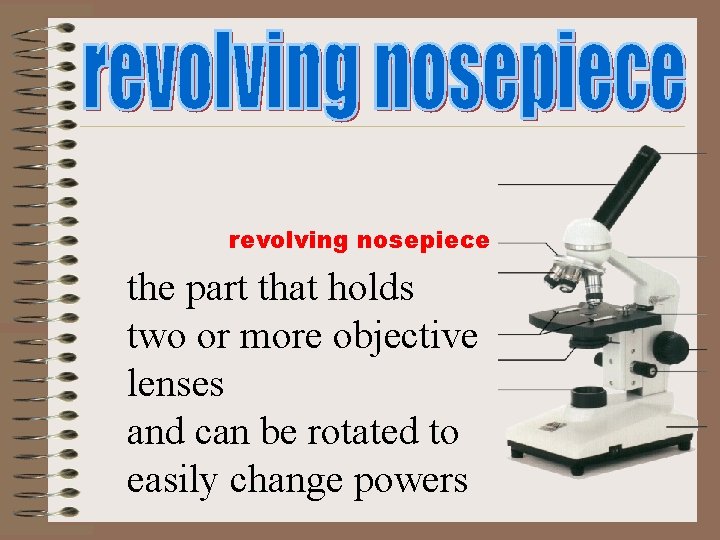
revolving nosepiece the part that holds two or more objective lenses and can be rotated to easily change powers
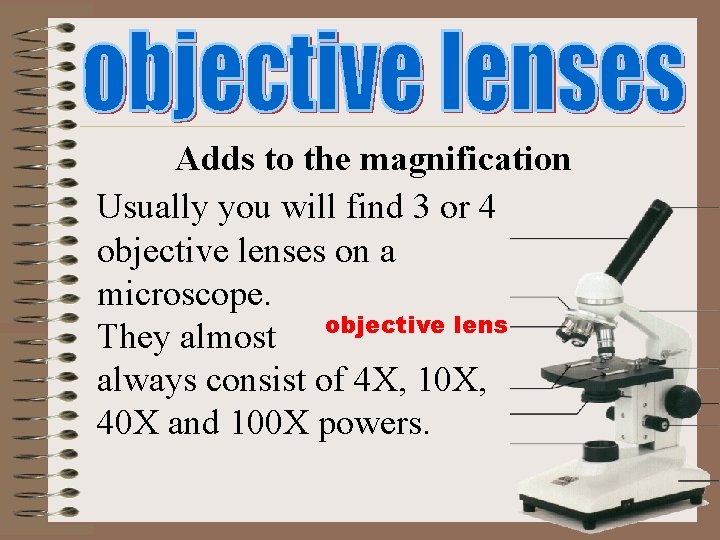
Adds to the magnification Usually you will find 3 or 4 objective lenses on a microscope. They almost objective lens always consist of 4 X, 10 X, 40 X and 100 X powers.
Stage clips hold the slides in place. stage clips
controls the amount of light going through the slide diaphragm
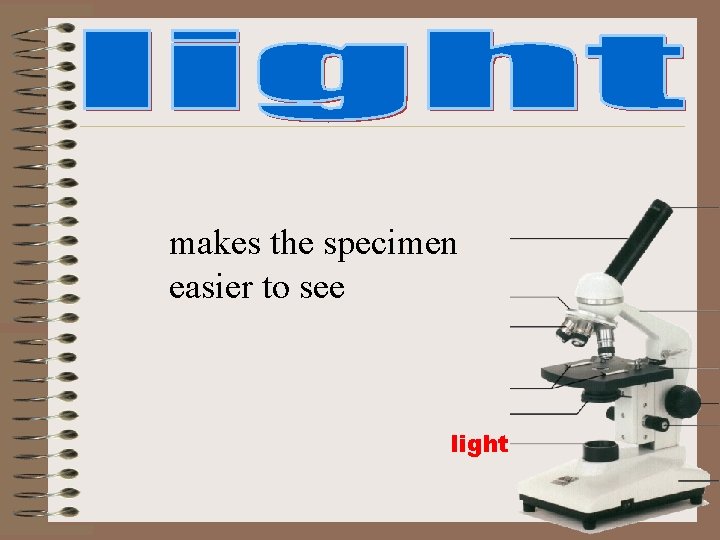
makes the specimen easier to see light
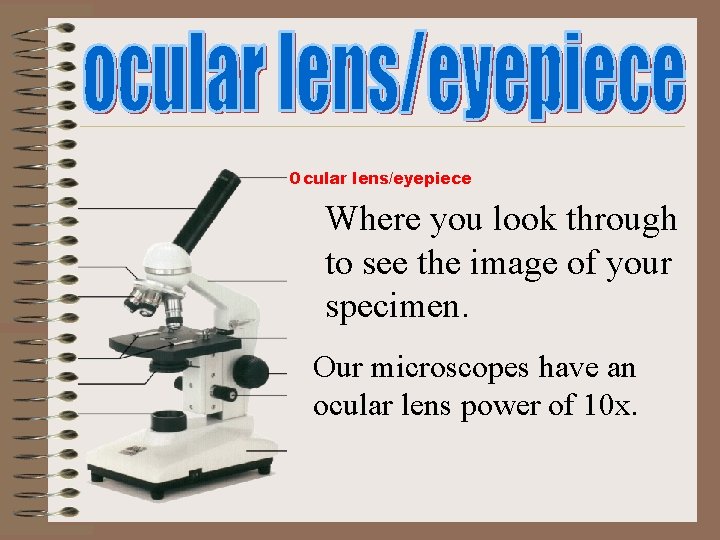
Ocular lens/eyepiece Where you look through to see the image of your specimen. Our microscopes have an ocular lens power of 10 x.
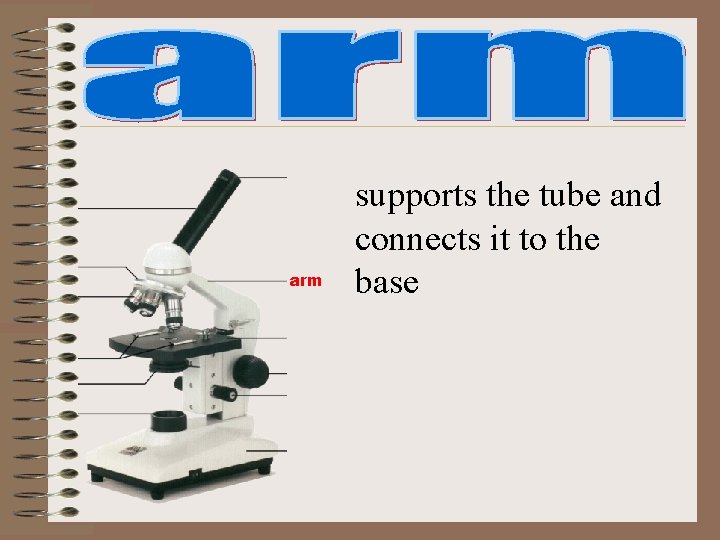
arm supports the tube and connects it to the base
the flat platform where you place your slides stage
moves stage up and down to focus the slide coarse adjustment knob
Used to fine-tune the focus of your slide after using the coarse adjustment knob fine adjustment knob
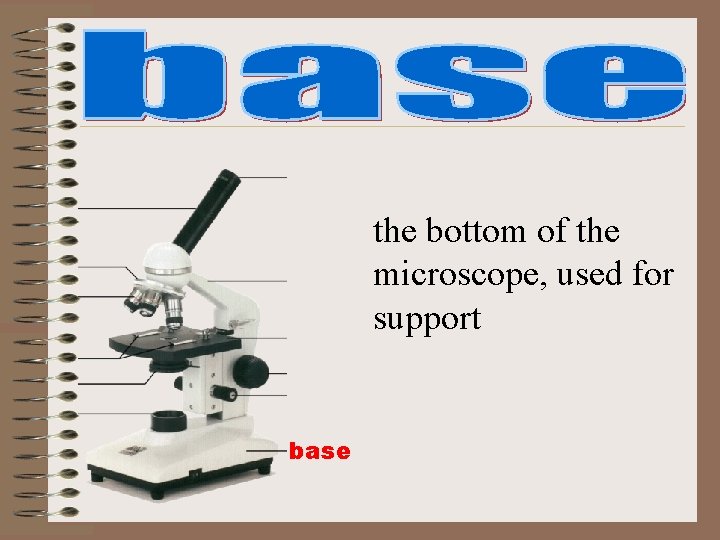
the bottom of the microscope, used for support base
• • • Always carry with 2 hands Never touch the lenses with your fingers. Only use lens paper for cleaning Do not force knobs Keep objects clear of desk and cords When you are finished with your "scope", rotate the nosepiece so that it's on the low power objective and roll the stage down to lowest level. • .
The proper way to focus a microscope is to start with the lowest power objective lens first and move the stage all the way down. Now, look through the eyepiece lens and focus upward only until the image is sharp. If you can't get it in focus, repeat the process again.
Once the image is sharp with the low power lens, you should be able to simply click in the next power lens and do minor adjustments with the focus knob. Turning the fine focus adjustment knob a bit should be all that's necessary. Do the same with each objective lenses and fine focus each time.
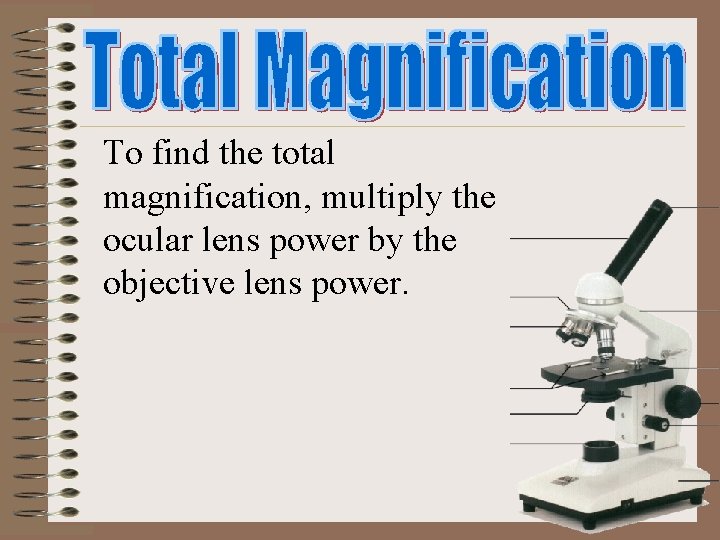
To find the total magnification, multiply the ocular lens power by the objective lens power.
Practice Calculating Total Magnification If you are looking through a 10 x power ocular lens and a 10 X power objective lens, what is the total magnification?