
Introduction to the Light Microscope Care Parts Focusing

- Slides: 10
Introduction to the Light Microscope ■Care ■Parts ■Focusing ■Magnification
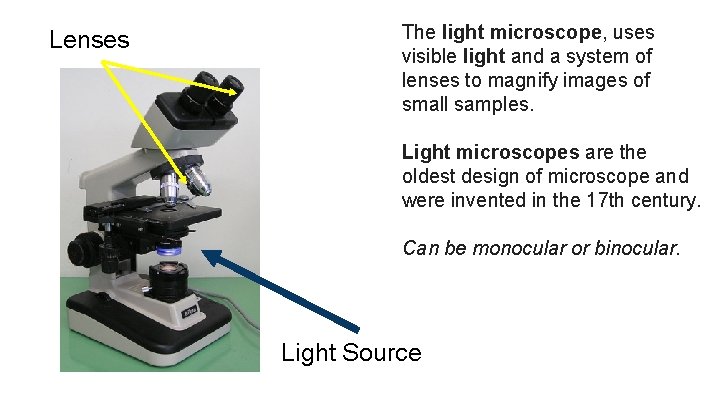
Lenses The light microscope, uses visible light and a system of lenses to magnify images of small samples. Light microscopes are the oldest design of microscope and were invented in the 17 th century. Can be monocular or binocular. Light Source
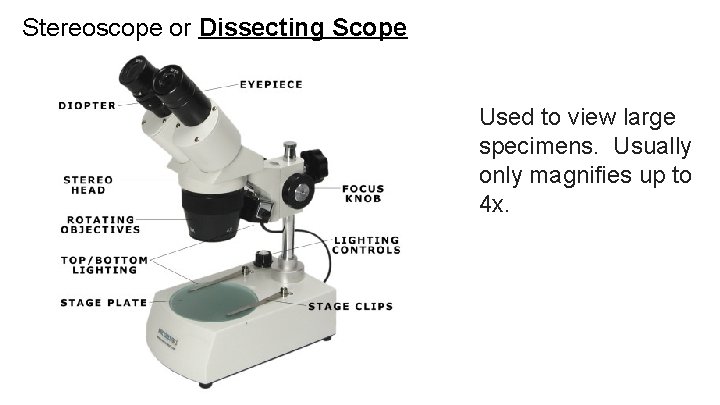
Stereoscope or Dissecting Scope Used to view large specimens. Usually only magnifies up to 4 x.
●Always carry with 2 hands, one hand on the arm, one on the base. ●Only use lens paper for cleaning ●Do not force knobs ●Always store covered ●Keep objects clear of desk and cords
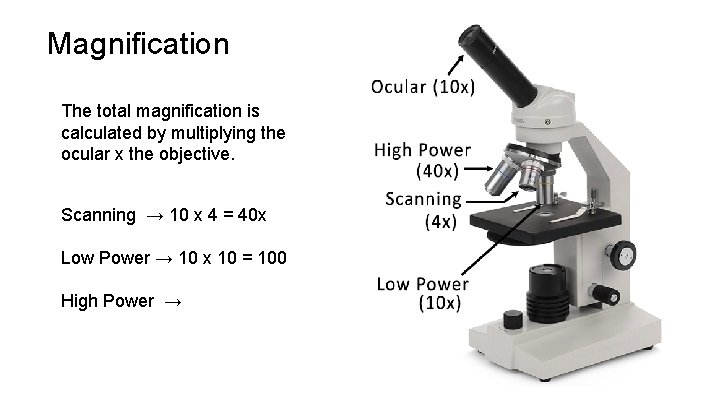
Magnification The total magnification is calculated by multiplying the ocular x the objective. Scanning → 10 x 4 = 40 x Low Power → 10 x 10 = 100 High Power →
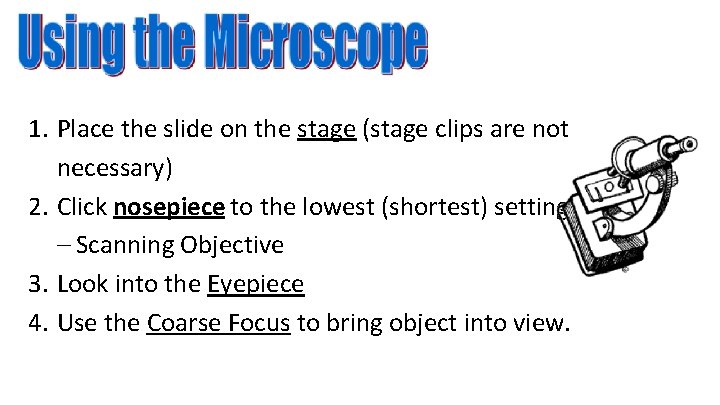
1. Place the slide on the stage (stage clips are not necessary) 2. Click nosepiece to the lowest (shortest) setting – Scanning Objective 3. Look into the Eyepiece 4. Use the Coarse Focus to bring object into view.
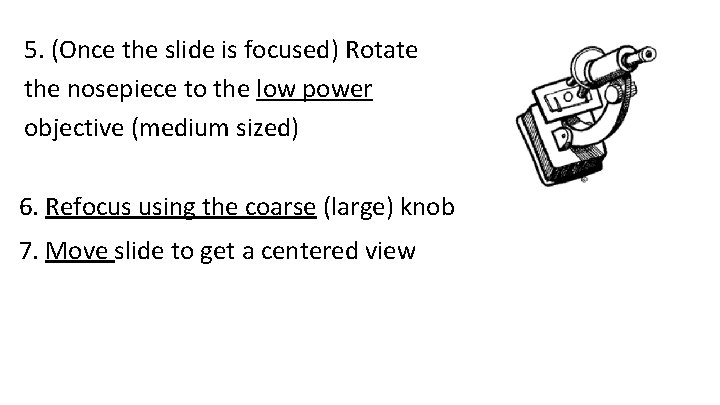
5. (Once the slide is focused) Rotate the nosepiece to the low power objective (medium sized) 6. Refocus using the coarse (large) knob 7. Move slide to get a centered view
**All the steps above must be completed before you attempt to focus on high power** 8. Click the high power objective into place, it should be very close to the stage. 9. Only use the fine adjustment knob (small) to bring object into focus. What can you find on your slide?
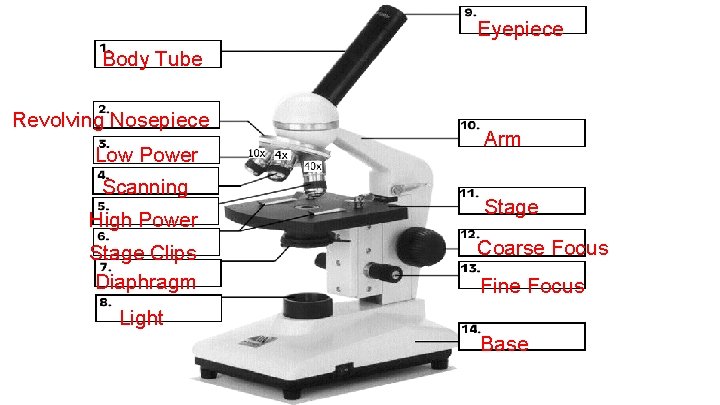
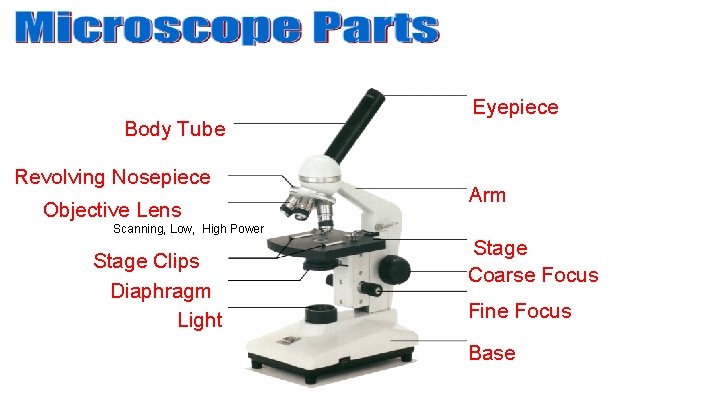
Eyepiece Body Tube Revolving Nosepiece Low Power Scanning High Power Stage Clips Diaphragm Arm Stage Coarse Focus Fine Focus Light Base
Body Tube Revolving Nosepiece Objective Lens Eyepiece Arm Scanning, Low, High Power Stage Clips Diaphragm Light Stage Coarse Focus Fine Focus Base