
Introduction to the IOC Project Office for IODE
- Slides: 36
Introduction to the IOC Project Office for IODE, IOC Capacity Development Strategy and Ocean. Teacher Global Academy Peter Pissierssens, Head IOC Project Office for IODE/ IOC CD coordinator
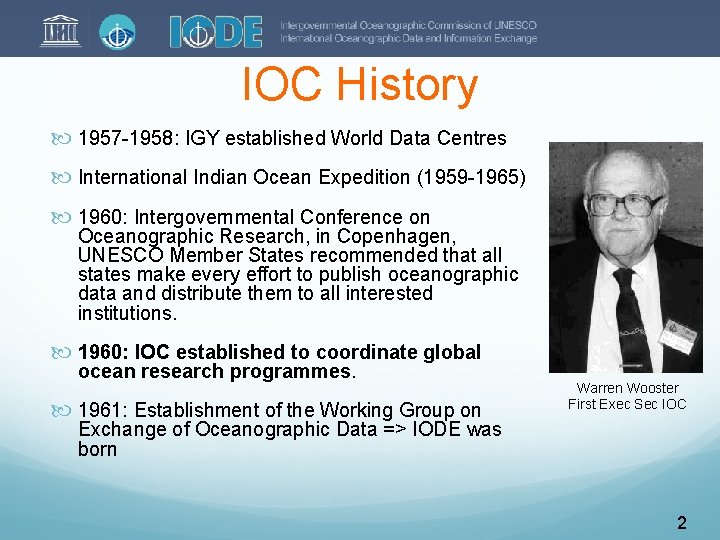
IOC History 1957 -1958: IGY established World Data Centres International Indian Ocean Expedition (1959 -1965) 1960: Intergovernmental Conference on Oceanographic Research, in Copenhagen, UNESCO Member States recommended that all states make every effort to publish oceanographic data and distribute them to all interested institutions. 1960: IOC established to coordinate global ocean research programmes. 1961: Establishment of the Working Group on Warren Wooster First Exec Sec IOC Exchange of Oceanographic Data => IODE was born 2
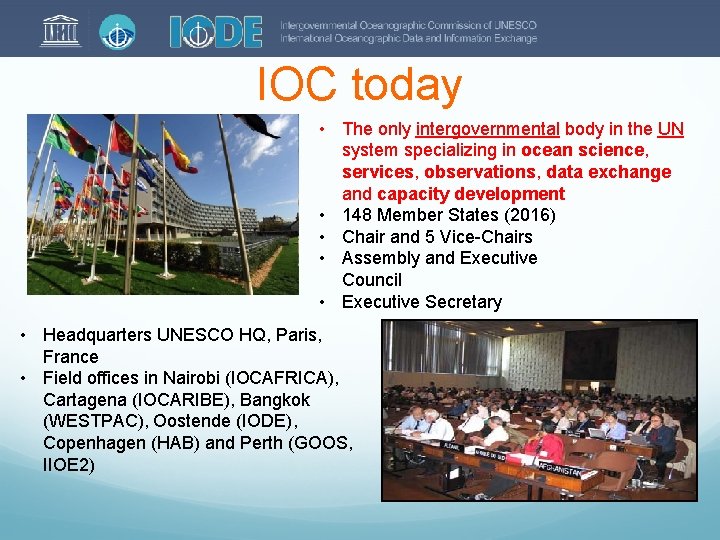
IOC today • The only intergovernmental body in the UN system specializing in ocean science, services, observations, data exchange and capacity development • 148 Member States (2016) • Chair and 5 Vice-Chairs • Assembly and Executive Council • Executive Secretary • Headquarters UNESCO HQ, Paris, France • Field offices in Nairobi (IOCAFRICA), Cartagena (IOCARIBE), Bangkok (WESTPAC), Oostende (IODE), Copenhagen (HAB) and Perth (GOOS, IIOE 2)
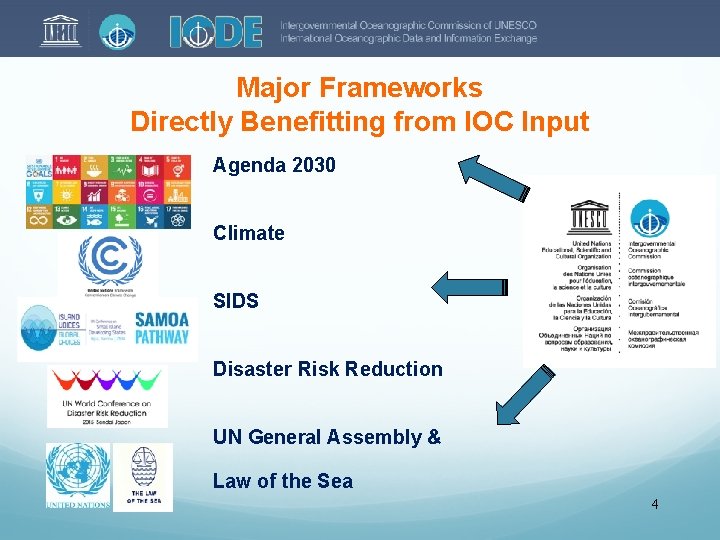
Major Frameworks Directly Benefitting from IOC Input Agenda 2030 Climate SIDS Disaster Risk Reduction UN General Assembly & Law of the Sea 4
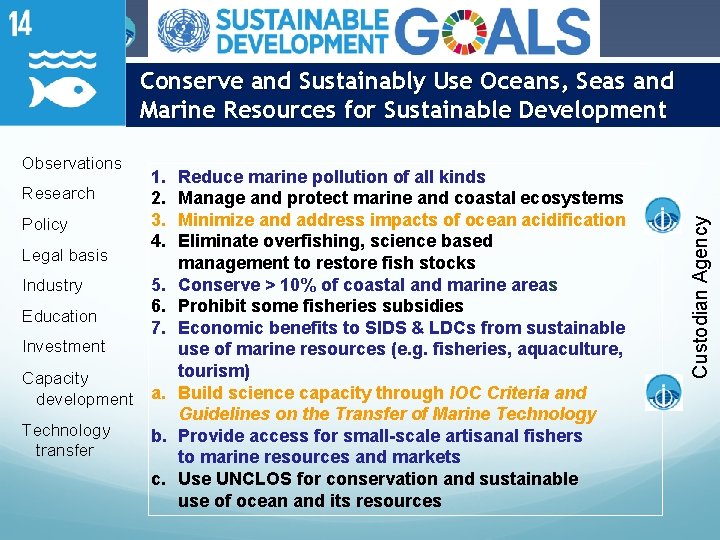
Observations Research Policy Legal basis Industry Education Investment 1. 2. 3. 4. 5. 6. 7. Capacity development a. Technology transfer b. c. Reduce marine pollution of all kinds Manage and protect marine and coastal ecosystems Minimize and address impacts of ocean acidification Eliminate overfishing, science based management to restore fish stocks Conserve > 10% of coastal and marine areas Prohibit some fisheries subsidies Economic benefits to SIDS & LDCs from sustainable use of marine resources (e. g. fisheries, aquaculture, tourism) Build science capacity through IOC Criteria and Guidelines on the Transfer of Marine Technology Provide access for small-scale artisanal fishers to marine resources and markets Use UNCLOS for conservation and sustainable use of ocean and its resources Custodian Agency Conserve and Sustainably Use Oceans, Seas and Marine Resources for Sustainable Development
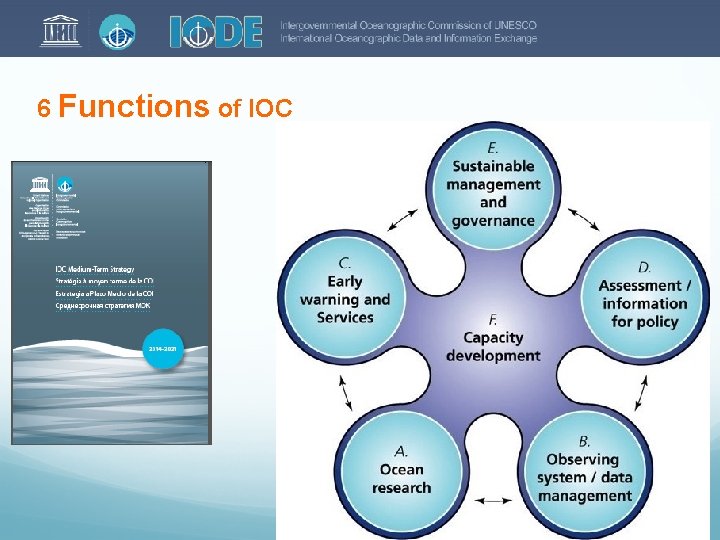
6 Functions of IOC
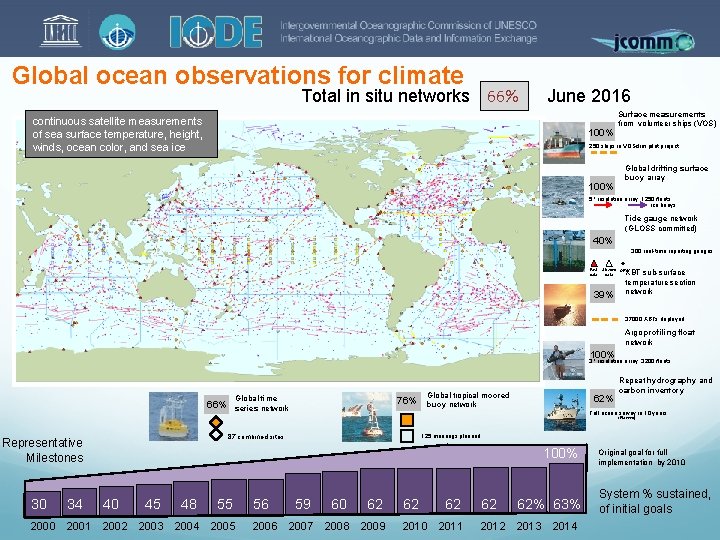
Global ocean observations for climate Total in situ networks 66% June 2016 continuous satellite measurements of sea surface temperature, height, winds, ocean color, and sea ice 100% Surface measurements from volunteer ships (VOS) 250 ships in VOSclim pilot project 100% Global drifting surface buoy array 5° resolution array: 1250 floats ice buoys Tide gauge network (GLOSS committed) 40% 300 real-time reporting gauges Fast Slow/no GPS data 39% XBT sub-surface temperature section network 37000 XBTs deployed Argo profiling float network 100% 3° resolution array: 3200 floats Global time series network 66% 76% Global tropical moored buoy network 62% Repeat hydrography and carbon inventory Full ocean survey in 10 years (Planned) 125 moorings planned 87 combined sites Representative Milestones 100% 30 34 40 2001 2002 45 48 55 2003 2004 2005 56 2006 59 60 62 2007 2008 2009 62 2010 62 2011 62 62% 63% 2012 2013 2014 Original goal for full implementation by 2010 System % sustained, of initial goals
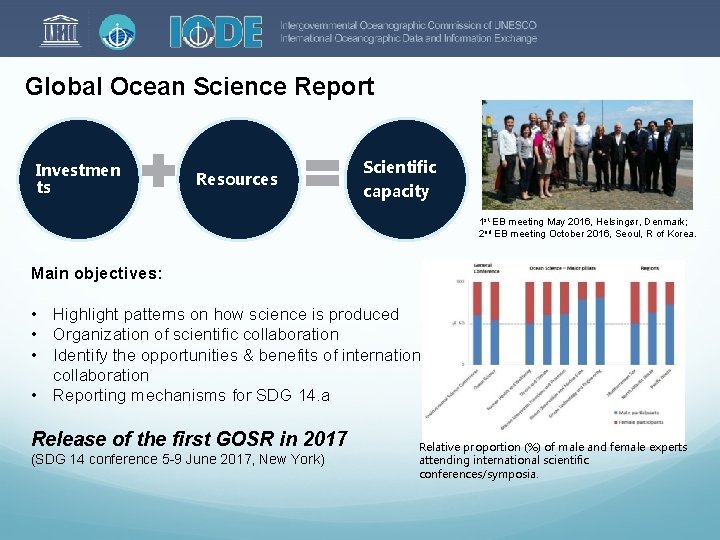
Global Ocean Science Report Investmen ts Resources Scientific capacity 1 st EB meeting May 2016, Helsingør, Denmark; 2 nd EB meeting October 2016, Seoul, R of Korea. Main objectives: • Highlight patterns on how science is produced • Organization of scientific collaboration • Identify the opportunities & benefits of international collaboration • Reporting mechanisms for SDG 14. a Release of the first GOSR in 2017 (SDG 14 conference 5 -9 June 2017, New York) Relative proportion (%) of male and female experts attending international scientific conferences/symposia.
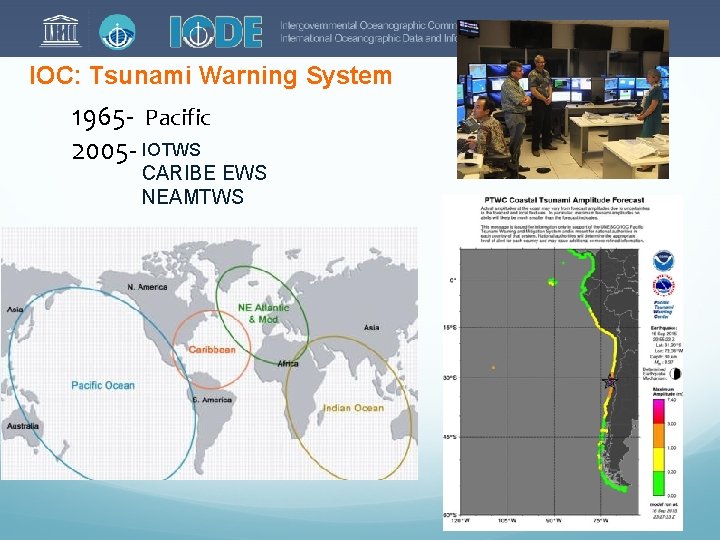
IOC: Tsunami Warning System 1965 - Pacific 2005 - IOTWS CARIBE EWS NEAMTWS
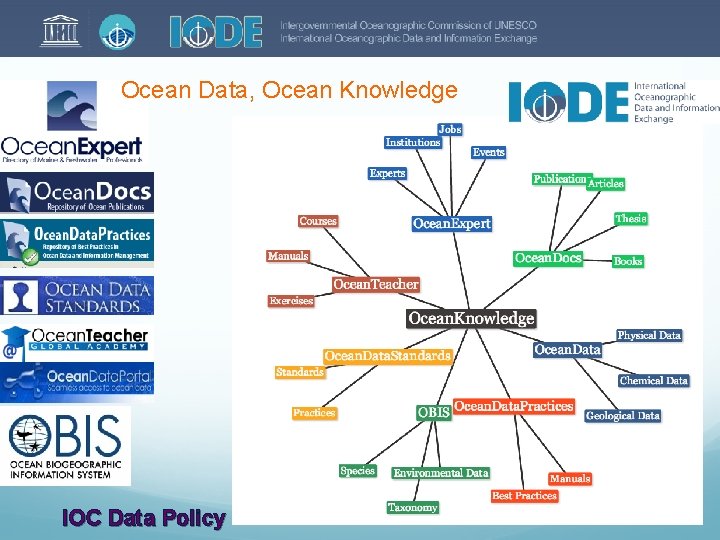
Ocean Data, Ocean Knowledge IOC Data Policy
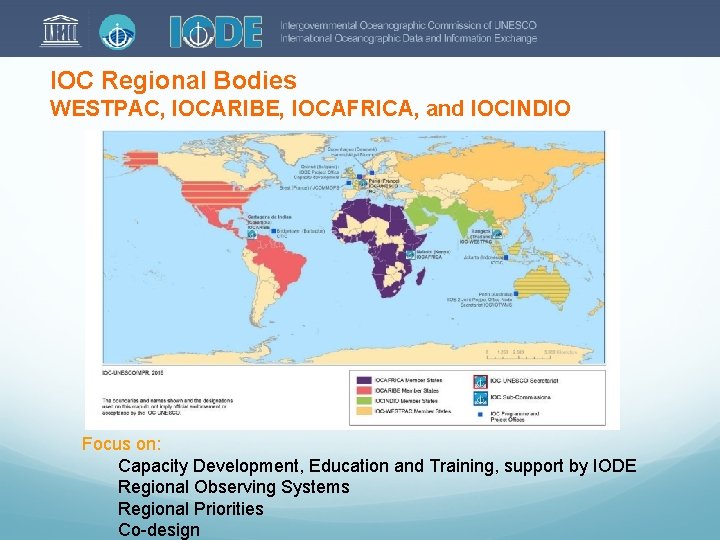
IOC Regional Bodies WESTPAC, IOCARIBE, IOCAFRICA, and IOCINDIO Focus on: Capacity Development, Education and Training, support by IODE Regional Observing Systems Regional Priorities Co-design
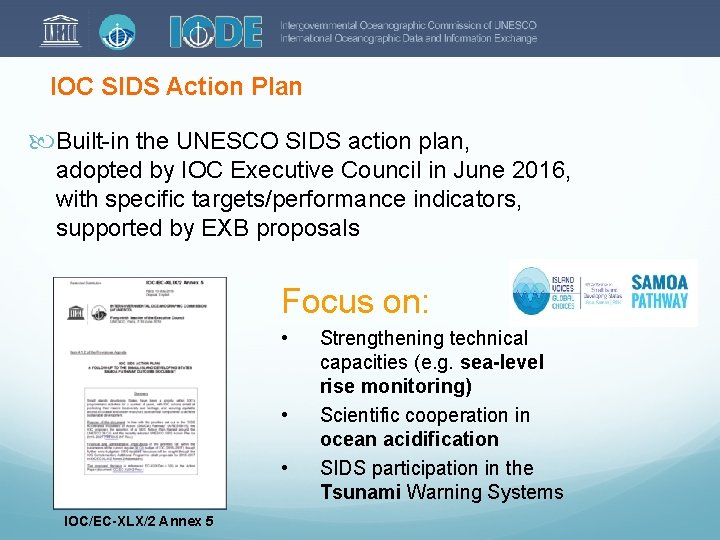
IOC SIDS Action Plan Built-in the UNESCO SIDS action plan, adopted by IOC Executive Council in June 2016, with specific targets/performance indicators, supported by EXB proposals Focus on: • • • IOC/EC-XLX/2 Annex 5 Strengthening technical capacities (e. g. sea-level rise monitoring) Scientific cooperation in ocean acidification SIDS participation in the Tsunami Warning Systems
IODE established in 1961: ‘to enhance marine research, exploitation and development by facilitating the exchange of oceanographic data and information between participating Member States and by meeting the needs of users for data and information products’ 14
IODE objectives to facilitate and promote the exchange of all marine data and information including metadata, products and information in real-time, near real time and delayed mode; to ensure the long term archival, management and services of all marine data and information; to promote the use of international standards, and develop or help in the development of standards and methods for the global exchange of marine data and information, using the most appropriate information management and information technology; to assist Member States to acquire the necessary capacity to manage marine data and information and become partners in the IODE network; and to support international scientific and operational marine programmes of IOC and WMO and their sponsor organisations with advice and data management services. 15
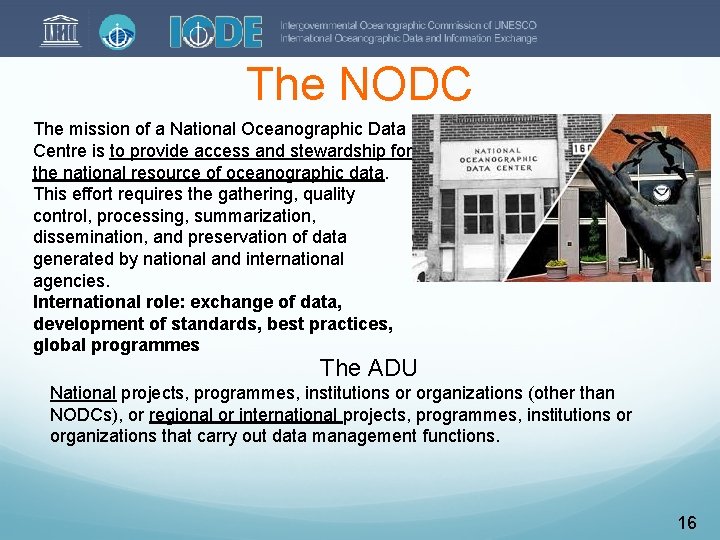
The NODC The mission of a National Oceanographic Data Centre is to provide access and stewardship for the national resource of oceanographic data. This effort requires the gathering, quality control, processing, summarization, dissemination, and preservation of data generated by national and international agencies. International role: exchange of data, development of standards, best practices, global programmes The ADU National projects, programmes, institutions or organizations (other than NODCs), or regional or international projects, programmes, institutions or organizations that carry out data management functions. 16
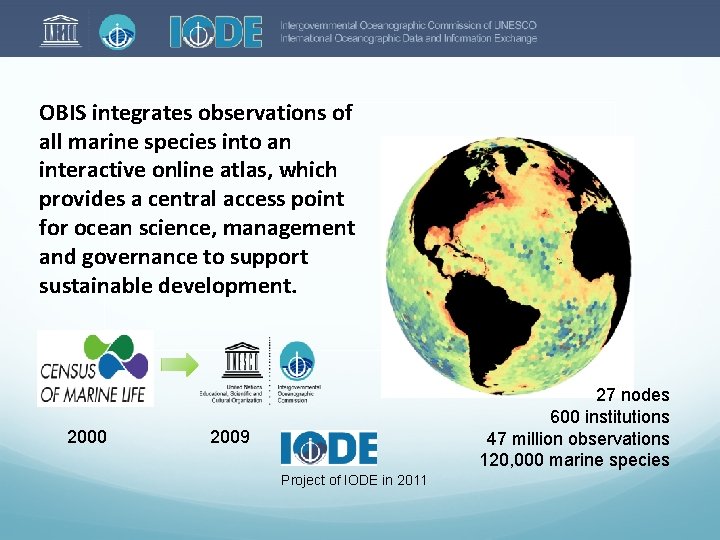
OBIS integrates observations of all marine species into an interactive online atlas, which provides a central access point for ocean science, management and governance to support sustainable development. 2000 27 nodes 600 institutions 47 million observations 120, 000 marine species 2009 Project of IODE in 2011
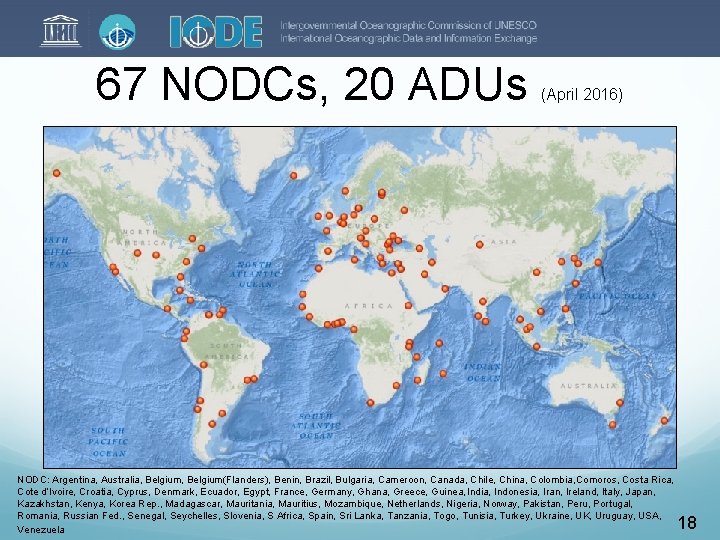
67 NODCs, 20 ADUs (April 2016) NODC: Argentina, Australia, Belgium(Flanders), Benin, Brazil, Bulgaria, Cameroon, Canada, Chile, China, Colombia, Comoros, Costa Rica, Cote d’Ivoire, Croatia, Cyprus, Denmark, Ecuador, Egypt, France, Germany, Ghana, Greece, Guinea, India, Indonesia, Iran, Ireland, Italy, Japan, Kazakhstan, Kenya, Korea Rep. , Madagascar, Mauritania, Mauritius, Mozambique, Netherlands, Nigeria, Norway, Pakistan, Peru, Portugal, Romania, Russian Fed. , Senegal, Seychelles, Slovenia, S Africa, Spain, Sri Lanka, Tanzania, Togo, Tunisia, Turkey, Ukraine, UK, Uruguay, USA, Venezuela 18
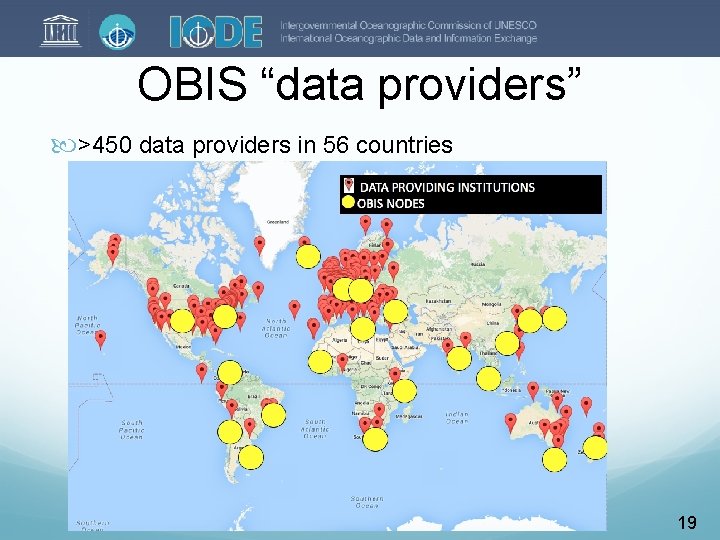
OBIS “data providers” >450 data providers in 56 countries 19
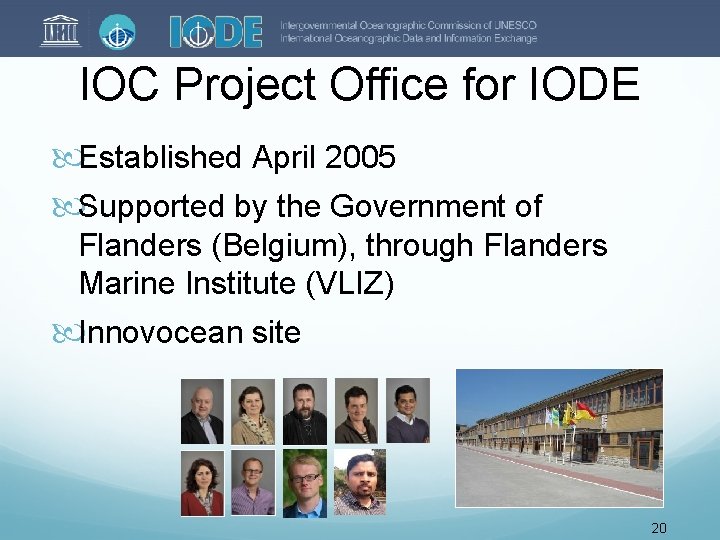
IOC Project Office for IODE Established April 2005 Supported by the Government of Flanders (Belgium), through Flanders Marine Institute (VLIZ) Innovocean site 20
Project Office objectives to establish a creative environment facilitating the further development and maintenance of IODE and partner data and information management projects, services and products with emphasis on improving the efficiency and effectiveness of the data and product/service stream between the stage of sampling and the user; and to assist in strengthening the capacity of Member States to manage oceanographic data and information and to provide ocean data and information products and services required by users.
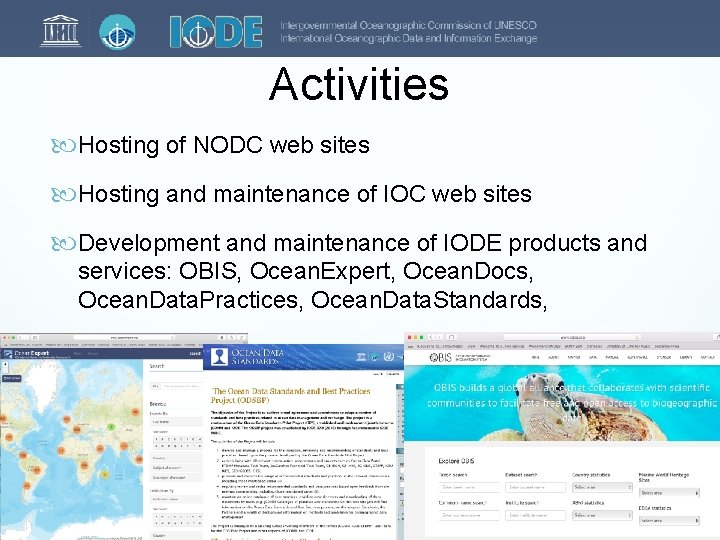
Activities Hosting of NODC web sites Hosting and maintenance of IOC web sites Development and maintenance of IODE products and services: OBIS, Ocean. Expert, Ocean. Docs, Ocean. Data. Practices, Ocean. Data. Standards,
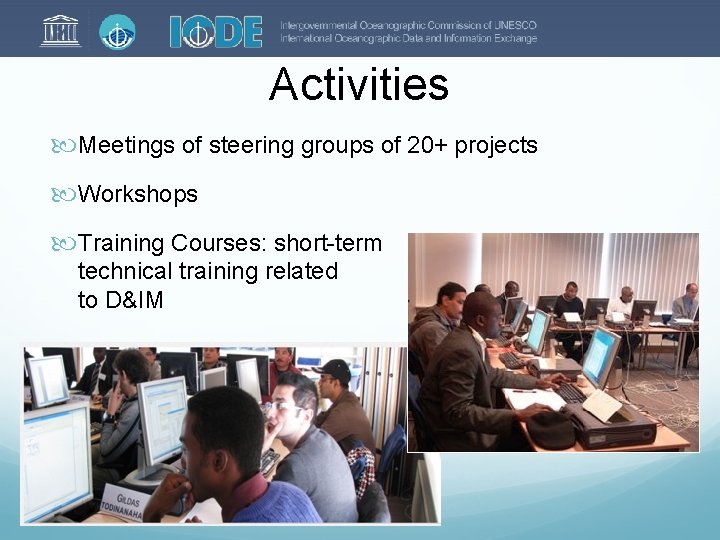
Activities Meetings of steering groups of 20+ projects Workshops Training Courses: short-term technical training related to D&IM
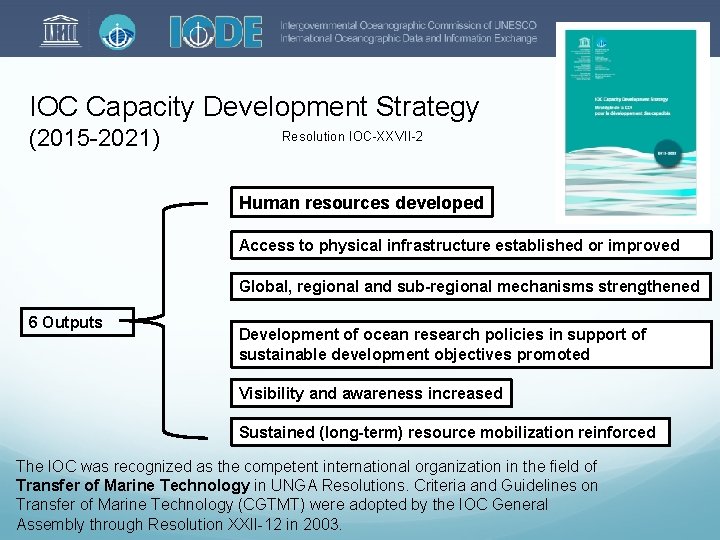
IOC Capacity Development Strategy (2015 -2021) Resolution IOC-XXVII-2 Human resources developed Access to physical infrastructure established or improved Global, regional and sub-regional mechanisms strengthened 6 Outputs Development of ocean research policies in support of sustainable development objectives promoted Visibility and awareness increased Sustained (long-term) resource mobilization reinforced The IOC was recognized as the competent international organization in the field of Transfer of Marine Technology in UNGA Resolutions. Criteria and Guidelines on Transfer of Marine Technology (CGTMT) were adopted by the IOC General Assembly through Resolution XXII-12 in 2003.
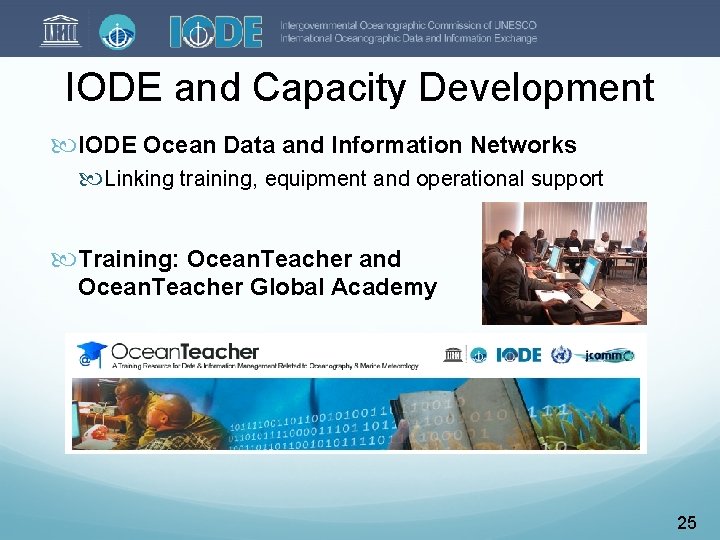
IODE and Capacity Development IODE Ocean Data and Information Networks Linking training, equipment and operational support Training: Ocean. Teacher and Ocean. Teacher Global Academy 25
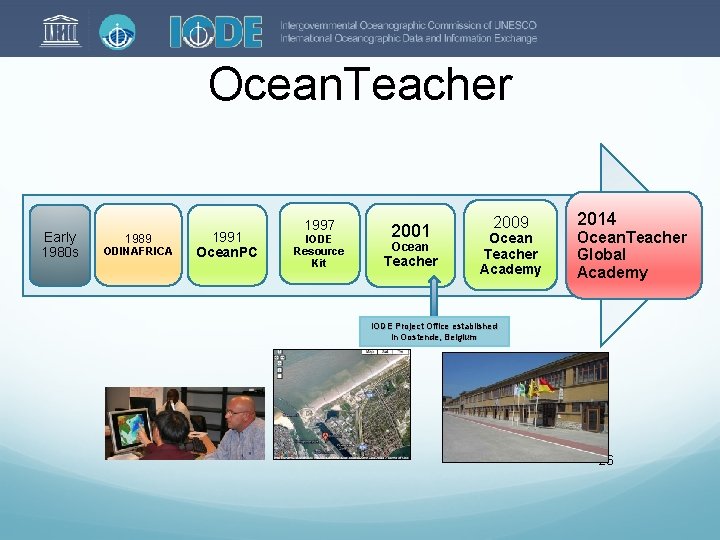
Ocean. Teacher Early 1980 s 1989 ODINAFRICA 1991 Ocean. PC 1997 IODE Resource Kit 2001 Ocean Teacher 2009 Ocean Teacher Academy 2014 Ocean. Teacher Global Academy IODE Project Office established in Oostende, Belgium 26
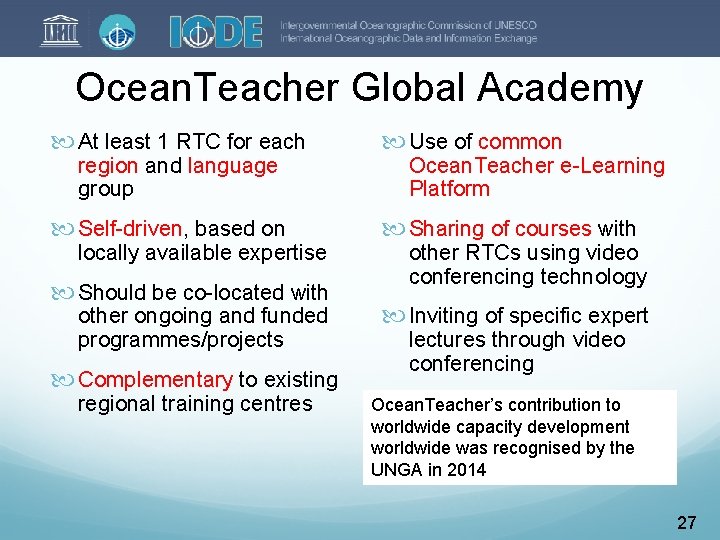
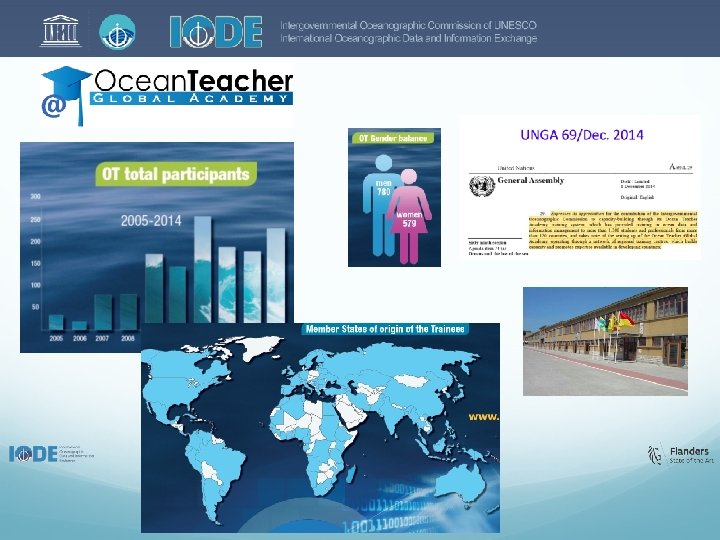
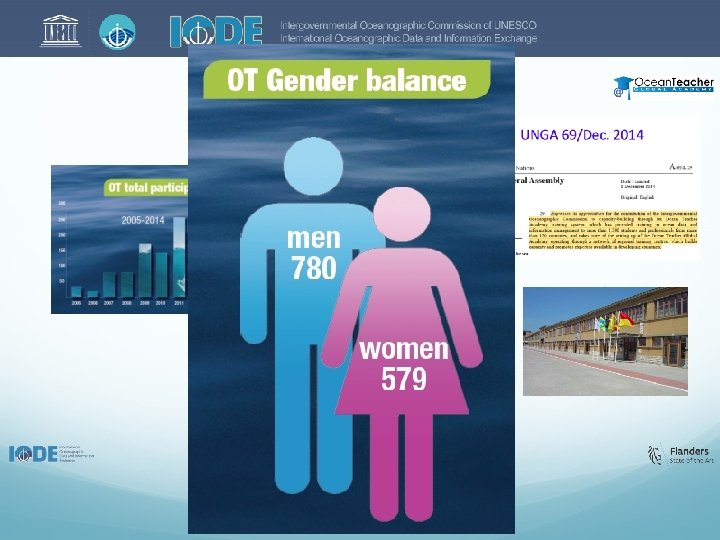
Ocean. Teacher Global Academy At least 1 RTC for each Use of common Self-driven, based on Sharing of courses with region and language group locally available expertise Should be co-located with other ongoing and funded programmes/projects Complementary to existing regional training centres Ocean. Teacher e-Learning Platform other RTCs using video conferencing technology Inviting of specific expert lectures through video conferencing Ocean. Teacher’s contribution to worldwide capacity development worldwide was recognised by the UNGA in 2014 27
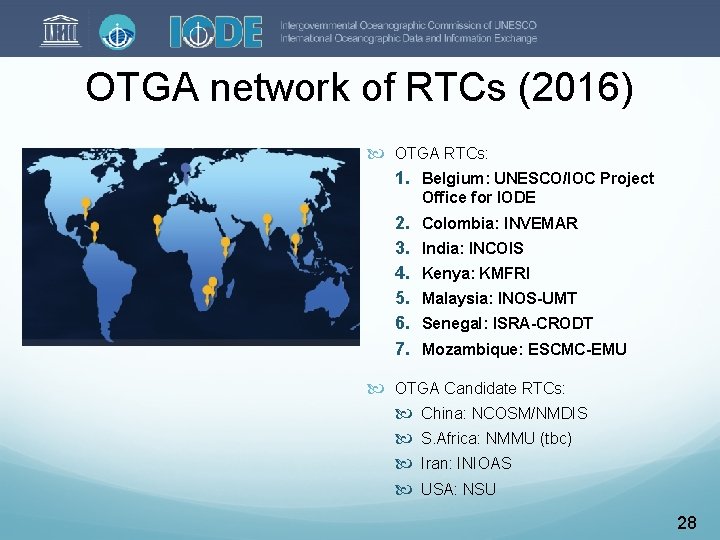
OTGA network of RTCs (2016) OTGA RTCs: 1. Belgium: UNESCO/IOC Project Office for IODE 2. 3. 4. 5. 6. 7. Colombia: INVEMAR India: INCOIS Kenya: KMFRI Malaysia: INOS-UMT Senegal: ISRA-CRODT Mozambique: ESCMC-EMU OTGA Candidate RTCs: China: NCOSM/NMDIS S. Africa: NMMU (tbc) Iran: INIOAS USA: NSU 28
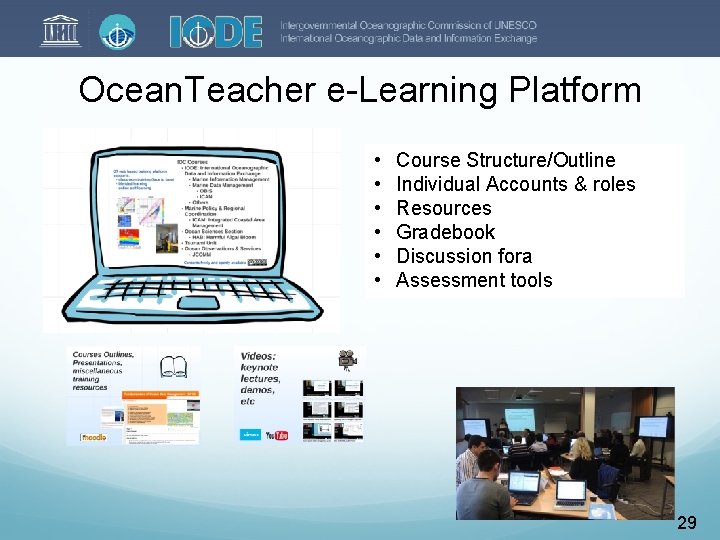
Ocean. Teacher e-Learning Platform • • • Course Structure/Outline Individual Accounts & roles Resources Gradebook Discussion fora Assessment tools 29
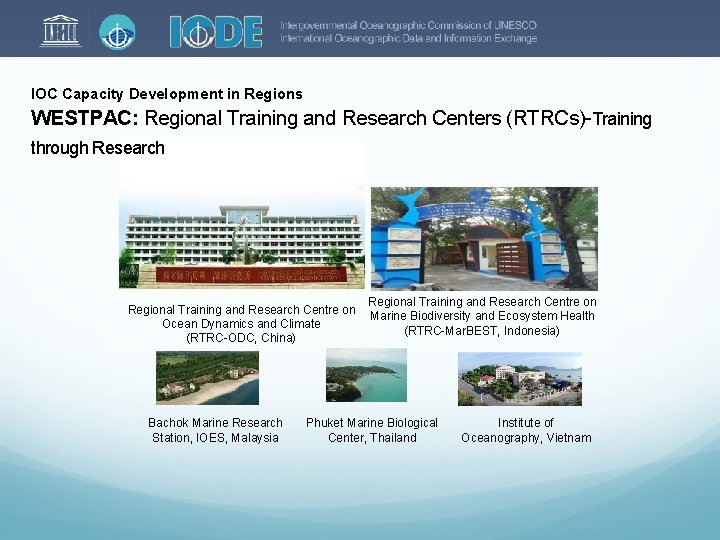
IOC Capacity Development in Regions WESTPAC: Regional Training and Research Centers (RTRCs)-Training through Research The Pari Island, Indonesian Institute of Sciences Regional Training and Research Centre on Ocean Dynamics and Climate (RTRC-ODC, China) Bachok Marine Research Station, IOES, Malaysia Regional Training and Research Centre on Marine Biodiversity and Ecosystem Health (RTRC-Mar. BEST, Indonesia) Phuket Marine Biological Center, Thailand Institute of Oceanography, Vietnam
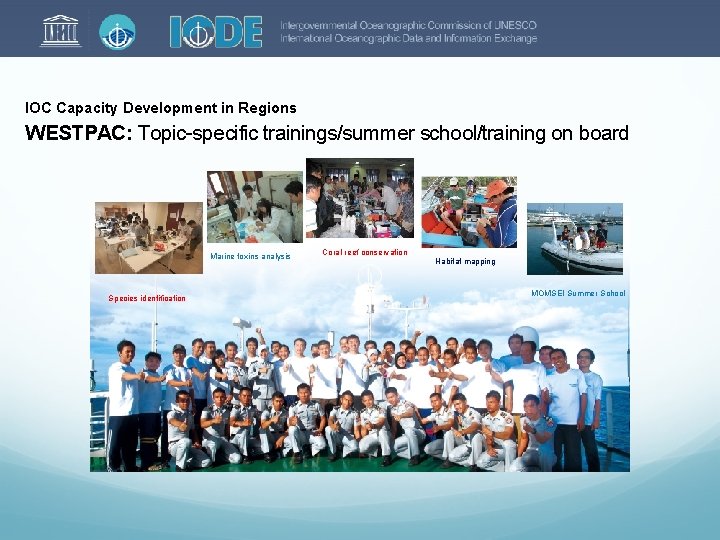
IOC Capacity Development in Regions WESTPAC: Topic-specific trainings/summer school/training on board Marine toxins analysis Species identification Coral reef conservation Habitat mapping MOMSEI Summer School
CD and SIDS CHALLENGES Small population Limited resources: human, infrastructure, … Competition for expertise TAILORED APPROACH Example: CMA 2: lessons learned Create regional partnerships based on resource sharing
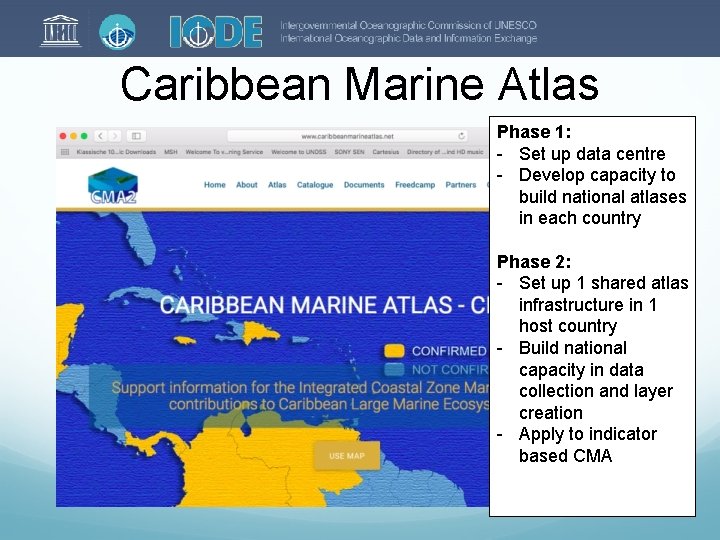
Caribbean Marine Atlas Phase 1: - Set up data centre - Develop capacity to build national atlases in each country Phase 2: - Set up 1 shared atlas infrastructure in 1 host country - Build national capacity in data collection and layer creation - Apply to indicator based CMA
Thank you 36