
Introduction to the Human Body Chapter 1 l
Introduction to the Human Body Chapter 1
l. Early interest: injuries/illnesses l. Studied herbs/potions and affect on body l. Greek and Latin words are basis of A/P language. l. Importance of Scientific Method: ¡Hypothesis/experiments/results/repeat Anatomy: study of body parts Physiology: study of how body works Shape reflects function
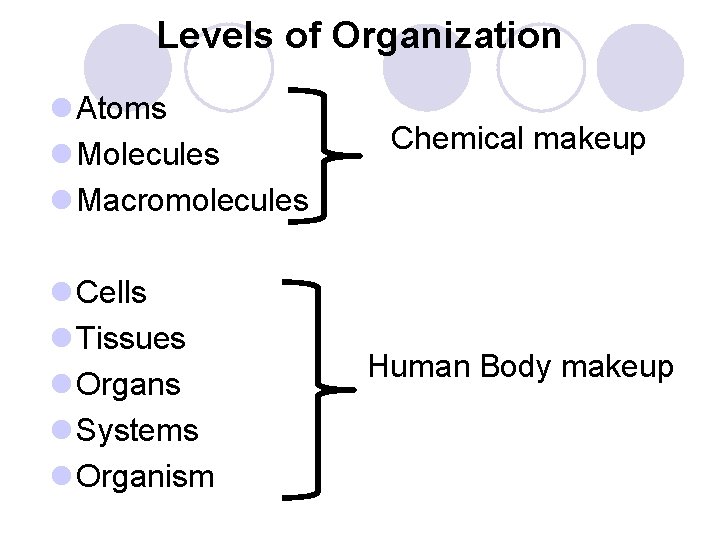
Levels of Organization l Atoms l Molecules l Macromolecules l Cells l Tissues l Organs l Systems l Organism Chemical makeup Human Body makeup
Characteristics of Life 1. 2. 3. 4. 5. 6. 7. Movement: change in position of body Responsiveness: reaction to change body Growth: increase in body size w/o changing shape Reproduction: production of new organisms/cells Respiration: obtaining O 2, releasing energy from food Digestion: breakdown of food to be absorbed Absorption/Circulation: passage/movement of substances into body fluids 8. Assimilation: changing absorbed substances into diff. forms 9. Excretion: removal of wastes
Maintenance of Life l Water l Food l Oxygen l Heat l Pressure (breathing/BP) forces O 2/blood
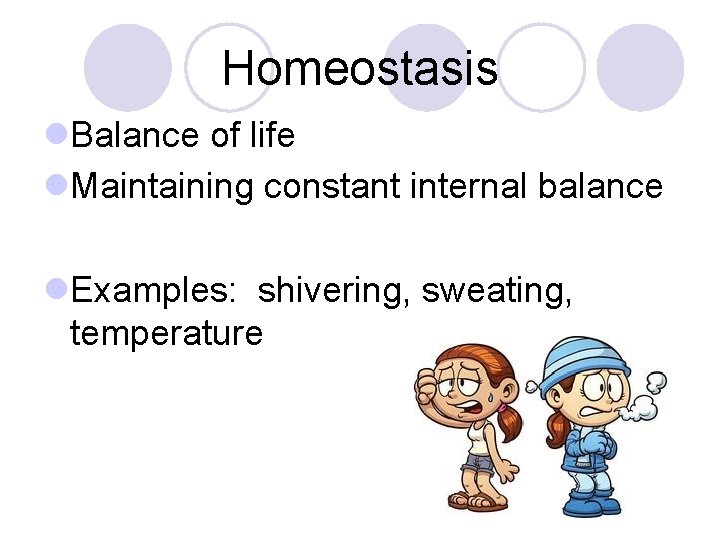
Homeostasis l. Balance of life l. Maintaining constant internal balance l. Examples: shivering, sweating, temperature
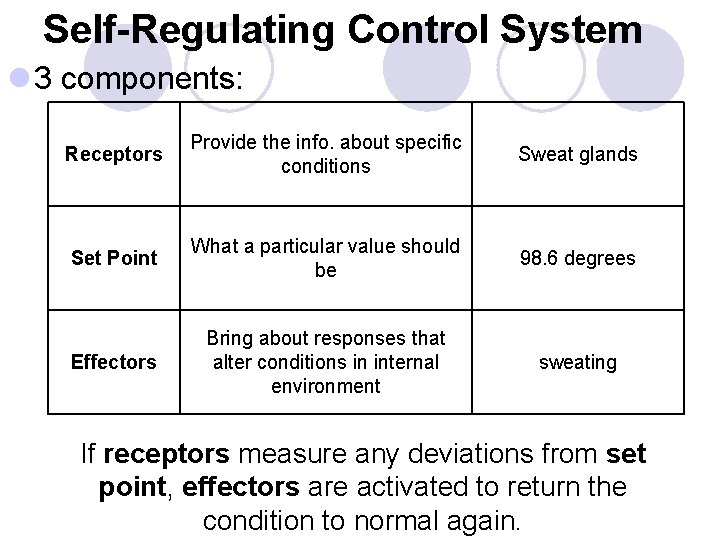
Self-Regulating Control System l 3 components: Receptors Provide the info. about specific conditions Sweat glands Set Point What a particular value should be 98. 6 degrees Effectors Bring about responses that alter conditions in internal environment sweating If receptors measure any deviations from set point, effectors are activated to return the condition to normal again.
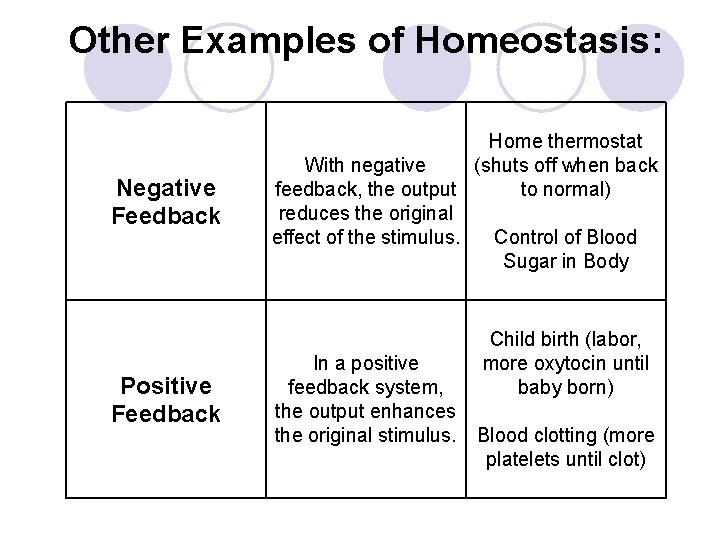
Other Examples of Homeostasis: Negative Feedback Positive Feedback Home thermostat With negative (shuts off when back feedback, the output to normal) reduces the original effect of the stimulus. Control of Blood Sugar in Body In a positive feedback system, the output enhances the original stimulus. Child birth (labor, more oxytocin until baby born) Blood clotting (more platelets until clot)
The n a l P l Body Cavities Body l 1. Dorsal Cavity (posterior) l A. Cranial l B. Vertebral l Body Regions: 2. Ventral Cavity (anterior) l 1. head A. Thoracic 1. pleural (lungs) l 2. neck 2. pericardial (heart) l 3. trunk 3. mediastinum l 4. upper appendages (between heart and lungs) B. Abdominopelvic l 5. lower appendages 1. abdomen 2. pelvic
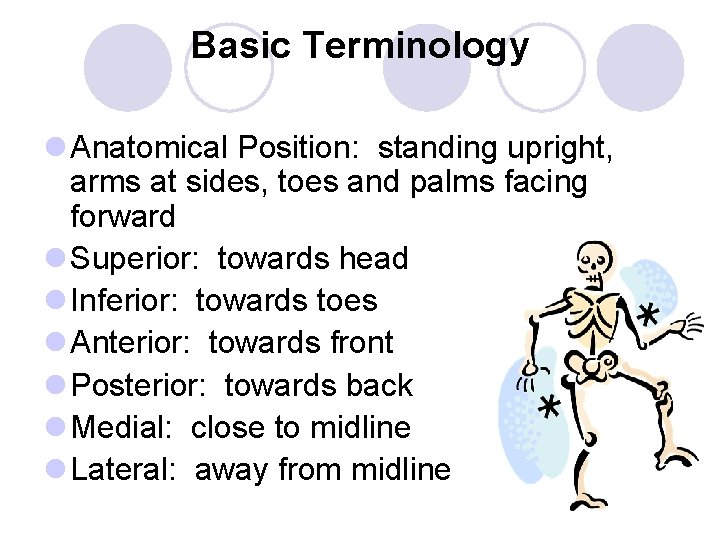
Basic Terminology l Anatomical Position: standing upright, arms at sides, toes and palms facing forward l Superior: towards head l Inferior: towards toes l Anterior: towards front l Posterior: towards back l Medial: close to midline l Lateral: away from midline
……………More Terms l Proximal: towards point of attachment l Distal: further from point of attachment l Superficial: towards surface of skin l Deep: inward from surface of skin l Bilateral: refers to paired structures, one of each side of body (lungs) l Ipsilateral: refers to structures on the same side (right kidney and right lung) l Contralateral: refers to structures on opposite sides (right leg/left leg)
Body Planes l Sagittal Plane: divides body into right/left halves l Frontal Plane: divides body into front/back halves l Horizontal Plane: divides body into top/bottom halves
For Test: Also KNOW THE FOLLOWING: l. Worksheets on BODY PLAN and SYSTEMS These things are not within your notes
- Slides: 13