
INTRODUCTION TO THE HUMAN BODY CHAPTER 1 Characteristics
INTRODUCTION TO THE HUMAN BODY CHAPTER 1 • • Characteristics of Life • Levels of Organization Anatomical Position, Directional Terms, and Body Planes • Body Cavities • Body Regions • Organ Systems • • Homeostasis Mechanisms of Disease

PAGE 7
ANATOMY AND PHYSIOLOGY • Greek and Latin form the basis for the language of anatomy and physiology • A&P are the basis of all other medical sciences and study. • Anatomy- from the Greek for "a cutting up, " examines the structures, or morphology, of the body parts - their forms and organization. • Physiology- from the Greek for "relationship to nature”, considers the functions of body parts -what they do and how they do it. • These two sciences are related: structure determines function / anatomy determines physiology.
THE SCIENTIFIC METHOD • Make observations • Hypothesis: idea to be tested (written in If…then format) • Design and conduct a controlled experiment • Collect and analyze data • Redesign experiment or repeat experiment • Draw conclusions • Theory: hypothesis that has been proven by experiments to have a high level of confidence (can change) • Law: a theory that has an unusually high level of confidence (don’t change)
CHARACTERISTICS OF LIFE • Uptake/Expenditure of energy– taking in food for energy & using that energy to do work • Response to Stimuli – reaction to a change in the environment • Growth & Development – increase in body size; no change in shape basic shape • Reproduction – producing cells from pre-existing cells; reproducing a new organism • Respiration – obtaining oxygen; removing carbon dioxide & releasing energy (ATP) from foods
CHARACTERISTICS OF LIFE • Digestion – breakdown of food substances into simpler forms • Absorption – passage of substances through membranes and into body fluids • Circulation – movement of substances in body fluids • Assimilation – changing of absorbed substances into chemically different forms • Excretion – removal of wastes produced by metabolic reactions

LEVELS OF ORGANIZATION Subatomic particles Atom Organ system Molecule Macromolecule Organelle Organism Cell Tissue
LEVELS OF ORGANIZATION • Subatomic particles- electrons, protons, neutrons • Atoms- hydrogen atom, lithium atom, etc. • Molecules-water, glucose, etc. • Macromolecules- protein, DNA, etc. • Organelles- mitochondrion, golgi body, nucleus, etc. • Cells- muscle cell, nerve cell *smallest unit that possess the characteristics of life* • Tissues: epithelial, connective, muscle, nervous • Organs- femur, heart, kidney, etc. *unique size, shape, appearance, and placement in body* • Organ/Body systems: Integumentary, Skeletal, Muscular, Nervous, etc.

PAGE 9

ANATOMICAL POSITION • Refers to the reference position (body erect with arms at sides and palms facing forward) • Humans have bilateral symmetry (right and left sides of the body are mirror images) • Ipsilateral structures are on the same side of the body • Contralateral structures are on the opposite side of the body
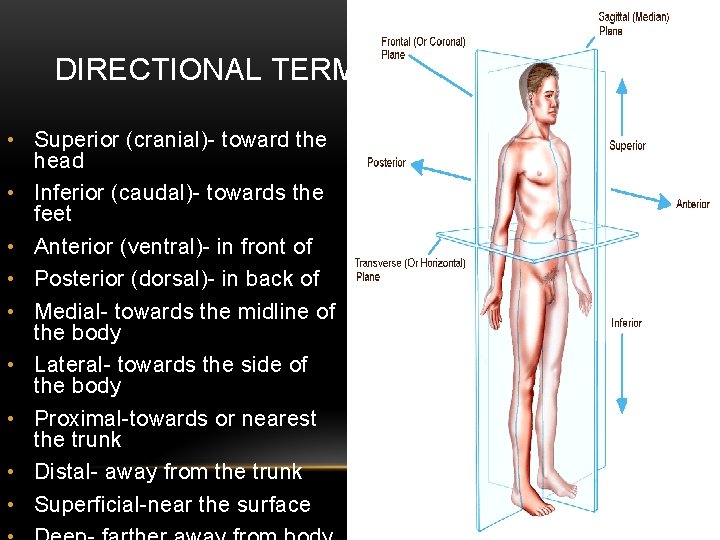
DIRECTIONAL TERMS • Superior (cranial)- toward the head • Inferior (caudal)- towards the feet • Anterior (ventral)- in front of • Posterior (dorsal)- in back of • Medial- towards the midline of the body • Lateral- towards the side of the body • Proximal-towards or nearest the trunk • Distal- away from the trunk • Superficial-near the surface
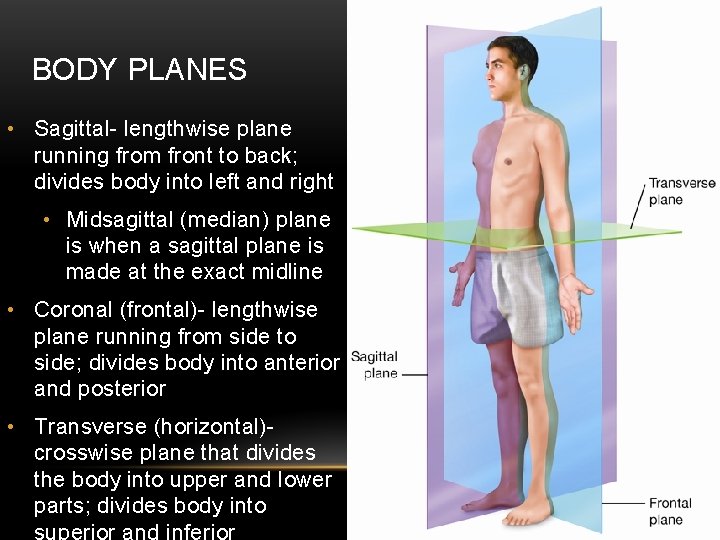
BODY PLANES • Sagittal- lengthwise plane running from front to back; divides body into left and right • Midsagittal (median) plane is when a sagittal plane is made at the exact midline • Coronal (frontal)- lengthwise plane running from side to side; divides body into anterior and posterior • Transverse (horizontal)crosswise plane that divides the body into upper and lower parts; divides body into superior and inferior
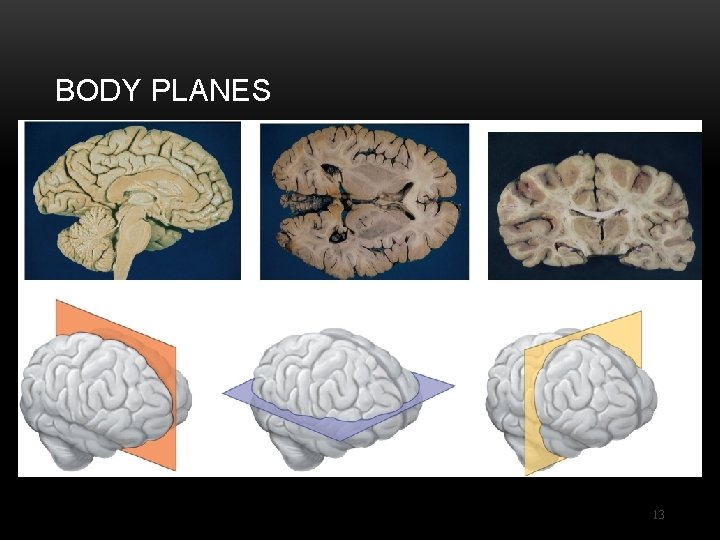
BODY PLANES (a) (b) (c) 13

PAGE 11
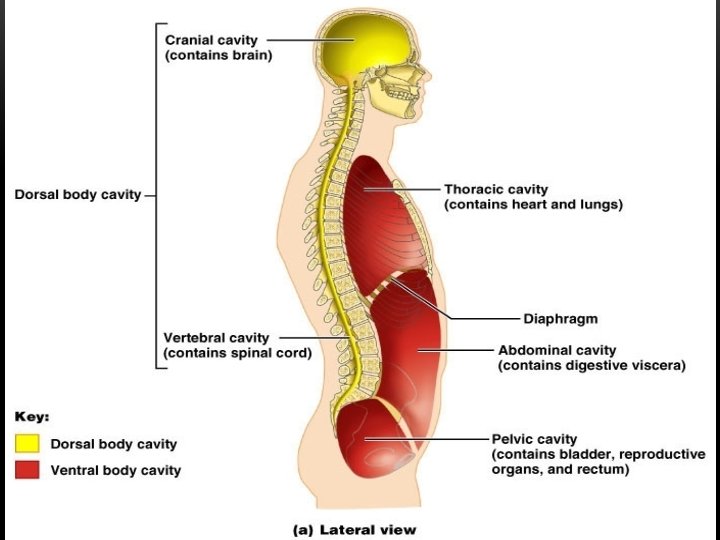
BODY CAVITIES • Ventral Cavity • Consists of thoracic/chest cavity and abdominopelvic cavity separated by diaphragm • Thoracic cavity consists of: • left and right pleural cavity(where lungs are located) • mid-portion called the mediastinum (where heart, trachea, right and left bronchi, esophagus, thymus, blood vessels, thoracic duct, lymphatic vessels, lymph nodes, and nerves) • Abdominopelvic cavity consists of: • Abdominal-liver, gallbladder, stomach, pancreas, intestines, spleen, kidneys, ureters • Pelvic-urinary bladder, female and male reproductive organs, colon, rectum
BODY CAVITIES • Dorsal Cavity • Consists of cranial and spinal/vertebral cavities • Cranial cavity consists of the brain • Spinal/vertebral cavity consists of the spinal cord
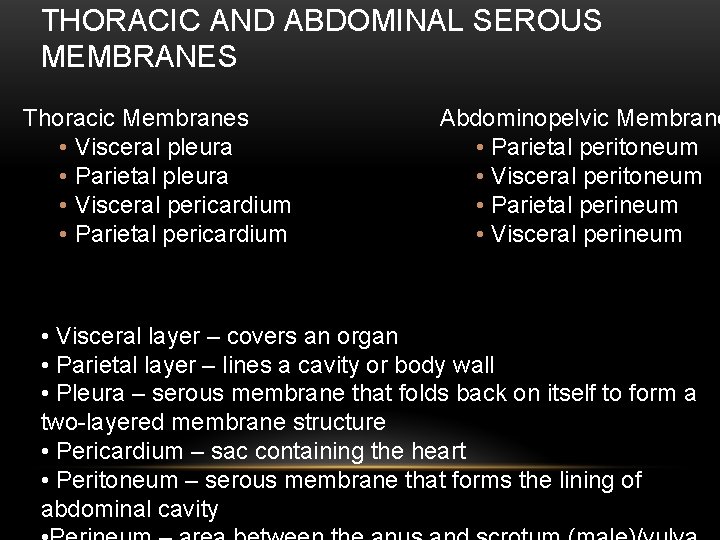
THORACIC AND ABDOMINAL SEROUS MEMBRANES Thoracic Membranes • Visceral pleura • Parietal pleura • Visceral pericardium • Parietal pericardium Abdominopelvic Membrane • Parietal peritoneum • Visceral peritoneum • Parietal perineum • Visceral perineum • Visceral layer – covers an organ • Parietal layer – lines a cavity or body wall • Pleura – serous membrane that folds back on itself to form a two-layered membrane structure • Pericardium – sac containing the heart • Peritoneum – serous membrane that forms the lining of abdominal cavity

PAGE 13
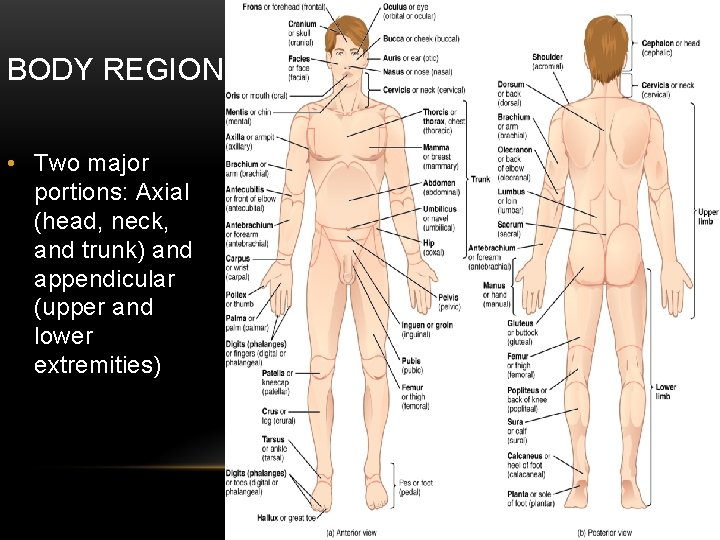
BODY REGIONS • Two major portions: Axial (head, neck, and trunk) and appendicular (upper and lower extremities)
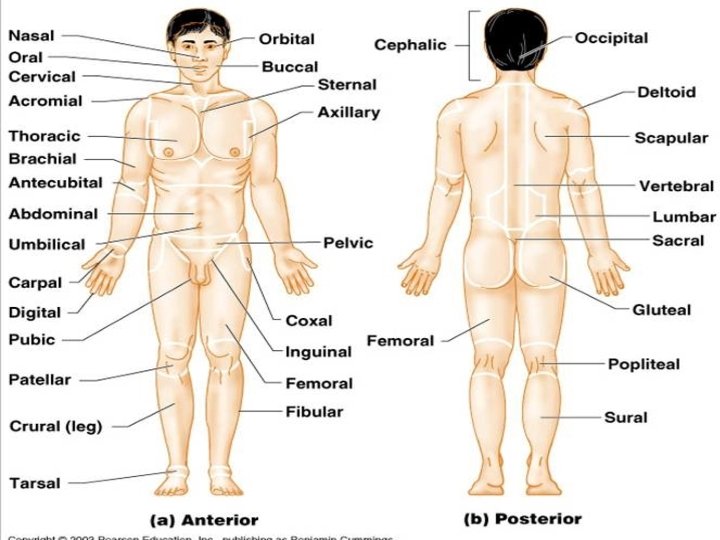

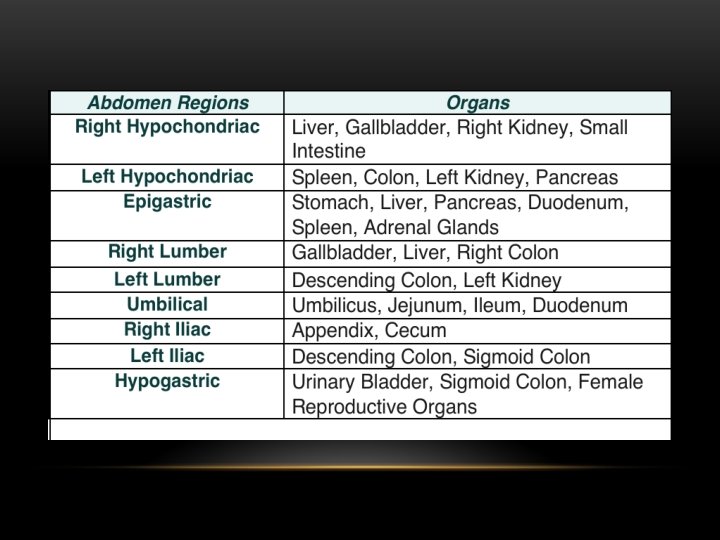
ABDOMINAL BODY REGIONS Right hypochondriac region Epigastric region Right lumbar region Umbilical region Right iliac region Left hypochondriac region Left lumbar region Hypogastric Left iliac region Right upper Left upper quadrant (RUQ) (LUQ) Right lower Left lower quadrant (RLQ) (LLQ) 22
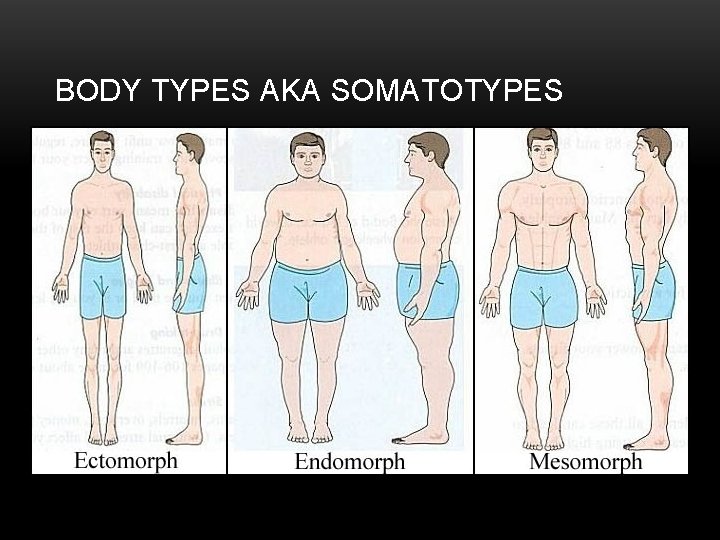
BODY TYPES AKA SOMATOTYPES
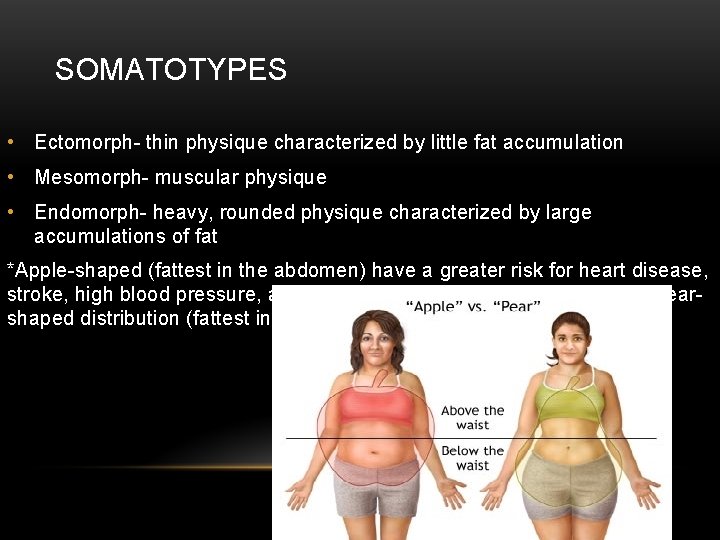
SOMATOTYPES • Ectomorph- thin physique characterized by little fat accumulation • Mesomorph- muscular physique • Endomorph- heavy, rounded physique characterized by large accumulations of fat *Apple-shaped (fattest in the abdomen) have a greater risk for heart disease, stroke, high blood pressure, and diabetes than individuals with a lower pearshaped distribution (fattest in the hips, thighs and buttocks)

PAGE 15
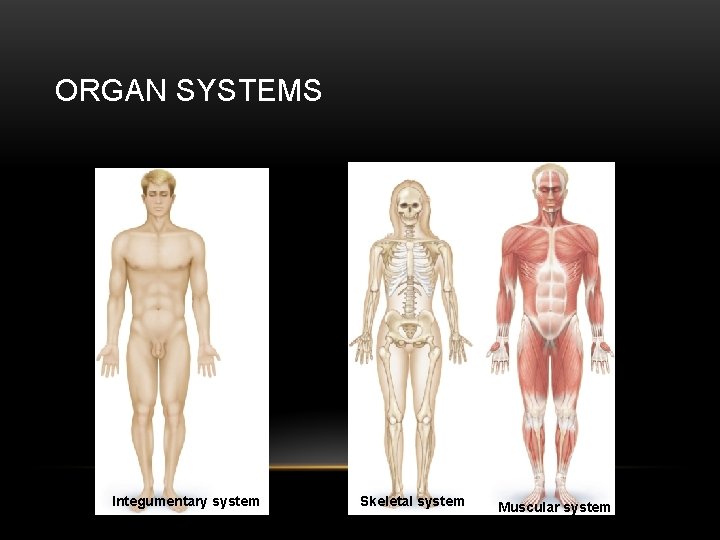
ORGAN SYSTEMS Integumentary system Skeletal system Muscular system
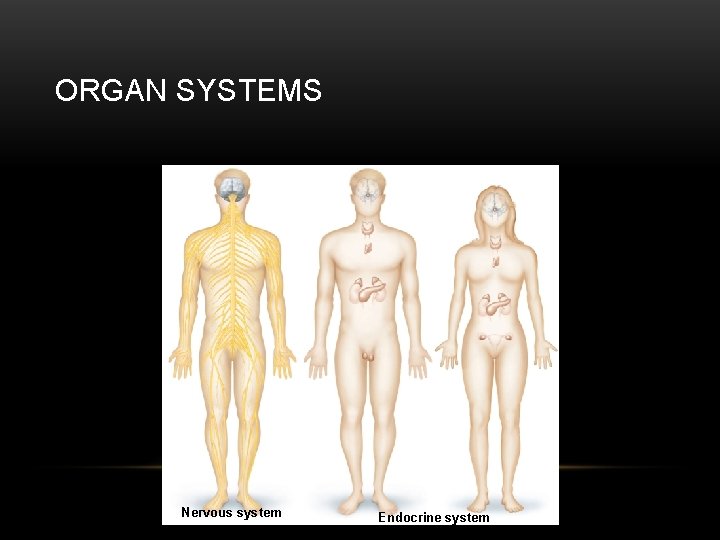
ORGAN SYSTEMS Nervous system Endocrine system
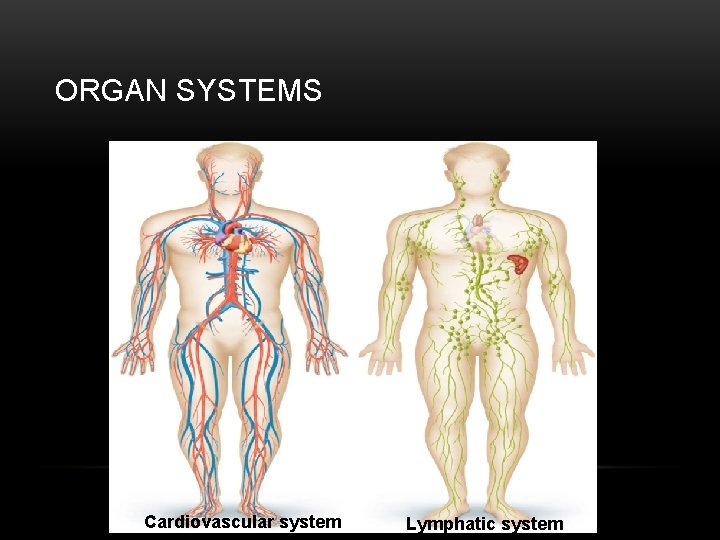
ORGAN SYSTEMS Cardiovascular system Lymphatic system
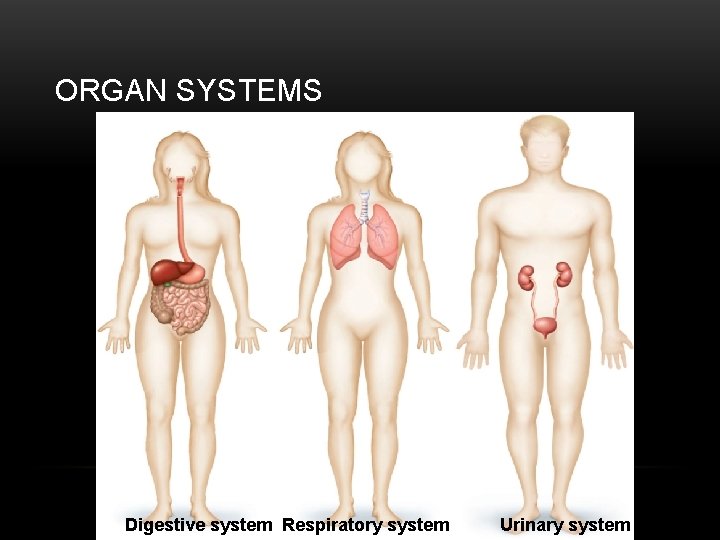
ORGAN SYSTEMS Digestive system Respiratory system Urinary system
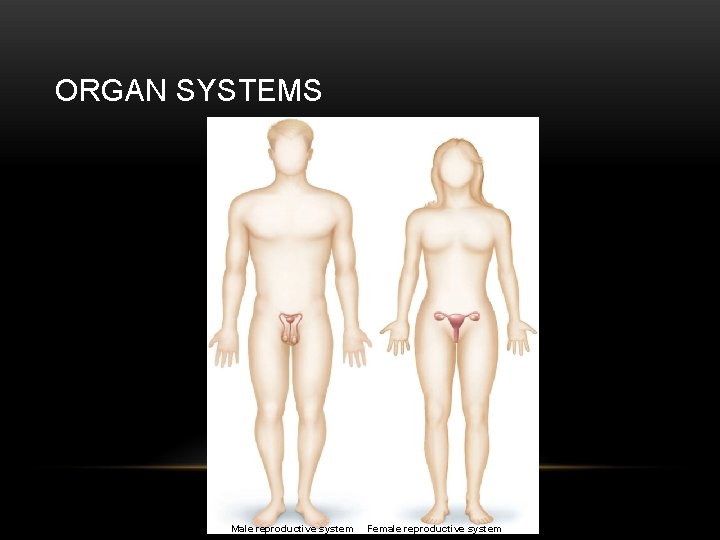
ORGAN SYSTEMS Male reproductive system Female reproductive system
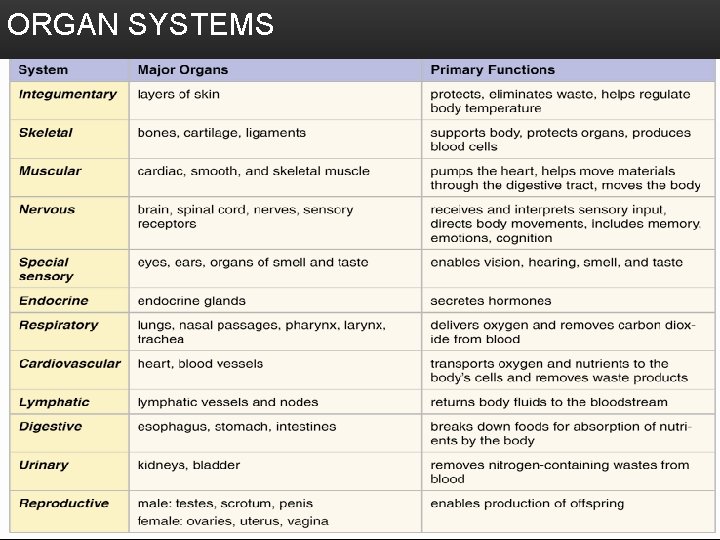
ORGAN SYSTEMS
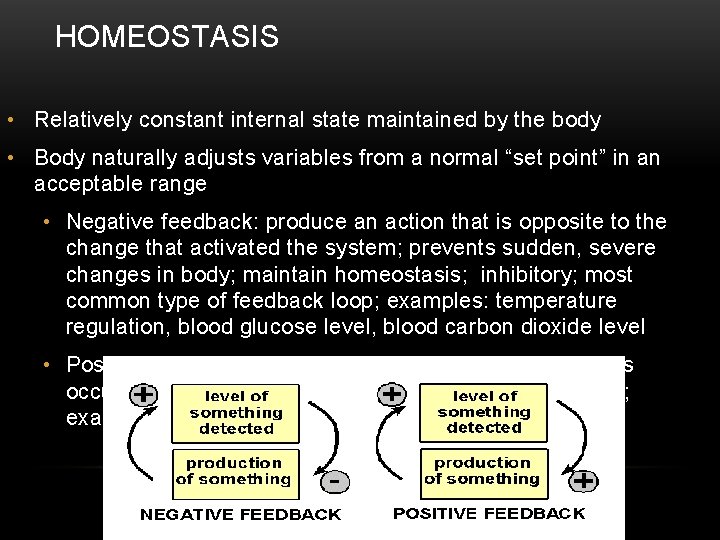
HOMEOSTASIS • Relatively constant internal state maintained by the body • Body naturally adjusts variables from a normal “set point” in an acceptable range • Negative feedback: produce an action that is opposite to the change that activated the system; prevents sudden, severe changes in body; maintain homeostasis; inhibitory; most common type of feedback loop; examples: temperature regulation, blood glucose level, blood carbon dioxide level • Positive feedback: amplify or reinforce the change that is occurring; short-lived; disrupts homeostasis; stimulatory; examples: blood clotting, childbirth
HOMEOSTATIC CONTROL MECHANISMS • Homeostatic Control Mechanisms – monitors aspects of the internal environment and corrects as needed. Variations are within limits. There are three (3) parts: • Receptor - provides information about the stimuli • Control Center - tells what a particular value should be (called the set point) • Effector - elicits responses that change conditions in the internal environment
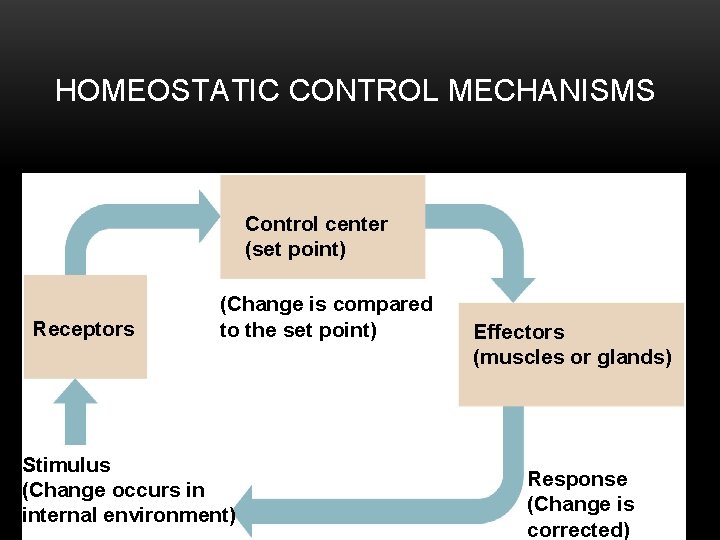
HOMEOSTATIC CONTROL MECHANISMS Control center (set point) Receptors (Change is compared to the set point) Stimulus (Change occurs in internal environment) Effectors (muscles or glands) Response (Change is corrected) 35
MECHANISMS OF DISEASE • Disturbances to homeostasis and the body’s responses cause disease • Genetic mechanisms-altered or mutated genes • Pathogenic organisms- prions (proteins), viruses (non-living particles), bacteria (prokaryotic cells), fungi (similar to plants but are heterotrophic), protozoa (protists), pathogenic animals (insects and worms) • Tumors and cancer-abnormal tissue growth • Physical and chemical agents-toxic chemicals, extreme heat or cold, mechanical injury, radiation • Malnutrition-insufficient intake of nutrients • Autoimmunity-immune system attacking its own body • Inflammation-response at inappropriate times damaging normal tissue
- Slides: 36