
Introduction to the Human Body Anatomy the study
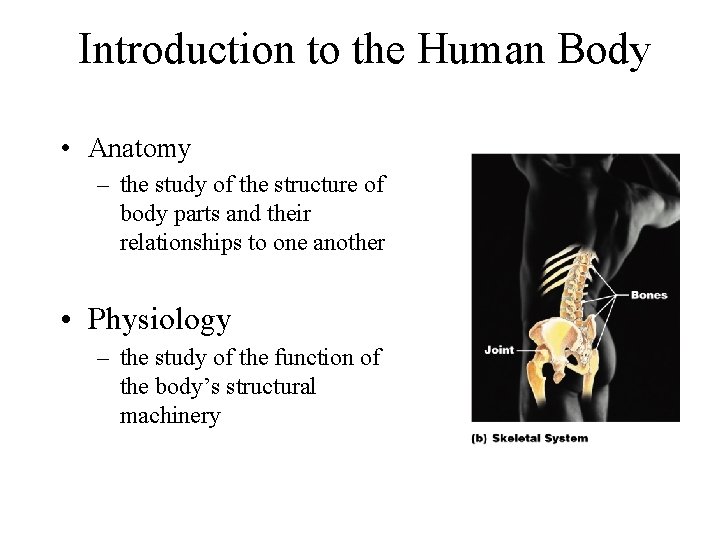
Introduction to the Human Body • Anatomy – the study of the structure of body parts and their relationships to one another • Physiology – the study of the function of the body’s structural machinery
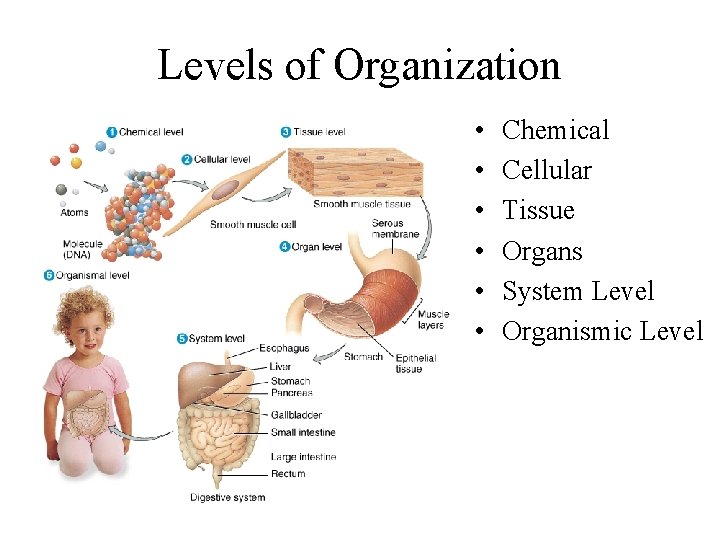
Levels of Organization • • • Chemical Cellular Tissue Organs System Level Organismic Level
Levels of Structural Organization • Chemical Level – atomic and molecular level • Cellular level – smallest living unit of the body • Tissue level – group of cells and the materials surrounding them that work together on one task – 4 basic tissue types • epithelium, muscle, connective tissue, and nerve
Levels of Structural Organization • Organ level – grouping of 2 or more tissue types into a recognizable structure with a specific function. • Organ system – collection of related organs with a common function – sometimes an organ is part of more than one system • Organismic level – one living individual
Organ Systems Integumentary Skeletal Muscular Nervous Endocrine Digestive Cardiovascular Lymphatic and Immune Respiratory Urinary Reproductive
Homeostasis • Maintaining the internal environment within physiological limits • Example – blood glucose level is kept within narrow range
Control of Homeostasis • Homeostasis is continually being disrupted by – external stimuli or • intense heat, cold , and lack of oxygen – internal stimuli • psychological stresses • exercise • Disruptions are usually mild & temporary • If homeostasis is not maintained, death may result
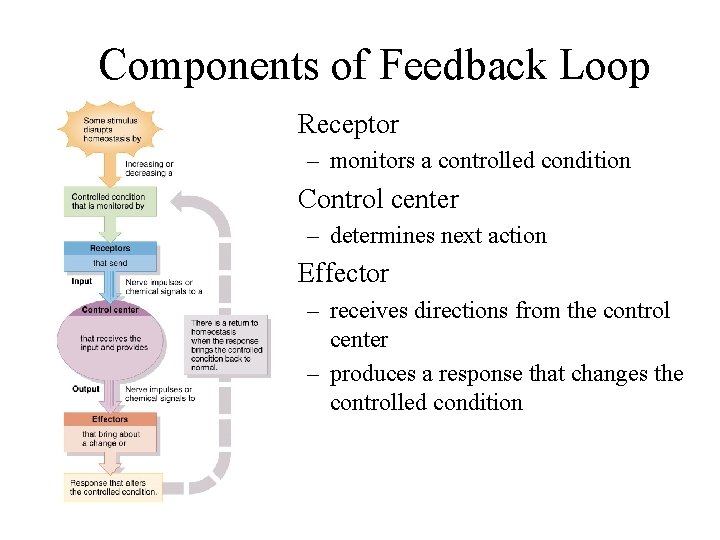
Components of Feedback Loop • Receptor – monitors a controlled condition • Control center – determines next action • Effector – receives directions from the control center – produces a response that changes the controlled condition
Negative & Positive Feedback Loops • Negative feedback loop – original stimulus reversed – most feedback systems in the body are negative – used for conditions that need frequent adjustment – body temperature, blood sugar levels, blood pressure • Positive feedback loop – original stimulus intensified – seen during normal childbirth
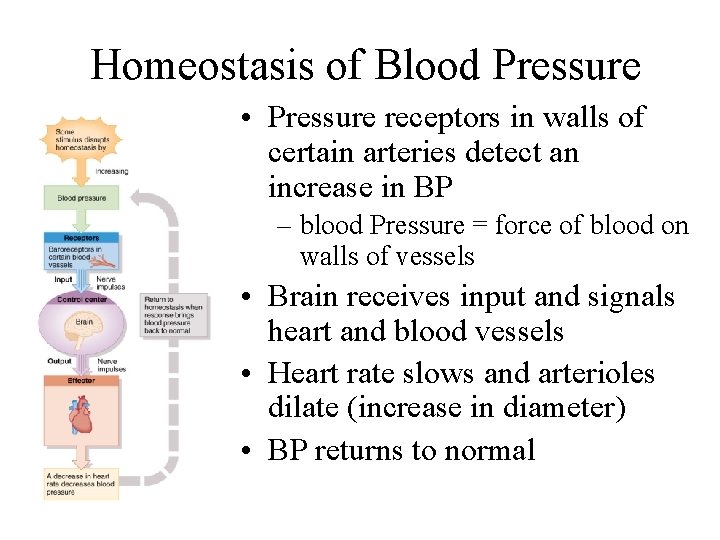
Homeostasis of Blood Pressure • Pressure receptors in walls of certain arteries detect an increase in BP – blood Pressure = force of blood on walls of vessels • Brain receives input and signals heart and blood vessels • Heart rate slows and arterioles dilate (increase in diameter) • BP returns to normal
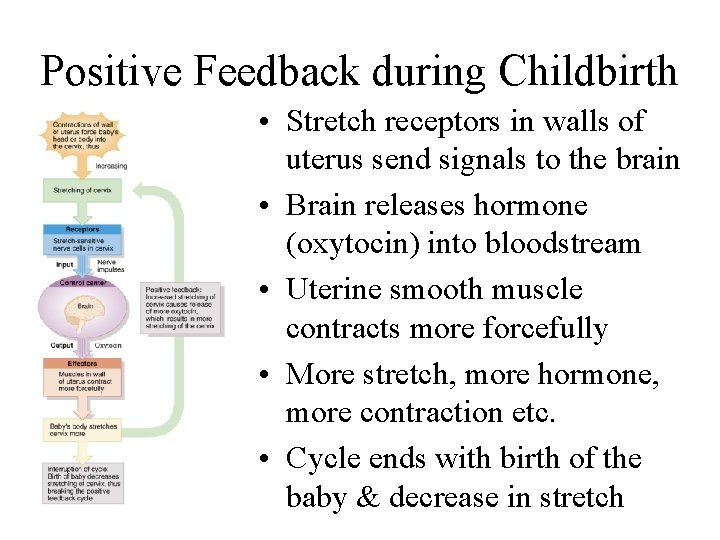
Positive Feedback during Childbirth • Stretch receptors in walls of uterus send signals to the brain • Brain releases hormone (oxytocin) into bloodstream • Uterine smooth muscle contracts more forcefully • More stretch, more hormone, more contraction etc. • Cycle ends with birth of the baby & decrease in stretch
Basic Anatomical Terminology • Anatomical position • Regions of the body • Anatomical planes, sections and directional terms
Anatomical Position • Standardized position from which to describe directional terms – – – standing upright facing the observer, head level eyes facing forward feet flat on the floor arms at the sides palms turned forward • Prone position = lying face down • Supine position = lying face up anatomical position?
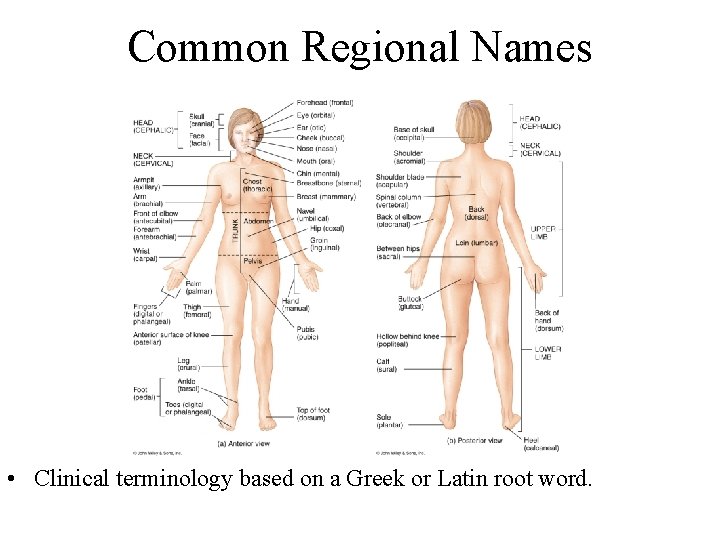
Common Regional Names • Clinical terminology based on a Greek or Latin root word.
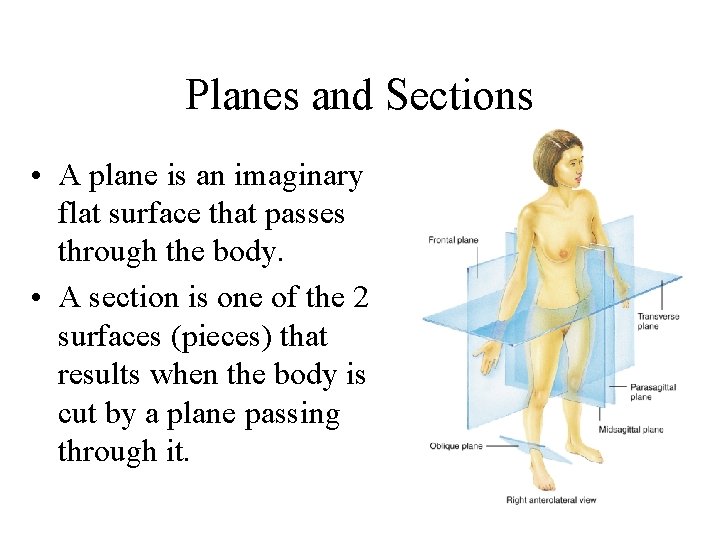
Planes and Sections • A plane is an imaginary flat surface that passes through the body. • A section is one of the 2 surfaces (pieces) that results when the body is cut by a plane passing through it.
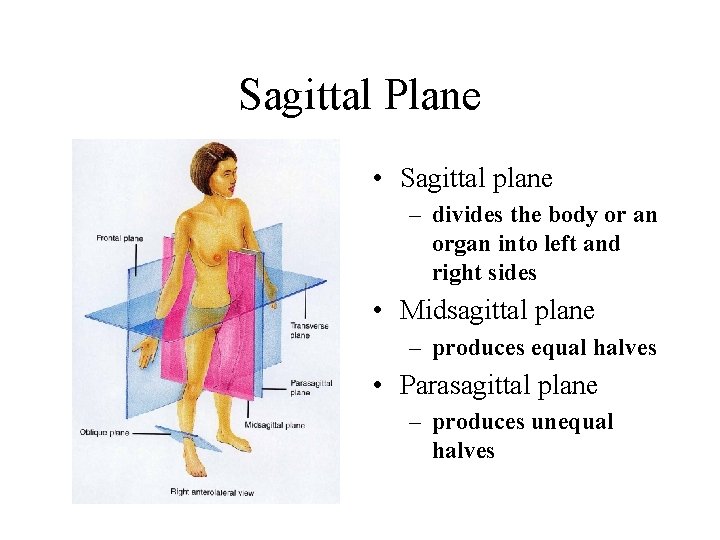
Sagittal Plane • Sagittal plane – divides the body or an organ into left and right sides • Midsagittal plane – produces equal halves • Parasagittal plane – produces unequal halves
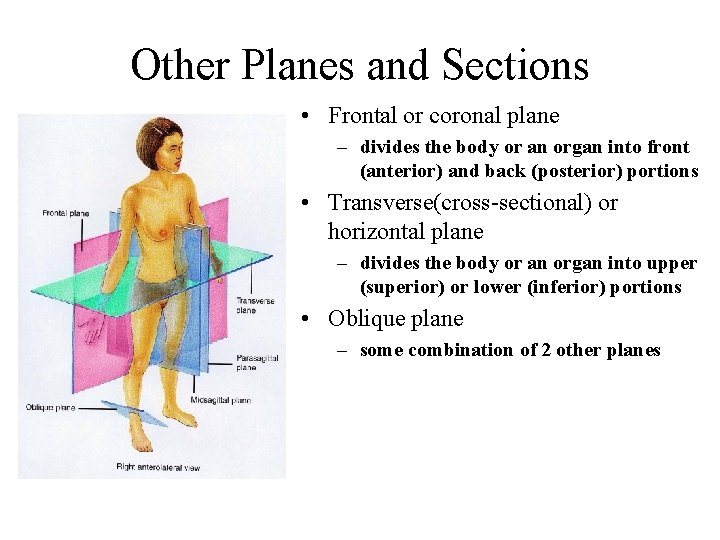
Other Planes and Sections • Frontal or coronal plane – divides the body or an organ into front (anterior) and back (posterior) portions • Transverse(cross-sectional) or horizontal plane – divides the body or an organ into upper (superior) or lower (inferior) portions • Oblique plane – some combination of 2 other planes
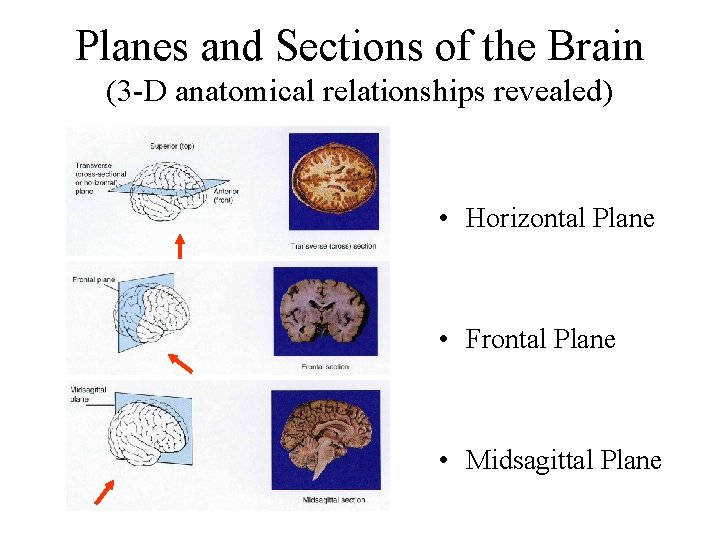
Planes and Sections of the Brain (3 -D anatomical relationships revealed) • Horizontal Plane • Frontal Plane • Midsagittal Plane
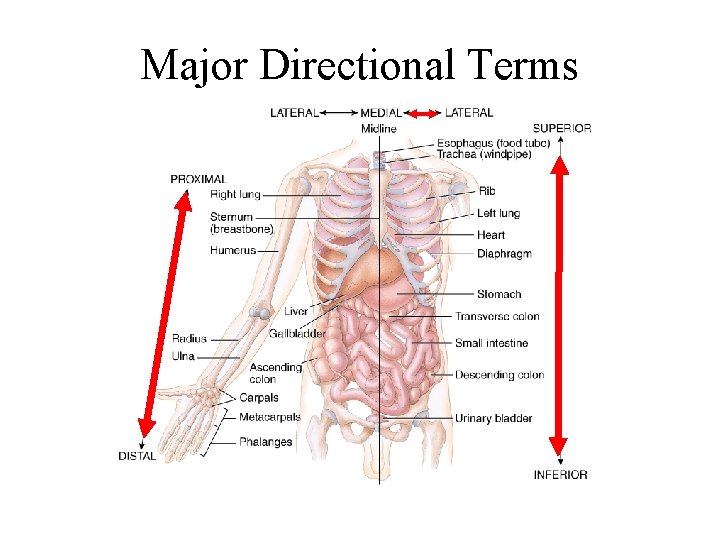
Major Directional Terms
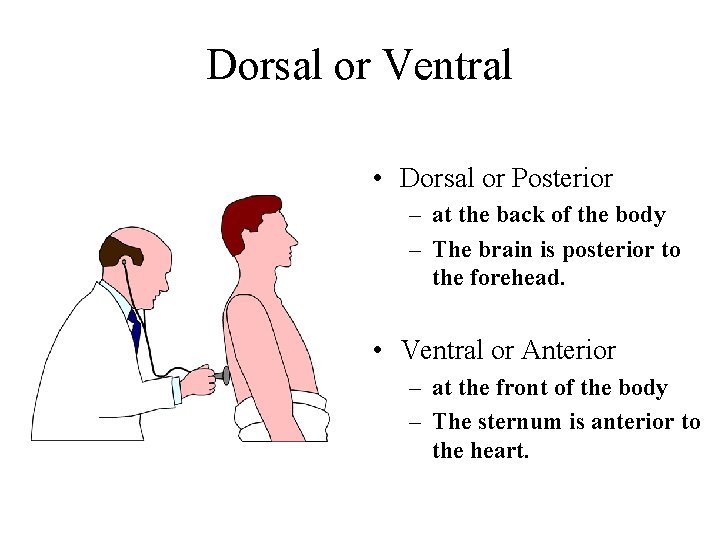
Dorsal or Ventral • Dorsal or Posterior – at the back of the body – The brain is posterior to the forehead. • Ventral or Anterior – at the front of the body – The sternum is anterior to the heart.
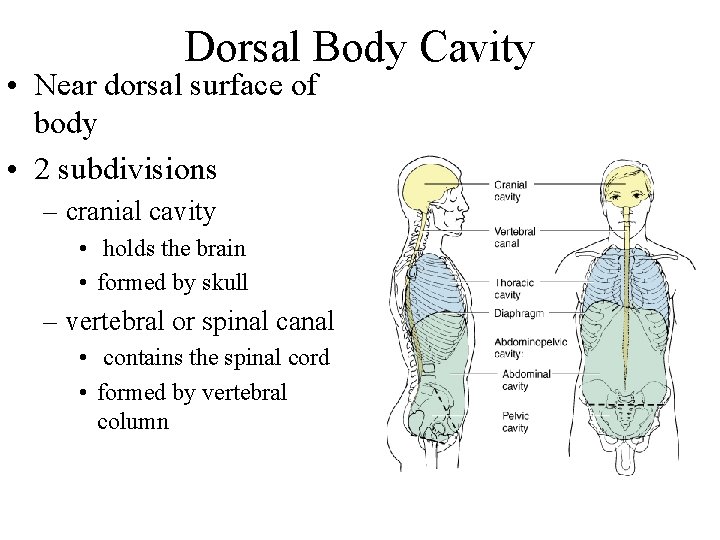
Dorsal Body Cavity • Near dorsal surface of body • 2 subdivisions – cranial cavity • holds the brain • formed by skull – vertebral or spinal canal • contains the spinal cord • formed by vertebral column
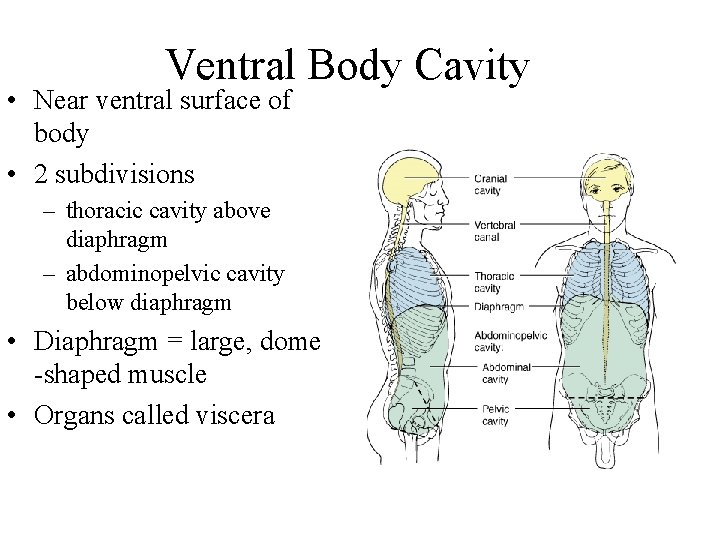
Ventral Body Cavity • Near ventral surface of body • 2 subdivisions – thoracic cavity above diaphragm – abdominopelvic cavity below diaphragm • Diaphragm = large, dome -shaped muscle • Organs called viscera
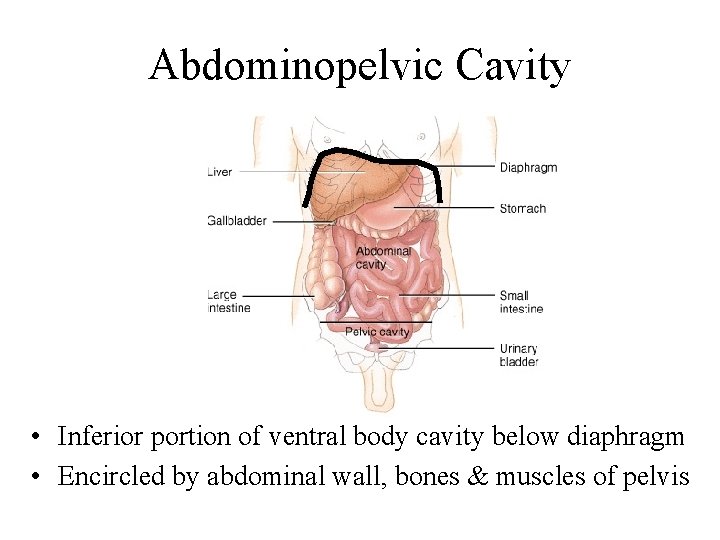
Abdominopelvic Cavity • Inferior portion of ventral body cavity below diaphragm • Encircled by abdominal wall, bones & muscles of pelvis
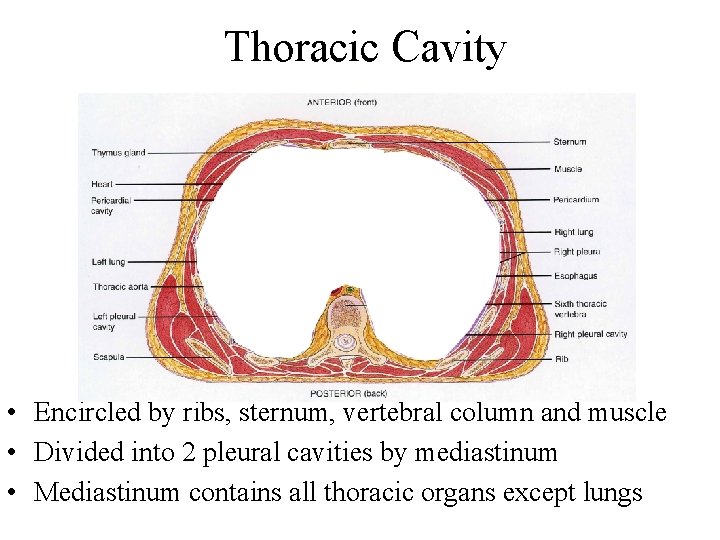
Thoracic Cavity • Encircled by ribs, sternum, vertebral column and muscle • Divided into 2 pleural cavities by mediastinum • Mediastinum contains all thoracic organs except lungs
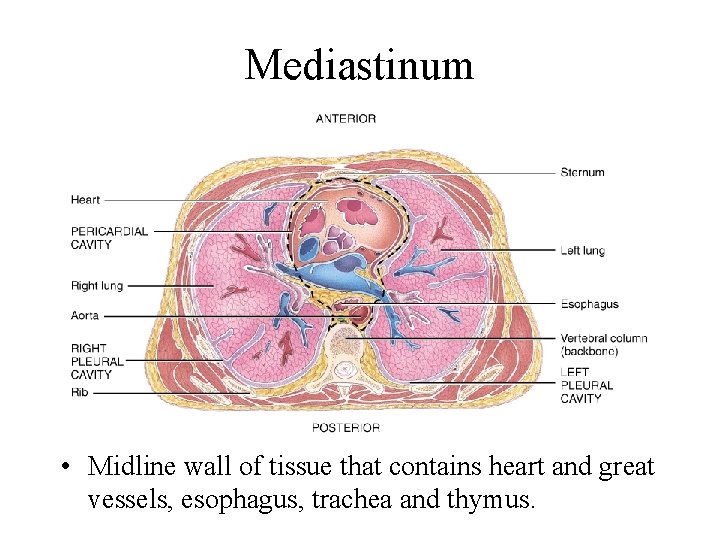
Mediastinum • Midline wall of tissue that contains heart and great vessels, esophagus, trachea and thymus.
Serous Membranes • Thin slippery membrane lines body cavities not open to the outside – parietal layer lines walls of cavities – visceral layer covers viscera within the cavities • Serous fluid reduces friction
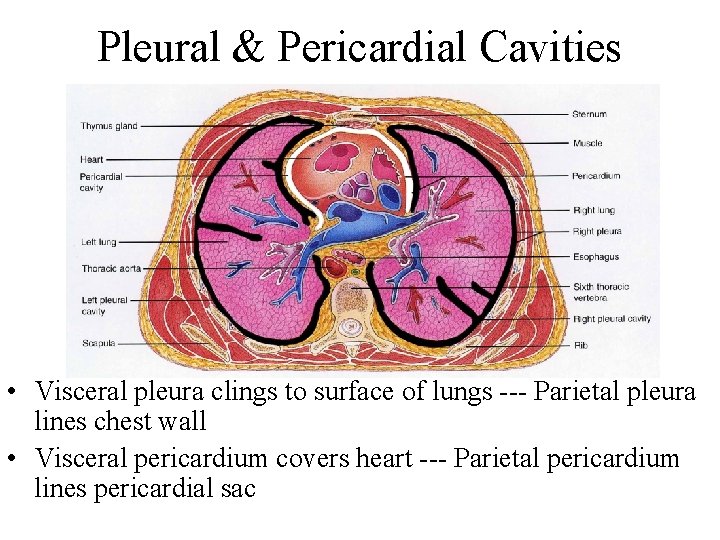
Pleural & Pericardial Cavities • Visceral pleura clings to surface of lungs --- Parietal pleura lines chest wall • Visceral pericardium covers heart --- Parietal pericardium lines pericardial sac
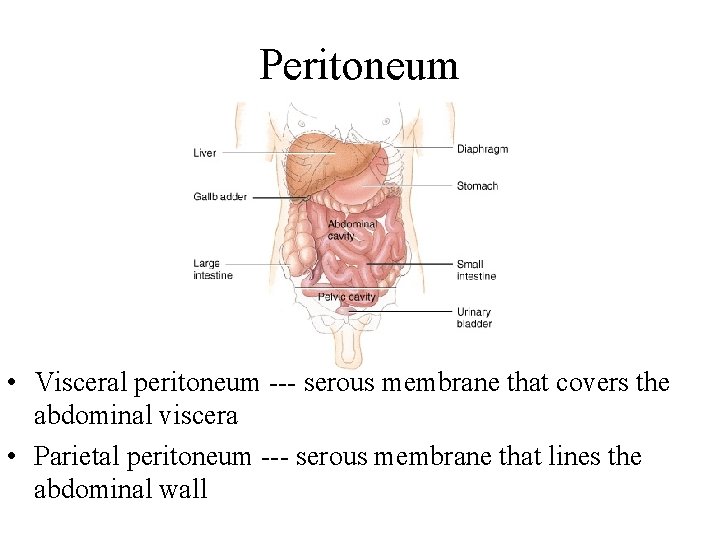
Peritoneum • Visceral peritoneum --- serous membrane that covers the abdominal viscera • Parietal peritoneum --- serous membrane that lines the abdominal wall
- Slides: 28